
01432 610152 Get a quote Call 01432 610152

Roofers in Sling

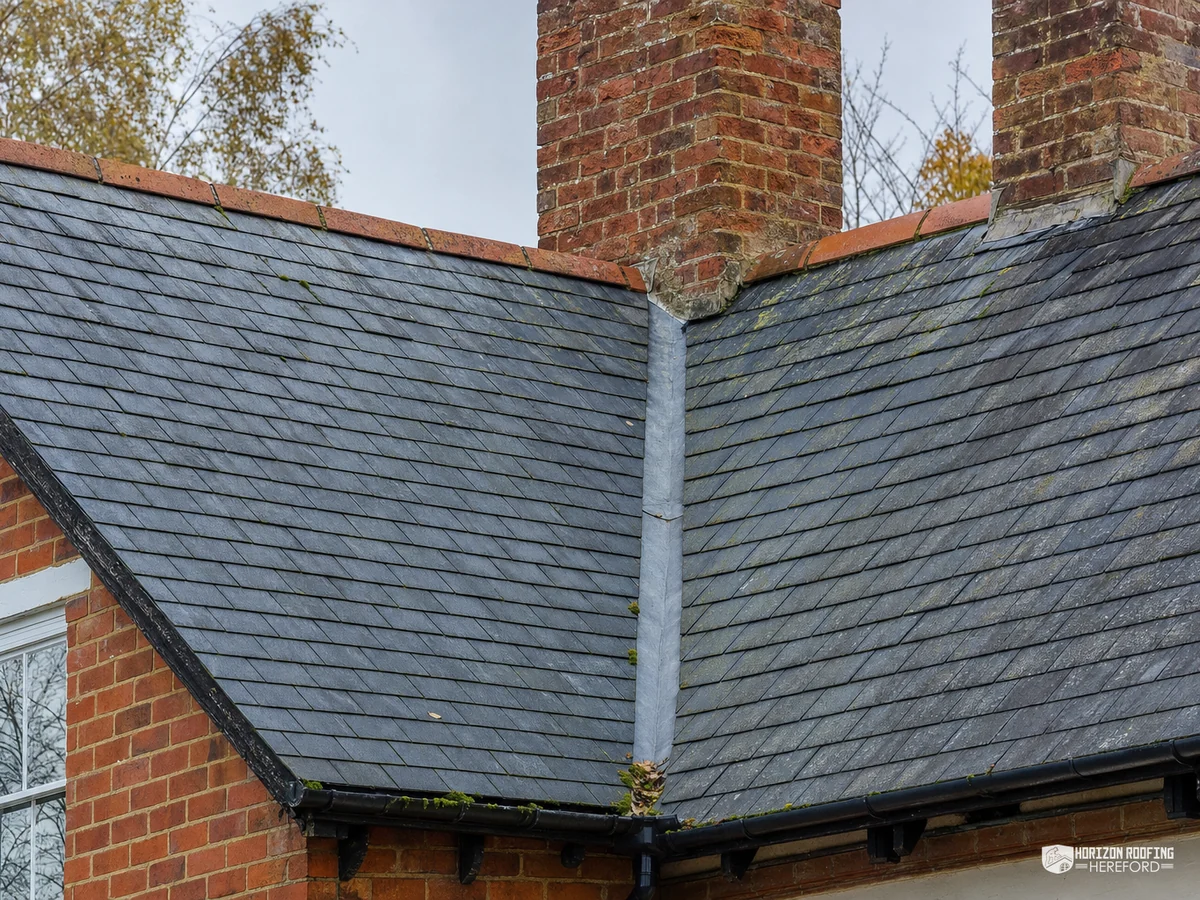
Slate repairs, valley lead and gable verges for homes in Sling.

Each job starts with a climb and a camera, and you then receive one written total.

Get a free quoteCall 01432 610152

Three places a Sling roof lets go

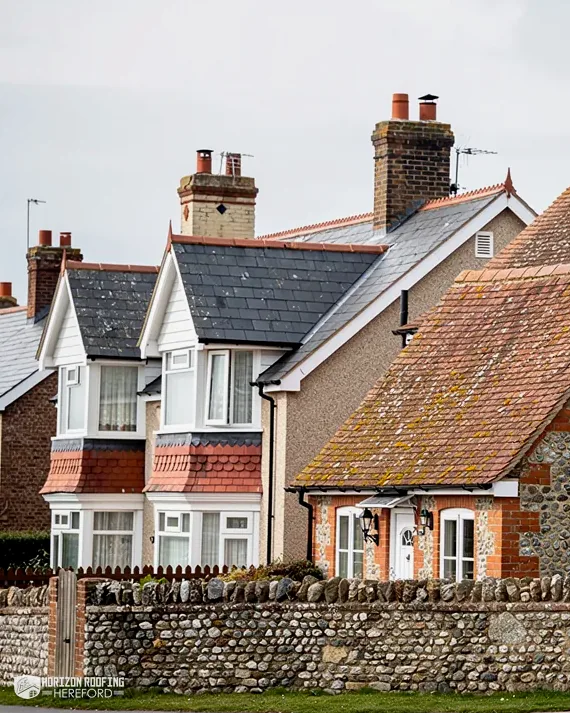
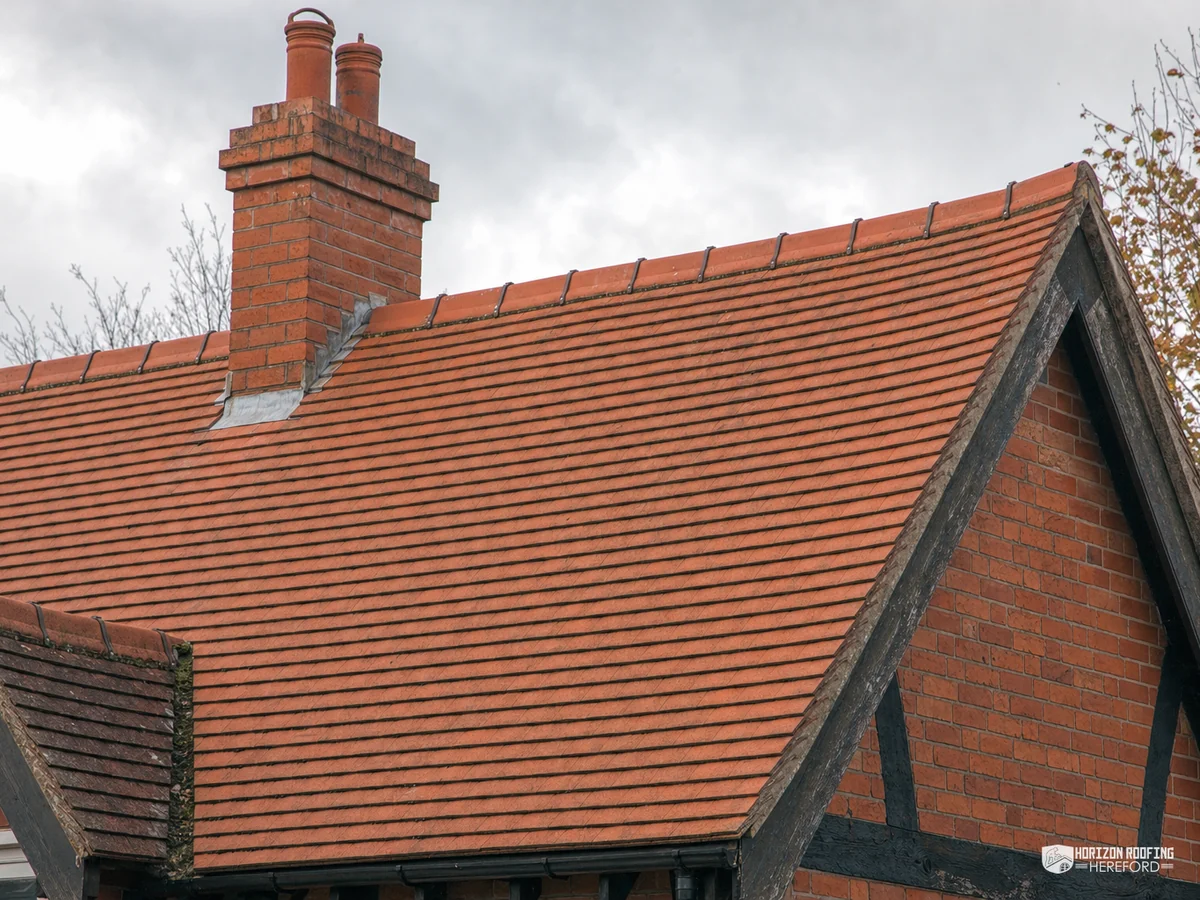
  • Older cottages with weathered clay tile roofs and brick chimneys behind a flint wall
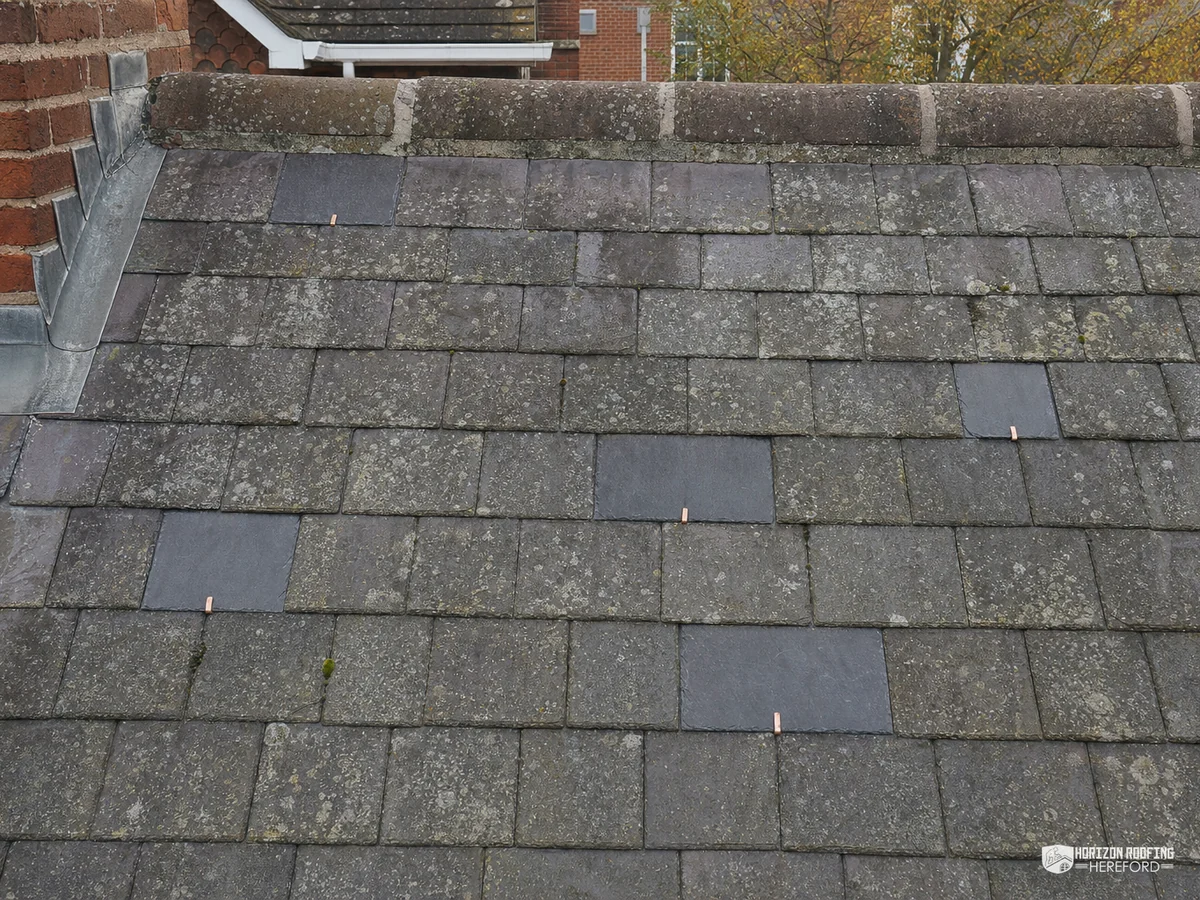
    Slipped slatesA slate slips when its fixing gives way, leaving a gap in the course.
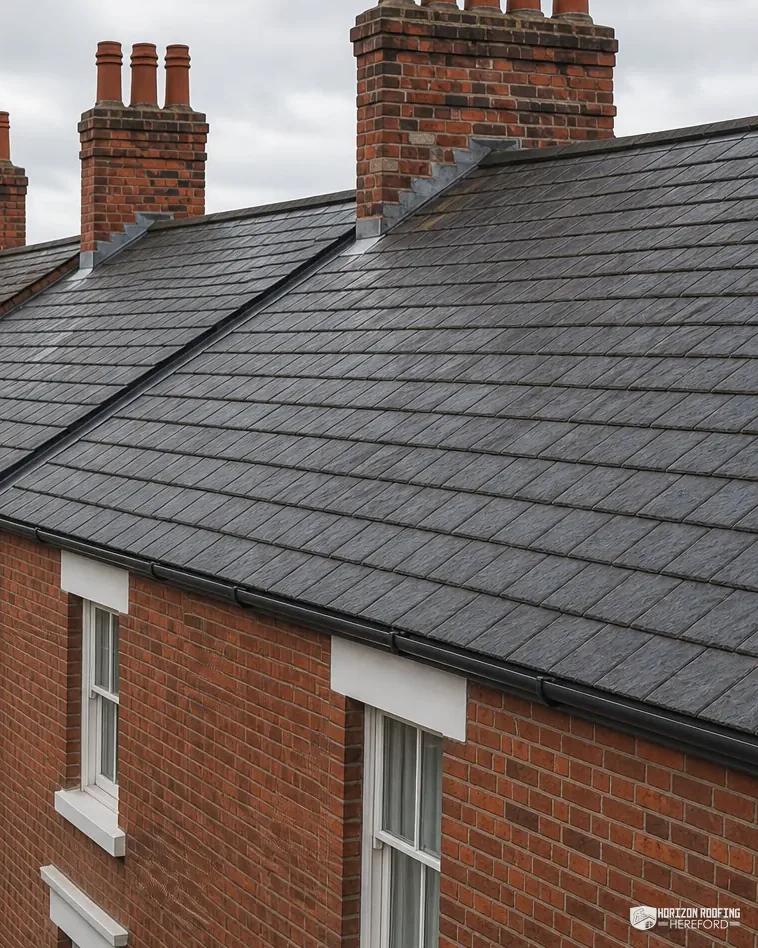
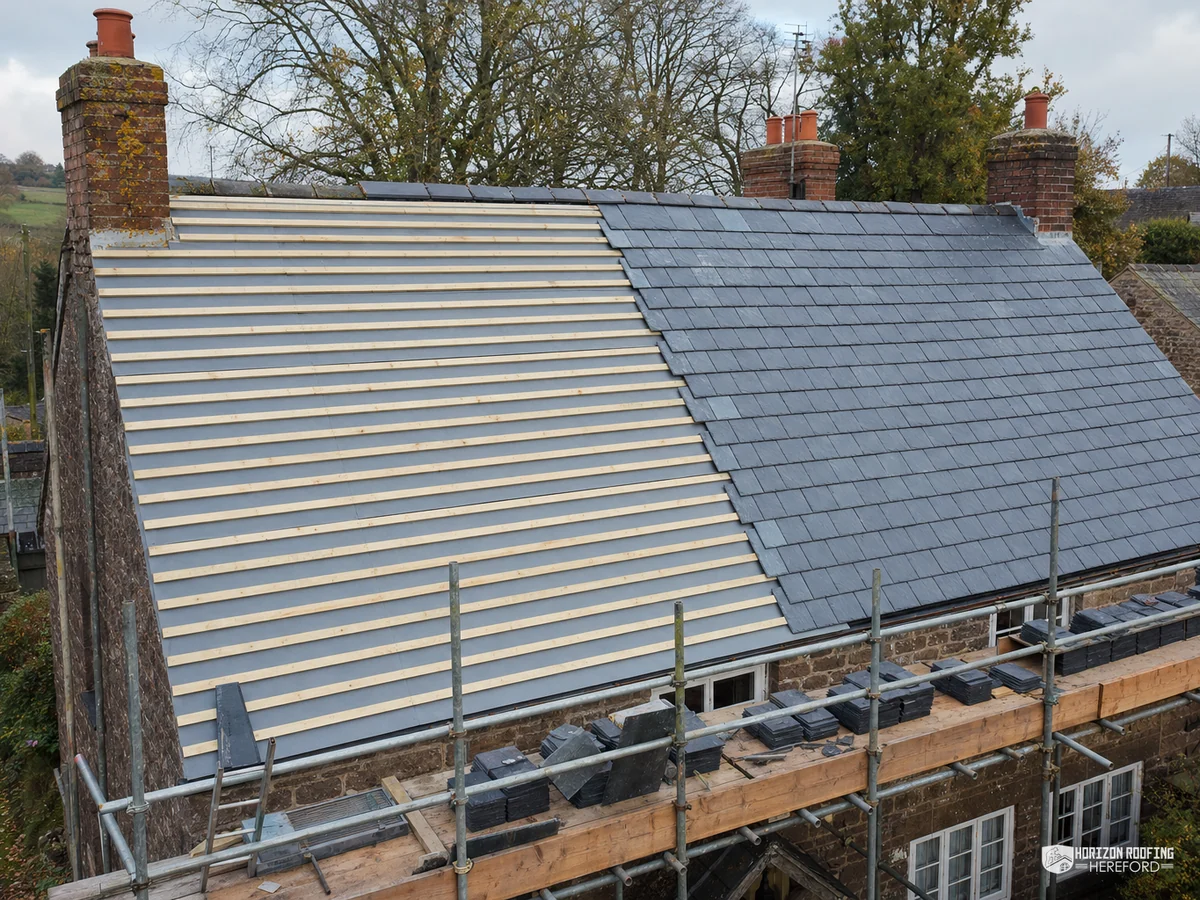
  • Slate roofs and chimney stacks along a red brick Victorian terrace
    Valley guttersLeaves and failing lead in a valley send run-off into the roof timbers.
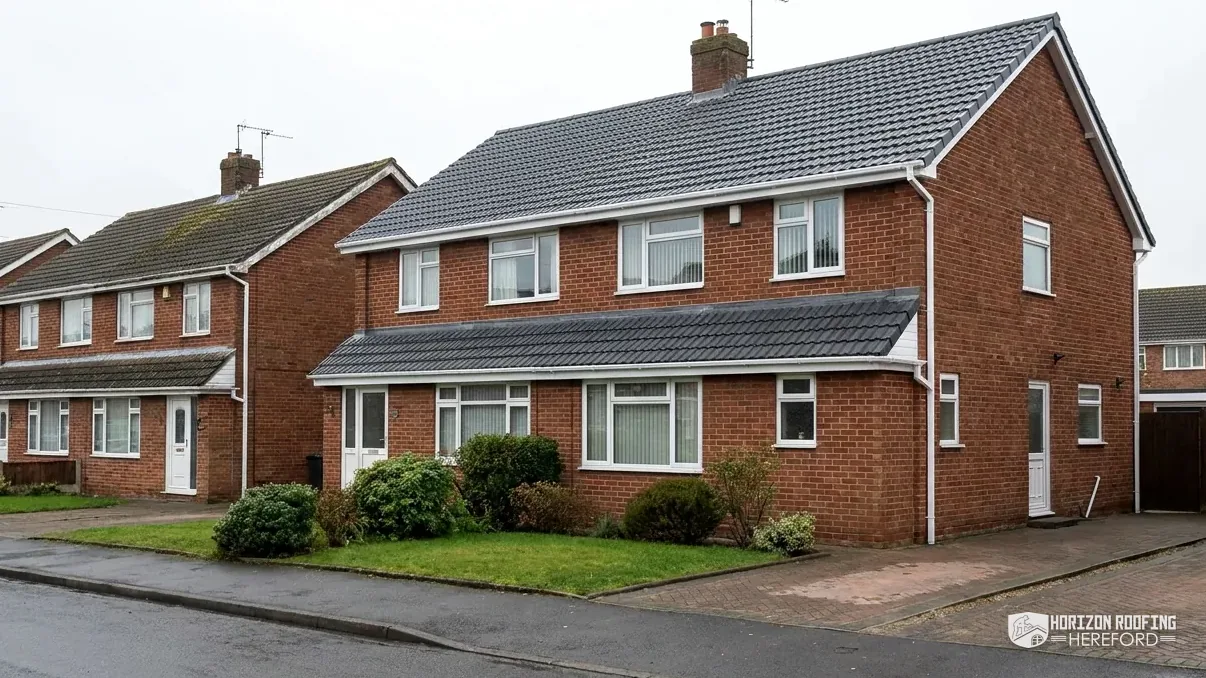
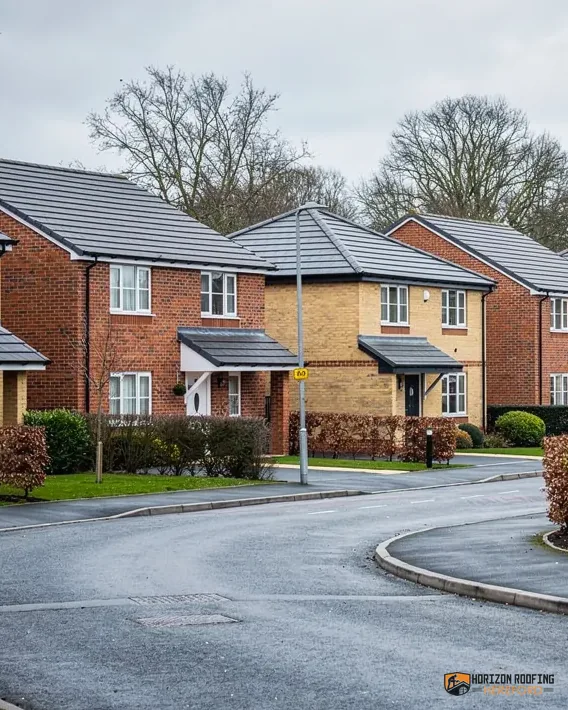
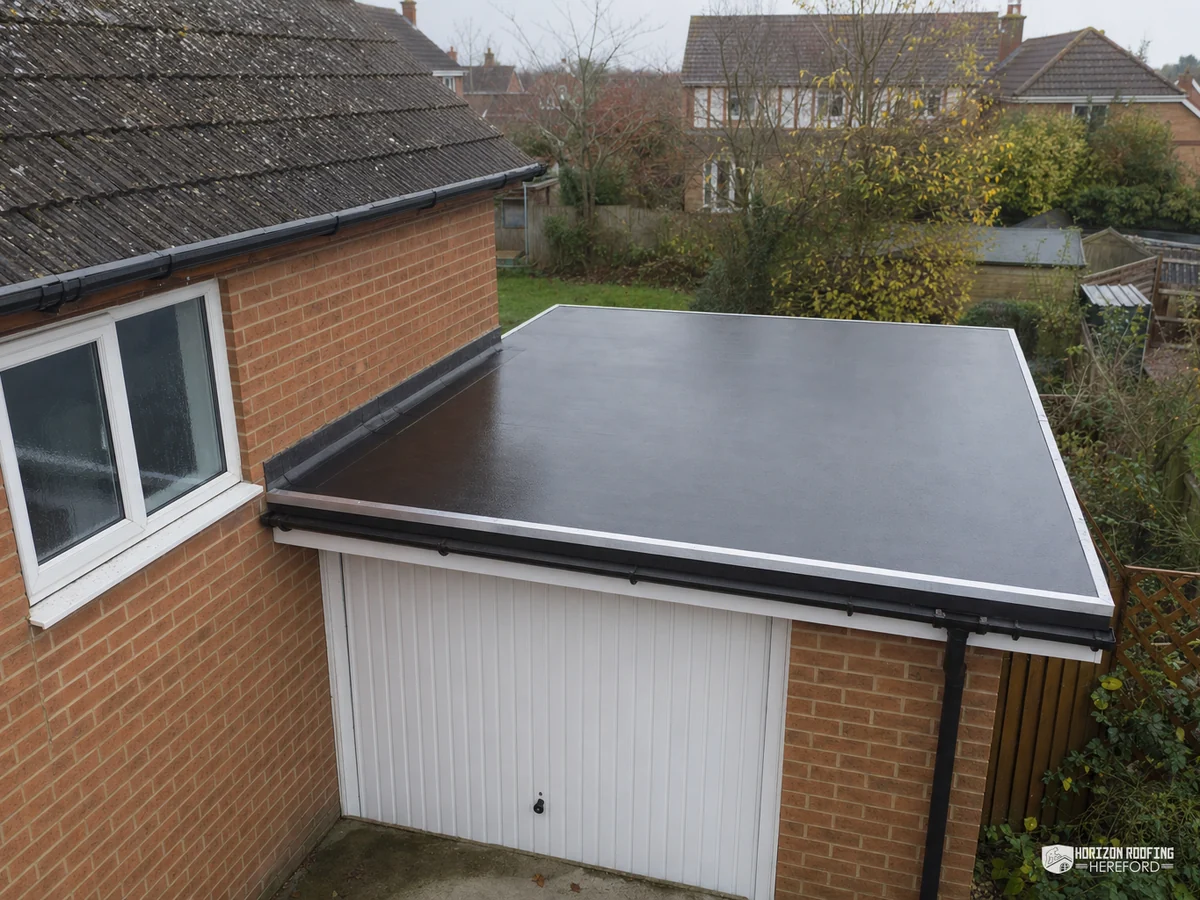
  • Newer homes with grey concrete tile roofs along a curving estate road
    Verges on later housesGable verges on post-war houses and bungalows lose their bedding to the wind.

Sling and the lanes around it

Sling on a street map, with a dashed circle around the town and the nearest towns we cover. Tiles © Esri; map data © Esri, HERE, Garmin, OpenStreetMap contributors.

Sling roofs, valley first

Valleys, slates and gable verges on the roofs around Sling

The survey starts in the valley, the channel that drains a pair of slopes, moves up onto the slates themselves, and ends at the gable verge, where the wind meets the open edge of the covering.

A drawn cut-away section through a Herefordshire border house: the front of the main roof is cut open to show the rafters, underlay, battens and slates, beside a black-and-white timber-framed gable. Numbered, from the ridge down: 1 Valley gutter; 2 Slate courses; 3 Verge on the gable.

Fig. 1 Roof section for Sling: valley, slope and gable verge, numbered.

Callout 1 of 3

The valley, where two Sling slopes drain as one

Slopes that meet at an inward angle leave a valley between them. Both slopes drain into it, so it takes the heaviest run-off of any line up there, and it is lined with lead, or with tiles cut to fit and bedded on a board. From the ground the valley hides behind the slopes, which is why we climb and look along it. Leaves, moss and grit settle in the channel, and a blocked channel overflows sideways, under the edge of the covering, instead of running to the gutter.

A brown stain on a ceiling can sit directly beneath a valley while the slopes either side look tight. That is the reason a valley is checked early in the survey, before anyone starts blaming slates.

Lead behaves like a living material. It expands in the sun and contracts at night, so a valley liner has to be laid with room to move, and fixed so it can. Royston Lead's chart lists Codes 4 to 8 for pitched valley gutters; Code 3 is "Recommended for lead soakers only", so it has no place in a valley. We look along the liner for creases that have cracked, splits where someone has walked, and laps that have lifted. A pinhole is a small fault now and a rotten timber later, so each one is marked and photographed.

Beneath the lead is the valley board, the timber that carries it. If the liner has leaked for a long time, the board can go soft, and the rafters beside it can be damp. We probe the board where the lead is lifted, and the board gets a photograph, so the repair you are quoted is the repair the timber needs. Cleaning a valley out and refixing a lifted lap is one job. A new liner on the existing board is another, and a new board under a new liner is a third. The survey says which applies, with pictures beside the reasoning.

Moss and grit are lifted out by hand. A high-powered jet wash is something Marley calls "not recommended" for slate and tile, and a lead liner would fare no better under one.

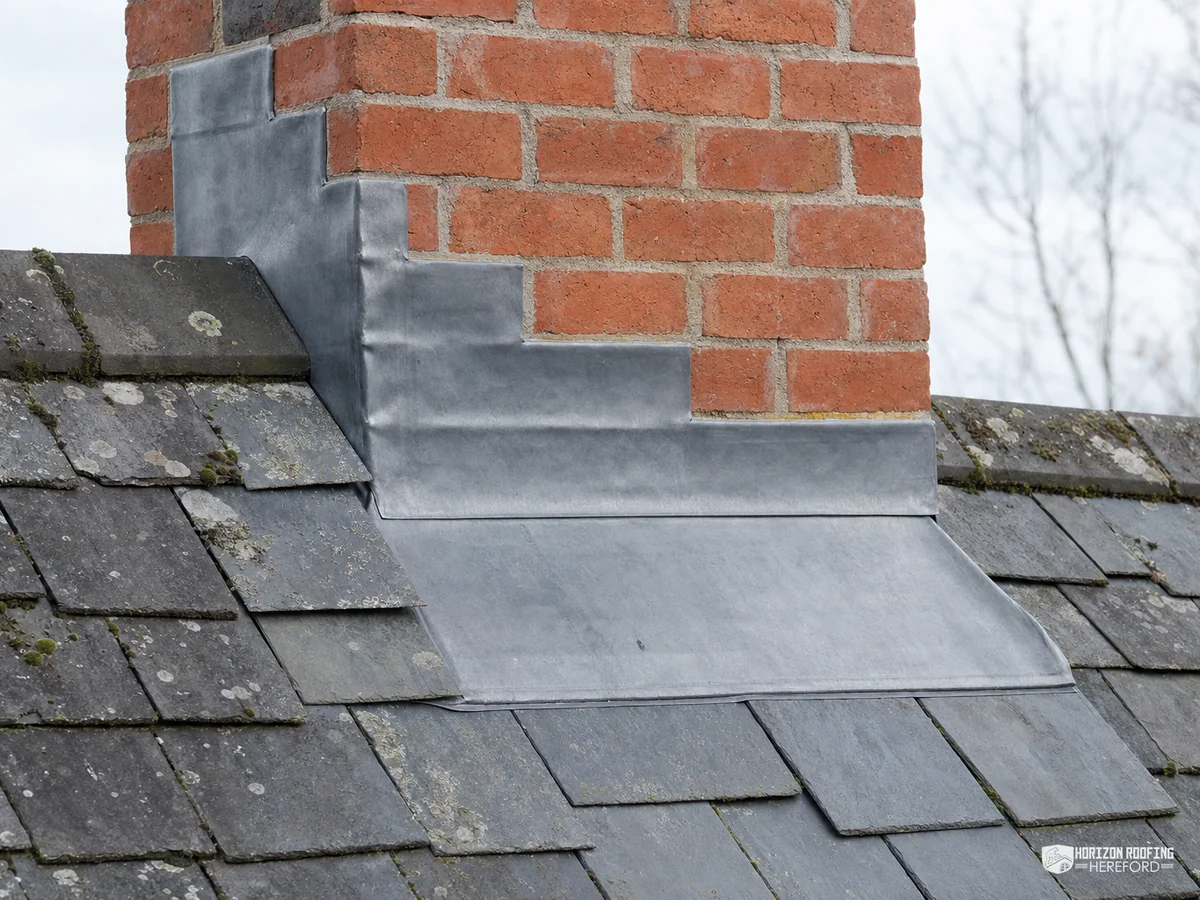
For other leadwork, such as flashings and soakers, see our lead roofing page.

A stain with no obvious source

How can a Sling ceiling stain sit under a roof that looks sound?

A valley collects run-off from two slopes, so a split in its lead or a blocked channel can leak while every slate beside it looks tight. The stain appears below the angle, which is why the valley is checked before anything is stripped.

A brown stain on the ceiling can sit under a valley while the slopes look tight.

Fig. 2 The valley, drawn close

Callout 2 of 3

Slipped slates, pitch limits and slate lifespans

Slates hang in courses, each row overlapping the rows below. A slate slips when its fixing gives way, and the gap it leaves lets rain reach the battens, the timber strips behind the course. Slipped slates are counted slope by slope, with the rows noted. One slipped slate can be reset or replaced in a visit. Several slipped slates across one slope tell us the fixings are failing along the whole course, and the repair plan changes with that finding.

Pitch limits how a slate can be fixed. Cupa, a slate maker, says BS 5534:2014+A2:2018 "also indicates that the minimum roof pitch for natural slate is 20 degrees in the case of a project situated in an area with moderate exposure and with a slate 500mm long and a 115mm overlap", and it excludes hook fixings on slopes under 25º. So the pitch of the slope is measured before we say how a replacement slate would be held.

Many slate roofs are double-lapped, a layout explained in the chips below. SPAB advises going to the quarries to test any claim that matching slate is unobtainable or delayed. That is why matching is explored before a different material is suggested. A full re-roof comes into the quote only where the survey shows repair cannot hold, and a roof with sound slates is repaired instead. When a slope does have to be re-slated, the old slates are sorted first: whole ones can go back, cracked ones are rejected, and the shortfall is made up from matching stock.

On lifespan, HomeBuilding puts Welsh slate at "100+ years", Spanish natural slate at "75-100 years" and reclaimed Welsh slate at "50-80 years". SPAB adds that "the life of a well-slated roof is likely to be more than 100 years". Those are ranges for slate in good order, and a particular roof is judged by what the survey finds.

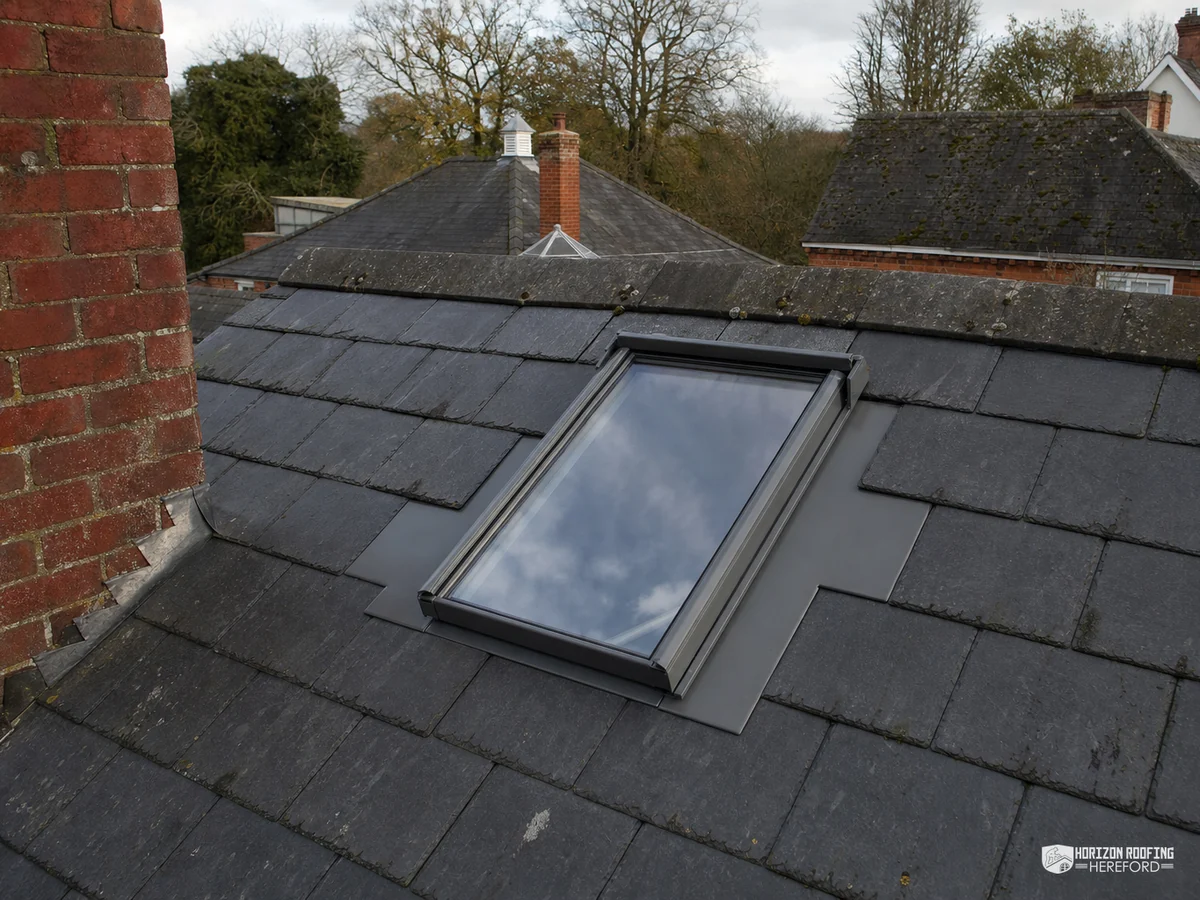
If you are thinking of fitting a roof window into a slate slope, read the planning guide for roof windows first. Our slate roofing page covers re-slating and repairs.

Slating terms used in this chapter

Headlap
The overlap of each slate over the one two courses below
Double-lapped
Each slate covers the joint below and overlaps the course beneath
Hook fixing
A metal hook holding a slate's lower edge instead of a nail
Course
One horizontal row of slates across the slope
Batten
A timber strip nailed across the rafters to carry slates
Fig. 3 The slopes, drawn close

Callout 3 of 3

Where a Sling covering meets the gable

Our last stop is the gable verge, where tiles or slates finish over the end wall. The Victoria County History's 1996 volume on the Forest of Dean says the hamlet called Sling developed in the 20th century around a crossroads, that four pairs of council houses went up on the Coleford road in 1923, and that it "grew considerably after the Second World War with the building of large numbers of council and private houses and bungalows". Many gables of that age finish with edge units bedded on mortar above a strip known as the undercloak, and that bedding is the part the wind works at first. We look for edge units that have lifted, for bedding that has crumbled out of the joint, and for dark streaks down the gable wall below the line. From the loft hatch, damp marks along the wall plate or at the rafter foot nearest the gable give the first clue.

The Clearwell Conservation Area lies close to Sling, so a house here may or may not sit within it; Forest of Dean District Council's map settles that, and Article 4 questions for your road go to that council too. Under section 7 of the Planning (Listed Buildings and Conservation Areas) Act 1990, works to a listed building that would alter its special character need consent. Closest on the national list is the Mortuary Chapel, Grade II (list entry 1186330, first listed 24 September 1984). A listed house keeps its permitted development rights, with consent required in addition.

For building control, Forest of Dean District Council Building Control is on 01594 812315, or a registered building control approver may be engaged in its place. A job that only repairs a verge is unlikely to raise a building control question, but a larger re-cover might.

A verge can go back on fresh mortar with each edge unit also clipped or screwed, or converted to a dry verge system made to BS 8612, which holds the edge mechanically without any mortar. The choice depends on the covering and on how the gable reads from the lane, and the survey sets it out. Where the bargeboard behind the verge has gone soft, that board is replaced while the scaffold is up, so the new edge has sound timber to fix into. A verge takes wind-driven rain from its open side, so its bedding and fixings are photographed along their full length before any price is written.

Our roof repairs page lists the smaller jobs at the verge.

The verge on a Sling gable

SoundEdge units tight, bedding full and dry
Needs workEdge units lifted, mortar lost, dark streaks below

Sling roofs: slates, valleys and gable verges

Can one slipped slate on a Sling roof just be reset?

Sometimes. A single slate that has slid can be refixed or replaced in a visit, and the repair is photographed. If the course around it has loose slates too, the fixings along that row are failing, and resetting one slate would leave the next to go. We check the neighbouring slates by hand and from above before saying which repair applies, and the quote reflects what the photographs show.

Why does a ceiling stain in Sling sit under a valley and not under a slate?

A valley collects run-off from two slopes, so a split, crease or blocked channel there can leak while the slates beside it look tight. The stain forms below the angle, not below the slate. We climb up to the valley, look along the lead, probe the board beneath where it has lifted, and show you what we find before anything is stripped.

Can the existing slates be reused when a Sling roof is re-slated?

The sound ones can, once they are sorted by size and condition, and sound slates are worth keeping. Reclaimed Welsh slate is rated by HomeBuilding at "50-80 years". Where replacements are unavoidable, we choose slate to suit the old in size and colour. SPAB tells owners to test any story that slate is unobtainable by asking the quarries, and that enquiry comes first when a change of material is raised.

Does the Clearwell Conservation Area affect a house in Sling?

It depends on the address. The conservation area lies close to Sling, and Forest of Dean District Council holds its boundary map. Ask the council which side of the line your house sits on, and put the Article 4 question to it as well. The planning guide has the roof window and dormer rules, including what changes in a conservation area.

Is a Sling roof too shallow for slate hooks?

Cupa, the slate maker, says no hooks below 25º, and that the minimum pitch for natural slate under BS 5534 is 20 degrees for moderate exposure with a 500mm slate and a 115mm overlap. A roof below those limits needs a different fixing or a different covering, so the survey starts by measuring the pitch and records the figure beside the photographs, with a copy of both for you to keep.

Does stripping and re-slating a Sling roof need an application?

Sling is in England. The Planning Portal's test asks whether the work touches under 25 per cent of the building envelope and under 50 per cent of the roof; stay below both and the Portal does not normally ask for one. Beyond that, ask Forest of Dean District Council Building Control. If a scaffold stands on the highway, we arrange the licence with our scaffolder, and Gloucestershire County Council's fee is £145 for a minimum of 28 days, then £36 per 7 days to extend.

Have the Sling valleys and slates checked

Send the address with a line about the fault, and we will go up, photograph it and set one total price.

10-year workmanship guarantee, in writing