
01432 610152 Get a quote Call 01432 610152

Roofers in Ledbury

Roofs in Ledbury's old streets and in the homes beyond them, repaired and renewed.

We read each roof from the ridge down, photograph the faults and finish the survey with one written total.

Get a free quoteCall 01432 610152

Grade I roofs and a conservation area

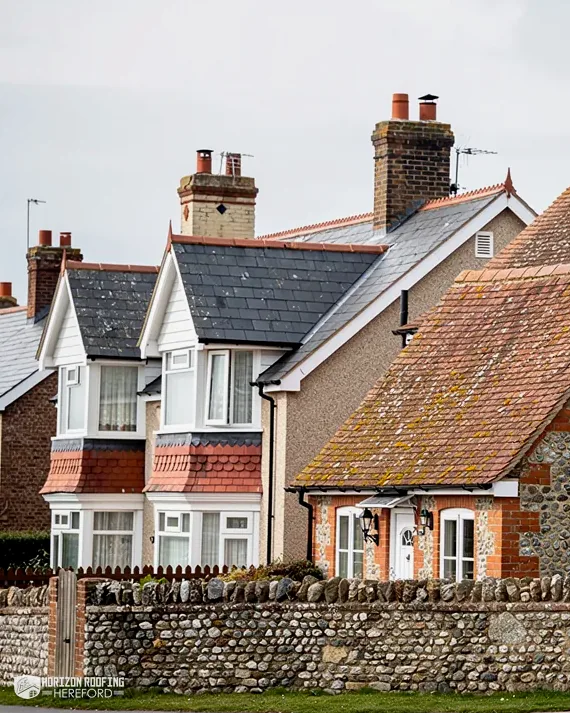
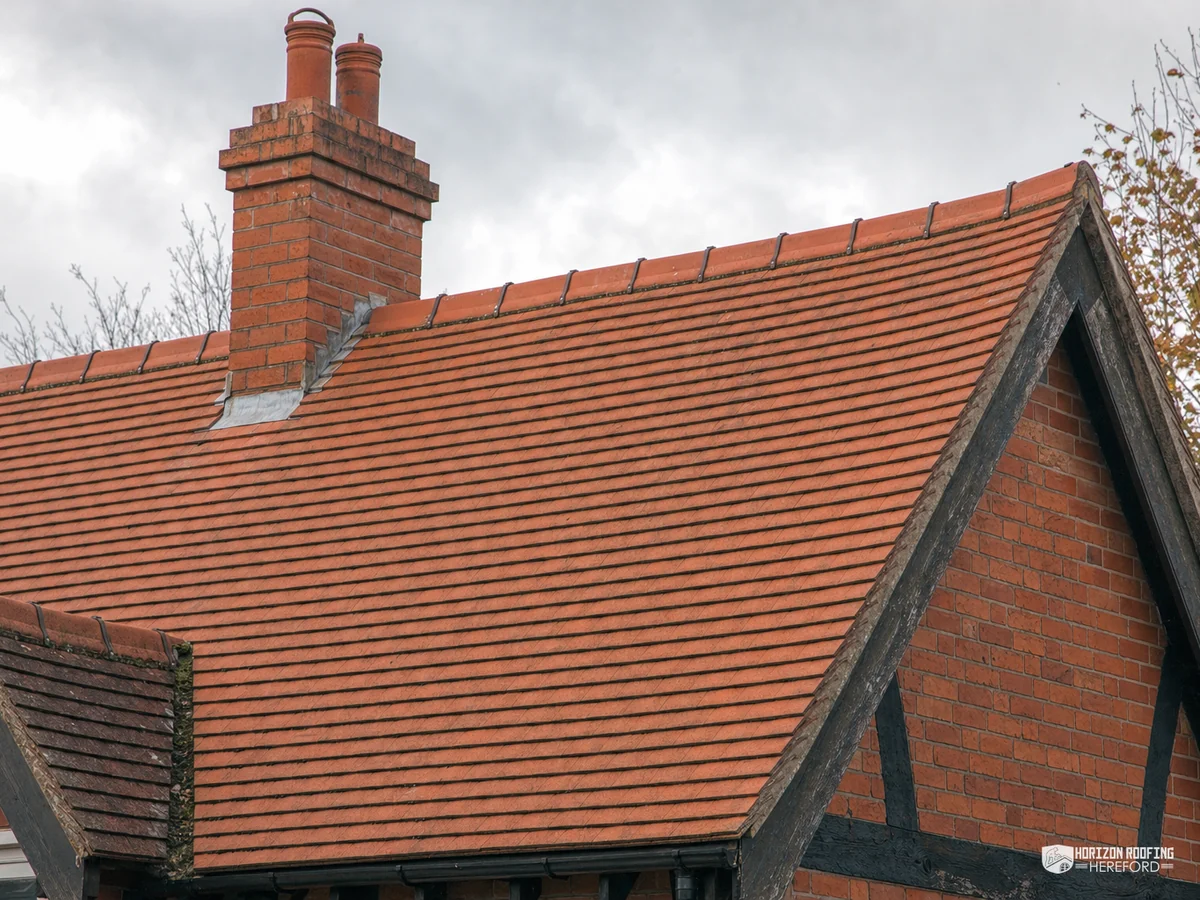
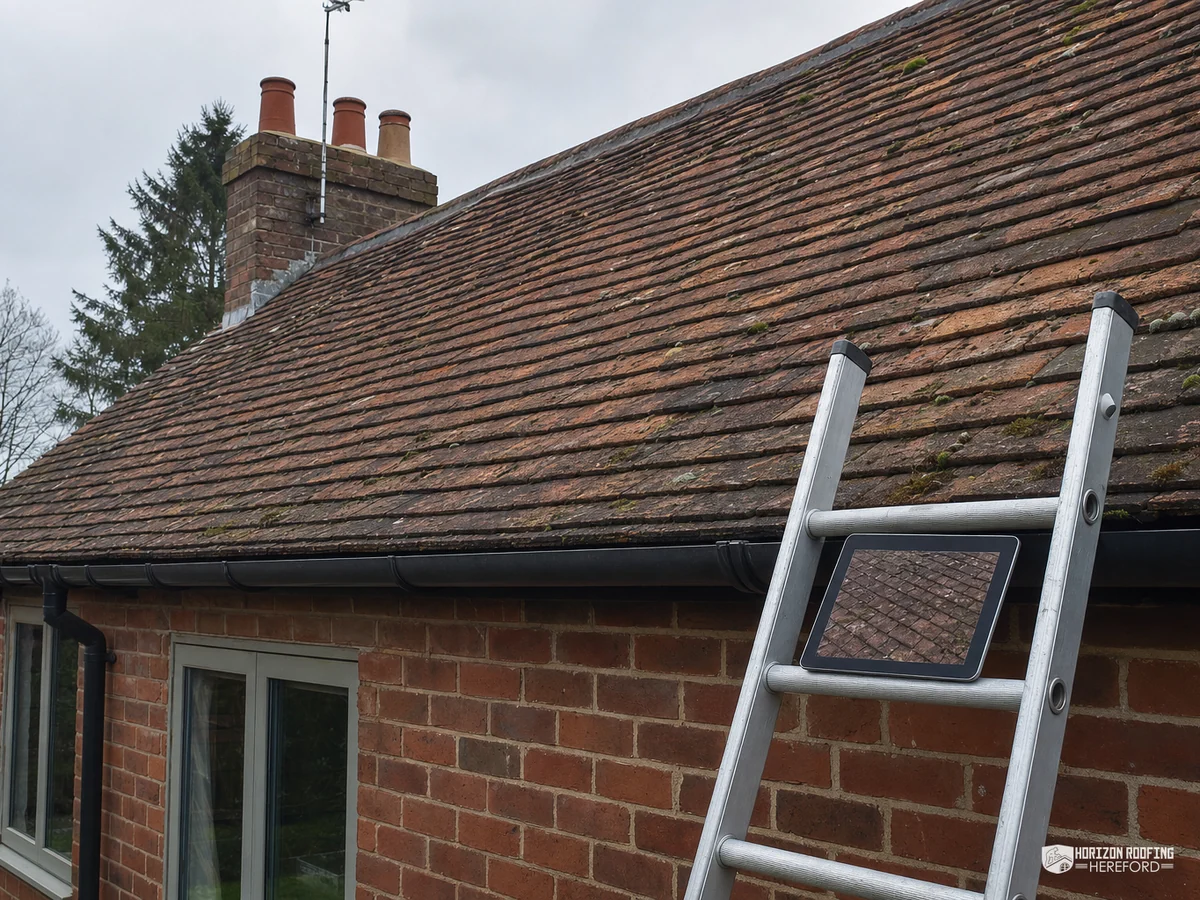
  • Older cottages with weathered clay tile roofs and brick chimneys behind a flint wall
    Listed town centreSt Michael's church, Market House and Ledbury Park are all listed Grade I.
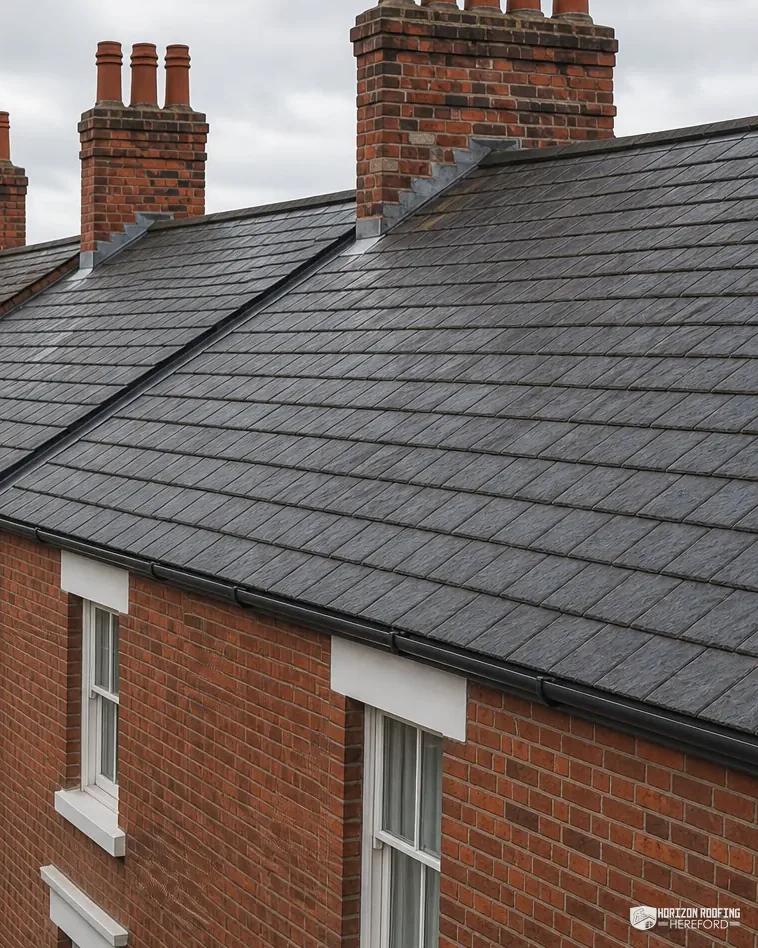
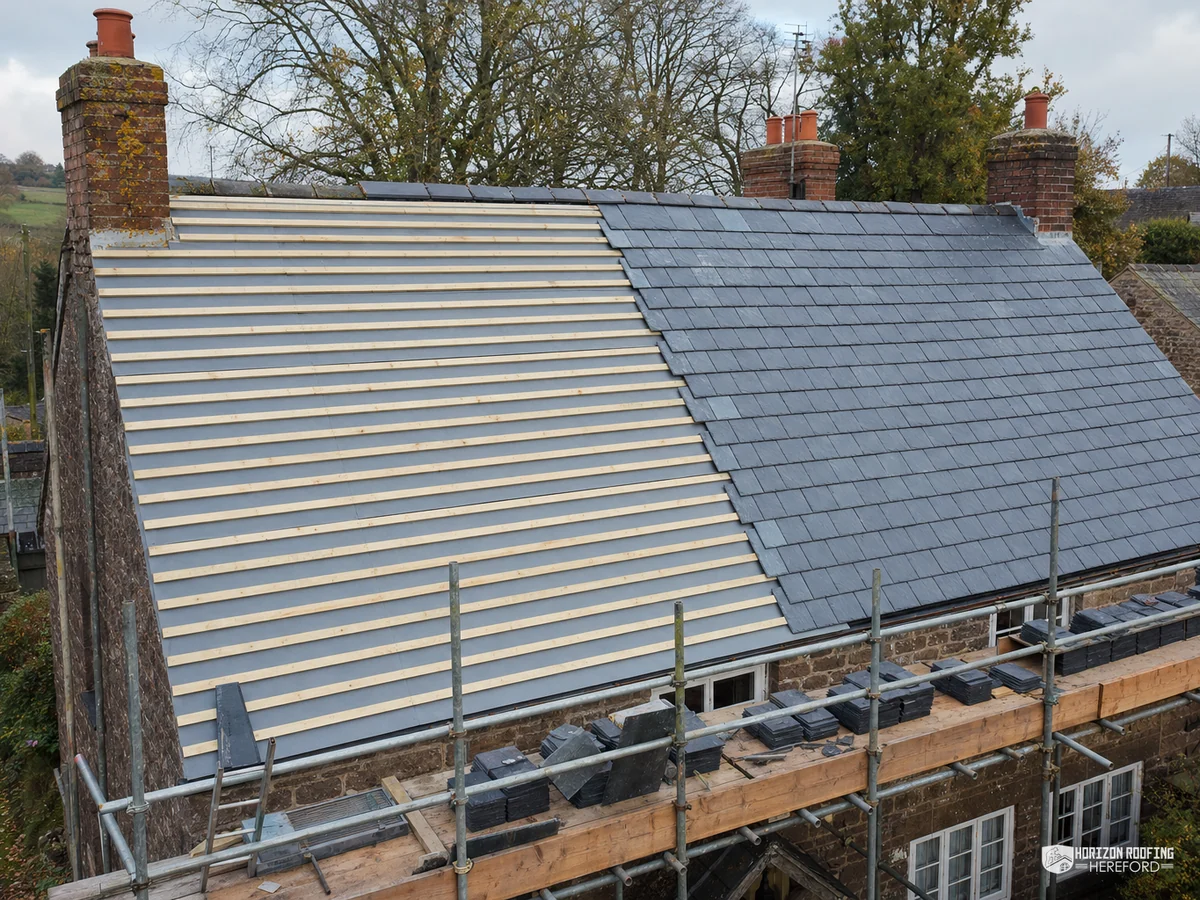
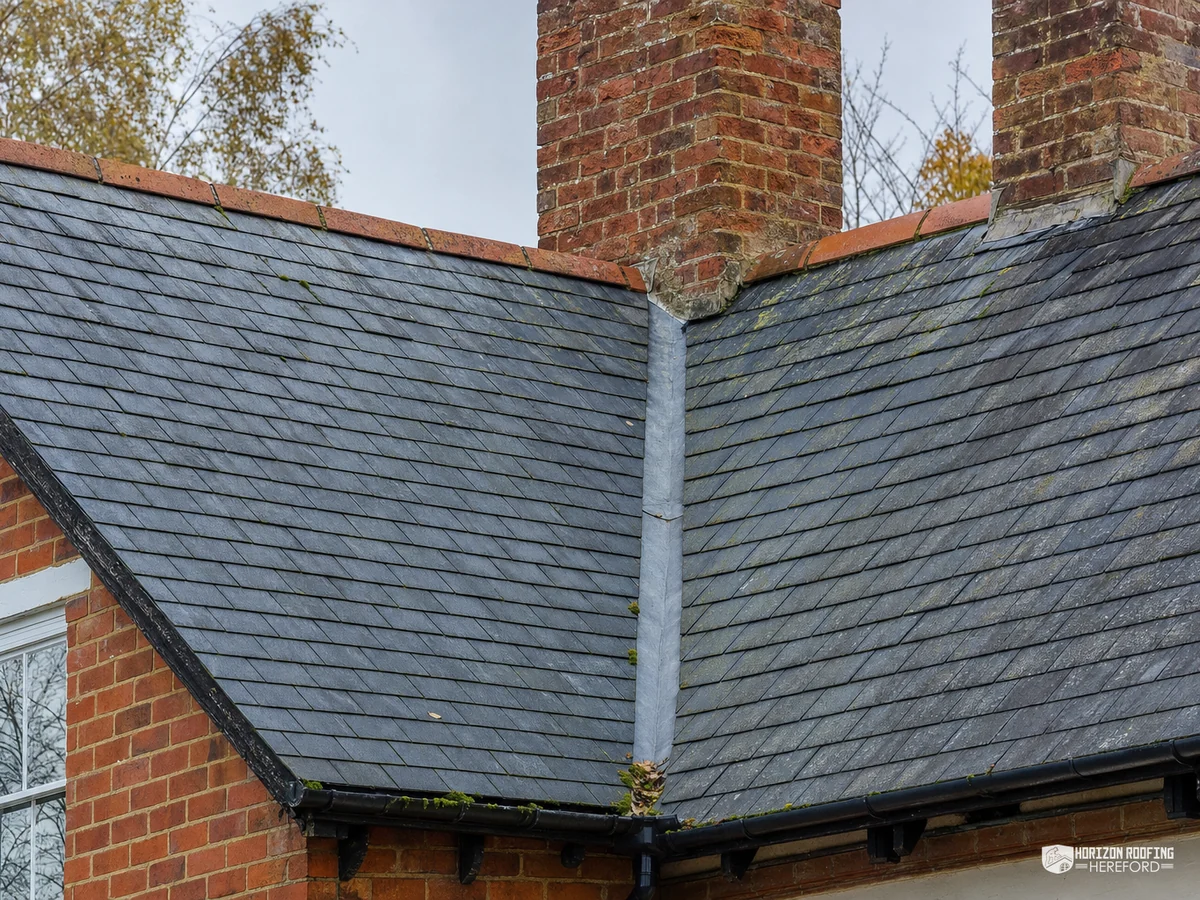
  • Slate roofs and chimney stacks along a red brick Victorian terrace
    Timber-framed town housesThe 1932 inventory describes monuments here as timber-framed, under tiles or slates.
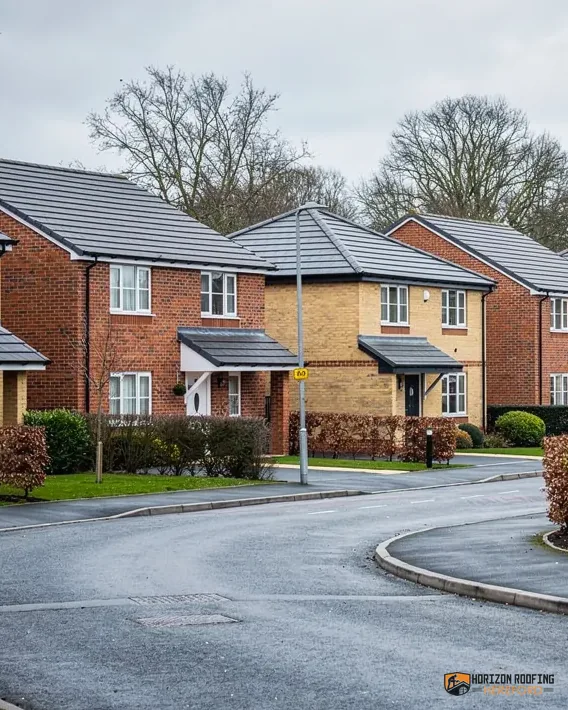
  • Newer homes with grey concrete tile roofs along a curving estate road
    Hills on the horizonThe Malvern Hills National Landscape reaches part of the area round the town.

Finding Ledbury

Ledbury on a street map, with a dashed circle around the town and the nearest towns we cover. Tiles © Esri; map data © Esri, HERE, Garmin, OpenStreetMap contributors.

The Ledbury roof, read from the street

Ledbury surveyed in three callouts: the timber frame, the chimney stack and the designated slope

We begin with the timber-framed houses and the listing rules, move to the chimney and any wall you share with a neighbour, and finish at the slope, where the conservation area and the Malvern Hills designation come in.

A drawn cut-away section through a Herefordshire border house: the front of the main roof is cut open to show the rafters, underlay, battens and slates, beside a black-and-white timber-framed gable. Numbered, from the ridge down: 1 Listed frames; 2 Stack and wall; 3 Designations.

Fig. 1 Roof section with the three Ledbury callouts numbered along it.

Callout 1 of 3

Timber frames, Grade I landmarks and the listing rules

In 1932 the Royal Commission surveyed Ledbury parish for its Herefordshire inventory. For the monuments it numbered 8 to 89, it describes timber-framed walls and roofs "covered with tiles or slates". That reading concerns those monuments and leaves open what any later house in the town is wearing. It does tell a roofer where to begin: with a frame that has been moving for centuries and a covering laid against it, whether tile or slate.

The list in and around the town is long, with a Grade I church, a Grade I market hall and a Grade I house among it. Three are Grade I: St Michael and All Angels church, its detached bell tower included (list entry 1301825), Market House (1349392) and Ledbury Park (1180078), each first listed on 18 September 1953. The Steppes is Grade II* (1082838). Each list entry gives the building, its grade and its date, and it is the record to check against your address. Any Ledbury house might be listed, so before a quote is written we help you check, because the answer decides which route the work takes.

Where a house is listed, anything that alters its special architectural or historic interest needs consent under section 7 of the Planning (Listed Buildings and Conservation Areas) Act 1990. The house retains its permitted development rights, with the consent layered on top. Covering, fixings and method are agreed with Herefordshire Council up front, so nothing is argued after a tile has come off.

A listed roof starts from like-for-like repair. HomeBuilding gives Welsh slate "100+ years", so sound old slates are worth sorting and refixing before new ones are bought, and any new slate that is unavoidable is matched in size and colour to the old. The photographs we take of the existing covering go into the consent paperwork.

Churches have a separate gate. Exemption turns on who owns the building and whether services continue. Where the Church of England owns it and it is in use, the faculty jurisdiction replaces listed building consent. Churches in use of the United Reformed, Methodist and Roman Catholic denominations sit outside listed building consent likewise, and so do Baptist Union churches a Schedule 1 trust corporation holds. Unitarians, Quakers and any closed church do not qualify. Start by asking the body that governs the church. Our listed and heritage roofing page covers surveys and repairs on protected buildings.

Settled before a listed Ledbury roof is touched

  • Whether the building is listed, and its grade
  • Whether the work touches its special interest
  • Whether a church is exempt while in use
  • Which materials match the existing roof
  • Who signs off the method

On a listed roof, the consent and the method are agreed before the first tile comes off.

Fig. 2 Timber frames, drawn close

Callout 2 of 3

Stacks, shared walls and scaffold on the street

A chimney stack takes weather on all four faces, and where it rises from a wall shared with next door it takes legal attention as well. The Party Wall etc. Act 1996 governs work such as cutting off a projecting chimney breast, and it is the building owner, not the contractor, who must give notice. At least two months' notice is required for work to a party wall (section 3), and at least one month for building on the boundary line or digging close to a neighbour's foundations (sections 1 and 6). Fourteen days of silence from the neighbour count as dissent, which brings in a surveyor (sections 5 and 10). Written consent from the owners and occupiers avoids the dispute (section 3(3)(a)). Ledbury party wall questions belong with a party wall surveyor rather than with building control.

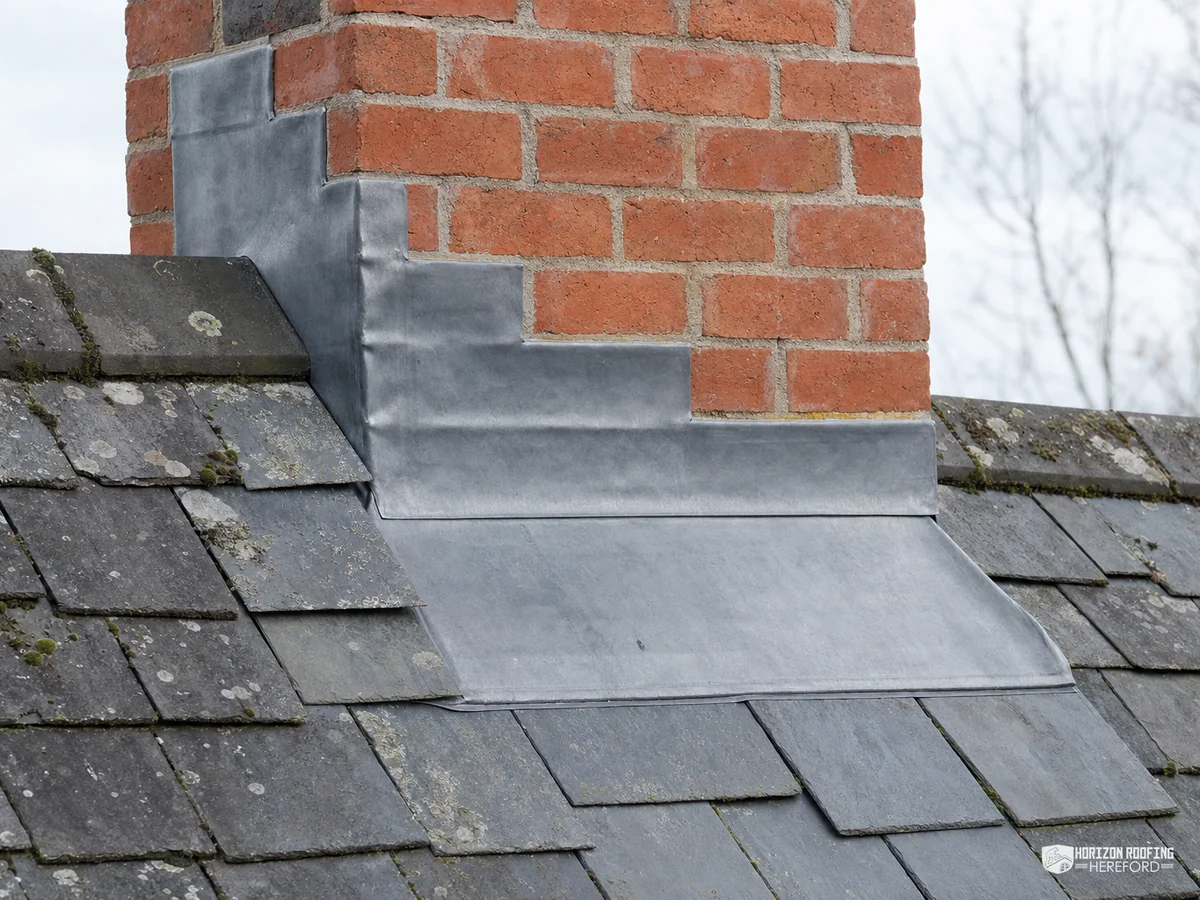
Taking a breast out is a Building Regulations matter too. The Planning Portal says "Building regulations approval will always apply when removing chimney breasts as they are part of the building's structure." A stack that stays has checks of its own. Where the chimney meets the roof, lead keeps the junction watertight: a flashing is tucked into a mortar course and dressed over the covering, and Royston Lead's table lists Codes 4, 5 and 6 for flashings. MyJobQuote says correctly fitted lead flashing "can last for over 80 years", so sound lead is kept and lifted lead is replaced, never coated over with mastic.

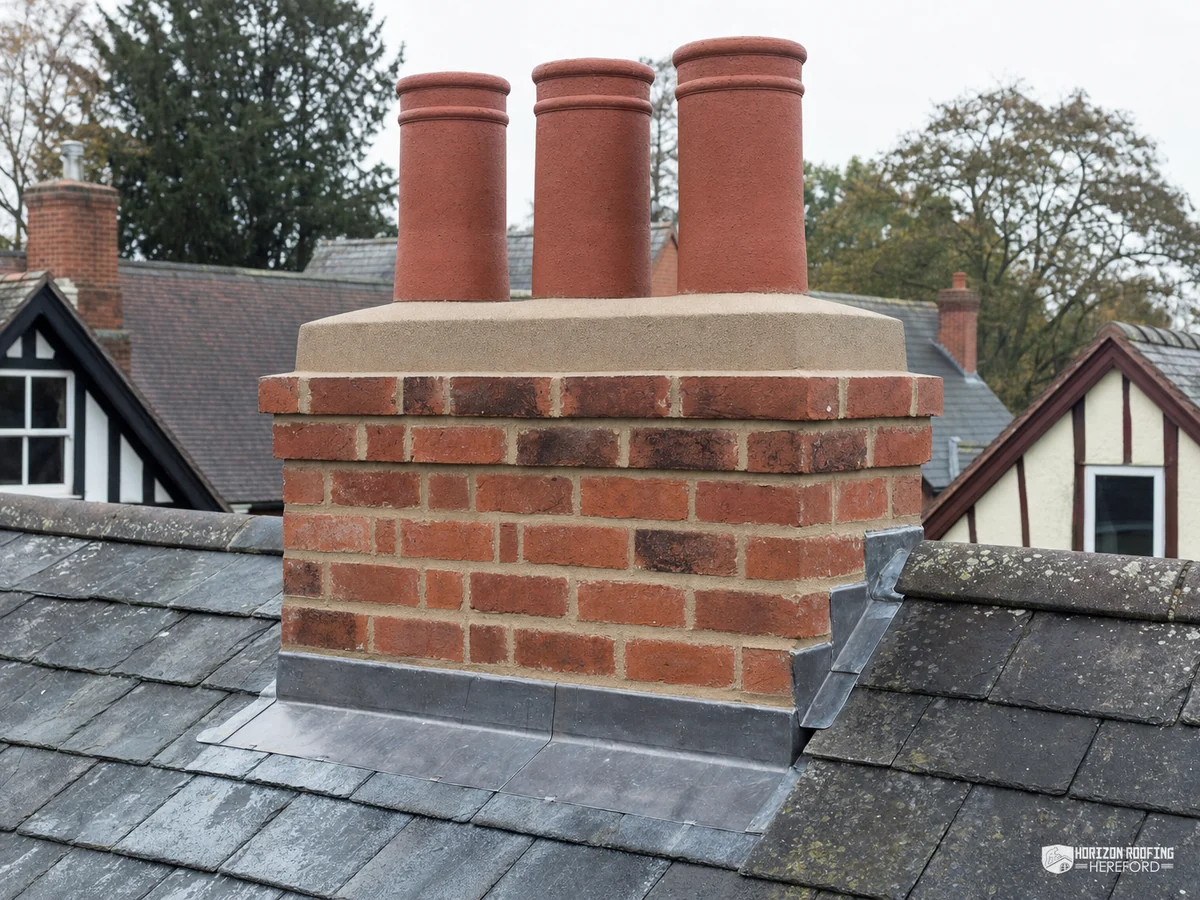
Herefordshire's black-and-white buildings carry stacks that the stone atlas describes as "commonly of local sandstone". Whatever the stone or brick, we examine the pointing, the flaunching (the mortar fillet bedding the pots) and the pots, and send photographs of each face of the stack, because nobody on the pavement can see the top. A loose pot or cracked flaunching is a falling hazard over a public pavement, which is why a stack above a street is checked early in a survey.

A scaffold on the public road needs a licence under section 169 of the Highways Act 1980. We arrange the licence with our scaffolder, and Herefordshire Council wants the application at least 10 days before erection. Our chimney repairs page covers repointing, rebuilding and removal in more depth.

What sets the price of a Ledbury stack job

Height and access
Tower or scaffold, and whether the road is involved
Condition of the stack
Repointing, rebuilding or a full take-down
Lead
Flashings and back gutter, repaired or renewed
Shared wall
Whether party wall notices add time

One written total price, never itemised.

Fig. 3 Chimneys, drawn close

Callout 3 of 3

The conservation area, Malvern Hills land and roof openings

The slope is where the area rules show. Ledbury has a conservation area, designated in 1995 on Herefordshire Council's list of the county's 64. Check that boundary before any change to how your Ledbury roof looks, so use the council's own list and map to place your house, and check whether an Article 4 direction applies with Herefordshire Council.

The Malvern Hills National Landscape, the new name for an AONB, extends over part of the surrounding area, though not the middle of the town. It is a designation and not the planning authority: Herefordshire Council decides applications. In England that designation, like a conservation area, matters for a dormer, and the Ledbury owner finds the detail in our guide. A change of covering stays outside both, so a repair in the existing material carries on.

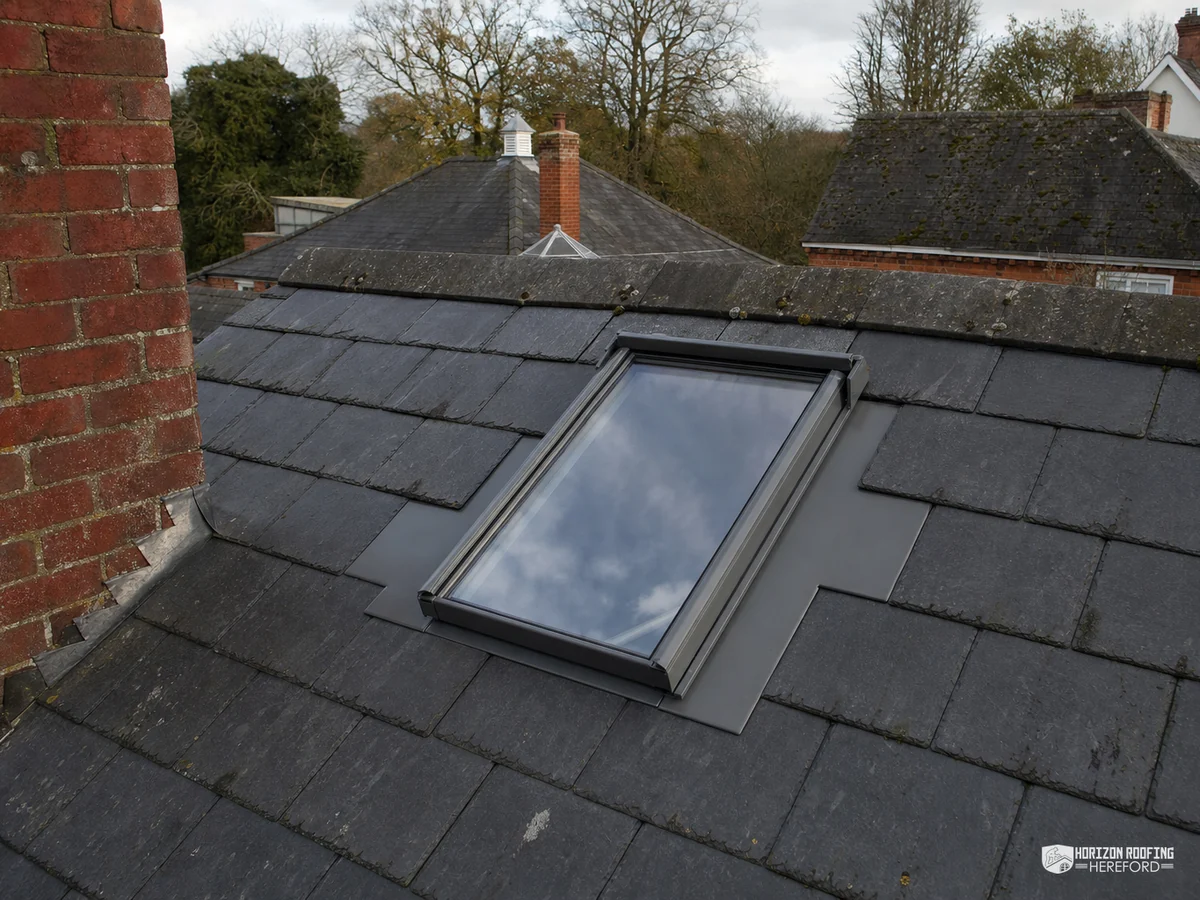
For roof windows and dormers, our planning guide for roof windows sets out the conditions, and it is worth reading before any drawing is paid for. The glazing rating is a separate matter: AD L 2021 Table 4.2 gives roof windows 1.4 or WER Band B and rooflights 2.2, and a renovated roof falls under Table 4.3, with a threshold of 0.35 and an improved figure of 0.16. AD L 2026 takes over from 24 March 2027, as Tables 3.2 and 3.3. Our skylights page covers the products.

Reaching 0.16 is not always possible. Paragraph 4.13 of AD L 2021 covers that case: it asks for the lowest feasible U-value that still pays back within 15 years, and generally not above 0.7. A U-value is the rate at which heat passes through a roof, and lower is better. The survey records the rafter depth and the existing insulation from the loft, which shows what can be achieved before a price is written.

Nothing here stops a repair. A slipped course, a failed ridge or a cracked hip tile is mended like for like in tile or slate whichever designation applies, and the photographs record the roof before and after the work.

Herefordshire Council runs its own Building Control team, on 01432 261938 or at bce@herefordshire.gov.uk, and you may use a registered building control approver instead.

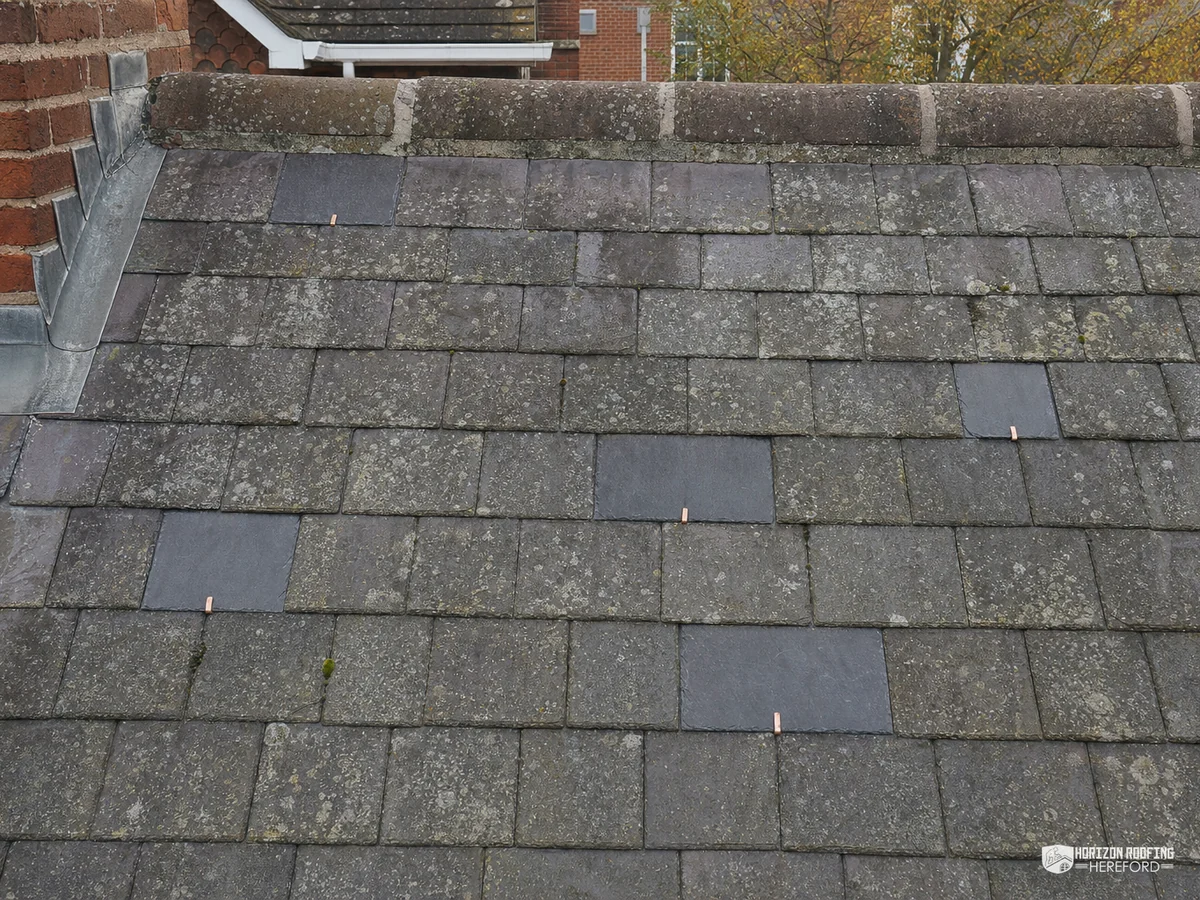
The Ledbury slope, sound and failing

SoundCourses lie flat, laps are tight, no unit has slipped
Needs workSlipped or cracked units, with battens showing in the gaps

Ledbury roofs: listing, party walls and scaffold

What does Ledbury's conservation area change for a roof?

Ledbury's conservation area was designated in 1995, according to Herefordshire Council's list. A dormer inside it goes before Herefordshire Council, while a repair or a re-covering in the existing material does not raise that step. The council's own list and map show the boundary, so find your address on them, and ask Herefordshire Council whether an Article 4 direction applies to it. Roof windows are covered in our planning guide, and a straight repair is not held up by the boundary.

Does the Malvern Hills National Landscape reach my Ledbury address?

It extends over part of the area round the town, though the middle of Ledbury lies outside it. Whether your own address falls inside is a question for Herefordshire Council's maps. Landscape designations are not planning authorities, and Herefordshire Council decides applications here. Where the designation applies, talk to the council before a dormer is drawn. We check your address during the survey and note the answer in the report, so the rules are known before any drawing is made.

Which route covers roof repairs at St Michael and All Angels church in Ledbury?

The church, its detached bell tower included, is listed Grade I (entry 1301825). Should the congregation be Church of England and services continue, faculty jurisdiction covers the repairs, in place of listed building consent from Herefordshire Council. That would change if the building closed for worship. The church's governing body can explain its own process, and our price for the roof follows once the route is known.

Do I serve a party wall notice before a Ledbury chimney breast comes out?

Yes, where the breast sits in a party wall: the duty falls to the building owner, who must allow at least two months between notice and start. A neighbour may consent in writing, and a surveyor enters only after dissent or 14 days without a reply. Building Regulations approval applies as well. We advise on the roof side of the job, and the neighbour's side belongs with a party wall surveyor.

What will Herefordshire Council ask for if scaffold stands on a Ledbury street?

Herefordshire Council's scaffold licence costs £167 for a maximum of one month, £123 per month for extensions, and the council wants 10 days' notice at least. We arrange the licence with our scaffolder, and scaffold is folded into the one total price you are given. Name the road the Ledbury house faces, since the council is asked about busy ones first.

Is Building Regulations approval needed to re-roof a house in Ledbury?

Ledbury is in England, so the Planning Portal's two limits apply: a re-roof touching under 25 per cent of the building envelope and under 50 per cent of the roof is normally free of any application. Approval is needed anyway for a covering whose weight is 15 per cent or more beyond that of the old one. Herefordshire Council Building Control, or a registered building control approver, can confirm which side of the line you sit.

Book a Ledbury roof survey

Tell us about the roof by message or photo, and we survey it ridge first, then set out one total in writing.

10-year workmanship guarantee, in writing