
01432 610152 Get a quote Call 01432 610152

Roofers in Abergavenny

Roof repairs, flat roofs and re-roofs across Abergavenny, from town streets to rear extensions.

Every survey ends with photographs of what we found on your roof and one written total price.

Get a free quoteCall 01432 610152

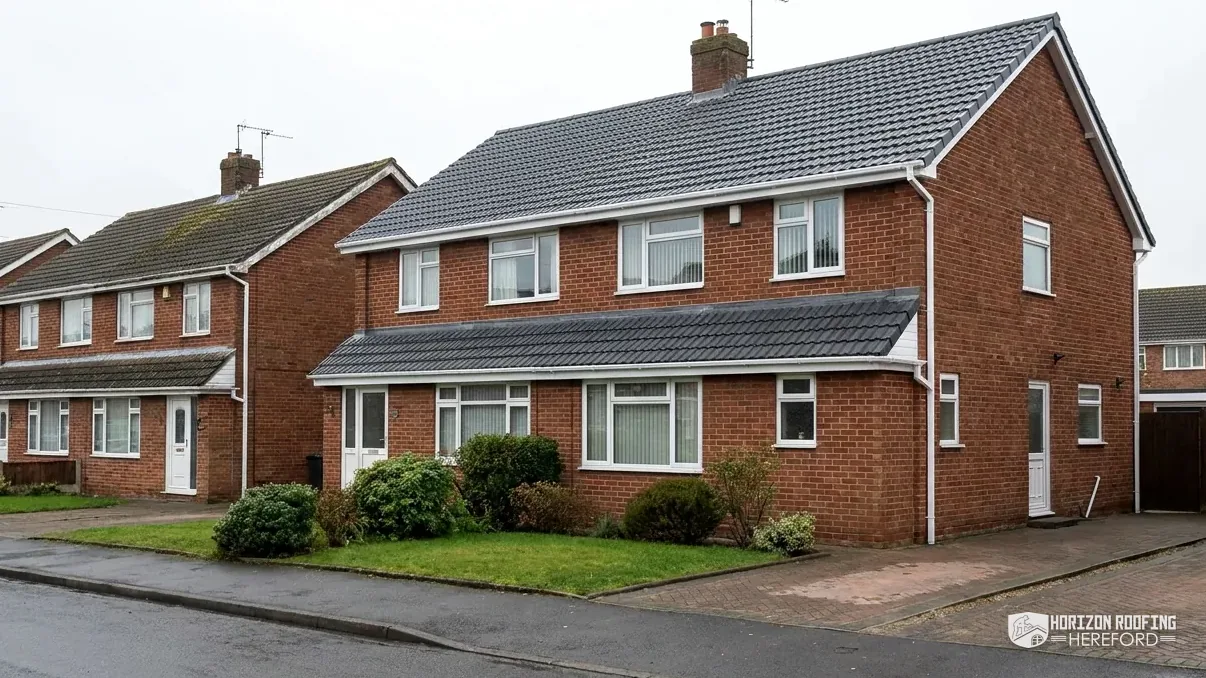
Abergavenny's listed centre and its flat roofs

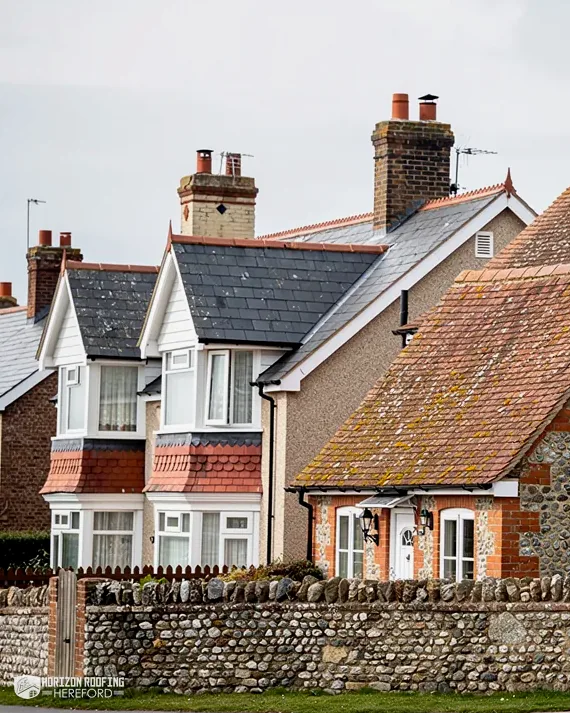
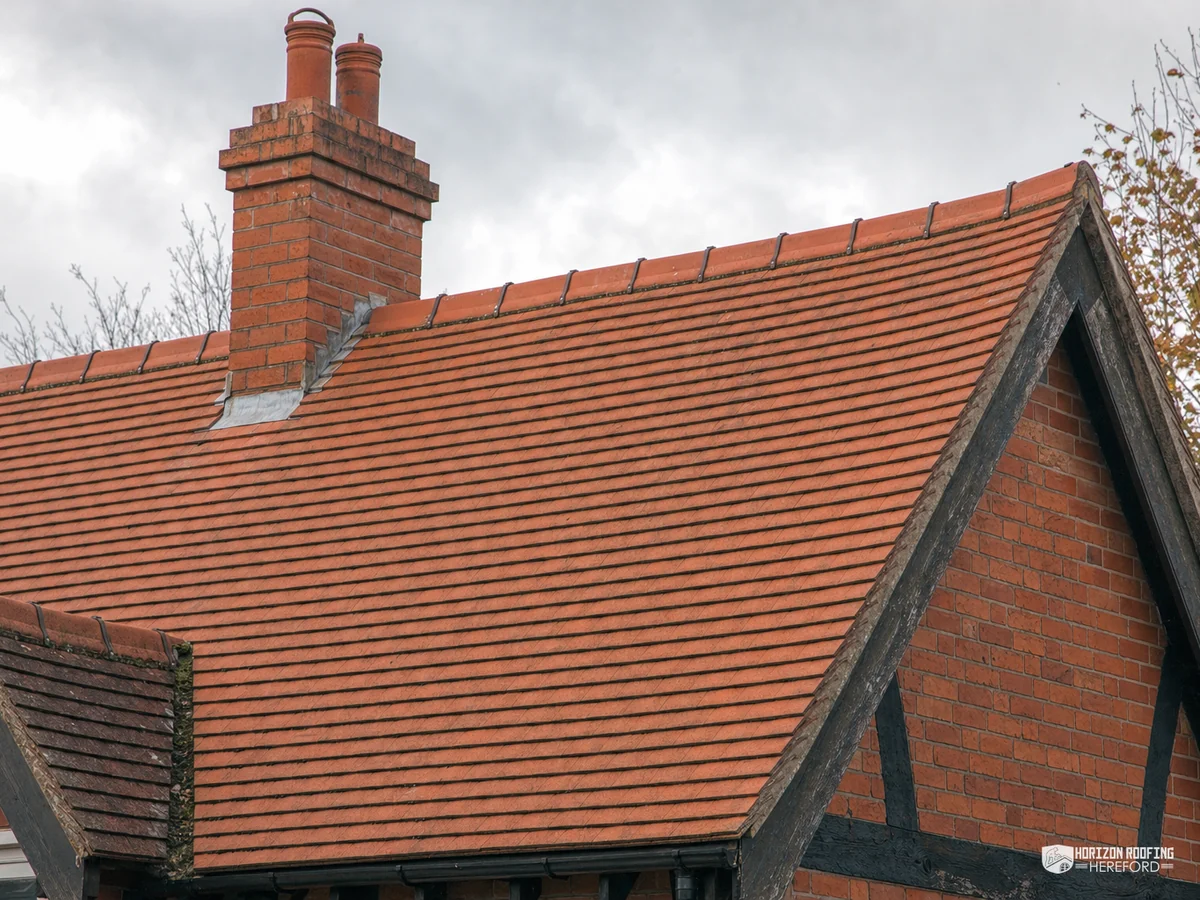
  • Older cottages with weathered clay tile roofs and brick chimneys behind a flint wall
    Listed in the town centreSt Mary's church and the Tithe Barn are listed, so their roofs need consent.
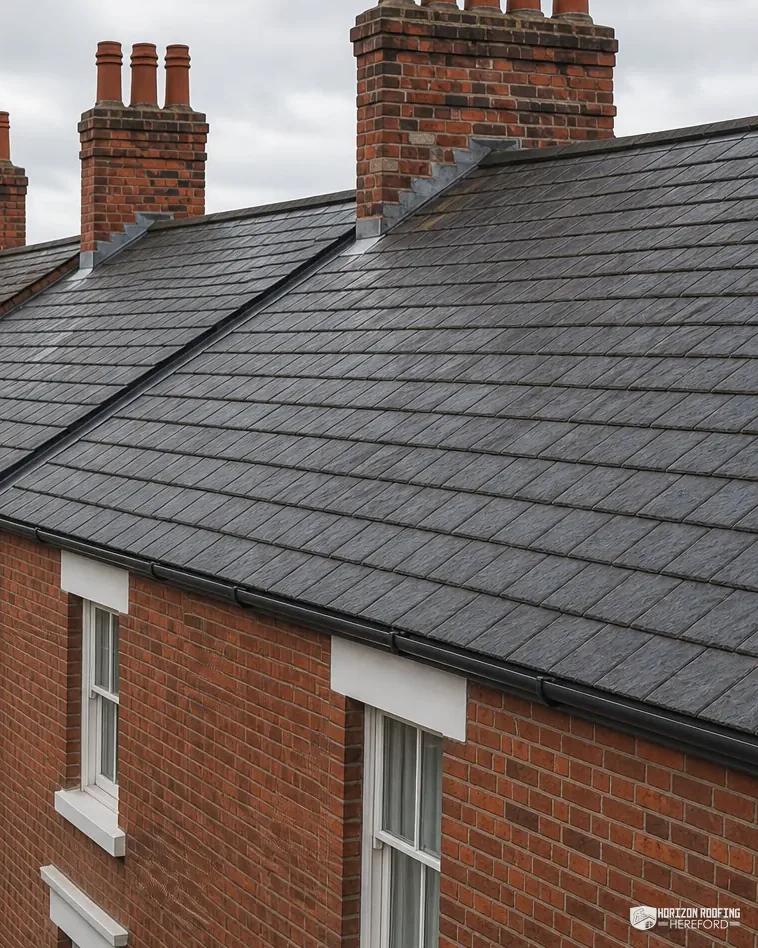
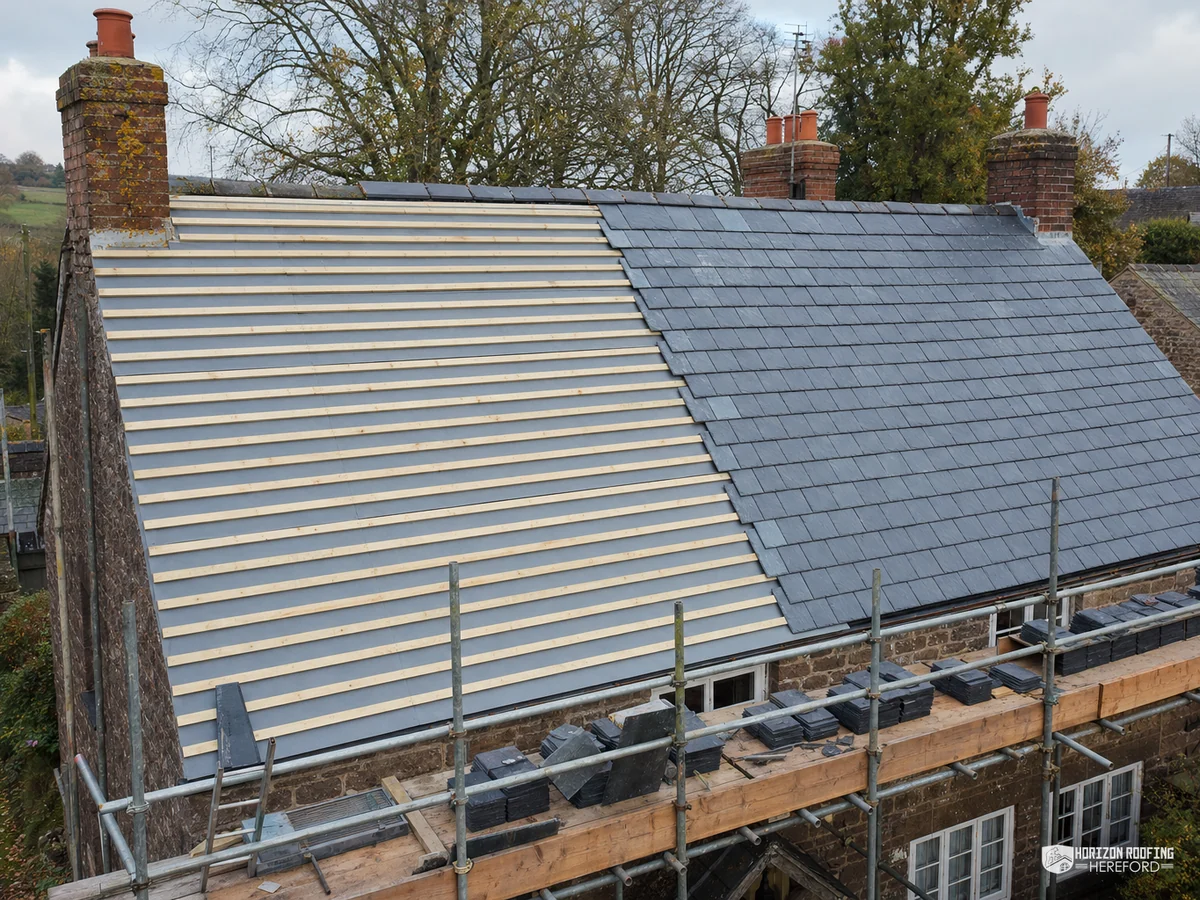
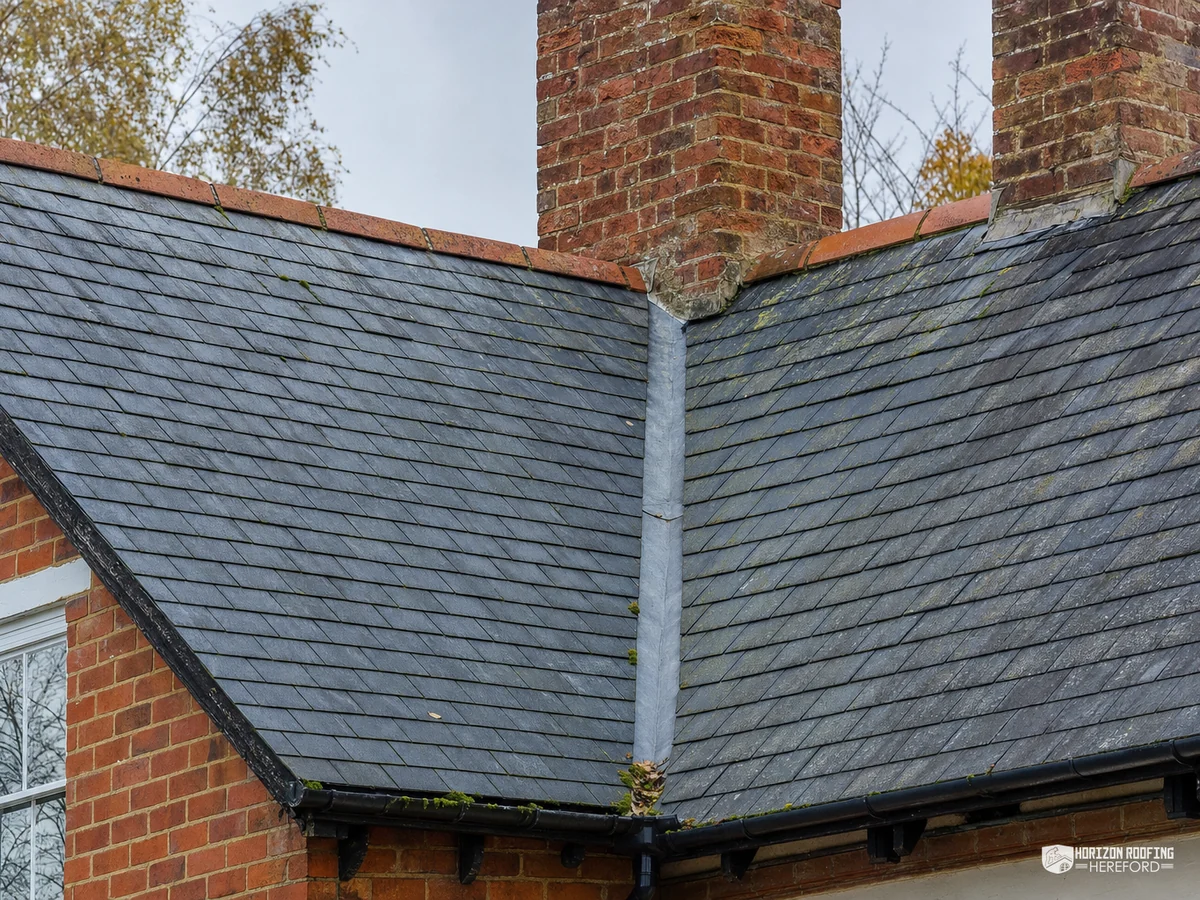
  • Slate roofs and chimney stacks along a red brick Victorian terrace
    Conservation areas on the listAbergavenny and Pen-y-Fal both appear among the council's conservation areas.
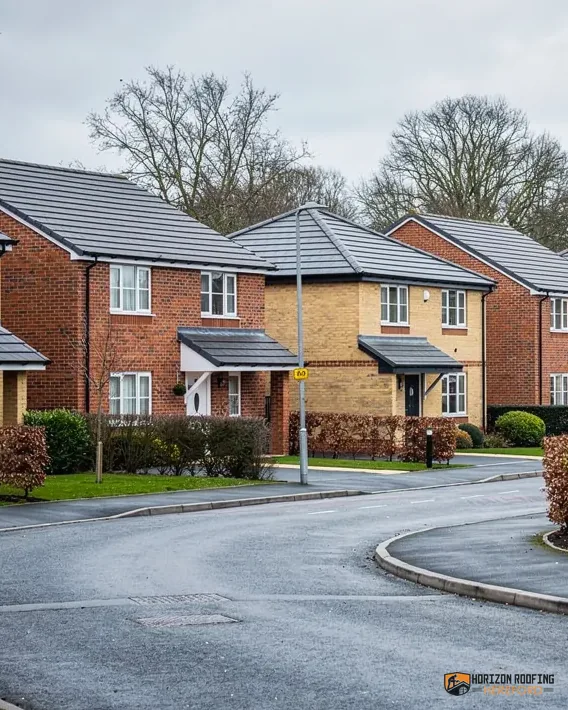
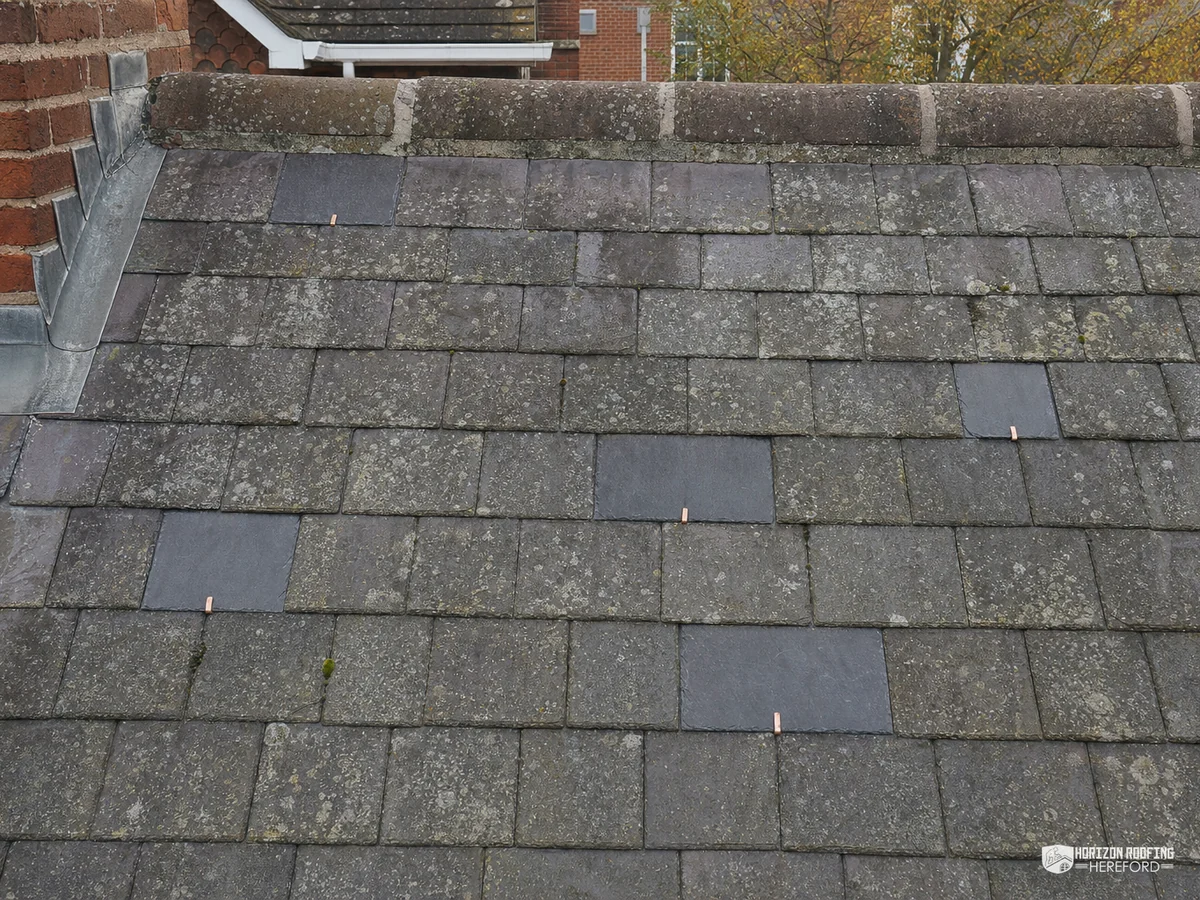
  • Newer homes with grey concrete tile roofs along a curving estate road
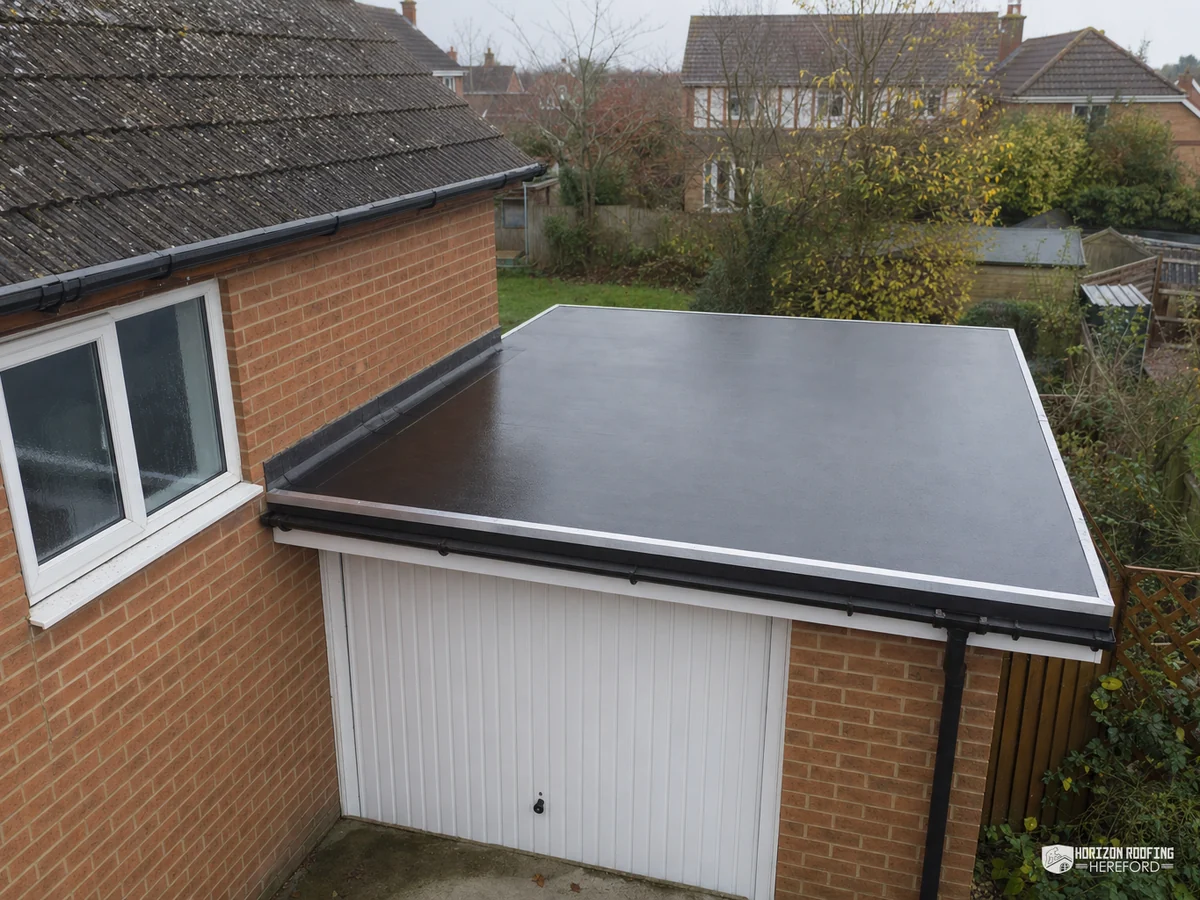
    Flat roofs on extensionsA flat roof on an extension needs its fall, upstands and outlets checked.

A map of Abergavenny

Abergavenny on a street map, with a dashed circle around the town and the nearest towns we cover. Tiles © Esri; map data © Esri, HERE, Garmin, OpenStreetMap contributors.

Abergavenny roofs, flat to listed

Flat roofs, valleys and listed walls: three checks across Abergavenny

Abergavenny is a town of shops, terraces and rear extensions as well as a castle and a Grade I church. We begin with the flat roofs, move to the valleys and gutters where slopes meet, and end at the listed walls and the conservation areas.

A drawn cut-away section through a Herefordshire border house: the front of the main roof is cut open to show the rafters, underlay, battens and slates, beside a black-and-white timber-framed gable. Numbered, from the ridge down: 1 Flat roofs; 2 Valleys and gutters; 3 Listed walls.

Fig. 1 Abergavenny roof in section: flat extension, valley gutter and a listed wall.

Callout 1 of 3

Flat roofs behind the shopfronts and on rear extensions

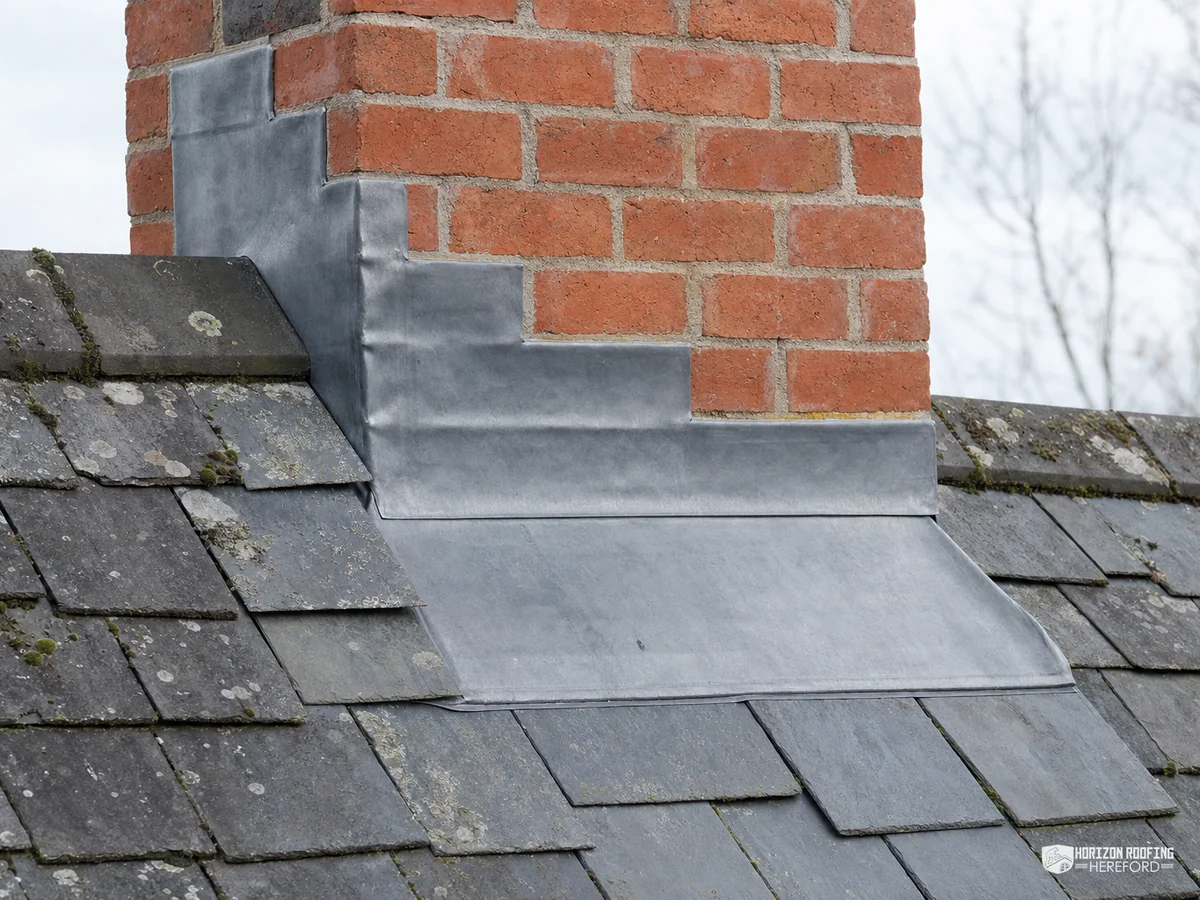
Wherever a town grows by building outwards, flat roofs appear on the back. A rear extension, a shop's storeroom or an outbuilding beside a yard can all be covered by a membrane laid over a deck, and that membrane lives or dies on three details: the fall that drains it, the upstands that turn it up against walls, and the outlets that carry water away. We begin by looking for ponding, which shows as stained or dull patches where water has stood after rain. Next we check each upstand for splits, and each outlet for blockage. Where the flat roof butts against a tiled or slated slope, we also inspect the abutment: the lead or the upstand that closes the gap between the two coverings, which can open when a building moves. Inside, we look at the ceiling beneath for tide-marks, because a stain that has grown since the last decorating tells us how long a leak has been running.

Standards matter here. BS 6229:2025 is the current standard for membrane flat roofs, and NFRC reads it as setting "a minimum 1:80 finished fall for general roof areas and internal gutters". IKO, a membrane maker, advises designing for a fall of 1:40. A roof laid dead flat will hold water, and a covering that holds water ages faster than one that drains.

Life expectancy depends on the material, and the published figures disagree. HomeBuilding gives EPDM 25-30 years, where Less says 30 to 50 years. For GRP, HomeBuilding says 25-30 years and Less says 25 to 40. For torch-on felt, HomeBuilding says 10-15 and Less says 10 to 20 depending on quality and installation. We give the spread because it is the fair picture, and the survey tells you how much life your own roof appears to have left.

The Welsh Government is careful about flat roofs. Its re-roofing page says that "Some repairs to flats roofs will not require an application for approval under the Building Regulations", but "if the roof with integral insulation is to be replaced then you may be required to upgrade this 'thermal element'". We therefore look at what lies under the membrane before proposing a repair or a re-cover. Our flat roofing page covers the coverings in turn, and the same method scales up to larger flat roofs on units and shops.

What holds a flat roof together

Fall
A finished slope towards the outlets
Membrane
EPDM, GRP or felt, laid over a sound deck
Upstands
Covering turned up against each wall
Outlets
Clear, set at the low points
Edge trim
Drip detail that throws water into the gutter

A flat roof earns its keep through its fall, and the fall is measured, not guessed.

Fig. 2 Flat roofs, drawn close

Callout 2 of 3

Valleys, parapet gutters and the lead that lines them

A valley is the inside angle where two slopes run together, and everything that lands on both slopes ends up in it. That sends the run-off of two slopes through one channel. Where terraces or tall front walls hide the gutter behind a parapet, the same rule applies: the channel carries the water of a whole roof, so a small defect in it is felt below within one storm.

Lead lines many valleys and parapet gutters. In Royston Lead's table, Codes 4 to 8 are shown against pitched valley gutters and Codes 5 to 8 against parapet and box channels, while Code 3 is "Recommended for lead soakers only". A thicker sheet therefore lines the channel, and the thin sheet stays with the soakers. We examine the laps, the welts and the outlets, then look under the neighbouring slates for staining that points to water reaching the timber. MyJobQuote says correctly installed lead flashing "can last for over 80 years", so a lining that is sound is left alone, and one that has cracked at its folds is replaced.

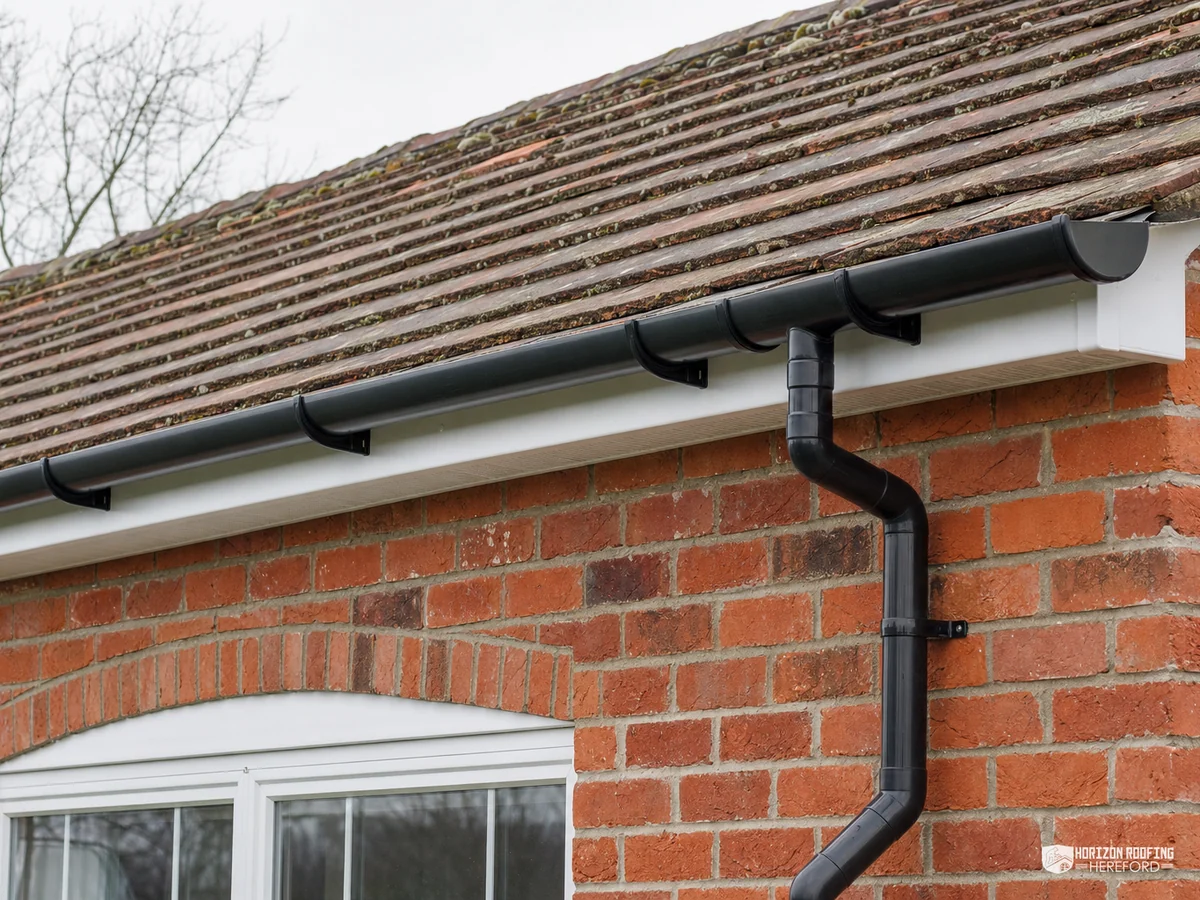
Gutters beyond the valley are judged on slope as well. Brett Martin, a manufacturer, gives the figure as "1mm for every 600mm". A run that sags between brackets holds a puddle, and a puddle freezes. Moss and silt left in a gutter make it heavier than its brackets expect, so we clear and re-seat where needed. Our roof repairs page sets out the repairs we carry out.

A town street brings access problems. If scaffold has to occupy the highway, section 169 of the Highways Act 1980 requires a scaffold licence, and we arrange the licence with our scaffolder. Up in the loft, our torch runs along the underside of each valley, hunting for daylight, dark staining and soft timber, and whatever turns up is photographed before any slate is lifted. A repair that stops at the visible slates leaves the cause behind, so we follow the stain back to where the water got in before we describe the fix in writing.

A valley question

Can a leaking valley be patched with sealant?

Sealant hides a failed lining for a season or two and leaves the real fault in place. We open the valley, look at the laps and the timber beneath, and renew the lining where it has cracked. If the lining is sound, the leak may be coming from a flashing or a slate beside it, and we show you which.

Fig. 3 The valley, drawn close

Callout 3 of 3

The castle, St Mary's and the conservation areas

On Cadw's list, the Church of St Mary is Grade I (record 2373, designated 7 May 1952). So is Abergavenny Castle, a ruin (record 2376, same date), and the Tithe Barn is Grade II* (record 2375, also 7 May 1952). St John's Masonic Lodge, Grade II* (record 2470), is on the list too. A roofer in Abergavenny works among protected buildings, and the law for them is Welsh. Section 88 of the Historic Environment (Wales) Act 2023 says works affecting a listed building's character must be authorised, and section 89 provides the consent. Both sections have been in force since 4 November 2024.

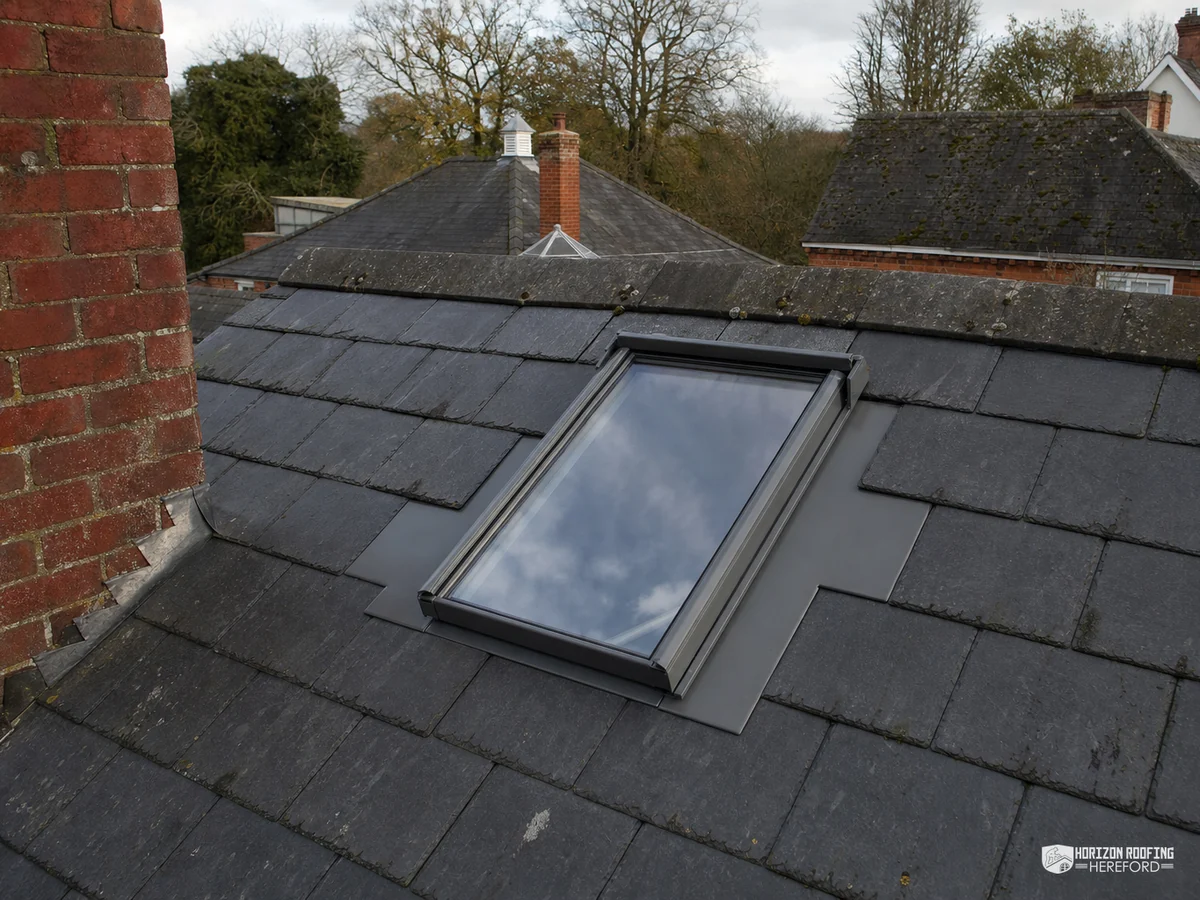
Monmouthshire County Council has designated the Abergavenny conservation area here, and the Abergavenny Pen-y-Fal Conservation Area as well. An address near either is worth checking with Monmouthshire County Council before a roof light, a dormer or a different covering is planned. Welsh householder rights stop short of roof lights in a conservation area, so adding one means a planning application. Whether an Article 4 direction applies to your street is for Monmouthshire County Council to confirm, and our planning guide for roof windows explains what follows.

Roof consent for a church depends on ownership and use. Wales exempts church buildings of the Church in Wales, Catholic property, Methodist property, Baptist buildings held by the two named corporations and Church of England buildings under faculty jurisdiction, while the United Reformed Church is left off the list. Where a structure is a scheduled monument, consent comes from the Welsh Ministers, not from the council. Which route covers a given building is a question for the body that owns it, and we help by supplying photographs and a written scope.

Building control is Monmouthshire County Council Building Control, or a registered building control approver, and the council's building control page announces an updated regime from 1 July 2026. For protected roofs near the church and castle, our listed and heritage roofing page sets out the method, and a survey with photographs gives the council something concrete to consider.

What sets the price on a protected roof

Roof shape
Hips, valleys and dormers add detail
Height
Tall frontages need more access
Covering
Reclaimed or matched material costs more to source
Consents
Listed work needs paperwork before it starts
Condition
Timber found under the covering changes the scope

One written total price, never itemised.

Questions from Abergavenny roofs

Which flat roof covering suits an Abergavenny extension, and how long might it last?

EPDM, GRP and torch-on felt all have a place, and the published lifespans overlap. HomeBuilding gives EPDM 25-30 years and Less 30 to 50 years; for GRP it is 25-30 against 25 to 40; for felt, 10-15 against 10 to 20. These are typical ranges, not promises. The survey checks the deck and the fall first, because the best membrane still fails on a deck that holds water.

Does re-covering a flat roof in Abergavenny mean upgrading its insulation?

It can. The Welsh Government says that "if the roof with integral insulation is to be replaced then you may be required to upgrade this 'thermal element'". In the Welsh Approved Document L, Table 11.1 gives flat roofs a target of 0.16 W/m²K, with 0.35 as the limit where 0.16 cannot be reached, once more than 50% of it is renovated. The Welsh Government's roof page speaks of work on "less than 25 per cent of the area of a pitch or flat roof" as not normally needing an application.

What does a scaffold on an Abergavenny street involve?

Section 169 of the Highways Act 1980 requires a licence for scaffold that obstructs the highway. Monmouthshire County Council's form asks for an administration fee of £108, then £27 per week to extend, and wants at least 5 working days before erection begins. We arrange the licence with our scaffolder, and the one written total price takes the scaffold into account.

Can I add a roof light to a house in Abergavenny's conservation area?

Only with planning permission. Welsh householder rights do not cover roof lights in a conservation area, a National Park or a National Landscape. Monmouthshire County Council lists Abergavenny and Abergavenny Pen-y-Fal as conservation areas, so find out which one your street falls in. On the Building Regulations side, the Welsh Government says "Approval under the Building Regulations will generally be needed for the installation of a new rooflight".

Could the garage roof behind an older Abergavenny house contain asbestos?

HSE's advice is "If the building was built or refurbished before 2000, assume that there is asbestos in it", and it adds that "AC roofs are always fragile", so nobody should walk on one. Monmouthshire's recycling centres at Five Lanes and Llanfoist accept small household amounts, booked ahead. NRW says "contractors moving asbestos from a domestic property will need to use consignment notes".

Who checks roof work in Abergavenny: the council or a private approver?

Either can. Monmouthshire County Council Building Control is based at County Hall in Usk, and a registered building control approver is the private alternative. In Wales the Building Safety Regulator regulates approvers on behalf of the Welsh Ministers, while local authorities are regulated by the Welsh Ministers themselves. Party wall questions go to a party wall surveyor, not building control.

Arrange an Abergavenny roof survey

Tell us whether the roof is pitched, flat or both, and we will book the visit.

10-year workmanship guarantee, in writing