
01432 610152 Get a quote Call 01432 610152

Roofers in Coleford

Flat roofs, house roofs and town-centre rooflines in Coleford, surveyed by roofers from Hereford.

Expect photographs of what we find, one total price in writing, and the site left clear when we go.

Get a free quoteCall 01432 610152

Flat roofs, lead and Market Place in Coleford

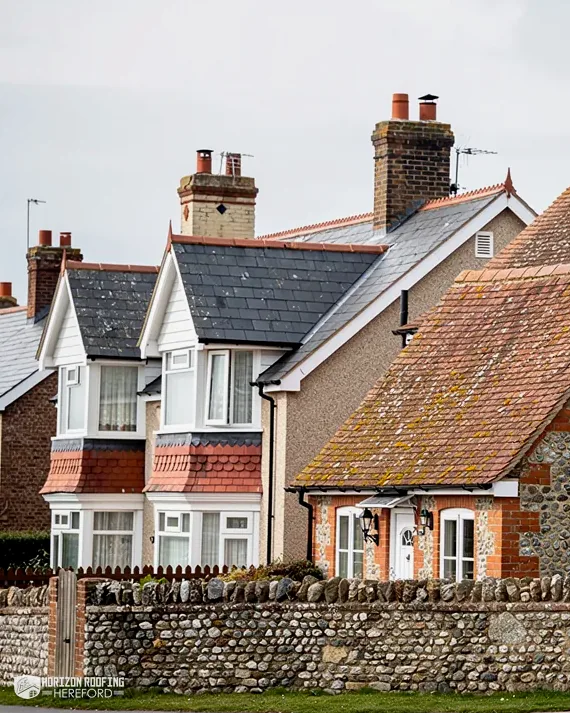
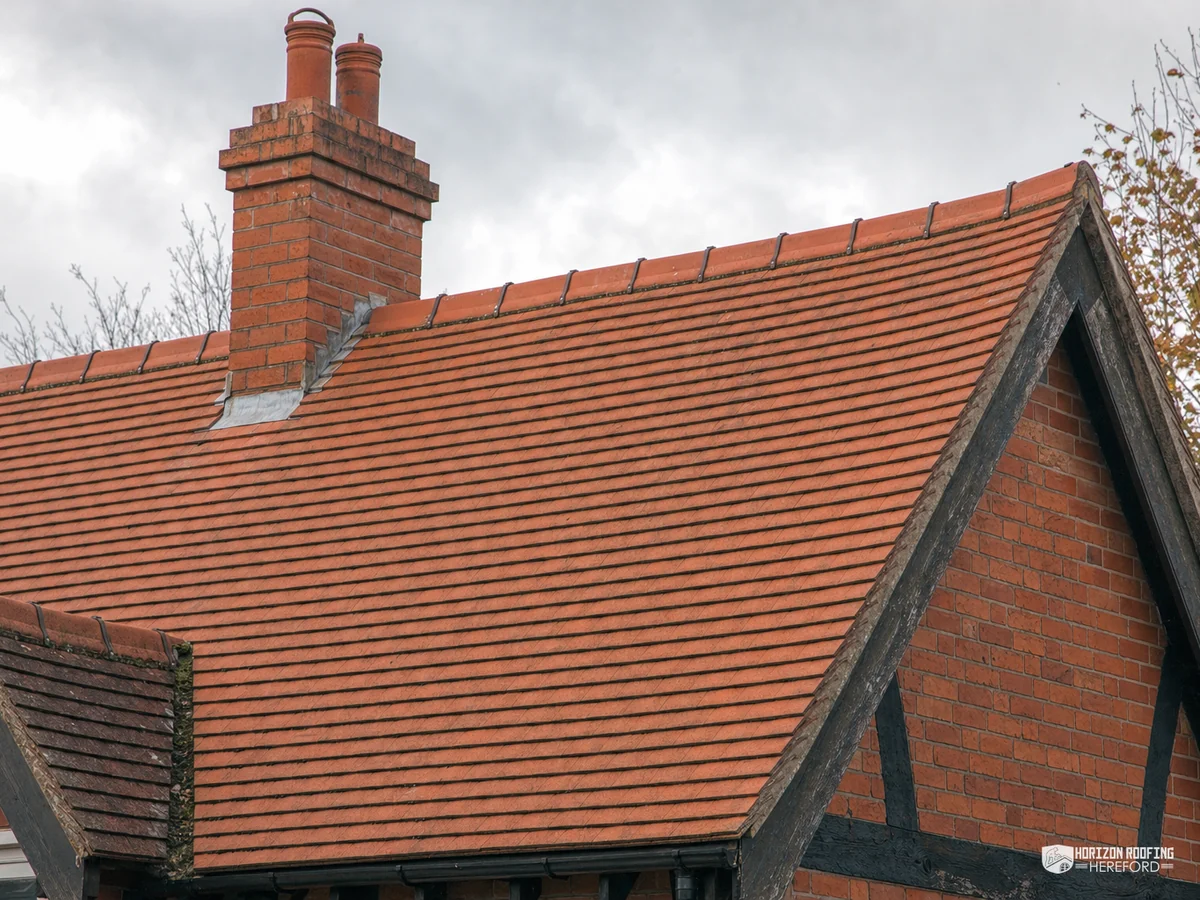
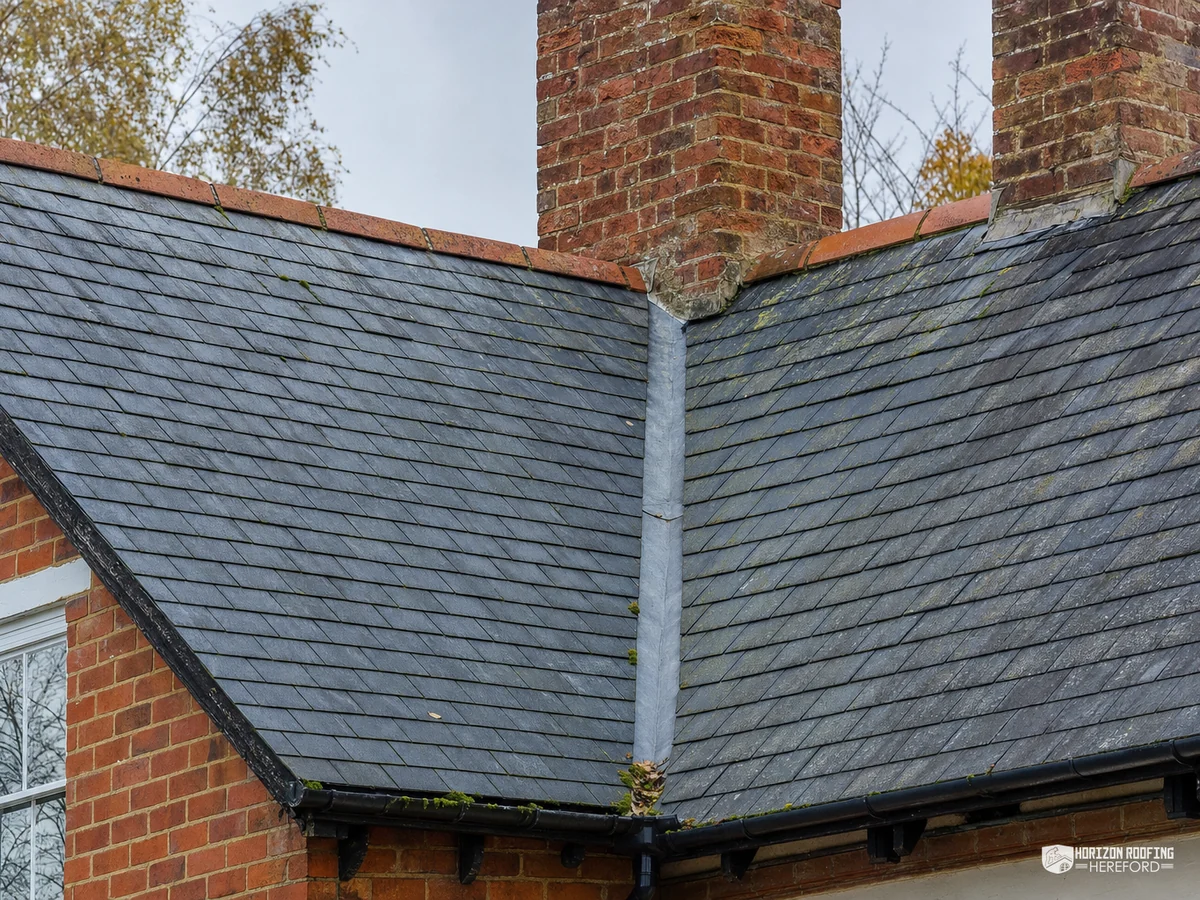
  • Older cottages with weathered clay tile roofs and brick chimneys behind a flint wall
    Flat roof membranesFelt, EPDM and GRP age differently, so we name yours first.
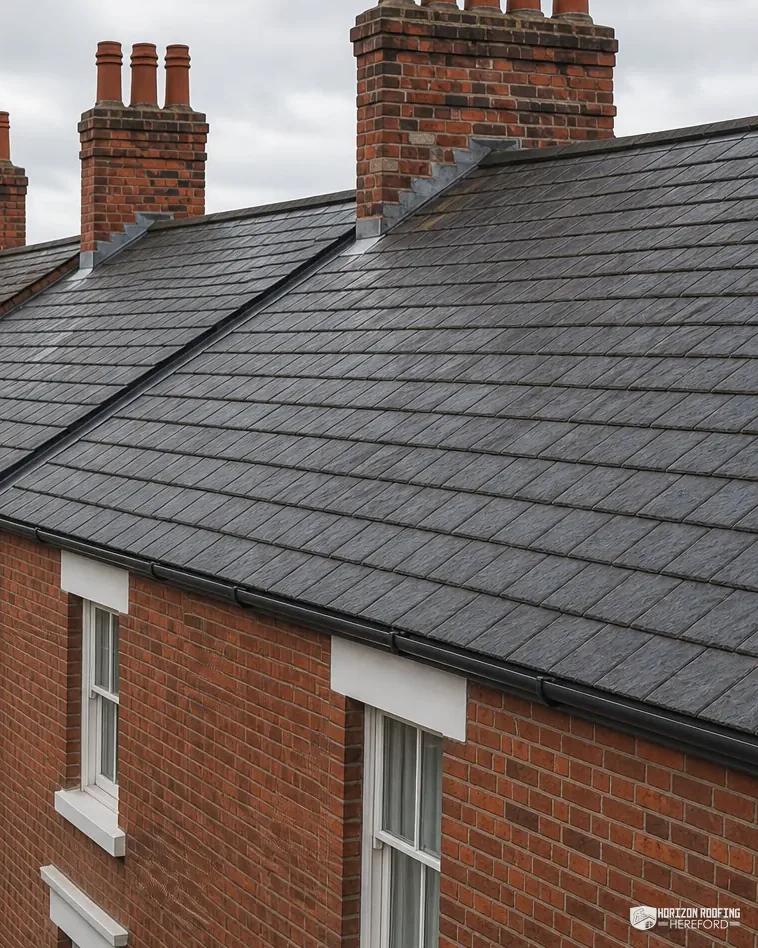
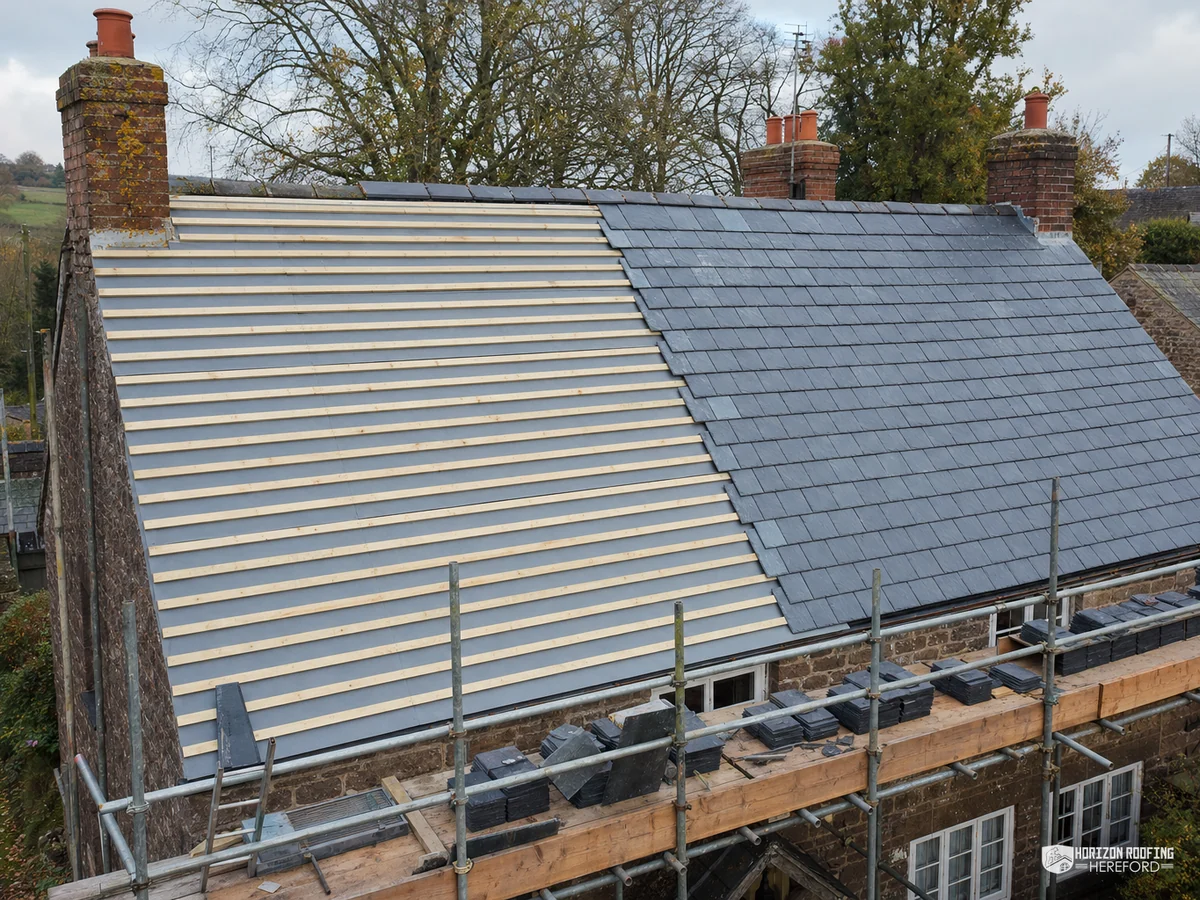
  • Slate roofs and chimney stacks along a red brick Victorian terrace
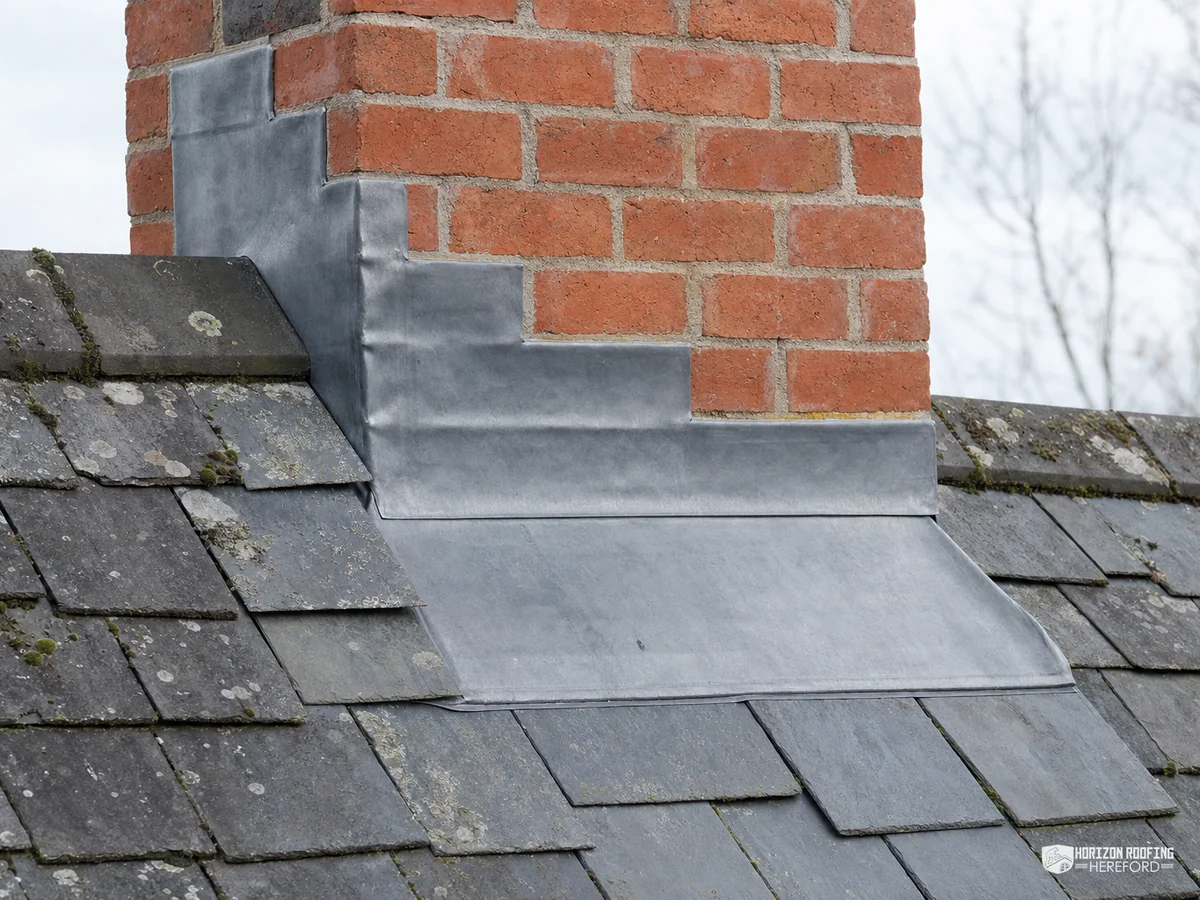
    Lead at the abutmentsLead where a roof meets a wall is checked for lifting and splits.
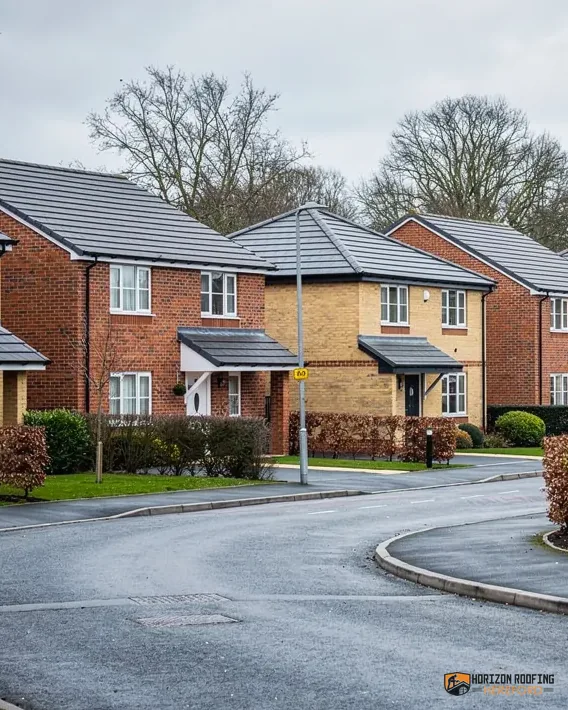
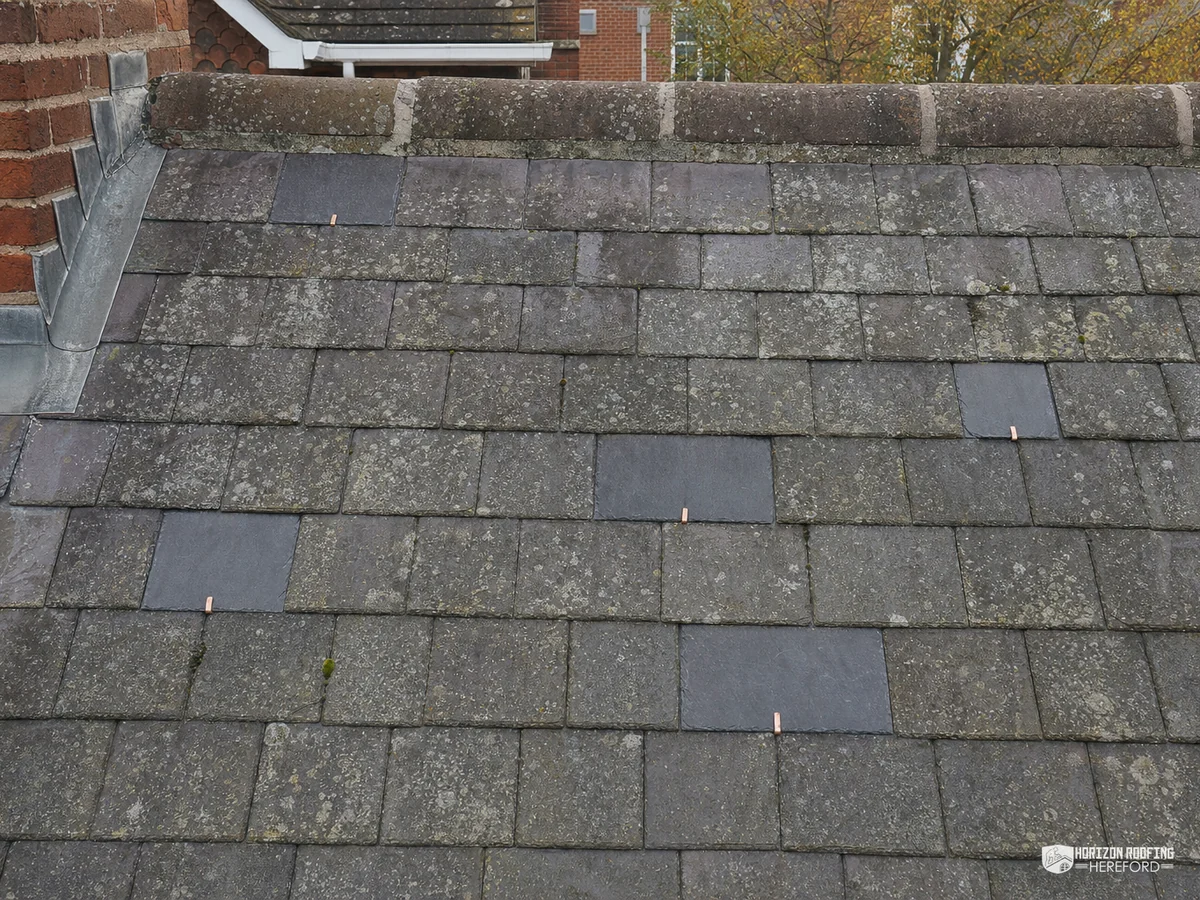
  • Newer homes with grey concrete tile roofs along a curving estate road
    Listed buildings in the centreThe Angel Hotel and 20 Market Place are both Grade II.

Finding Coleford

Coleford on a street map, with a dashed circle around the town and the nearest towns we cover. Tiles © Esri; map data © Esri, HERE, Garmin, OpenStreetMap contributors.

Coleford roofs, flat deck to Market Place

Three callouts on a Coleford roof: the flat deck, the wall lead and Market Place

The survey starts on the near-level deck of a flat roof, follows the lead where roofs meet walls, and finishes among the town's Grade II listings, its chapel and its conservation area.

A drawn cut-away section through a Herefordshire border house: the front of the main roof is cut open to show the rafters, underlay, battens and slates, beside a black-and-white timber-framed gable. Numbered, from the ridge down: 1 Flat deck; 2 Wall lead; 3 Market Place.

Fig. 1 Coleford roof section with flat deck, wall lead and town-centre wall numbered.

Callout 1 of 3

Flat roofs: felt, EPDM, GRP and their falls

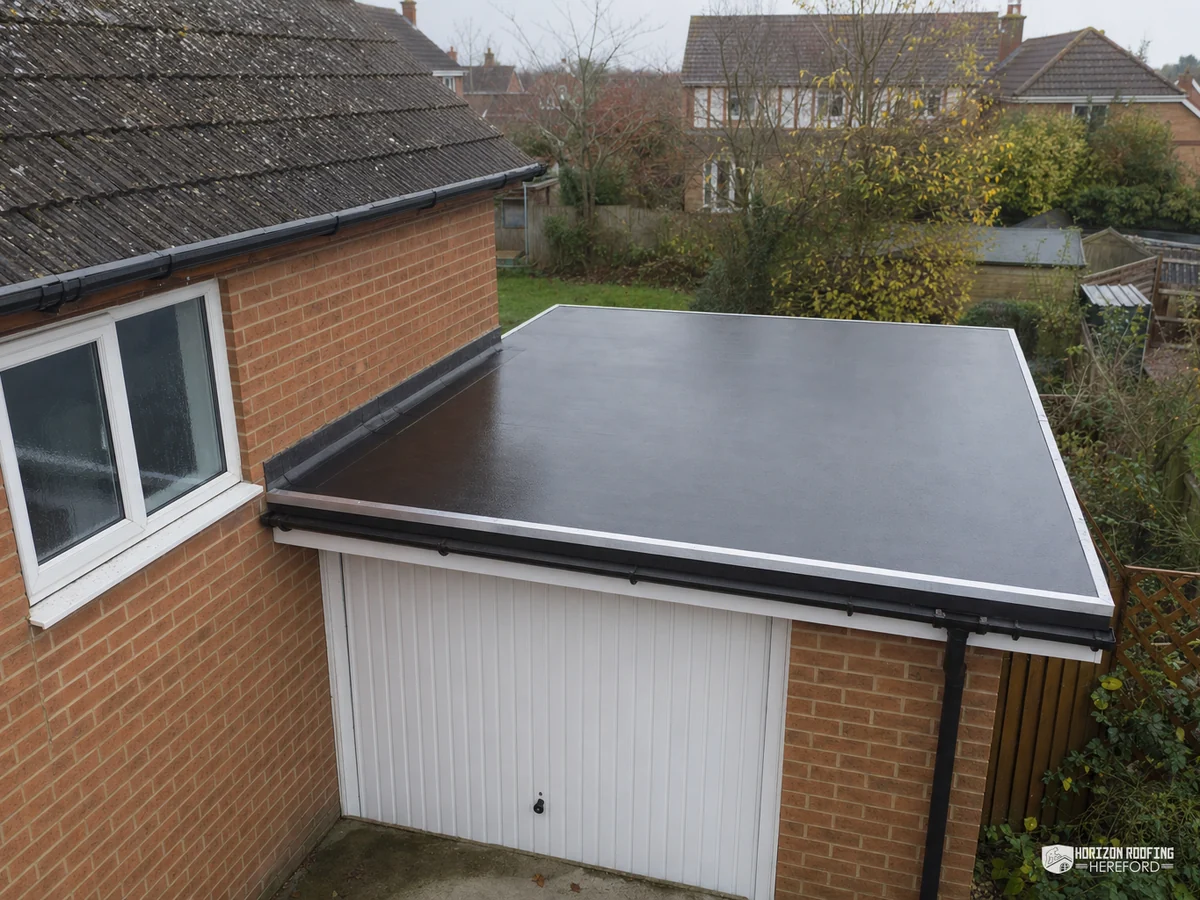
Callout one is the flat deck, the near-level roof over an extension, a garage or the back of a building. No flat roof is perfectly level. It needs a fall so that water leaves it, and the NFRC gives a minimum finished fall of 1:80 for a membrane, while IKO advises designing for 1:40. BS 6229:2025 is the standard for flat roofs with continuous membranes, and it covers membranes, not lead. A surface that stays wet long after the rain has stopped is telling us that the fall has been lost, and no amount of patching will cure that.

Three coverings are worth naming, since each is judged differently. Felt is bonded in layers and shows its age at the laps and the upstands, the short upturned edges where the roof meets a wall. EPDM is a single rubber sheet, so the checks are for splits, shrinkage at the corners and the quality of the adhesive. GRP is a rigid glass-reinforced shell that can crack at movement joints. Lifespans come as ranges, and the published figures do not agree: HomeBuilding gives EPDM "25-30" years where Less says "30 to 50"; for GRP HomeBuilding says "25-30" and Less "25 to 40"; for felt the figures are "10-15" and "10 to 20". Neither range is a promise about your roof.

On a repair the question is simple: is the deck underneath dry? We press the surface, look for blisters and open laps, and lift a corner of any suspect patch. Outlets matter too: a blocked outlet turns a small leak into a pond, so each one is cleared, photographed and traced to where it discharges. Spongy boards mean the water has already got into the deck, and a membrane laid over wet timber will fail again. A dry deck with a single split is a repair. A soft deck, or a membrane that has gone brittle across the whole surface, is a replacement.

Under AD L 2021, laying a replacement membrane over a flat roof in England is renovation work, and that brings in Table 4.3: a threshold of 0.35 and an improved 0.16. AD L 2026 renumbers it as Table 3.3 from 24 March 2027. Our flat roofing page describes how each covering is laid.

Checked on a Coleford flat deck

  • Ponding that outlasts the rain
  • Blisters, splits and open laps
  • Upstands at every wall
  • Outlets and gutters clear of debris
  • Boards underfoot, firm or spongy

A flat roof that stays wet has lost its fall. Patches cannot put it back.

Fig. 2 Flat roofs, drawn close

Callout 2 of 3

Lead where a roof meets a wall

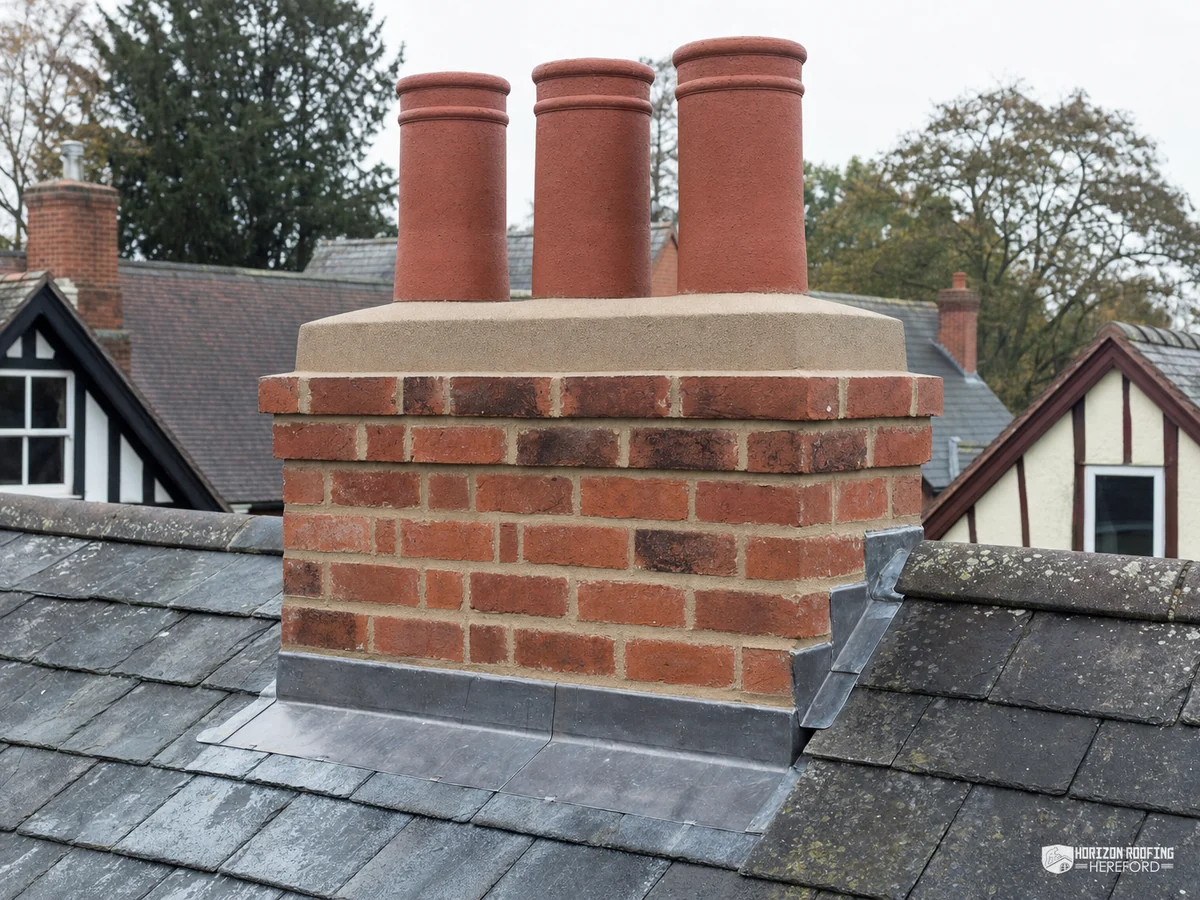
Callout two is the junction between roof and wall, and in a town centre there are many such joints. Where a pitched roof runs up against a wall, a stepped strip of lead called an abutment flashing is let into the brickwork and dressed down over the covering. Where two roofs sit side by side, a lead gutter may run between them to carry water down to a downpipe, and where a roof ends at a parapet, lead lines the trough behind it. All three are places where a failure reaches the ceiling below as a brown mark, well after the lead gave way.

Royston Lead's brochure assigns each thickness a code and keeps Code 3 for soakers, whereas Codes 4, 5 and 6 are the ones it lists for flashings. The choice of code belongs to the detail. We check for lead that has lifted from its joint, split along a fold, or been smothered in sealant, which does not repair lead and hides the fault beneath. Fitted correctly, lead flashing can last for over 80 years, according to MyJobQuote, so lead that is still sound stays where it is. Photographs go with the quote showing each length of lead, so you can see which joints are sound and which are not.

When a flashing is renewed, the old chase is raked clean and the new lead is wedged and pointed, which means narrow lengths of lead tucked into a groove in the wall and sealed with mortar. Nothing is surface-fixed with adhesive. If the wall is a shared one and the job involves cutting away a chimney breast, the Planning Portal says Building Regulations approval will always apply, and the owner must serve the neighbour with a party wall notice at least two months before cutting starts.

Frontage work in a town raises the matter of scaffold. Scaffold set up on the footway or carriageway falls under section 169 of the Highways Act 1980, which asks for a licence, and Gloucestershire County Council is the highway authority. The scaffold sits in the written total, and we arrange the licence with our scaffolder. Our lead roofing page covers sheet work, flashings and gutters in more depth.

Lead question

Can a flashing be sealed with mastic instead of being replaced?

Mastic can be a short-term cover for a small gap, but it does not repair lead that has split or lifted, and it hides the fault from the next survey. If the lead is sound and only the joint has opened, we re-dress and point it. If the lead has failed, new sheet goes in.

Sealant hides a failed joint. It has never mended one.

Fig. 3 Leadwork, drawn close

Callout 3 of 3

Market Place, the chapel and the Coleford Conservation Area

The last callout is the street wall. Coleford has several buildings on the National Heritage List, and each one is Grade II: the Angel Hotel (list entry 1186306, first listed 24 September 1984), 20 Market Place (list entry 1289765, first listed 24 September 1984) and the Congregational chapel (list entry 1299279, first listed 14 December 1983). Under section 7 of the Planning (Listed Buildings and Conservation Areas) Act 1990, works that would affect a listed building's character need listed building consent, and permitted development rights are kept, with consent on top.

A chapel is a different case. The list entry names it a Congregational chapel, and the route for its roof turns on who holds it and on whether a congregation still meets in it. Should it have closed, listed building consent would be needed, and the district council decides that. Its governing body is the place to start, before any roof work is planned. We would send it our survey photographs and a plain description of each fault, so that whoever answers can see the roof as it stands.

Forest of Dean District Council holds the Coleford Conservation Area, and a roof within it or beside it should be set against the council's map before the covering changes. Ask the council whether an Article 4 direction applies to your address. The Wye Valley National Landscape reaches into the district round Coleford. It makes no planning decisions, yet under English rules it still matters for a new Coleford dormer, which goes to the council first. A flat, or a building containing flats, has no householder permitted development rights at all, which matters in a town where homes can sit over shops. For a window in the slope, the conditions are laid out in our planning guide for roof windows.

Building control in Coleford is Forest of Dean District Council Building Control, on 01594 812315, or a registered building control approver. We photograph the roof before we touch it, so the application, the building control officer and any buyer can all see what was there, and a copy of the set stays with you.

A listed frontage is surveyed on paper first, and then on the roof.

Terms for the town-centre survey

Listed building consent
Permission needed before works that alter a listed building's character
Faculty
The Church of England's own consent system for church buildings in use
Article 4 direction
A council order withdrawing permitted development in a defined area
Upstand
The short upturned edge of a flat roof where it meets a wall

Coleford roofs: flat decks, lead and listed neighbours

How long does a flat roof in Coleford last, and when is it patched?

Published lifespans differ, so treat the figures as ranges. HomeBuilding gives EPDM 25-30 years and Less 30 to 50, with GRP at 25-30 and 25 to 40, and felt at 10-15 and 10 to 20. A dry deck with one split is patched. A spongy deck, a lost fall or a membrane that has gone brittle points to replacement, and the survey says which you have, with a photograph of the deck beside each finding.

Does re-covering a Coleford flat roof bring in Part L?

Yes, in England. AD L 2021 puts a replacement membrane on a flat roof in the renovation category. Table 4.3 therefore applies, with a threshold of 0.35 and an improved 0.16. Paragraph 4.13 relaxes the figure when the full upgrade is not practical or would take longer than 15 years to repay. AD L 2026 renumbers the tables as 3.2 and 3.3 from 24 March 2027.

Who agrees roof work at Coleford's Congregational chapel?

The chapel is Grade II (list entry 1299279, first listed 14 December 1983). Its consent route depends on who holds it and on whether a congregation still gathers in it, and a chapel that closes needs listed building consent, which Forest of Dean District Council decides. Ask the chapel's governing body before work is planned, and keep the list entry number to hand when you write.

Do flats above Coleford shops have permitted development for roof work?

No. A flat, or a building containing flats, has no householder permitted development rights, so ask Forest of Dean District Council before changing a roof over one. If the building is listed, as the Angel Hotel and 20 Market Place are, listed building consent applies as well. A survey with photographs gives the council a clear record of the roof as it stands.

Does the Coleford Conservation Area stop a re-roof?

Not by itself. Like-for-like repair in a conservation area raises few questions, while a new dormer belongs with Forest of Dean District Council from the very start. Forest of Dean District Council holds the map, and you should ask it whether an Article 4 direction applies at your address. We photograph the roof first so the council sees what is there.

What does scaffold cost to licence on a Coleford street?

Section 169 of the Highways Act 1980 requires a licence whenever scaffold obstructs a highway. In Coleford that licence comes from Gloucestershire County Council, priced at £145 for a minimum of 28 days, with additional time at £36 per 7 days, and the application must be in at least twelve calendar days beforehand. We arrange the licence with our scaffolder, and that lead time shapes the start date we give for a town-centre job.

Book a Coleford survey, deck to wall

Tell us whether the worry is a flat roof, a leaking joint or a listed frontage, and we will climb up and photograph it.

10-year workmanship guarantee, in writing