
Callout 1 of 3
The gutter line, and what lives behind the fascia
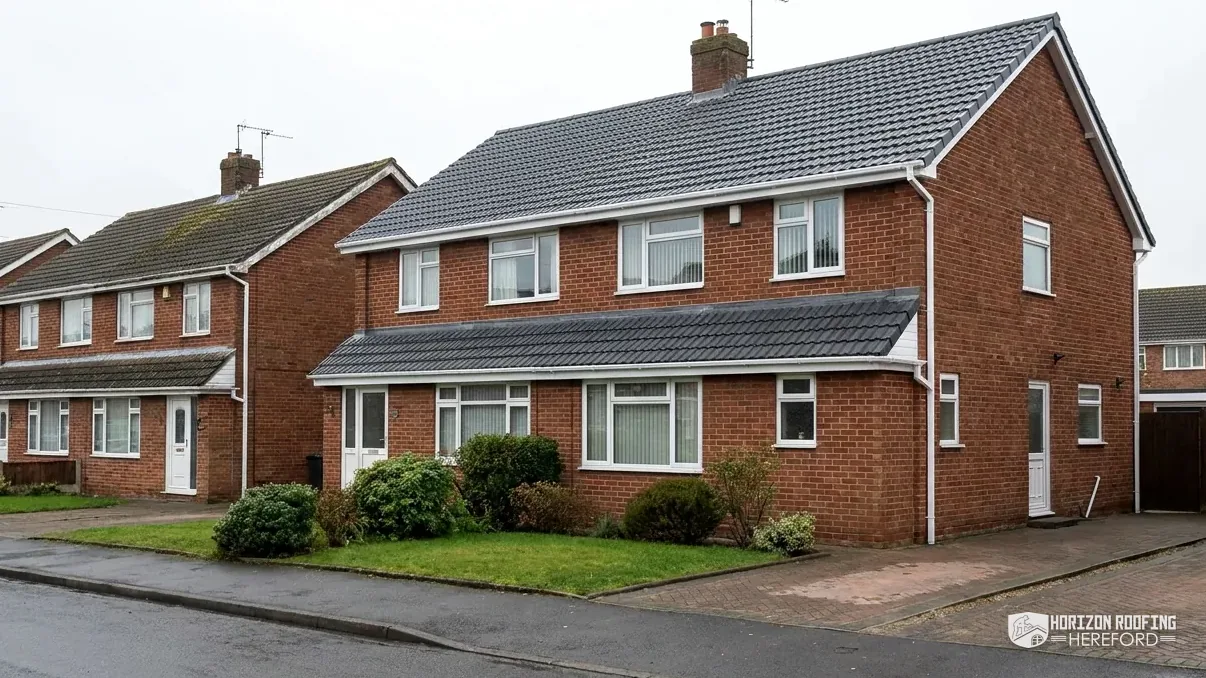
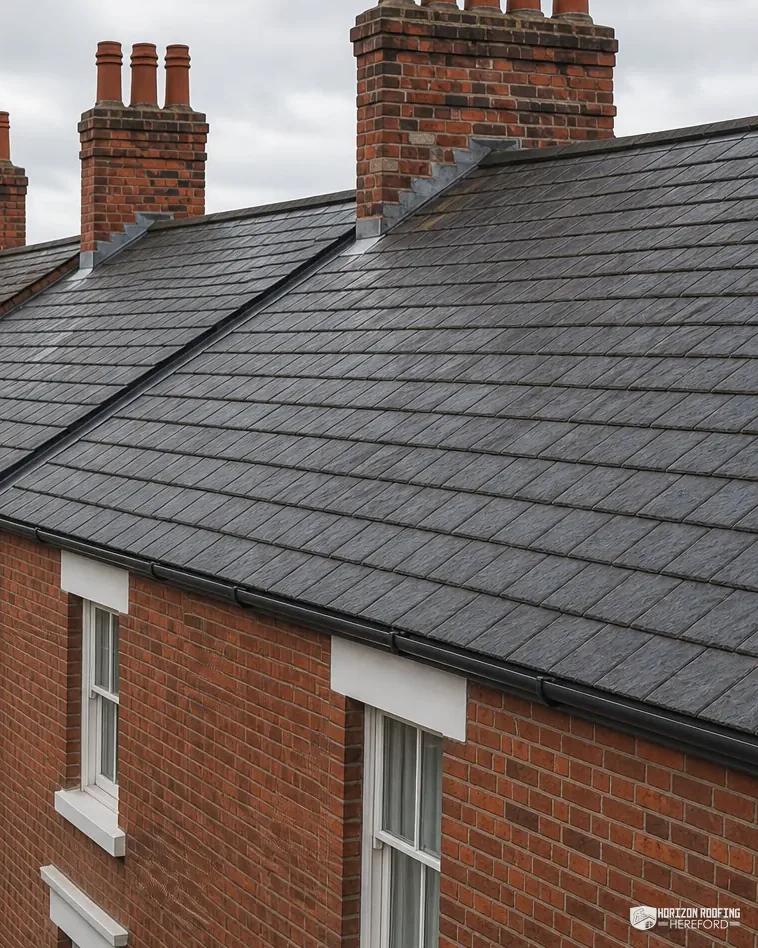
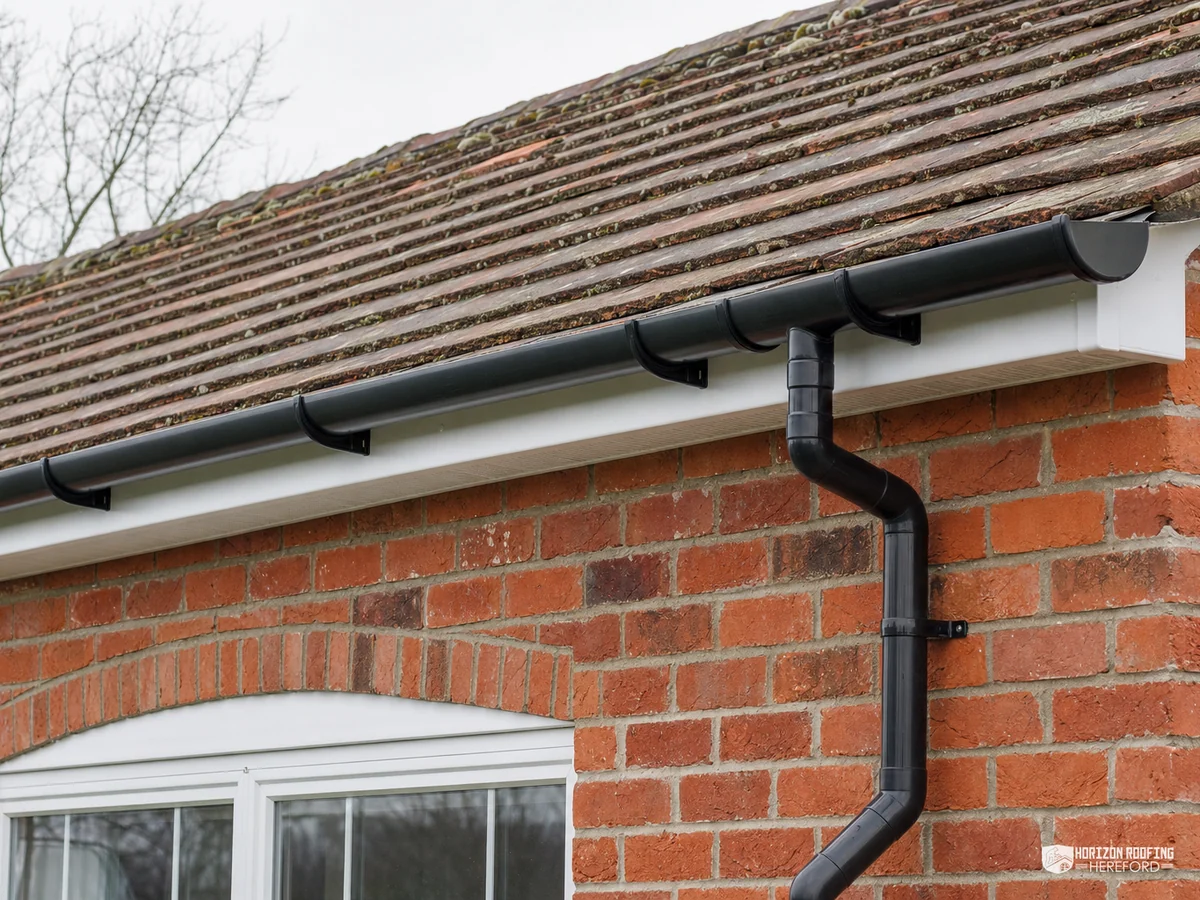
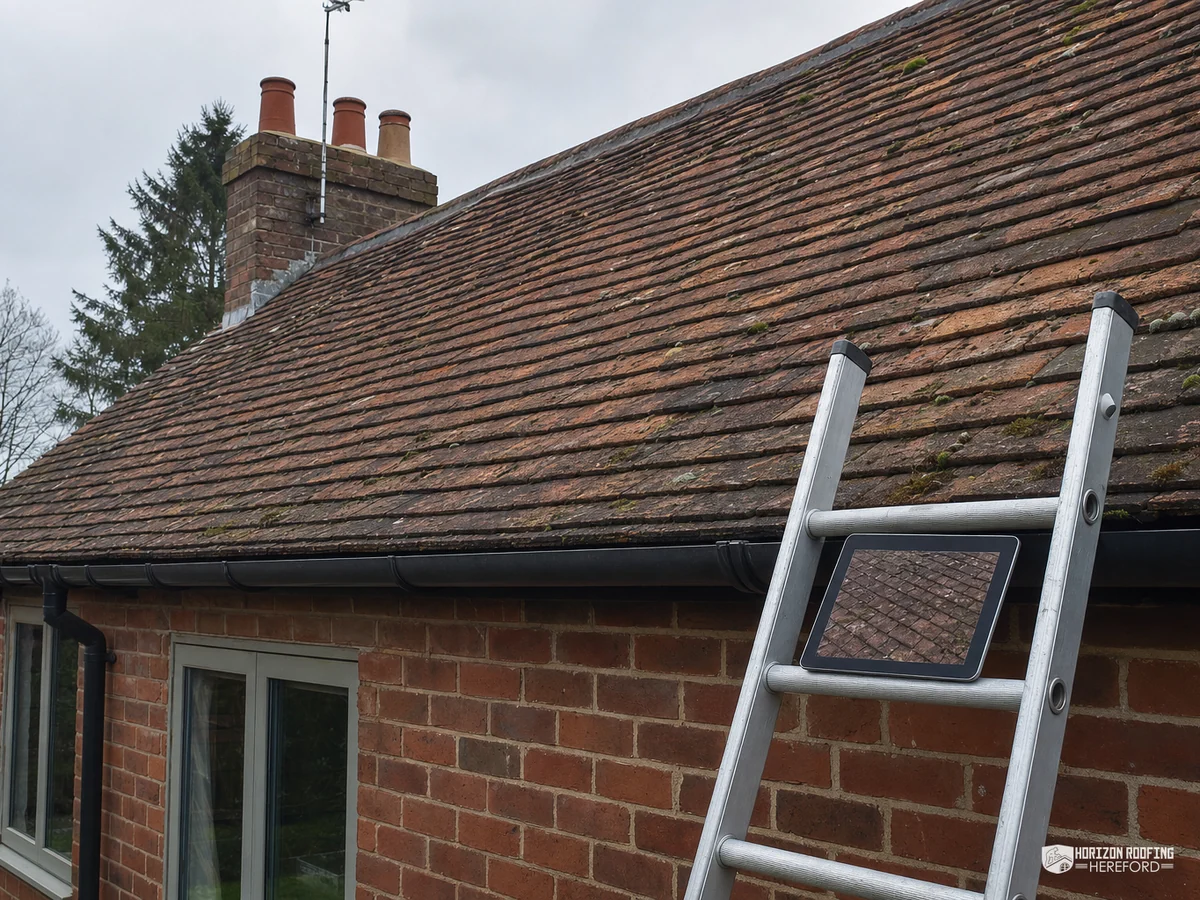
Rain has one job on its way down, which is to leave the roof by the gutter, and a gutter that has sagged does not let it. Brett Martin, a guttering maker, sets the fall at "1mm for every 600mm", a gentle slope that a dropped bracket can undo. Water standing in the middle of a run shows where the line has gone. Joints, stop ends and outlets come next, because a leaking joint drips onto the wall below and can pass for a fault in the roof. The downpipe, the hopper and the gully at its foot are the end of the line, and a blocked gully sends water back up the wall.
Two parts sit behind the gutter line: the fascia (the long board that holds the brackets) and the soffit, the panel under the overhang. Birds look for the gap. Under section 1 of the Wildlife and Countryside Act 1981, a person commits an offence who intentionally destroys, takes or damages a nest while a wild bird is using it or still building it, so a fascia with a nest behind it stays untouched while the nest is in use. Nesting dates are not fixed, so the nest itself is the guide.
Soffit vents belong to the same line. Marley asks for a gap of 25mm along the length of the eaves on pitches of 15 degrees or less and 10mm on steeper pitches when the underlay is high-resistance and the roof is cold, and a vent that has been blocked or painted over defeats that. Where the loft smells damp or the rafter ends are dark, the eaves are the place to look first, from outside and from the loft hatch.
Bats are covered by separate rules. Natural England's page on GOV.UK says that "All bat species, their breeding sites and resting places are fully protected by law", and it lists "repairing or replacing a roof" as one such activity. It adds that "You may be able to get a licence from Natural England". Section 9(4) of the 1981 Act reaches anyone who "intentionally or recklessly" disturbs an animal in a roost or blocks its way in, and regulation 43 of the Habitats Regulations 2017 goes further, because its offence of damaging a roost's breeding site or resting place carries no intent test. Eaves and soffits are therefore checked for signs of a roost before any board comes off. Our guttering, soffits and fascias page describes renewals.
A gutter run on a Maisemore house
The first look at a gutter is a look for what is living behind it.