
01432 610152 Get a quote Call 01432 610152

Roofers in Ashleworth

Roof repairs in Ashleworth's conservation area, with lead, matching coverings and listed houses all in view.

Before the survey we check what the conservation area asks of your roof; the report then carries photographs and one total in writing.

Get a free quoteCall 01432 610152

Repairs inside a conservation area

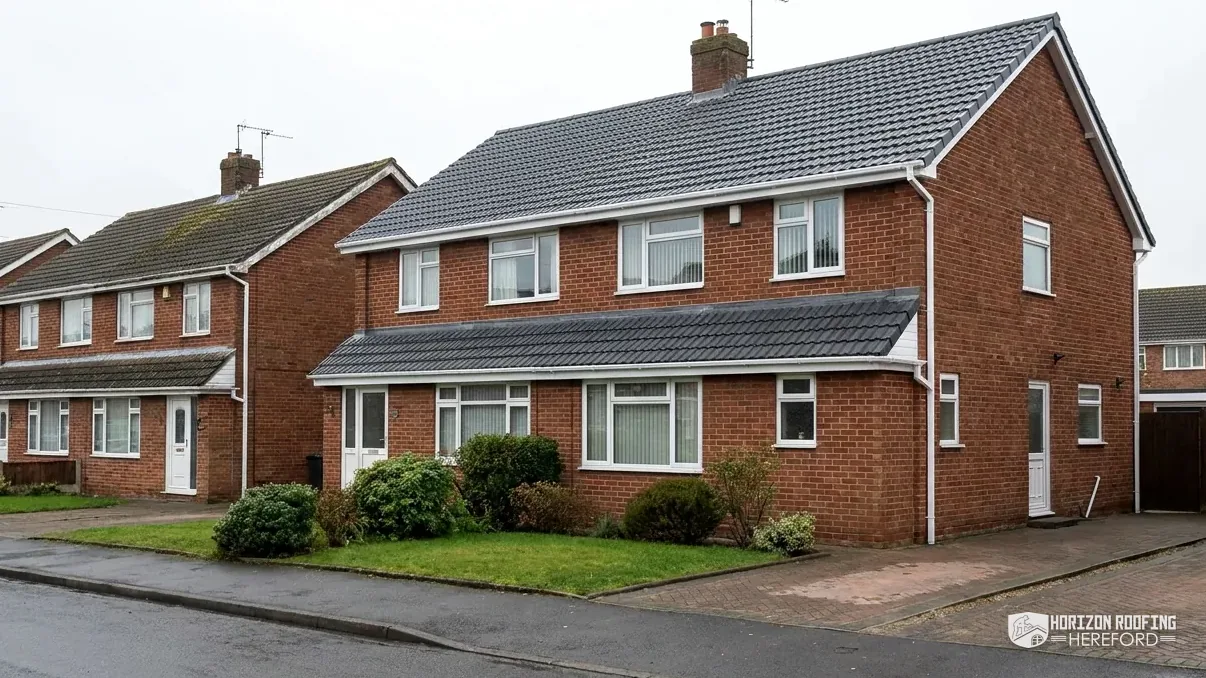
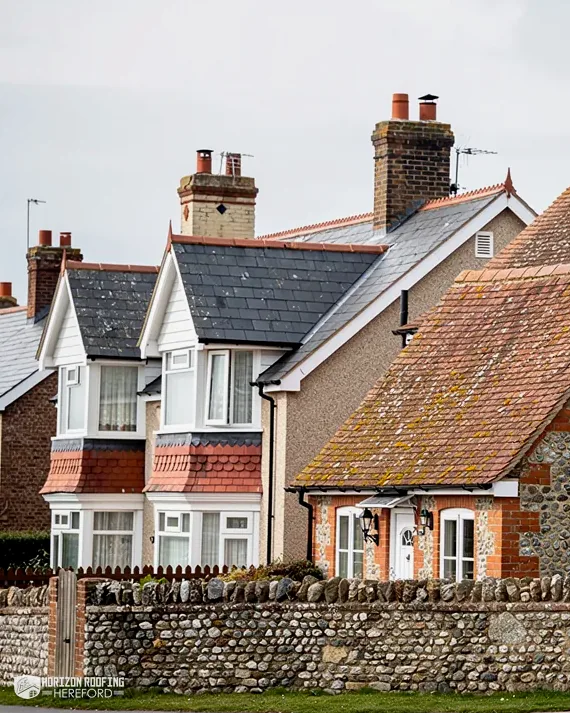
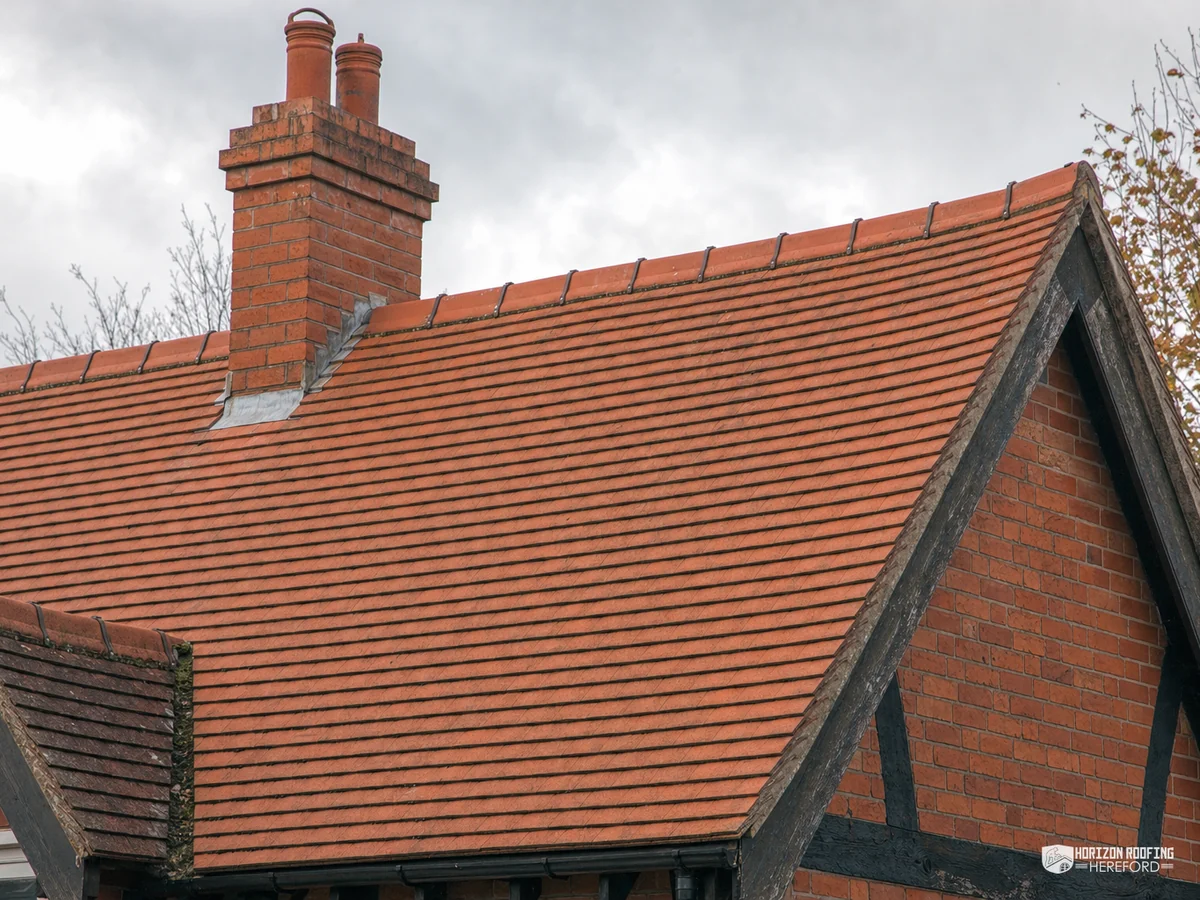
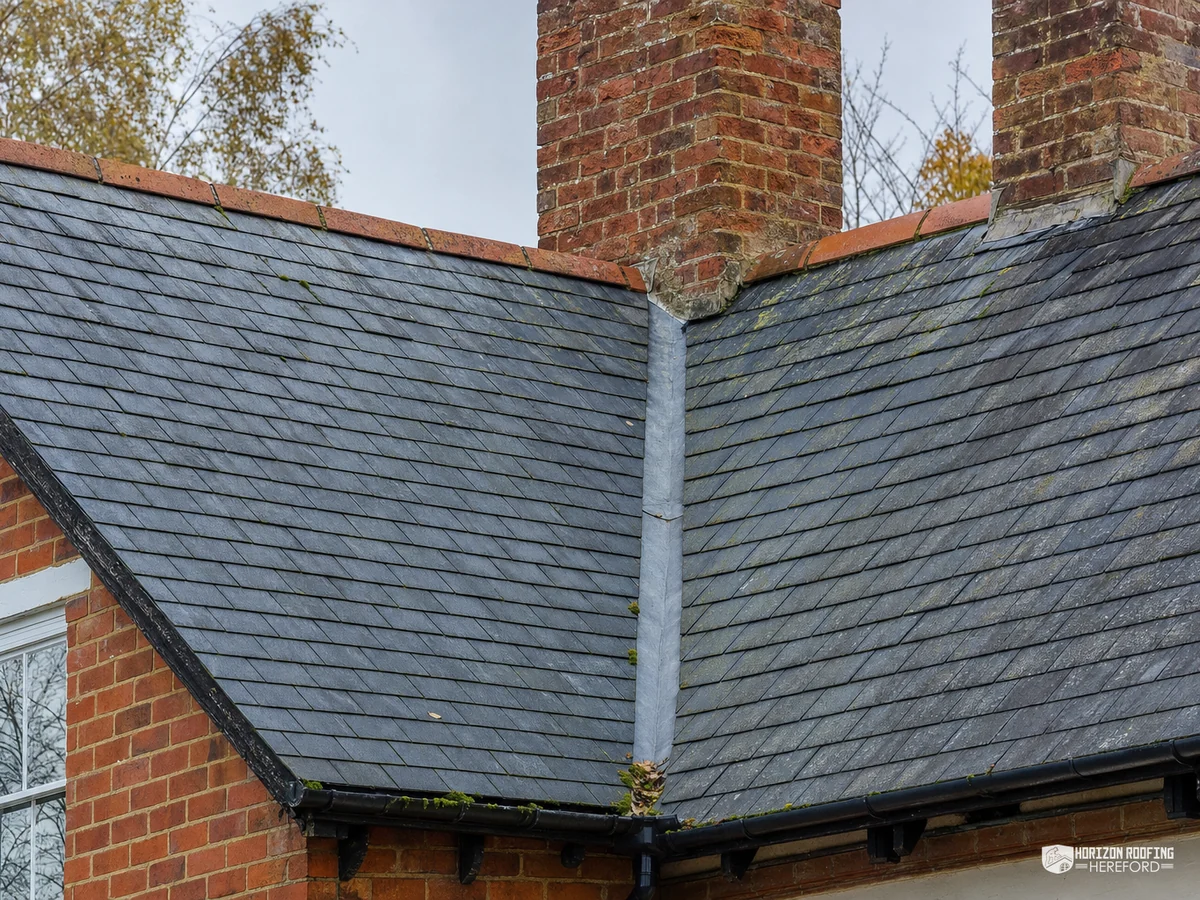
  • Older cottages with weathered clay tile roofs and brick chimneys behind a flint wall
    Matching what is already thereA like-for-like repair keeps the roofline and the covering as they are.
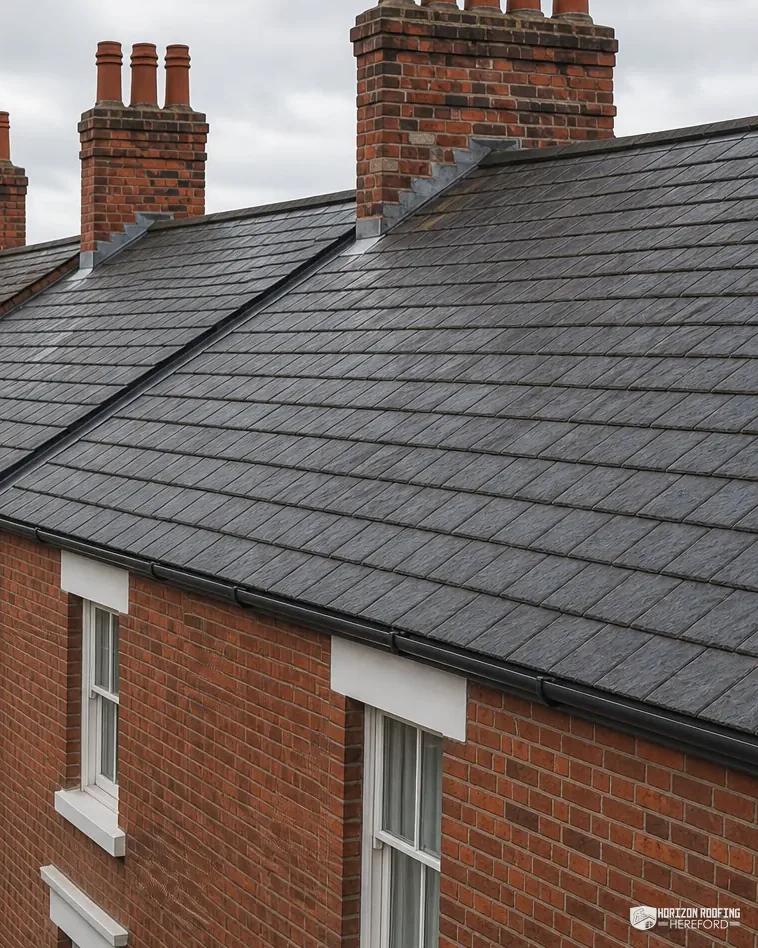
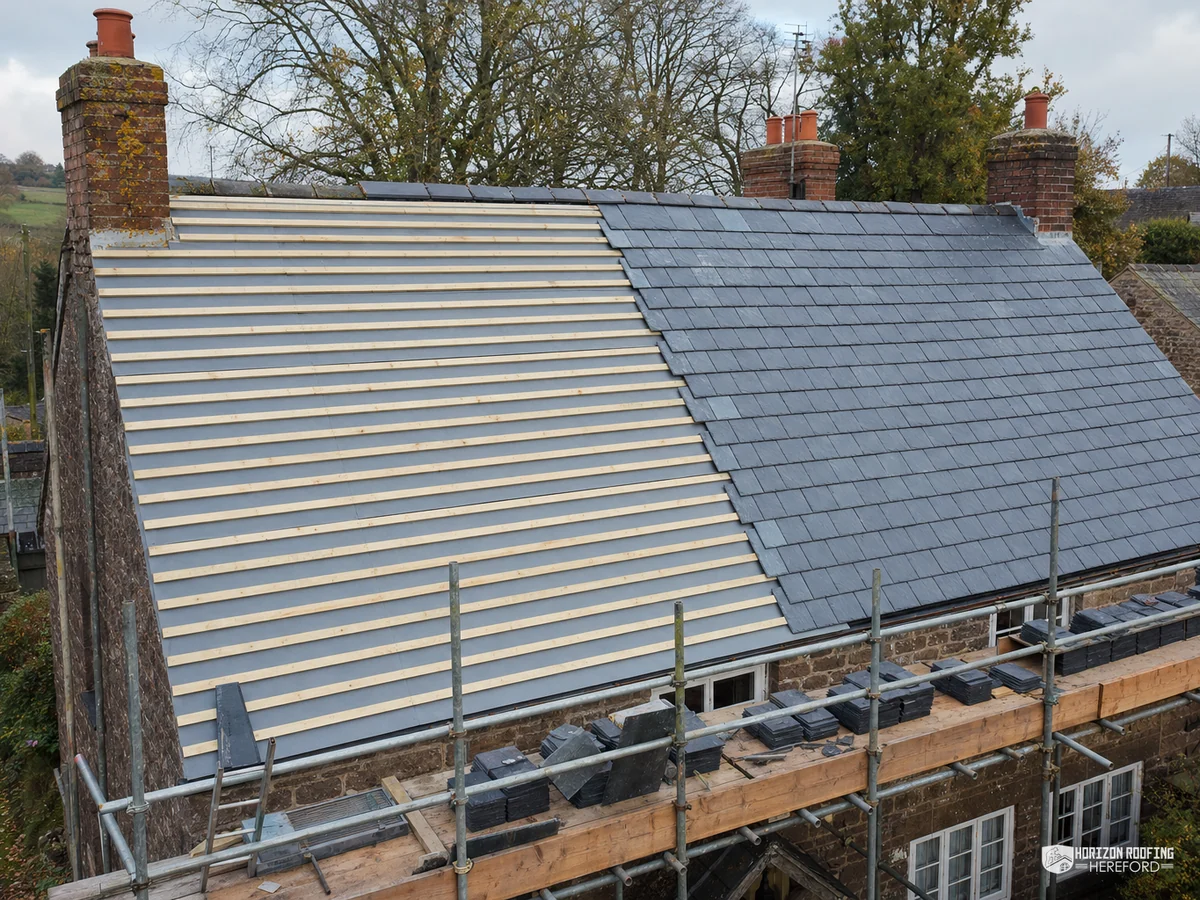
  • Slate roofs and chimney stacks along a red brick Victorian terrace
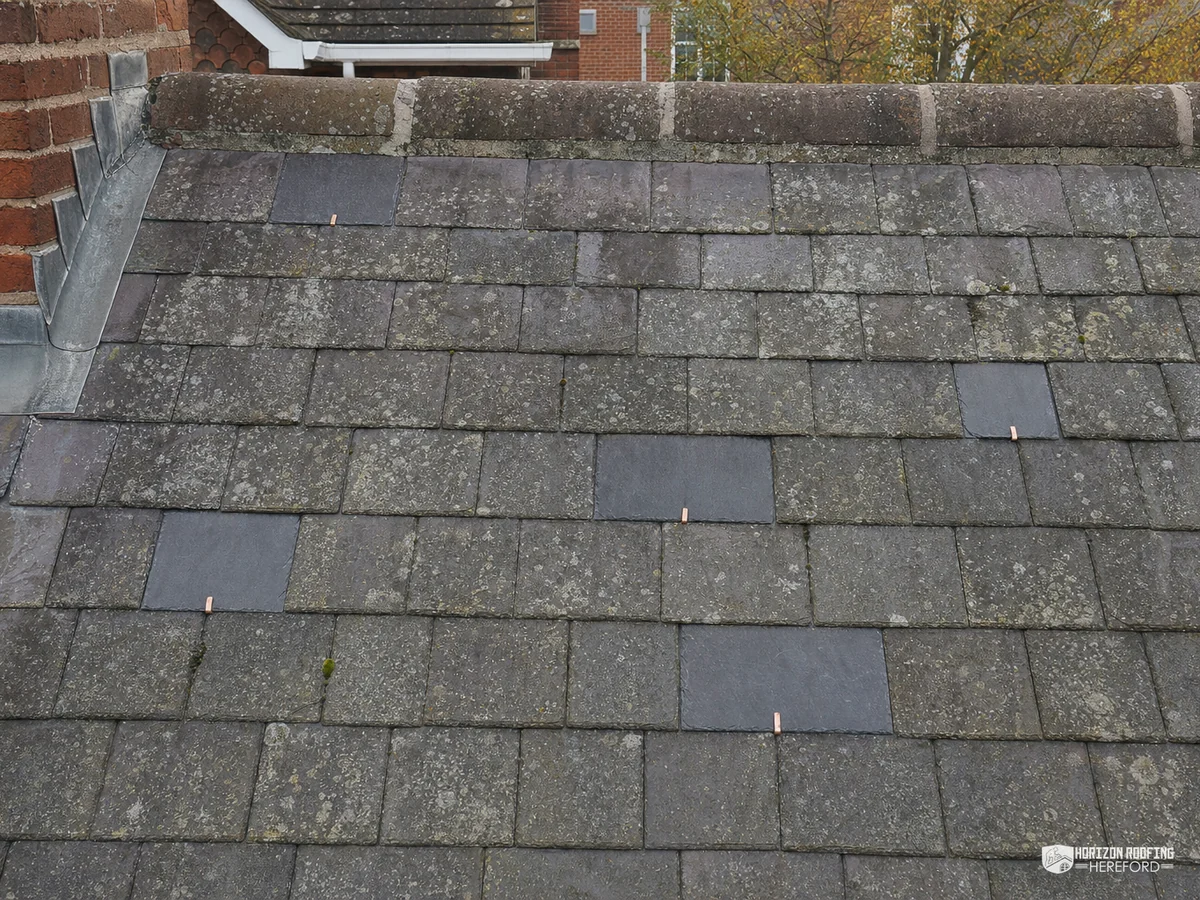
    Lead at stacks and wallsSplit lead at a stack or wall abutment lets rain behind the covering.
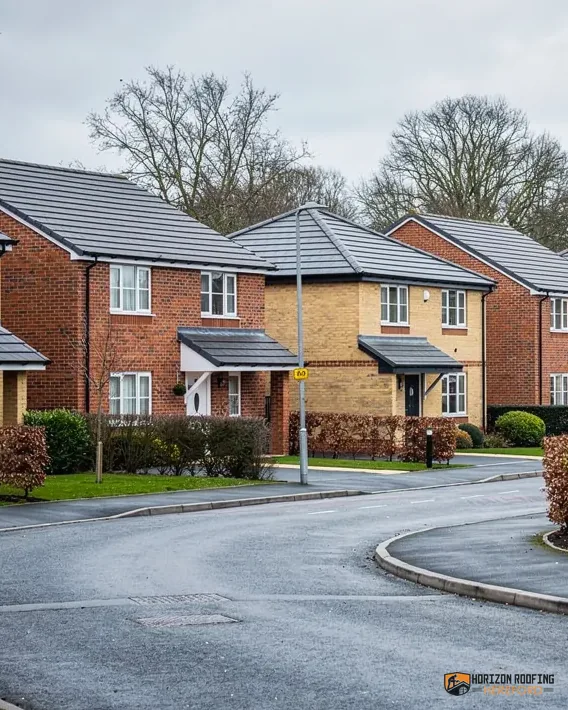
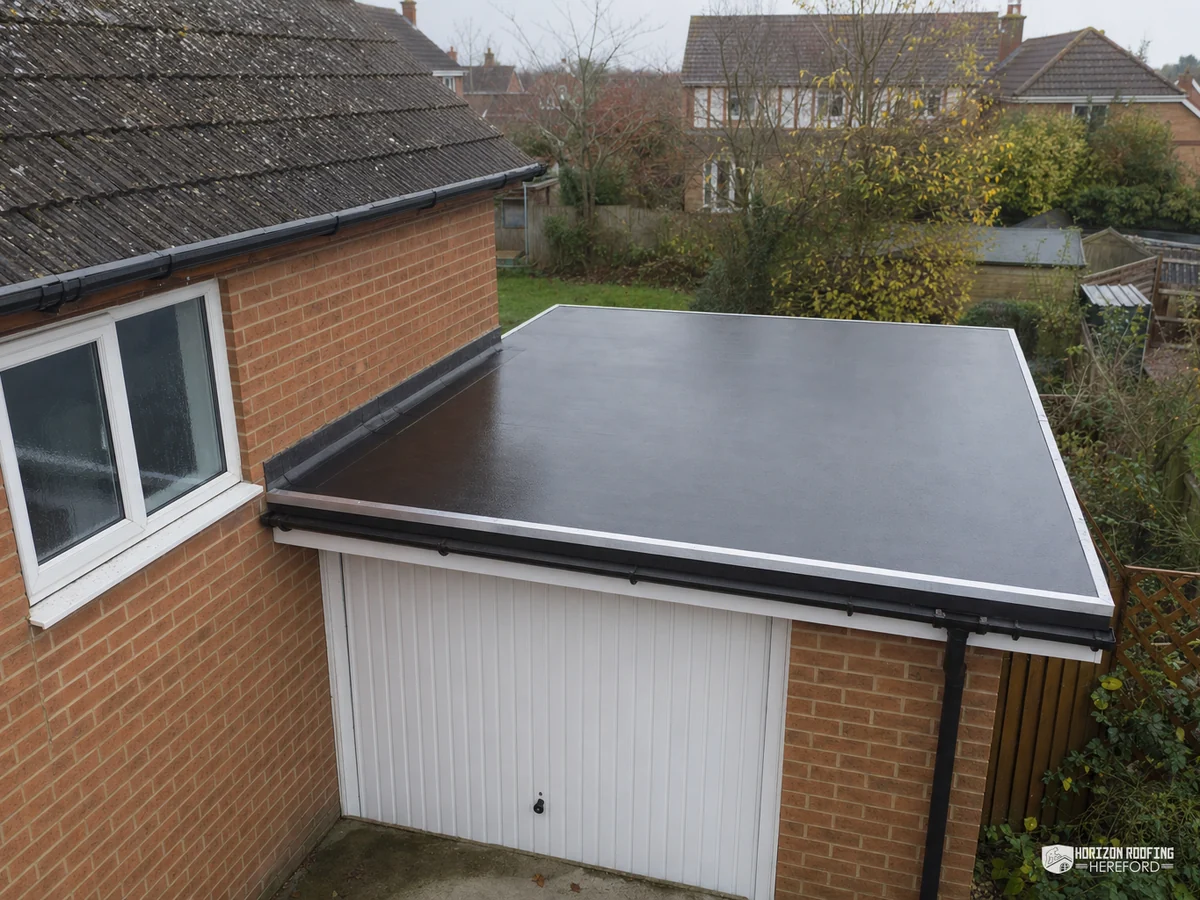
  • Newer homes with grey concrete tile roofs along a curving estate road
    Listed houses and cottagesListed roofs need consent for works that change their character.

Our map of Ashleworth

Ashleworth on a street map, with a dashed circle around the town and the nearest towns we cover. Tiles © Esri; map data © Esri, HERE, Garmin, OpenStreetMap contributors.

An Ashleworth roof, read from the slope

Conservation area repairs, lead and listings: three checks in Ashleworth

Our survey opens on the slopes, where the conservation area and the Article 4 direction shape what a repair can be, then turns to lead at the stacks and walls, and closes on listings and licences.

A drawn cut-away section through a Herefordshire border house: the front of the main roof is cut open to show the rafters, underlay, battens and slates, beside a black-and-white timber-framed gable. Numbered, from the ridge down: 1 Slopes; 2 Lead work; 3 Listings and licences.

Fig. 1 An Ashleworth roof in section: slope, lead flashing and wall head, numbered in survey order.

Callout 1 of 3

Slopes and repairs inside the Ashleworth Conservation Area

Tewkesbury Borough Council lists a conservation area at Ashleworth Green, and a roof inside it is read by neighbours and passers-by as part of the street. In England a conservation area weighs on dormer windows, so ask Tewkesbury Borough Council first. Re-covering is a separate question and that rule does not catch it, but a village's character is built from many small repairs, so we handle each one with care. A like-for-like repair, in the same material, size and laying pattern, leaves a roof as it was. Before we touch the covering we photograph it, so the new work can be matched and the file shows what stood there.

The council's Article 4 list also names a direction for Ashleworth Green. What that direction covers, and which houses it reaches, is for the council to say, so ask Tewkesbury Borough Council before you plan any roof change near the Green. In the government's planning guidance an Article 4 direction "enables the Secretary of State or the local planning authority to withdraw specified permitted development rights across a defined area", and the council's answer goes straight into the repair plan.

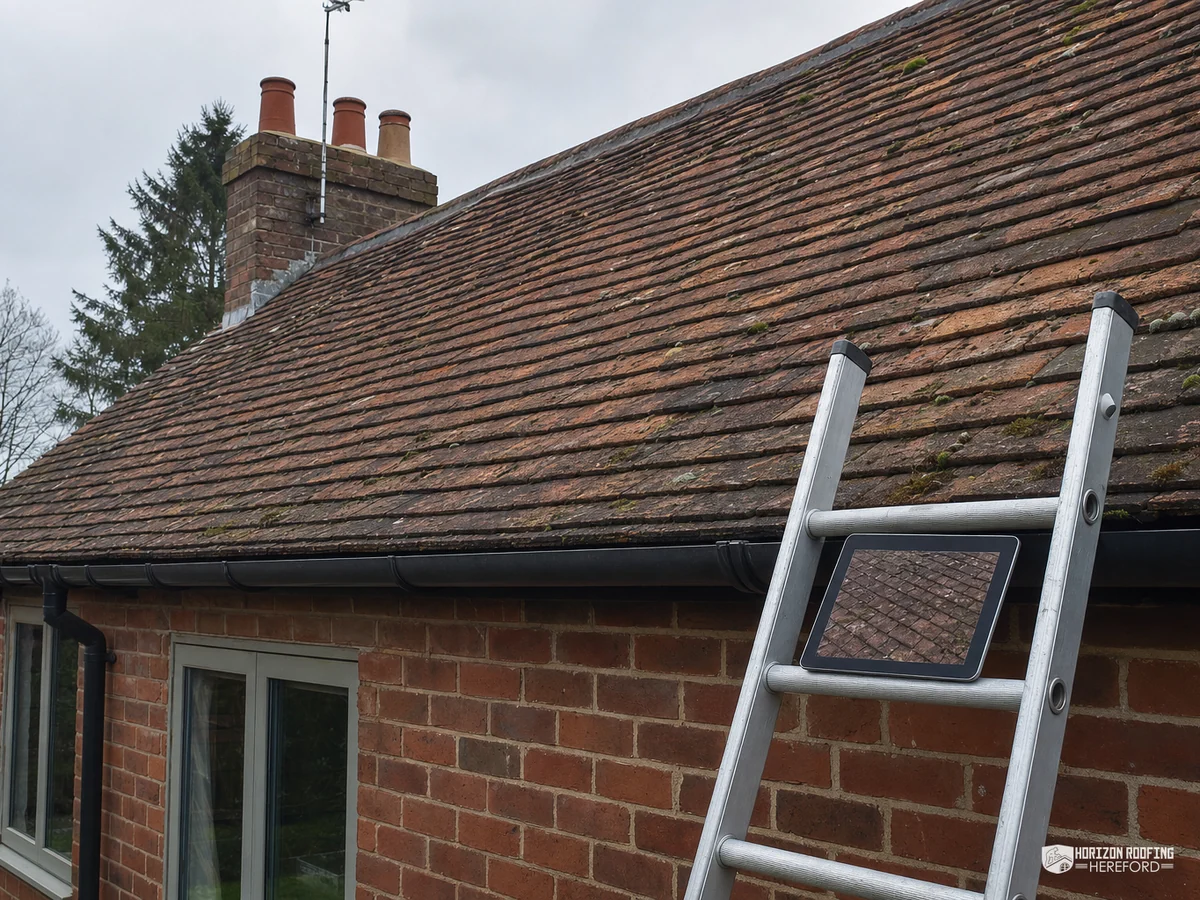
Matching a covering is a job of sorting and sourcing. Tiles lifted from one slope are sorted, and the good ones are kept to patch another part of the same roof, which holds colour and weathering together. If your roof is natural slate or stone, SPAB's advice note for Wales and the Marches says that many such roofs have been changed to different stones, to slates or to fake stone slates, and that a claim of unavailability or long delivery should always be checked with the quarries. We make that check before suggesting a change of material.

Colour and texture change as a roof ages. A new tile set among weathered ones stands out for a season or two, and the way to soften that is to mix new and reclaimed pieces across a slope instead of grouping them. Where the ridge, the verge and the hip are finished in the same way as the originals, the repair belongs to the roof it sits on.

Age is no reason to replace what still works. HomeBuilding gives Welsh slate "100+ years", and a covering within its range can be repaired, with failed fixings renewed and slipped pieces set back. Our roof repairs hub sets out the repairs we make, from single tiles to whole ridges, and the photographs show each fault close up.

A repair set against a change of covering

SoundSame material, size and laying pattern as the original
Needs workA new covering that changes the colour or the texture of the slope

In a conservation area, the best repair is the one a passer-by cannot pick out.

Callout 2 of 3

Lead flashings and soakers at Ashleworth stacks and walls

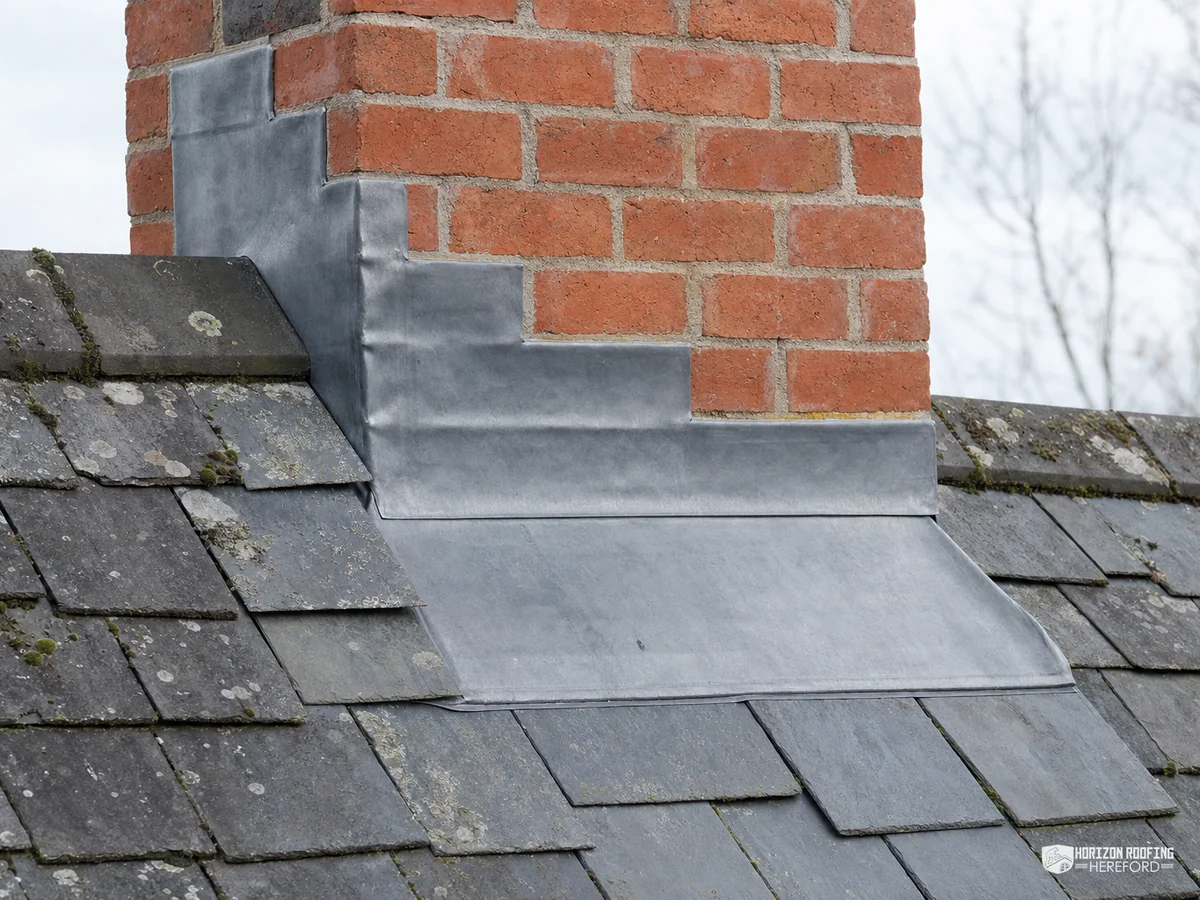
Wherever a roof butts against a chimney stack, a gable wall or a dormer cheek, a strip of lead is let into the masonry and laid down over the covering. That strip is the flashing. A soaker is a folded lead piece, cut small, and worked in beneath each tile or slate course beside the stack. The lead trough behind the stack, called the back gutter, turns water round it. Along a wall that slopes with the roof, the flashing steps up in short lengths, one for each course of brick or stone.

Royston Lead's table codes each thickness of lead sheet. Code 3 is "Recommended for lead soakers only", while Codes 4, 5 and 6 are listed for flashings, so the code on the roof is matched to the job and not picked from habit. Lead moves with heat, expanding by day and contracting by night, and it splits when it is clamped hard at both ends or dressed too tight. A split along a flashing can mean it was fixed with no room to move.

Failed lead is replaced in the same code or a better-suited one. We do not smear sealant over a split, because sealant hides the fault and lets water spread behind the lead. For correctly fitted lead flashing, MyJobQuote's figure is that it "can last for over 80 years", so lead that is sound, well dressed and tucked in tight is kept and re-pointed.

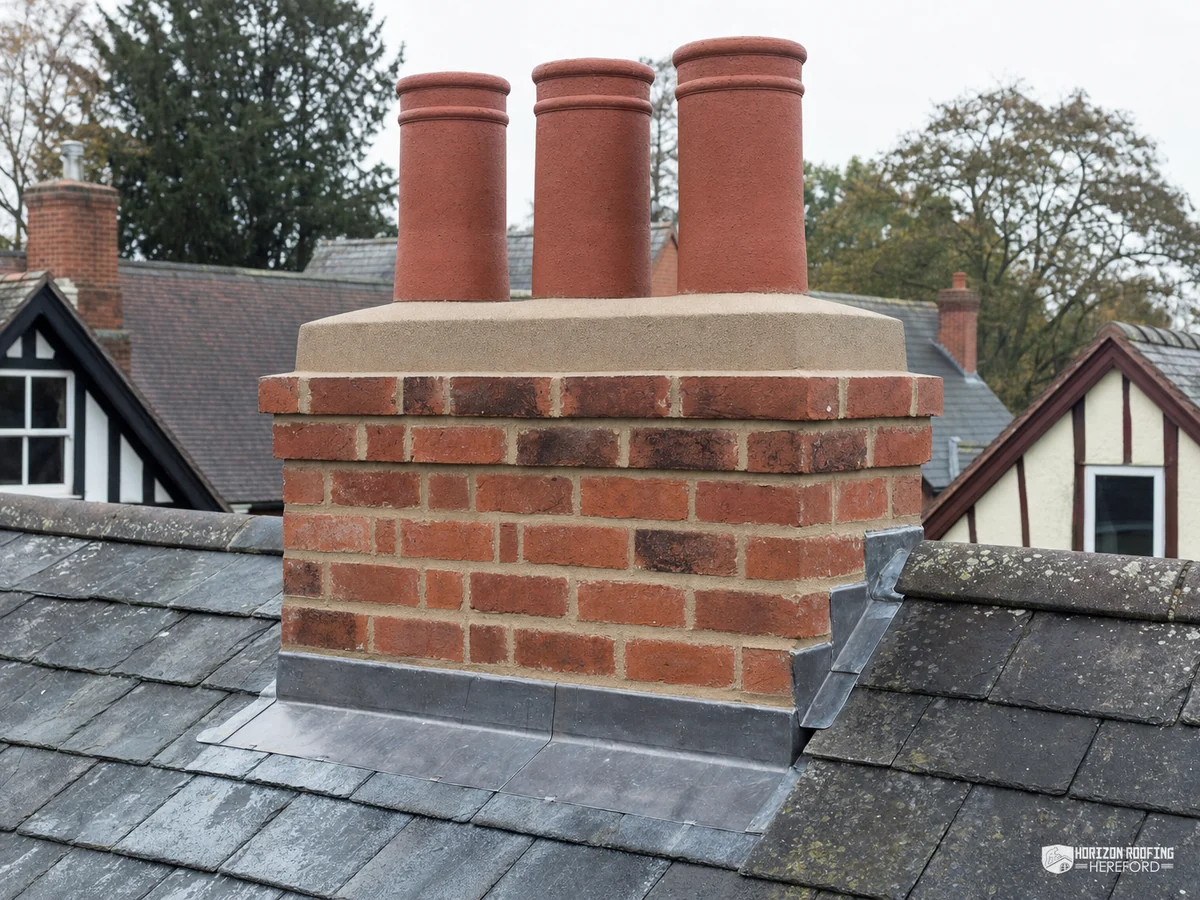
The mortar the lead is tucked into matters as much as the lead. A joint raked out and refilled with a mortar harder than the stone beside it cracks the masonry, so on older walls we match the mix to the wall. We also look at the stack beyond its lead. The pointing, the flaunching and the pots get the same close look, and a stack that has let go at the top is photographed from every side so the report can show it. Chimney stacks add one more job: the lead at the base of each stack has four sides to seal, and the side facing uphill, where the back gutter sits, gathers the run-off from the slope above it. Our lead roofing hub covers flashings, soakers, valleys and flat lead roofs, and the report pictures each junction with the old lead lifted back.

Lead at an Ashleworth junction

Flashing
Lead let into the joint and laid over the covering
Soaker
Folded lead under each course beside the stack
Back gutter
A lead trough behind the stack
Step flashing
Stepped lead along a wall that slopes with the roof
Fig. 3 Leadwork, drawn close

Callout 3 of 3

Listed houses, the council's rules and the licences

Kozicot and Part of Post Office is listed Grade II (list entry 1305764, first listed 26 November 1986), and so is Lords Hill House (list entry 1091399, first listed 26 November 1986). Mailly Cottage is listed Grade II as well (list entry 1091400), with the same first-listed date. Under section 7 of the Planning (Listed Buildings and Conservation Areas) Act 1990, work that alters a listed building's "character as a building of special architectural or historic interest" needs consent first. The house keeps its permitted development rights alongside that duty, so Tewkesbury Borough Council settles materials and method before a tile comes off. Photographs of the covering, the ridge and the chimneys go to the council with any request, so it can see what is there before it decides, and you receive the same set.

Two Planning Portal limits decide whether a re-roof in England normally needs an application: less than 25 per cent of the building envelope, and less than 50 per cent of the roof. A job above either goes to building control, which here means Cheltenham and Tewkesbury Building Control or a registered building control approver. The main number for Tewkesbury Borough Council is 01684 295010.

A scaffold standing on the road is a matter for Gloucestershire County Council, the highway authority, and the Highways Act 1980 requires a licence for it. We arrange the licence with our scaffolder, and the county's notice period is at least twelve calendar days, so a job that needs one is planned with that wait built in, and your start date is set to cover it.

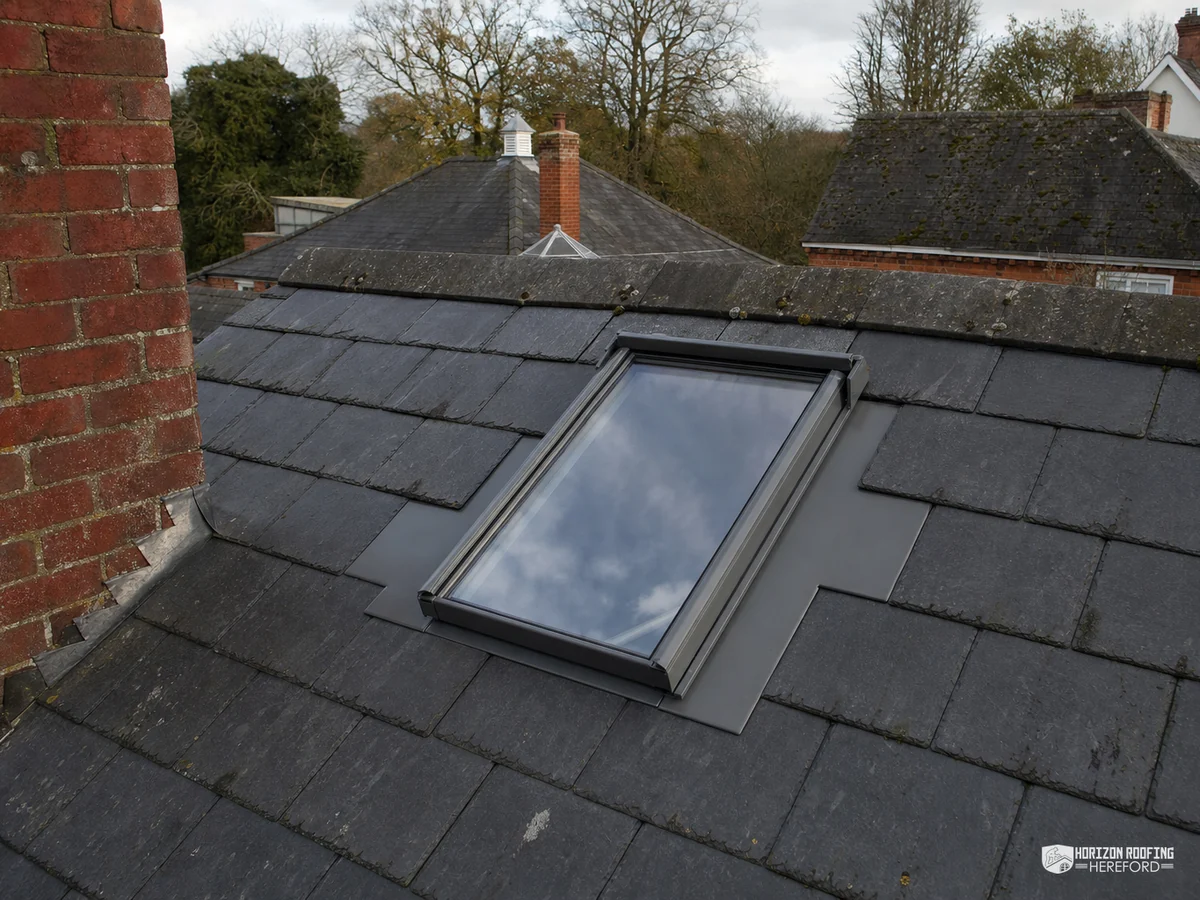
Windows in a roof slope, and dormers, turn on the particular house, and our planning guide for roof windows walks through each case in England. Ashleworth lies 26.7 miles south-east of central Hereford by road, about 45 minutes in the car, and the closest station is Gloucester. Our listed and heritage roofing hub shows how a protected roof is surveyed and repaired, step by step, with photographs for the council.

Terms in the Ashleworth paperwork

Article 4 direction
Withdraws specified permitted development rights across a defined area
Listed building consent
Consent for works that affect a listed building's character
Abutment
Where a roof slope meets a rising wall
Soaker
A folded lead piece slipped under each course of covering

Ashleworth roofs: conservation area, lead and listings

Does the Ashleworth Conservation Area stop me re-roofing my house?

Not on its own. An Ashleworth dormer inside the area needs the council's view before any drawing is paid for, and changing a roof covering in the same material is another matter. Tewkesbury Borough Council can say whether an Article 4 direction applies to your address, and a listed house needs consent as well. We photograph the existing covering first, so the new work matches it.

What does the Ashleworth Green Article 4 direction cover?

Tewkesbury Borough Council's list names an Article 4 direction for Ashleworth Green, and the council is the body to say what it covers and which houses it reaches. Ask it before planning any roof change near the Green, and bring the answer to the survey so the repair can be planned around it. Such a direction withdraws specified permitted development rights across a defined area, so the answer can change what a roof job needs.

Are Kozicot, Lords Hill House and Mailly Cottage listed?

Kozicot and Part of Post Office and Lords Hill House are listed Grade II (list entries 1305764 and 1091399, both first listed 26 November 1986), and Mailly Cottage is listed Grade II (list entry 1091400). Work touching a listed building's character needs listed building consent from Tewkesbury Borough Council under section 7 of the 1990 Act, and a listed roof is surveyed with that consent in mind from the first visit.

How long can lead flashing last on an Ashleworth chimney?

On MyJobQuote's figures, lead flashing that is installed correctly "can last for over 80 years". That is a hedge for good work, never a promise, and it does not cover lead that was clamped too tight or fixed with no room to move. We check every junction on the stack and report on each one, so you know which lead is sound and which has split.

How is a scaffold licence arranged on an Ashleworth road?

Gloucestershire County Council's table lists the scaffolding or hoarding licence at £145 for a minimum of 28 days, then £36 per 7 days to extend (prices from 1 April 2025), and asks for twelve calendar days' notice. Section 169 of the Highways Act 1980 is the reason a licence is needed. We arrange the licence with our scaffolder, and the survey allows for the lead time.

Does re-roofing an Ashleworth house need Building Regulations approval?

Whether a re-roof in England normally needs an application turns on two Planning Portal limits: less than 25 per cent of the building envelope and less than 50 per cent of the roof. A larger job goes to building control. Cheltenham and Tewkesbury Building Control, or a registered building control approver, confirms what applies, and AD L 2021 Table 4.3 governs the insulation of a renovated roof.

Book a conservation-area survey in Ashleworth

Send a photo of the roof or the lead at the stack, and a survey date will follow.

10-year workmanship guarantee, in writing