
01432 610152 Get a quote Call 01432 610152

Roofers in Gloucester

Roofing in Gloucester that reads the council's Article 4 list as closely as the slopes.

Each defect is photographed, each direction is checked, and the price arrives as one written total.

Get a free quoteCall 01432 610152

Grade I houses and Article 4 directions

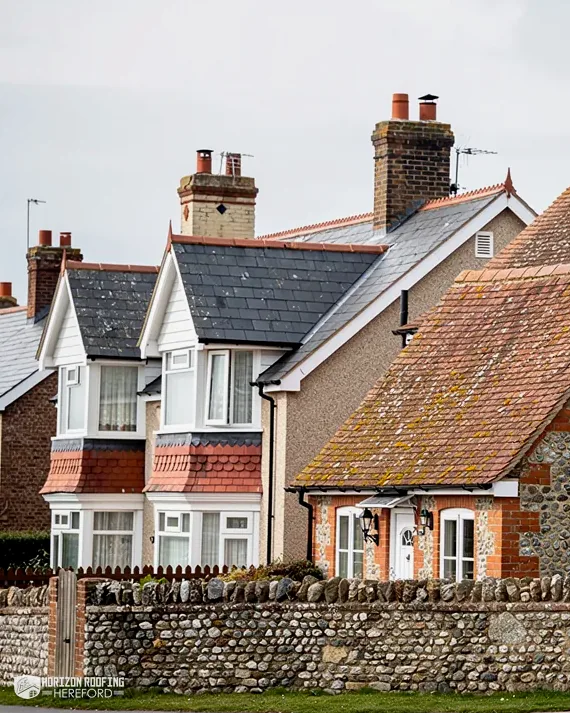
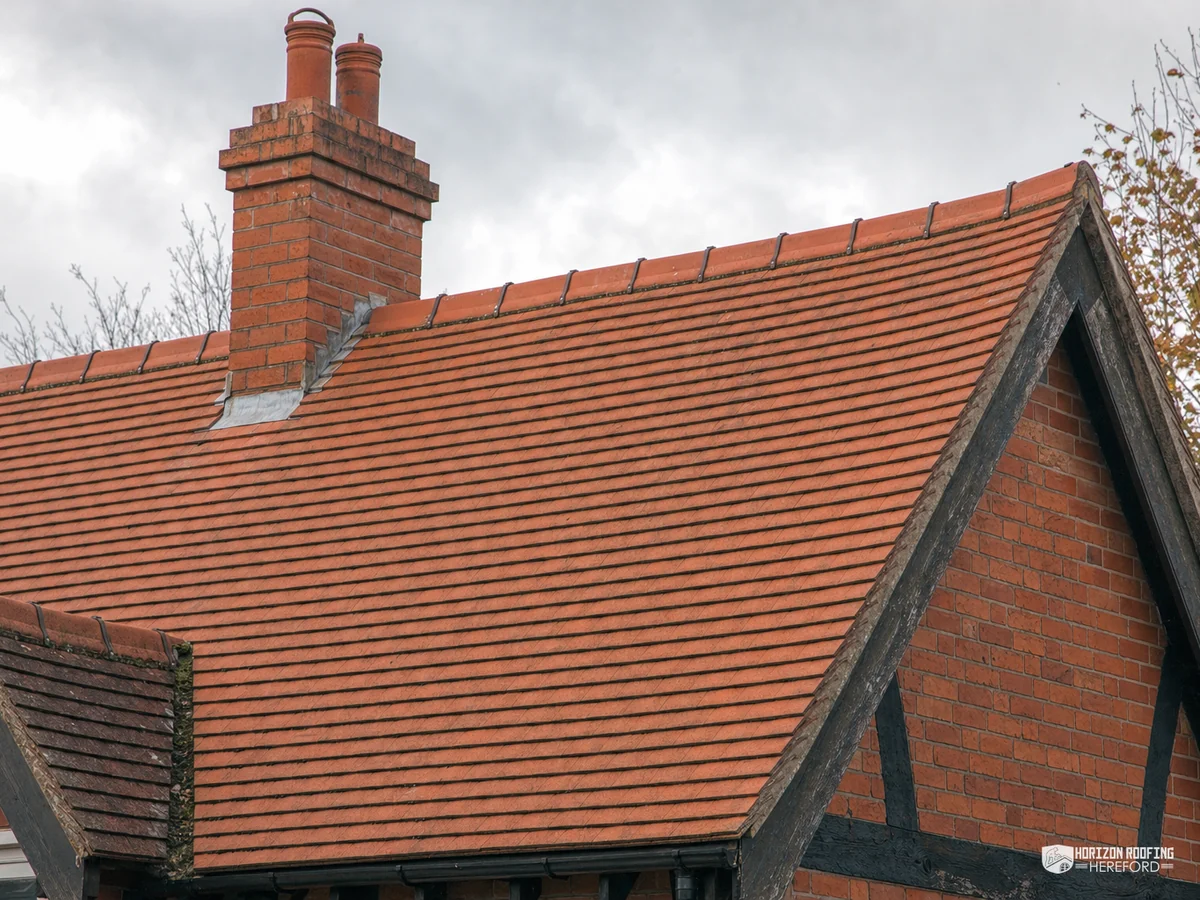
  • Older cottages with weathered clay tile roofs and brick chimneys behind a flint wall
    New Inn, Grade INew Inn is listed Grade I, entry 1245714, first listed on 23 January 1952.
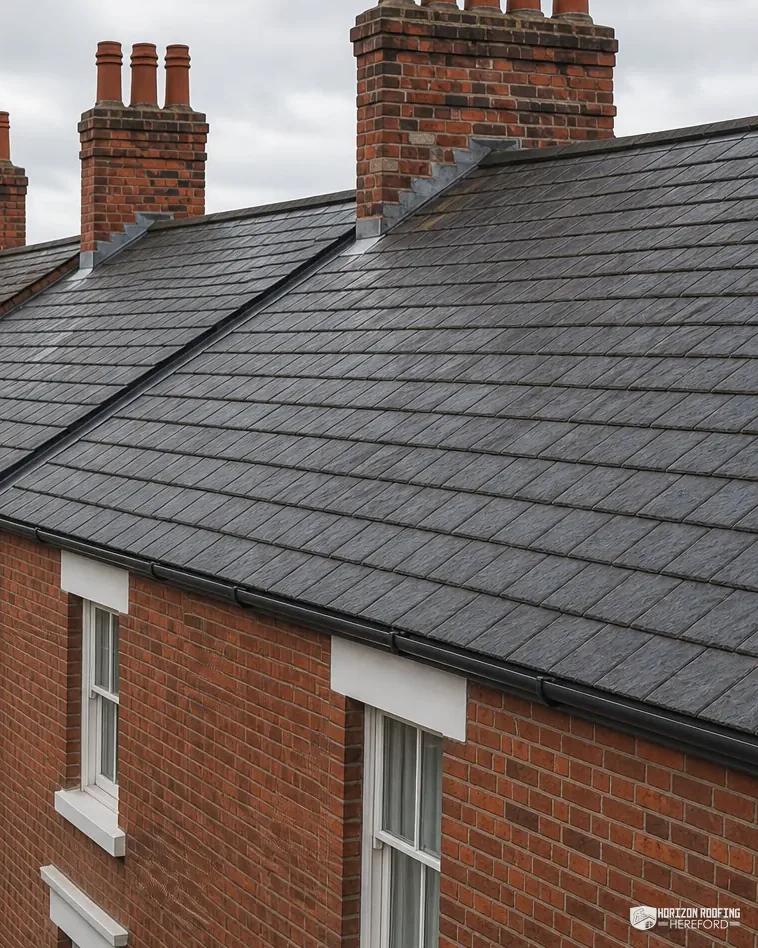
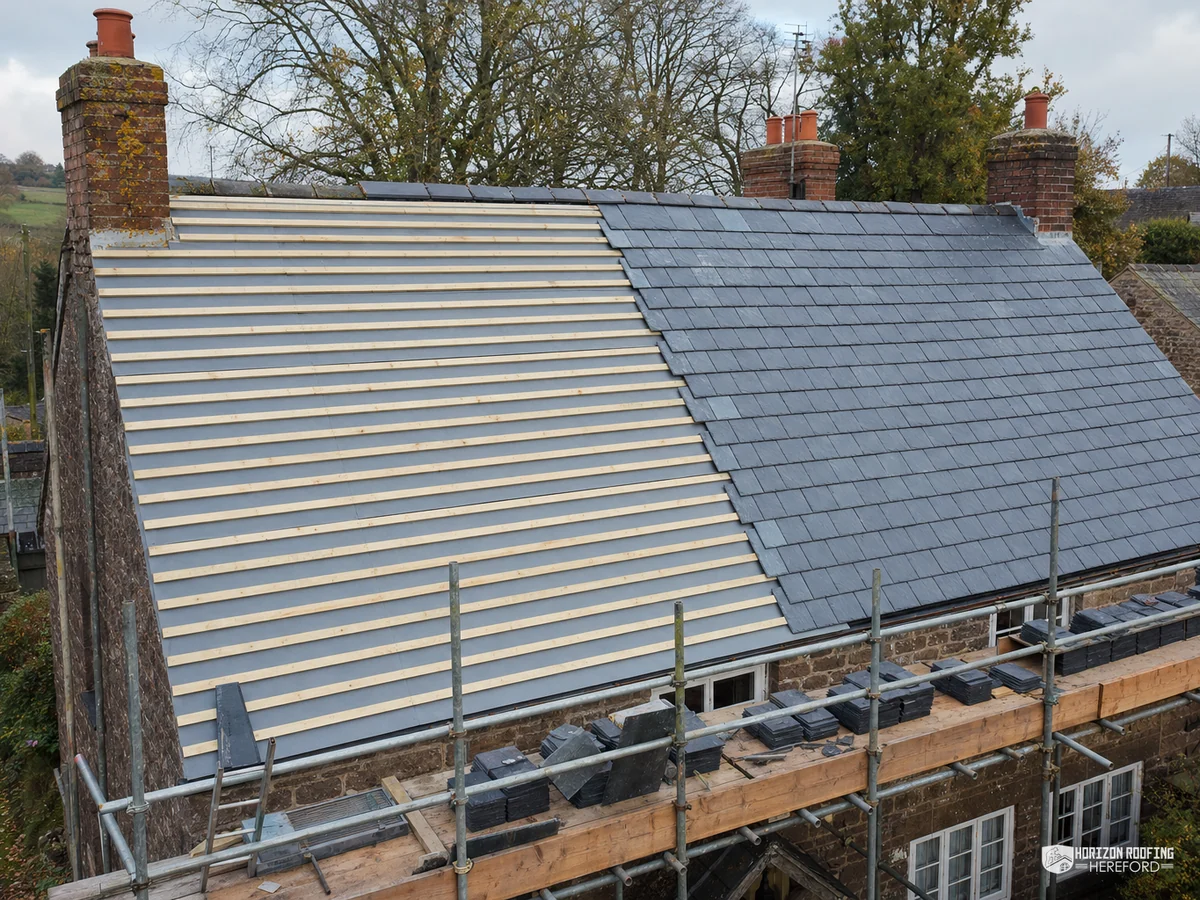
  • Slate roofs and chimney stacks along a red brick Victorian terrace
    Old Judges HouseOld Judges House carries a Grade I listing, entry 1245450, dated 23 January 1952.
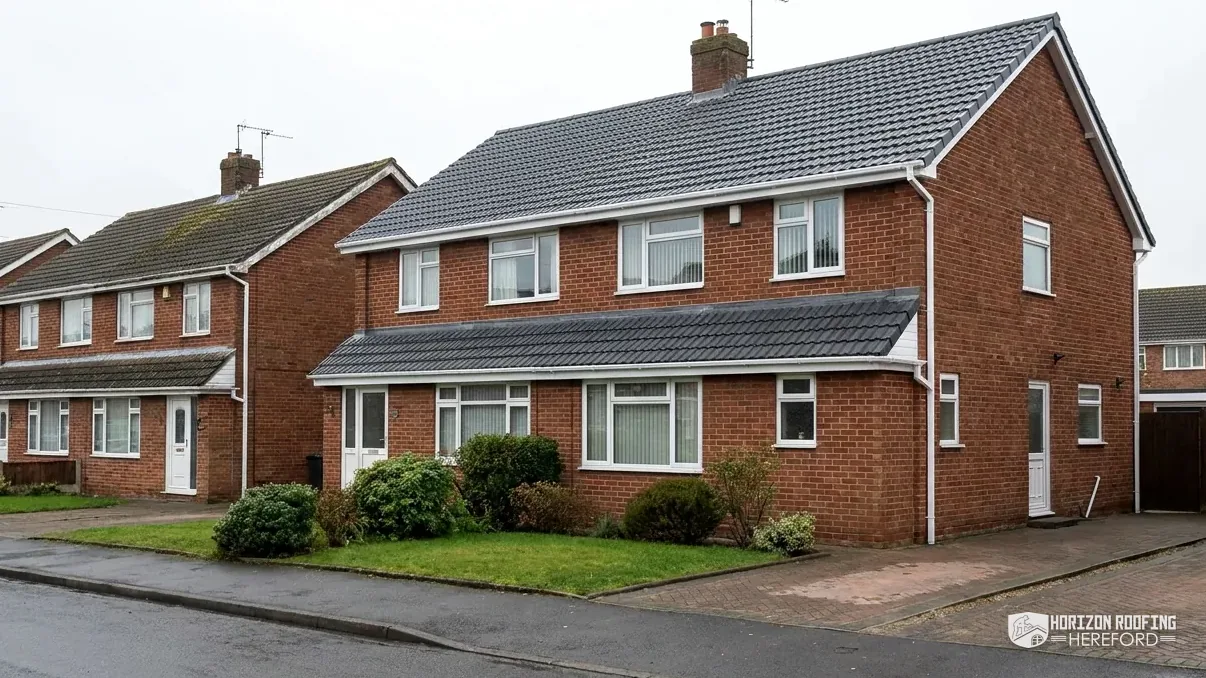
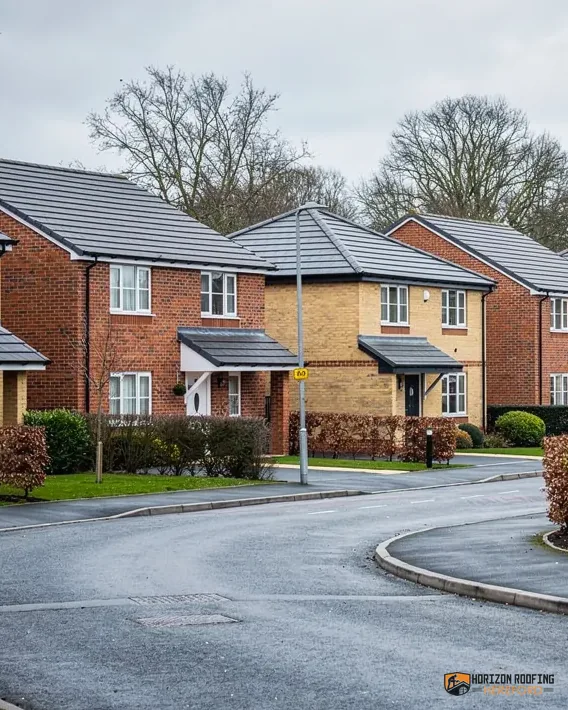
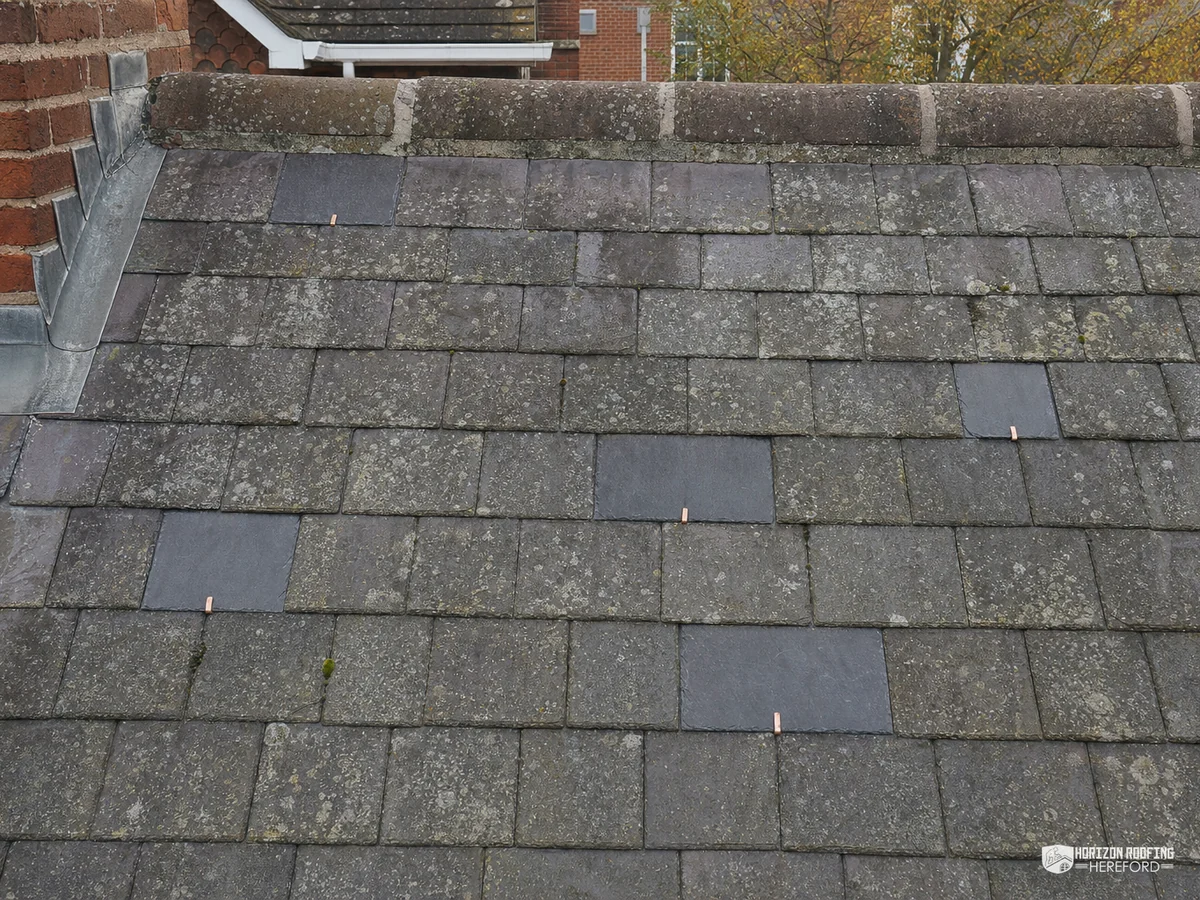
  • Newer homes with grey concrete tile roofs along a curving estate road
    Two Article 4 directionsGloucester City Council lists directions for St Michael's Square and Southgate Street.

Gloucester on our area map

Gloucester on a street map, with a dashed circle around the town and the nearest towns we cover. Tiles © Esri; map data © Esri, HERE, Garmin, OpenStreetMap contributors.

Gloucester roofs and the council's list

Slope, stack and Grade I wall: reading a Gloucester roof against the Article 4 list

First the slopes and what covers them, where two Article 4 directions touch clay tiles and natural slates; then the chimney stacks and their lead; last the Grade I buildings and conservation areas of the city.

A drawn cut-away section through a Herefordshire border house: the front of the main roof is cut open to show the rafters, underlay, battens and slates, beside a black-and-white timber-framed gable. Numbered, from the ridge down: 1 Covering; 2 Chimney stacks; 3 Grade I walls.

Fig. 1 A Gloucester roof in section, with slope, stack and Grade I wall numbered.

Callout 1 of 3

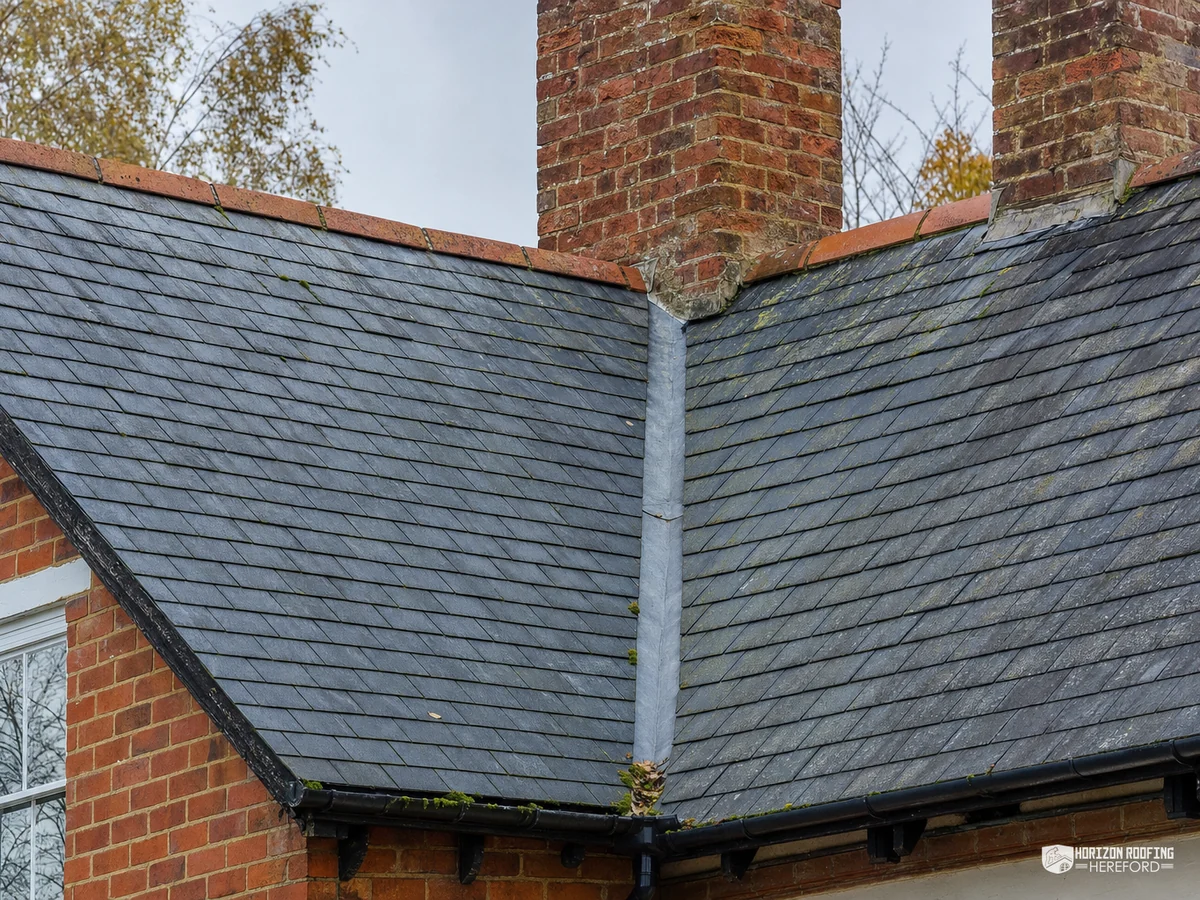
Clay, slate and the St Michael's Square direction

Gloucester City Council keeps a list of Article 4 directions, and two entries bear on roofs. Among the works the St Michael's Square direction brings under planning control are these four: enlargement, improvement or other alteration to the house, including changing windows and doors; any alteration to the roof, including roof lights, dormer windows and the substitution of clay tiles and natural slates with concrete or other materials; a porch outside any external door; and the installation, alteration or removal of a chimney. The Southgate Street Conservation Area direction, confirmed in January 2014, applies to named properties and includes the first three of those.

In plain terms, a house caught by either direction cannot swap clay for concrete as a free choice, because the substitution is a planning question for Gloucester City Council. Even where no direction applies, the covering matters. Marley, citing the BRE, gives clay tiles a minimum life expectancy of 60 years, and the BRE figure is for clay only. HomeBuilding puts Welsh slate at "100+ years", and SPAB says a well-slated roof is "likely to be more than 100 years". Reclaimed Welsh slate is lower, at "50-80 years" in HomeBuilding. Concrete tiles carry two published figures: Marley says "around 60 years", while HomeBuilding says "40-50 years", and both are named so you can weigh them.

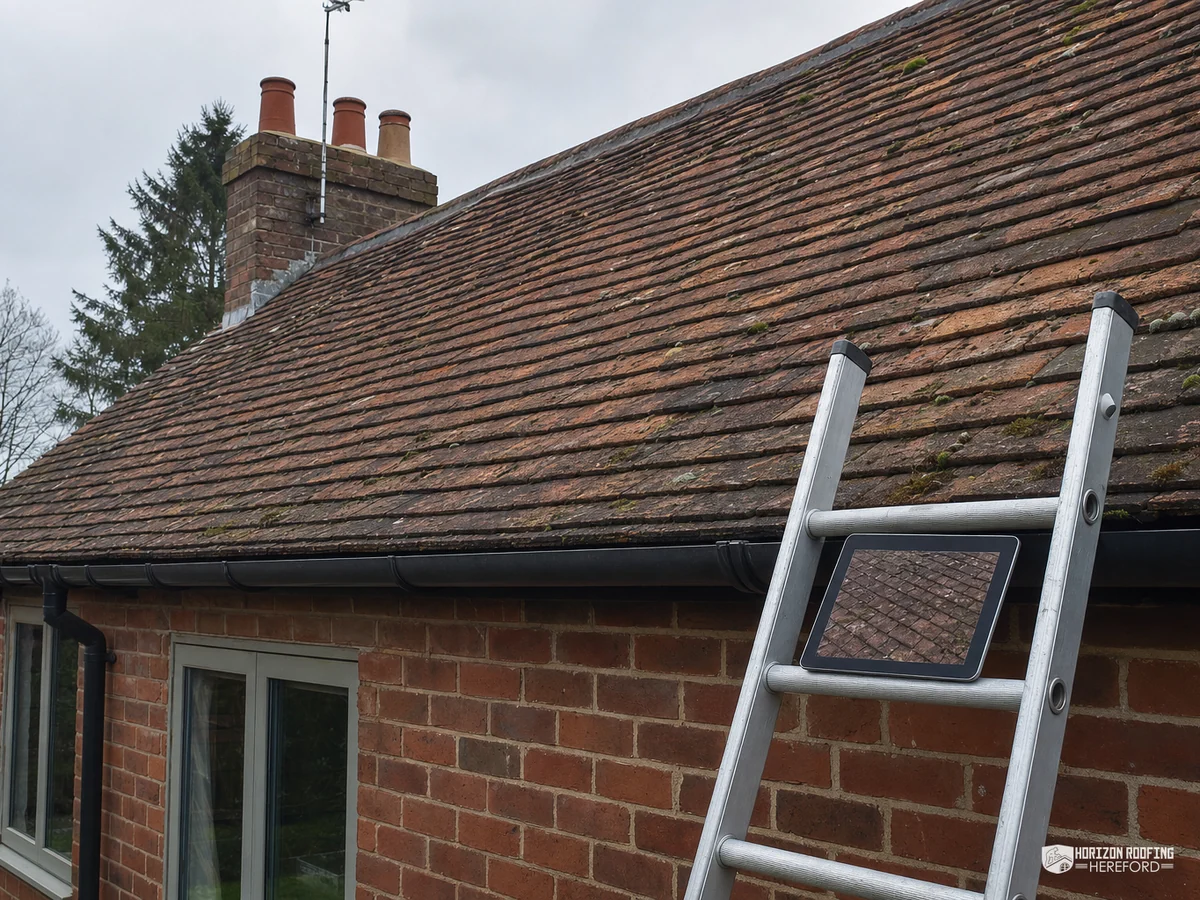
Those lifespans are why a sound clay or slate roof is worth keeping. We strip, sort and refix the good units and replace only the broken ones, with matching new or reclaimed pieces. SPAB's advice is that "Claims of unavailability or long delivery times should always be checked with the quarries", and we make that check before any different material is suggested. The covering is photographed slope by slope, and where a direction applies the pictures go to the council with the proposal. Where a slope is part original and part replacement, the join is photographed too, so the mixed area can be traced. The survey records which units are original and which came later, so that a proposal can match the old covering instead of guessing at it.

To find out whether your house is caught, use the council's own list of directions and ask Gloucester City Council directly, quoting the address. A roof that is not caught still gets the same survey. Our slate roofing page covers sorting, refixing and matching, and the written price states the covering that is proposed.

Checked on a Gloucester slope

  • Slipped, cracked or missing tiles and slates
  • Nail fixings and slate hooks
  • Battens and underlay from the loft
  • Gaps at the lowest course above the gutter
  • The covering's material set against any direction

A direction can turn a change of covering into a question for the council, so we ask it first.

Fig. 2 The slopes, drawn close

Callout 2 of 3

Chimneys, lead flashings and the St Michael's Square direction

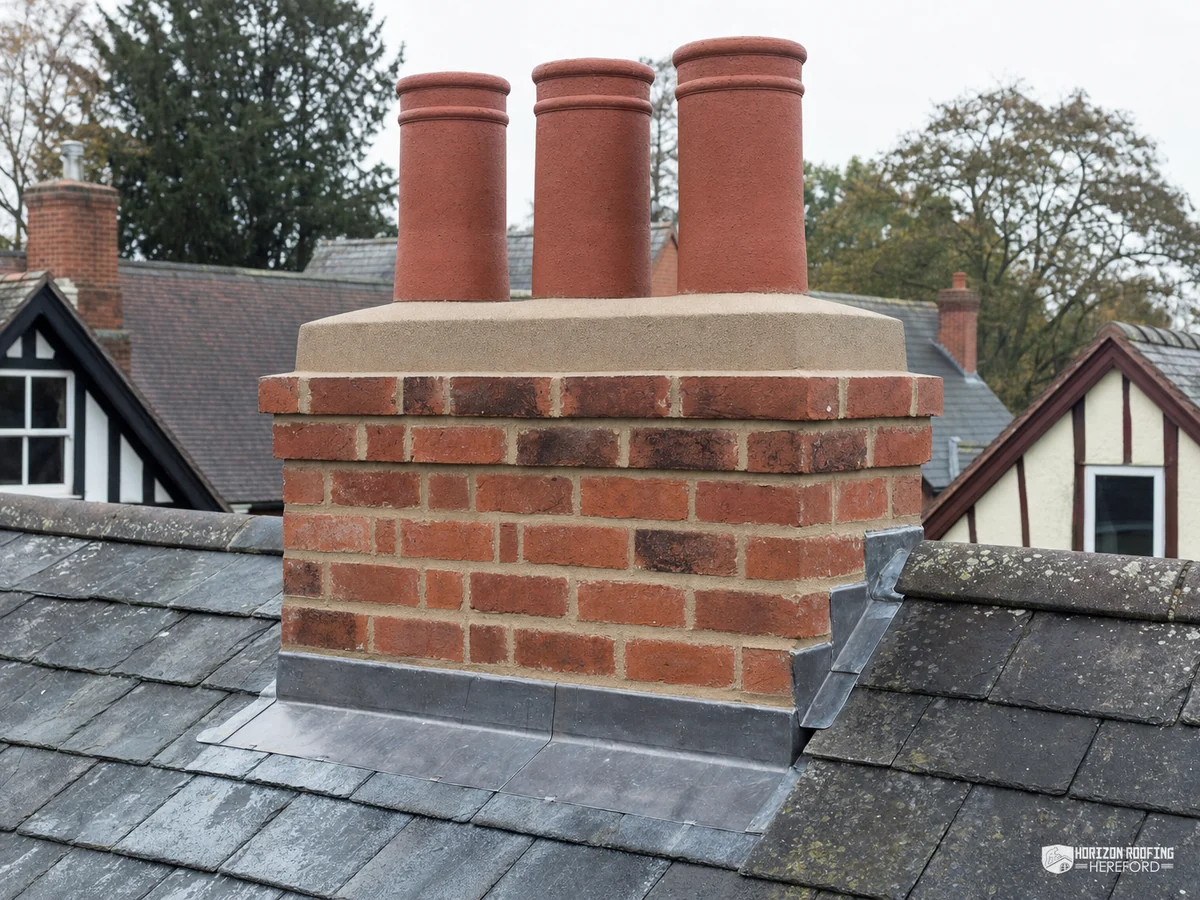
Stacks stand clear of the slope and meet weather on every side, so their joints and lead are checked early. We read the brickwork face by face, noting spalled bricks (those whose surface is flaking away) and open joints, and we test the pointing. At the top, the flaunching holds the pots in place, and a cracked collar lets water run down inside the flue. Each face is photographed from the roof, since the crown of a stack hides from the street.

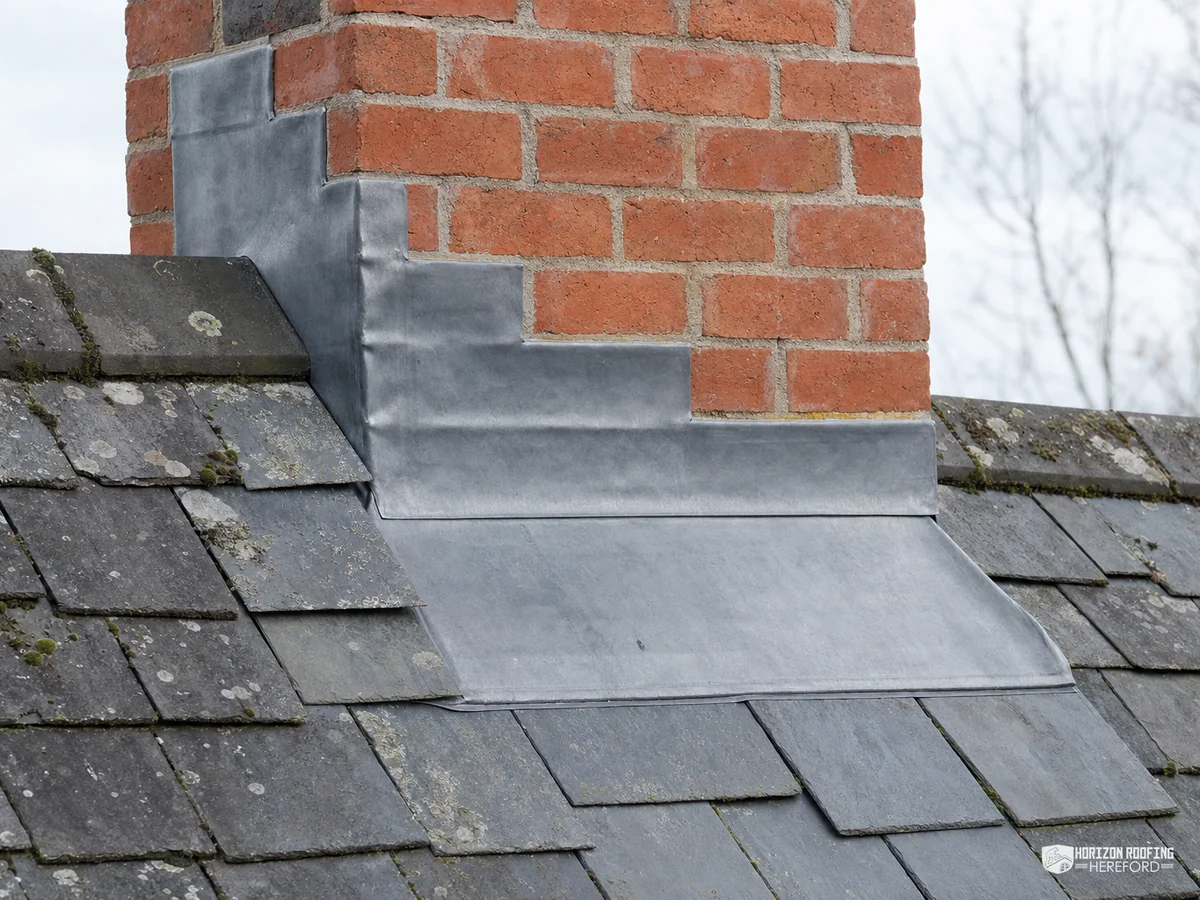
Where the stack leaves the slope, lead flashings, soakers and a back gutter keep the junction dry. The flashing, a lead strip let into a raked-out mortar joint, bends down across the covering; soakers are folded pieces that slip beneath each course at the sides; the back gutter is the channel behind the stack. MyJobQuote says properly fitted lead flashing "can last for over 80 years", so a sound junction is left alone, and a split or lifted one is renewed in new lead, never smeared over with sealant. A leaning stack, or one with a crack running through several courses, is a rebuild rather than a repointing job, and the report shows the crack in a photograph. If the damage stops short of the lower brickwork, so does the rebuild. Pots that are loose or cracked are reset or replaced on the same visit.

Removal is a separate matter. The St Michael's Square direction lists "the installation, alteration or removal of a chimney" among the rights it withdraws, so a stack in that square is a question for Gloucester City Council before it is a job for us. Taking out a chimney breast inside the house brings in Building Regulations, and the Planning Portal says approval "will always apply" to it. A breast on the party wall with a neighbour triggers the Party Wall etc. Act 1996, which asks the owner for at least two months' written notice before any cutting.

In Gloucester, building control comes from the Gloucestershire Building Control Partnership, a service shared by Stroud District Council and Gloucester City Council, with a registered building control approver as the alternative. Our chimney repairs page covers repointing, rebuilding and lead work from the first photograph to the clear-up.

A Gloucester chimney, face by face

Brickwork
Each face read for spalling and open joints
Pointing
Tested, and raked out where it has failed
Flaunching
The mortar collar, checked for cracks
Pots
Seated firmly and free of damage
Lead
Flashing, soakers and back gutter inspected
Fig. 3 Chimneys, drawn close

Callout 3 of 3

Grade I walls and the city's conservation areas

Grade I listings in the city include the Church of St Mary De Crypt (entry 1245611), New Inn (entry 1245714) and Old Judges House (entry 1245450), each first listed on 23 January 1952, while Greyfriars House and the attached remains of Greyfriars Church carry entry 1245826. A roof near any of them is judged against that setting, and each entry is a separate building, so a job near one is written up as its own case. St Mary de Crypt is an Anglican parish church, with a service every Friday at 1pm according to A Church Near You, so while that use continues its roof work goes by faculty and not by listed building consent. For a house, consent under section 7 of the Planning (Listed Buildings and Conservation Areas) Act 1990 is the control, and permitted development stays alongside it.

Gloucester City Council's conservation areas include these: City Centre, Cathedral Precincts, Barbican, The Docks, Southgate Street, The Spa, Eastgate and St Michael's, and Barton Street. Southgate Street appears on both lists, so a house there can be caught twice over, and the council's interactive map shows which area a property falls within. Roof windows and dormers follow their own English rules, which the planning guide for roof windows explains.

A scaffold on a city street needs a licence under section 169 of the Highways Act 1980. We arrange the licence with our scaffolder, and the charge and notice period are in the questions below. A street with a tight carriageway can mean a scaffold built over the pavement, so we look at access at the first visit, not on the day. The survey also records the roofs on either side, since access, scaffolding and the look of a new covering are all judged in context. For a tall city house the height of the eaves, the width of the pavement and the position of any street furniture decide where the scaffold can go.

On a listed or protected roof the report names each junction, the covering found and the repair proposed, with pictures taken before the work and after it. That record lets the council compare the proposal with what stands on site. Our listed and heritage roofing page describes how we approach protected buildings, from the survey to the last dressing of lead.

Words you will meet on a protected Gloucester roof

Grade I
The highest grade of national listing, for buildings of exceptional interest
Conservation area
A zone the council protects for its character and appearance
Article 4 direction
A council order withdrawing specified permitted development rights in an area
Scaffold licence
Highway permission for a scaffold that obstructs the highway

Gloucester roofs: directions, coverings, chimneys and licences

Can a Gloucester house in St Michael's Square swap clay tiles for concrete?

Not as a free choice. Gloucester City Council's Article 4 direction for St Michael's Square withdraws permitted development rights for any alteration to the roof, including the substitution of clay tiles and natural slates with concrete or other materials. A house caught by it takes the question to the council first. The survey photographs the existing covering so the proposal can be compared with what is there.

Where can I check whether a Gloucester street is protected?

Gloucester City Council lists City Centre, Cathedral Precincts, Barbican, The Docks, Southgate Street, The Spa, Eastgate and St Michael's, and Barton Street as conservation areas. Check your address against the council's own map, and ask the council whether an Article 4 direction applies as well. A street can sit in a conservation area and a direction at once, and the two work separately.

Does removing a chimney in Gloucester need more than building control?

It can. The St Michael's Square direction withdraws permitted development rights for the installation, alteration or removal of a chimney, so a stack there goes to Gloucester City Council. Wherever you live, removing a breast needs Building Regulations approval, and a wall shared with a neighbour adds a party wall notice served by the owner. The survey settles which of these apply before any price is written.

What would a scaffold licence involve on a Gloucester street?

We arrange the licence with our scaffolder under section 169 of the Highways Act 1980. Gloucestershire County Council lists a minimum period of 28 days at £145, with extensions at £36 per 7 days (prices from 1 April 2025), and wants at least 12 calendar days' notice. Tell us about the street and where the scaffold can stand, so the application is complete.

Does re-covering a Gloucester roof need approval?

Gloucester is in England, so the Planning Portal's test is the one that counts. Where the work affects less than 25 per cent of the building envelope and less than 50 per cent of the roof itself, an application is normally unnecessary. Beyond that, the Gloucestershire Building Control Partnership or a registered building control approver is asked. A covering 15 per cent or more heavier needs approval as well.

What do guides give for repairing lead flashing by a Gloucester chimney?

MyJobQuote gives around £200 to patch-repair a chimney's lead flashing, around £570 on average to replace it in full, and £350 to £920 for full chimney leadwork. Checkatrade (June 2026, ex VAT) gives £50 to £70 per metre for lead flashing repairs. These are ranges from other roofs, and a per-metre rate is not a total, so a Gloucester stack is priced in writing after the survey.

A Gloucester roof checked against the list

Send the address and a photograph of the roof, and we will check the covering and the stack against the council's directions.

10-year workmanship guarantee, in writing