

Callout 1 of 3
Caynham stacks: pointing, flaunching and the lead beneath
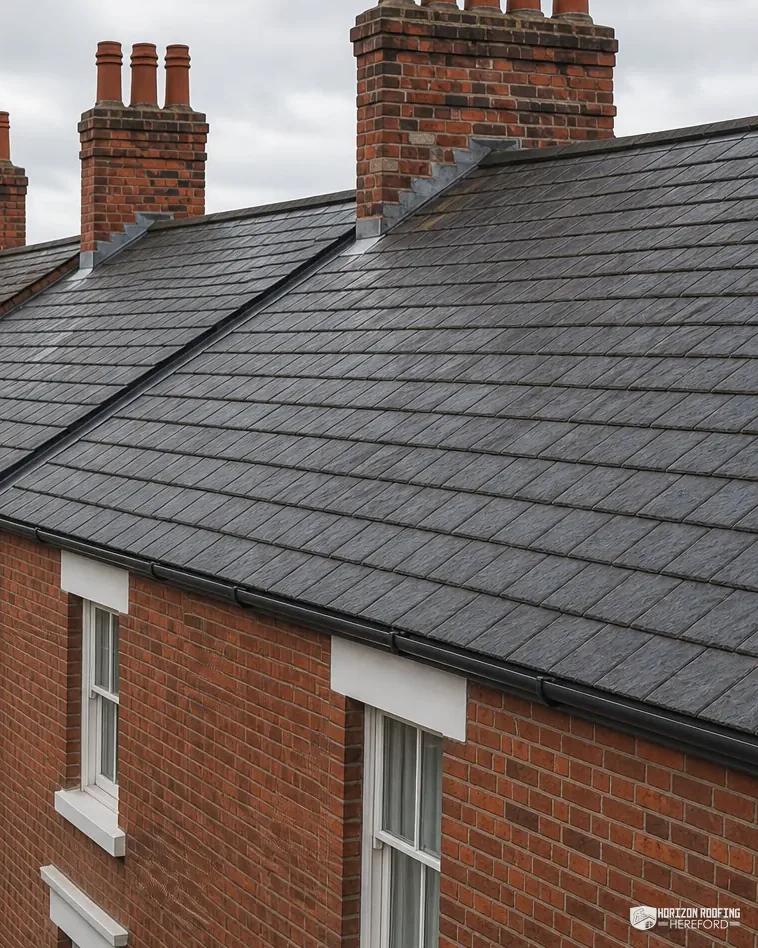
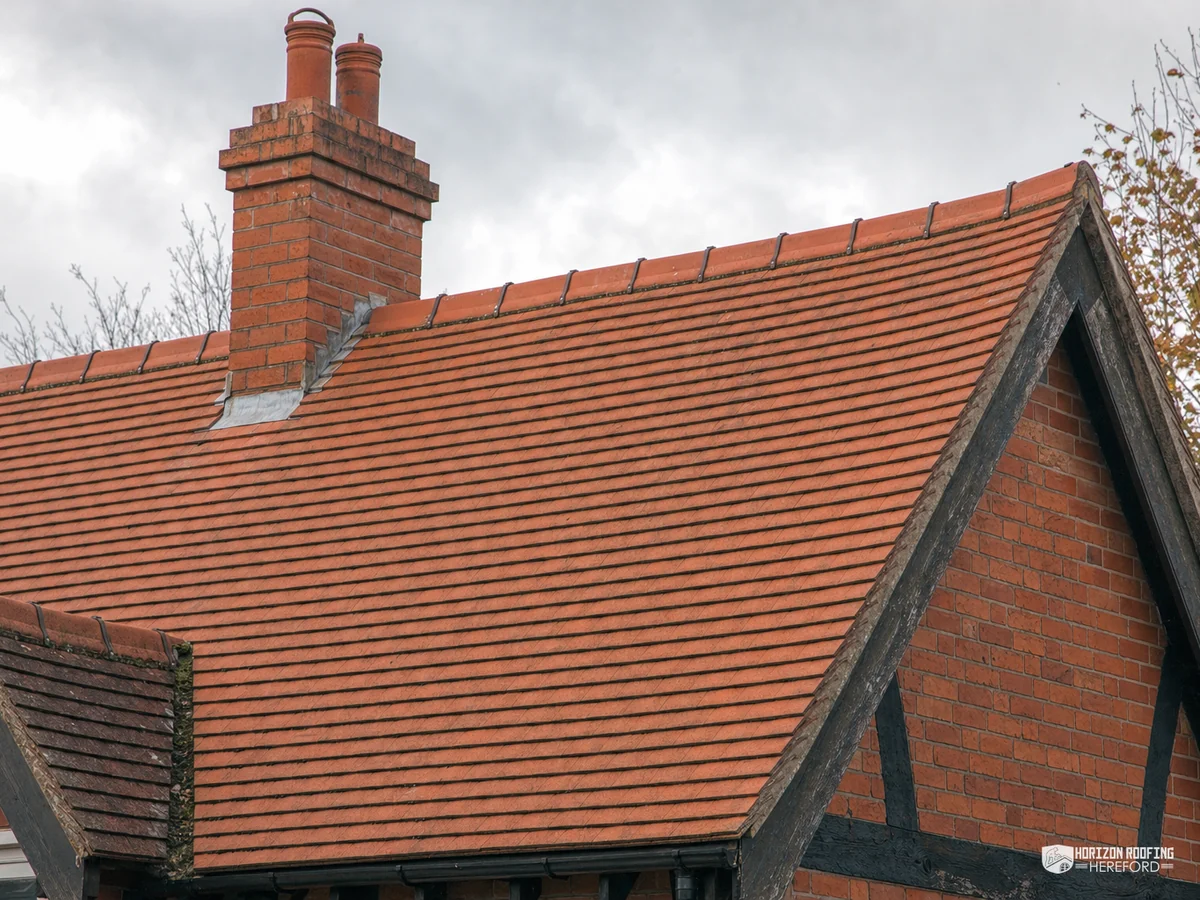
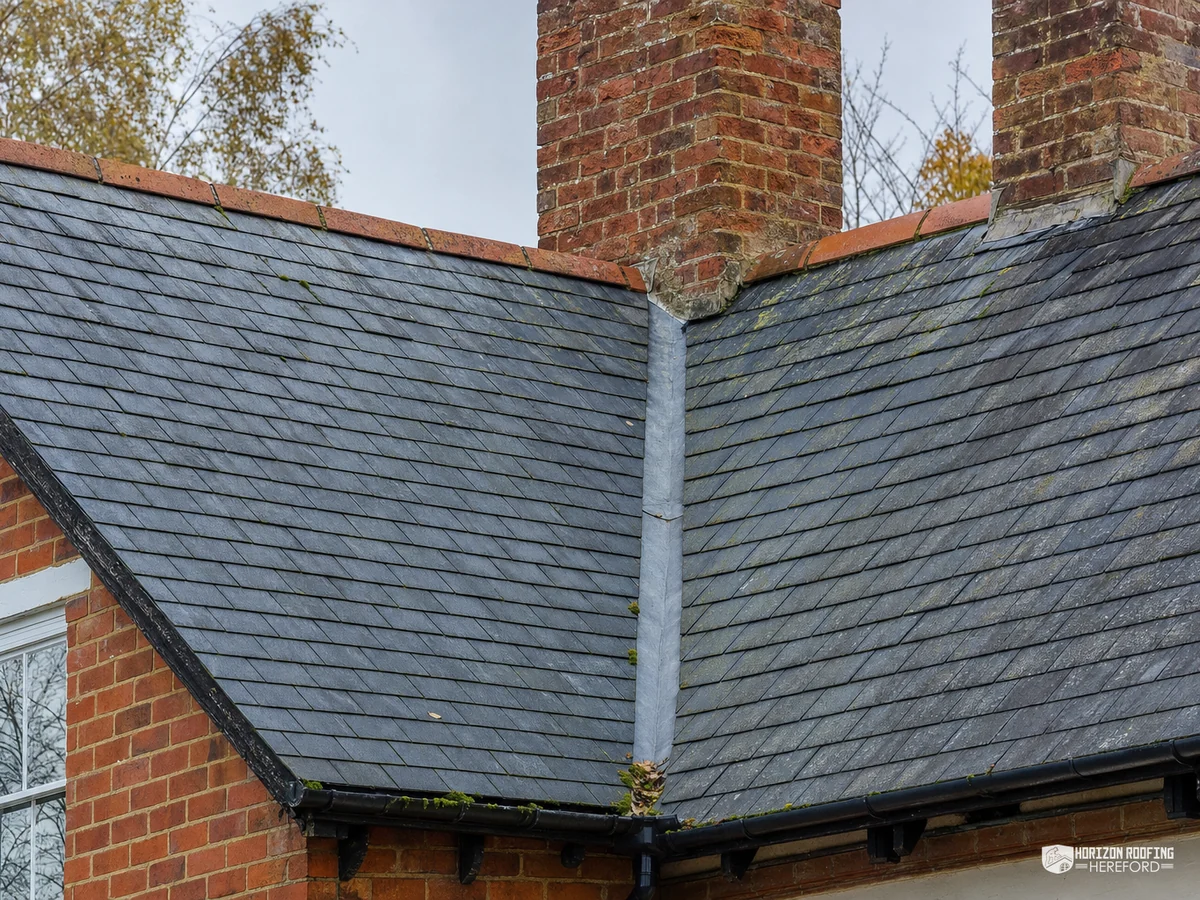
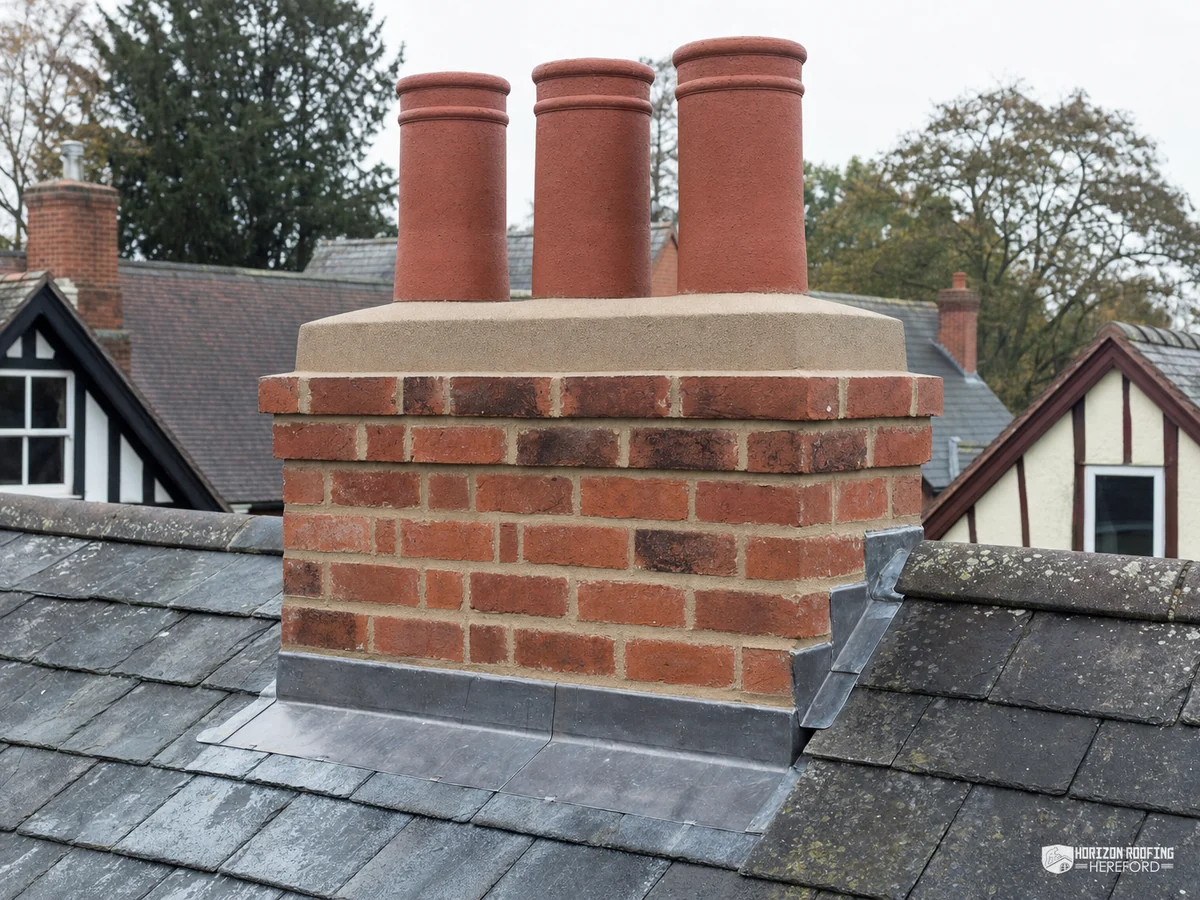
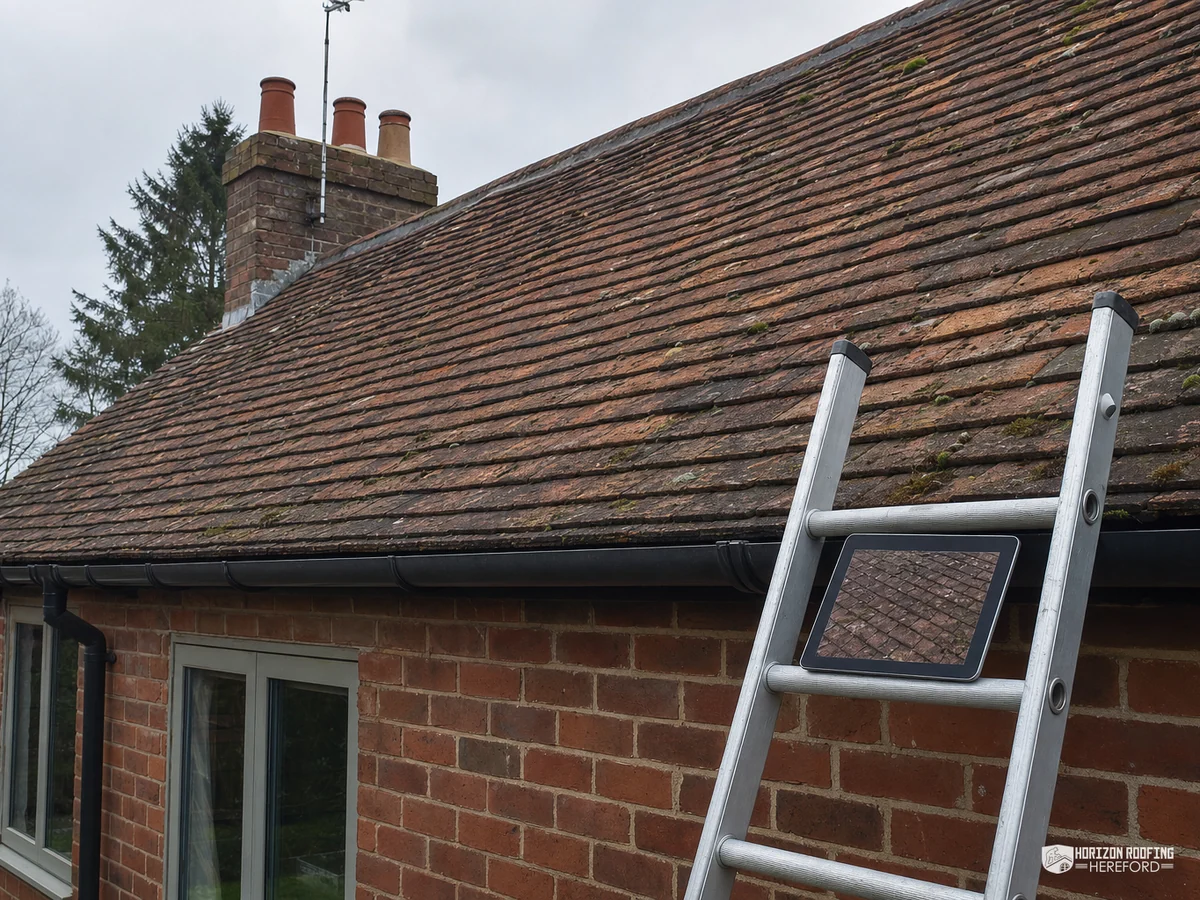
Every Caynham survey of ours opens at the chimney. A stack rises alone above the slope, meets weather from every side and then drips onto the tiles or slates below it. Working round its four faces, we read the brick or stone, the pointing between the units, and the flaunching: the sloping mortar cap that holds the pots. When that cap cracks, rain gets in beside the pots and runs down the flue. You cannot judge any of this from the lane, so each face is photographed on the roof and the images are sent with your report.
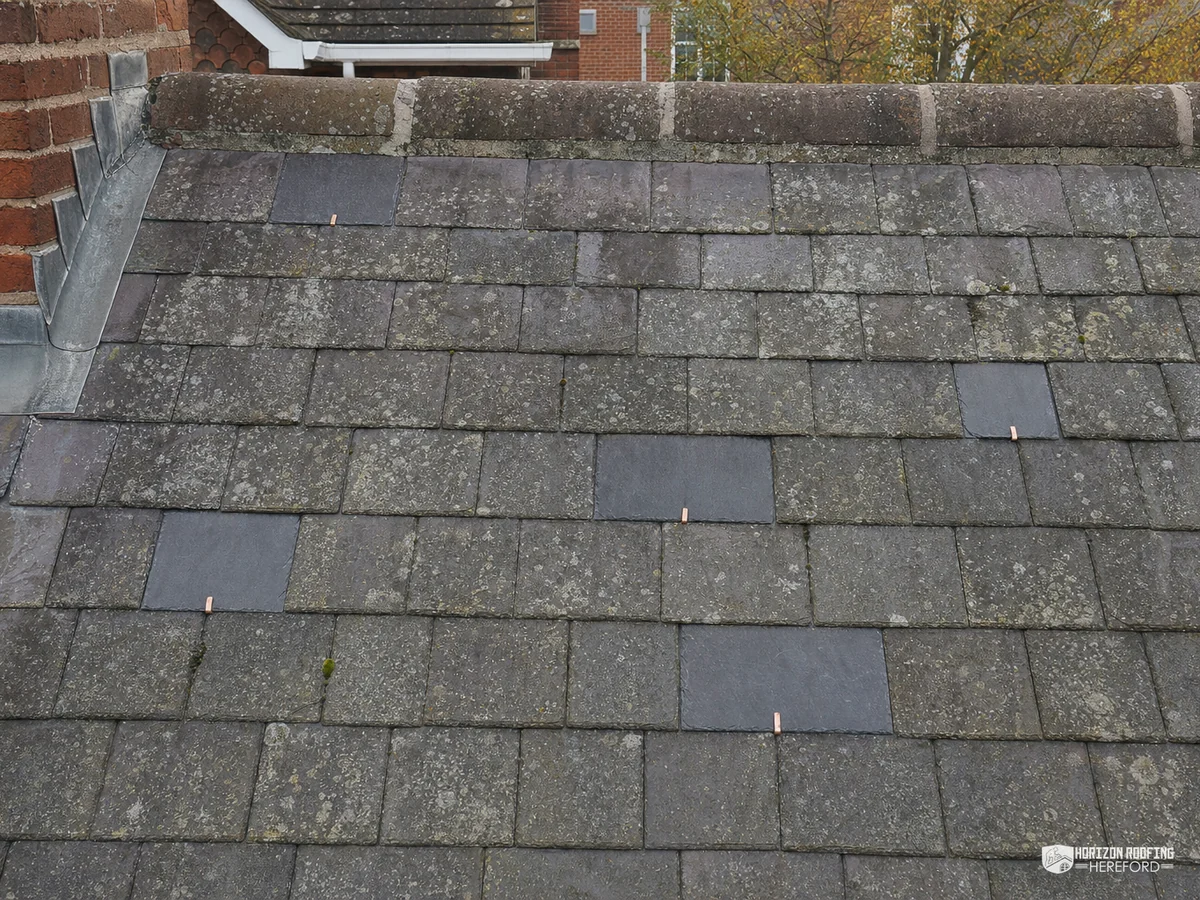
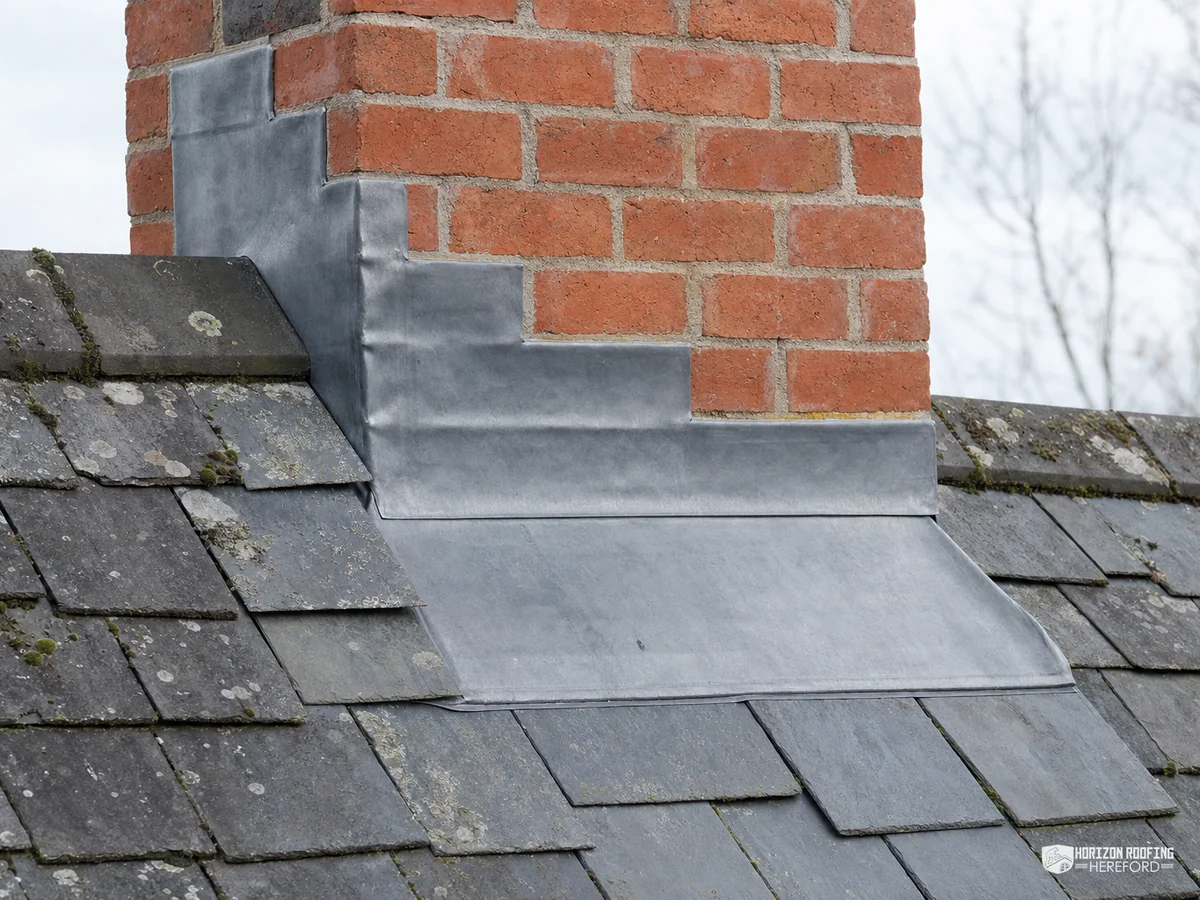
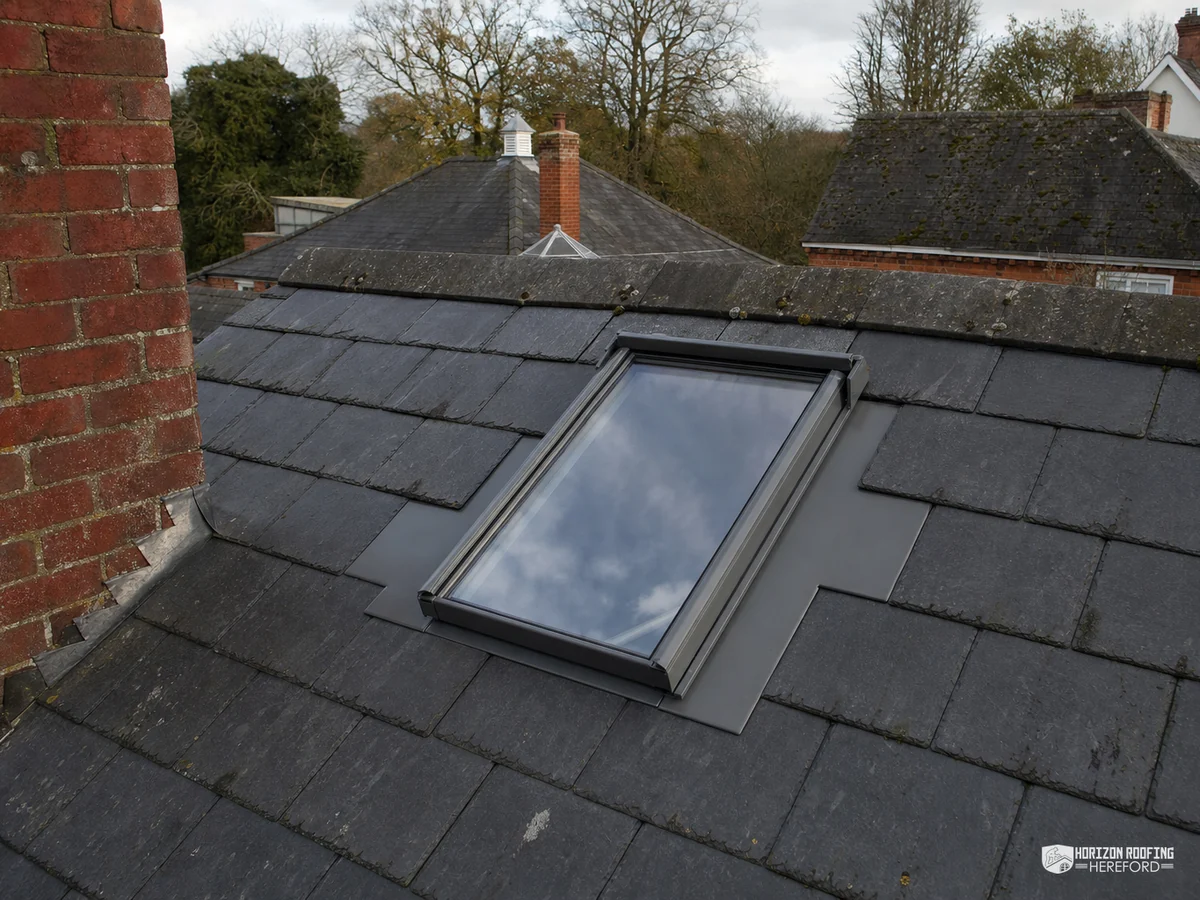
At the foot of the stack, lead does the sealing. Flashings are lead strips pushed into a raked joint, their lower edges lying on the covering. Under each course beside the stack go the soakers, little folded pieces of lead. A back gutter, the lead trough set in behind the stack, sends the water round to either side. According to Royston Lead's table, Code 3 is "Recommended for lead soakers only", and Codes 4, 5 and 6 are listed for flashings. We choose the code to suit the position, since sheet too light for a flashing will wear out before the masonry does.
Lead lasts. MyJobQuote says correctly installed lead flashing "can last for over 80 years", so a section that has split or lifted is repaired or replaced, never painted over with sealant. A bead of mastic hides a fault from the ground for a season while the gap stays open underneath. On a Caynham house with a chimney that has leaned or lost stones, we also look inside the loft at the brickwork where the stack passes through, because a stain on the brickwork shows how long the damp has been present.
Taking a stack down is a separate job. The Planning Portal states that "Building regulations approval will always apply when removing chimney breasts as they are part of the building's structure." If the breast backs onto a neighbour's wall, the owner must give the neighbour a party wall notice carrying at least two months' warning before any cutting begins. Whole-stack rebuilds and repointing are set out on our chimney repairs page, alongside the smaller jobs at pots and flaunching.
What we check at a Caynham stack
- Pointing
- Open joints on each face, photographed
- Flaunching
- Cracks around the pots and loose mortar
- Flashing
- Lead edges lifted or split along the masonry
- Soakers
- Folded lead under each course beside the stack
- Back gutter
- The lead tray behind the stack, clear of debris
From the lane a stack can look fine while its flaunching has cracked.