
01432 610152 Get a quote Call 01432 610152

Roofers in Putson

Lead, slate and listed-roof work in Putson, on the south side of Hereford.

Putson lies 1.6 road miles south of the city centre. We check the lead first, photograph each fault and give one total price.

Get a free quoteCall 01432 610152

Putson roofs where lead and stone matter

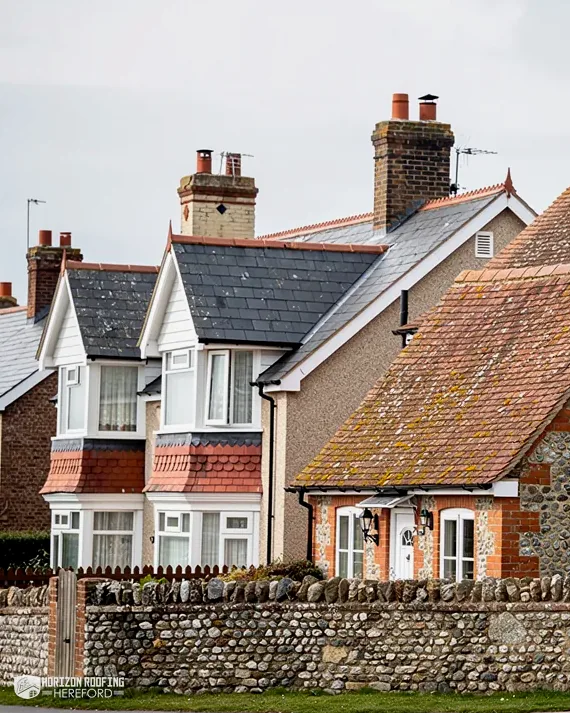
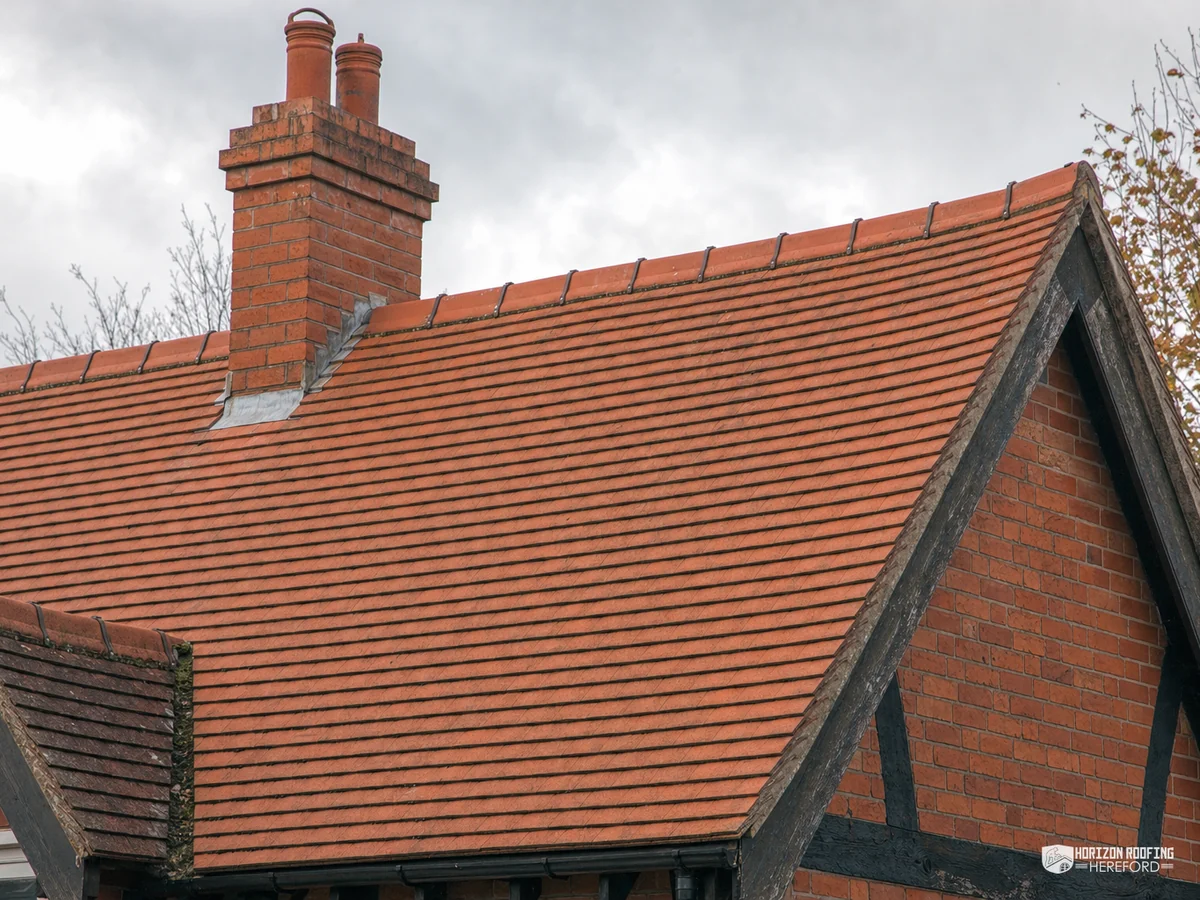
  • Older cottages with weathered clay tile roofs and brick chimneys behind a flint wall
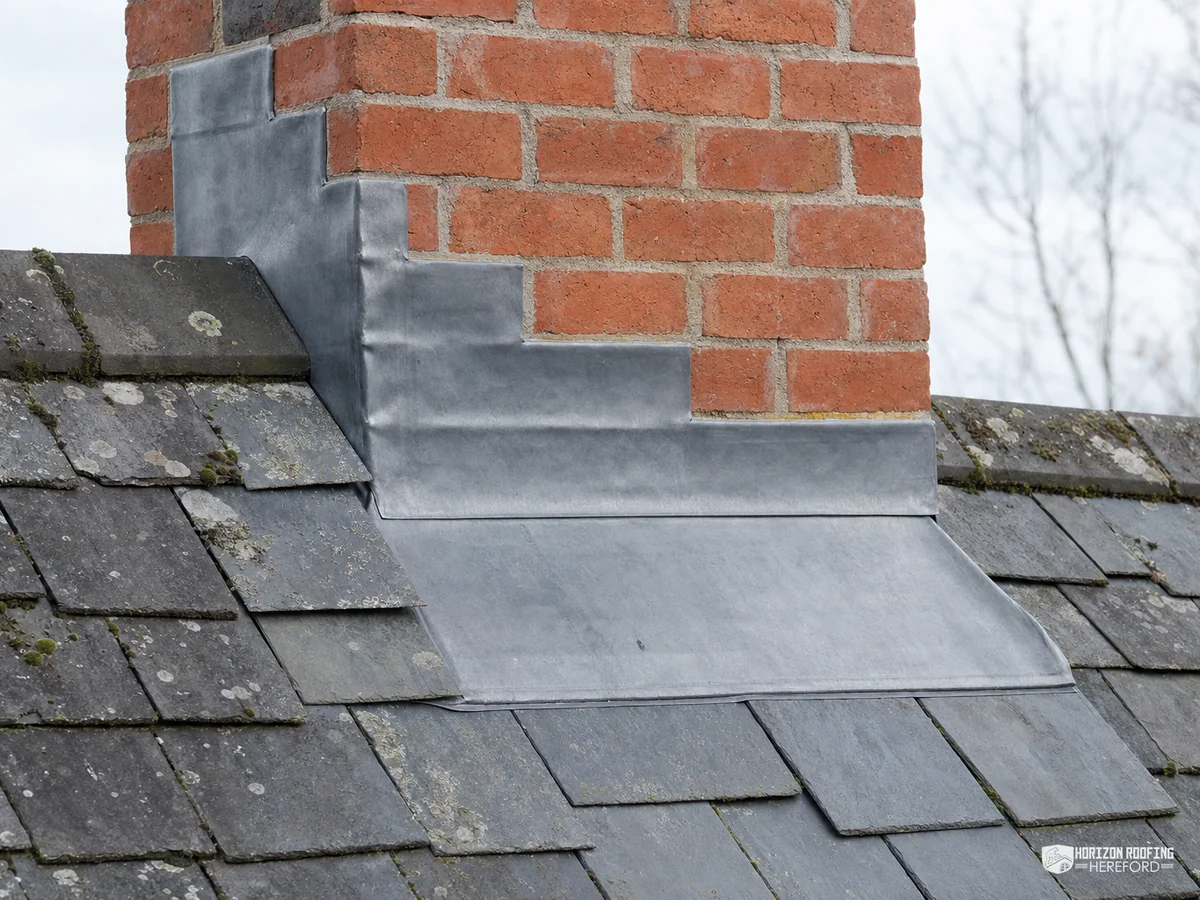
    Lead flashings and guttersLead lifts, splits and thins, and rain then runs behind the covering.
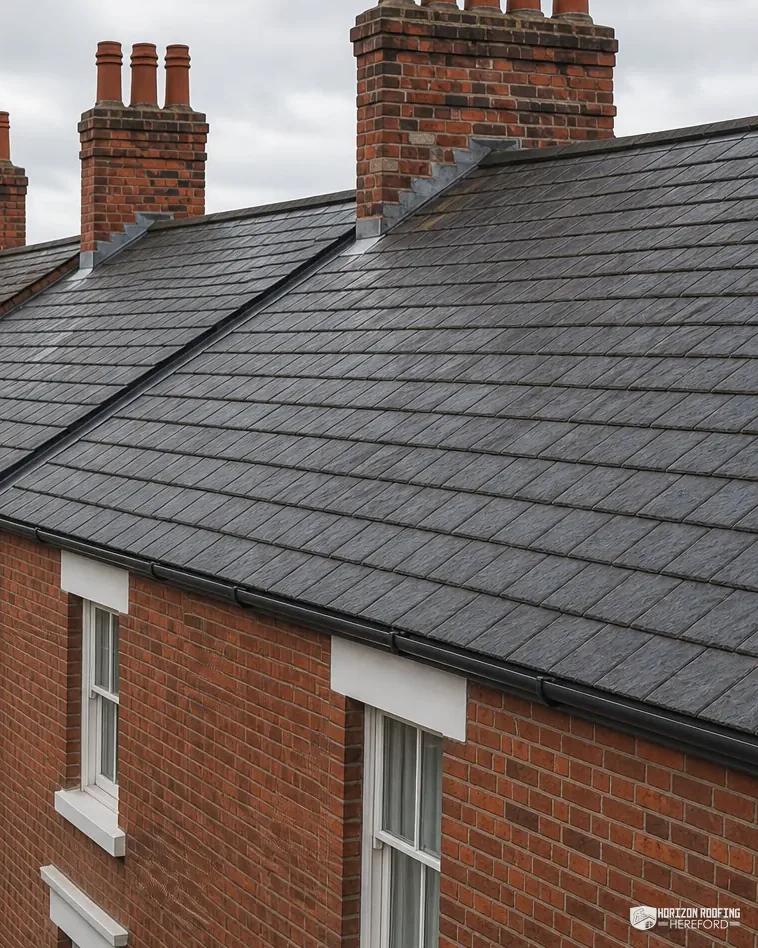
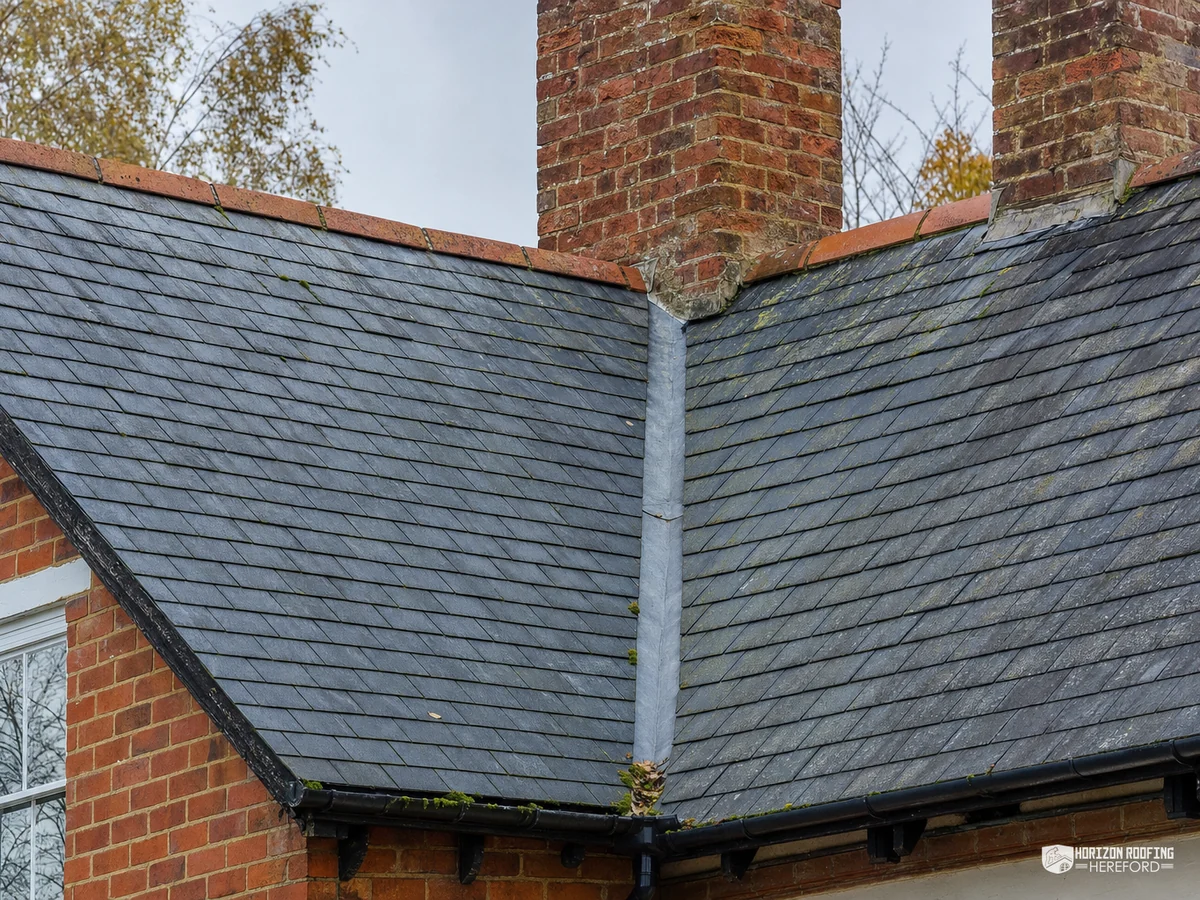
  • Slate roofs and chimney stacks along a red brick Victorian terrace
    Slate and stone coveringsMatching old material takes time, so we check availability before quoting.
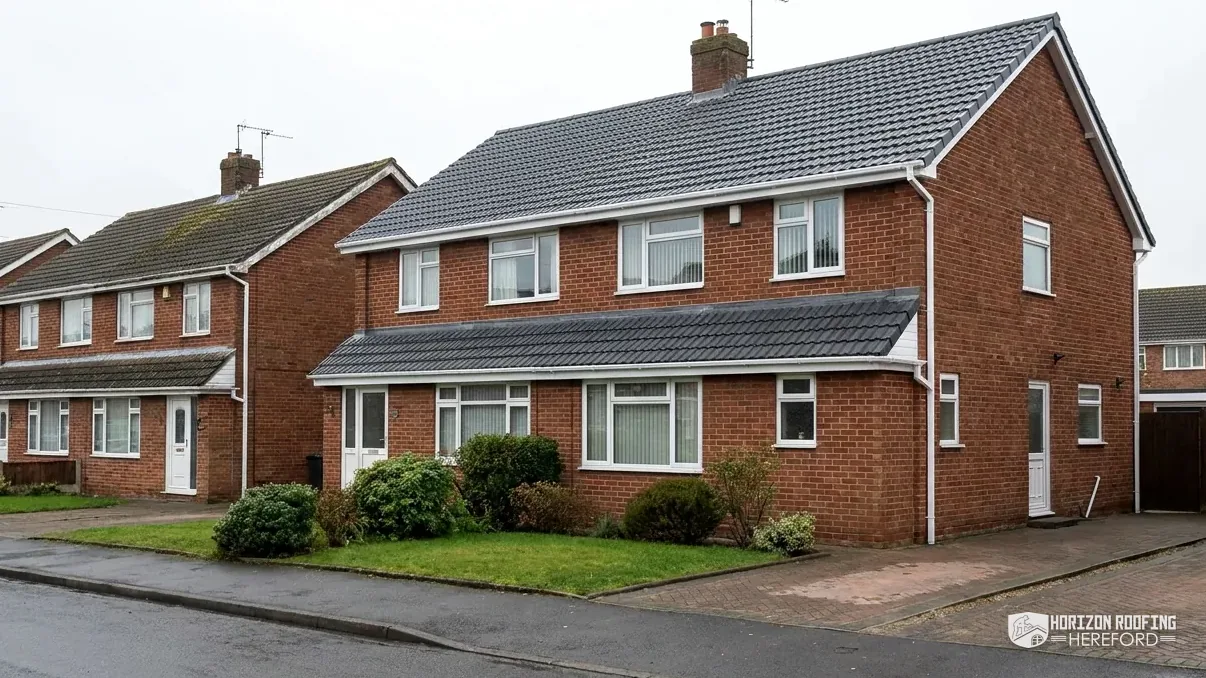
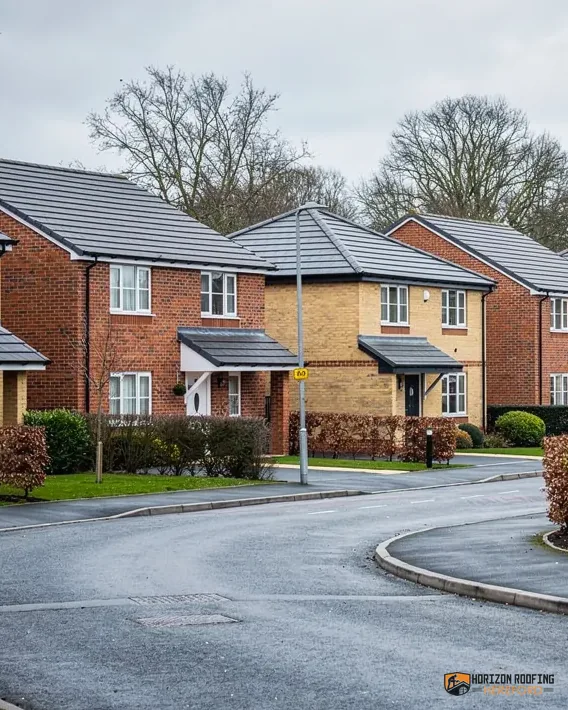
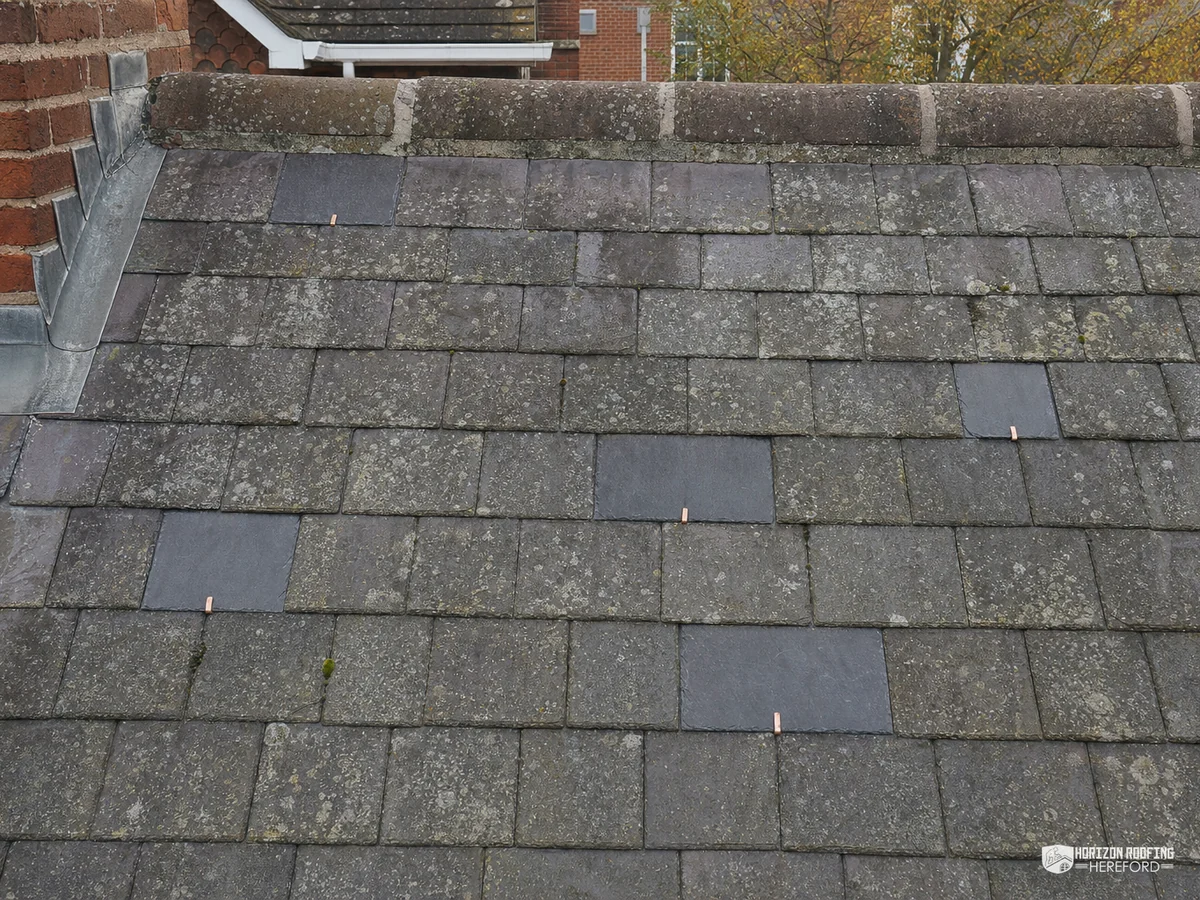
  • Newer homes with grey concrete tile roofs along a curving estate road
    Listed roofs near Putson ManorListed roofs need consent before the covering, lead or ridge changes.

Getting to Putson

Putson on a street map, with a dashed circle around the town and the nearest towns we cover. Tiles © Esri; map data © Esri, HERE, Garmin, OpenStreetMap contributors.

Putson roofs, lead to listed ridge

Lead, slate and listed ridges: three checks on a Putson roof

The survey starts with the lead that seals every joint, moves on to the slate or stone covering and how it is matched, and ends at the ridge of a listed house, where consent comes before work.

A drawn cut-away section through a Herefordshire border house: the front of the main roof is cut open to show the rafters, underlay, battens and slates, beside a black-and-white timber-framed gable. Numbered, from the ridge down: 1 Lead; 2 Covering; 3 Listed ridge.

Fig. 1 House section with the Putson lead, covering and ridge callouts numbered.

Callout 1 of 3

Lead in a Putson roof: age, codes and repair

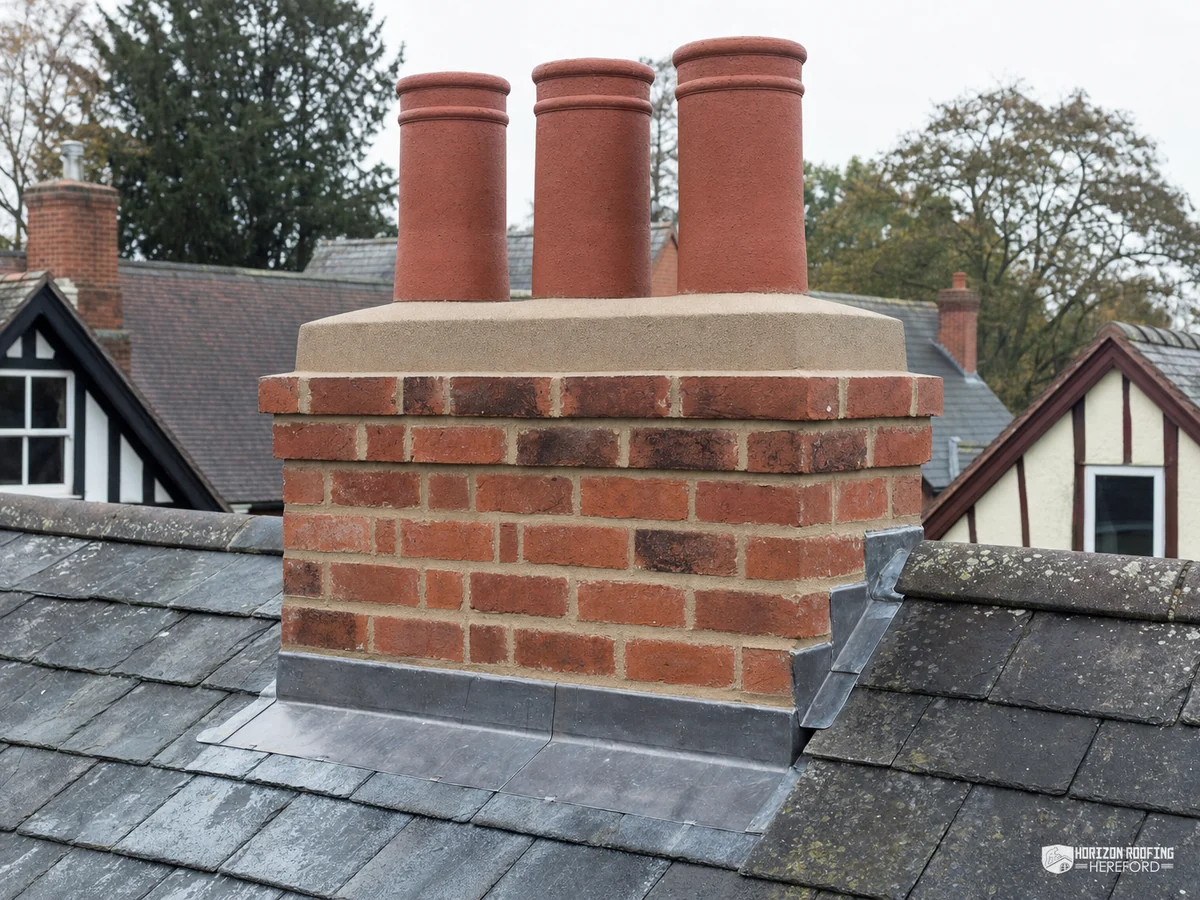
Lead seals the places where a roof changes direction: round a stack, against a wall, along a valley and over a hip. Sheet lead is made in numbered codes, and Royston Lead's table pairs each code with the positions it suits. Code 3 is for soakers alone, Code 4 adds flashings and valley gutters, and Codes 5 and 6 are listed for flashings, valley gutters and heavier work such as parapets. The code goes into the quote, so the lead we price is the lead the table says suits the position. Position matters as much as thickness: a flashing that runs up a wall is cut and tucked in differently from a valley that runs down a slope.

Published ages for lead run long and vary. HomeBuilding gives a lead flat roof 60 to 100 years, Less says 50 to 100, and, for flashing, MyJobQuote says a correct installation can last more than 80 years. No one of those figures is a promise, and each describes lead that was laid well and has been looked after. Lead is also checked at its fixings, the clips that hold the lower edge and the wedges at the upper edge where it is tucked into a joint. Lead fails in particular ways: it splits where it was fixed too stiffly, it thins where water runs over it, and it lifts at an edge that has lost its clip or its wedge.

Where a stretch of lead has failed, the cure depends on how much of it has. A lifted edge can be refixed. A long split or a thin area means new lead for that piece, dressed to allow for movement, and the old piece is kept for you to see. A smear of sealant over a split would only hide it for a season, and the damp behind it would carry on.

The survey checks lead in the order water meets it: the highest piece first, whether that is a stack apron or a ridge flashing, then the pieces below it, finishing at any gutter lining. Photographs of each piece are numbered so that the report can say where every fault sits, and anything that cannot be seen from the ladder is flagged for a closer look from the scaffold. Our lead roofing page describes flashings, valleys and flat leadwork in more detail.

Lead codes in Royston Lead's table

Code 3
1.32 mm; soakers only
Code 4
1.80 mm; soakers, flashings, valley gutters, dormers
Code 5
2.24 mm; flashings, valley gutters, parapets, dormers
Code 6
2.65 mm; flashings, valley gutters, parapets, dormers

Lead has to move with the roof, and a stiff fixing is the way it splits.

Fig. 2 Leadwork, drawn close

Callout 2 of 3

Slate, stone tiles and matching an old Putson roof

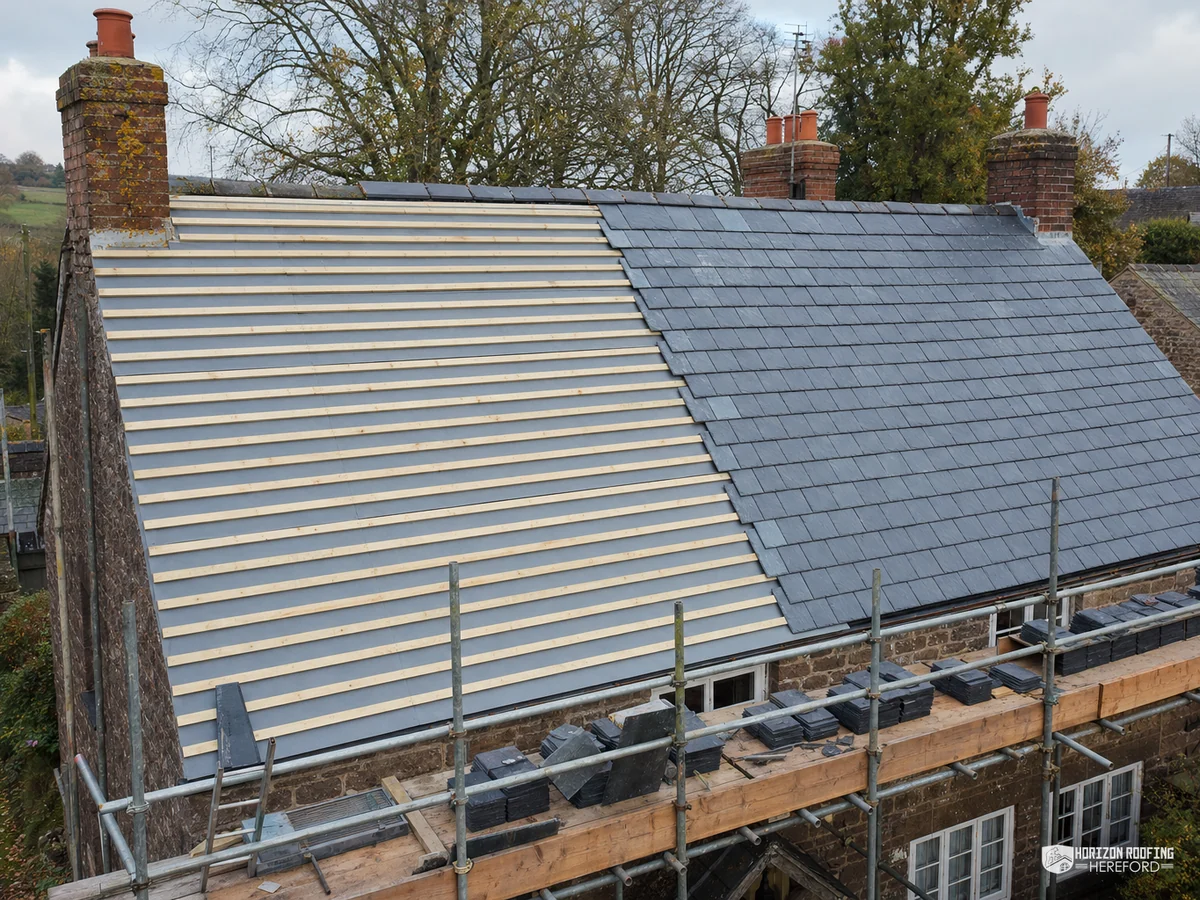
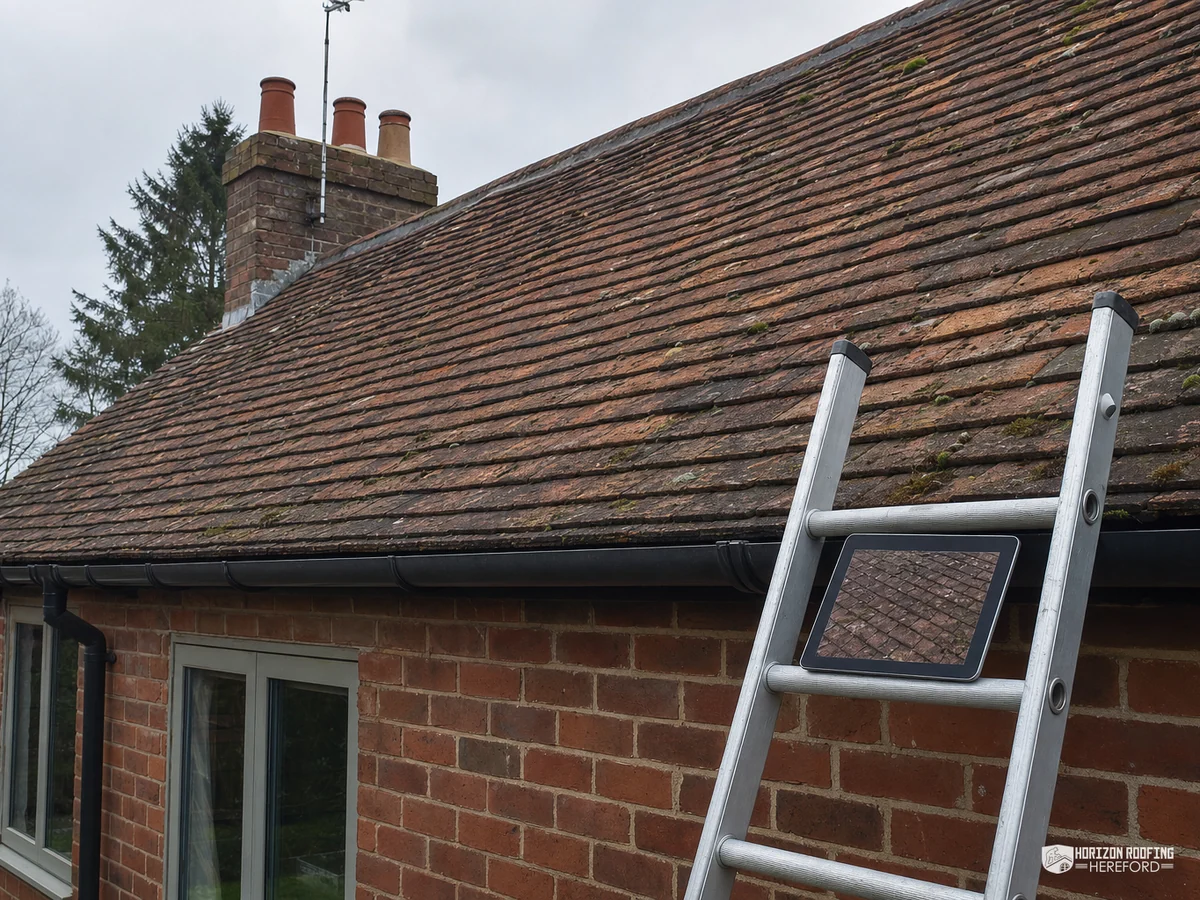
Slate and stone roofs are read slope by slope. A slate hangs from a nail or a hook, and a slipped one shows as a gap in a line of otherwise even courses. A stone tile is a thick slab of sandstone, hung from a peg or a nail through the stone. On the survey we count the slipped and cracked pieces, look at the fixings, and note whether the rest of the slope is worth saving. The slipped pieces are marked on a sketch of the slope, and each marked piece has a matching photograph.

Herefordshire's building stone atlas traces the county's old stone roofs to local sandstone tilestones, and it names the St Maughans sandstones, which belong to the Golden Valley district, as the main source. SPAB describes the roofs of Welsh slate and stone as predominantly double-lapped, so each piece overlaps the one two courses below, and that there are some purple types in Herefordshire. A repair that follows the existing lapping and colour blends in. One that does not shows from the street.

Where new material is needed, availability sets the timetable. SPAB's advice is to put any claim of non-availability or long lead times to the quarries themselves, and that call is made before a change of material is raised with you. We also sort the pieces already on the roof and reuse the sound ones. HomeBuilding's table puts reclaimed Welsh slate at 50 to 80 years, which is one reason salvaged slates from a stripped slope are worth sorting before new ones are ordered. Where a few pieces are missing from a slope that is otherwise sound, a matching piece or two from the sorted stock fills the gap, and the repair is photographed before and after.

The report says, slope by slope, what can stay, what is refixed and what is replaced, and the one written total price follows from that. A slope with a handful of slipped pieces is a repair. A slope where the fixings have worn across the whole surface is a re-cover. Our slate roofing page explains how a slate roof is stripped, sorted and relaid.

Checked on a slate or stone slope

  • Slipped or cracked pieces in each course
  • Nails and hooks for corrosion and wear
  • Lap and gauge against the neighbouring courses
  • Sound pieces worth sorting and reusing
  • Battens and rafters beneath, where visible
Fig. 3 The slopes, drawn close

Callout 3 of 3

Putson's listed roofs and the conservation areas near them

On a listed house a ridge or hip is repaired using the material it was built with. Historic England's list records these buildings near the middle of Putson: The Granary (Grade II, list entry 1025013, first listed 10 June 1952), Acacia House (Grade II, list entry 1196846, first listed 10 June 1952) and Putson Manor (Grade II, list entry 1025034). A ridge is also where a listed roof shows its age, in the colour and the profile of the capping.

On a listed ridge we record what is there before anything is touched: the profile and colour of the capping, how the joints are filled, and how the end piece meets the gable. The repair follows that record, so that a replacement piece matches in size and colour. If no match can be found, we set out the closest alternative and put it to Herefordshire Council before anything is ordered, which keeps the order from running ahead of the consent.

Section 7 of the Planning (Listed Buildings and Conservation Areas) Act 1990 requires listed building consent where works would affect the building's special character, and Herefordshire Council takes the application. A listed house keeps its permitted development rights, so the two systems sit side by side. We prepare the photographs and the description of the repair so that they are ready to attach, and a repair that stays within the existing material and profile is easier to describe than one that departs from it.

Aylestone Hill and Hafod Road are among the conservation areas closest to Putson, along with Widemarsh Common and Hampton Park. Herefordshire has 64 in all. Herefordshire Council's map traces each boundary, and the council can say whether an Article 4 direction applies to your street. Putson addresses use Herefordshire Council Building Control (01432 261938, bce@herefordshire.gov.uk) or a registered building control approver. Our listed and heritage roofing page explains how a protected ridge, hip or verge is repaired, from the opening photograph through to the final course.

Consent routes in plain terms

Listed building consent
Council permission for works that affect a listed building's character
Faculty
The Church of England's own consent system for churches in use
Article 4 direction
A council direction removing specified permitted development rights in an area
Scheduled monument consent
Consent from the Secretary of State for works to a scheduled monument

Lead, slate and listed roofs in Putson

How long does lead flashing last on a Putson roof?

MyJobQuote's line is that lead flashing put in properly can last for over 80 years, HomeBuilding gives a lead flat roof 60 to 100 years, and Less says 50 to 100. Those are hedged ranges, not promises. MyJobQuote's guide gives around £200 for patching chimney lead flashing and around £570 for replacing it in full, so a local fault is a smaller job than new lead throughout, and the pictures from the roof show the extent of the damage.

Can an old Putson slate roof be repaired with matching slates?

Yes, where enough sound slates remain or matching ones can be found. The first step is sorting the slates already on the roof. SPAB advises checking any claim of unavailability or long delivery with the quarries, so the quarries are asked before we propose a different material. HomeBuilding gives reclaimed Welsh slate 50 to 80 years, which shows why salvaged slates are worth sorting.

Which listed buildings stand near the middle of Putson?

Historic England's list records The Granary and Acacia House, both Grade II and both first listed on 10 June 1952 (list entries 1025013 and 1196846), and Putson Manor, Grade II (list entry 1025034). Roof work that would affect a listed building's character needs listed building consent from Herefordshire Council, which is the body that takes the application. A listed house still keeps its permitted development rights, so the two systems apply together.

Which conservation areas lie near Putson?

Hampton Park, Hafod Road, Aylestone Hill and Widemarsh Common are the nearest on Herefordshire Council's list, and the county has 64 in all. Herefordshire Council's map traces each boundary, so lay your own street against it. Whether an Article 4 direction applies is a question for Herefordshire Council, and it is worth asking before you plan a dormer, a new opening in the slope or any change of covering.

Can a Putson slate roof be covered again with a heavier tile?

The weight matters, and so does the look. The Planning Portal draws its line when the new covering leaves the roof covering 15 per cent or more heavier, and that becomes a Building Regulations matter, with a structural check coming first. A listed house needs listed building consent where a change of covering would affect its character, and a house in a conservation area deserves a call to the council before any change in appearance.

On a Putson street, who looks after the scaffold licence, and what is the fee?

Anything built over the public highway, scaffold included, needs a section 169 licence under the Highways Act 1980 from Herefordshire Council. Herefordshire Council's fee is £167 per licence, valid for one month at most; extension months cost £123 each; applications go in at least 10 days before the scaffold. We arrange the licence with our scaffolder, so the scaffold sits within the one written total price. On a busy Putson city road, the licence request is made early.

Book a lead-to-ridge survey in Putson

Say where you have seen a stain, a slipped slate or a loose flashing, and we will set a date to inspect it.

10-year workmanship guarantee, in writing