
01432 610152 Get a quote Call 01432 610152

Roofers in Bobblestock

Covering repairs and re-roofs for Bobblestock homes, north-west of Hereford's centre.

Every Bobblestock job begins with a look at the covering itself, then the edges, then the walls and listings around it.

Get a free quoteCall 01432 610152

Bobblestock roofs and their weak points

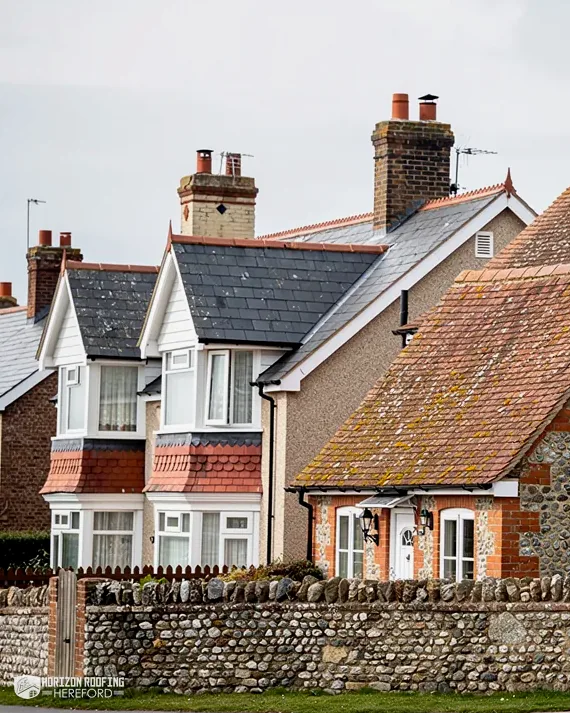
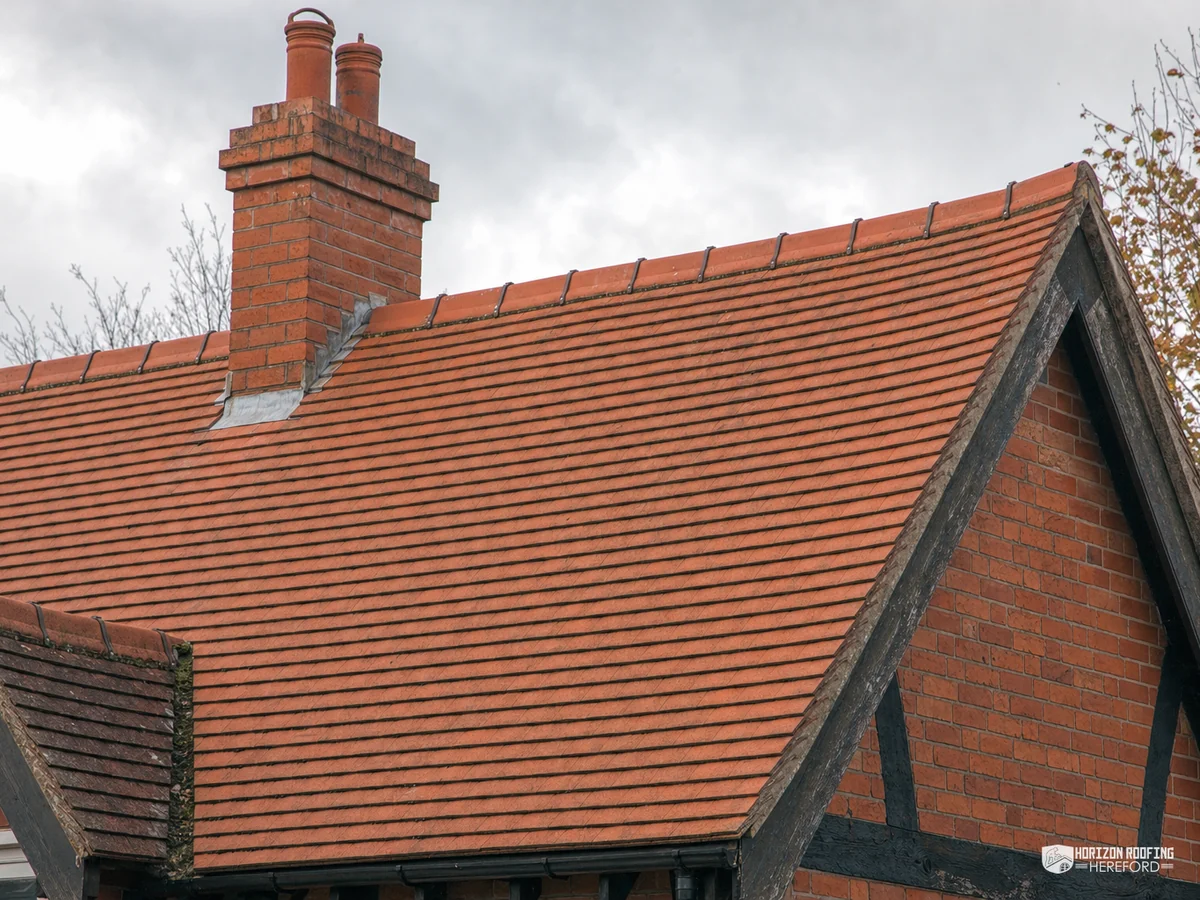
  • Older cottages with weathered clay tile roofs and brick chimneys behind a flint wall
    Slipped or cracked coveringsOne loose tile or slate opens a path to the battens and underlay.
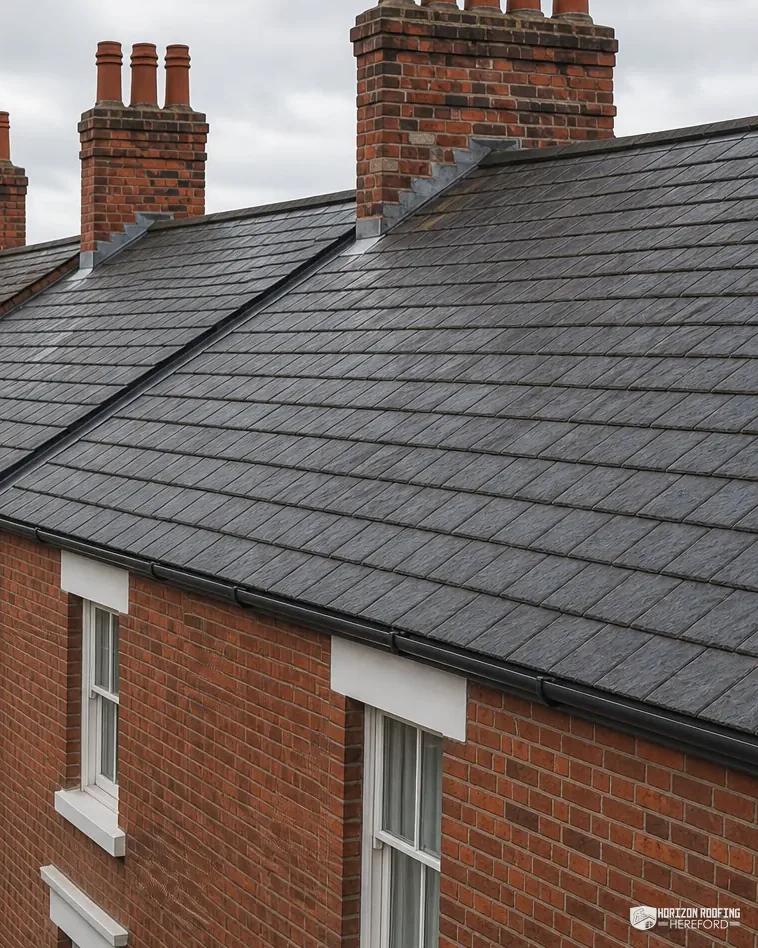
  • Slate roofs and chimney stacks along a red brick Victorian terrace
    Verges that have lost their bedThe gable edge takes gusts and shows its age before the slope does.
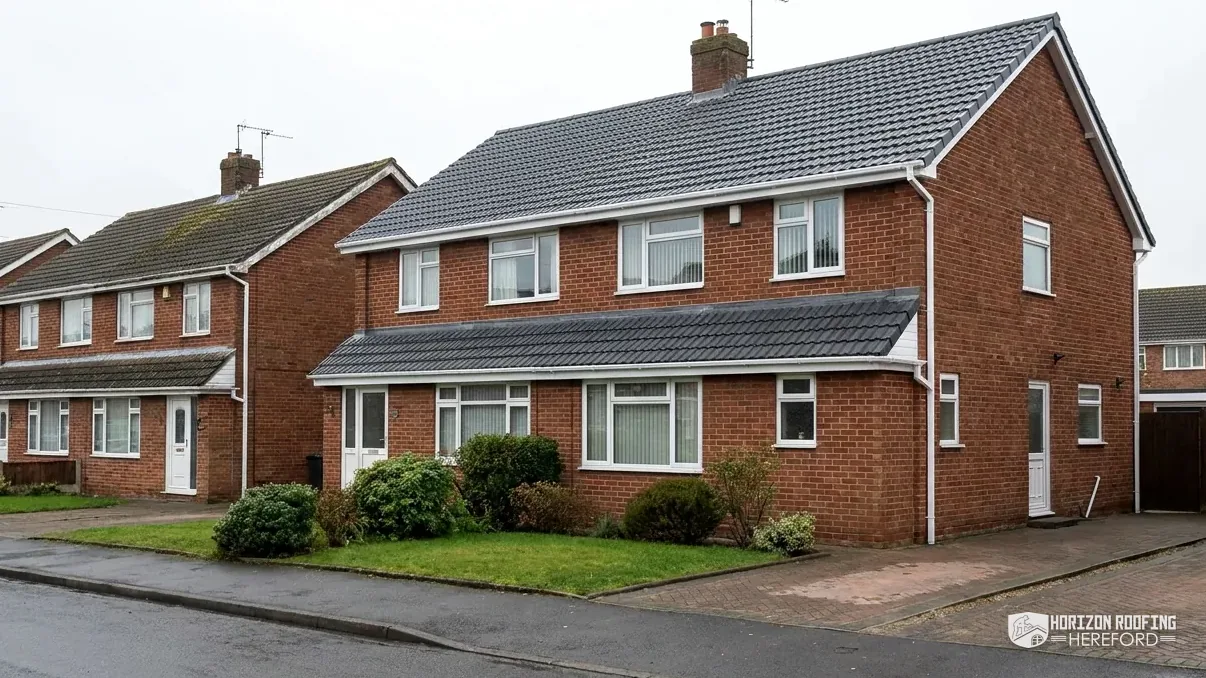
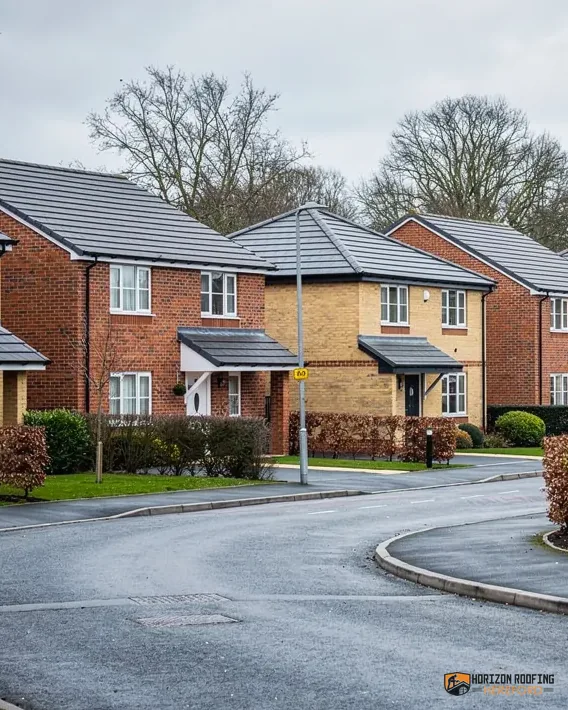
  • Newer homes with grey concrete tile roofs along a curving estate road
    Huntington's conservation areaListing and conservation rules sit close by, so we check them first.

Bobblestock within our radius

Bobblestock on a street map, with a dashed circle around the town and the nearest towns we cover. Tiles © Esri; map data © Esri, HERE, Garmin, OpenStreetMap contributors.

Bobblestock: slope, edge and wall

Three things we read on a Bobblestock roof: covering, verge and listed wall

A Bobblestock survey runs from the covering across the slope, to the verge at the gable edge, and last to the walls and designations that decide how freely a roof can be changed.

A drawn cut-away section through a Herefordshire border house: the front of the main roof is cut open to show the rafters, underlay, battens and slates, beside a black-and-white timber-framed gable. Numbered, from the ridge down: 1 Covering; 2 Gable edge; 3 Wall and listing.

Fig. 1 A house in section, with the three Bobblestock callouts marked in order.

Callout 1 of 3

Telling a repair from a replacement on the slope

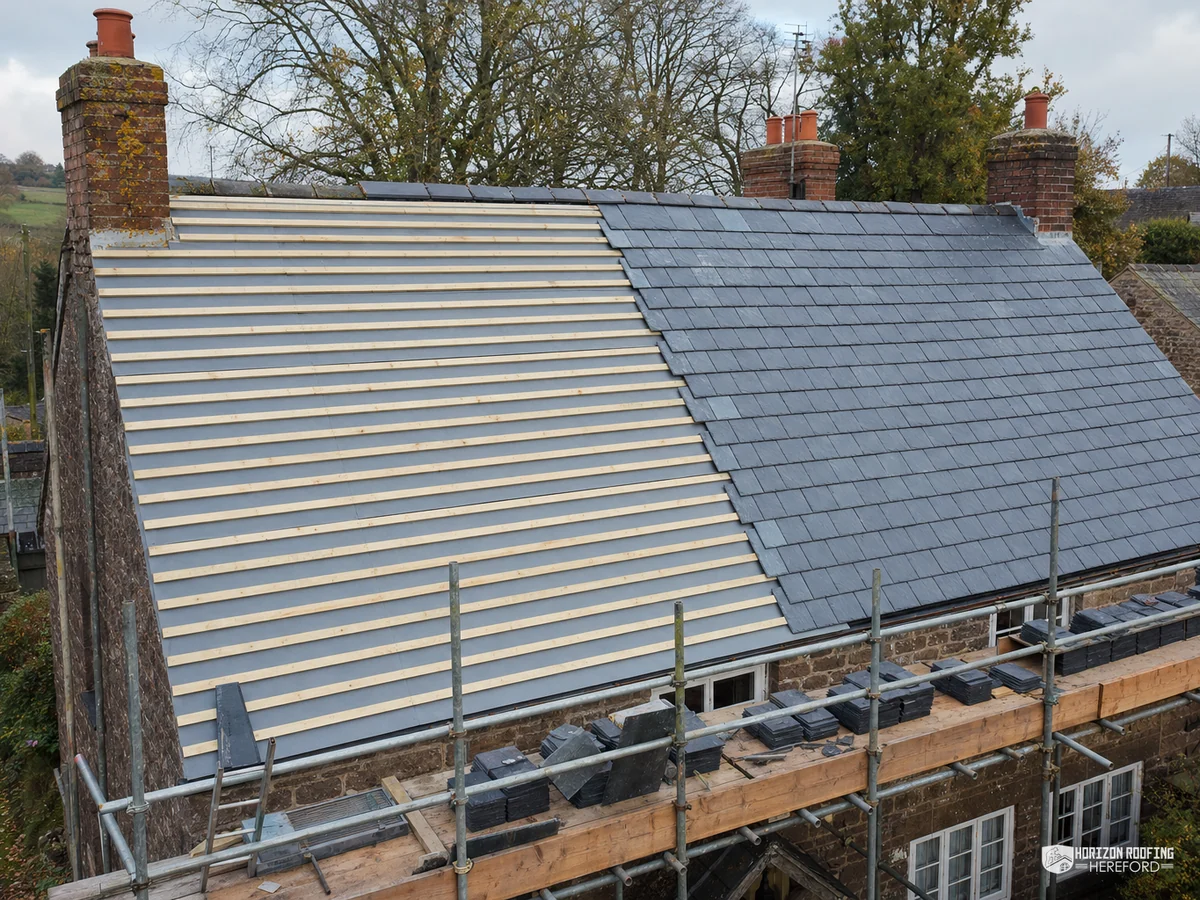
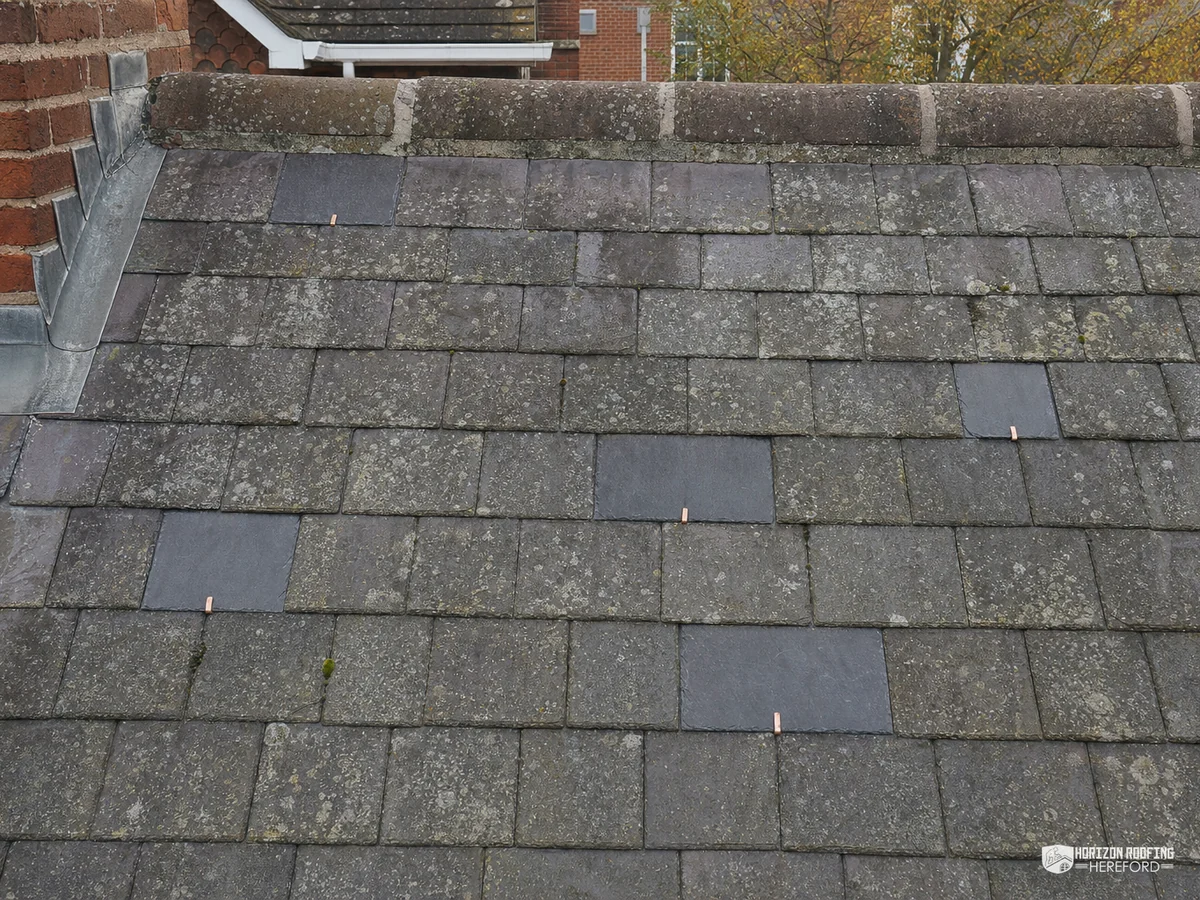
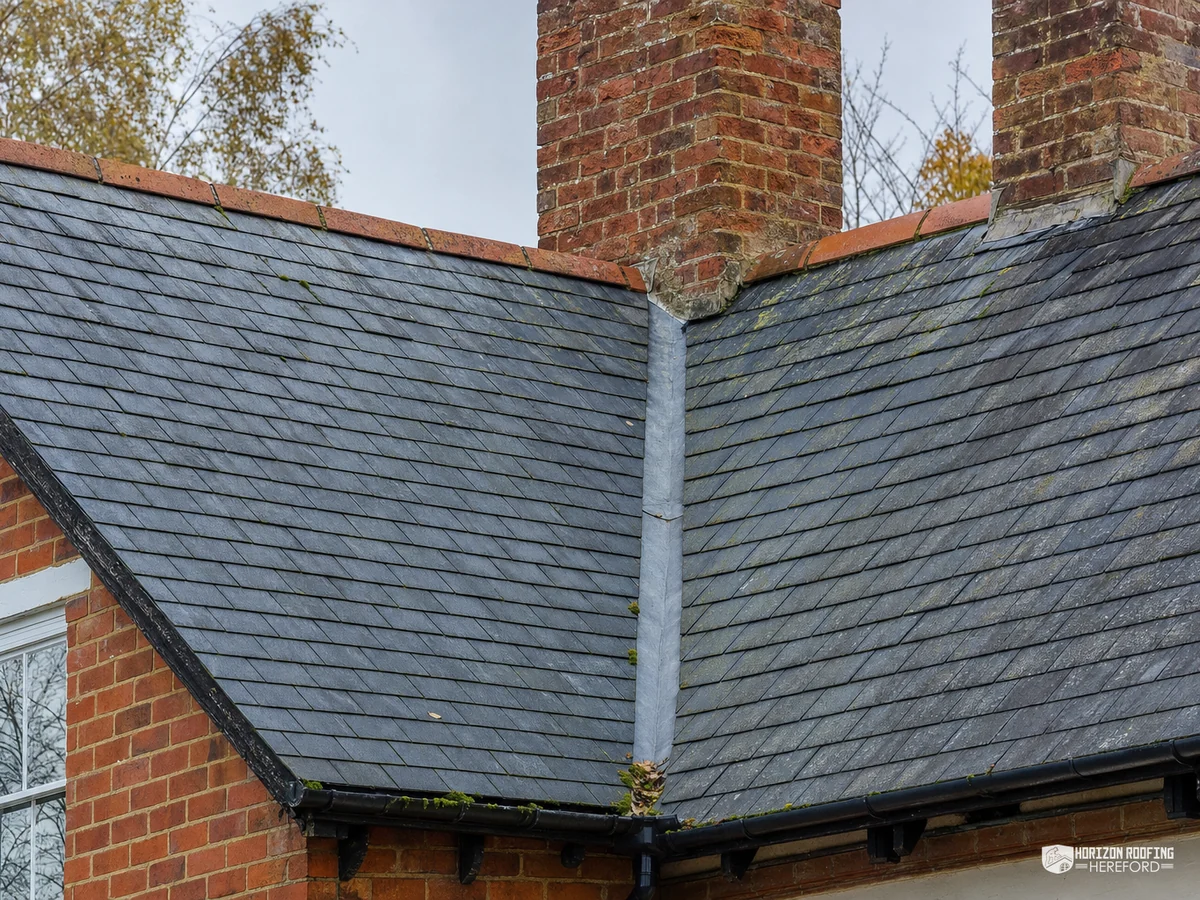
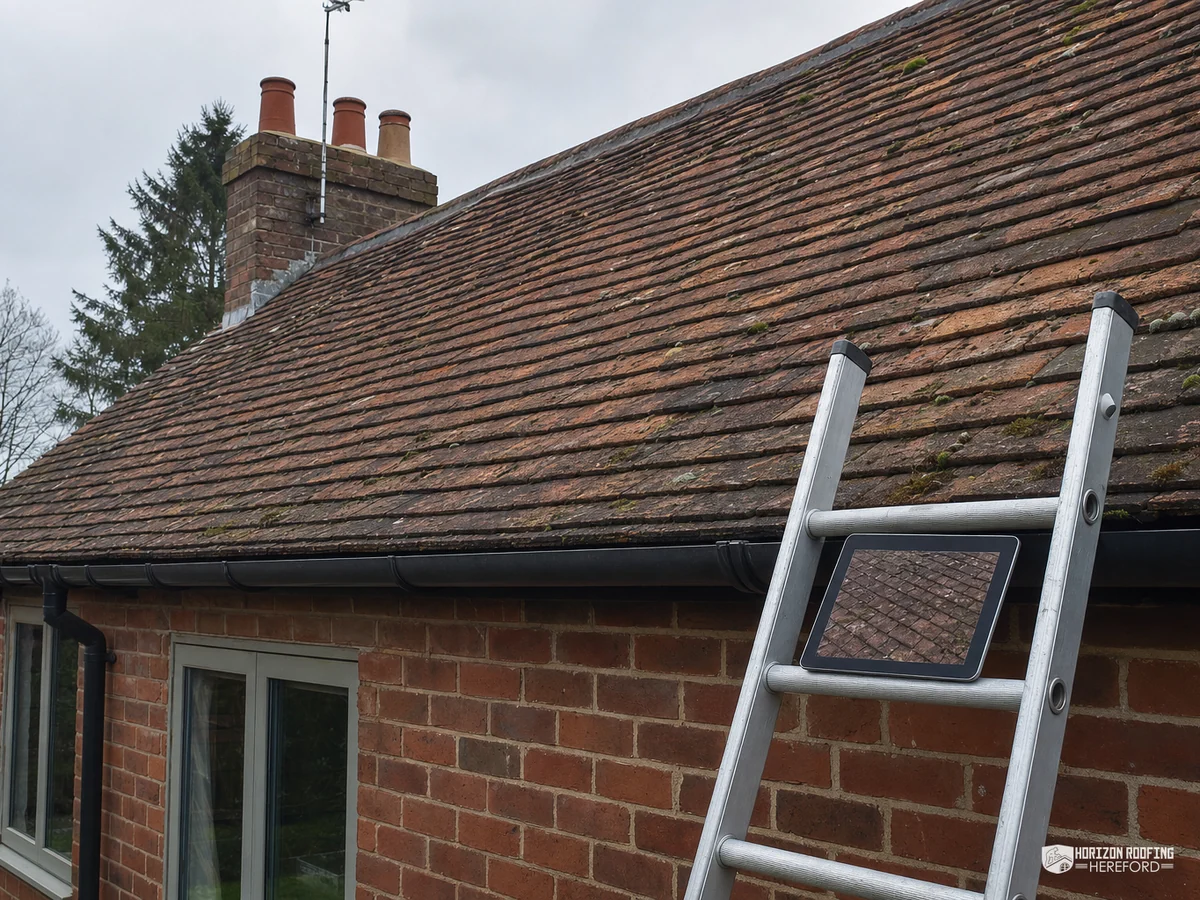
The slope is the largest part of any roof, and the covering on it is the first thing a survey has to name. Clay tiles, concrete tiles and natural slate age differently, and so do their repairs. We start by identifying which covering you have, what is fixed beneath it and how far the problems spread. A single slipped tile is a small job. A slope where tiles are slipping in many places points to rusted nails, rotten battens or a perished underlay, and that is a bigger conversation.

Published lifespans help set expectations, though none is a promise. For natural slate, HomeBuilding lists Welsh slate at "100+ years", Spanish slate at "75-100 years" and reclaimed Welsh slate at "50-80 years". For concrete tiles, Marley says they are expected to last "around 60 years" while HomeBuilding gives 40-50 years, so the two sources are worth reading side by side. The BRE's 60-year minimum applies to clay tiles only. A roof inside those ranges can still need repair, and one beyond them can still be sound, which is why we test the covering by hand instead of working from a date.

Battens are the timber strips the covering hangs from, and underlay is the membrane between the battens and the rafters. We look for slipped courses, tiles with cracked corners, moss that holds water against the surface and nail fixings that have let go. At the loft hatch, daylight through a joint and stained rafters tell us what the top side cannot. Rafters that are dry and clean beneath a worn covering are good news, because it means the structure can take a new covering without timber repairs. Rafters that are dark and soft along the wall plate change the job, and we photograph those marks so you can see why the written price has moved.

Changing from one covering to another has a rule attached. The Planning Portal says Building Regulations approval is needed if a new covering "increases the weight of the roof covering by 15 per cent or more", and AD A says "more than 15%". Slate to concrete, or the reverse, can cross that line. The structure is checked first. Our roof replacement page describes the process from strip to final inspection, and the price comes as one total in writing.

Words on a Bobblestock slope

Batten
A timber strip fixed across the rafters to carry the covering
Underlay
The membrane laid over the rafters beneath the battens
Course
One horizontal row of tiles or slates
Headlap
How far each course overlaps the one two rows below

A roof inside its published lifespan can still fail, and one beyond it can still be sound.

Fig. 2 The slopes, drawn close

Callout 2 of 3

The verge at a Bobblestock gable end

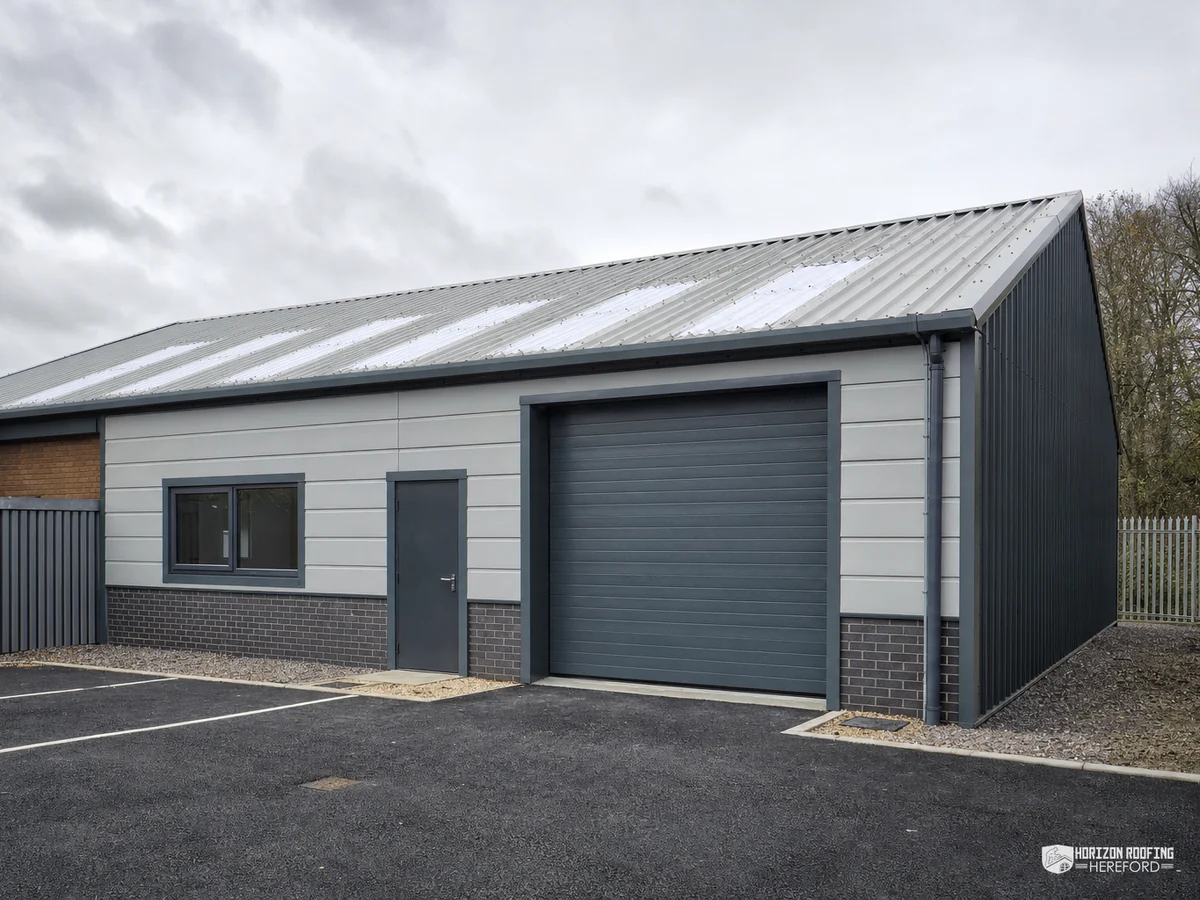
At a gable end the slope stops and the roof finishes at the verge. Two methods are common. In the traditional one, the edge tiles are bedded on mortar, with the mortar pointed along the wall. In the dry-fix method, an edge unit is clipped or screwed in place and the tiles beneath are held independently. BS 8612 is the standard for dry-fix ridge and verge systems, and BS 5534 covers fixing for slating and tiling more generally.

An edge takes more than its share of wind, because the air that runs up a gable wall lifts the outer tiles first. Loose verge mortar, tiles with no clip at the edge and gaps along the wall line are what we look for. We also check the barge board, the timber under the edge on some houses, and the top of the gable masonry itself. Rain that gets in at a verge tends to run down inside the gable wall, so stains on the loft side of the wall are a clue.

Slate has its own limits. Cupa, a slate supplier, notes that BS 5534:2014+A2:2018 "also indicates that the minimum roof pitch for natural slate is 20 degrees in the case of a project situated in an area with moderate exposure and with a slate 500mm long and a 115mm overlap", and the same supplier says slate hooks have no place on a slope under 25 degrees. Those limits matter when a roof is low-pitched or an extension is added to an existing slope. We measure the pitch before recommending slate, and if a covering will not suit the angle, the report tells you straight away and suggests what will. A shallow slope is also where lap and fixing detail matter most, so we photograph the laps at the eaves and at the ridge as well.

Where only the edge has failed, we rebed or refix it and leave the slope alone. A verge repair may sit alongside a ridge repair, since both are the top line of the roof. Our slate roofing page covers slate work in detail. If the survey does show that more than the edge has failed, the price you are given is one total in writing, so you can compare repair and replacement side by side.

Along a Bobblestock gable edge

  • Verge mortar that has dropped
  • Edge tiles with no clip or screw
  • The gap beside the gable wall
  • Stains on the loft face of the wall
  • Barge board timber, where one is fitted
Fig. 3 The verge, drawn close

Callout 3 of 3

Huntington, St Mary Magdalene and old walls

The final callout is the wall, and with it the rules that attach to old buildings. Bobblestock is part of Hereford, 1.9 road miles north-west of Hereford's centre. The Huntington conservation area, close to Bobblestock, was designated in 1975, by the dates Herefordshire Council publishes. Herefordshire has 64 conservation areas in all. Close by, the National Heritage List includes the Church of St Mary Magdalene, Grade II (list entry 1196847, first listed 10 June 1952).

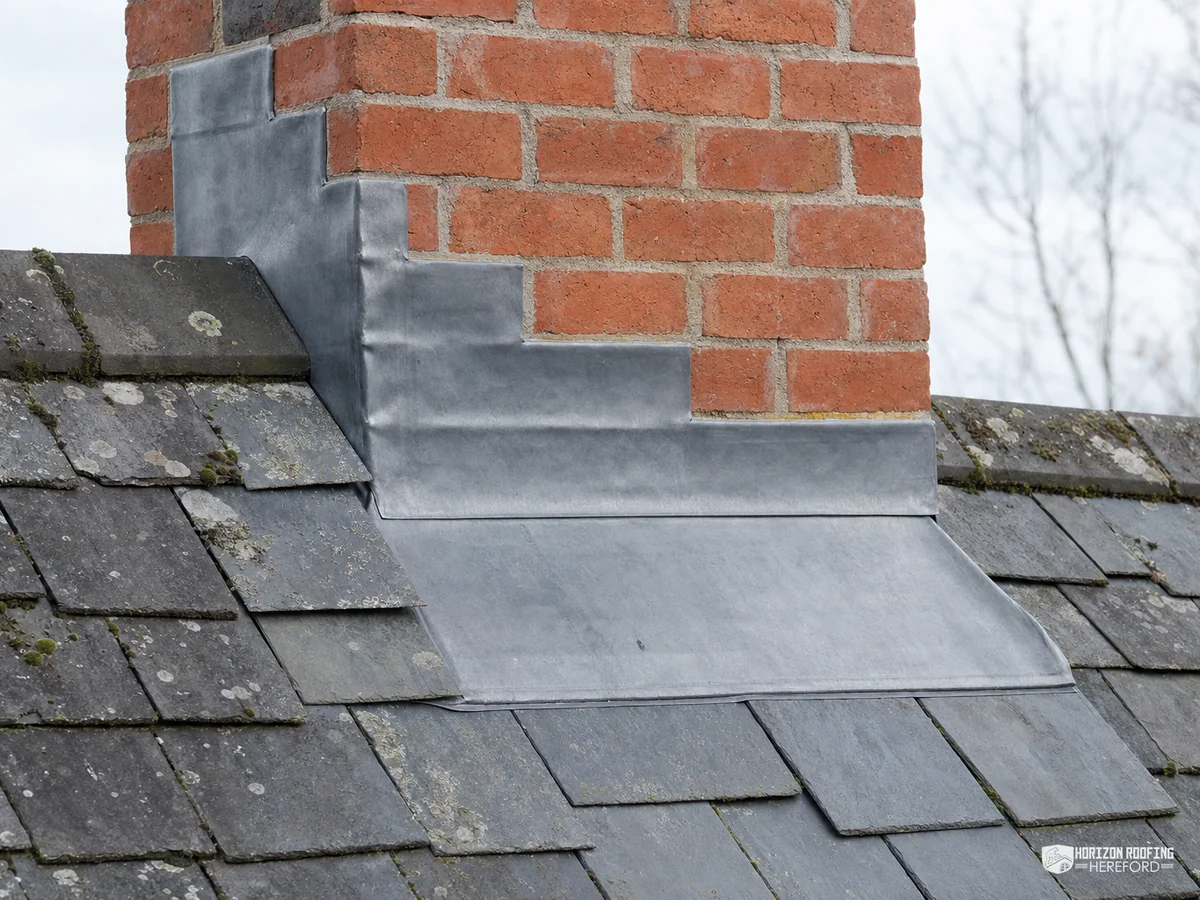
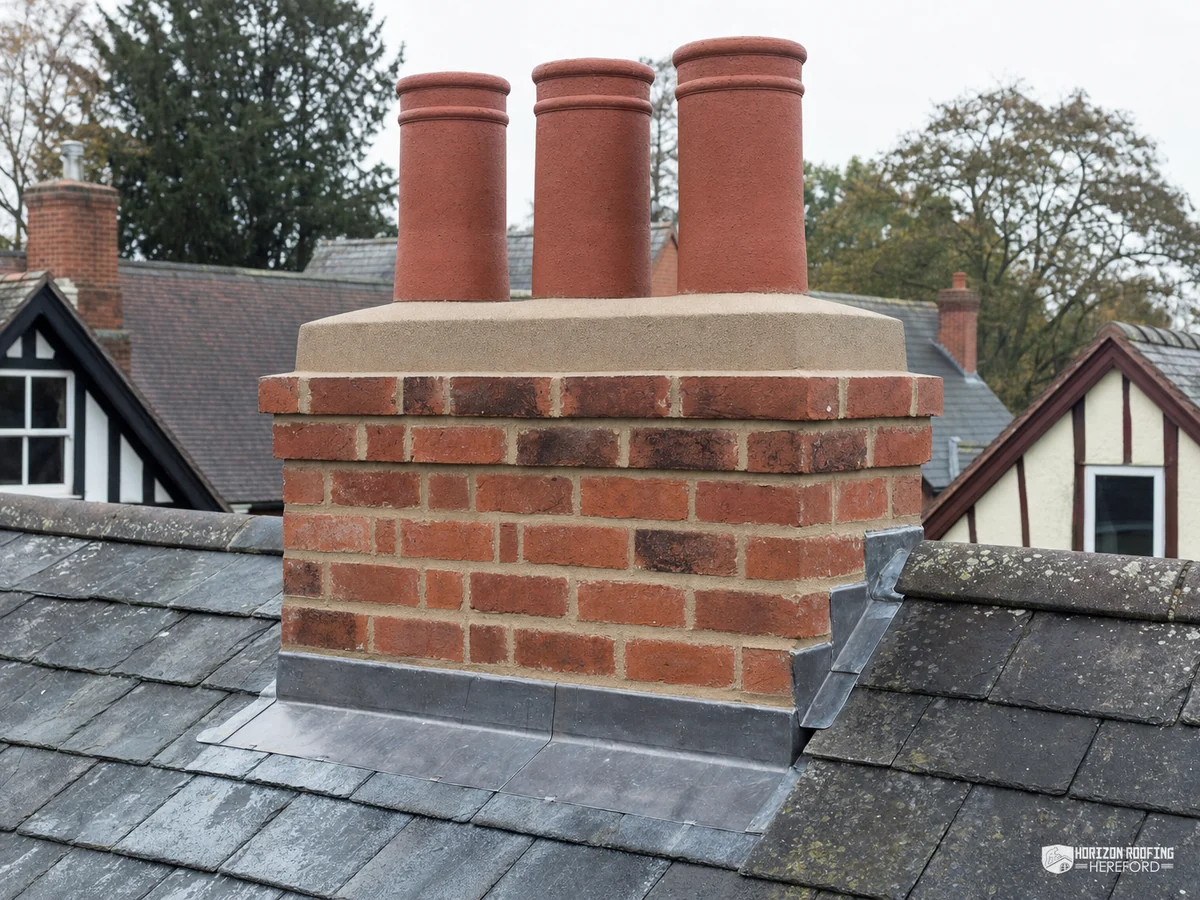
A conservation area changes what can be done to the look of a roof, not whether it can be repaired. Check whether an Article 4 direction applies with Herefordshire Council, because a direction can remove rights that houses otherwise have. For a listed house, section 7 of the Planning (Listed Buildings and Conservation Areas) Act 1990 makes consent a condition of any work in a manner which would affect "its character as a building of special architectural or historic interest". Listing does not remove permitted development rights; consent is needed in addition. The wall around a roof matters too, because lead that is chased into old masonry, or a coping that has loosened, is part of that character. Where a wall carries a roof edge, we look at the pointing, the stone or brick face and the line where the covering meets it, and we show you each in a photograph before anything is priced.

For a church roof the route depends on the owner and on use. Faculty jurisdiction handles an Anglican parish church while worship goes on there. Roman Catholic and Methodist churches have systems of their own, and so do United Reformed churches, while a Baptist Union church is exempt only if a Schedule 1 trust body holds it. Unitarian and Quaker buildings fall outside the exemption, as does a church that has closed, so those need listed building consent. Which category a given church falls into is for its owner to confirm.

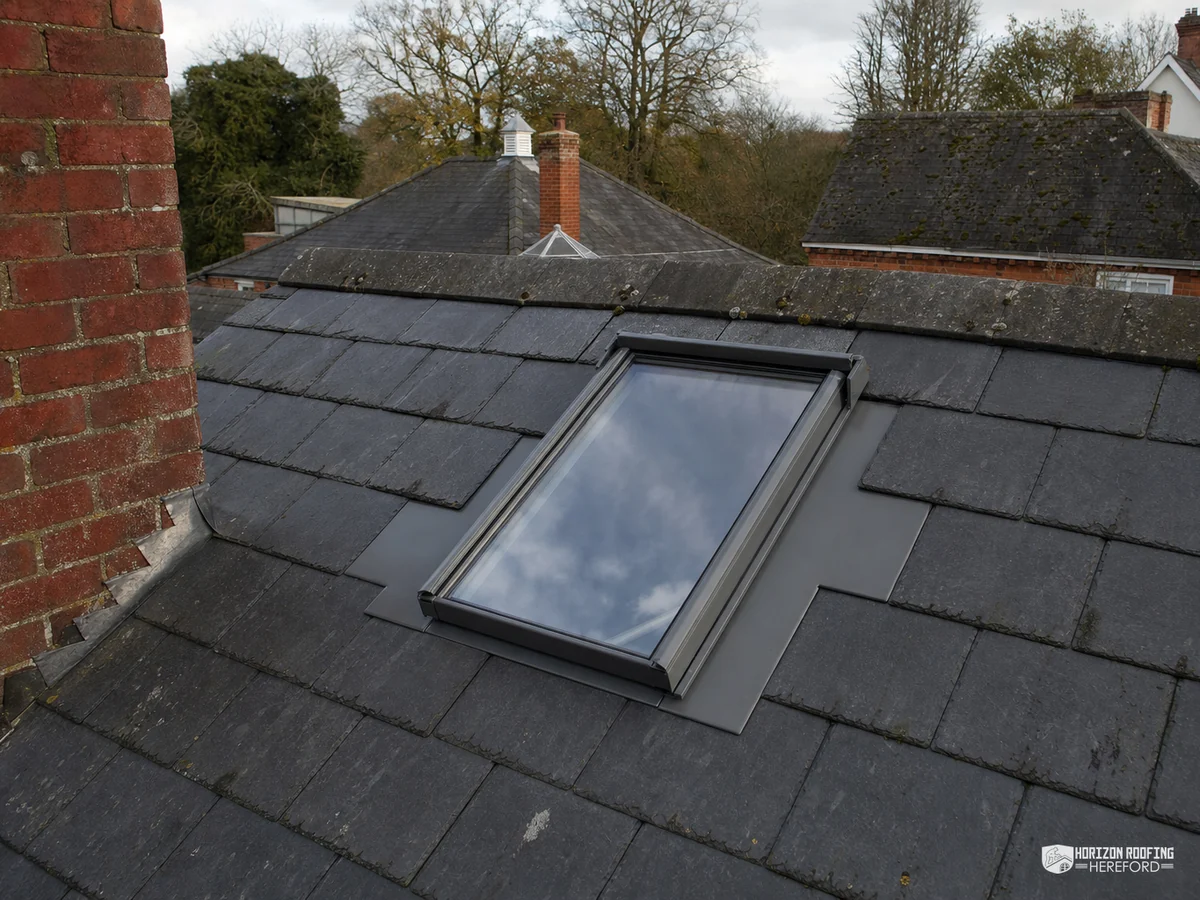
Roof windows and dormers are where planning rules bite hardest, so our planning guide for roof windows sets them out in full. Building control for a Bobblestock address is Herefordshire Council Building Control, on 01432 261938 or at bce@herefordshire.gov.uk, or a registered building control approver. Our roof repairs page covers the smaller jobs.

Masonry at a Bobblestock wall

SoundCoping bedded, lead tight in the chase, joints full
Needs workCoping loose, chase crumbling, lead lifting at the top

Bobblestock roofs: coverings, edges, listings and cost

How can I tell if a Bobblestock roof needs repair or a new covering?

Look from the garden for slipped courses, cracked corners and moss, then check the loft for daylight and damp stains. We do the same and test the fixings by hand. A few loose tiles on sound battens are a repair. Slipping across the whole slope, rotten battens or a worn underlay point towards a new covering, and the report shows the evidence either way.

Does the Huntington conservation area affect roof work in Bobblestock?

Herefordshire Council's list gives Huntington a designation date of 1975, and it lies close to Bobblestock. Whether your own address is inside the boundary is shown on the council's map. A conservation area affects changes to how a roof looks, not like for like repairs, so check the boundary and ask whether an Article 4 direction applies with Herefordshire Council before work.

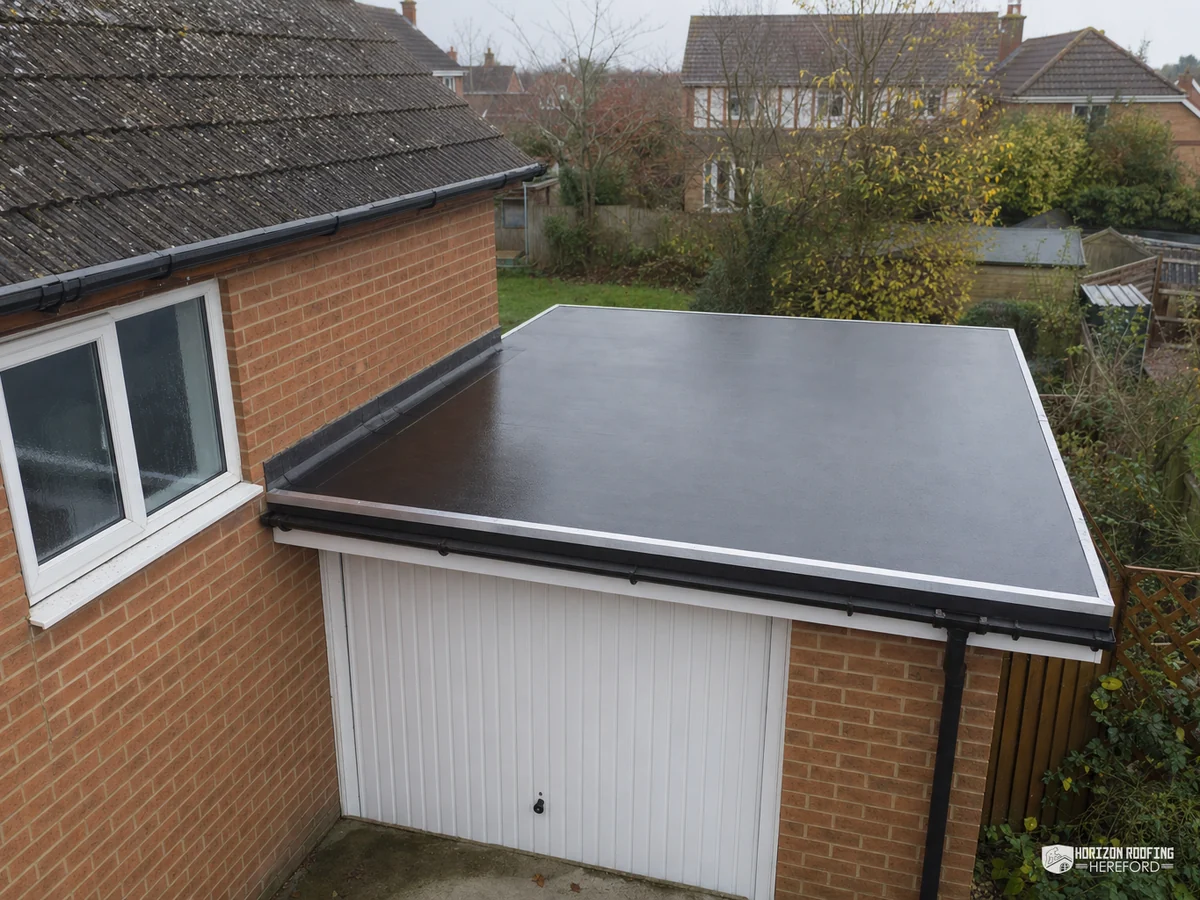
Can an old garage roof in Bobblestock contain asbestos?

It can. HSE's guidance is to presume asbestos wherever a building was constructed or refurbished before 2000, and it calls asbestos cement roofs "always fragile", so walking on a sheet or breaking one is out of the question. Taking intact sheets down with care is non-licensed work; sheets already damaged or broken fall into a separate category. Anything that needs a licence is handed to a firm that holds one, and the waste goes out in a lockable skip, as HSE advises for asbestos.

Whose consent covers roof work on a listed church near Bobblestock?

St Mary Magdalene's Church is Grade II (list entry 1196847). The route depends on who owns a church and whether worship still takes place there. The faculty system covers an active Church of England building, while Methodist, URC and Roman Catholic churches in use keep schemes of their own, and Baptist Union churches are exempt when a Schedule 1 trust corporation is the holder. Meeting houses used by Unitarians or Quakers sit outside the exemption, so listed building consent applies to them, and so it does to a closed chapel.

Do I need Building Regulations approval if I change the covering?

Switching to a heavier covering needs approval: the Planning Portal says 15 per cent or more, and AD A says more than 15%. England's re-roofing test is separate: no application is normally needed where work touches under 25 per cent of the building envelope and under 50 per cent of the roof together. Herefordshire Council Building Control can advise on 01432 261938.

What do small tile and ridge repairs cost in Bobblestock?

Which? reported one to six replacement tiles at "£75-£400" and a new ridge tile at "£80-£300" in its November 2025 survey, ex VAT. Those are national ranges. A Bobblestock price depends on access, the covering and the state of the battens, and it arrives after the survey as one total in writing, with scaffold allowed for where it is needed.

Ask for a Bobblestock covering check

Send a photo or a short description of the roof, and we will inspect the covering first and give you a written price.

10-year workmanship guarantee, in writing