
01432 610152 Get a quote Call 01432 610152

Roofers in Allensmore

Roof repairs in Allensmore: slate, tile, garage sheets and listed farm buildings, south-west of Hereford.

Photographs of what we find come first, then a single written total at the end of the survey.

Get a free quoteCall 01432 610152

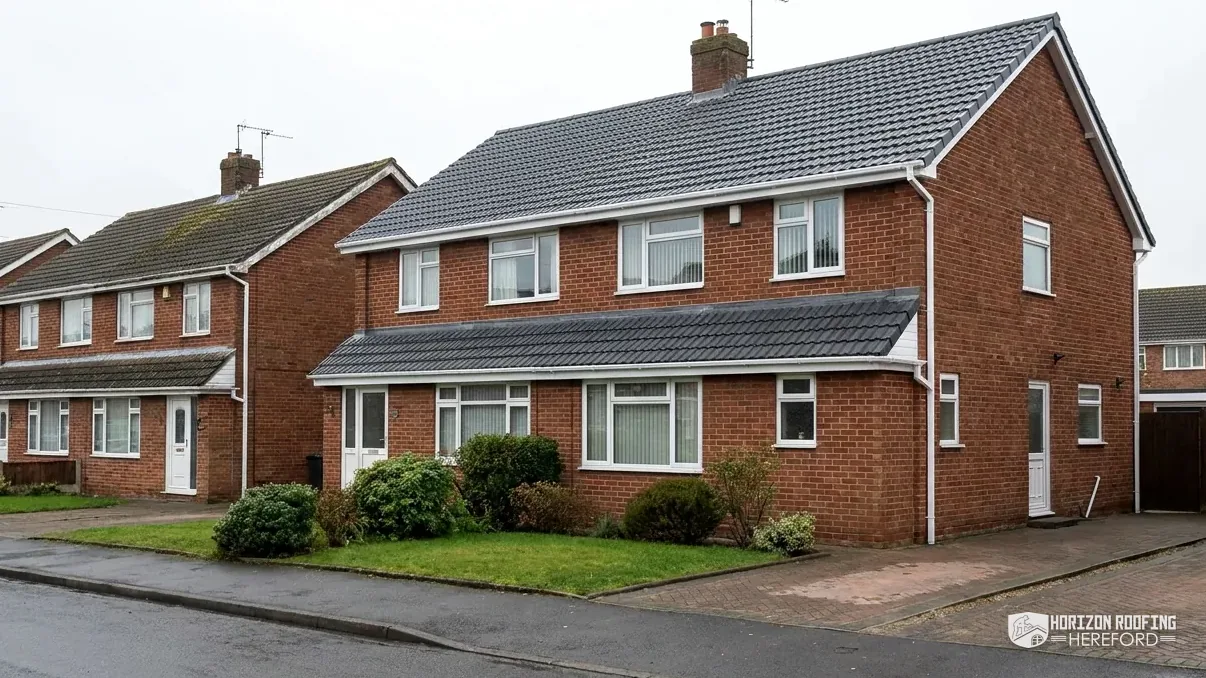
What Allensmore's roofs ask of a roofer

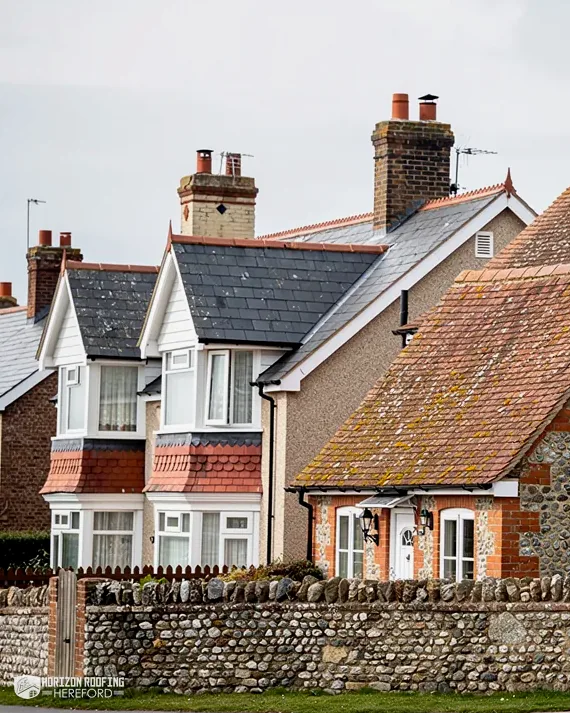
  • Older cottages with weathered clay tile roofs and brick chimneys behind a flint wall
    Slates and tiles on recordThe 1931 inventory notes slate and tile coverings on the parish's recorded buildings.
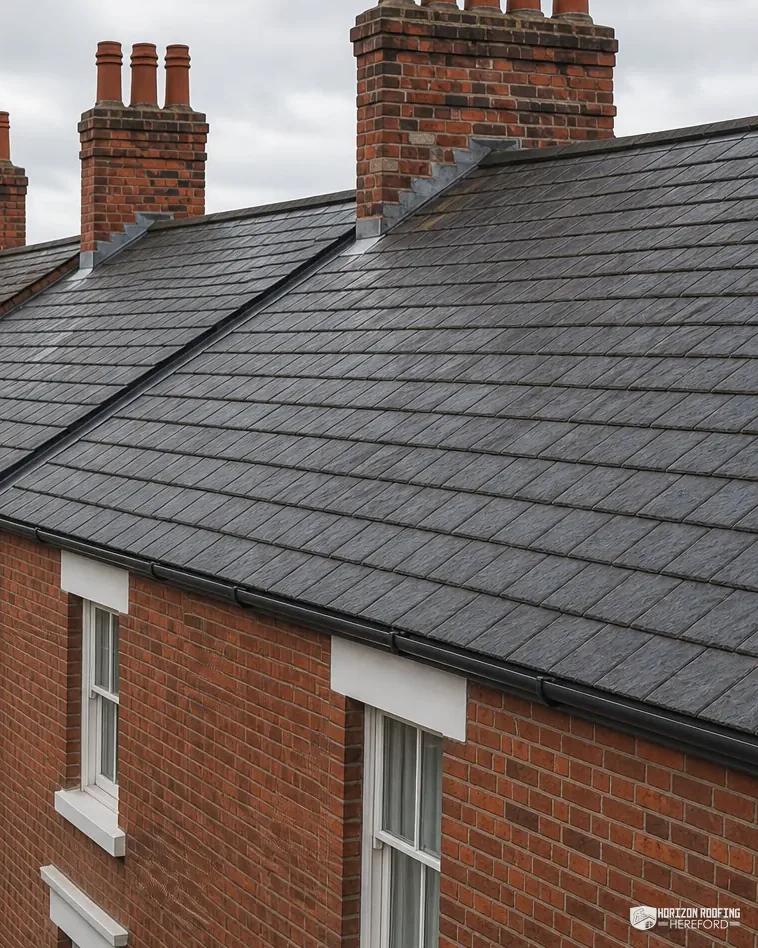
  • Slate roofs and chimney stacks along a red brick Victorian terrace
    Outbuilding sheet roofsA building built or refurbished before 2000 should be assumed to contain asbestos.
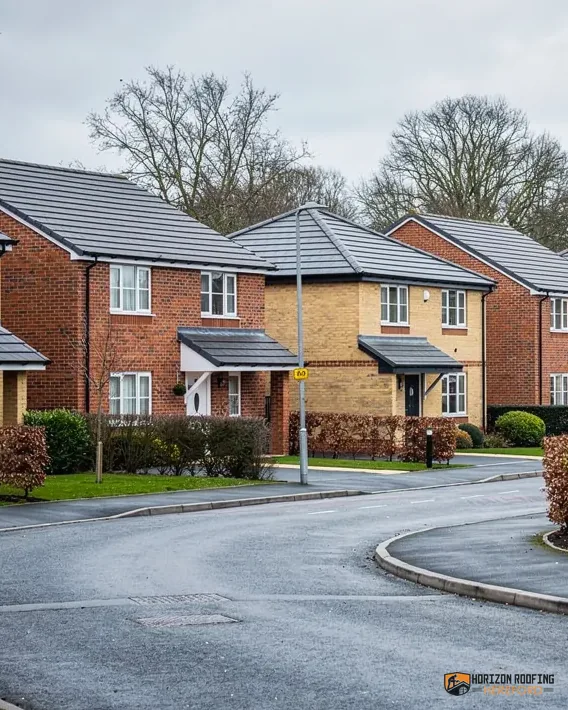
  • Newer homes with grey concrete tile roofs along a curving estate road
    Church House and its barnChurch House and the barn beside it are both Grade II listed.

Allensmore and surroundings

Allensmore on a street map, with a dashed circle around the town and the nearest towns we cover. Tiles © Esri; map data © Esri, HERE, Garmin, OpenStreetMap contributors.

Allensmore roofs, from slate slope to sheet roof

Slope, sheet roof and church wall: the Allensmore survey

The survey begins on the main slopes, where slate or tile has to be identified before anything is priced, then moves to garage and barn sheets, and ends at the listed walls round the church.

A drawn cut-away section through a Herefordshire border house: the front of the main roof is cut open to show the rafters, underlay, battens and slates, beside a black-and-white timber-framed gable. Numbered, from the ridge down: 1 Slate and tile; 2 Sheet roofs; 3 Church and barn walls.

Fig. 1 The three Allensmore callouts, numbered along one drawn border house.

Callout 1 of 3

Slate and tile slopes, pitch and moss

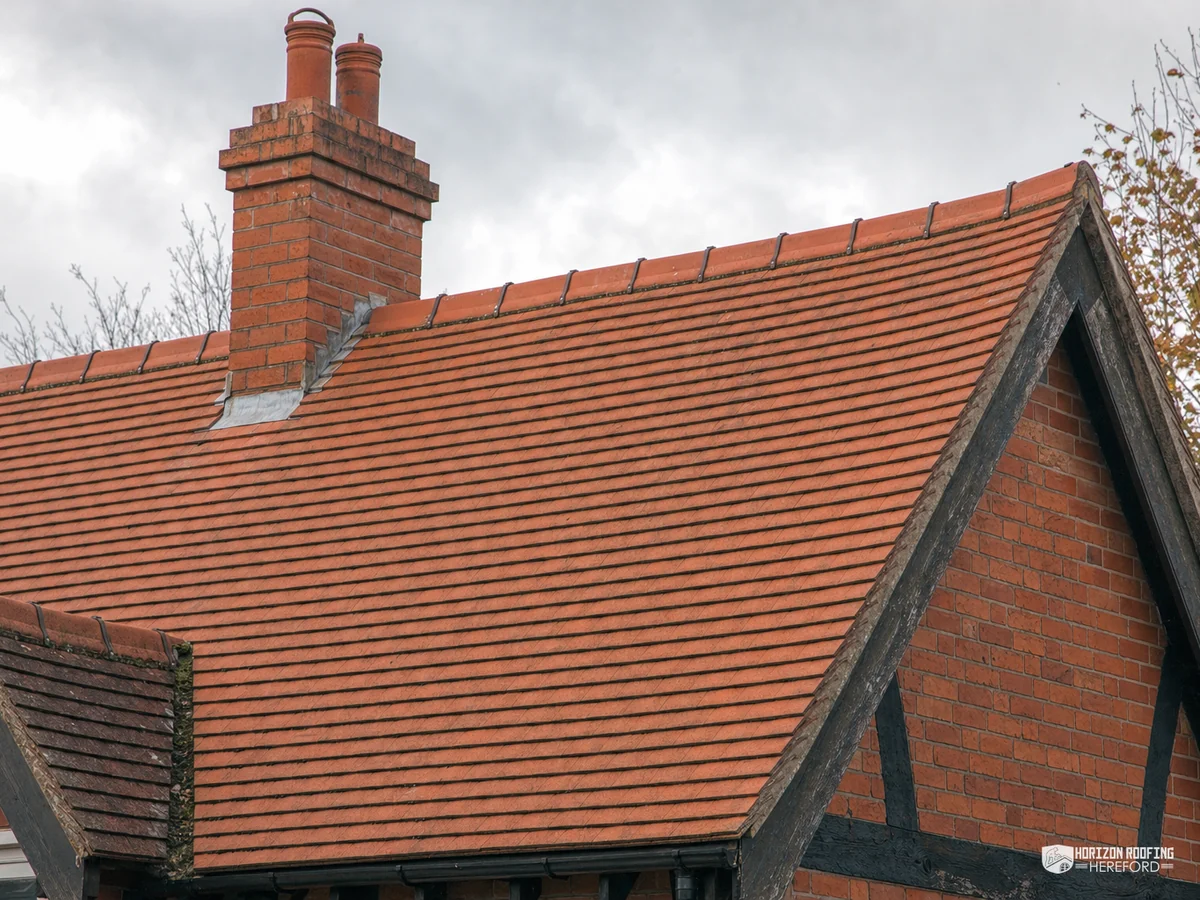
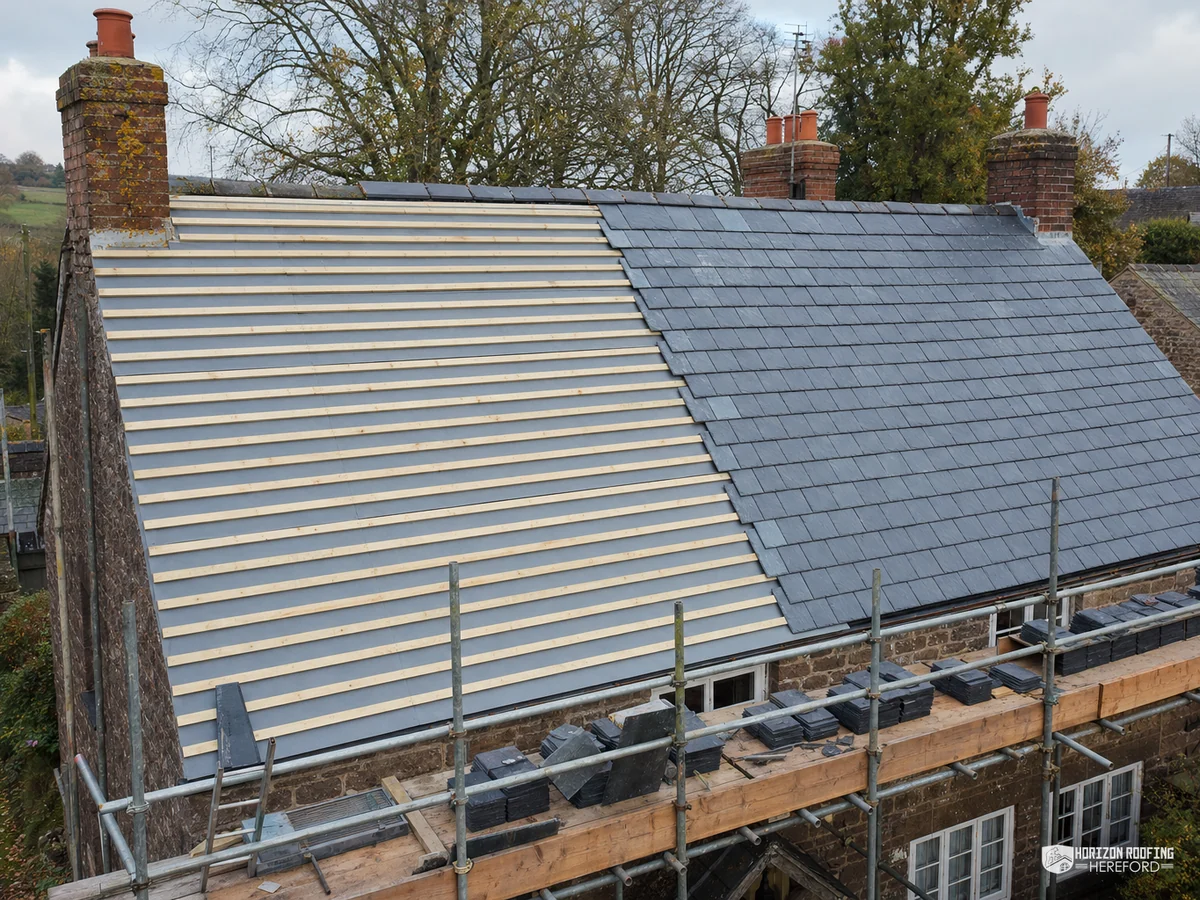
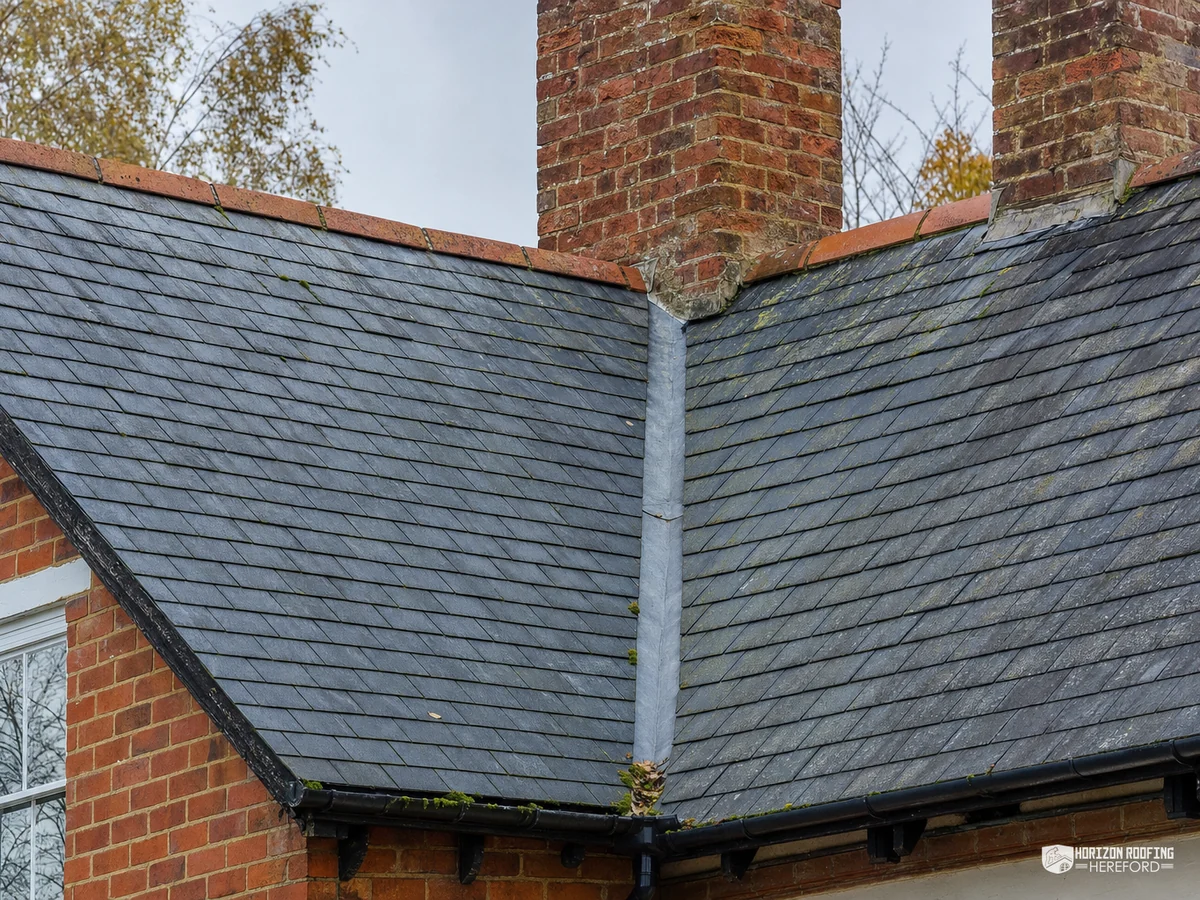
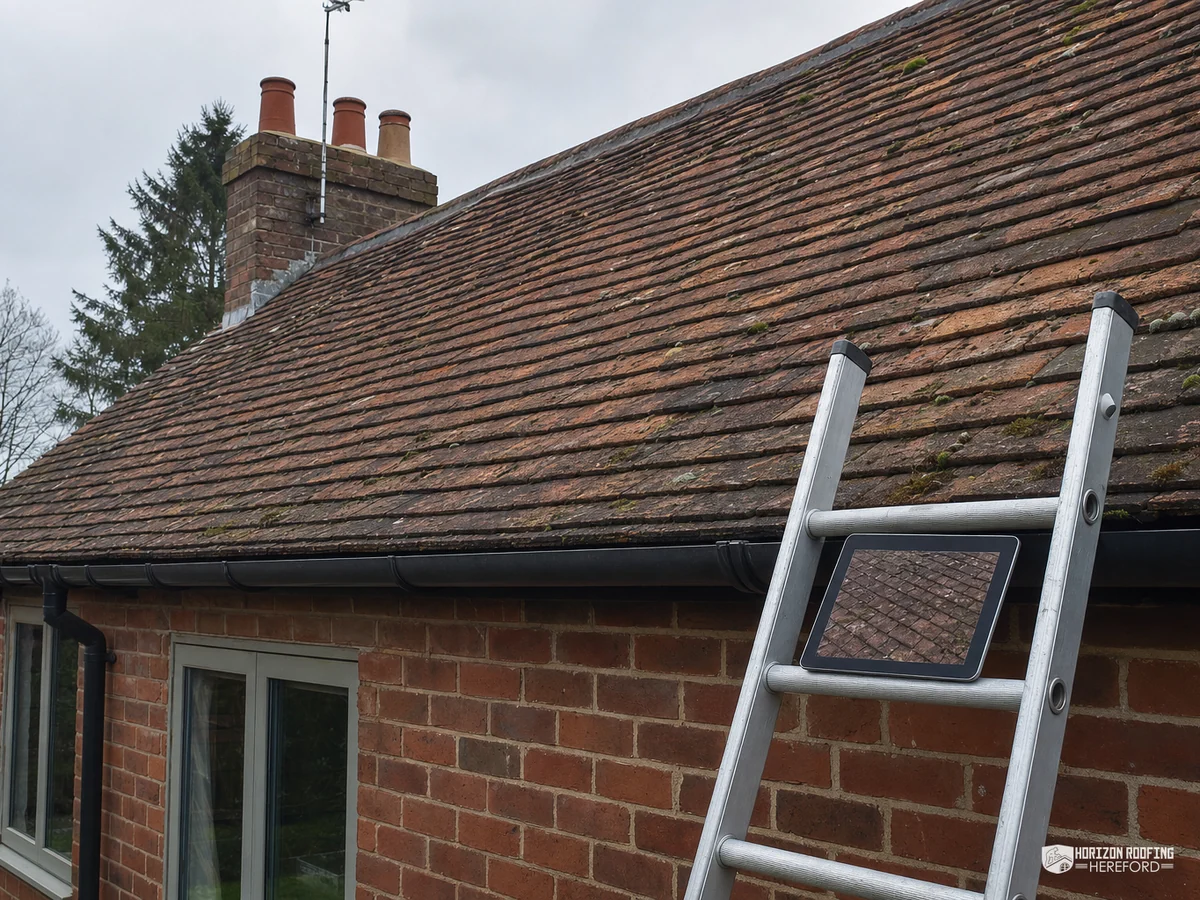
On an Allensmore house the covering is worth identifying before anything is priced. The Royal Commission's 1931 inventory of south-west Herefordshire recorded of the Parish Church of St Andrew that "the roofs are covered with slates", and of its monuments numbered 5 to 16 in Allensmore parish that "the roofs are covered with modern slate or tiles". Modern there means modern in 1931, so a roof you own today may have been re-covered since. At the survey we lift the edge of a slate or tile, photograph what is underneath and tell you what the roof is made of. We also note which slopes sit in shade, because moss and lichen gather on a damp, shaded face.

The covering decides how steep a roof must be. Marley's pitch table gives 35 degrees as the minimum for its plain concrete tile and 15 degrees for its Mendip, and its clay Canterbury needs 40 degrees. Those are product names, not places, and the data sheet for the tile on your own roof is the document to check. Lifespans differ as well. For clay tiles, Marley cites a minimum life expectancy of 60 years from the BRE. Concrete is a separate case: Marley gives roof tiles "around 60 years" as an expectation rather than a promise, while HomeBuilding gives plain concrete tiles "40-50 years". We set out both concrete figures instead of picking one.

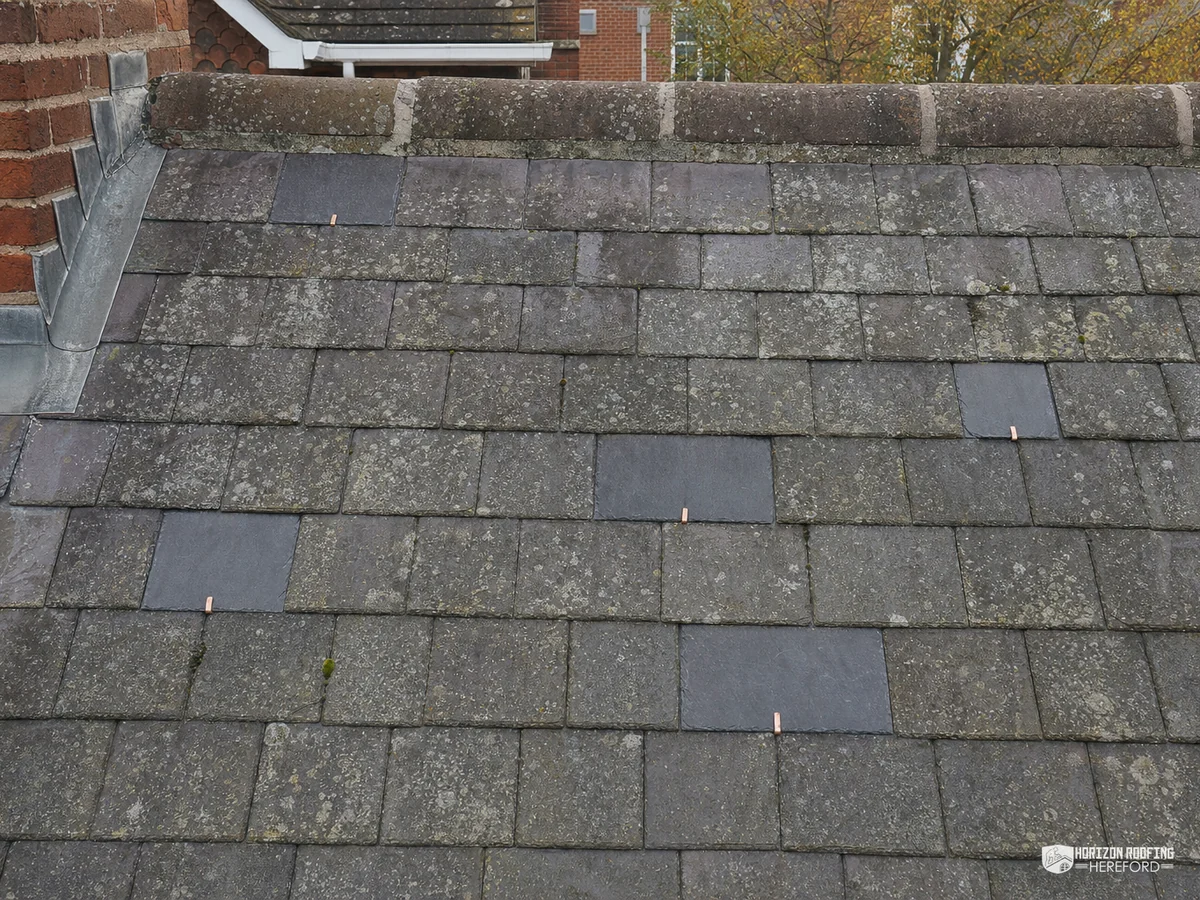
Moss and lichen on a shaded slope are a cleaning job, not a reason to re-roof. Marley's advice is that "The use of high powered jet washes is not recommended as it can damage the surface of the slate or tile, thus reducing its expected life considerably". Moss is therefore cleared by hand from the gutters, valleys and the first courses, and any tile that moss has lifted is relaid. A slate or tile that has cracked is replaced singly, and the survey photographs each replacement spot. Slate carries its own ranges: HomeBuilding gives Welsh slate "100+ years" and Spanish slate "75-100 years", and SPAB describes the slate and stone roofs of Wales and the Marches as "predominantly double-lapped". Double-lapped means each slate covers the joints in the course beneath it and also laps onto the course below that. Our roof cleaning and moss removal page explains the work in more depth.

Minimum pitches in Marley's table

Plain concrete tile
35 degrees
Mendip concrete tile
15 degrees (smooth)
Canterbury clay tile
40 degrees
Lincoln clay pantile
15 degrees
Your roof
Check the maker's data sheet

A mossy slope needs cleaning and a few relaid tiles, not a new roof.

Fig. 2 The slopes, drawn close

Callout 2 of 3

Garage sheets, barn roofs and asbestos

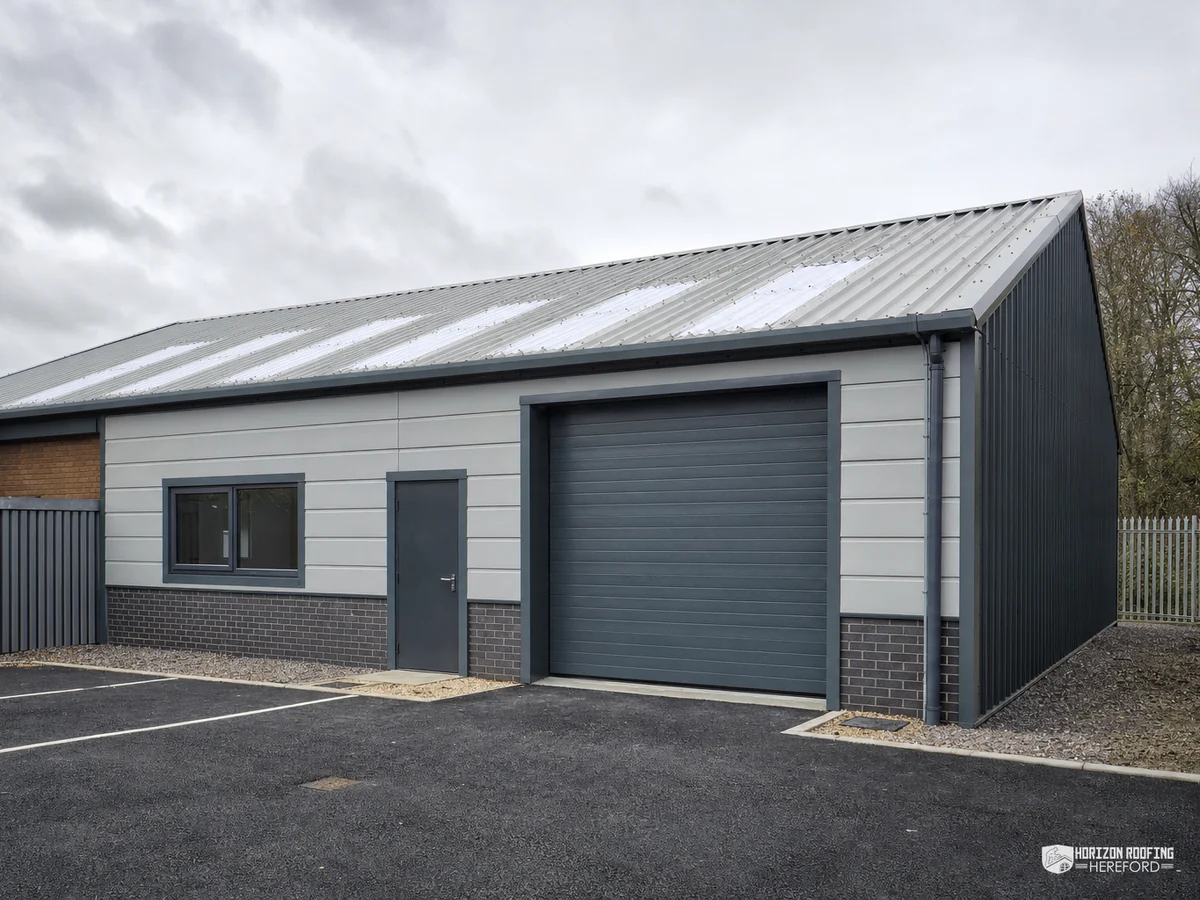
Not every outbuilding is the same, but a garage, workshop or farm shed can carry a low-pitched roof of large corrugated sheets. HSE's advice is blunt: for any building constructed or refurbished before 2000, "assume that there is asbestos in it", and its guidance A14 says "AC roofs are always fragile". An asbestos cement sheet can fail underfoot, so nobody should walk on one, and a leak in such a roof is looked at from a crawling board or from below until the material is known.

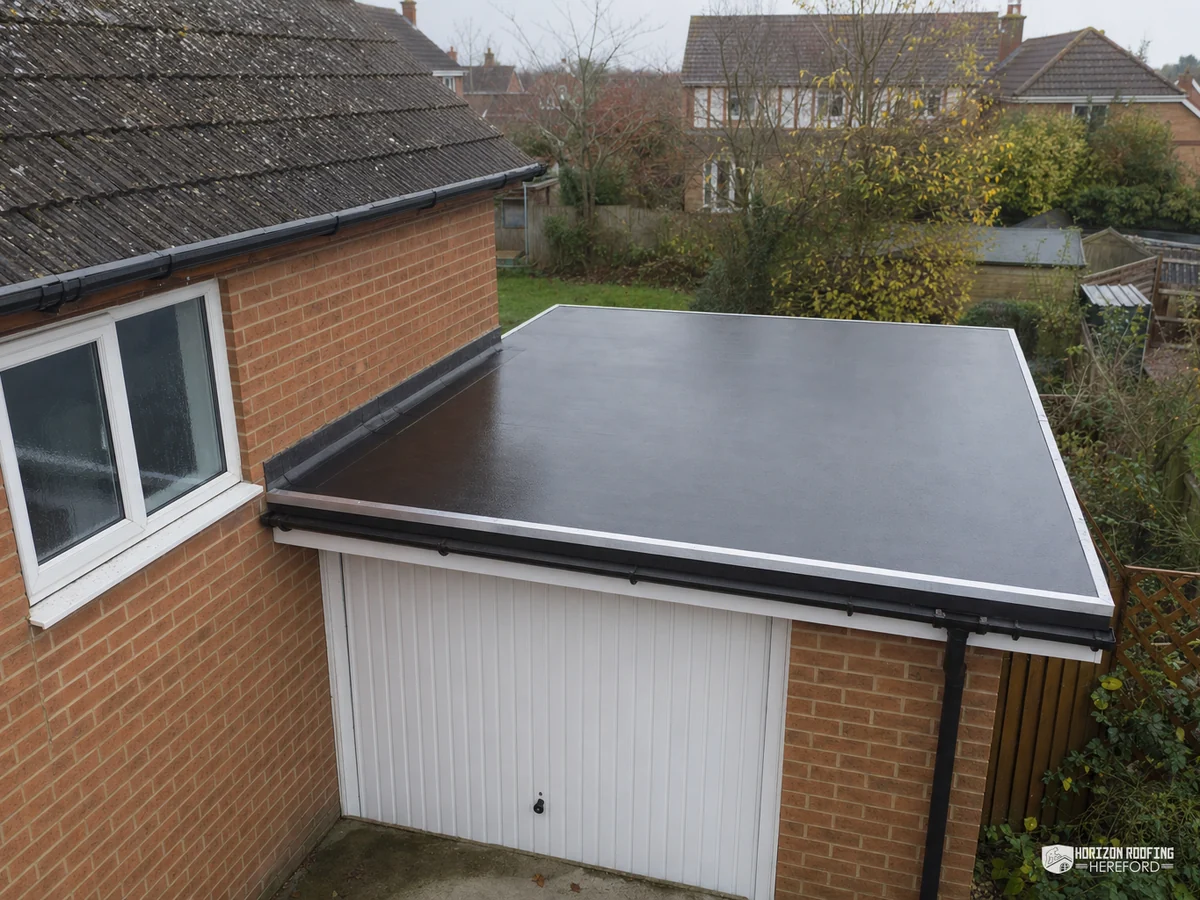
HSE treats asbestos work in three tiers. Asbestos cement roof sheeting that comes off whole, including sheets that are weathered but not otherwise substantially damaged, is non-licensed work. Cement that has been substantially damaged or broken up, or whose removal would break it up, such as "dropping" a roof, is notifiable non-licensed work. Removing asbestos insulating board, the material in many white soffit panels, is mostly licensed work, and licensed work goes to a licensed firm. Our first step is a sample or a record of the material before a sheet is touched. A flat garage roof is a different case: if water stands on it for days after rain, the fall has been lost, and the covering is re-laid to the NFRC's minimum finished fall of 1:80 under BS 6229:2025.

Waste is half the job. HSE's guidance says to "Use a lockable skip for asbestos", and that it is not good enough to throw sheeting over a standard skip. In England the household consignment-note exemption covers domestic hazardous waste "other than asbestos waste", so a roofer's asbestos travels on a consignment note. A householder with a small amount can use the Hereford or Leominster household recycling centre: Herefordshire Council says asbestos is accepted if it is double bagged or wrapped in plastic sheeting and sealed, for Herefordshire residents only, by booking. Our commercial roofing page covers farm, workshop and unit roofs, and every stage of a sheet roof job is photographed.

Before touching a sheet roof

  • Assume asbestos if built or refurbished pre-2000
  • Walk only on boards, never on the sheets
  • Identify the material before any removal
  • Use a lockable skip, never an open one
  • Record the waste route on paper

Nobody walks on an asbestos cement sheet, so we look from boards or from below.

Fig. 3 Flat roofs, drawn close

Callout 3 of 3

St Andrew's church, Church House and the barn

The entries on Historic England's list near the middle of Allensmore include those below. The Church of St Andrew is Grade II* (list entry 1099725, first listed 26 January 1967). Church House is Grade II (list entry 1099727), the barn about 20 yards west of Church House is Grade II (list entry 1301253, first listed 22 October 1986), and Little Village Farmhouse is Grade II (list entry 1099690, first listed 22 October 1986). These are the entries a survey cross-checks before the roof is touched. Section 7 of the Planning (Listed Buildings and Conservation Areas) Act 1990 brings works that would affect a listed building's character under consent, and a listed house keeps its permitted development rights with that consent needed on top.

St Andrew's is part of the Church of England within the Diocese of Hereford, and services are still held there, so its roof works go through the faculty jurisdiction and not through listed building consent. Had it closed, listed building consent from Herefordshire Council would be the route instead, as it is for a Quaker or Unitarian meeting house. You are told which applies before any scaffold goes up, and the report names the route.

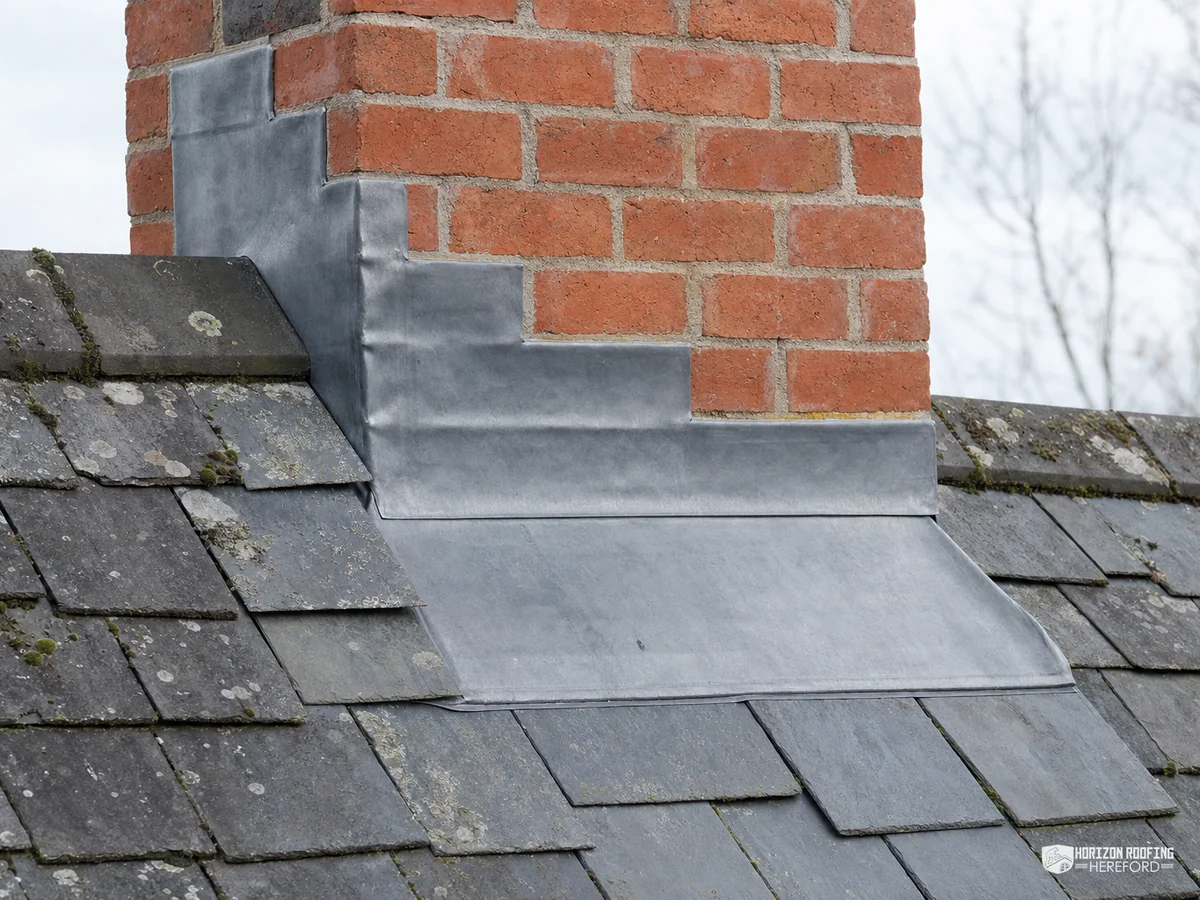
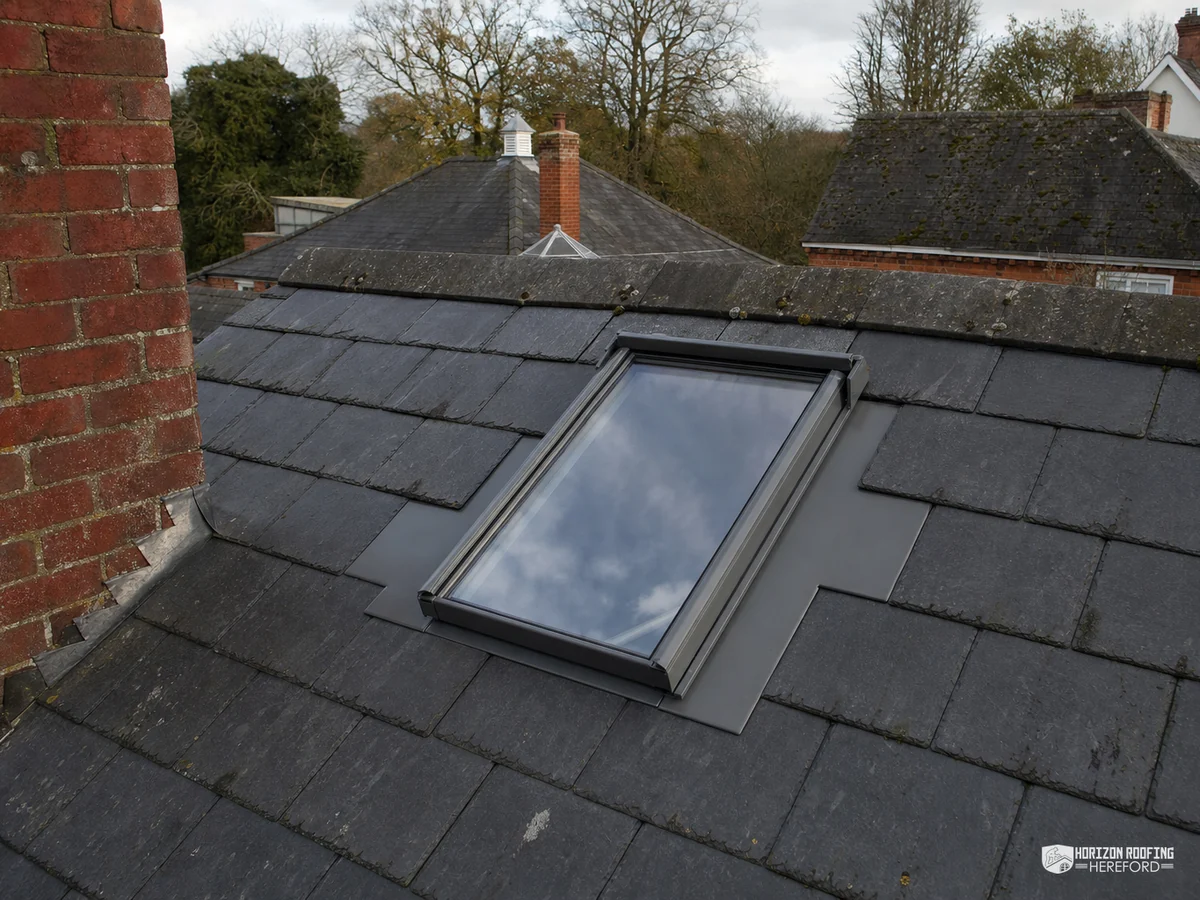
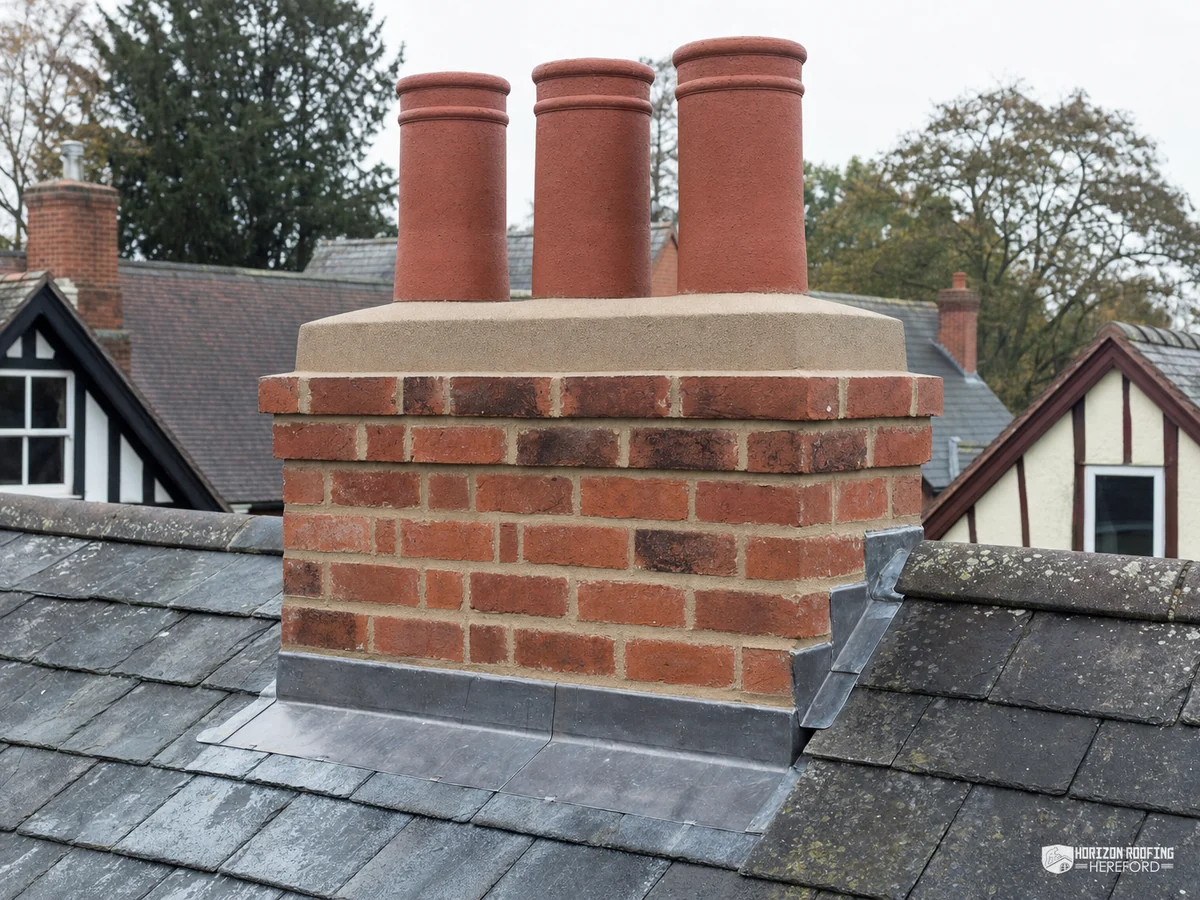
Herefordshire Council keeps its own list of the county's 64 conservation areas, and the list is the place to check whether an address near Allensmore falls inside one. Ask Herefordshire Council whether an Article 4 direction applies to your street too. A barn can also hold nests. Intent is the test in the Wildlife and Countryside Act 1981 s1: to intentionally harm a wild bird's nest by taking, damaging or destroying it while it is occupied or under construction is an offence, so a nest with birds in it delays the work until they have gone. Where a roof meets a church or barn wall, lead is tucked into the stone joints and dressed over the covering, and we look at the pointing and the stonework below it for damp, from the roof side and again from inside the building where access allows. For roof windows the roof window planning guide sets out the limits. Herefordshire Council Building Control takes questions on 01432 261938, and a registered building control approver can act instead. Our listed and heritage roofing page describes the work on a protected building.

Lead at a stone wall is checked from the roof and again from inside.

Where a roof meets a church or barn wall

SoundLead tight in sound joints, pointing intact, wall dry below
Needs workLead lifted, pointing open, damp marks on the wall inside

Allensmore roofs: slate, sheets and the church

What did the 1931 inventory say about the slate and tile roofs of Allensmore?

Of the Parish Church of St Andrew the Royal Commission wrote "the roofs are covered with slates", and of its monuments numbered 5 to 16 in Allensmore parish, "the roofs are covered with modern slate or tiles". It names the materials without counting them, and ninety years of repairs have passed since. The survey identifies what your own roof carries and photographs it, so the repair matches the covering you have.

Should I assume my Allensmore garage roof contains asbestos?

For a building constructed or refurbished before 2000, HSE says to assume there is asbestos in it, and asbestos cement roofs are always fragile, so do not walk on the sheets. Careful removal without breaking the sheets is non-licensed work, while broken-up sheeting is notifiable non-licensed work. Waste goes in a lockable skip. We identify the material before any quote.

Where can an Allensmore household take small amounts of asbestos?

Herefordshire's Hereford and Leominster household recycling centres accept asbestos that is double bagged or wrapped in plastic sheeting and sealed, by booking, for Herefordshire residents only. Business waste is not accepted, so a roofer's asbestos is carried as trade waste on a consignment note. In England the household exemption covers domestic hazardous waste other than asbestos waste, which is why a contractor cannot simply take it to a recycling centre alongside household bags.

Can spray foam go under the slates of an Allensmore roof?

Think first about lenders and rot. RICS noted in March 2023 concern in specific sectors of the lending market, equity release mortgages for one, and advises asking your mortgage provider. The Energy Saving Trust calls closed-cell foam not vapour permeable and says the rot risk should be much lower with open-cell foam. Foam already under the slates can be surveyed before any decision is taken.

Which consent route applies to the roof of St Andrew's church in Allensmore?

The church is Grade II* (list entry 1099725). It is an Anglican church in the Diocese of Hereford with services still held, so a faculty is the route for its roof, not listed building consent. If it ever closed for worship, consent from Herefordshire Council would take over. For a Grade II* building the survey also records the lead, the gutters and the stonework below them, because those details decide how much of the job the consent covers.

Who arranges the scaffold licence on an Allensmore lane?

We arrange the licence with our scaffolder. Herefordshire Council wants the application at least 10 days ahead. Herefordshire Council's fee of £167 buys a maximum of 1 month of highway space, then £123 for each added month. Scaffold is included in the one written price, so no separate bill arrives, and where an Allensmore house sits on a busy road we book the licence dates at the survey. Narrow lanes and lorries need planning, so the survey notes where the scaffold would stand.

Book a slope-first survey in Allensmore

Tell us about the roof in a sentence or two, and the survey and the written total price follow.

10-year workmanship guarantee, in writing