
01432 610152 Get a quote Call 01432 610152

Roofers in Hartpury

Re-roofs and repairs for the houses of Hartpury, a parish of 1,785 residents.

A survey reads the whole roof, valleys and eaves included, and you receive one written price afterwards.

Get a free quoteCall 01432 610152

Where a Hartpury roof starts to fail

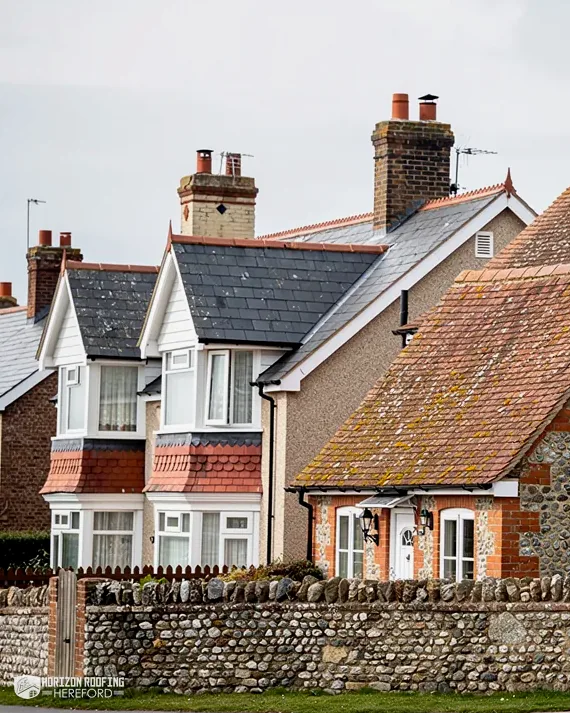
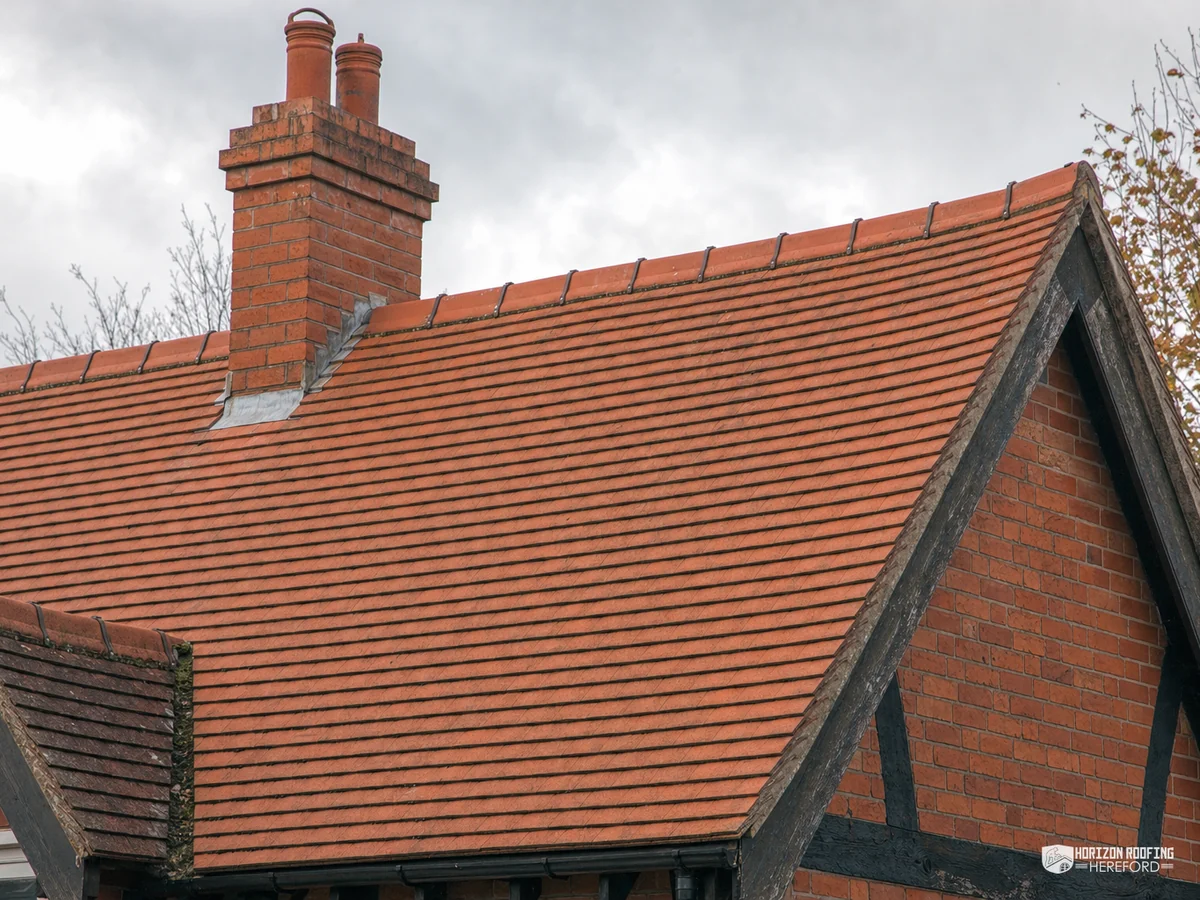
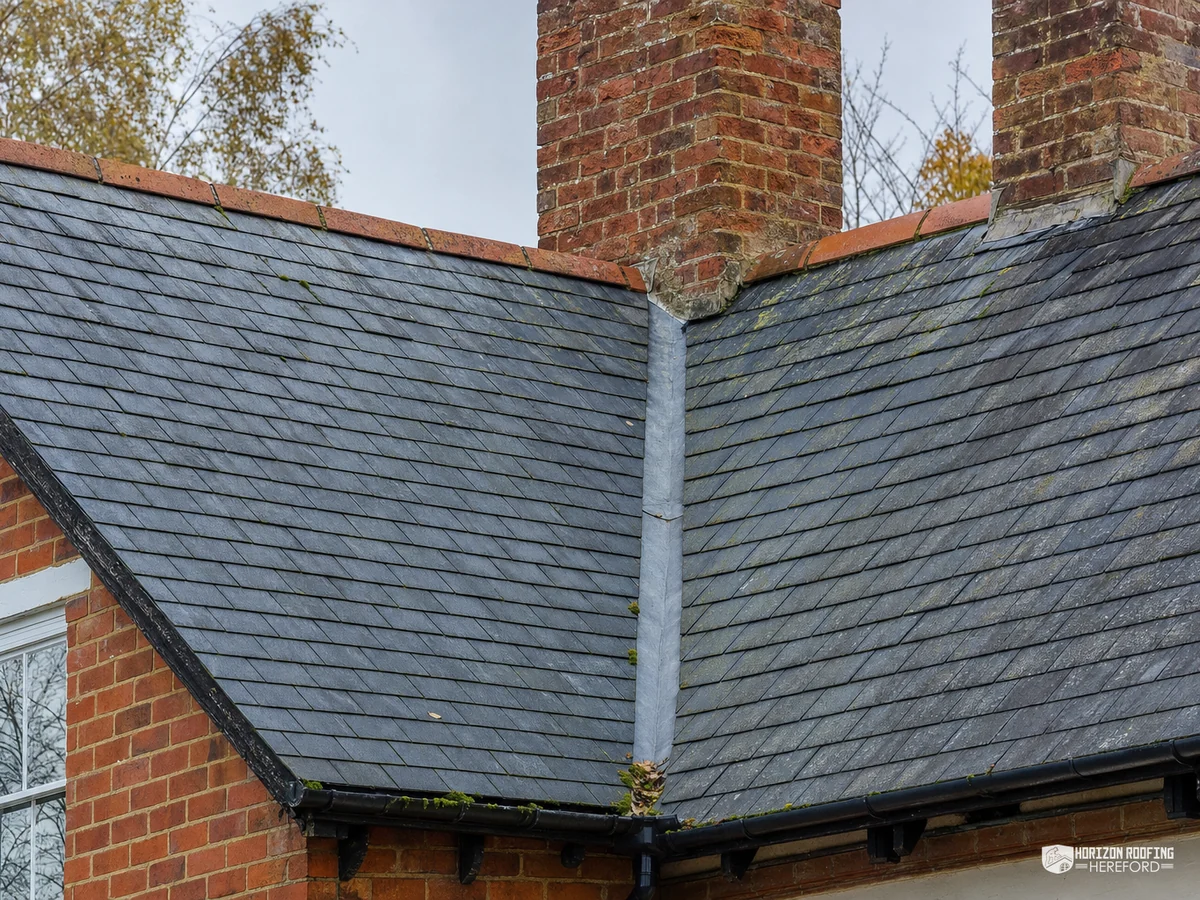
  • Older cottages with weathered clay tile roofs and brick chimneys behind a flint wall
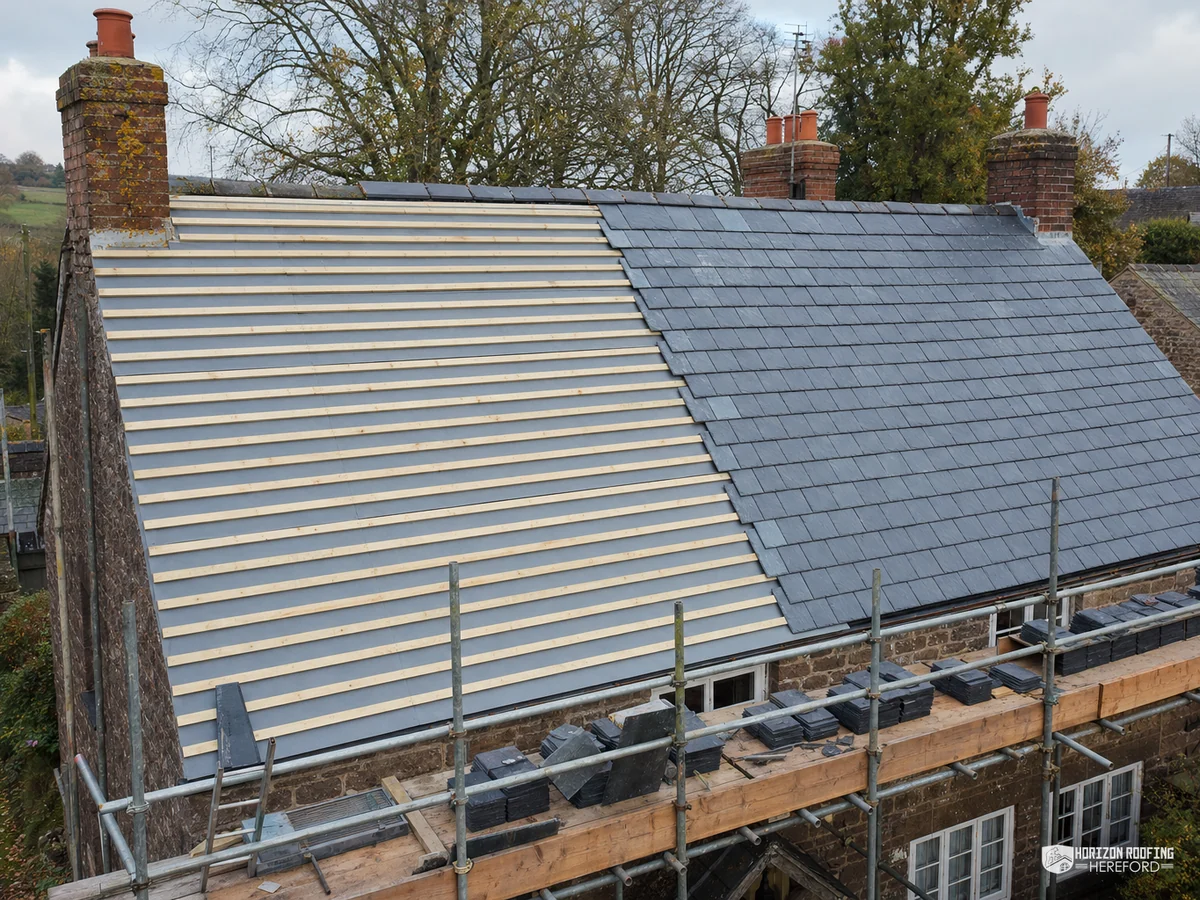
    Worn slopes awaiting re-coveringTiles and slates reach an age where patching stops being sensible.
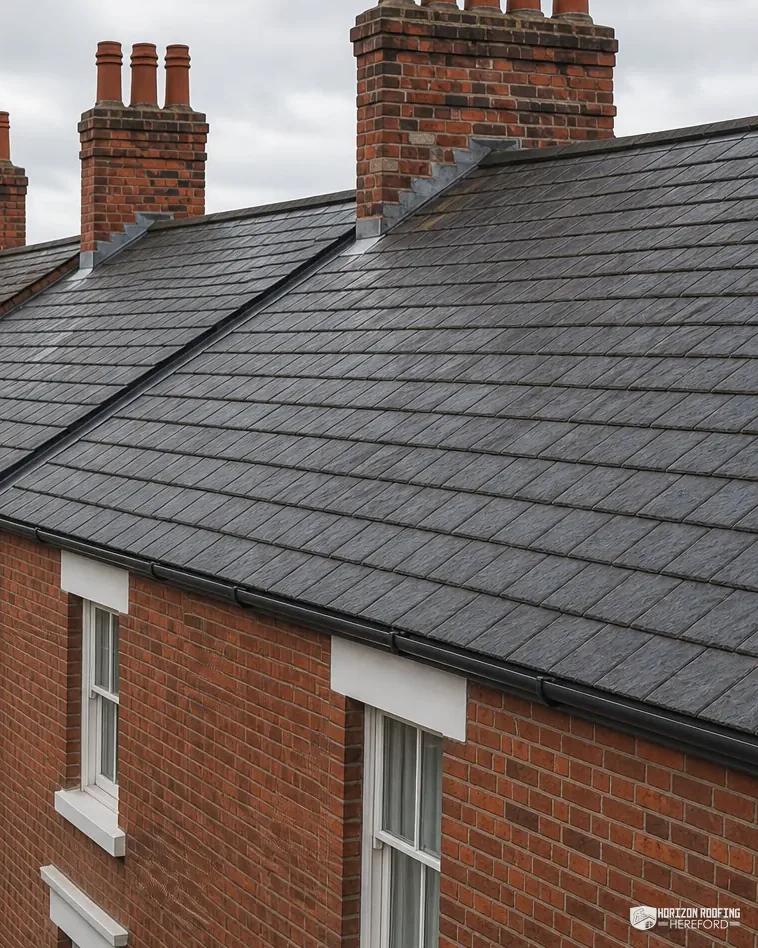
  • Slate roofs and chimney stacks along a red brick Victorian terrace
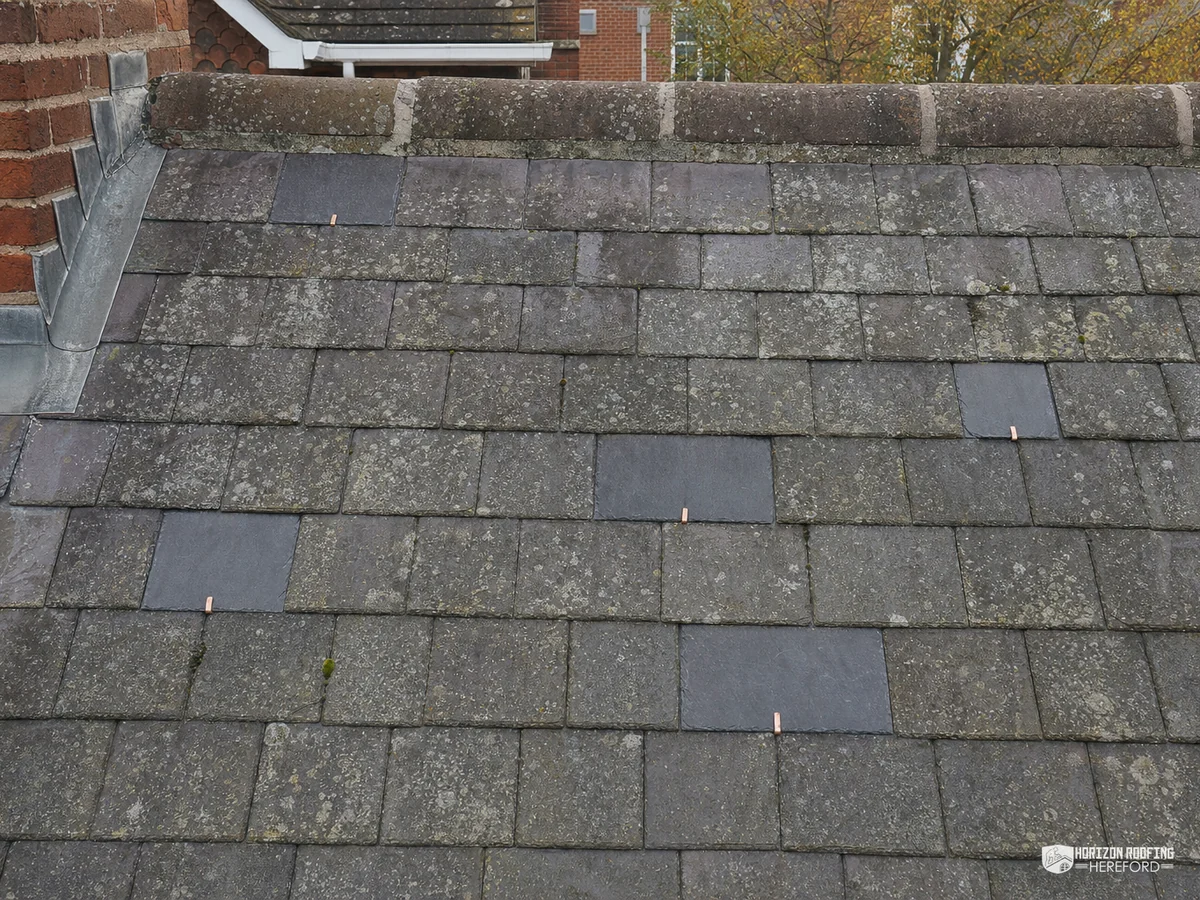
    Valleys where slopes meetTwo slopes drain into every valley, so its lead takes double duty.
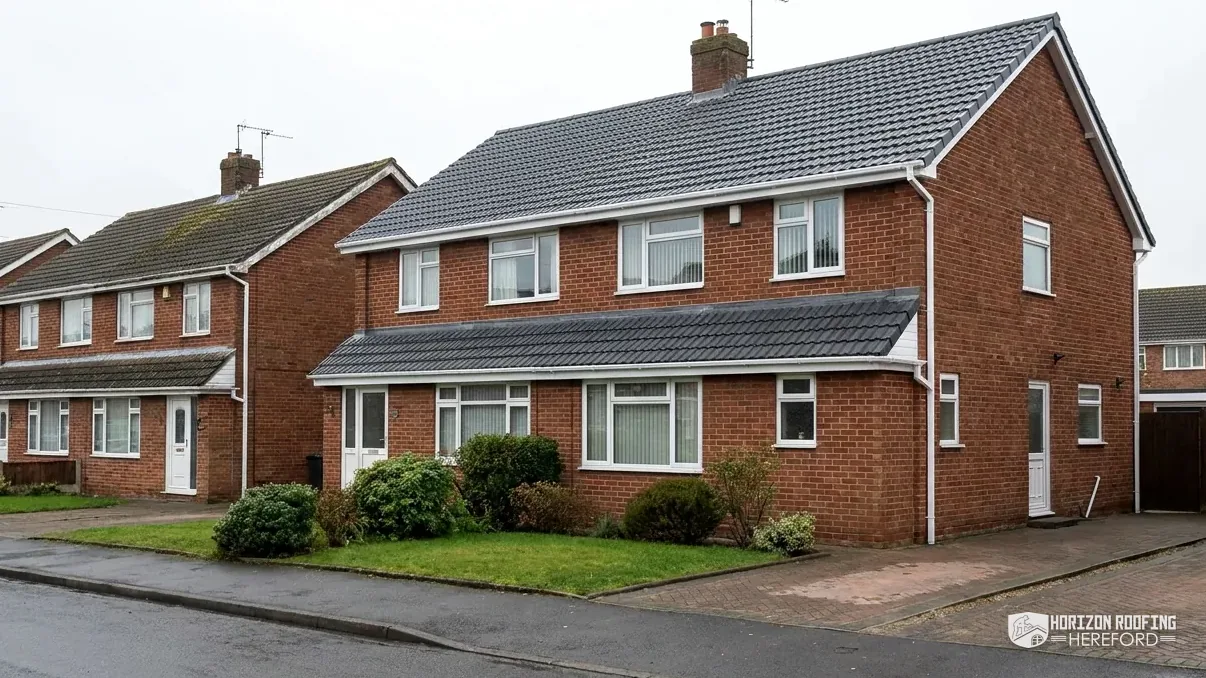
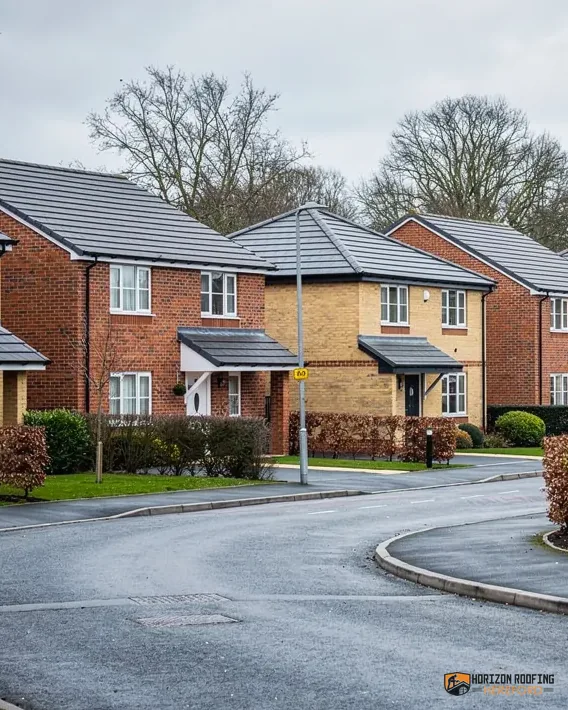
  • Newer homes with grey concrete tile roofs along a curving estate road
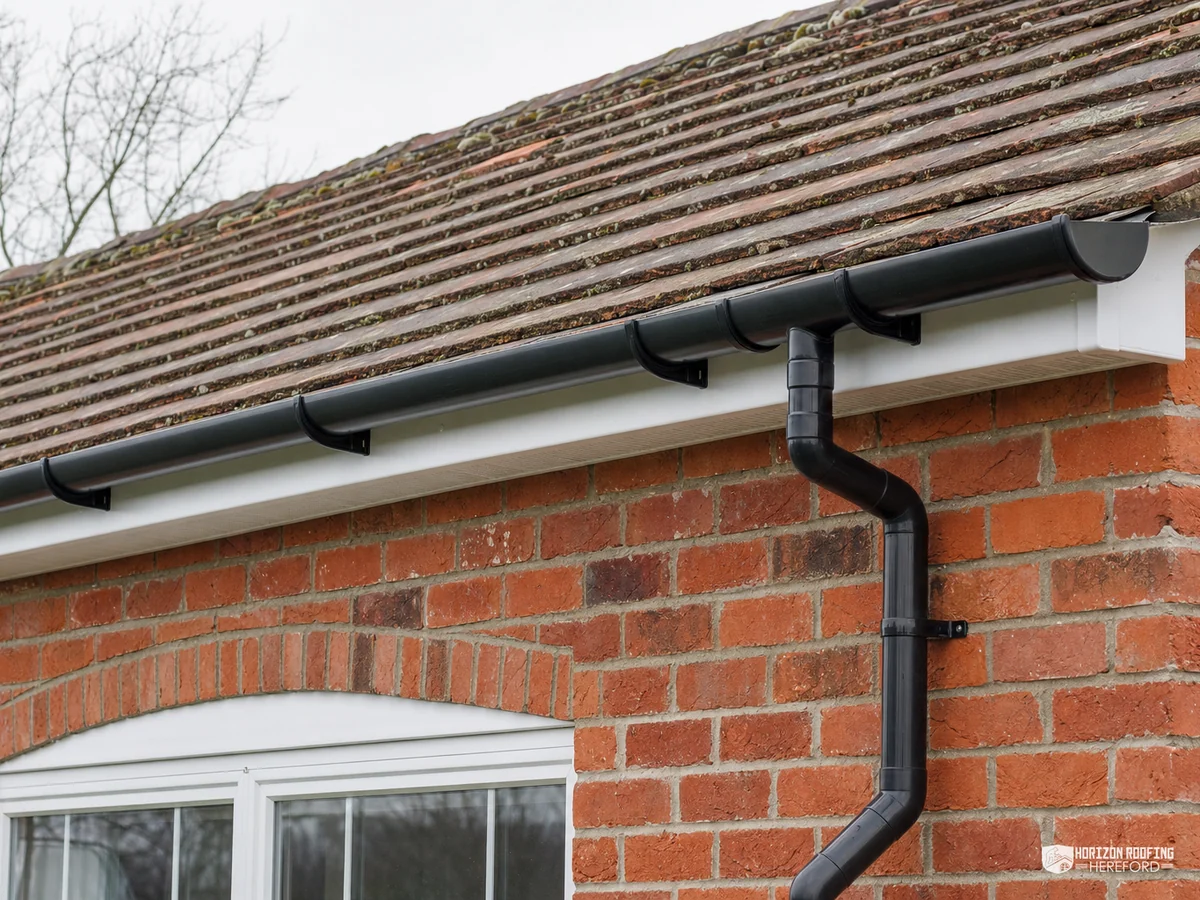
    Eaves with nests or roostsBirds and bats use eaves, and the law protects both before we start.

How far Hartpury is

Hartpury on a street map, with a dashed circle around the town and the nearest towns we cover. Tiles © Esri; map data © Esri, HERE, Garmin, OpenStreetMap contributors.

A Hartpury roof, read slope by slope

Hartpury roofs in three parts: the main slope, the valley and the eaves

We take a Hartpury roof in the order rain travels. The slope and its covering come first, then the valley where two slopes meet, and last the eaves, where birds, bats and ventilation each need thought.

A drawn cut-away section through a Herefordshire border house: the front of the main roof is cut open to show the rafters, underlay, battens and slates, beside a black-and-white timber-framed gable. Numbered, from the ridge down: 1 Main slope; 2 Valley and lead; 3 Eaves and wildlife.

Fig. 1 Hartpury roof in section: slope, valley and eaves, numbered 1 to 3.

Callout 1 of 3

The main slope: when a Hartpury roof needs re-covering

Hartpury parish had 1,785 usual residents at the 2021 Census, and its roofs range from listed houses to modern homes, so no single covering or age can be assumed. We read what is on your roof, never what the neighbouring houses might have. Underneath the covering we check the battens (the timber strips that carry the covering), since a sound covering on rotten battens fails soon after it is refixed. We also check the underlay, the membrane under the covering, for tears and for the sagging that holds water against the timbers. If the underlay has to be renewed, the choice between a high-resistance type and an air-permeable one is made with the eaves in mind, and chapter 3 explains why. A re-covering job is the right answer when fixings, battens and covering alike are spent; a handful of slipped tiles is a repair, and we tell you which of the two you have.

Lifespans come with hedges attached, and we pass them on in the same spirit. For concrete, Marley expects its tiles to last "around 60 years" and stresses that this promises nothing, whereas HomeBuilding puts plain concrete tiles at "40-50 years". Clay is separate: the BRE set a minimum life expectancy of 60 years for clay tiles alone. HomeBuilding lists Welsh slate at "100+ years". Because the sources disagree, we give you a range and look at your own slope to see where it falls.

Pitch limits what can go on. Marley publishes a minimum pitch for every tile, 22.5 degrees for its Ludlow Plus concrete tile, for instance. For natural slate, Cupa reads BS 5534:2014+A2:2018 as indicating 20 degrees, provided exposure is moderate, the slate is 500mm long and the overlap is 115mm. We measure the pitch before suggesting a covering, because a tile laid below its minimum will leak however well it is fixed.

Weight and insulation follow. A new covering that adds 15 per cent or more in weight needs Building Regulations approval, the Planning Portal says, and a structural check comes first. The same source sets two limits below which no application is normally made: under 25 per cent of the building envelope and under 50 per cent of the roof. Insulating while the roof is open brings in Part L: AD L 2021 Table 4.3 sets 0.35 as the threshold and 0.16 as the improved figure. The roof replacement service page follows a full re-cover from the first stripped course to the last ridge cap.

Covering lifespans, as the sources give them

Concrete tile
Marley: around 60 years; HomeBuilding: 40-50 years
Welsh slate
HomeBuilding: 100+ years
Natural slate pitch
Cupa: 20 degrees minimum in moderate exposure
Clay tile
BRE minimum life of 60 years, clay only
Fig. 2 The slopes, drawn close

Callout 2 of 3

Valleys, lead and the listed houses of Hartpury

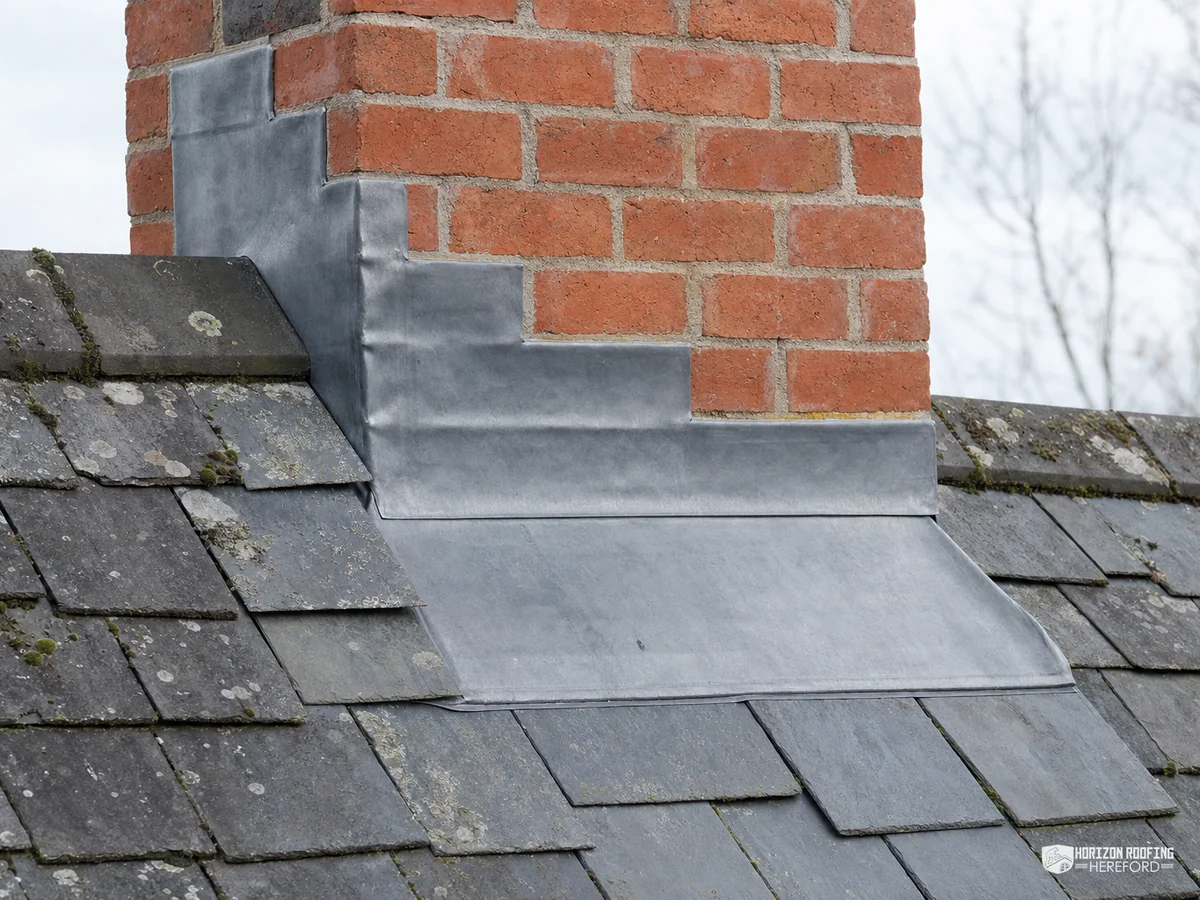
Where two slopes meet at an inward angle there is a valley, and the channel collects rain from both sides at once. Its lead lining works harder than any other part of the roof. Royston Lead's brochure lists the thicknesses by code, and for a pitched valley gutter it shows Codes 4, 5, 6, 7 and 8, with Code 3 recommended for soakers only. The lining runs under the covering on each side, so a valley cannot be inspected properly without lifting the edge tiles. Royston's table sorts lead uses into letters, and a pitched valley gutter is use C, while a box or tapered valley gutter, found where a parapet or an extension meets the main roof, is use D. Which one you have changes the code we would choose. We do that and photograph the lead, looking for cracks along the folds and for debris lodged in the channel.

MyJobQuote says that correctly installed lead flashing "can last for over 80 years". That is a hedge, not a promise, and it is a source for flashings, so for valleys we judge each valley by its code and by how carefully its lead was dressed. A fold that has cracked can sometimes be mended in place, but a long run of cracks points to a new lining.

Hartpury has several listed houses. Glebelands is Grade II (Historic England list entry 1305273, listed on 26 October 1978), the Canning Arms is Grade II (list entry 1078668, listed on 18 October 1985), and Wold Edge is Grade II as well (list entry 1078698). Section 7 of the Planning (Listed Buildings and Conservation Areas) Act 1990 asks for consent where work "would affect its character as a building of special architectural or historic interest". Renewing a valley in the same lead is one thing, while replacing it with another metal changes the building's appearance, so the council hears about it first. A listed house keeps its permitted development rights, but listed building consent is needed in addition.

If you own one of these houses, or any other, tell us at the first call. We will then ask Forest of Dean District Council what it needs to see, and the survey photographs are taken with that request in mind: close shots of the lead, the laps and the way the covering meets the valley, with a wider view of the whole slope for context. For flashings, valley linings and lead-covered flats, see lead roofing.

Opening up a Hartpury valley

  • Edge tiles lifted both sides
  • Cracks along the folds of the lead
  • Moss or soil lodged in the channel
  • The lining's code, where it can be read
  • Whether the house is listed
Fig. 3 The valley, drawn close

Callout 3 of 3

Eaves, roosts and the rules that apply near Hartpury

Eaves join the roof to the wall, which makes them popular with nesting birds and roosting bats. Under section 1 of the Wildlife and Countryside Act 1981, a nest of a wild bird, occupied or still going up, is protected against anyone intentionally taking, damaging or destroying it, and the Act's own word is "intentionally". The law on bats goes further. Natural England's guidance on GOV.UK states that every bat species and its breeding and resting places are fully protected, and it lists roof repair as work that can affect them. The licensing body for England is Natural England. If we find droppings, staining or a nest in use, we stop, show you what we saw, and sort out the next step before any covering comes off. A torch in the roof space shows more than the view from a ladder, so the inside of the roof is checked too before a start date is agreed.

Ventilation also happens at the eaves. For a cold roof using a high-resistance (HR) underlay, Marley specifies a 25mm opening where the pitch is 15 degrees or less, and 10mm where it is steeper. Because HR underlay is not vapour-permeable, that opening has real work to do. An air-permeable underlay can lean on the ordinary eaves gap only when its certification conditions are met. Before choosing an underlay we find out how your roof was built.

The village lies to the south-east: 26.8 road miles from central Hereford, around 44 minutes' drive. Ashleworth Conservation Area is the closest, and it belongs to Tewkesbury Borough Council, across the district boundary, so that council (main number 01684 295010) holds its map. For Hartpury itself, ask Forest of Dean District Council whether your house lies in any conservation area and whether an Article 4 direction applies. Gloucester has the closest railway station, 4.6 miles away as the crow flies. The district council's own building control team takes calls on 01594 812315, or you can choose a registered building control approver instead.

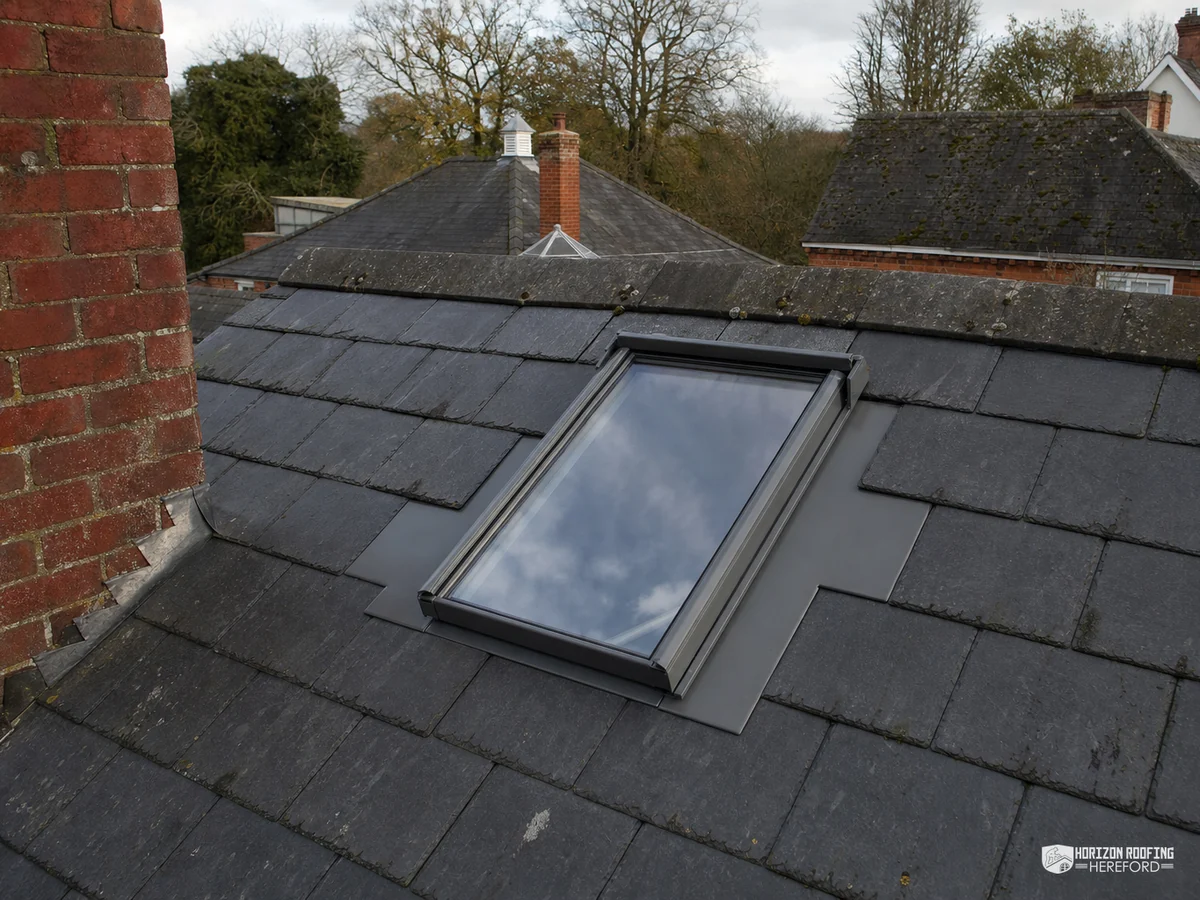
Scaffold on a road or footway needs a licence under section 169 of the Highways Act 1980, and it is dealt with at the survey so it never delays the start. Anyone planning a new window should begin with the planning guide for roof windows.

Eaves where a roost or nest may be

SoundClean eaves, no staining, droppings or straw at the gap
Needs workDroppings or staining below the gap, or a nest in use

Hartpury roofs: coverings, valleys, wildlife and rules

How long should a re-covered Hartpury roof last?

The covering decides. For concrete, Marley expects around 60 years and says that is no promise, while HomeBuilding gives 40-50 years for plain concrete tiles. Separately, the BRE set a minimum of 60 years for clay tiles, and HomeBuilding lists Welsh slate at 100+ years. These are ranges, so a close look at your own slopes tells you more than any table.

Do the listed houses in Hartpury need consent for roof work?

Glebelands, the Canning Arms and Wold Edge are each Grade II. Under section 7 of the 1990 Act, consent is needed where work would alter the character of a listed building, and a change of covering can do exactly that. Even like-for-like repair is something to raise with Forest of Dean District Council, so we ask before pricing. Photographs of the existing covering help the council see what is being proposed, and we supply them from the survey. Listing leaves permitted development rights in place but adds consent.

What happens if you find bats at the eaves in Hartpury?

We stop work and show you what we found. Every bat species and its roost is protected, and repairing a roof can affect one. In England, licences come from Natural England, so what follows is a licence question, dealt with while the roof is still closed. A bird's nest that is in use is treated in the same way: work around it waits.

Is there a conservation area near Hartpury?

The closest is Ashleworth Conservation Area, a Tewkesbury Borough Council designation over the district line. For your own Hartpury street, Forest of Dean District Council can say whether a conservation area or an Article 4 direction applies. Settle both before you re-cover a slope that faces the road. We raise them at the survey and record what the council tells you in the report, which you can then pass to anyone else involved in the work.

Does a Hartpury re-roof need Building Regulations approval?

Hartpury is in England, so the Planning Portal test applies: under 25 per cent of the building envelope and under 50 per cent of the roof, and then normally no application. A covering adding 15 per cent or more in weight needs approval, and insulating the roof brings in Part L. Forest of Dean District Council Building Control, on 01594 812315, will give the answer for your house.

Who deals with the scaffold licence in Hartpury?

Gloucestershire County Council licenses scaffold on its highways at £145 for a minimum period of 28 days, then £36 for every further 7 days, and asks for at least 12 calendar days' notice, and we arrange the licence with our scaffolder. Because of that wait, the first date you hear from us allows for it. Anything about your street that could slow access, such as parking or a narrow pavement, is flagged at the survey.

Book a Hartpury survey, slope to eaves

Say what the roof has been up to, and we will work through it from slope to eaves and set the price out in writing.

10-year workmanship guarantee, in writing