
01432 610152 Get a quote Call 01432 610152

Roofers in Dixton

Roof repair and re-roofing in Dixton, where a conservation area covers the village centre.

We begin with the stone or slate above you, photograph each fault, then set out a single written total after the survey.

Get a free quoteCall 01432 610152

Stone slates, Welsh slate and a conservation area

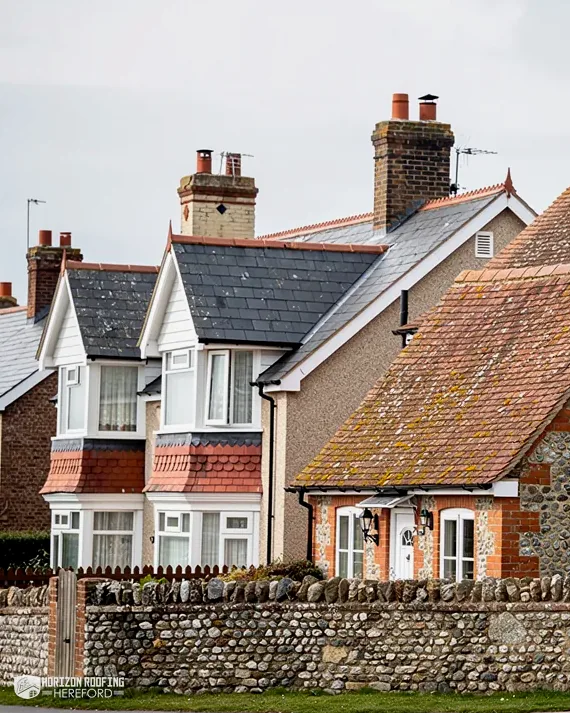
  • Older cottages with weathered clay tile roofs and brick chimneys behind a flint wall
    Stone slates on the churchCadw's listing for St Peter's records that all the roofs are stone slates.
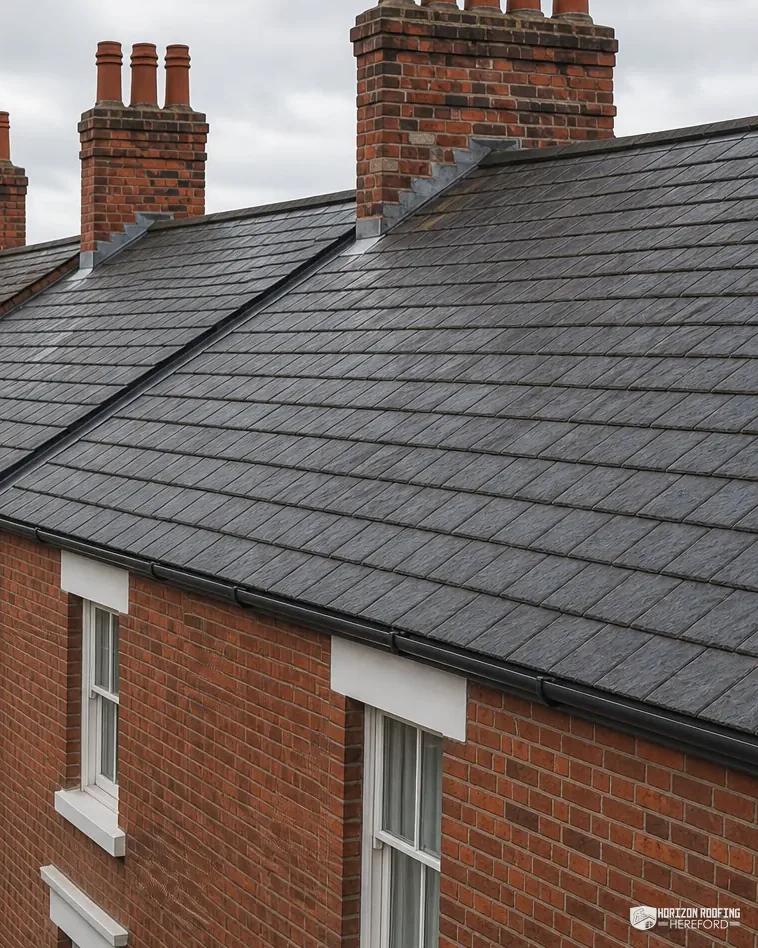
  • Slate roofs and chimney stacks along a red brick Victorian terrace
    Welsh slate on Old Pike HouseIts Cadw listing records painted rubble walls under Welsh slate roofs.
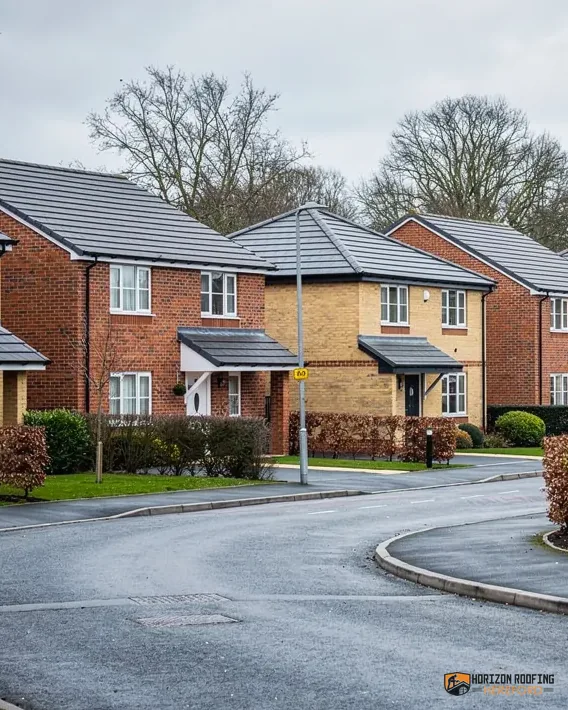
  • Newer homes with grey concrete tile roofs along a curving estate road
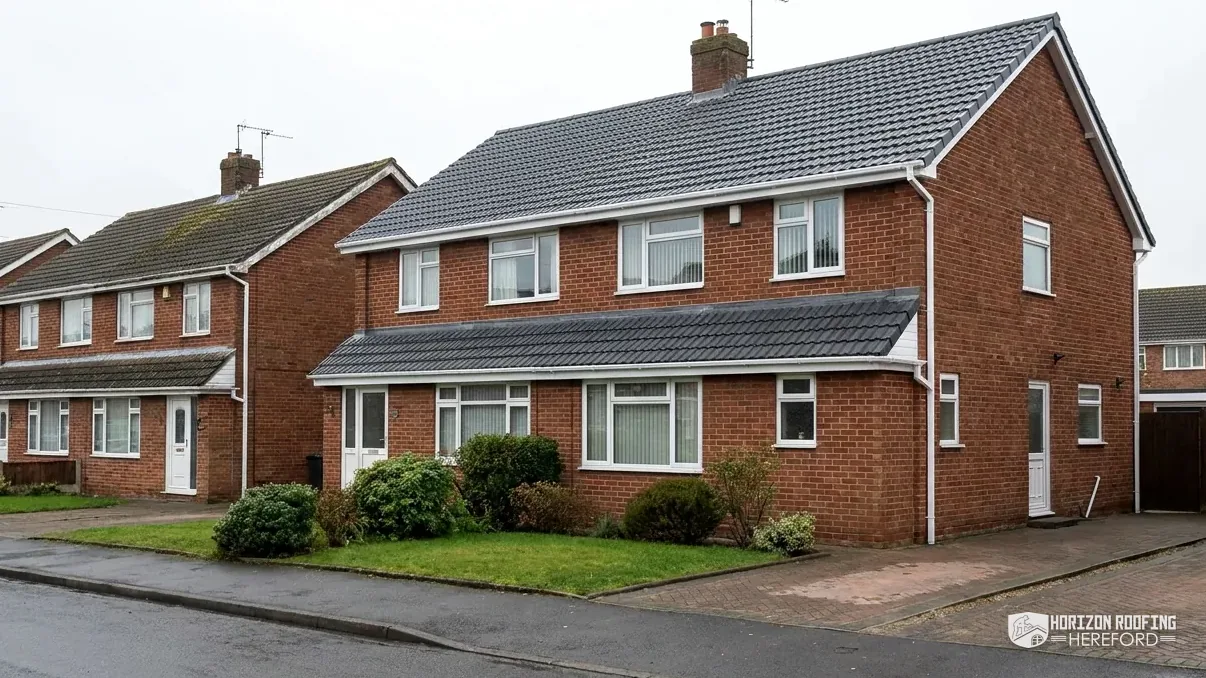
    A village centre conservation areaMonmouth (Dixton) covers the village centre, so roof changes need a council check.

Dixton on our area map

Dixton on a street map, with a dashed circle around the town and the nearest towns we cover. Tiles © Esri; map data © Esri, HERE, Garmin, OpenStreetMap contributors.

Dixton roofs from the skyline down

Ridge, stone and slate, then the rules for a village with a conservation area

We read a Dixton roof in three passes: the ridge line, then the stone and slate covering, then the wall, where listings, the conservation area and the Wye Valley decide what may be changed.

A drawn cut-away section through a Herefordshire border house: the front of the main roof is cut open to show the rafters, underlay, battens and slates, beside a black-and-white timber-framed gable. Numbered, from the ridge down: 1 Ridge line; 2 Stone and slate; 3 Walls and consents.

Fig. 1 Dixton roof in section, with ridge, slope and wall marked in survey order.

Callout 1 of 3

Ridge lines under a conservation area

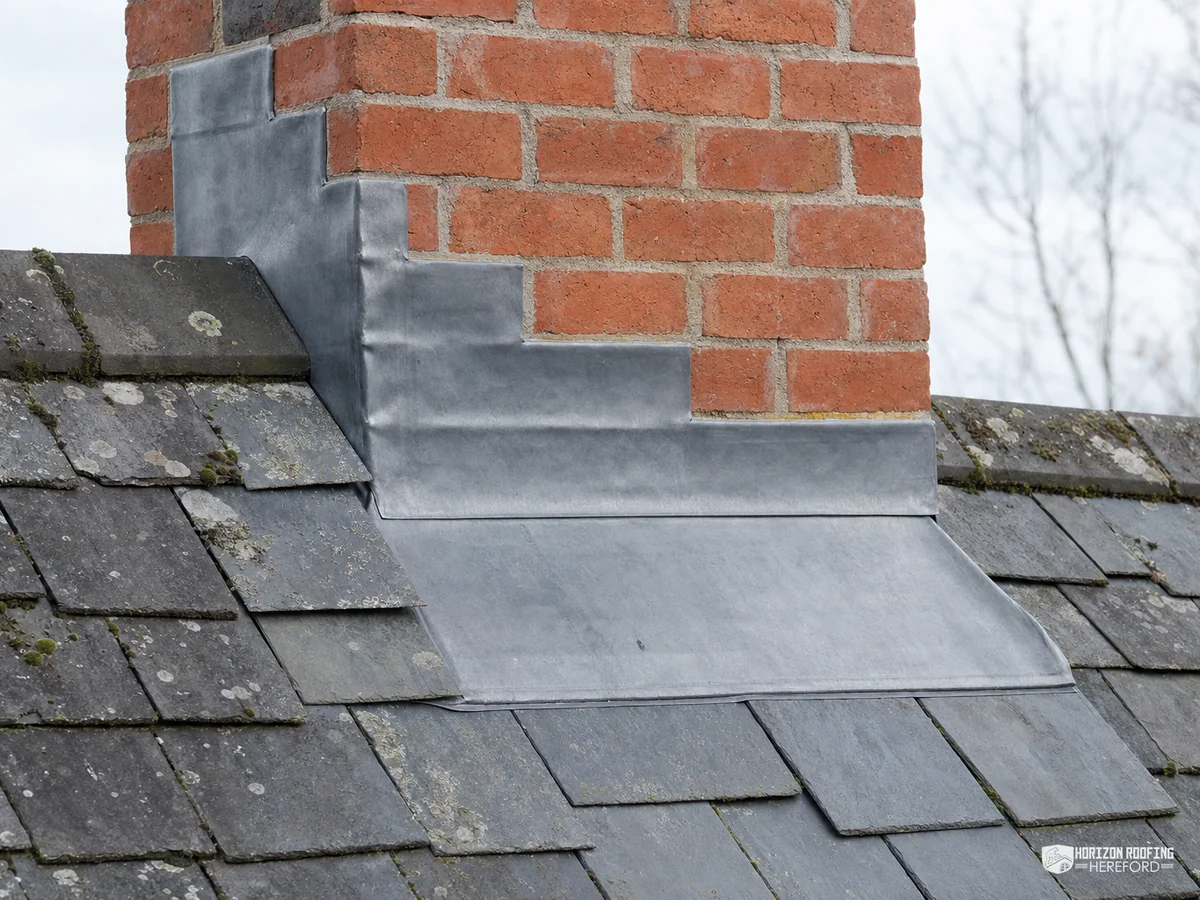
Dixton is small enough that a roof gets read against its neighbours, and the conservation area over the centre of the village makes that reading official. Monmouthshire County Council holds the boundaries of Monmouth (Dixton) and of Monmouth (Central) beside it, so the first thing we establish at a survey is which side of a line the house stands. Then we go up to the ridge, the highest horizontal line, where the two slopes meet under a row of cap pieces. Whatever those caps are made of, the survey writes down what is there before any repair is suggested.

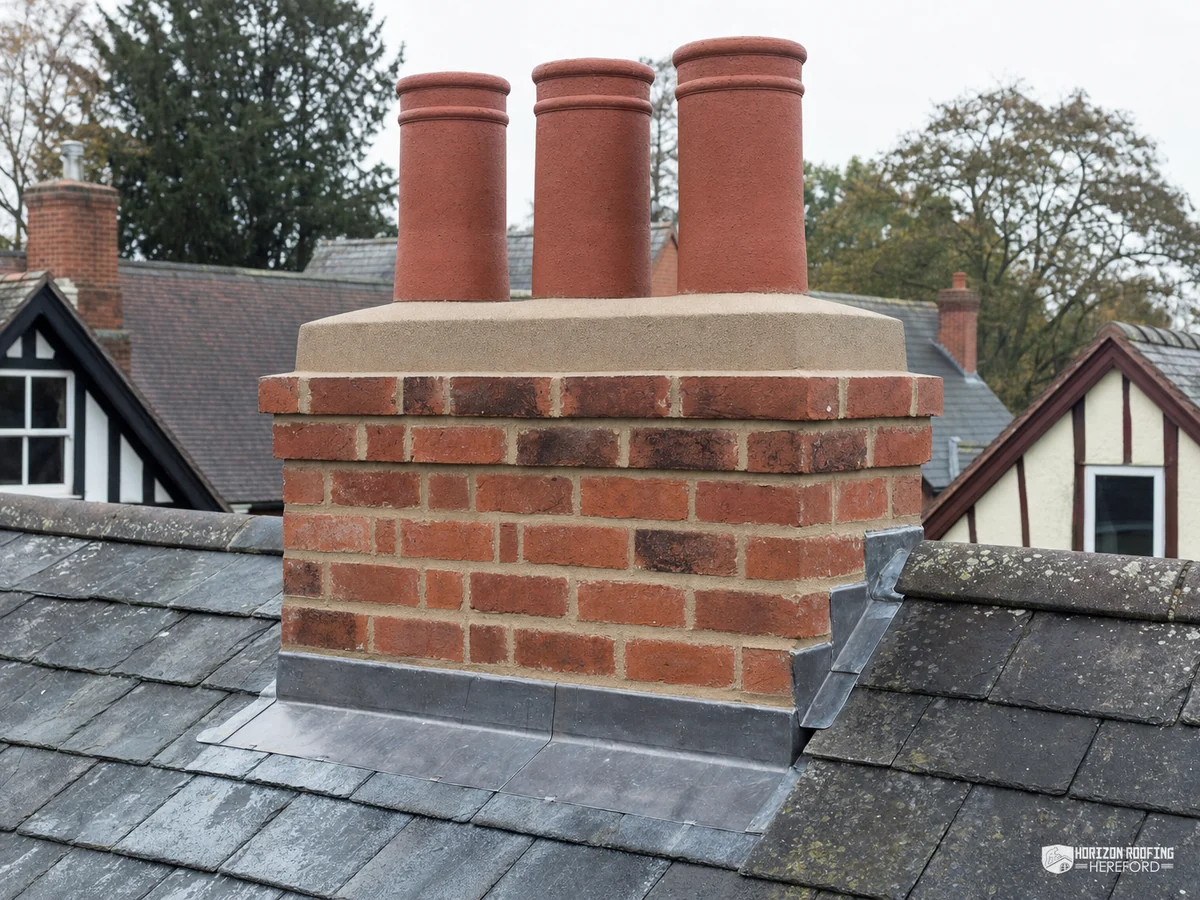
Photographs from the roof of the lines either side of the ridge go into the report, so the before and after can be compared on your phone. We press each cap for movement and sight along the line from the gable for dips, which can point to trouble in the timbers beneath. Crumbled mortar at the joints is raked out and renewed. A cracked cap is replaced with a match, not a near miss, so the repair reads as part of the old ridge. BS 8612 covers dry-fix ridge systems, and on an older house we weigh the softer look of a bedded ridge against the extra grip a mechanical fixing gives. The answer can be both: bedding for the appearance, a fixing for the wind.

The cap we fit should be the cap you cannot spot from the lane.

At each gable the verge is the next check. The verge is where the roof's edge runs out over the end wall, and it takes wind from below as well as rain from above. We look for loose pointing, for slates or slips that have lifted, and for stains on the wall beneath that show water has been running down. On the Old Pike House and its neighbours, a verge repair would be dressed to the existing line, because a straight new edge against an old wall is the detail that gives a repair away. Our pitched roofing page sets out how we handle ridges, hips and verges across a whole slope.

A ridge question from the village

Can a failed ridge be repaired without re-roofing the slopes?

Sometimes the ridge is the only part that has failed. We rebed or replace the caps, renew the verge pointing and photograph the result, and the quote covers that work alone. If the survey finds the slopes worn as well, we tell you plainly and show you the pictures.

Fig. 2 The ridge, drawn close

Callout 2 of 3

Stone slates and Welsh slate in Dixton

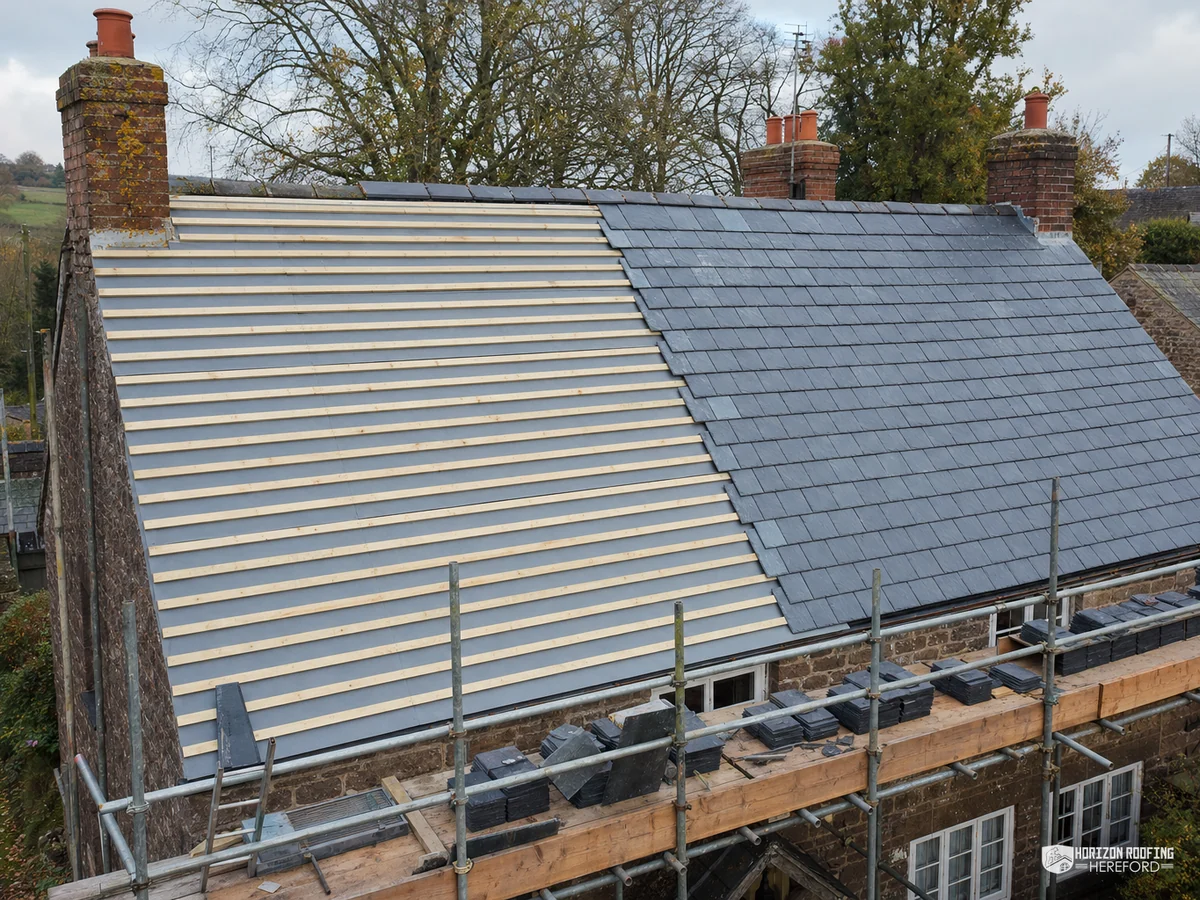
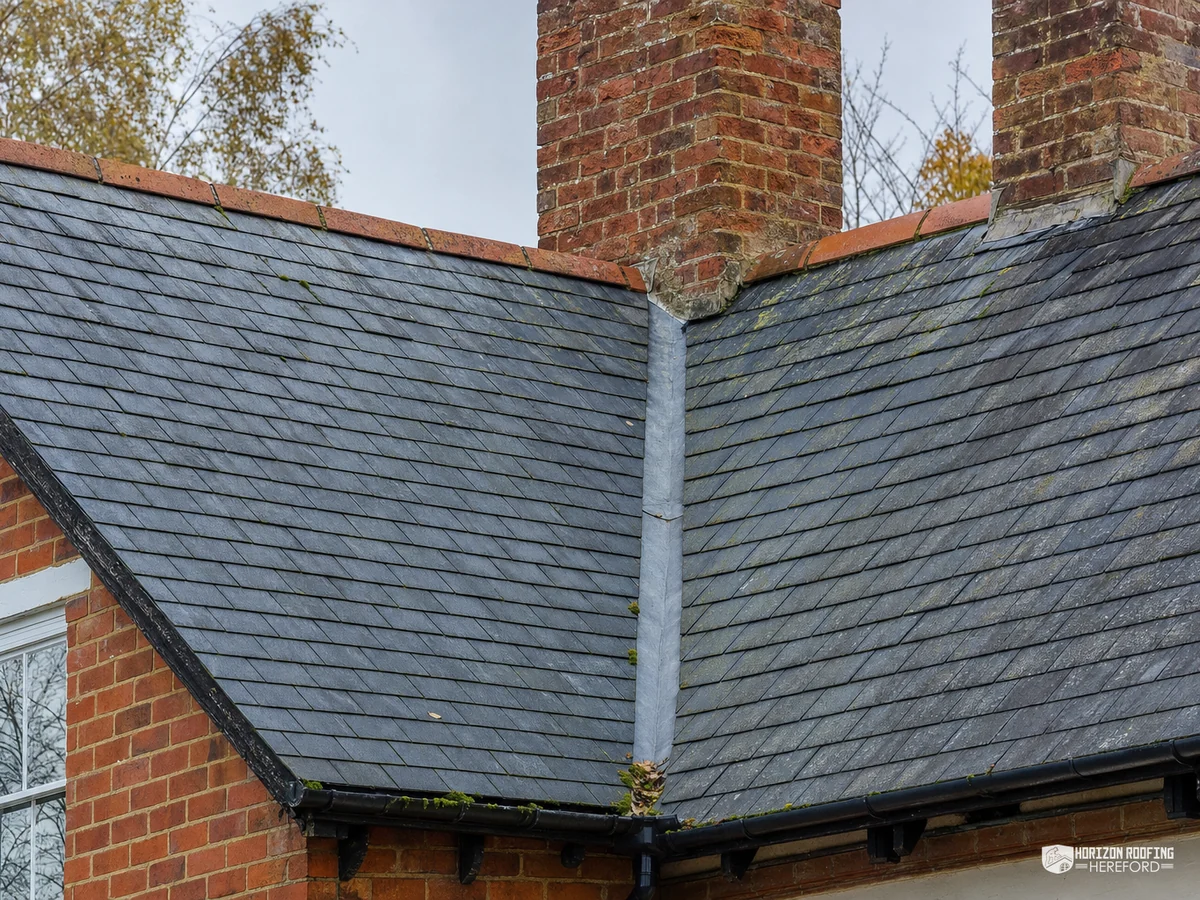
Two listing descriptions show how much a single village can hold. Cadw's listing description of the Church of St Peter (Grade II*) records that "all the roofs are stone slates". Its description of The Old Pike House (Grade II) records "roughly coursed and painted stone rubble with Welsh slate roofs". Stone slates are slabs of split stone hung from the battens; Welsh slate is a different rock, split thinner and flatter. Both are laid in overlapping rows, and SPAB says Welsh slate and stone roofs "are predominantly double-lapped", so each unit is covered by the courses above it. When a slip comes loose, we look at what is holding the courses above before we touch the one that moved.

Sound slates should not be thrown away. HomeBuilding gives Welsh slate a life of "100+ years", and SPAB describes the lifespan of a well-slated roof as "likely to be more than 100 years", so stripping, sorting and refixing the good ones can make sense. Where new slate is needed, SPAB's advice is to put any supplier's claim of shortage or long delay to the quarries directly, and a different material is raised with you only after that check. Cupa rules out slate hooks on any pitch under 25 degrees, so a shallow slope is fixed with nails. Where the survey finds slipped units but sound battens and underlay, the repair is a re-hang, not a new covering; where the timbers below have decayed, the quote says so before any slate is lifted.

A change of covering is a different decision. The Welsh Government gives "slate to tiles" as its example of replacing a roof with a different material, and says approval under the Building Regulations is "likely to be needed" to check the structure, fire safety and energy efficiency. Welsh Approved Document A counts it as significant when the loading upon the roof rises by "more than 15%". The Welsh Government's structural point covers a replacement significantly heavier or lighter than the existing, so a lighter covering on a stone slate roof is checked too. We would sooner repair in the original material, and the survey tells you if that is not possible. Our slate roofing page covers the repair methods.

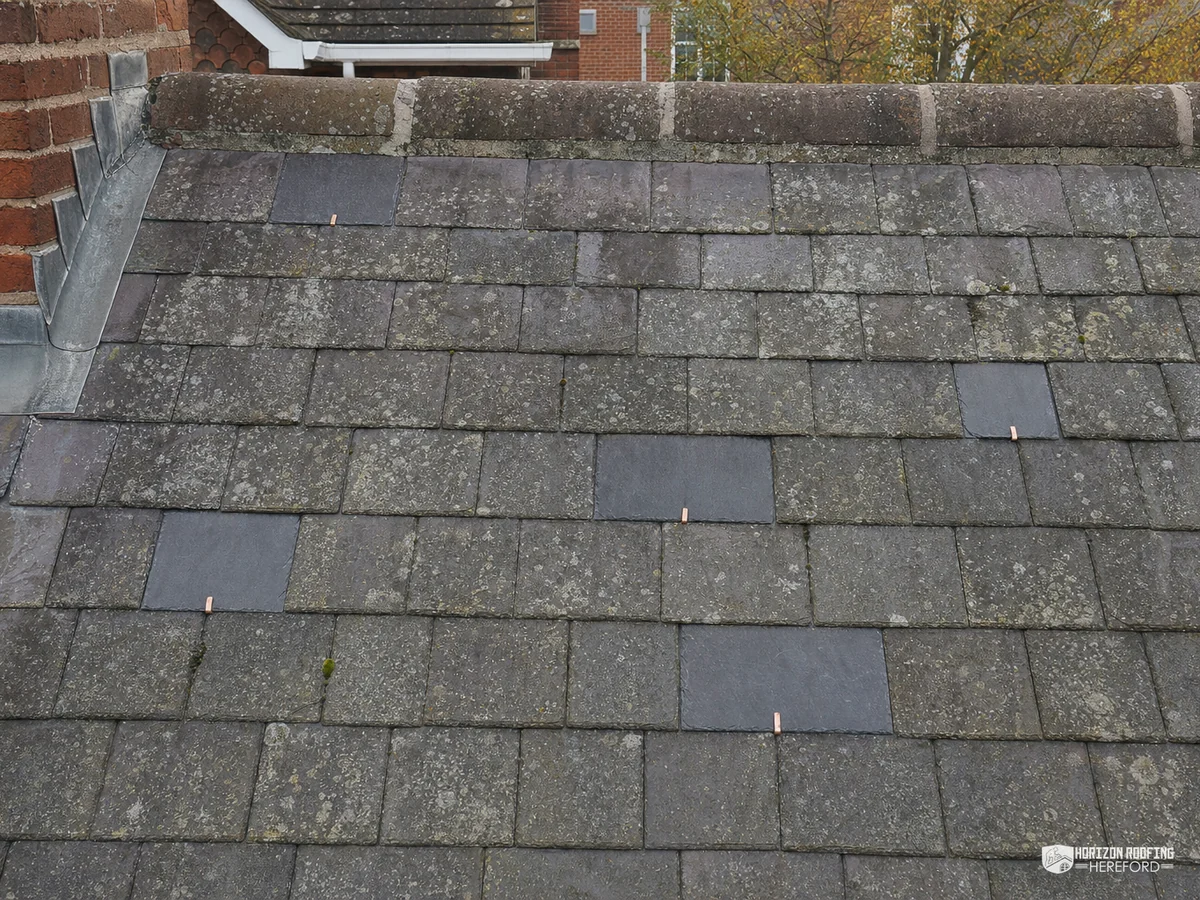
A slipped slate and the course above it

SoundRows overlap evenly, fixings hold, no light through
Needs workA slate sits proud, its fixing gone, damp below

Callout 3 of 3

Listings, the Wye Valley and Dixton's consent steps

The wall is where the paperwork starts. St Peter's church carries a Grade II* listing (Cadw record 2215, designated 27 June 1952). The Old Pike House and The Elms are each Grade II (records 2304 and 2303, both designated 15 August 1974), and Haberdashers' Agincourt School is listed too. In Wales, listed building consent under the Historic Environment (Wales) Act 2023 (sections 88 and 89) comes before works that would affect a listed building's character, and a listed house also keeps its permitted development rights. Monmouthshire County Council decides. With a church, the route turns on the denomination, so the congregation's governing body is who to ask first.

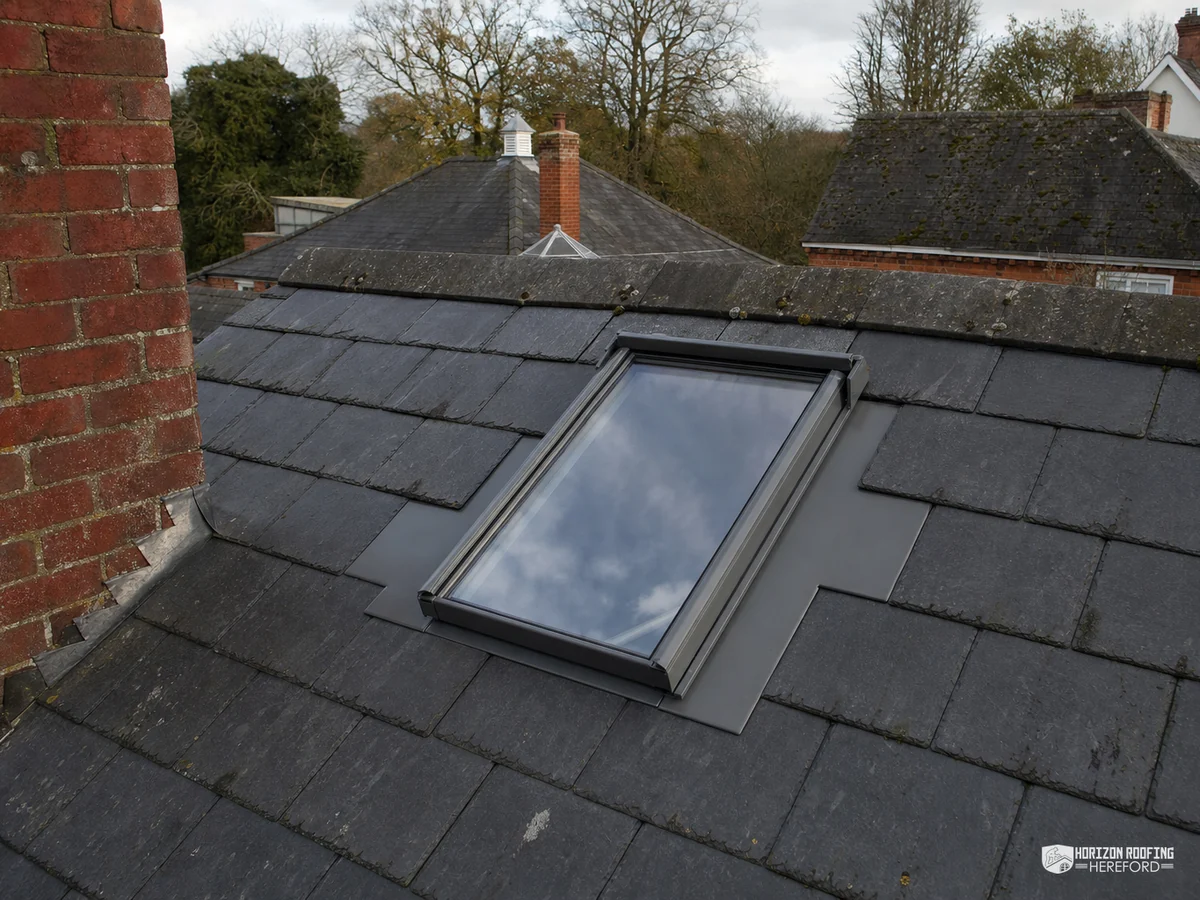
Part of the area round Dixton lies inside the Wye Valley National Landscape, which was known until recently as an AONB. That is a designation, and Monmouthshire County Council still makes the planning decisions. The practical effect is that Welsh conservation areas and National Landscapes both count as article 1(5) land, where permitted development does not cover roof lights or dormers. The Welsh Government says approval under the Building Regulations "will generally be needed" for a new rooflight anyway. Our planning guide for roof windows goes through the steps, and the council's Duty Planning Officer, on 01633 644831, takes queries on whether you need planning permission. Check whether an Article 4 direction applies with Monmouthshire County Council too.

Applications from the village go to Monmouthshire County Council Building Control at Usk, and a registered building control approver is the private alternative. Dixton is about 21 road miles south of Hereford, around 33 minutes by road. If a scaffold needs to stand on the pavement or the road, we arrange the licence with our scaffolder and allow for the council's notice period when we plan the start date.

Listing is worth checking even where a house looks ordinary. The Old Pike House and The Elms were both listed on 15 August 1974, and a search of Cadw's record against your address settles the question before a quote is written. Haberdashers' Agincourt School is Grade II as well, so schools and large premises follow the same consent route as houses. For a roof of that size we plan access to the full eaves and agree the work period with whoever manages the building, so lessons, residents and deliveries are not disrupted more than the job needs.

Rules to settle before the first slate moves

  • Which conservation area boundary covers the house
  • Whether the building is listed, and at what grade
  • Whether the National Landscape reaches the plot
  • Article 4 position, asked of the council
  • Scaffold licence timing for the start date

Dixton roofs, listings and the Wye Valley

Can stone slates on a Dixton house be refixed rather than replaced?

Yes, where the slates themselves are sound. The survey separates the units that can go back from those that have split, and new slate or stone is brought in only for the gaps. Cadw's listing for the Church of St Peter records that all its roofs are stone slates, so the material has a long local record. Reclaimed stone may offer a match, and we compare size and colour on the roof before agreeing the order.

Is repair work different inside Dixton's conservation area?

Monmouth (Dixton) covers the centre of the village, and Monmouth (Central) sits next to it, both on Monmouthshire County Council's list. A like-for-like repair, with the same material in the same pattern, is one thing. On conservation area land in Wales, permitted development stops short of roof lights and dormers, so a new roof light or a new dormer needs planning permission. Check whether an Article 4 direction applies with Monmouthshire County Council, and have the boundary confirmed before you fix a date.

Does the Wye Valley National Landscape affect a roof window in Dixton?

It can. Part of the area round Dixton lies inside the Wye Valley National Landscape, and in Wales that counts as article 1(5) land, where roof lights are not permitted development. The designation does not decide the application: Monmouthshire County Council does. We photograph the roof from several angles, so the council has a clear record of what is there if it asks. Building Regulations approval is also generally needed for a new rooflight, says the Welsh Government. The planning guide linked above explains the order of the steps.

What approval does a change of roof material need in Dixton?

The Welsh Government says that replacing a roof covering with a different material, "for example, slate to tiles", is likely to need Building Regulations approval, because the structure, fire safety and energy efficiency all have to be checked. Under Welsh Approved Document A, roof loading that goes up by "more than 15%" counts as a significant change. Like-for-like re-roofing keeps the structural question simple, though in Wales most re-roofs still need approval, and our photographs show whether the old covering can stay.

Does St Peter's church roof need listed building consent?

St Peter's is Grade II* (Cadw record 2215). Whether the work needs listed building consent from Monmouthshire County Council turns on which body owns it and whether worship is still its main use. Church in Wales, Roman Catholic, Methodist, named Baptist Union corporation and faculty churches are exempt, while the United Reformed Church has no entry on the Welsh list. The congregation's governing body is the right first call, and we can hand over photographs plus a written scope to take into that conversation.

What licence does scaffold at a Dixton house need?

Scaffold that obstructs the road or footway is controlled by section 169 of the Highways Act 1980. Monmouthshire County Council's application form lists an administration fee of £108 and £27 per week for an extension, and asks for at least 5 working days before erection. We arrange the licence with our scaffolder, and any scaffold is priced into the written quote. Trunk roads sit with the Welsh Government and its trunk road agents.

Have a Dixton roof surveyed from the ridge down

Describe the roof, or attach a picture, and we will visit, photograph what we find and write up one total price.

10-year workmanship guarantee, in writing