
01432 610152 Get a quote Call 01432 610152

Roofers in Newnham on Severn

Roof work in Newnham on Severn, where a conservation area direction covers gutter replacement.

Each survey runs ridge to gutter, and every fault we find is photographed before one total price is written down.

Get a free quoteCall 01432 610152

Faults we look for round Newnham

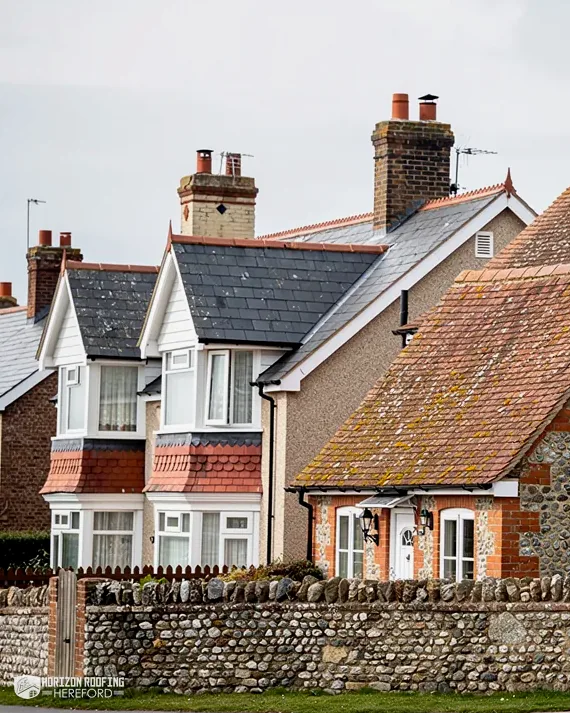
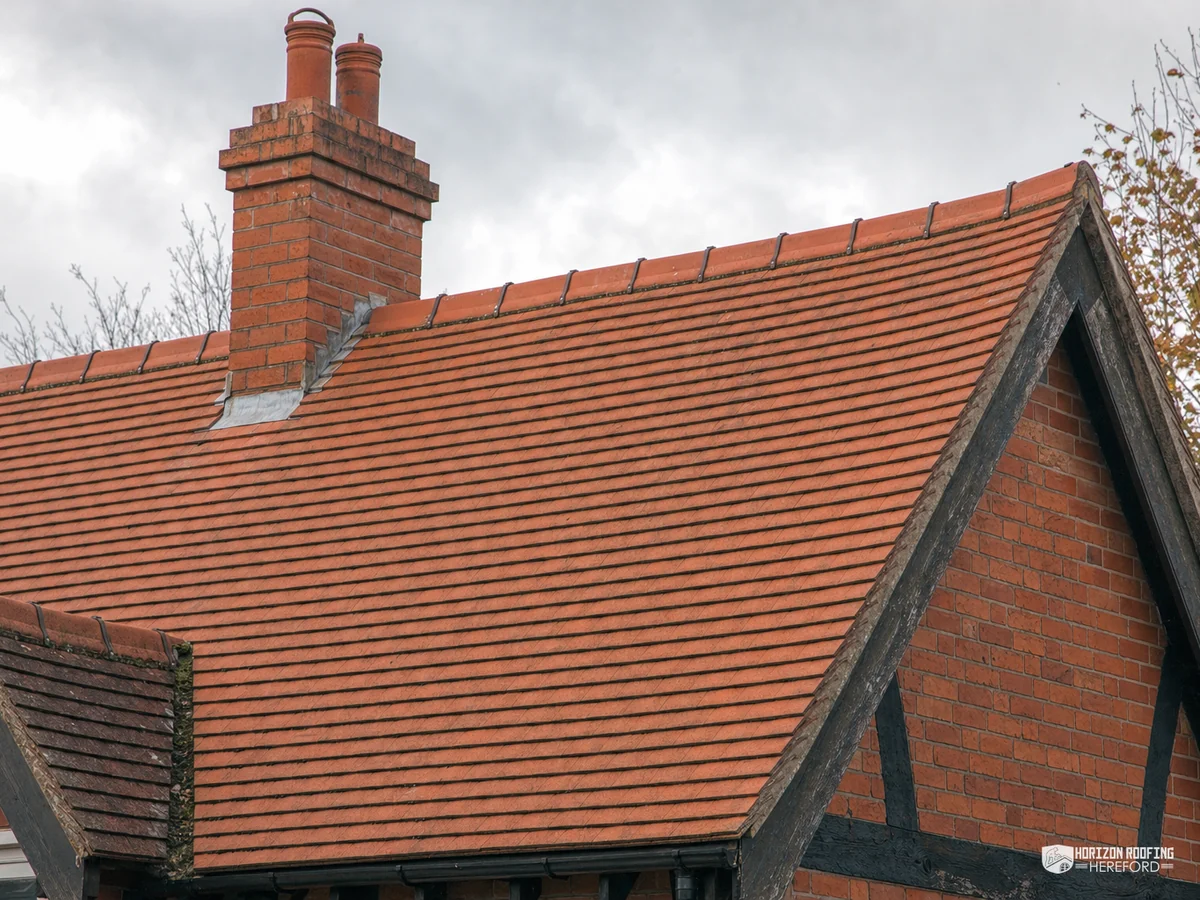
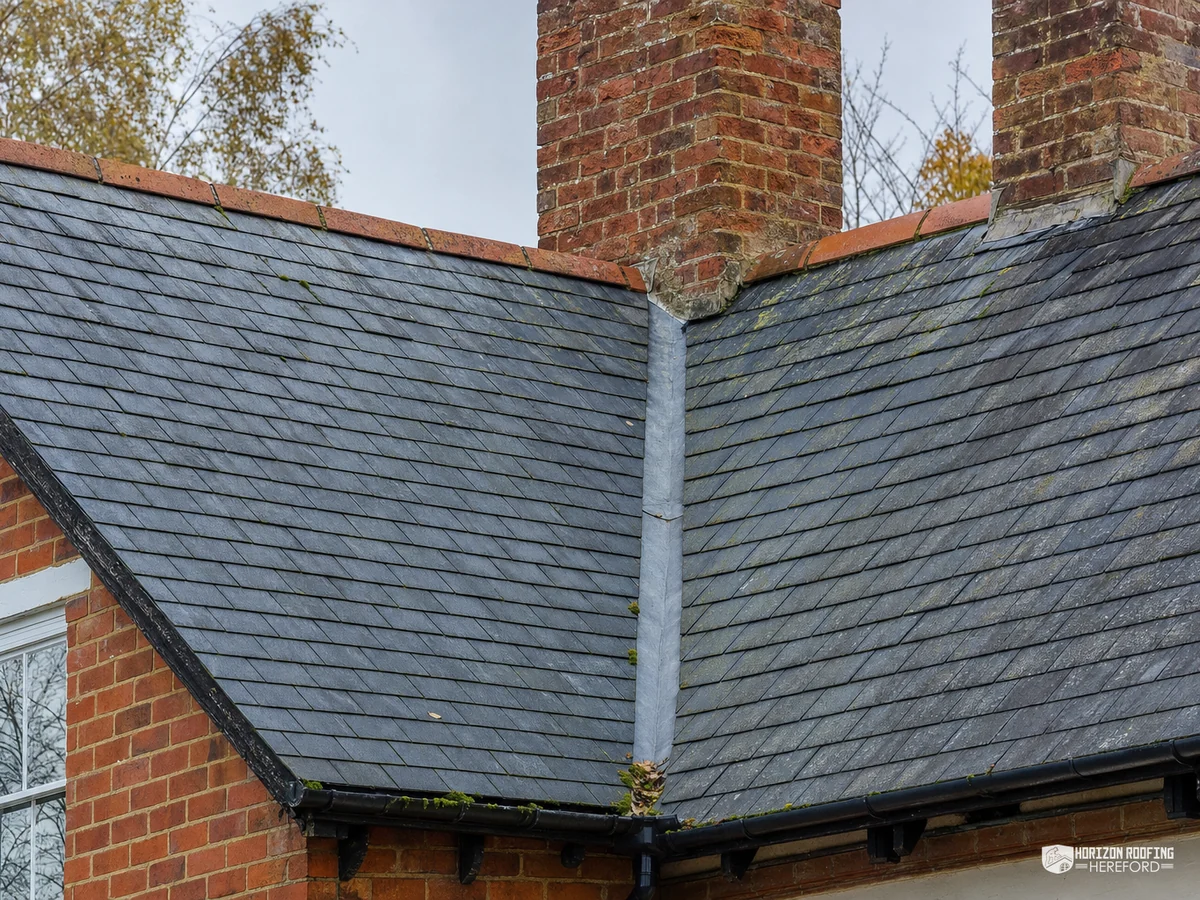
  • Older cottages with weathered clay tile roofs and brick chimneys behind a flint wall
    Gabled timber framesOld frames move, and the verge beside a frame can open up.
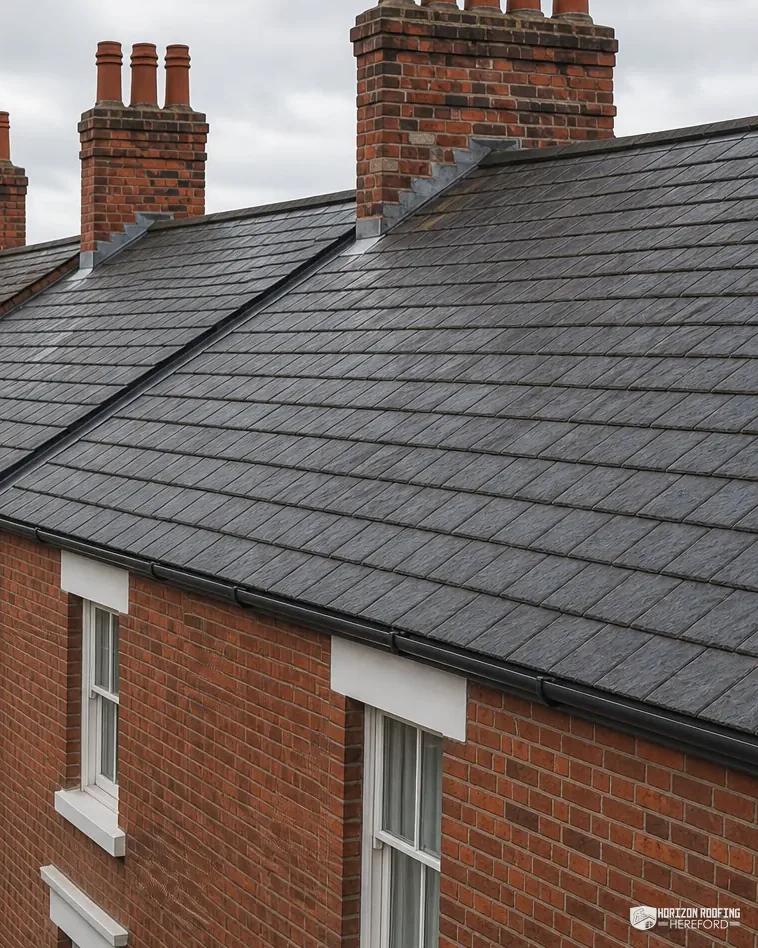
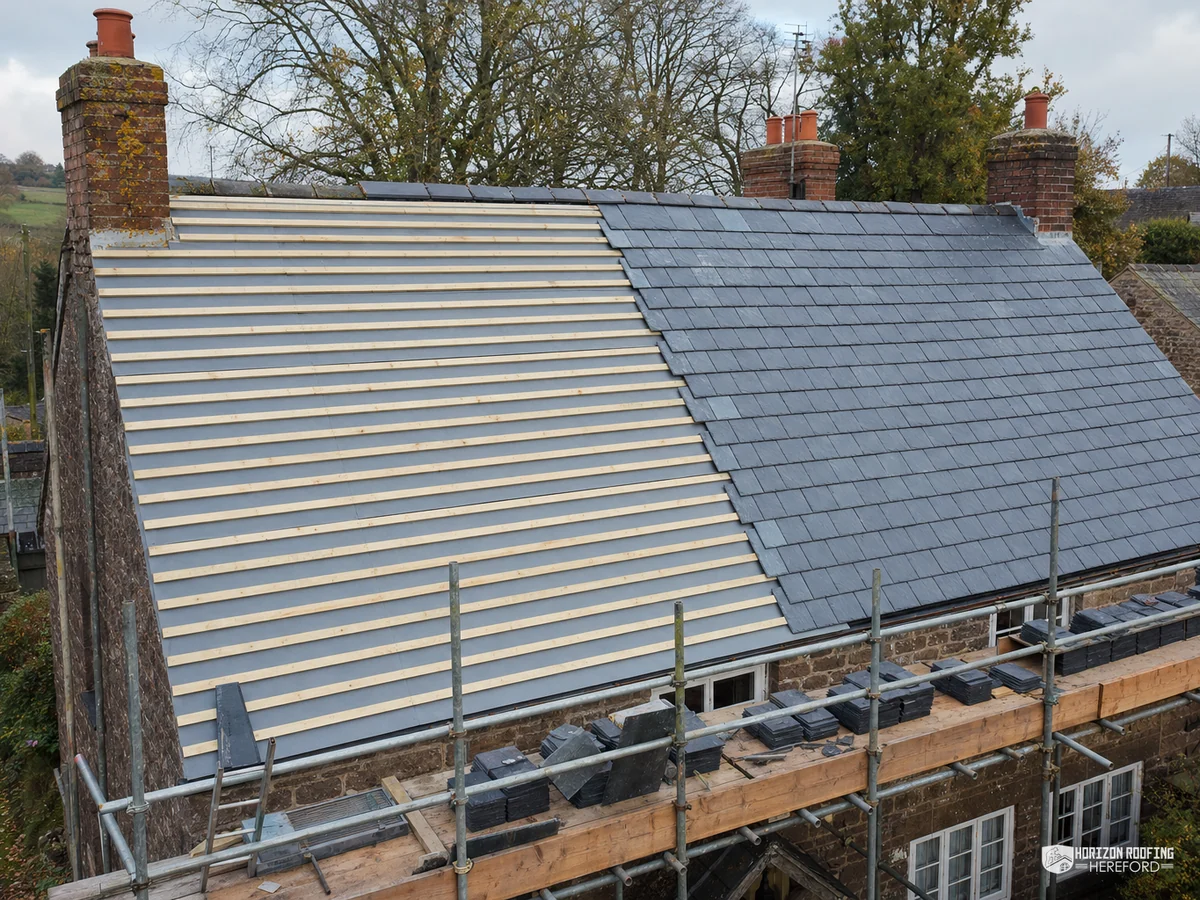
  • Slate roofs and chimney stacks along a red brick Victorian terrace
    Gutters under a directionGutter replacement in the conservation area has lost its permitted development right.
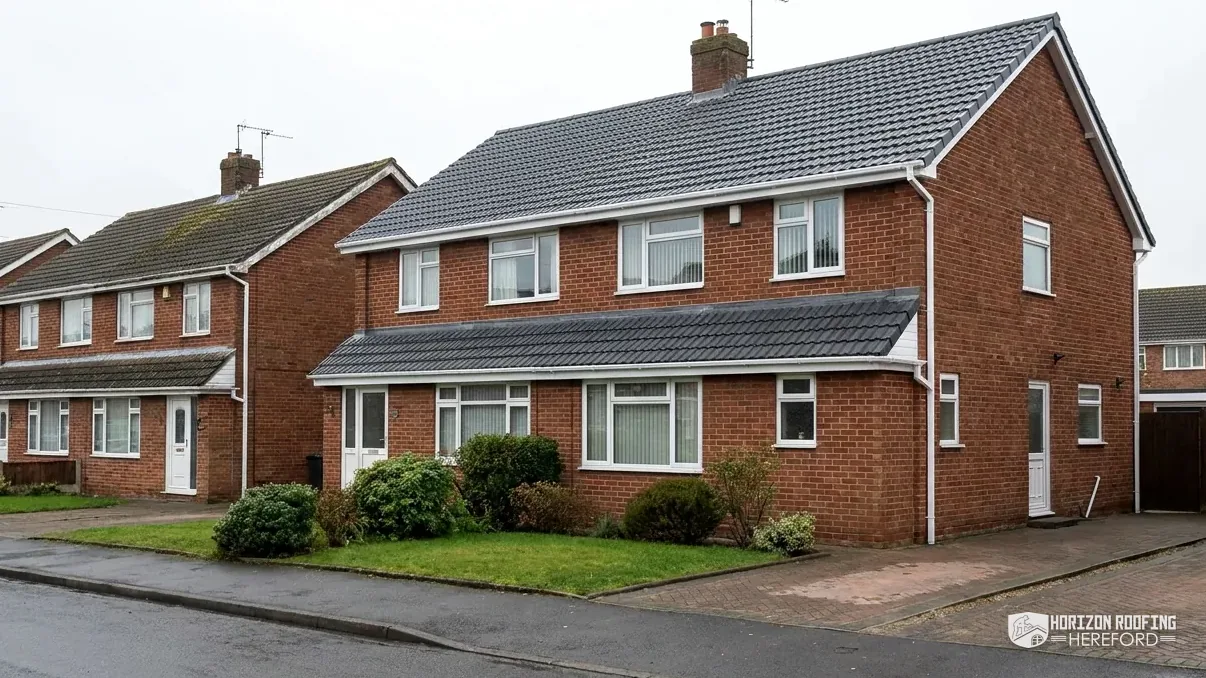
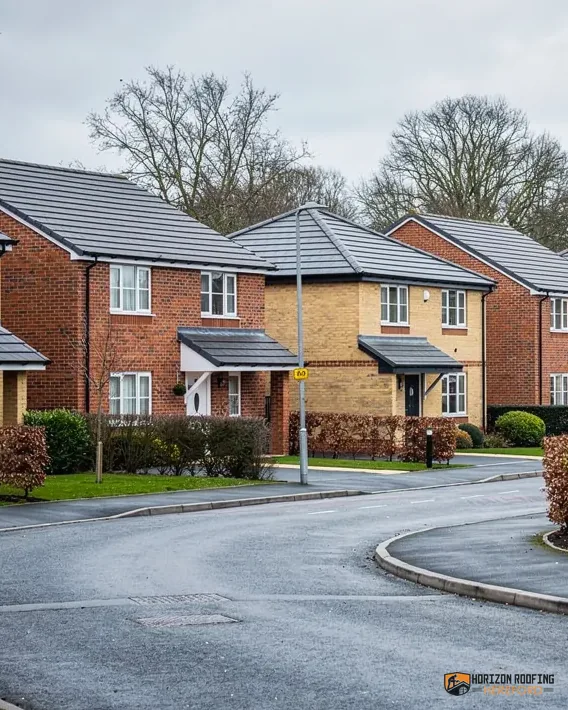
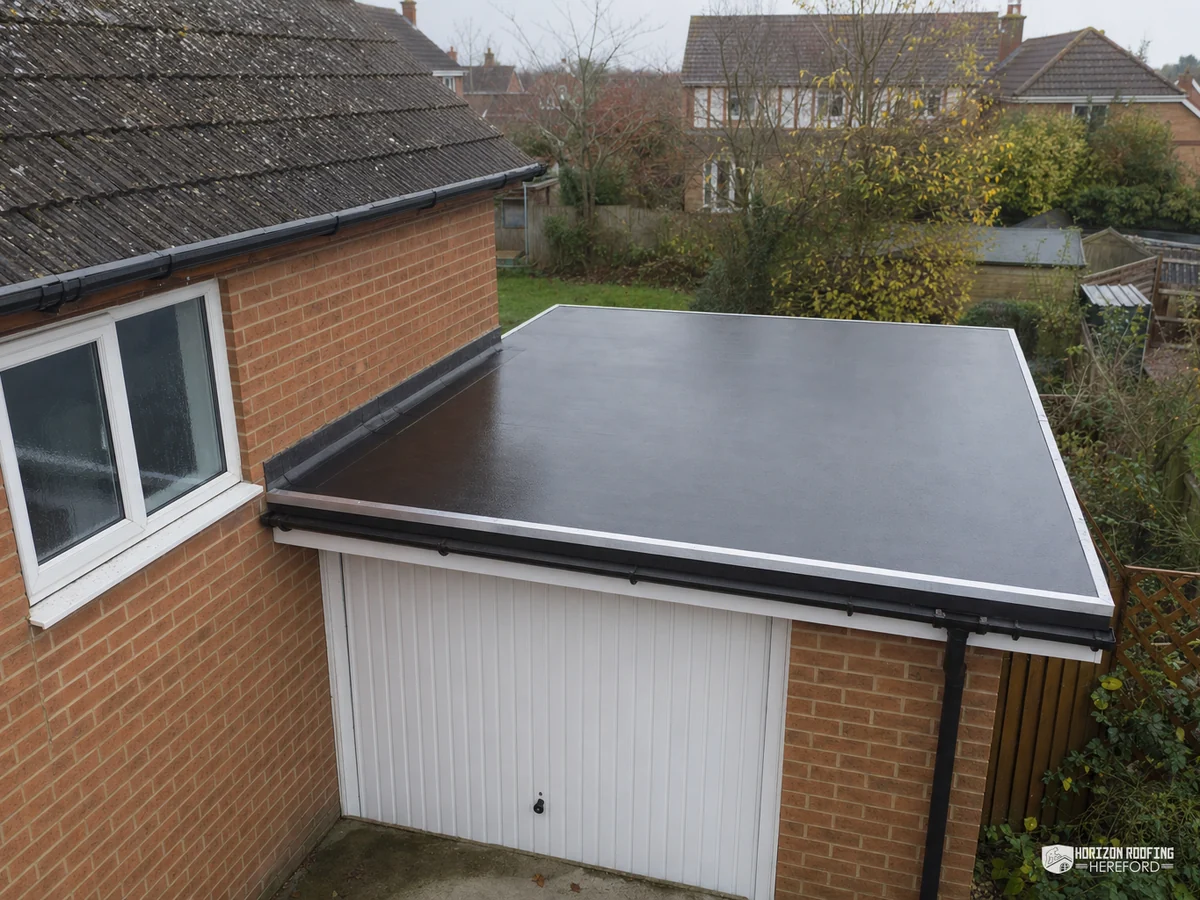
  • Newer homes with grey concrete tile roofs along a curving estate road
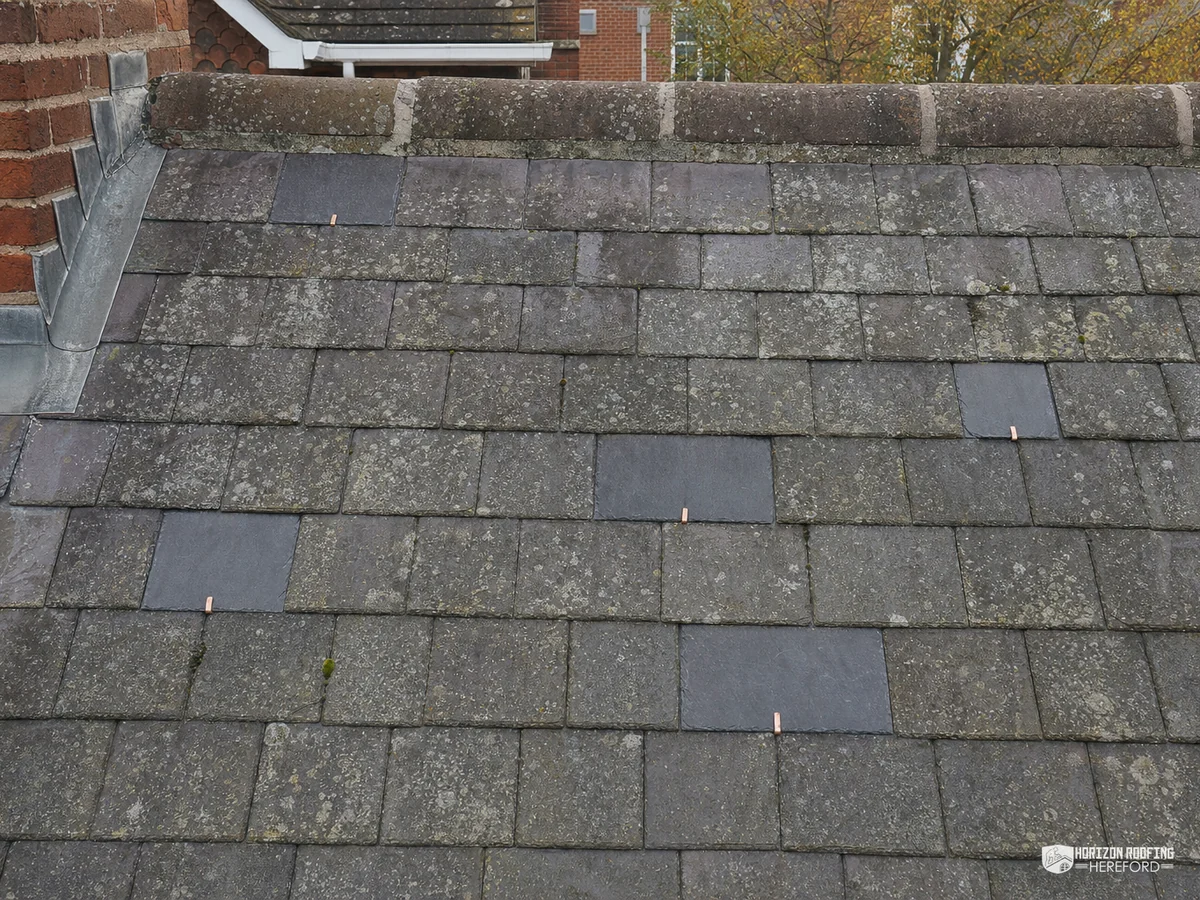
    Ridge tiles on tired bedsA capping tile that shifts under the hand has lost its mortar bed.

Newnham on Severn on our coverage map

Newnham on Severn on a street map, with a dashed circle around the town and the nearest towns we cover. Tiles © Esri; map data © Esri, HERE, Garmin, OpenStreetMap contributors.

Three callouts above the Severn

Frames, gutters and ridge tiles on the roofs of Newnham on Severn

The survey opens at the ridge, drops to the gutters that a council direction covers in part of the village, and finishes at a gabled house frame, where old timber and the covering above it have to move together.

A drawn cut-away section through a Herefordshire border house: the front of the main roof is cut open to show the rafters, underlay, battens and slates, beside a black-and-white timber-framed gable. Numbered, from the ridge down: 1 Ridge capping; 2 Gutters and downpipes; 3 Framed gable.

Fig. 1 Section through a Newnham roof: ridge, gutter and framed gable, each numbered.

Callout 1 of 3

Ridge tiles and how they are held at Newnham

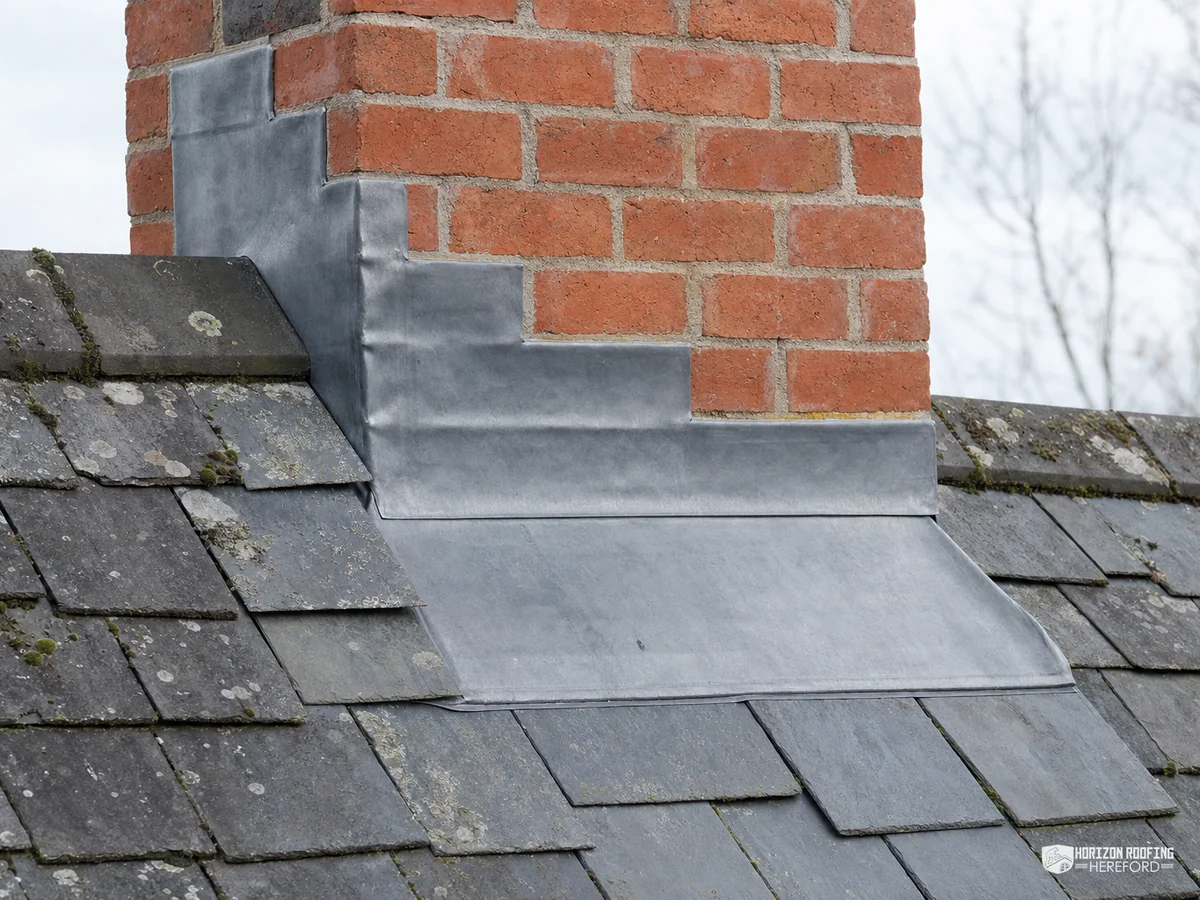
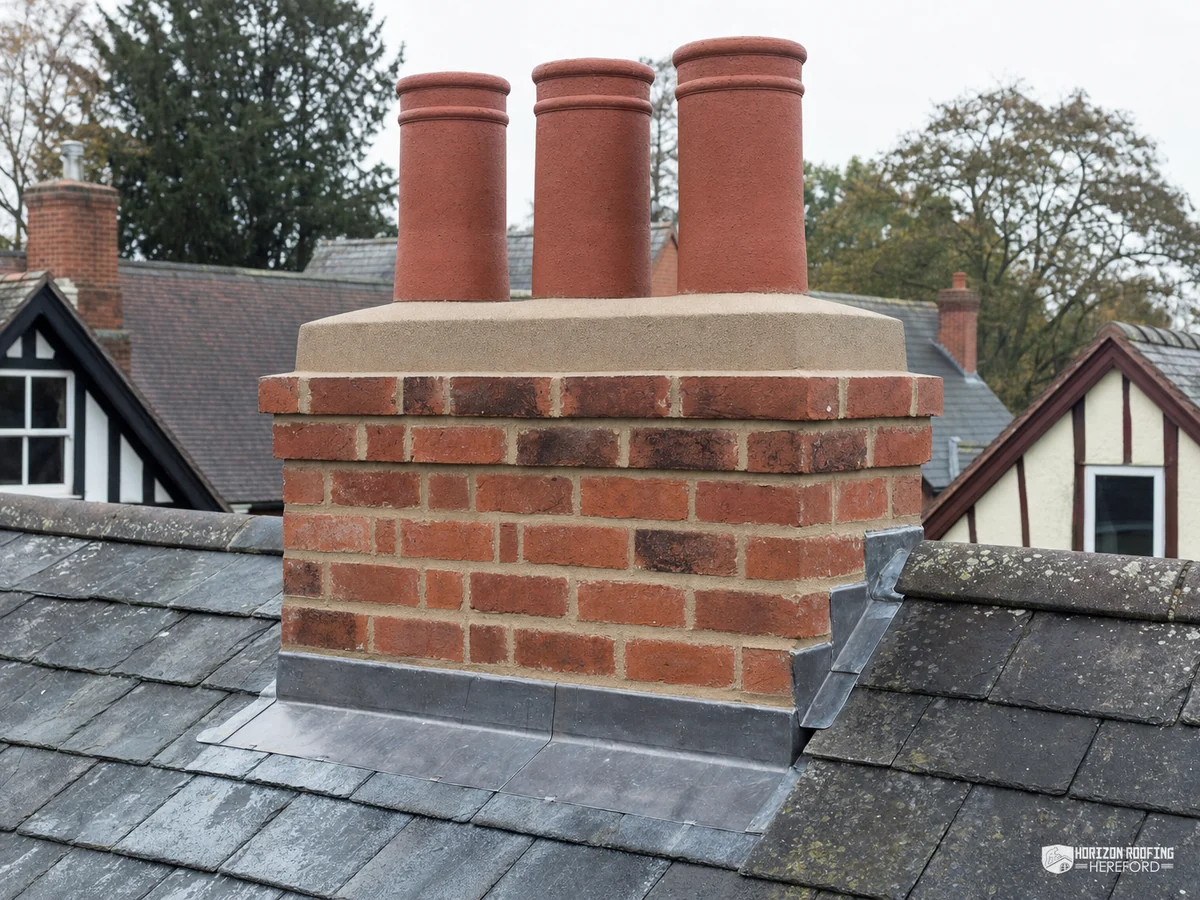
We begin at the top. The ridge is the capped line where two slopes meet, and the caps sit on mortar, on screwed clips, or on a mix of the two. None of that can be judged from the lane below a Newnham on Severn roof, so we climb up and test each cap with a gloved hand. A cap that shifts is sitting on failed mortar. A seam of daylight along a joint means damp has a route into the roof timbers: first the battens, the thin strips that carry the tiles, and then the rafters behind them. Each loose cap is photographed where it sits, so the extent of the problem is clear on paper.

Marley, a tile maker, says in its own words that "Installing to BS 5534 isn't required by law", yet "mortar could no longer be relied upon as the only means of securing the roof covering". The standard behind that remark, BS 5534:2014+A2:2018, covers slating and tiling, while BS 8612 covers dry-fix ridge and verge kits. On a Newnham rebed, every cap gets a clip or screw in addition to its mortar, and a mortar face stays wherever the house calls for one.

Hip lines get the same attention. A hip is the sloping outer corner where two slopes meet and the ridge runs into it, so the mortar at that junction sees weather from two sides. The cap at each gable end takes the first gust coming up the verge, and we test it separately for that reason.

Replacing a whole covering is a different scale of work. In England the Planning Portal says approval is not normally needed if "Less than 25 per cent of the total 'building envelope'" is touched and "Less than 50 per cent of the roof is affected". Switch to a heavier material and the answer changes: the Planning Portal wants approval wherever a new material leaves the finished covering 15 per cent or more heavier, and the rafters are assessed before the first tile goes on. Forest of Dean District Council Building Control, on 01594 812315, is the council's in-house team, and a registered building control approver can be used instead.

Every ridge fault goes into the photo set that comes with the quote, so you see the shifting cap or the open seam from above before agreeing a thing. Our roof repairs page covers the smaller jobs.

Looked at along a Newnham ridge

  • Capping tiles that rock or have lifted
  • Mortar joints that are open or crumbling
  • A mechanical fixing on every capping tile
  • The mortar where each hip meets the ridge
  • The end tile at each gable

A cap that shifts is a bedding problem, so it is priced as a bedding problem.

Fig. 2 The ridge, drawn close

Callout 2 of 3

Gutters under the Newnham conservation area direction

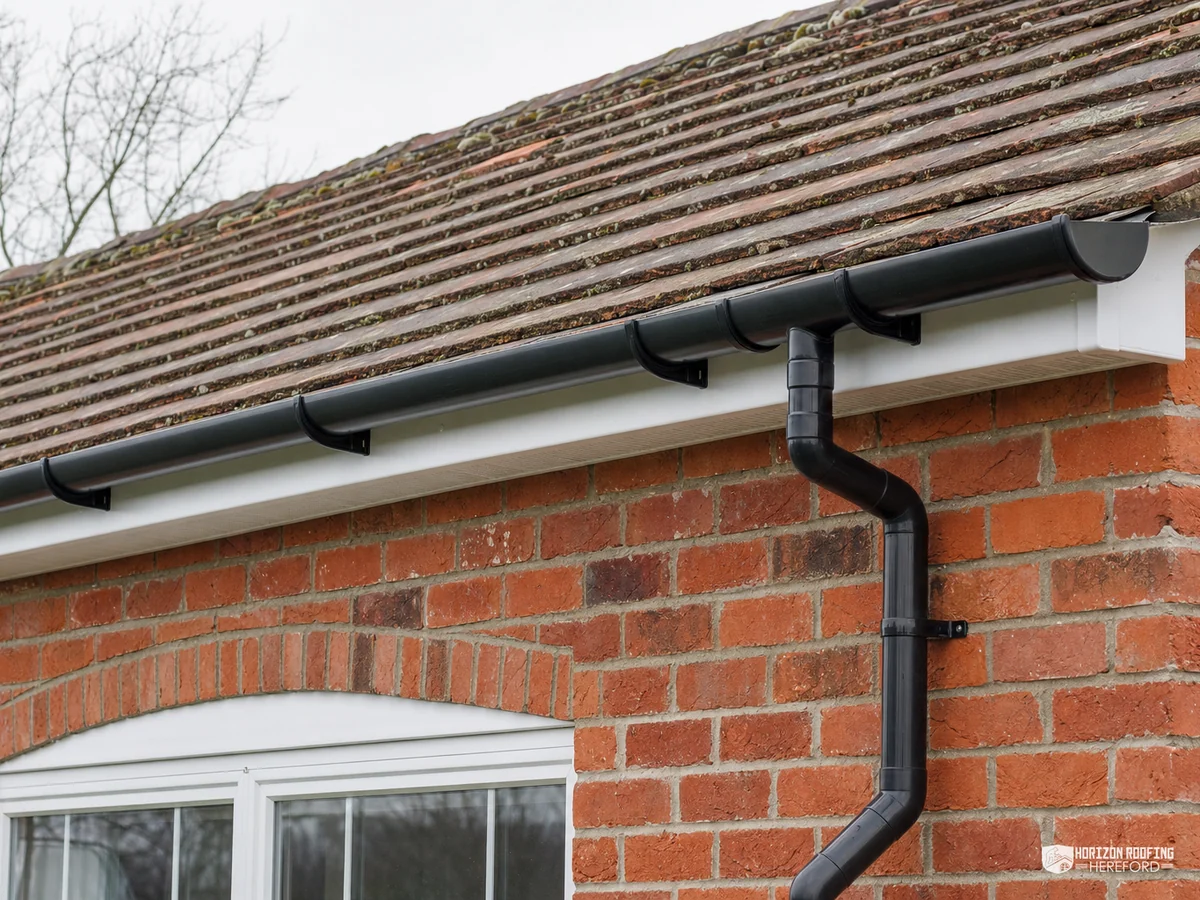
Gutters come next: the channel along the eaves that takes run-off to the downpipe. Newnham has an unusual wrinkle here. Forest of Dean District Council keeps a list of Article 4 directions, and the Newnham Conservation Area is on it. Such a direction withdraws permitted development rights inside the boundary it covers, and for Newnham the council's list gives four: new windows and external doors, rendering the front elevation, painting or re-painting a property, and replacing gutters.

In plain terms, a fresh run of gutters inside that boundary is something to raise with the council before anything is ordered. Whether patching or refixing counts as replacement is the council's call, and we would sooner you asked than learned after the scaffold went up. Across the Severn, the Arlingham conservation area is Stroud District Council's, not Forest of Dean's, so any question about that boundary goes to Stroud.

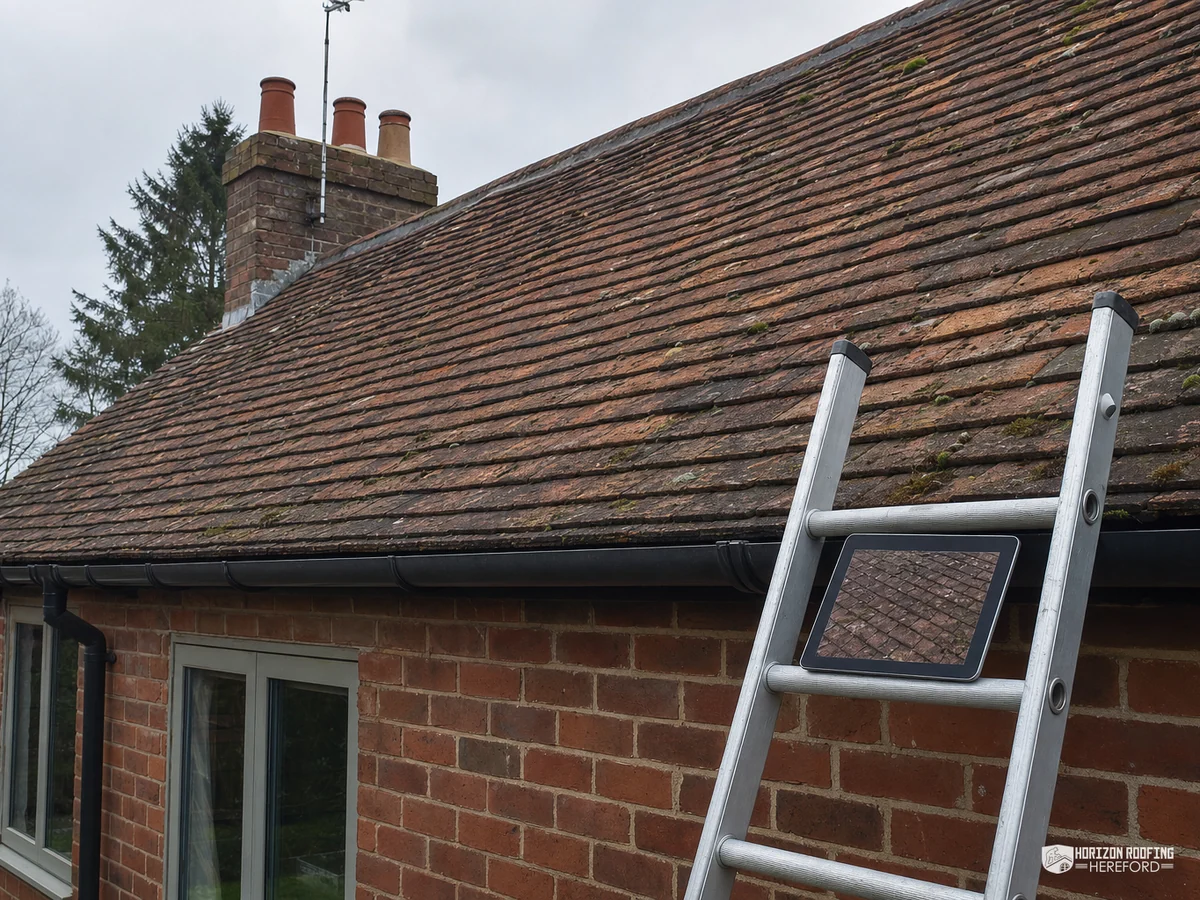
Then there is the fall. The manufacturer Brett Martin gives the slope a gutter run needs as "1mm for every 600mm", and a run that sags below it holds a puddle and spills at the joints. We look for brackets that have come loose from the fascia board, joints that weep and stop ends that have worked loose. If the timber behind the gutter has gone soft, the fascia becomes part of the repair, and the rot is shown to you in a picture.

Cast iron that has been painted over for years can look sound and still be cracked along the back. We tap the length of it, and we check the shoe at the foot of the downpipe, because a blocked shoe pushes run-off back up the wall. Lifting out leaf litter or screwing a loose bracket back into sound timber counts as upkeep. Renewing a whole run is a larger piece of work, and inside the conservation area the direction shapes how it is handled.

Our guttering, soffits and fascias page sets out the work. Where the eaves can only be reached from the road side, we arrange the licence with our scaffolder, and the quote we write takes the scaffold into account.

What the eaves survey records

Brackets
Pulled, rusted or missing along the run
Fall
Towards the outlet, 1mm for every 600mm per Brett Martin
Joints
Weeping, split or sealed over
Downpipe shoe
Clear at the base, not blocked
Fascia behind
Sound timber, or soft and stained
Fig. 3 Gutters and downpipes, drawn close

Callout 3 of 3

Old frames, listed houses and the village streets

Our third stop is the gabled end of a framed house, with the verge resting on the timber. The Victoria County History's 1972 account of Newnham describes Britannia House, further down High Street, as a 17th-century timber-framed house that, though covered in rough-cast, still has a gabled street frontage. Frames of that age have shifted over the centuries, and the covering along the verge has to follow them. We look for gaps where frame and covering part company, verge mortar missing from its joint, and dark staining on the timber under the verge line. Rough-cast over a frame can hide movement, so we also read the render for hairline cracks running down from the verge. In the loft we look at two things: the wall plate, the timber bedded along the top of the masonry, and each rafter foot, which is the first place damp from a failing joint leaves a mark.

Several buildings in the village are listed. The Old House is Grade II* (list entry 1101482, first listed 10 January 1955). The Gables, Lamb House and Tower Cottage share a Grade II entry (1186415), and Bentley House is Grade II (1111882). Grade II is also the listing of St Peter's church (entry 1186416, first listed 10 January 1955). Under section 7 of the Planning (Listed Buildings and Conservation Areas) Act 1990, works that change a listed building's special character need consent first. Listing alone does not remove permitted development, but consent comes on top, which is why the council is told the materials and method up front.

For churches, which route applies depends on the denomination. Anglican churches in use come under the faculty system. Their own bodies stand in for the council at United Reformed, Catholic and Methodist buildings in use, and at Baptist Union ones with Schedule 1 trustees. Meeting houses of Quakers or Unitarians lack it, as does a closed church: both need listed building consent from the council. If the denomination is uncertain, tell the governing body of that church about the roof plans before anything starts.

Thinking of a rooflight or a dormer? The rules are set out in the planning guide for roof windows. Forest of Dean District Council can confirm what applies at your address, including whether the Article 4 direction touches the work you have in mind.

If the timbers show decay, the covering comes off round the damaged part so a carpenter can judge how far it runs. We strip no more than the survey demands. Our listed and heritage roofing page describes how protected houses are handled, from first photographs to the final dressing of lead.

The gable verge on a Newnham frame

SoundTight covering, verge bedded and dry
Needs workOpen seam at the frame, verge mortar gone

Newnham on Severn roofs: frames, gutters and consent

Can a rough-cast timber-framed house in Newnham on Severn be re-roofed without disturbing the frame?

The covering normally comes off and goes back onto the same rafters, leaving the frame in place. Before that we check the wall plate and rafter feet from the loft, because decay there changes the plan. If a timber is soft, a carpenter needs to see it, and the covering is stripped only round that part. A listed frame also needs consent first, agreed with Forest of Dean District Council.

Does the Newnham Article 4 direction cover roof tiles?

The council's list for the Newnham Conservation Area direction names new windows and external doors, rendering the front elevation, painting or re-painting a property, and replacement of gutters. Roof coverings are not on that list. A conservation area or a listing can add limits of its own, though, so put the question to Forest of Dean District Council before planning a change.

Does re-covering my Newnham house trigger Building Regulations?

In England the Planning Portal sets a two-part test: less than 25 per cent of the building envelope, and less than 50 per cent of the roof. Work inside both limits does not normally need approval. Go over, or add insulation, and building control gets involved; AD L 2021 Table 4.3 sets 0.35 and an improved 0.16 for renovated roofs, until AD L 2026 applies from 24 March 2027.

What paperwork sits behind scaffold outside a Newnham house?

Scaffolding on or over a highway needs a scaffold licence (Highways Act 1980, section 169). Gloucestershire County Council's fee table gives £145 for a minimum of 28 days, then £36 per 7 days to extend, and its page asks that applications go in twelve calendar days or more beforehand. Our part: we arrange the licence with our scaffolder; the total we write already counts the scaffold.

Does a listed house in Newnham need consent for new gutters?

Consent is needed for works affecting a listed building's special architectural or historic interest. Swapping a cracked cast iron section for a matching one may be treated differently from fitting plastic along the whole run, and the council decides. We photograph the existing gutters, note the profile and fixings, and you take that record to Forest of Dean District Council before anything is ordered.

Do repairs near the Severn need a check for nesting birds or bats?

A wild bird's nest is protected by the Wildlife and Countryside Act 1981 from intentional damage while the birds are building it or using it. Bat roosts have legal protection as well, and re-covering a roof can disturb them. If we see signs of either, work on that part stops until the position is clear, and a bat licence in England is issued by Natural England.

Ask for a ridge-to-gutter survey in Newnham

Describe the problem, attach a photo if you can, and the survey runs from ridge to gutter before a price is given.

10-year workmanship guarantee, in writing