
01432 610152 Get a quote Call 01432 610152

Roofers in Mamble

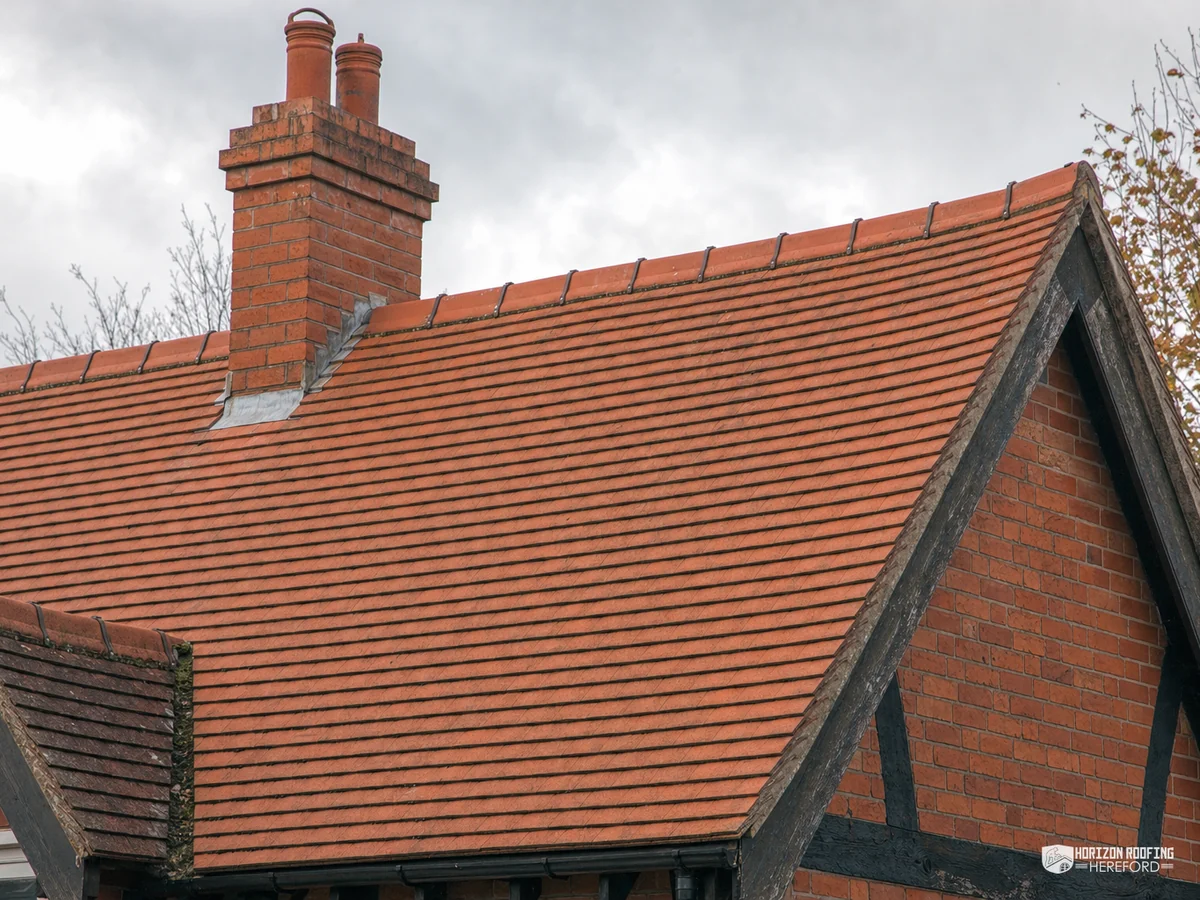
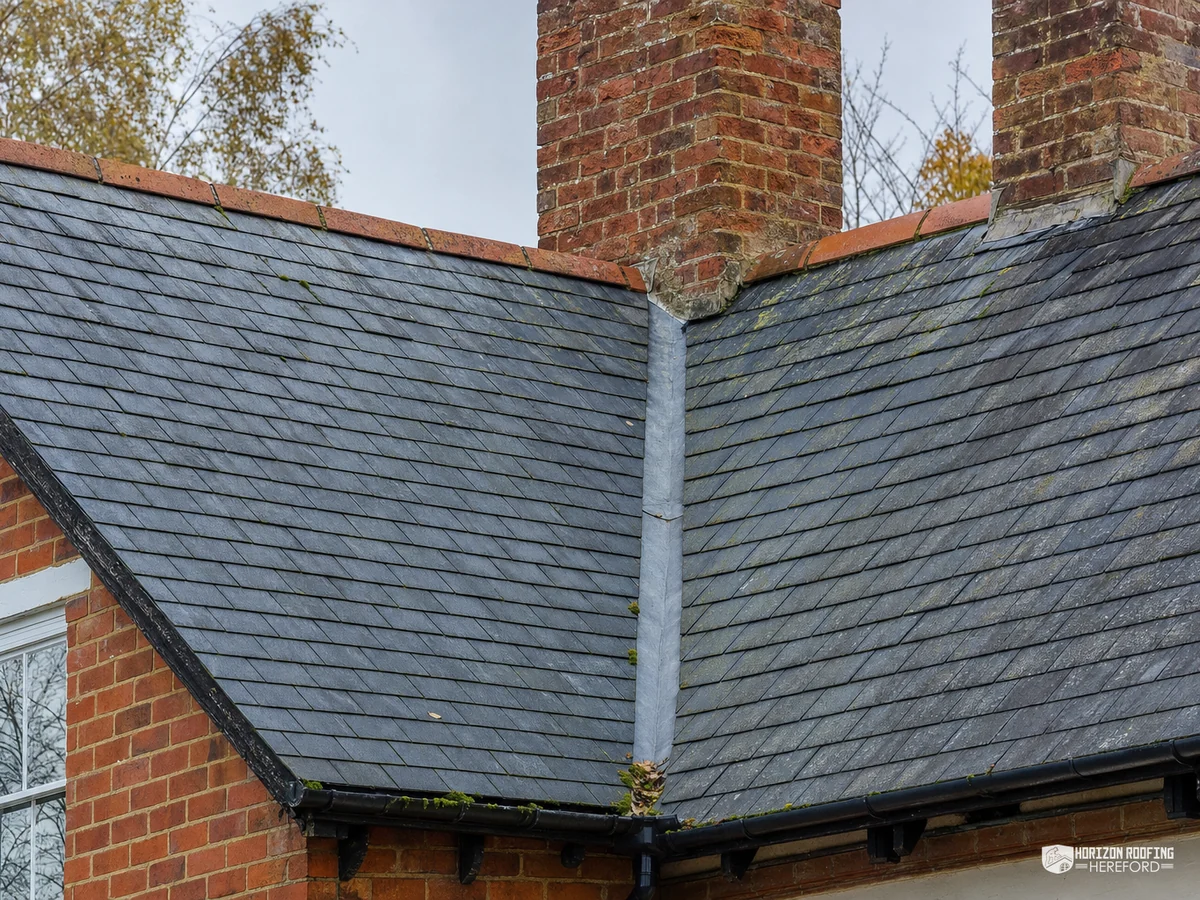
A gabled brick inn, a Grade I church and brick or half-timber houses: Mamble roofs.

From Hereford, Mamble is 29.9 road miles north-east, about 49 minutes' drive. Each visit ends with photographs and a single written total.

Get a free quoteCall 01432 610152

What Mamble roofs ask for

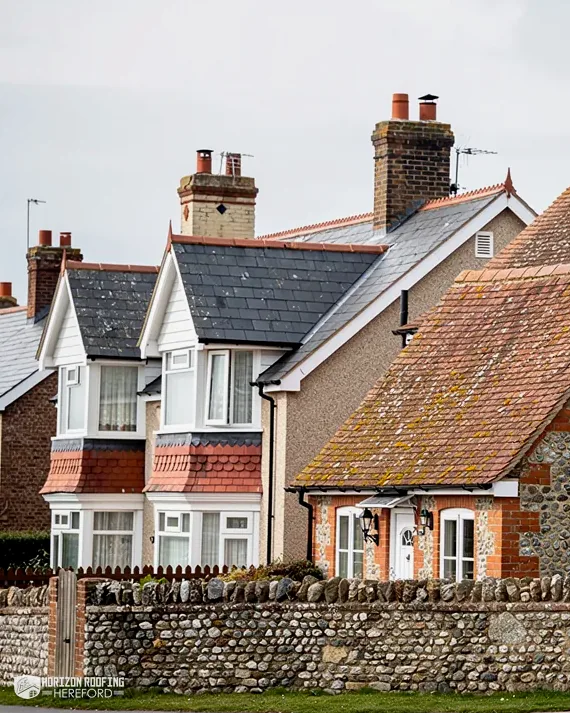
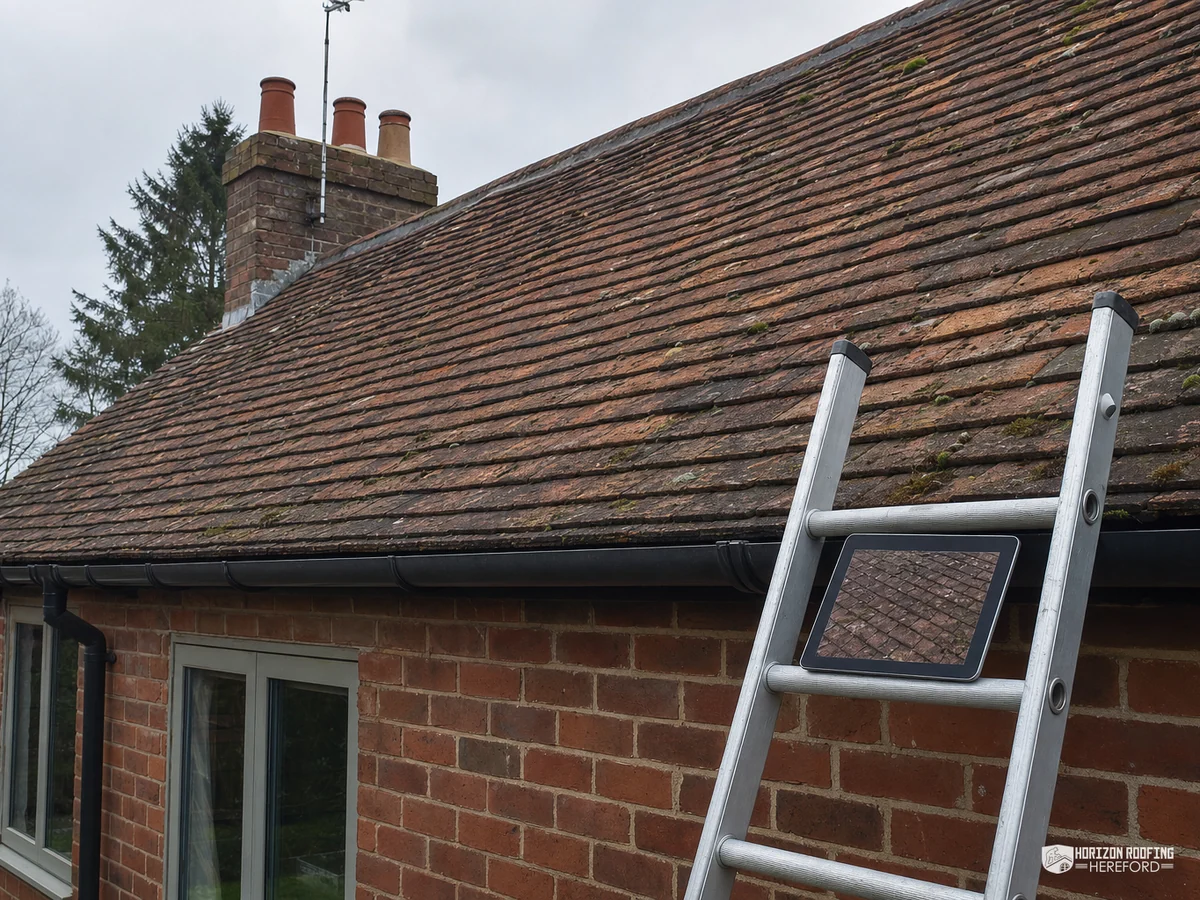
  • Older cottages with weathered clay tile roofs and brick chimneys behind a flint wall
    A gabled brick innA 1924 account calls the Sun Inn a gabled brick house with tiled roofs.
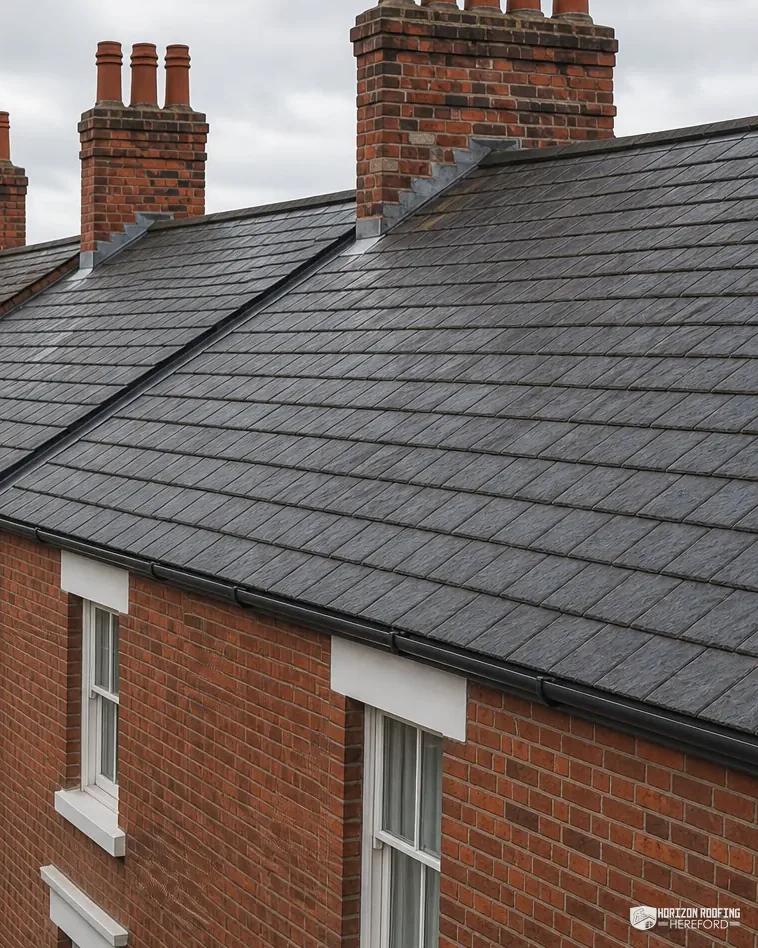
  • Slate roofs and chimney stacks along a red brick Victorian terrace
    St John the Baptist, Grade ISt John the Baptist's is Grade I and Church of England, so faculty applies.
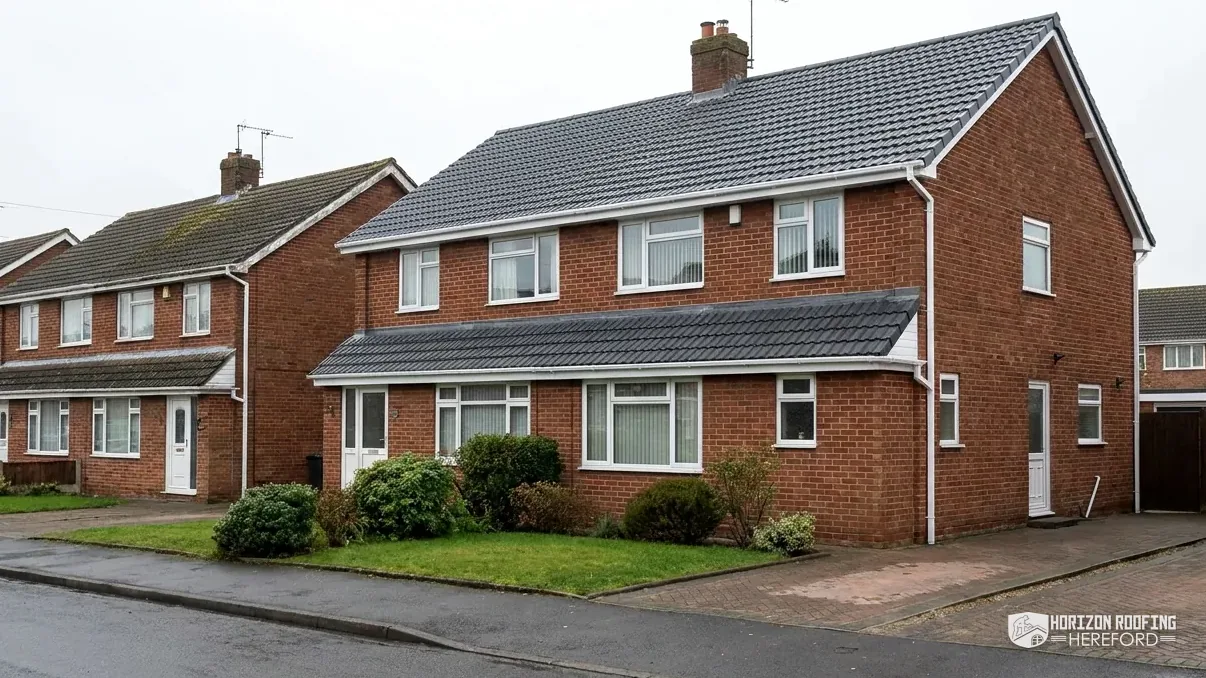
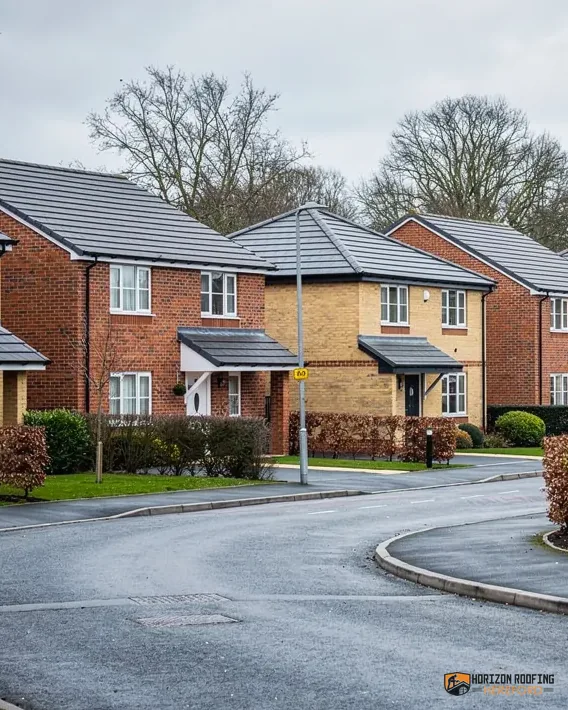
  • Newer homes with grey concrete tile roofs along a curving estate road
    Verges under the gablesEvery gable ends in a verge, and the verge mortar and fixings need checking.

Where to find Mamble

Mamble on a street map, with a dashed circle around the town and the nearest towns we cover. Tiles © Esri; map data © Esri, HERE, Garmin, OpenStreetMap contributors.

Mamble roofs, gable end to church wall

Gable verges, chimney stacks, listed walls: Mamble in three callouts

Three stops, top down: the verges at the gable ends, the stack with its lead flashings, and the listed walls of church and cottages, where consent sets the limits on what we can change.

A drawn cut-away section through a Herefordshire border house: the front of the main roof is cut open to show the rafters, underlay, battens and slates, beside a black-and-white timber-framed gable. Numbered, from the ridge down: 1 Gable verge; 2 Stack and lead; 3 Listed walls.

Fig. 1 Numbered 1 to 3 on a Mamble roof section: gable verge, chimney stack, listed wall.

Callout 1 of 3

Gable verges, from the Sun Inn outwards

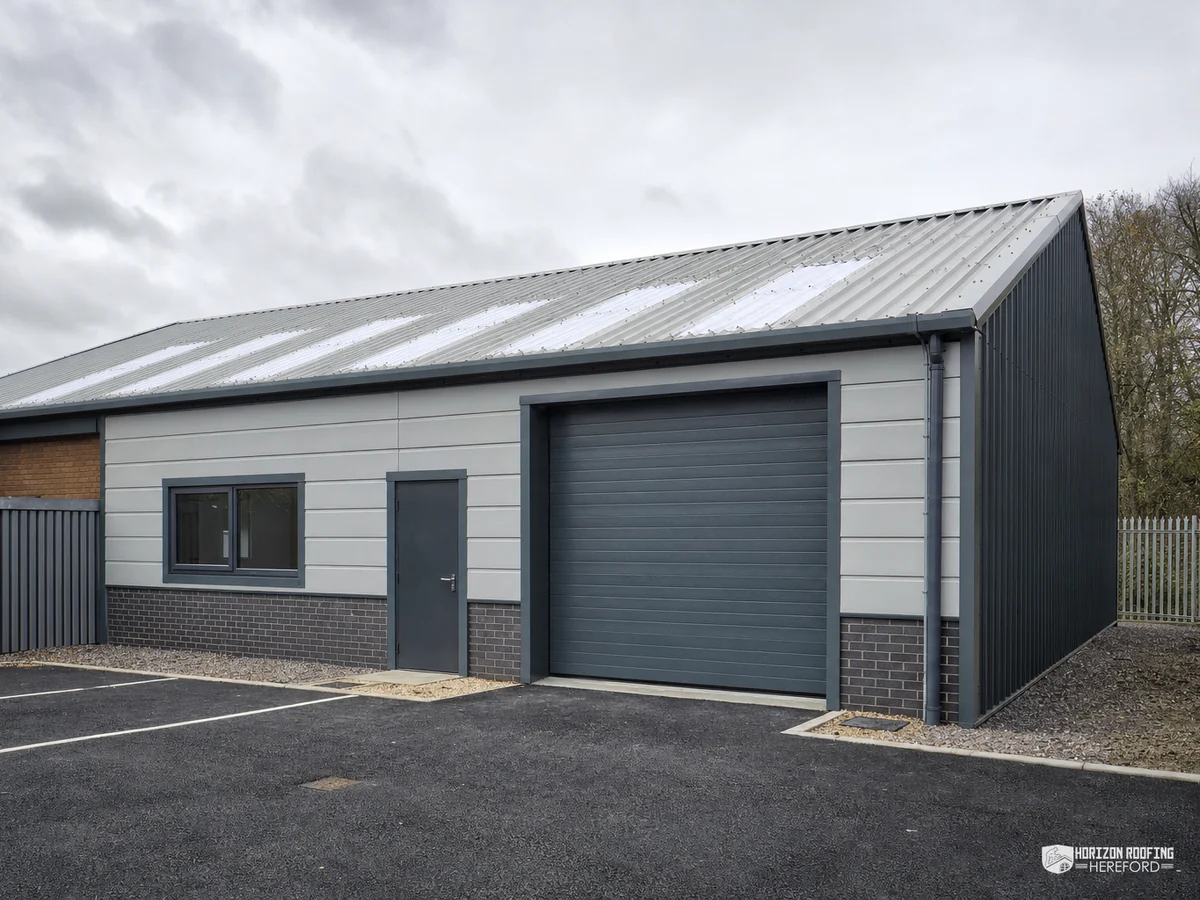
A gabled house has a roof that stops twice, once at each gable wall, and the finished edge there is the verge. We begin with it because a verge catches side wind as well as the rain falling on it. The Victoria County History of 1924 describes the Sun Inn, near the centre of Mamble, as a gabled brick house of the late 16th or early 17th century with tiled roofs, and says the few houses near the church are some of half-timber and some of brick. Whatever covers your own gable, the checks run the same way: edge tiles that have lifted, mortar that has cracked or dropped out, and the barge board, the timber that closes the gable edge, that has softened or pulled away from the wall.

Two methods finish a verge. Mortar bedding is the traditional one. The modern alternative screws or clips a dry verge unit in place, and BS 8612 is the specification for dry-fix, dealing with ridge and verge together. BS 5534:2014+A2:2018 covers slating and tiling. Marley, the tile maker, says "Installing to BS 5534 isn't required by law", and adds that since the 2015 amendments mortar "could no longer be relied upon as the only means of securing the roof covering". We therefore fix edge tiles mechanically, and where the house calls for it the mortar bed stays visible.

Edge gaps and eaves can shelter birds or bats. Under the Wildlife and Countryside Act 1981 it is an offence to damage a wild bird's nest intentionally while the nest is occupied or under construction. GOV.UK's bat guidance includes roof repair and replacement in the work that may disturb a roost, and sends licence requests to Natural England. Signs of nesting or roosting stop our work at that spot until the proper course is settled, and the rest of the roof carries on being made safe.

A full re-cover is a bigger decision. The Planning Portal asks two questions of an English re-roof: is less than 25 per cent of the building envelope affected, and is less than 50 per cent of the roof affected? Yes to both normally means nothing needs applying for, and a single verge repair sits far inside that. Our pitched roofing page covers the larger jobs. The survey photographs both verges on the house, so you can compare them before a price is written. Verge tiles come off a course at a time, never the whole edge at once, so the gable stays covered while the work goes on.

Checked along a Mamble verge

  • Edge tiles that have lifted or cracked
  • Mortar dropped or crumbling along the edge
  • Barge board softened or pulled from the wall
  • A mechanical fixing on every edge tile
  • Gaps where a nest or roost might sit

A gable has two verges, and the second one tells you whether the first was an accident.

Fig. 2 The verge, drawn close

Callout 2 of 3

Stack faces, mortar collars and the lead beside them

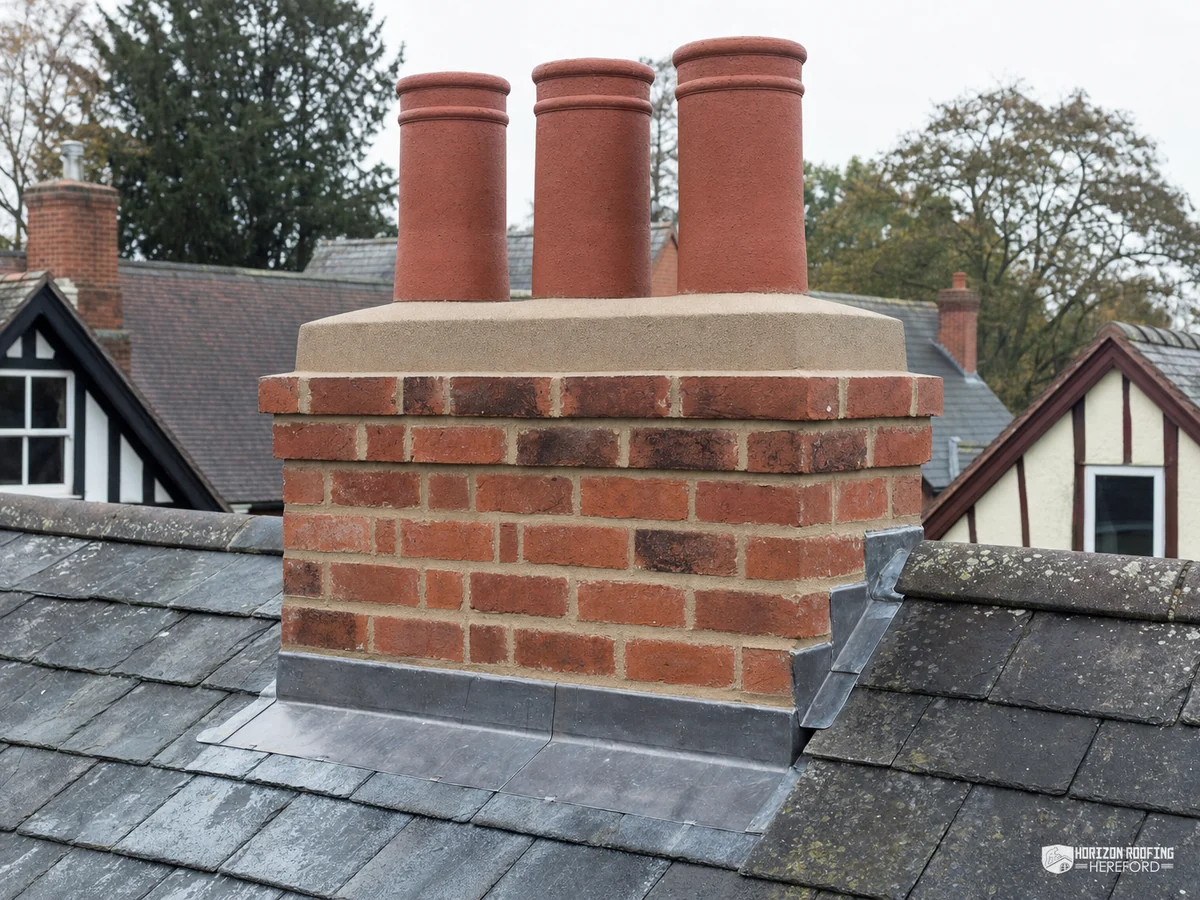
A chimney stands clear of the slopes and meets the weather on all four sides, so each face is read on its own: brick or stone that has flaked, joints where the pointing has receded, and any lean in the stack. A spalled brick, one that has shed its outer face, is cut out and a matching brick built in, never rendered over. The crown gets the same care. The pots sit in a sloped mortar cap called flaunching, and a hairline crack in it lets rain into the stack from above. Inside the roof space the masonry is studied where it breaks through, because a stack that has moved shows as a gap there long before it shows outdoors.

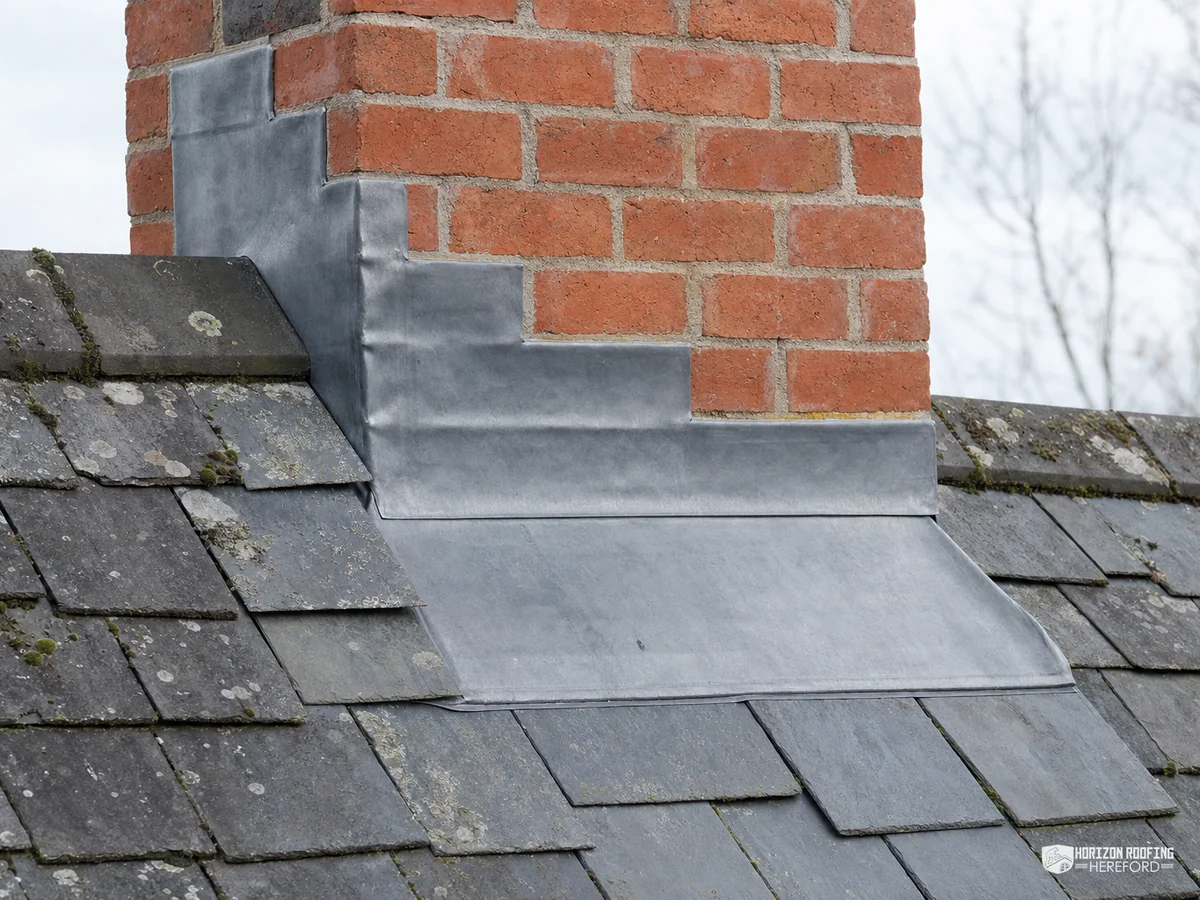
At the junction between stack and slope, lead is folded into a raked joint, then dressed over the tile surface; that strip is the flashing. Every tile course alongside has its own folded lead sheet, a soaker. Behind the stack, a lead-lined channel steers run-off round to the sides. Royston Lead's table lists Code 3 as "Recommended for lead soakers only", while Codes 4, 5 and 6 appear against flashings, so the thickness follows the part being sealed.

Lead only works if the joint behind it is sound. A flashing pushed into soft mortar peels away from the brick, so the pointing above is raked out and refilled before new lead goes in. According to MyJobQuote, lead flashing fitted correctly "can last for over 80 years", a hedge that rests on the fitting and the wall behind it. Split lead is replaced, never covered with sealant. Each face and the flaunching go into the photograph set that accompanies the report, since nobody sees a crown from the ground.

Work on a stack can switch other rules on. Our chimney repairs page sets out repointing, rebuilding and capping, and the questions below cover what happens when a breast comes out. Capped or disused stacks leak at the pots and joints just like working ones, so they get the same survey.

Which lead for which part

Does every part of a stack take the same lead?

No. Royston Lead lists Code 3 as "Recommended for lead soakers only". Codes 4, 5 and 6 are listed for flashings too, and the thickness is picked to suit the part of the stack being sealed.

Fig. 3 Chimneys, drawn close

Callout 3 of 3

A Grade I church, listed cottages and their consents

Callout three takes in the walls, and Mamble's are listed. St John the Baptist's Church holds Grade I, under list entry 1081406 (first listed 18 April 1966). Yew Tree Cottage, and Church Cottage and Church House, are Grade II (list entries 1350054 and 1350053, all first listed 27 February 1986), and Tudor Cottage is Grade II too (list entry 1172808). At the 2021 Census the parish had 284 usual residents. Section 7 of the Planning (Listed Buildings and Conservation Areas) Act 1990 asks for listed building consent before work that changes a listed house's special interest. Listed status does not remove permitted development, but consent is needed alongside it.

A church is regulated differently. St John the Baptist's is in Church of England hands, with Communion usually held on the first Sunday; while that worship carries on, the diocese grants a faculty for roof repairs, which stands in for listed building consent. With a Grade I entry, the parish is best approached early. Our report on a listed cottage is written for a conservation officer to read: entry number, photographs of the slopes, and a plain account of tiles, fixings and lead. Repairs to a listed house match the covering already there, so a slipped tile is replaced with one of its own kind and the lead is dressed as before.

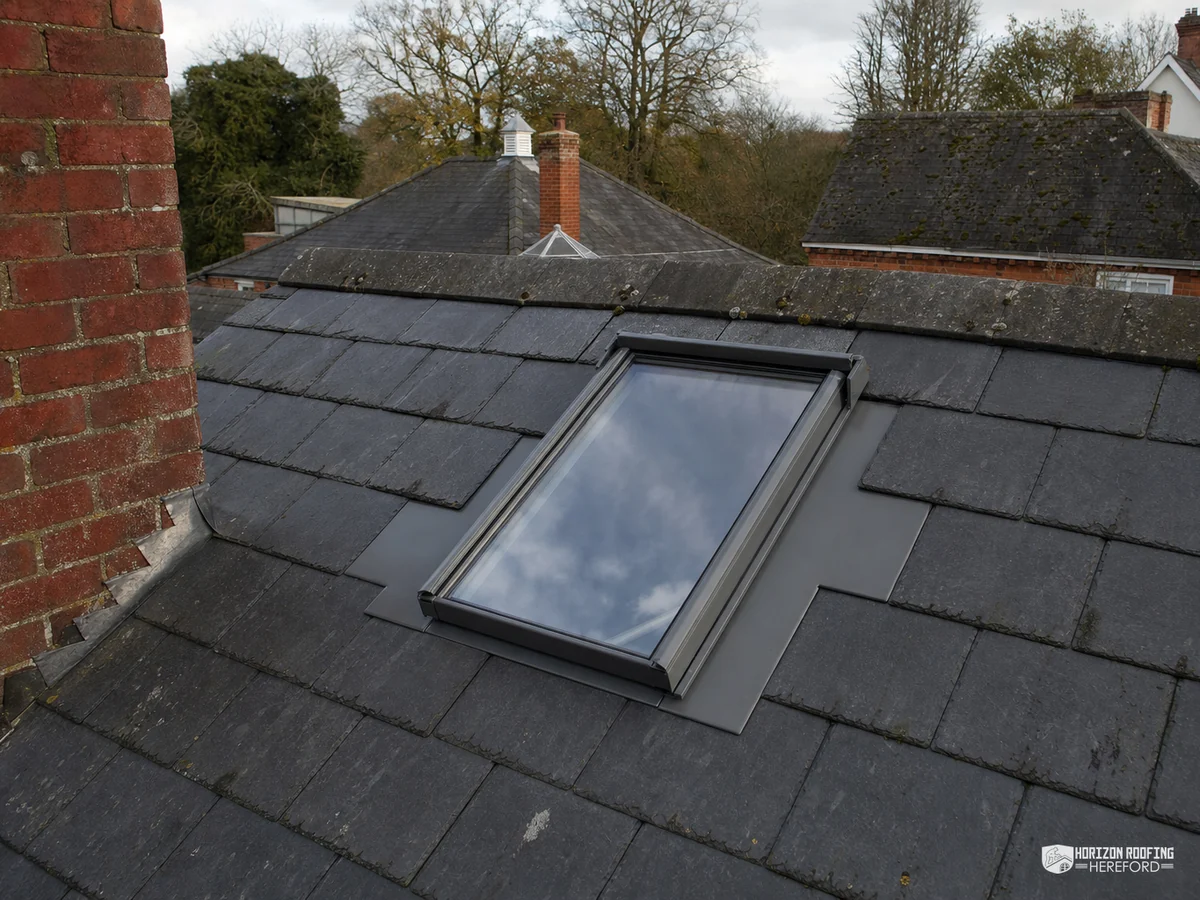
Malvern Hills District Council holds the conservation area list; its planners can tell you whether a Mamble address is covered. Malvern Hills District Council's own statement is that there are no Article 4(2) Directions in force. Dormers and roof windows raise the planning questions, and our planning guide for roof windows answers them for England.

Wychavon, Worcester City and Malvern Hills councils share South Worcestershire Building Control, which looks after Mamble. A registered building control approver is the alternative. A licence under section 169 of the Highways Act 1980 is needed for scaffolding that blocks the highway, and on Worcestershire County Council's licensing page the line reads that the company you contract is "required to apply for licences". The listed and heritage roofing page shows what a protected-roof survey looks at.

Price drivers on a Mamble listed roof

Consent
Whether the council must approve the covering first
Matching
Finding tile, brick or lead that suits the old work
Access
Where scaffold stands and for how many weeks
Condition
What the survey finds beneath the covering

One written total price, never itemised.

Mamble roofs: verges, lead and listed walls

What should be checked on the verge of a Mamble gable?

The edge tiles, the mortar under them and the barge board beside them. A lifted tile or a dropped section of mortar lets wind drive rain under the covering at the end of the roof. Each edge tile should be fixed mechanically as well as bedded, which is Marley's point about mortar no longer being relied on alone. We photograph both gables, so you can compare the two.

What if a Mamble roof repair uncovers a bat roost or a nest?

Work at that spot pauses. Nests in use or in the course of building are protected from intentional damage under the Wildlife and Countryside Act 1981, and GOV.UK describes bats and their roosts as fully protected. Mamble is in England, so Natural England is the body that can issue a licence. Meanwhile we make the roof weathertight around the spot, and the programme follows what the licensing advice allows.

What do published guides give for lead flashing round a Mamble stack?

For a chimney, MyJobQuote gives about £200 to patch the lead flashing and an average of about £570 to replace it, with complete leadwork at £350 to £920, the spread turning mostly on scaffold. Those are national guide figures, and none is a quote for your chimney. Our price comes from a survey that photographs the stack, the joints and the lead, and it is given as one written total, so a patch that proves enough is priced as a patch.

Does Mamble have a conservation area that limits roof changes?

Ask Malvern Hills District Council, which keeps the conservation area list, and the list should be checked against your address before any change is planned. The council says there are no Article 4(2) Directions in force at present. Like-for-like repairs are a separate question from new dormers and roof windows, which the roof-window planning guide here deals with for England, so read it before drawing anything.

What does taking down a chimney breast in a Mamble house involve?

Removing a chimney breast is a Building Regulations matter every time, according to the Planning Portal, because the breast is structural. A shared wall adds the Party Wall etc. Act 1996. The owner serves the notice, the Act wants that notice out at least two months ahead when a projecting breast is to be cut away, and written consent can stand in for a dispute. A party wall surveyor, not building control, is the person to ask about the notice.

Is spray foam under a Mamble roof a safe choice?

The Energy Saving Trust names the lack of vapour permeability as closed-cell foam's main drawback, and says that with open-cell foam the timber risk "should be much lower". In March 2023 RICS pointed to unease in parts of mortgage lending, naming equity release as an instance, so speak to whoever holds your mortgage first. If foam is already under your slates or tiles, ask us to survey it.

Start the Mamble survey at the gable end

Describe the roof, add a photograph of a verge or the stack, and we will arrange a visit.

10-year workmanship guarantee, in writing