
01432 610152 Get a quote Call 01432 610152

Roofers in Lydney

Roof repairs in Lydney for flat extensions, garage sheeting and listed buildings, surveyed before pricing.

Expect a ladder survey, pictures of what is wrong, the English rules that apply, and a single written total.

Get a free quoteCall 01432 610152

What wears a Lydney roof down

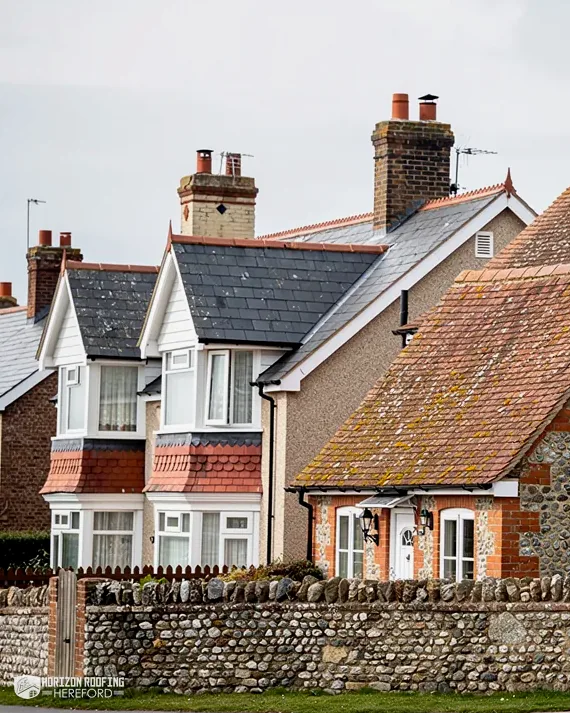
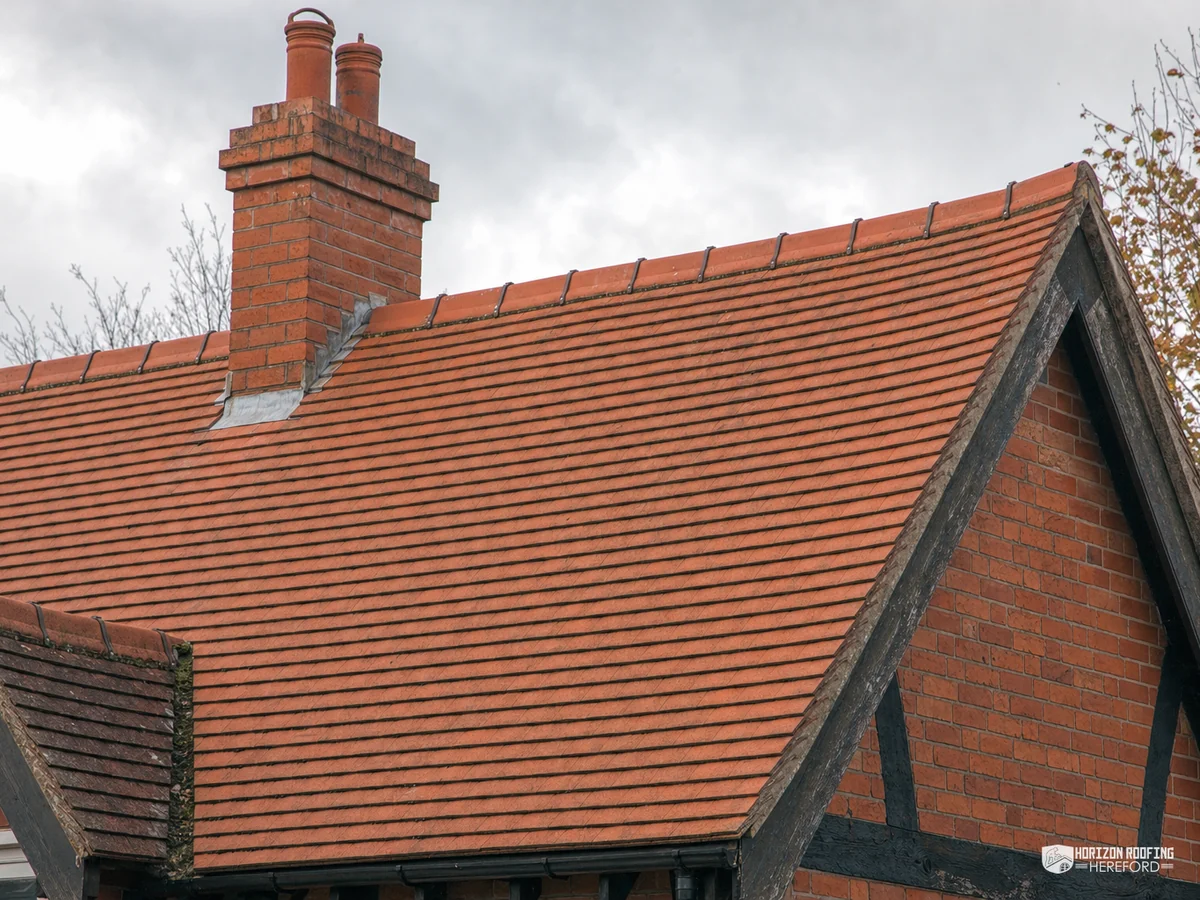
  • Older cottages with weathered clay tile roofs and brick chimneys behind a flint wall
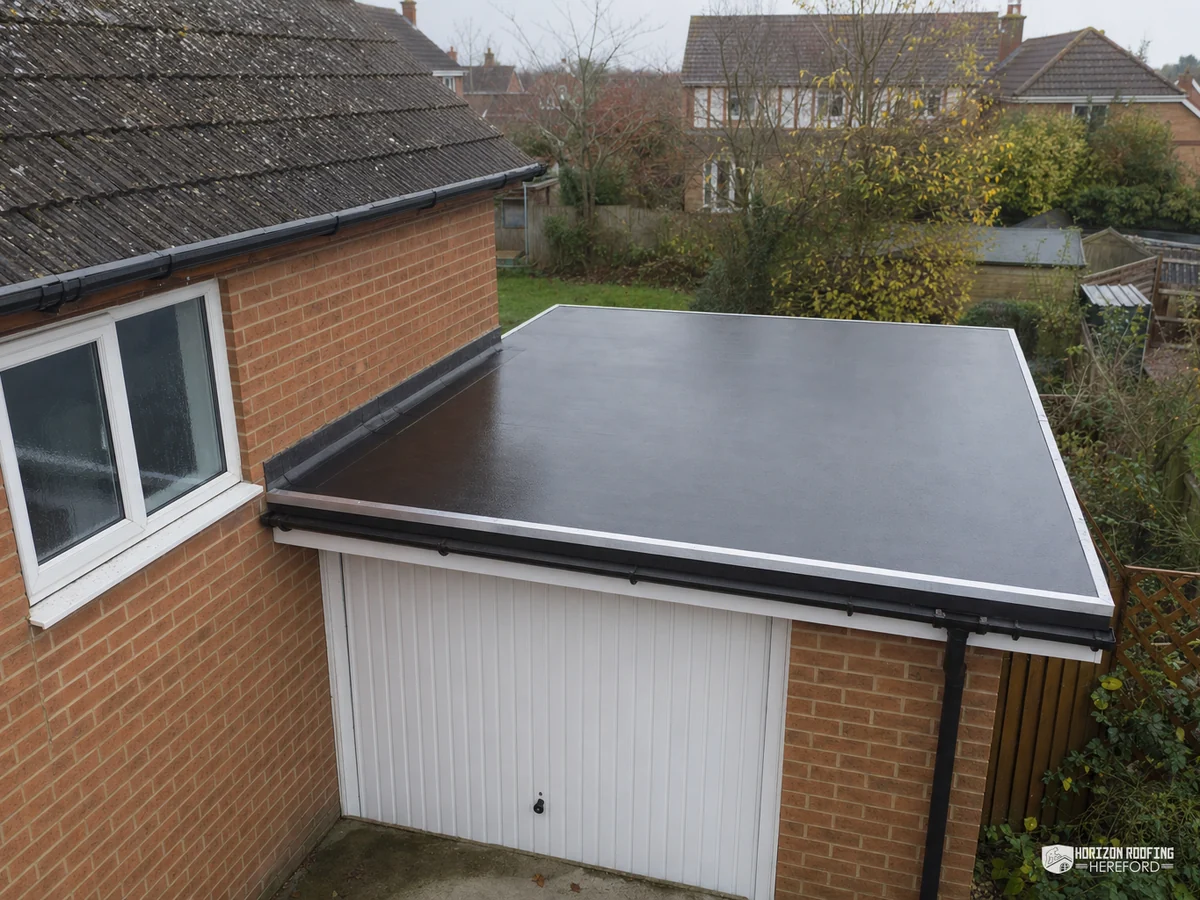
    Flat roofs that pondStanding water on a flat roof shows that the fall is not working.
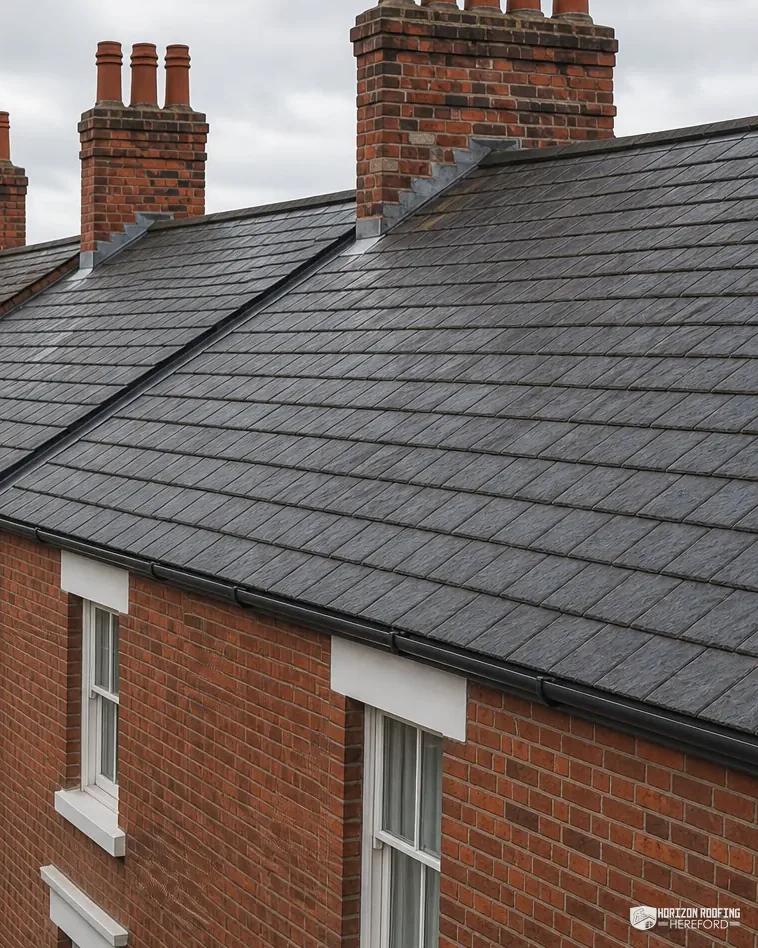
  • Slate roofs and chimney stacks along a red brick Victorian terrace
    Garage roofs of cement sheetOld cement sheeting is fragile, and breaking it up changes how it is handled.
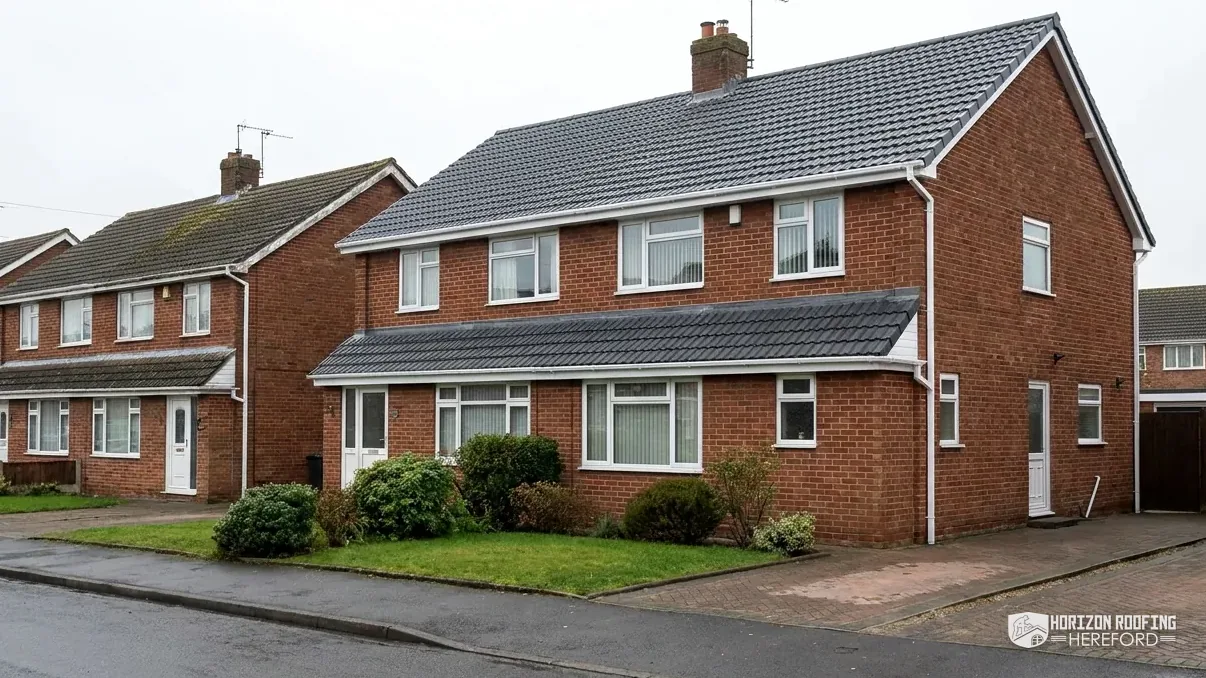
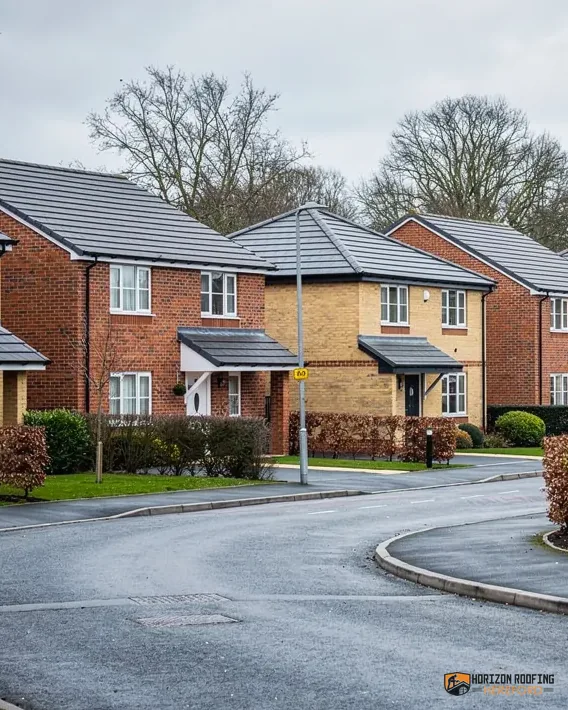
  • Newer homes with grey concrete tile roofs along a curving estate road
    Listed buildings in townRoofs on listed buildings need consent before the covering is altered.

Lydney and surroundings

Lydney on a street map, with a dashed circle around the town and the nearest towns we cover. Tiles © Esri; map data © Esri, HERE, Garmin, OpenStreetMap contributors.

Lydney roofs, flat roof to Grade I church

Three stops on a Lydney roof: the flat extension, the sheet roof and the listed wall

We work through a Lydney roof from the flat extension to an outbuilding's cement sheets, then out to the listed walls of the town, naming the English rule that applies at each stop.

A drawn cut-away section through a Herefordshire border house: the front of the main roof is cut open to show the rafters, underlay, battens and slates, beside a black-and-white timber-framed gable. Numbered, from the ridge down: 1 Flat roof; 2 Sheet roof; 3 Listed walls.

Fig. 1 Lydney section: flat extension roof, outbuilding sheets and a listed wall, numbered 1 to 3.

Callout 1 of 3

Flat roofs over Lydney garages and extensions

Few roofs are truly level, and a roof called flat is no exception. The membrane needs a gentle slope to carry rain to an outlet, and NFRC reads BS 6229:2025 as setting "a minimum 1:80 finished fall" for ordinary roof areas. IKO advises designing for a fall of 1:40 in order to achieve 1:80. On a Lydney extension we read the roof in a set order: the outlet, the edges, the laps in the membrane, then the deck beneath. A dark ring where a puddle dried tells us the fall has failed.

Each covering has its own range, and the published figures conflict. EPDM, a synthetic rubber sheet, gets 25-30 years from HomeBuilding and 30 to 50 from Less. GRP, a resin and glass-fibre finish, runs 25-30 in HomeBuilding and 25 to 40 in Less. Felt is shorter, at 10-15 years from HomeBuilding and 10 to 20 from Less. Both figures are quoted because both are published, and the condition of your own roof outweighs any average.

Small faults deserve a small answer. A split seam, a lifted edge or a blocked outlet can be mended, and the photographs show what is wrong. When the membrane is spent from end to end, or the boards beneath have turned spongy, the answer is a new covering. Upstands, the short vertical rises beside a wall, and the roof edges are checked with a torch from outside and from the room below, since a ceiling stain may be metres from the opening.

We clear and test the outlet and the gutter along the low side first; even a perfect fall achieves nothing if the water has nowhere to go. Where the flat roof meets a wall, the flashing above the upstand belongs to the same check. In the room below we look for damp on the underside of the deck, since a membrane laid over wet boards fails again, and we photograph any hatch, rooflight or pipe that pierces the covering, because each one is a joint that has to be sealed.

Under Part L, laying a fresh waterproof membrane over an existing flat roof counts as renovation, so AD L 2021 sends the roof to Table 4.3, with a threshold of 0.35 and an improved figure of 0.16, and the para 4.13 relaxation turns on a payback of 15 years. The 2026 edition of the document takes effect on 24 March 2027. The choices between coverings are laid out on our flat roofing page.

Read in this order on a Lydney flat roof

  • The outlet and the gutter it feeds
  • Edges, upstands and the line of the flashing
  • Laps and seams in the membrane
  • Soft or stained boards in the deck
  • Ponding marks left after rain

Water that stays on a flat roof long after the rain has stopped means the fall needs attention.

Fig. 2 Flat roofs, drawn close

Callout 2 of 3

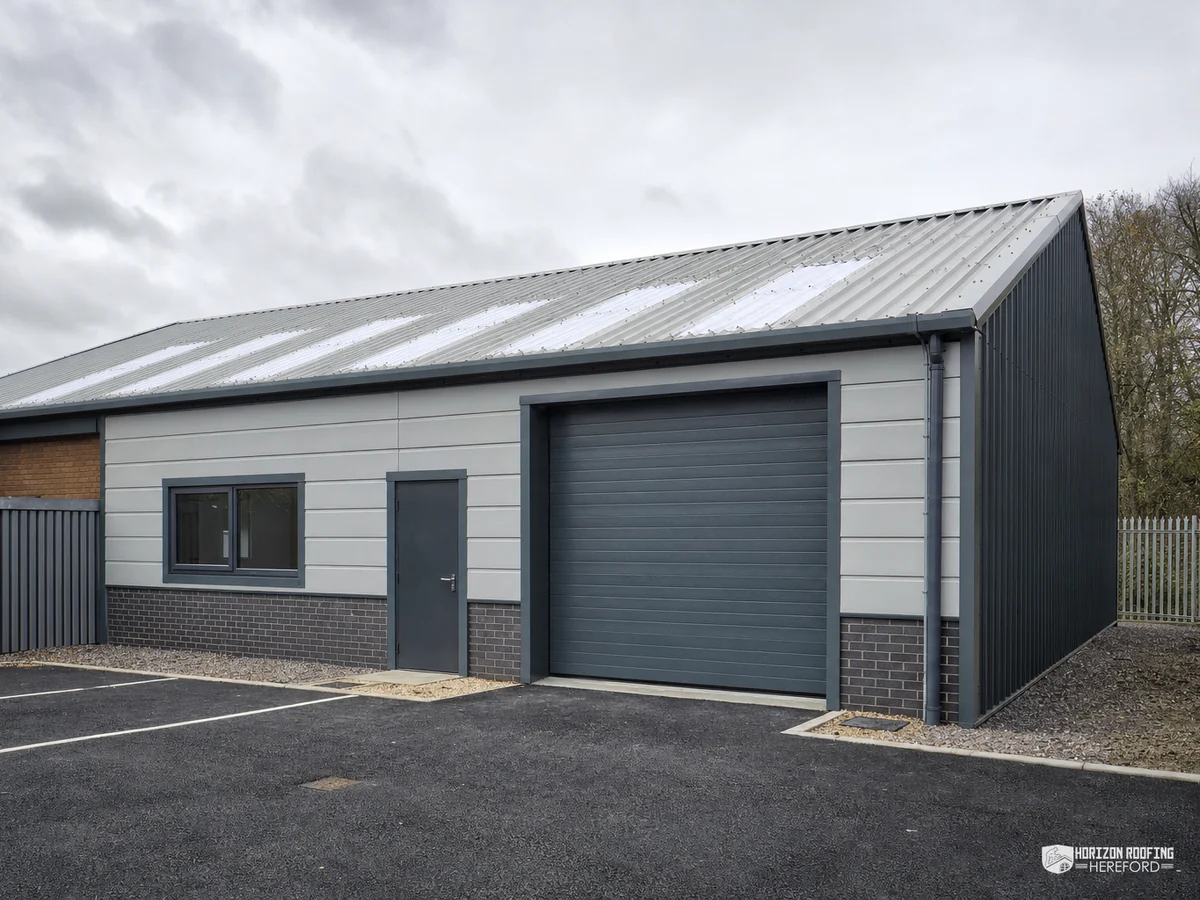
Cement sheet roofs on garages and outbuildings

Where a Lydney garage or shed wears corrugated cement sheets, the first question is what they are made of. HSE tells owners of a building constructed or refurbished before 2000 to assume asbestos is there, and its guidance adds that "AC roofs are always fragile". Because of that, we plan access from the edges and from below, never across the sheets themselves.

The rules turn on what is done to the material. On HSE's list, asbestos cement lifted off carefully, whole and unbroken, is classed as non-licensed work, even where the sheets have weathered, provided they are not badly damaged. Once the sheets are substantially damaged or have to be broken up, the job becomes notifiable non-licensed work, with extra steps. Asbestos insulating board, the material in some white soffit and panel work, is a different product, and its removal is normally licensed work, so a licensed firm takes it on.

HSE advises that the waste go out in a lockable skip. HSE's guidance says it is "not good enough to throw sheeting over a standard skip". England's exemption from consignment notes for household hazardous waste carves out asbestos, in the words "other than asbestos waste", so a contractor who moves it treats it as trade waste and keeps the paperwork that goes with it. None of that is a reason to leave a failing sheet roof where it is, but it explains why the job is planned before the day.

On the sheets themselves we note the fixings, the bolts and washers that hold each sheet to the purlins, and the lap where one sheet overlaps the next, since they show where movement has opened a gap. Choosing the replacement is a separate decision. The purlins, the timber beams running across the roof, have to carry it, and the Planning Portal asks for Building Regulations approval when a new material "increases the weight of the roof covering by 15 per cent or more". Our roof replacement page explains how a strip and re-cover is run.

A cement sheet roof at Lydney

Access
Planned from the edges, never across the sheets
Handling
Sheets lifted whole and not cut or broken
Skip
A lockable skip, as HSE advises
Paperwork
A consignment note for asbestos waste in England
Soffits
Insulating board is licensed work, passed on
Fig. 3 The slopes, drawn close

Callout 3 of 3

St Mary's, Althorpe House and the town's conservation area

The third stop is where listing sets the pace. St Mary's church in Lydney is Grade I (list entry 1186600, first listed 7 August 1954). Althorpe House is Grade II (list entry 1299113, first listed 7 March 1988), as is The Greyhound (list entry 1186616, first listed 7 March 1988), and the Rectory is Grade II as well (list entry 1121909). LBCA 1990 s7 puts consent in front of any works that would alter a listed building's architectural or historic character. Permitted development rights are not lost by listing, though consent is needed as well, so Forest of Dean District Council is asked first. Our listed and heritage roofing page shows how we prepare a proposal.

A church roof follows a different route from a house roof. Two facts decide it: who holds the building, and whether worship continues inside. For St Mary's, those are the questions to settle before anything is priced. In England the usual routes are:

  • Church of England, in use: the faculty system;
  • Roman Catholic, Methodist and URC churches, while in use: the denomination's own procedure;
  • Baptist Union churches, in use: exempt only where a Schedule 1 trust corporation is their trustee;
  • Quaker and Unitarian meeting houses, and any church no longer in use: listed building consent.

Forest of Dean District Council designates Lydney Conservation Area, and its map shows whether a street lies inside. Our planning guide for roof windows explains what a conservation area changes for dormers in England. A call to the district council settles whether an Article 4 direction covers your road. Building control is Forest of Dean District Council Building Control on 01594 812315, or a registered building control approver.

A job beside a listed building is planned around it: scaffold lines, ladder feet and skip positions are agreed so that nothing leans on listed stonework. Scaffold that stands over a pavement in the town centre needs a highway licence under the Highways Act 1980 s169. We arrange the licence with our scaffolder and raise the dates at the survey, because the notice period is long.

Terms on a Lydney listed-building job

List entry
The numbered record of a listed building's grade and date
Faculty
The Church of England's own permission route for its churches
Listed building consent
Council permission for works that change a listed building
Article 4 direction
A direction removing named permitted development rights in an area
Conservation area
An area the council designates for its special character

Lydney roofs: flat extensions, sheet roofs and listed walls

How should a Lydney flat roof be built to drain?

It needs a fall toward the outlet. NFRC reads BS 6229:2025 as setting a minimum 1:80 finished fall for ordinary roof areas, and IKO advises designing for 1:40 to reach it. At the survey we look for ponding marks, check where the outlet sits, and tell you whether the deck needs reshaping before a new membrane goes on or whether mending the seams will do. A gutter or hopper that has silted up counts as part of the fault, so it is cleared first.

Is a cement sheet garage roof in Lydney safe to walk on?

No. Cement sheets give way under body weight, and HSE's A14 guidance describes these roofs as always fragile. We work from the edges and from below, and the sheets are neither cut nor dropped. Any removal is planned before the day, with the lockable skip and the paperwork arranged first, so that nothing is improvised once the sheeting is disturbed.

Does St Mary's church in Lydney follow listed building rules for its roof?

It is Grade I (list entry 1186600), so LBCA 1990 s7 applies to its character. Who holds it and whether worship continues there decide the route: the faculty jurisdiction for an Anglican parish church that is open for worship, or consent from the district council as a listed building if it is not exempt. We ask the church's governing body which applies, and price nothing until that is answered.

Does Lydney Conservation Area reach my street?

Check the district council's map for your address, because Forest of Dean District Council set the boundary. Inside a Lydney conservation area, Forest of Dean District Council looks at a dormer first, as our planning guide explains. Forest of Dean District Council also keeps the answer on Article 4 directions, and such a direction can take certain permitted development rights away across a defined area.

What does building control need for a Lydney flat roof re-cover?

AD L 2021 treats renewing the membrane of an existing flat roof as renovation, which holds the roof to Table 4.3, with a para 4.13 relaxation based on a payback of 15 years. Forest of Dean District Council Building Control, on 01594 812315, or a registered building control approver confirms the position for your roof before work starts. The next edition arrives on 24 March 2027.

What does scaffold on a Lydney street cost?

The scaffolding and hoarding licence from Gloucestershire County Council is priced at £145 for a minimum of 28 days, then £36 per 7 days to extend, in its list dated from 1 April 2025, and the notice it wants is at least twelve calendar days. The licence is required by the Highways Act 1980 s169. The licence is something we arrange with our scaffolder, and the same written price as the roof work carries the scaffold.

Get your Lydney roof surveyed

Say what covers the roof and where it leaks, and the written price comes after our survey.

10-year workmanship guarantee, in writing