
01432 610152 Get a quote Call 01432 610152

Roofers in Llanfoist

Roof repairs and re-roofs for Llanfoist, the village close to Abergavenny.

Our survey starts at the ridge, puts the hidden faults into photographs and finishes with one written price.

Get a free quoteCall 01432 610152

From the cemetery chapel to Waterloo House

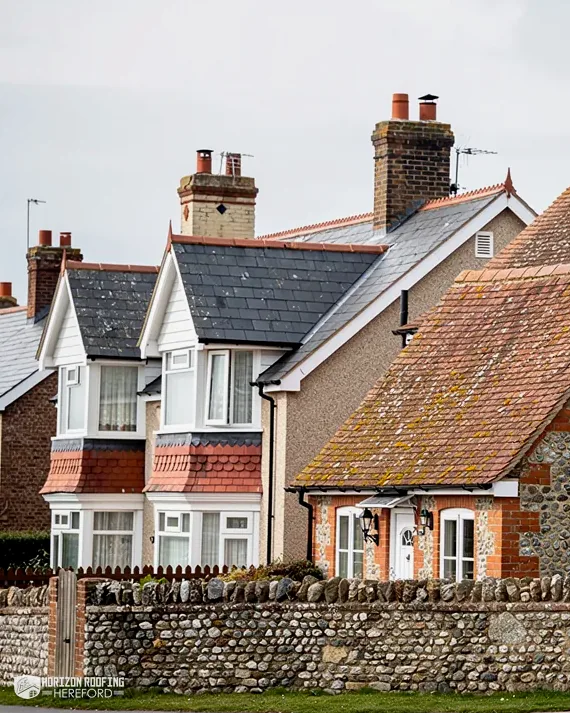
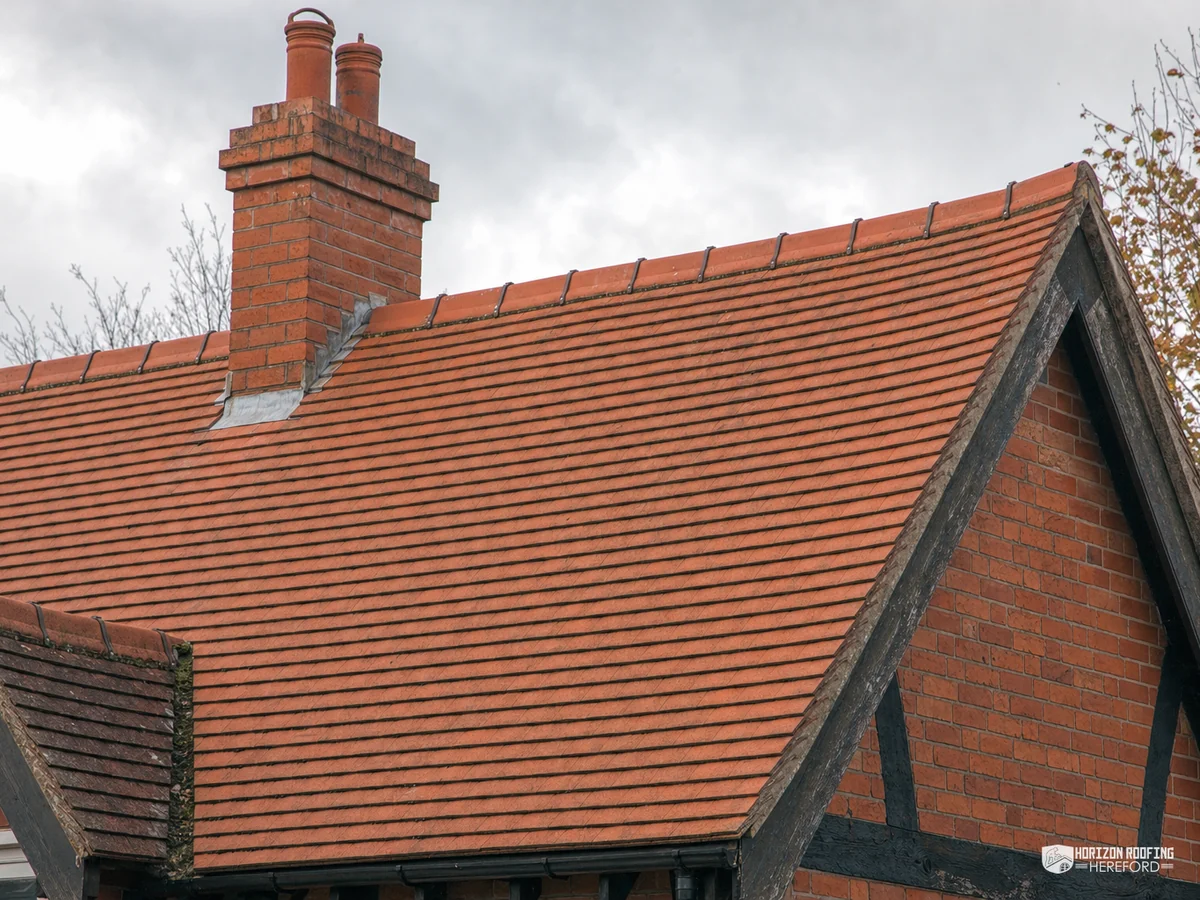
  • Older cottages with weathered clay tile roofs and brick chimneys behind a flint wall
    A slate-roofed cemetery chapelCadw's record describes slate roofs and gable parapets topped with crucifix finials.
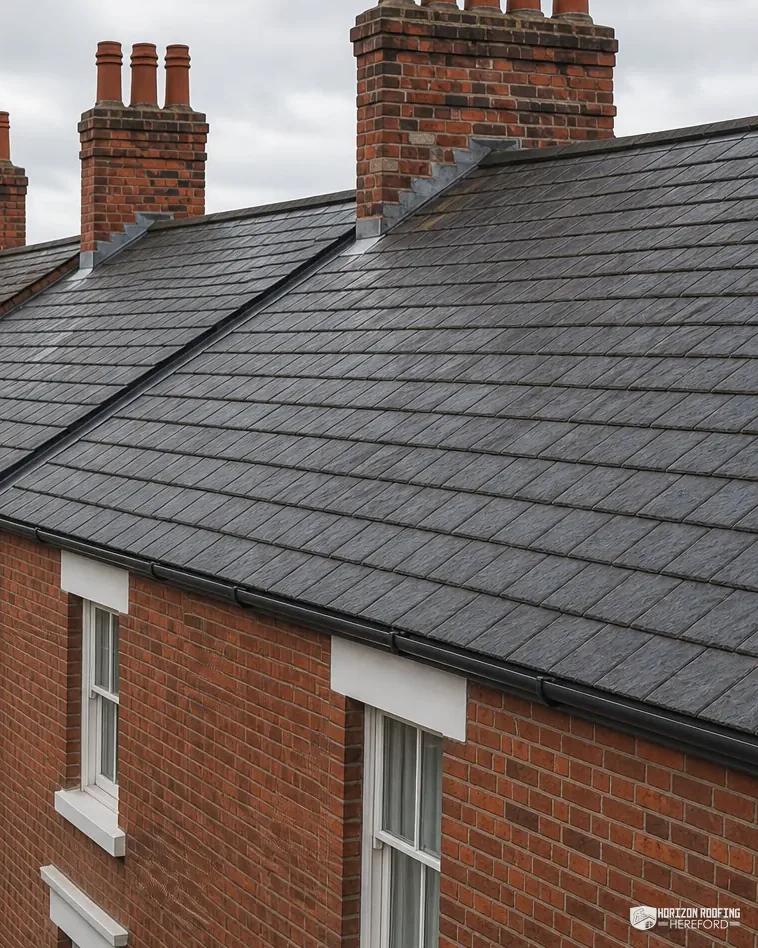
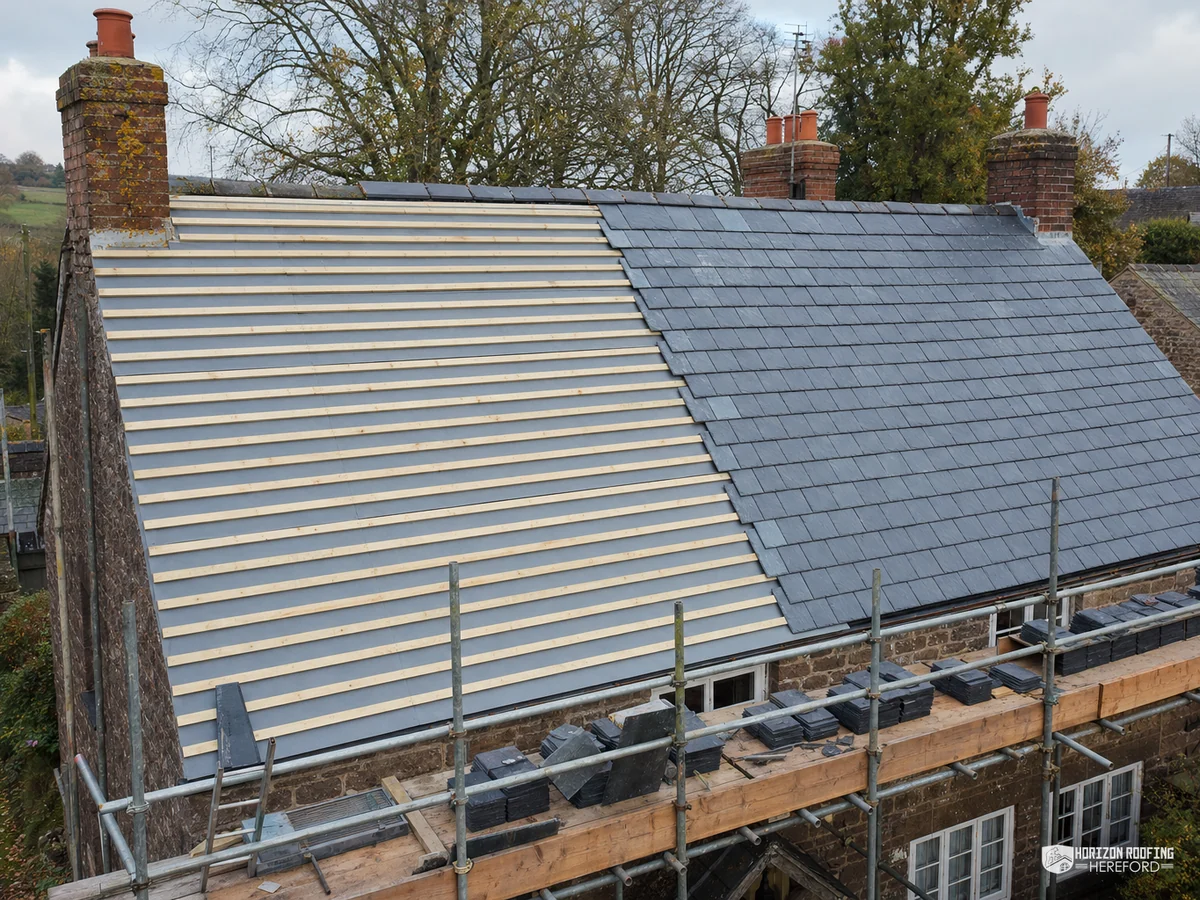
  • Slate roofs and chimney stacks along a red brick Victorian terrace
    Waterloo House, Grade IIWaterloo House has been listed since December 1984, so changes may need consent.
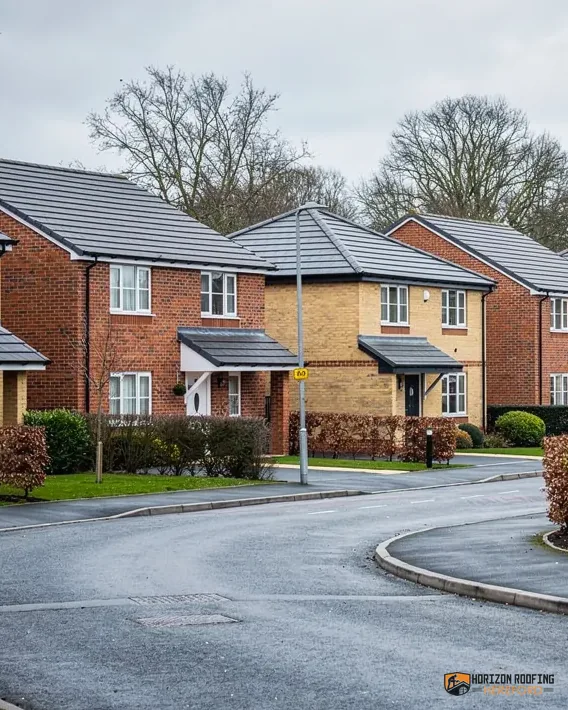
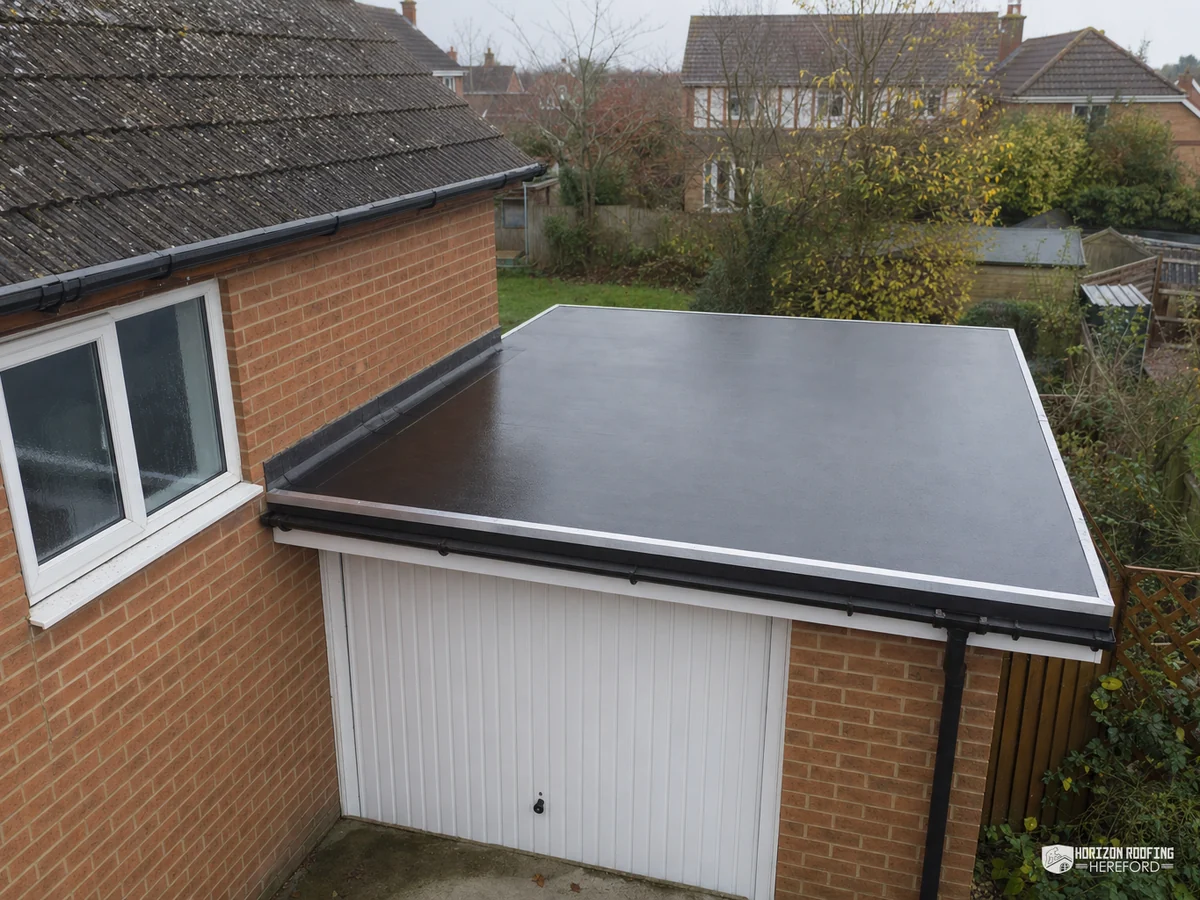
  • Newer homes with grey concrete tile roofs along a curving estate road
    Close to the National ParkPart of the area round Llanfoist lies inside Bannau Brycheiniog, so check each address.

Around and about Llanfoist

Llanfoist on a street map, with a dashed circle around the town and the nearest towns we cover. Tiles © Esri; map data © Esri, HERE, Garmin, OpenStreetMap contributors.

Llanfoist roofs, gable to roof light

Three checks on a Llanfoist roof: the parapet gable, the slate slope, the roof light

The survey follows a set order here: the gable parapets and their lead first, then the slate slopes where the age of a slate decides between repair and renewal, and last the roof lights, where the Park boundary and the Welsh planning rules bite hardest.

A drawn cut-away section through a Herefordshire border house: the front of the main roof is cut open to show the rafters, underlay, battens and slates, beside a black-and-white timber-framed gable. Numbered, from the ridge down: 1 Parapet gables; 2 Slate slopes; 3 Roof lights.

Fig. 1 A Llanfoist roof in section: parapet gable, slate slope and roof window.

Callout 1 of 3

Parapet gables and the lead tucked into them

The New Cemetery Chapel in Llanfoist is listed Grade II (Cadw record 17244, designated 15 March 1996). Cadw's description of it reads "Early English Gothic style chapel in local rubble with simple freestone dressings, slate roofs and gable parapets with crucifix finials". Gable parapets are the detail worth stopping on. At a parapet gable the end wall climbs above the roof surface instead of finishing flush with it, so the slope meets a vertical face of stone, and the meeting point has to be sealed against weather from above and from the side.

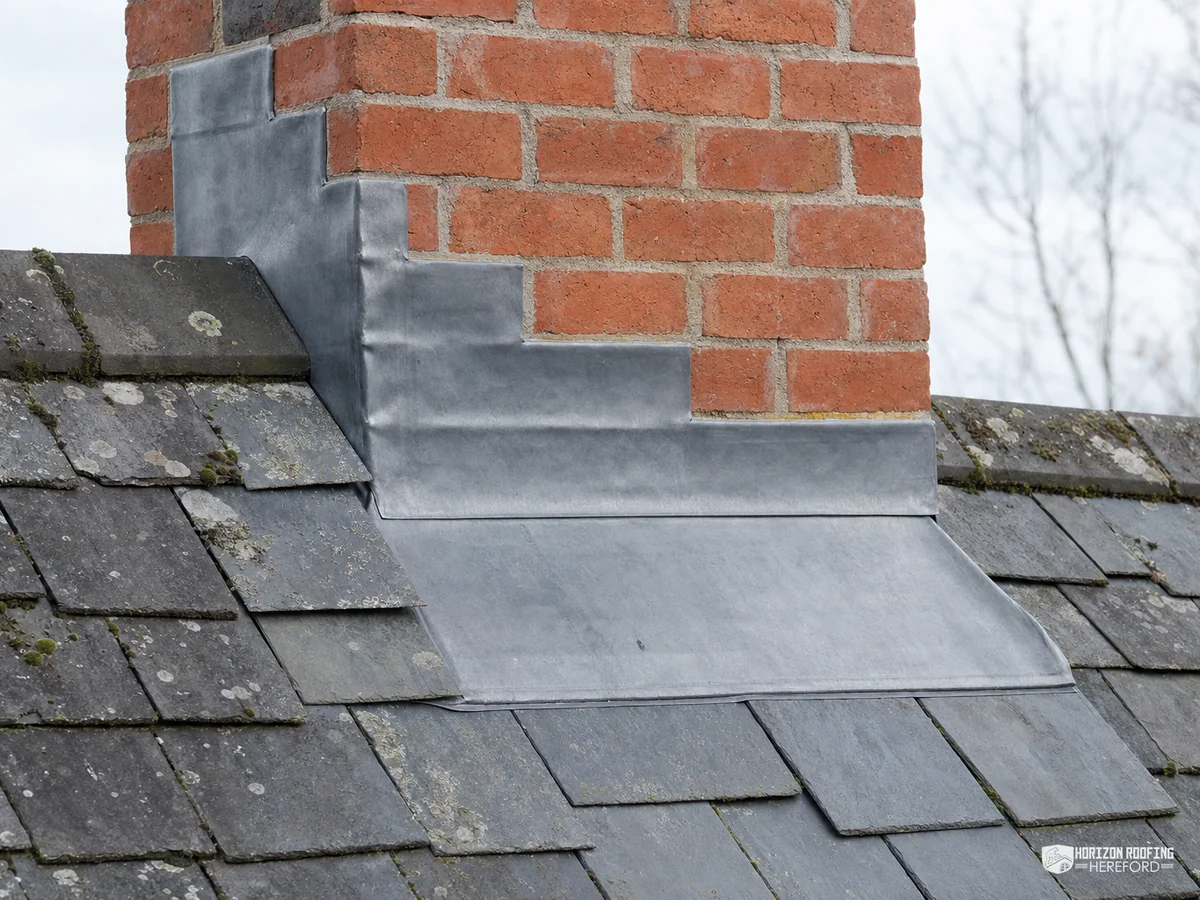
That seal is normally lead. A lead strip goes into a joint cut back in the wall and folds down onto the top course of slates, so rain running off the stone lands on the roof and not behind the covering. Royston Lead's table gives each sheet thickness a code, with Codes 4, 5 and 6 listed for flashings. At the top of the wall, a coping of freestone sheds water over both faces. We examine the bedding under each coping stone, the pointing in the rubble beneath it, and the lead along the foot of the wall. Where the mortar has gone soft or the lead has lifted, damp can travel down the inside of the gable long before it shows on a ceiling, which is why the loft side of the wall gets a torch as well as the outside. Rubble walls are also uneven, so a lead strip cut for a regular course will not sit tight against them; each piece is shaped to the wall in front of it, and the fixings are placed where the stone is sound.

MyJobQuote says correctly installed lead flashing "can last for over 80 years". The words are hedged, and on an old gable the lead can outlast the mortar that holds it, so the pointing gets looked at during the same survey. We take a photograph of every stretch of flashing, close up, and you see the same picture we see.

Section 169 of the Highways Act 1980 asks for a scaffold licence wherever scaffold obstructs a public road, and we arrange the licence with our scaffolder. It is built into the single written price. Where the job is lead as well as stone, our lead roofing page explains the sheet, the dressing and the fixings.

Checked along a parapet gable

  • Coping stones sitting firm on their bed
  • Pointing in the wall below the coping
  • Lead let into the wall and dressed down
  • Slates tight against the lead
  • Staining on the inside face of the gable

A parapet gable asks two trades to agree: the mason's joint and the roofer's lead.

Fig. 2 The verge, drawn close

Callout 2 of 3

Slate slopes and when a slate is worth saving

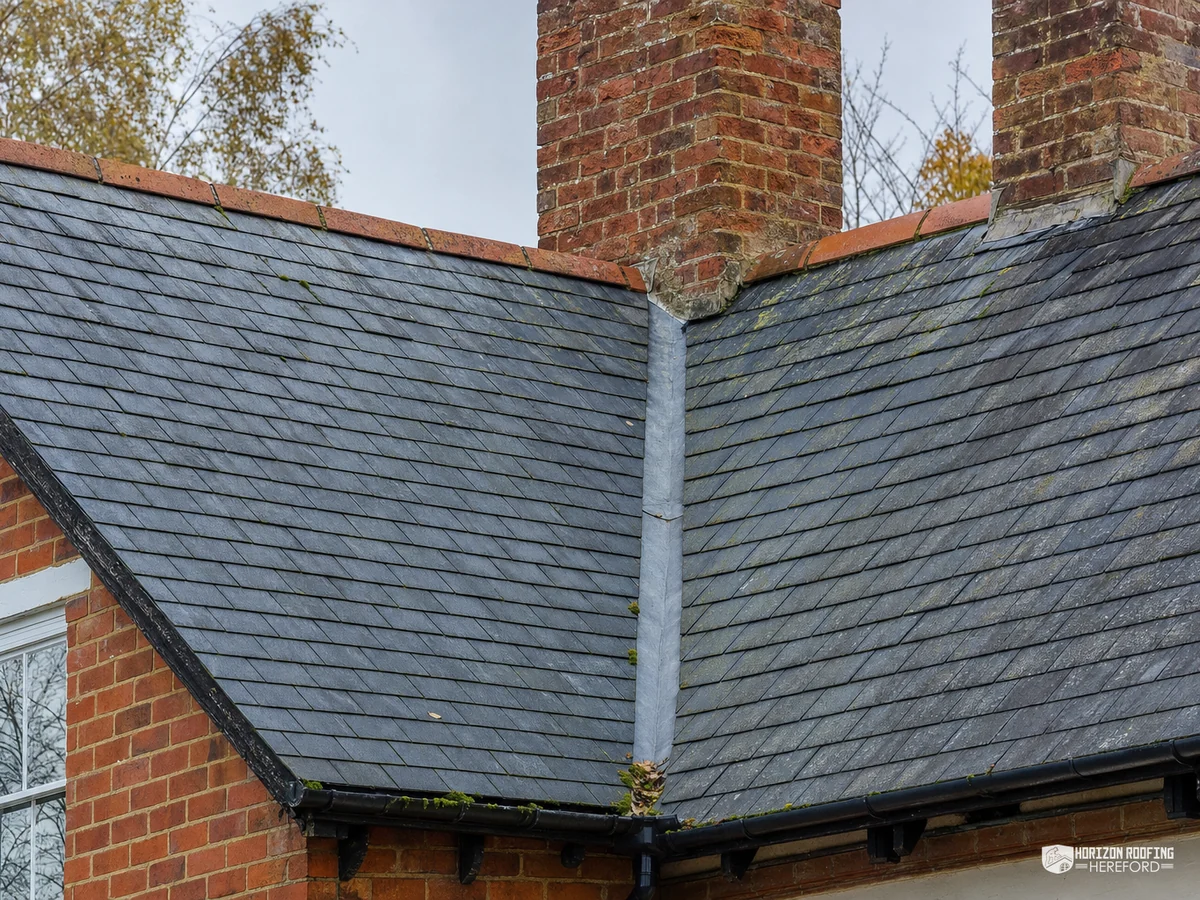
Cadw's record gives the chapel slate roofs, and slate is a covering whose age can be read. HomeBuilding's table gives Welsh slate 100+ years, Spanish natural slate 75-100 years and reclaimed Welsh slate 50-80 years. SPAB's guidance says "the life of a well-slated roof is likely to be more than 100 years". Such figures are typical ranges that vary with the roof. The fixing can end a slate roof's life long before the stone does: nails rust through while the slate itself stays hard.

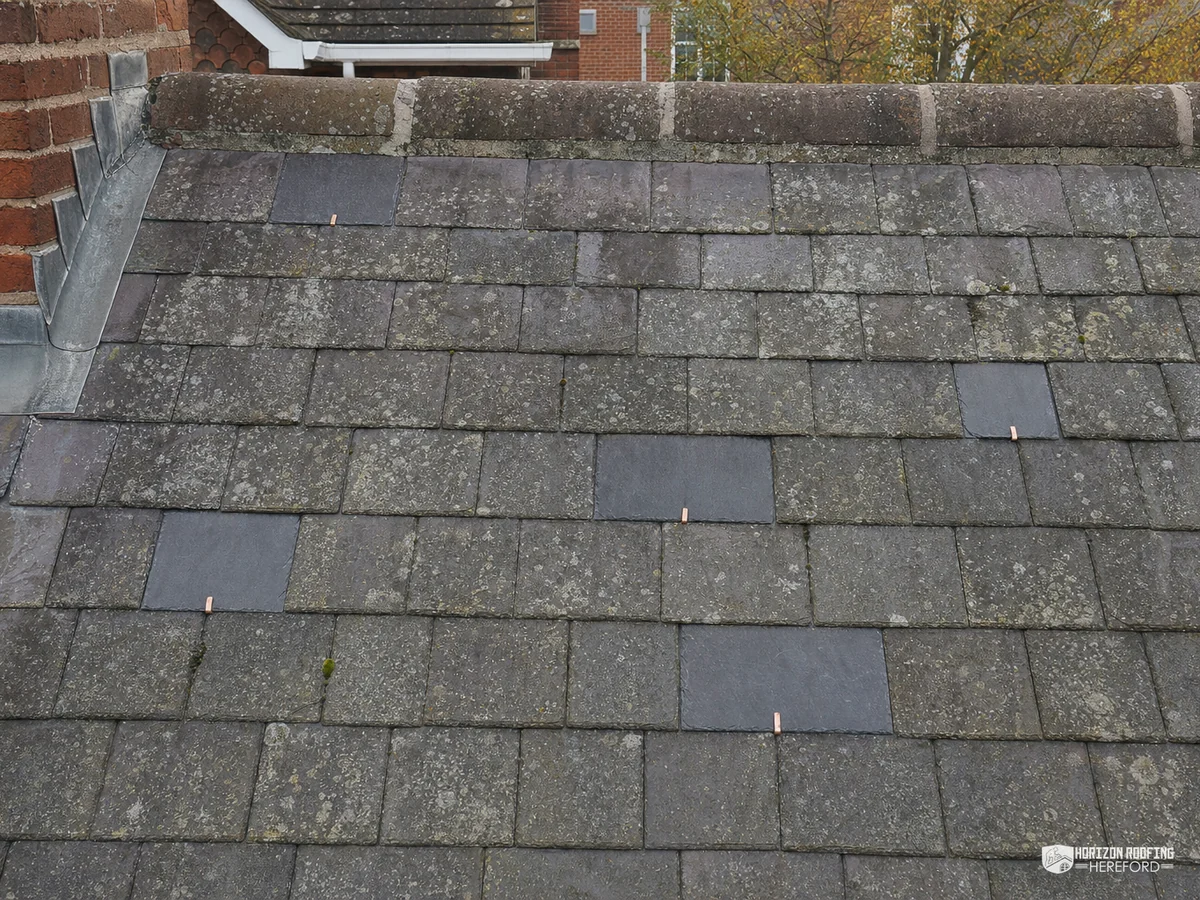
On the survey we tap and lift slates in the weakest-looking areas, count the slipped ones and look at the nails. Where the slates themselves are sound and just the fixings have given out, stripping, sorting and refixing keeps the original covering, and that can be the better buy. If the slates are laminating, flaking at the edges or soft underfoot, a new covering is the honest advice. Cupa's reading of BS 5534:2014+A2:2018 gives a minimum pitch of 20 degrees for natural slate with moderate exposure, a 500mm slate and a 115mm overlap, and it says hook fixings "should not be used on any pitch below 25º", so the pitch limits what we can offer.

Changing material is a bigger step. The Welsh Government says that if a covering is replaced "with a different material to its original for example, slate to tiles", then approval under the Building Regulations "is likely to be needed" for structure, fire safety and energy efficiency. A heavier covering is where structure comes in: the Welsh Approved Document A treats a load increase of "more than 15%" as a significant change, so the roof structure is checked before the new covering is ordered.

When a whole roof is re-covered, the insulation comes into view. That counts as renovation under the Welsh Approved Document L, and Table 11.1 asks for 0.16 W/m²K, or no worse than 0.35 where 0.16 is not feasible. Our slate roofing page sets out stripping, sorting and relaying slate course by course. Battens that have rotted or split are renewed while the slope is bare, and the underlay is checked at the same time, because it is cheaper to put these right before the new slates go on than after.

A slate question

Can the slates from my roof be used again?

Some can, once they are sorted. Hard, flat slates with sound edges go back on new nails or hooks, and cracked or flaking ones are set aside. Reclaimed slate bought in to fill gaps is matched for size, colour and thickness. The survey photographs show you which group your slates fall into.

Fig. 3 The slopes, drawn close

Callout 3 of 3

Roof lights, the Park boundary and Waterloo House

Part of the area round Llanfoist is inside the Bannau Brycheiniog National Park, while the planning authority for Llanfoist itself is Monmouthshire County Council. For an individual address the safe course is to check the boundary: addresses inside the National Park go to the National Park Authority for planning, and the rest go to the council. In either case building control stays with the council, because the Park Authority deals with planning alone.

This matters most for roof lights. Inside a National Park, a National Landscape or a conservation area, a roof light cannot rely on permitted development in Wales, so planning permission is the route there. The Abergavenny conservation area, designated by Monmouthshire County Council, reaches close to Llanfoist, which is one more boundary worth checking with Monmouthshire County Council. Our planning guide for roof windows explains the planning side, and the Welsh Government adds that Building Regulations approval "will generally be needed for the installation of a new rooflight".

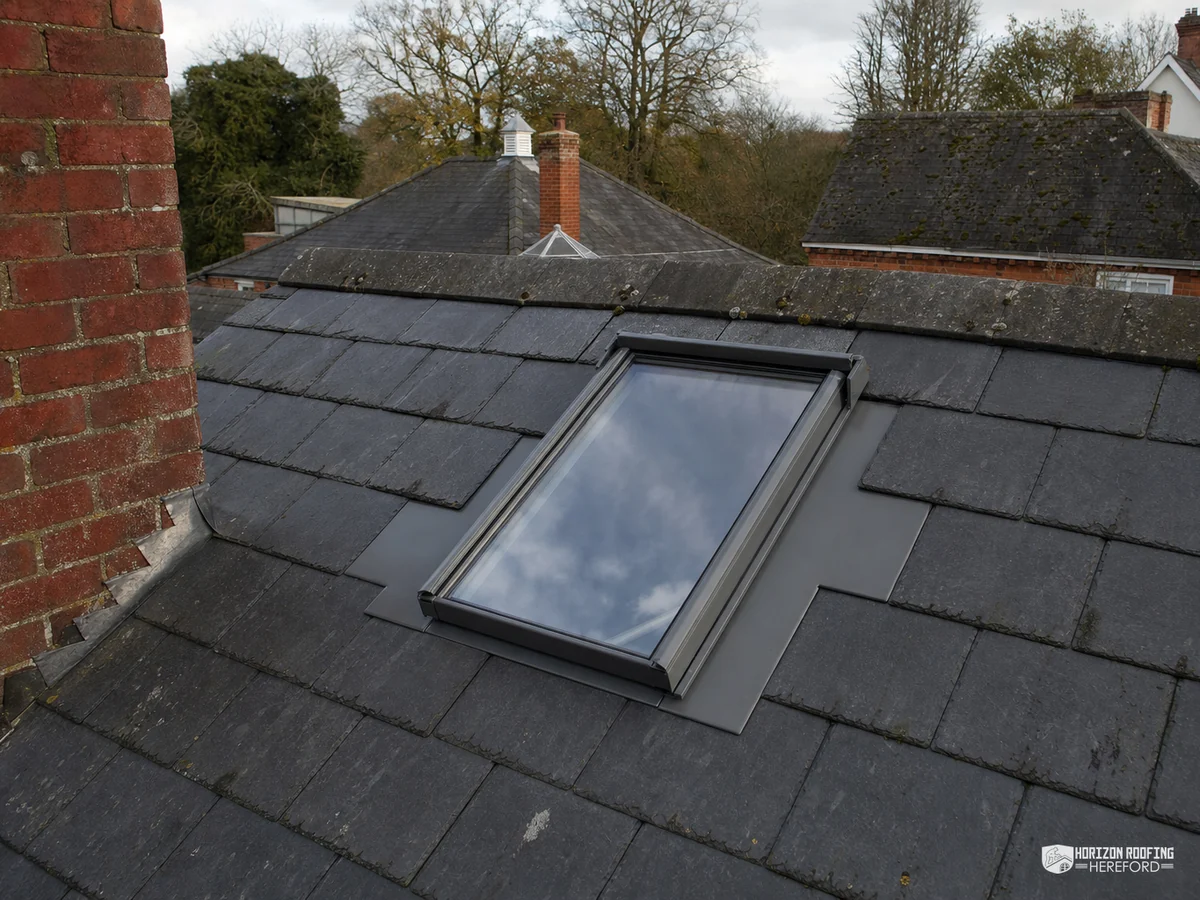
On the thermal side, Welsh Approved Document L sets a roof window at WER Band B or 1.4 W/m²K, and a rooflight at 2.2, which are also the English figures. Once installed, a roof window is a place where flashing, insulation and a hole in the roof all meet. We look at the flashing round the frame, the seal of the glass and the lining inside the opening.

Listed buildings add consent on top. Waterloo House is Grade II (record 2772, designated 11 December 1984), and Usk Bridge, also called Abergavenny Bridge, is Grade II* (record 2378, designated 7 May 1952). Under sections 88 and 89 of the Historic Environment (Wales) Act 2023, works that affect a listed building's character need listed building consent. The permitted development rights of a listed house remain, though consent is needed too, so the plan goes to Monmouthshire County Council first. Check whether an Article 4 direction applies with Monmouthshire County Council as well, and see Velux and skylight installation for how we fit and flash a roof window.

A roof window after a few winters

SoundFlashing tight to the frame, glass clear, lining dry
Needs workStained lining, tired seal, flashing lifting at the corners

Questions from Llanfoist roofs

Can the slate roof on an older Llanfoist cottage be saved rather than replaced?

It can, if the slates are hard and flat and the trouble lies in the fixings. We tap and lift slates across the slope, check the nails and look at the battens from the loft. Sound slates are stripped, sorted and refixed, with matching slate added to fill gaps. If they are laminating or soft, a new covering is the fair advice, and the photographs from the survey show why.

How are gable parapets kept watertight on a Llanfoist stone building?

Three parts work together: the coping stones along the top, the pointing in the wall beneath, and the lead that is let in and folded over the top slates. We check the bed under each coping, rake out and refill any soft joints, and renew lead that has split or lifted. Damp can run down the inside face of a parapet gable for years before a ceiling shows it, so we also look from the loft.

Which roof jobs near Llanfoist need planning permission because of the National Park?

Adding a roof light does, on land inside the National Park, because roof lights cannot rely on permitted development there. Dormers are barred too. A like-for-like re-roof is normally permitted development as long as the new covering resembles the old one as closely as the job allows. Part of the area round Llanfoist is inside Bannau Brycheiniog, so check the address first and ask the National Park Authority if it falls inside.

Does the National Park Authority also deal with building control on a Llanfoist roof?

No. The Authority only handles planning, and building control stays with the council. For Llanfoist that means Monmouthshire County Council Building Control, whose team works from County Hall in Usk, with a registered building control approver as the private alternative. The Welsh Government says re-roofing needs Building Regulations approval in most situations, so we raise the question before the work is priced.

Can I take old asbestos cement sheeting to the Llanfoist recycling centre?

Monmouthshire says small amounts of asbestos from a householder will be accepted at Five Lanes or Llanfoist, booked in advance and for Monmouthshire residents only. A roofer's asbestos is trade waste and travels on a consignment note: NRW says "contractors moving asbestos from a domestic property will need to use consignment notes". HSE says AC roofs are always fragile, so leave sheeting alone until it has been assessed.

Does changing slate to tile on a Llanfoist house need approval?

Probably. The Welsh Government says approval under the Building Regulations "is likely to be needed" when a roof covering is replaced with a different material, and its example is slate to tiles, and what it turns on is structural stability, fire performance and energy use. Planning is a separate question, and Monmouthshire County Council is the place to ask, especially for a listed house or one near the National Park boundary.

Ask for a Llanfoist roof survey

Send a short description and one photograph of the roof to begin; the visit comes next, then the price in writing.

10-year workmanship guarantee, in writing