
01432 610152 Get a quote Call 01432 610152

Roofers in Llanvihangel Crucorney

Roof repairs and re-roofs in Llanvihangel Crucorney, 18.8 road miles south-west of Hereford.

The survey reads stone tiles and the walls beneath them; each fault is photographed, and one total price comes to you in writing.

Get a free quoteCall 01432 610152

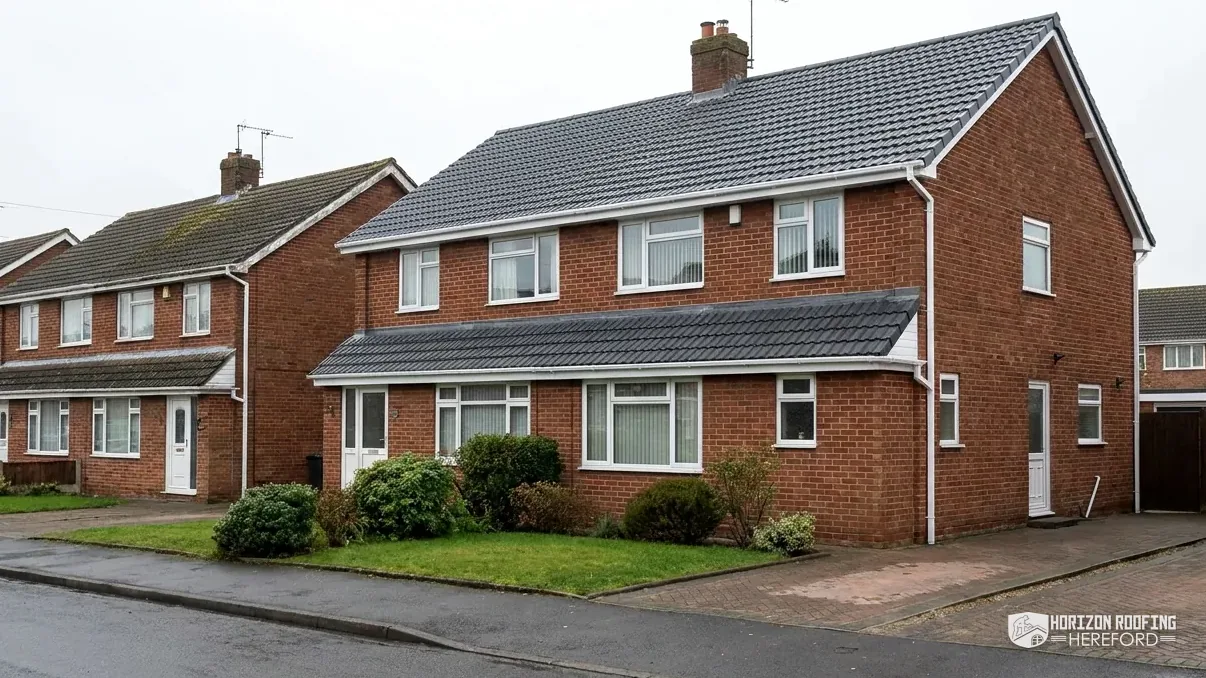
Stone tiles inside the National Park

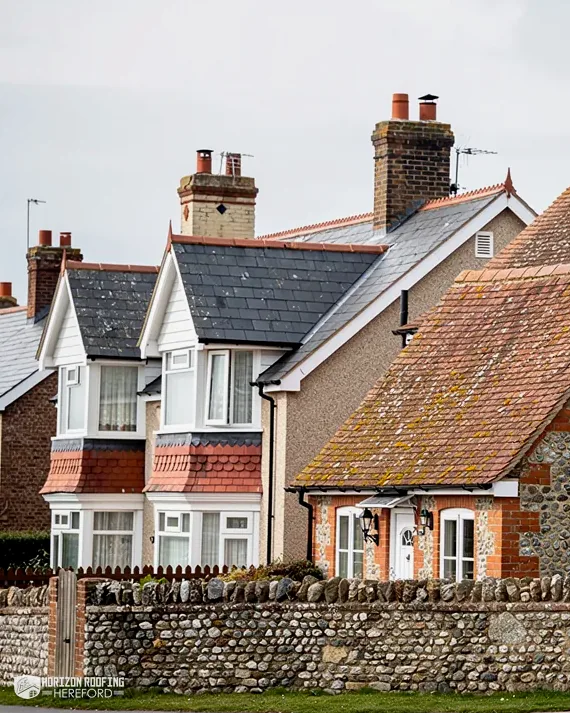
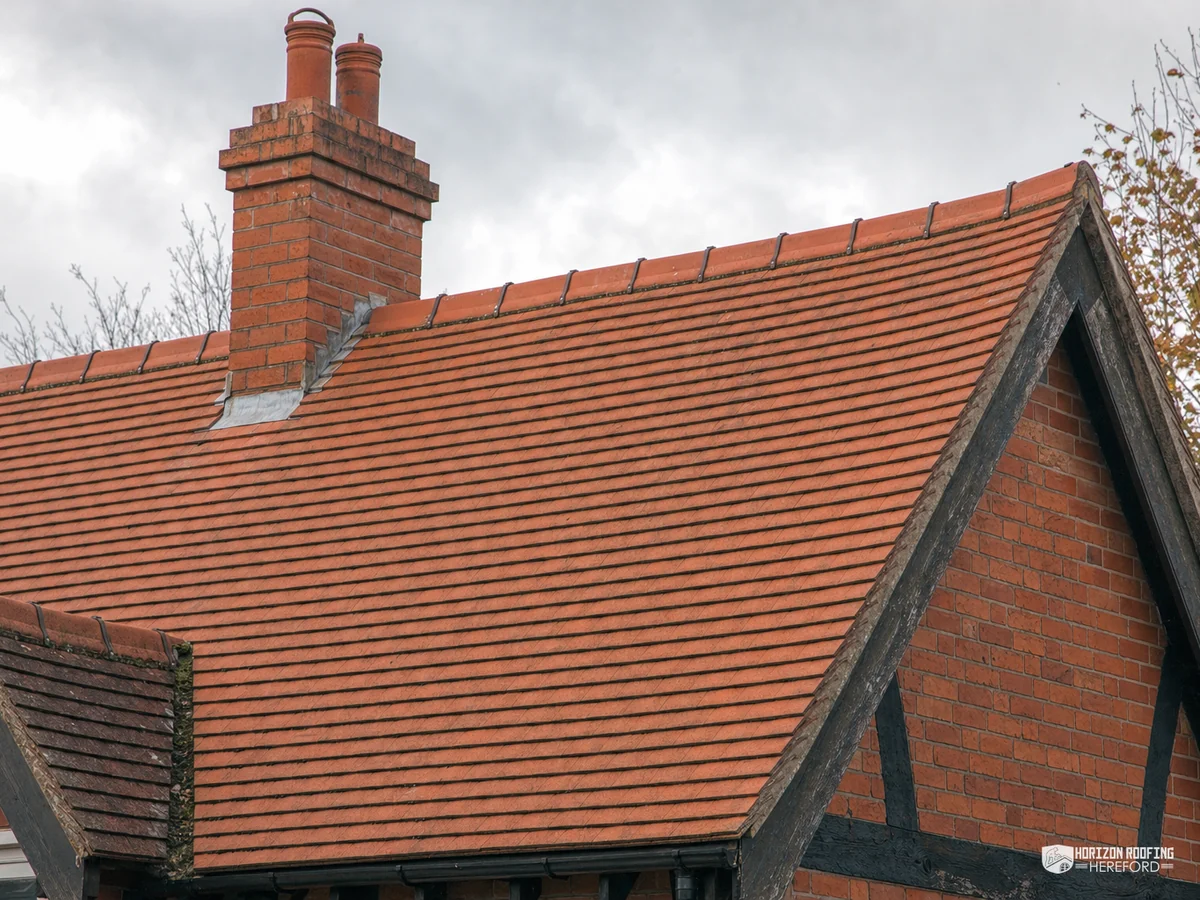
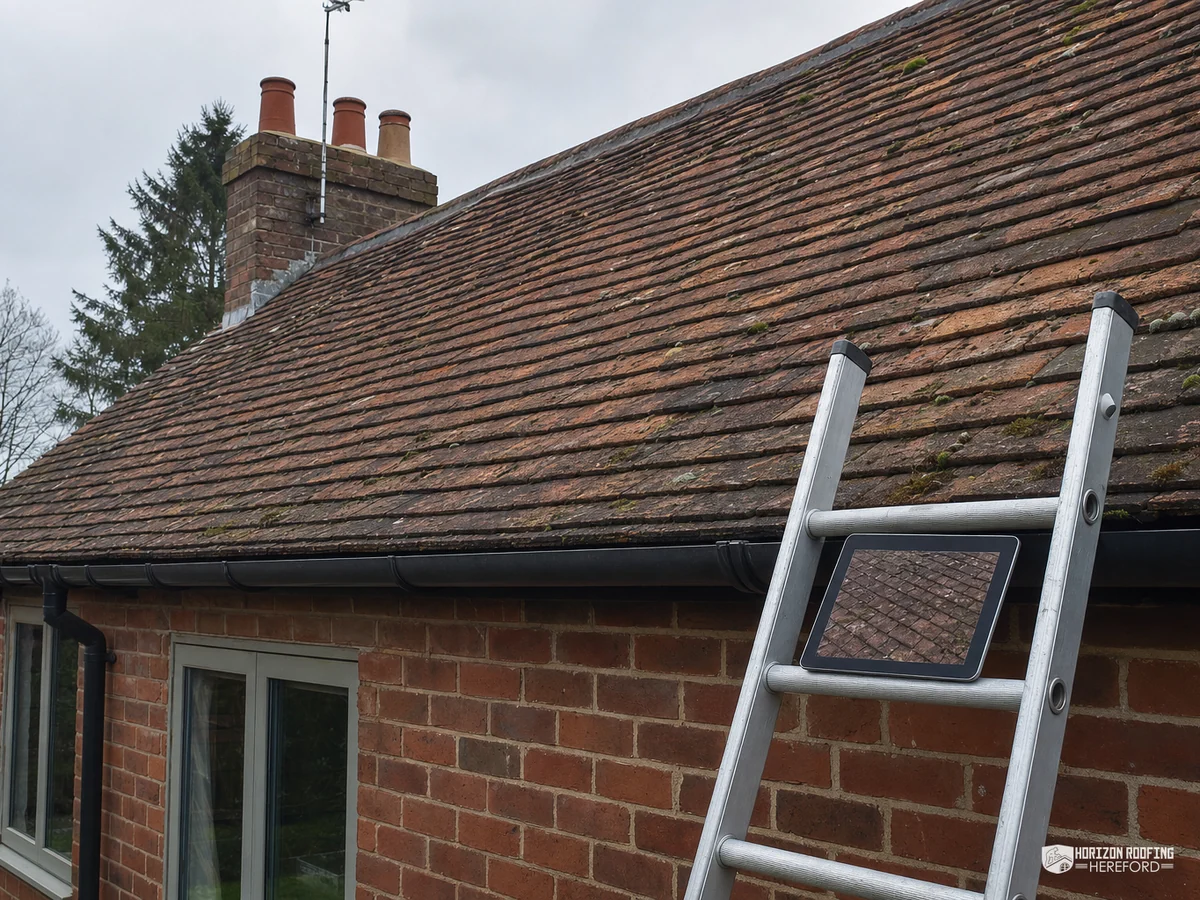
  • Older cottages with weathered clay tile roofs and brick chimneys behind a flint wall
    Stone tile roofs on recordCadw's descriptions of St Michael and Llanvihangel Court both record stone tile roofs.
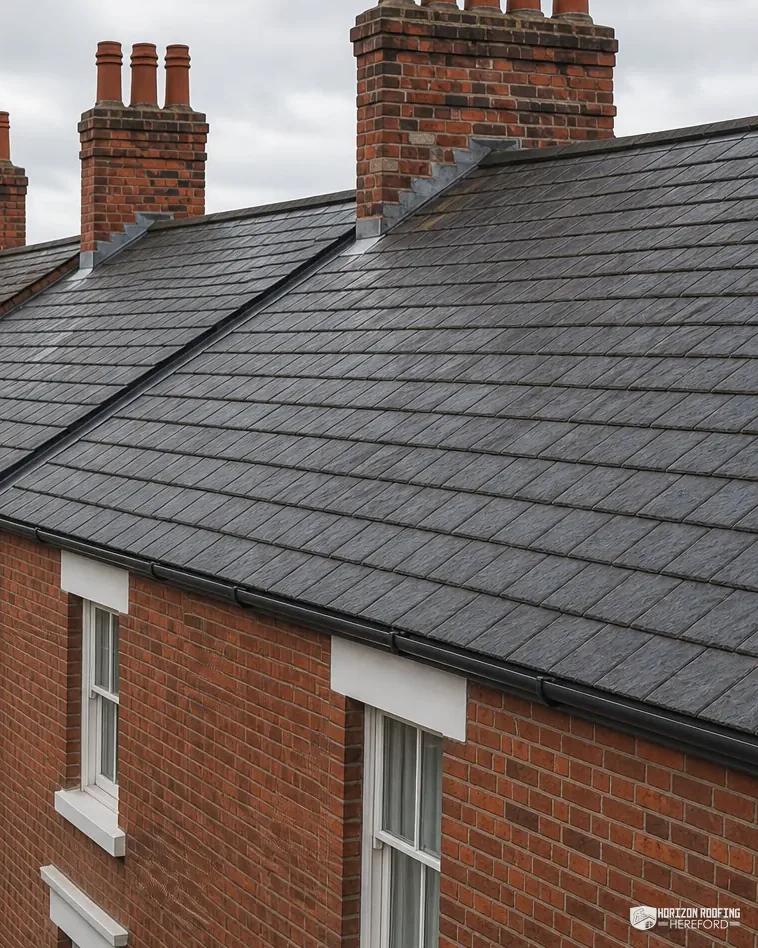
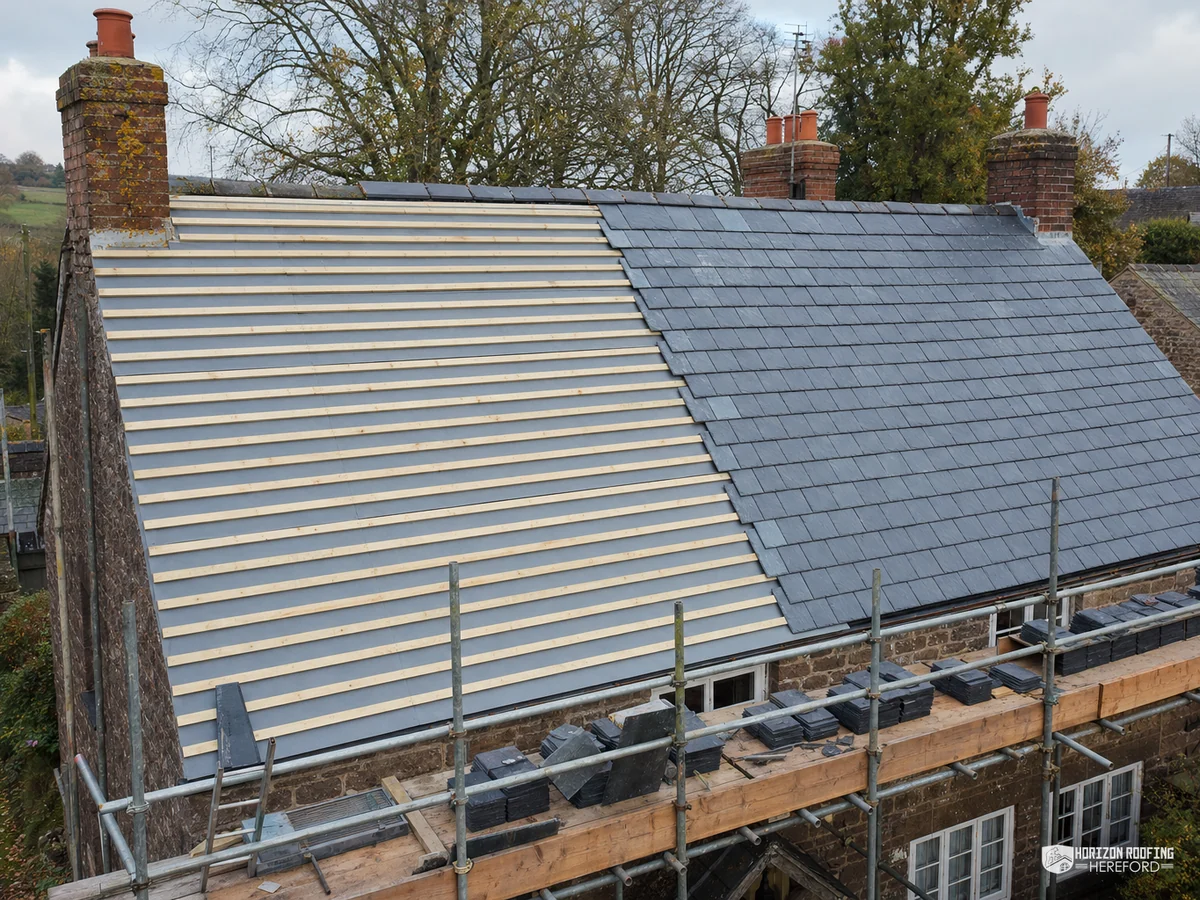
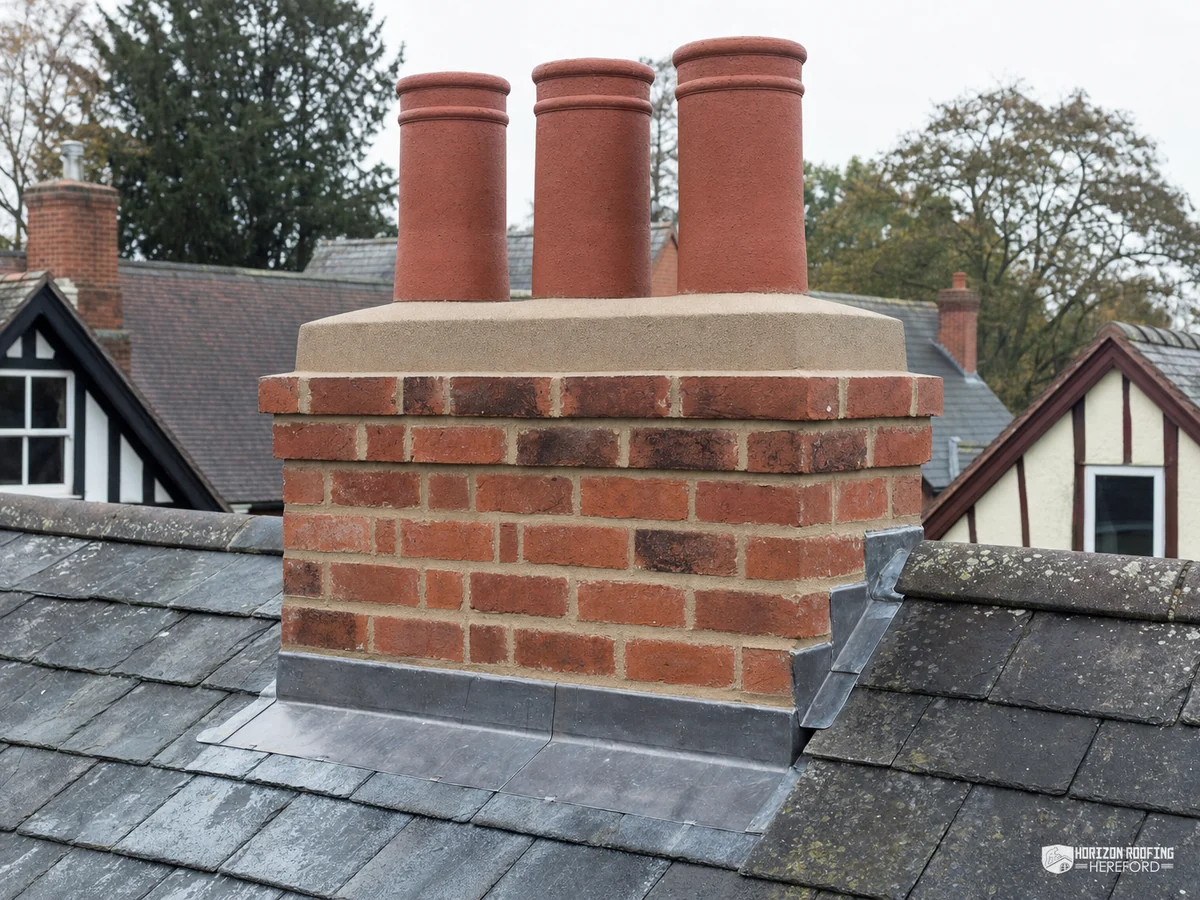
  • Slate roofs and chimney stacks along a red brick Victorian terrace
    A planning authority apartBannau Brycheiniog National Park Authority, not the council, is the planning authority here.
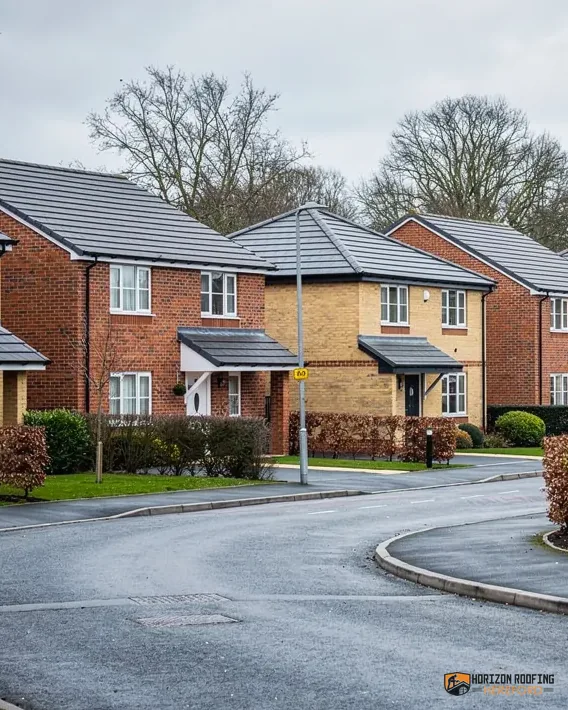
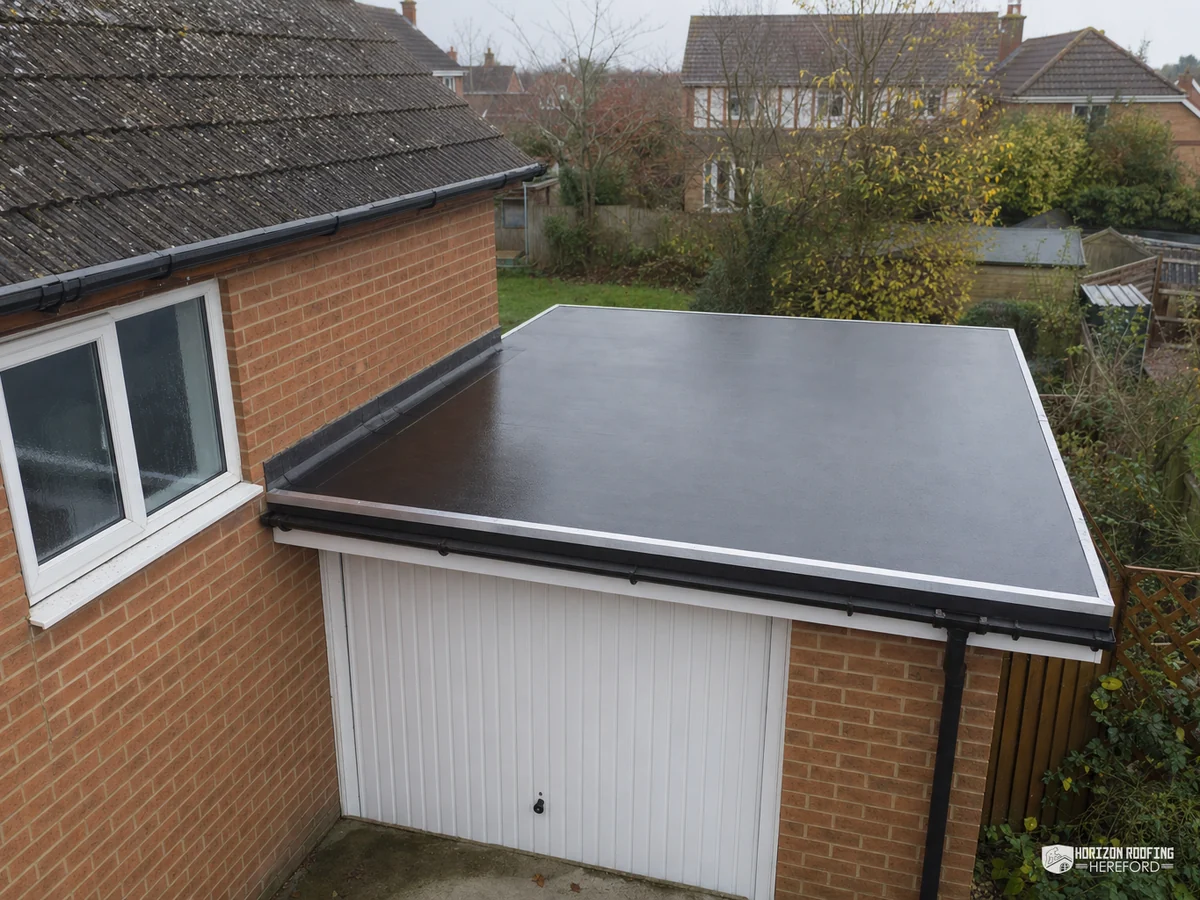
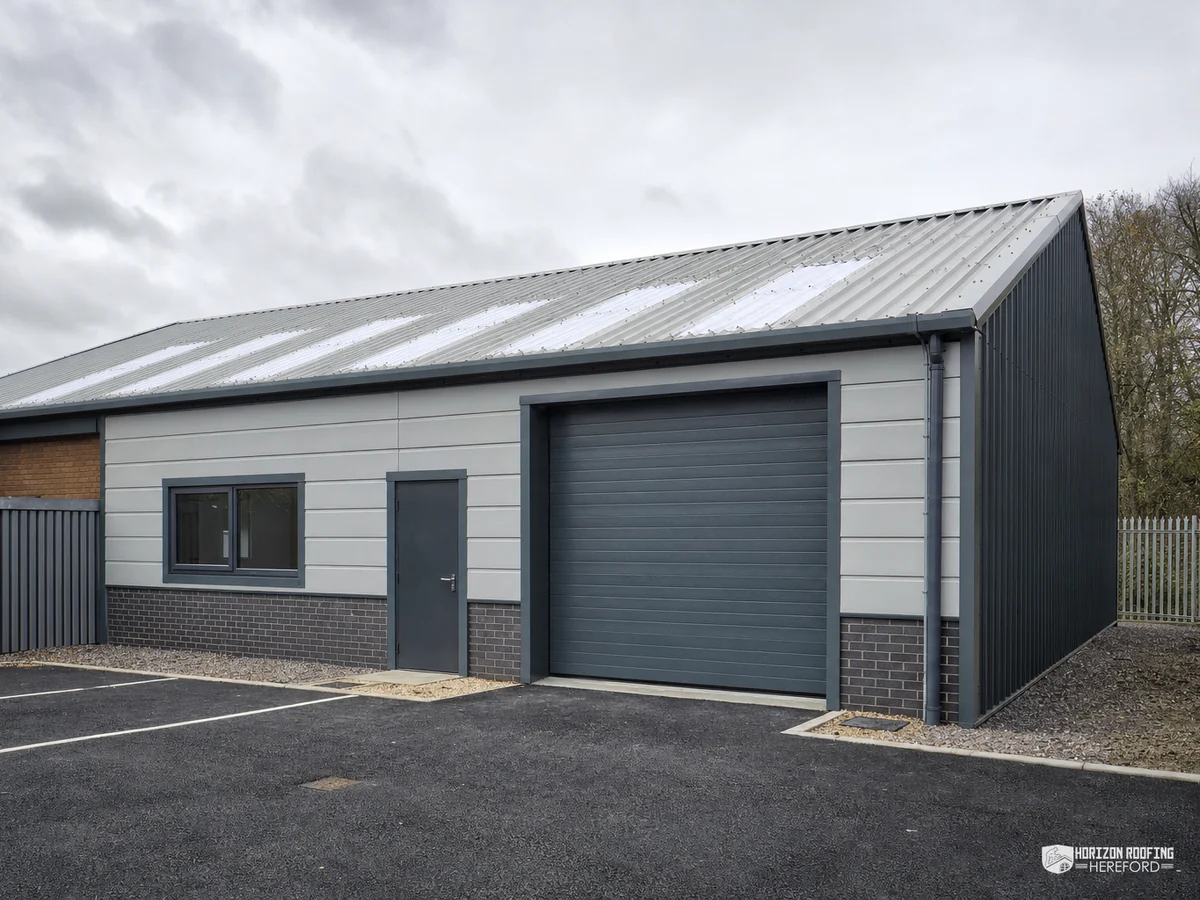
  • Newer homes with grey concrete tile roofs along a curving estate road
    A Grade I court and stablesLlanvihangel Court and its stable block are both Grade I buildings.

Our map around Llanvihangel Crucorney

Llanvihangel Crucorney on a street map, with a dashed circle around the town and the nearest towns we cover. Tiles © Esri; map data © Esri, HERE, Garmin, OpenStreetMap contributors.

Llanvihangel Crucorney roofs, stone tile to verge

Llanvihangel Crucorney surveyed: stone tiles, a National Park and the verge

Survey order here: the stone tile slopes of the church and the Court, then who decides what inside the National Park, then the verge and the approvals that follow a re-roof.

A drawn cut-away section through a Herefordshire border house: the front of the main roof is cut open to show the rafters, underlay, battens and slates, beside a black-and-white timber-framed gable. Numbered, from the ridge down: 1 Stone tiles; 2 National Park; 3 Verge.

Fig. 1 A stone-tiled house cut open, with three Llanvihangel Crucorney callouts numbered from the slope.

Callout 1 of 3

Stone-tiled roofs at the church and the Court

Two Cadw listings describe stone on the roof here. For the Church of St Michael, Grade II, the description reads "Red sandstone rubble with some ashlar dressings, stone tile roofs". For Llanvihangel Court, Grade I, it ends with the words "all the roofs are stone tiled", after noting that only the stair tower is painted now and that the whole house was presumably once rendered and lime-washed. Those are two buildings, and they say nothing about the cottages and farmhouses around them, so our survey reads each roof for itself.

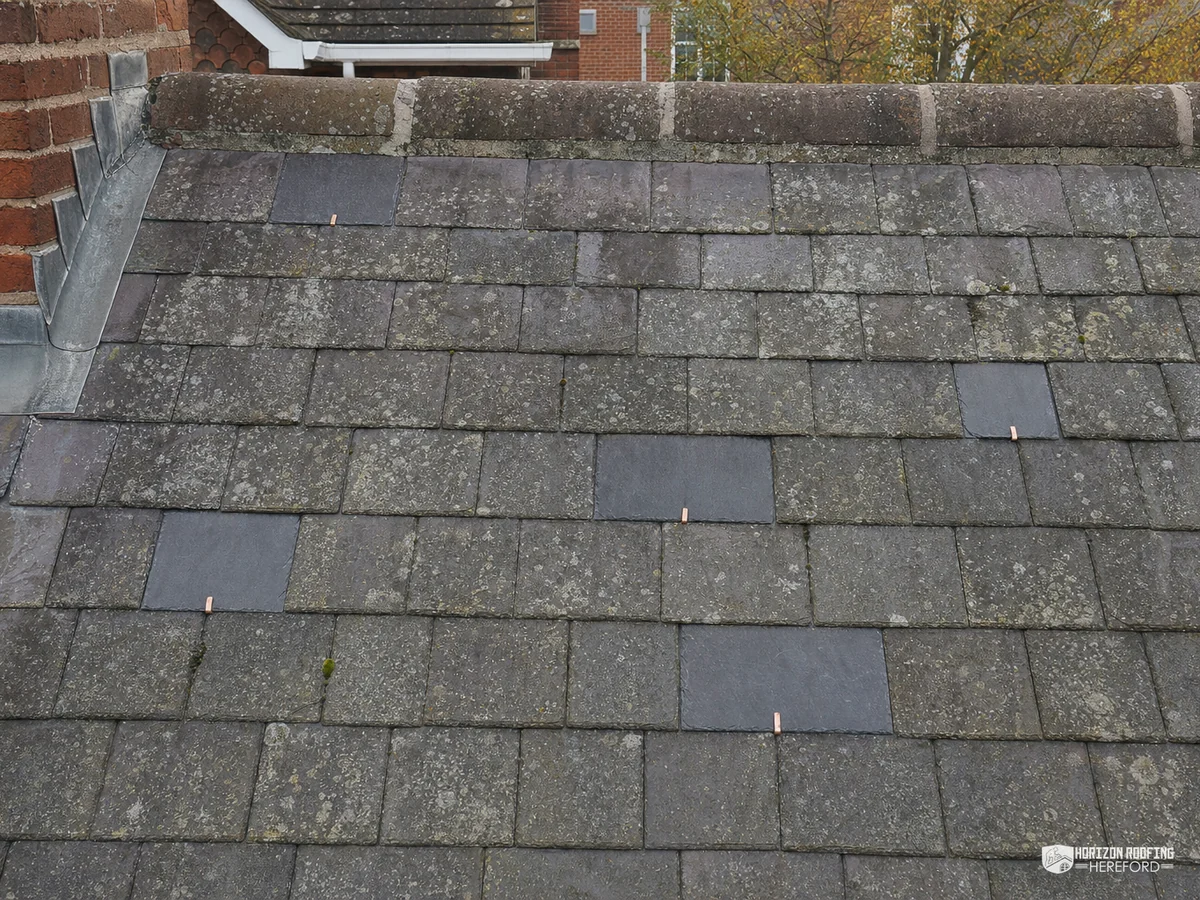
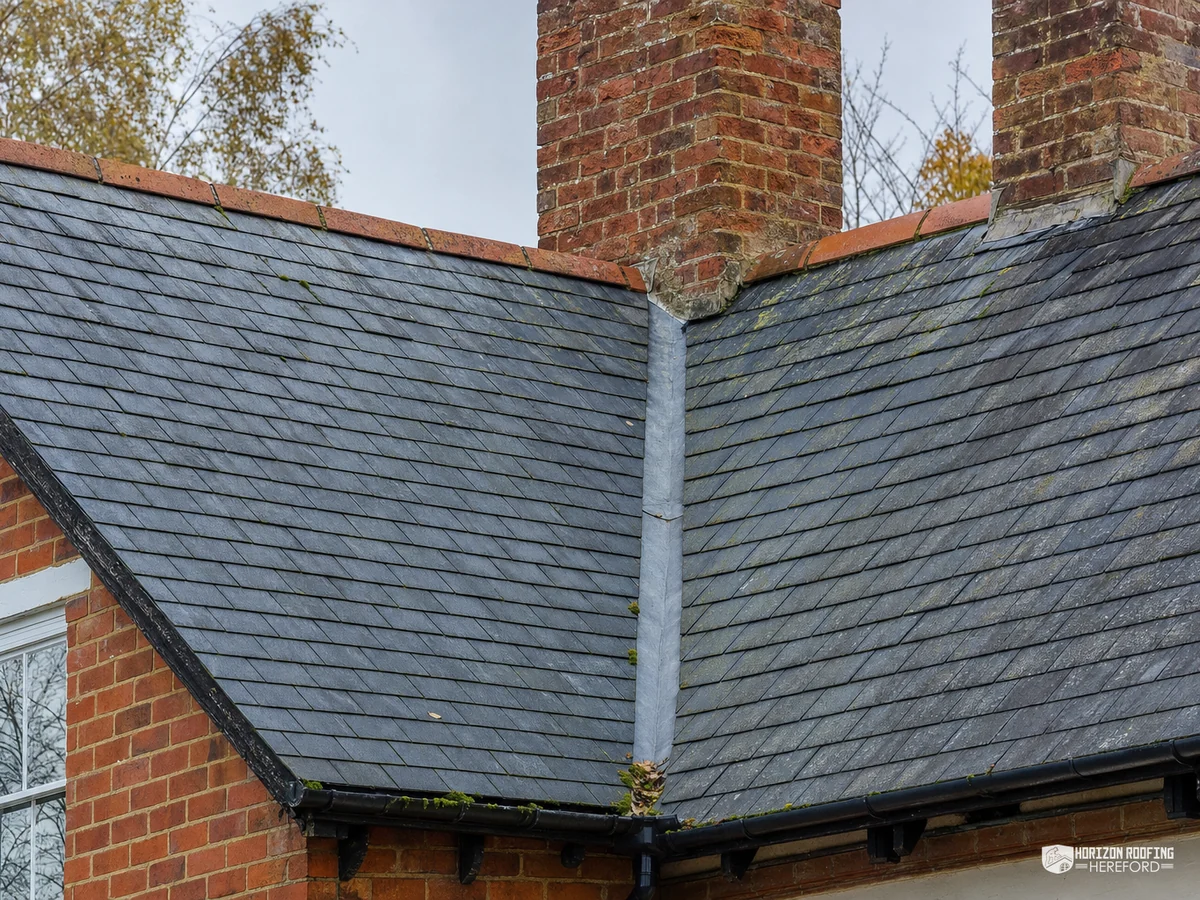
A stone tile is a thin slab of sandstone hung from the battens by a peg or a nail. The courses overlap, and in SPAB's phrase such roofs are "predominantly double-lapped". A stone roof shows its troubles plainly. Tiles delaminate, which is to say they split along their layers. They slip when a peg or nail gives way. The bedding at the ridge and verge wears out. Every fault is photographed up on the roof and numbered in the report.

On the day we walk each slope from the ridge down, then go into the loft and look up at the underside of the roof, because stone tiles that look sound from outside can show daylight or damp from within. A stained batten is noted against the tile above it, and the loft photographs go into the report beside the roof ones.

We lift only the tiles that have failed, keep the sound ones and lay them again at the same gauge, the spacing between courses. A replacement is chosen for thickness, colour and texture. SPAB says "Claims of unavailability or long delivery times should always be checked with the quarries", and we make that call before another covering is proposed. We describe each roof by its condition and never promise an age.

Re-covering follows the Welsh rules. The Welsh Government says re-roofing will in most situations need Building Regulations approval, and that a change of material, slate to tile for example, is likely to need it too. Our roof repairs page covers the smaller jobs that stop short of a re-cover.

Words for a stone tile roof

Stone tile
A thin sandstone slab hung from the battens as a covering
Delamination
A tile splitting along the natural layers of the stone
Gauge
The spacing between one course of tiles and the next
Quoin
A dressed corner stone at the angle of a wall

Stone tells you its troubles plainly: a split along the layers, a slip at the peg, a bedding that has worn out.

Fig. 2 The slopes, drawn close

Callout 2 of 3

Inside the National Park: who decides what

Llanvihangel Crucorney lies inside the Bannau Brycheiniog National Park, designated in 1955. That has one consequence above the others: the planning authority is the National Park Authority, not Monmouthshire County Council. Building control stays with the council, so a single roof can involve both bodies, each for its own job. An application for work inside the Park is addressed to the Authority and not to the council in Usk. We cannot speak for the Authority, so for planning questions our advice is to check with the National Park Authority itself.

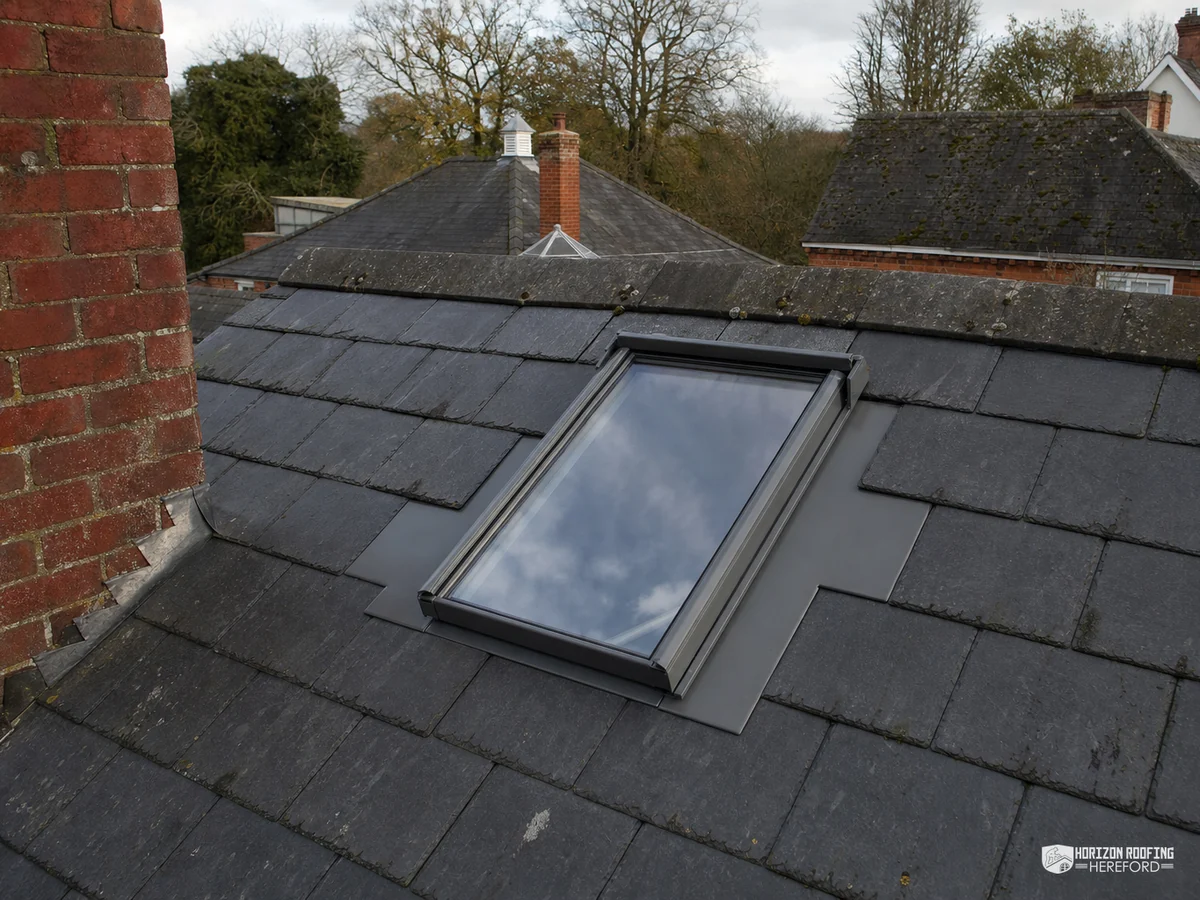
The Park is article 1(5) land in Welsh planning law, which means a new roof light or dormer is not permitted development here. Both need planning permission, and our planning guide for roof windows sets out the detail. A repair is a different matter. Welsh permitted development covers a change of covering when the new materials match the appearance of the existing ones so far as practicable, so a like-for-like stone repair stays inside it while a move to another material is a question for the Authority.

Conservation areas are the Authority's to list. Check Bannau Brycheiniog National Park Authority's own conservation area list against your street. Then check whether an Article 4 direction applies with Bannau Brycheiniog National Park Authority. Where a listing or a conservation area is in play, the way the roof looks becomes a planning matter and the Authority decides.

Cadw's records name Llanvihangel Court as Grade I (record 1919, designated 6 May 1952), its Stable Block as Grade I (record 19288), Millbrook as Grade II* (record 2858) and the Church of St Michael as Grade II (record 1943, designated 9 January 1956). Work on a listed building needs authorisation under section 88 of the Historic Environment (Wales) Act 2023, and the consent that gives it is set out in section 89. In Wales a church in use escapes listed building consent only if it is a Church in Wales, Roman Catholic or Methodist building, a Baptist chapel held by one of the two named Baptist Union corporations, or within the Church of England's faculty jurisdiction, so the route for St Michael's is settled with the church at the outset.

Building control for a Llanvihangel Crucorney roof is the job of Monmouthshire County Council Building Control (County Hall, Usk), though a registered building control approver may be used instead. Our listed and heritage roofing page covers protected roofs.

Two bodies, one roof

Who is the planning authority for a roof in Llanvihangel Crucorney?

Bannau Brycheiniog National Park Authority is, because the village is inside the Park. Monmouthshire County Council still handles building control. Check with the National Park Authority before changing how a roof looks, and ask the council's building control team about structure and insulation.

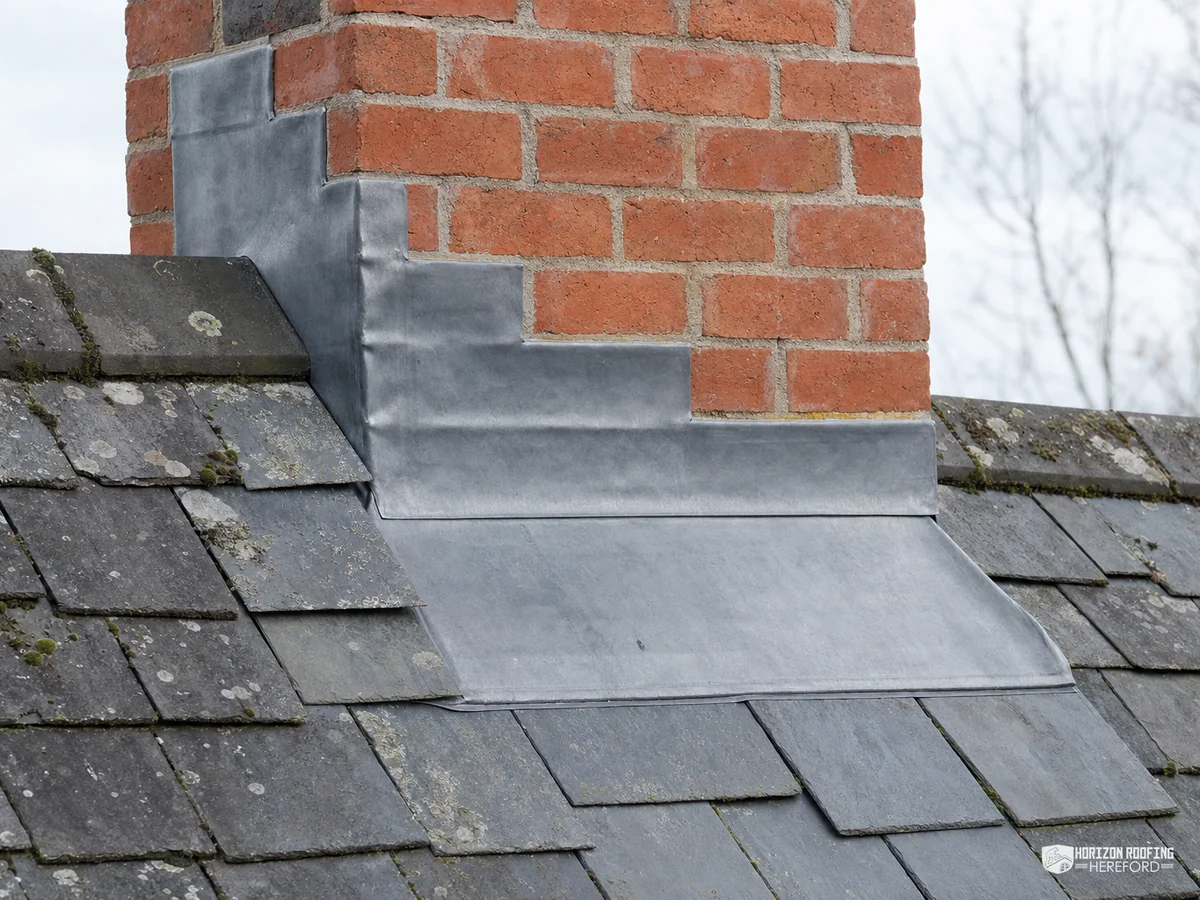
Fig. 3 Wall abutments, drawn close

Callout 3 of 3

The verge and the rules that follow a re-roof

Callout three takes the verge, where the stone tiles finish against a gable wall. On a stone tile roof the verge is bedded in mortar, and the bedding wears out before the tiles do. We look for gaps under the edge tiles, for mortar that has fallen away and for water staining on the gable wall below, because any of these means rain is getting behind the covering at its edge. Edge tiles take more wind than tiles mid-slope, so we press each one to see if it rocks.

If the whole covering is renewed, insulation joins the job. In the Welsh Approved Document L, Table 4.1 sets a roof added to an existing dwelling at 0.13, and Table 11.1 puts a renovated roof at 0.16, with 0.35 as the limit where 0.16 cannot be achieved. The renovation figure applies to the whole element when more than 50% of it is renovated. A newer Welsh edition of the document begins on 4 March 2027.

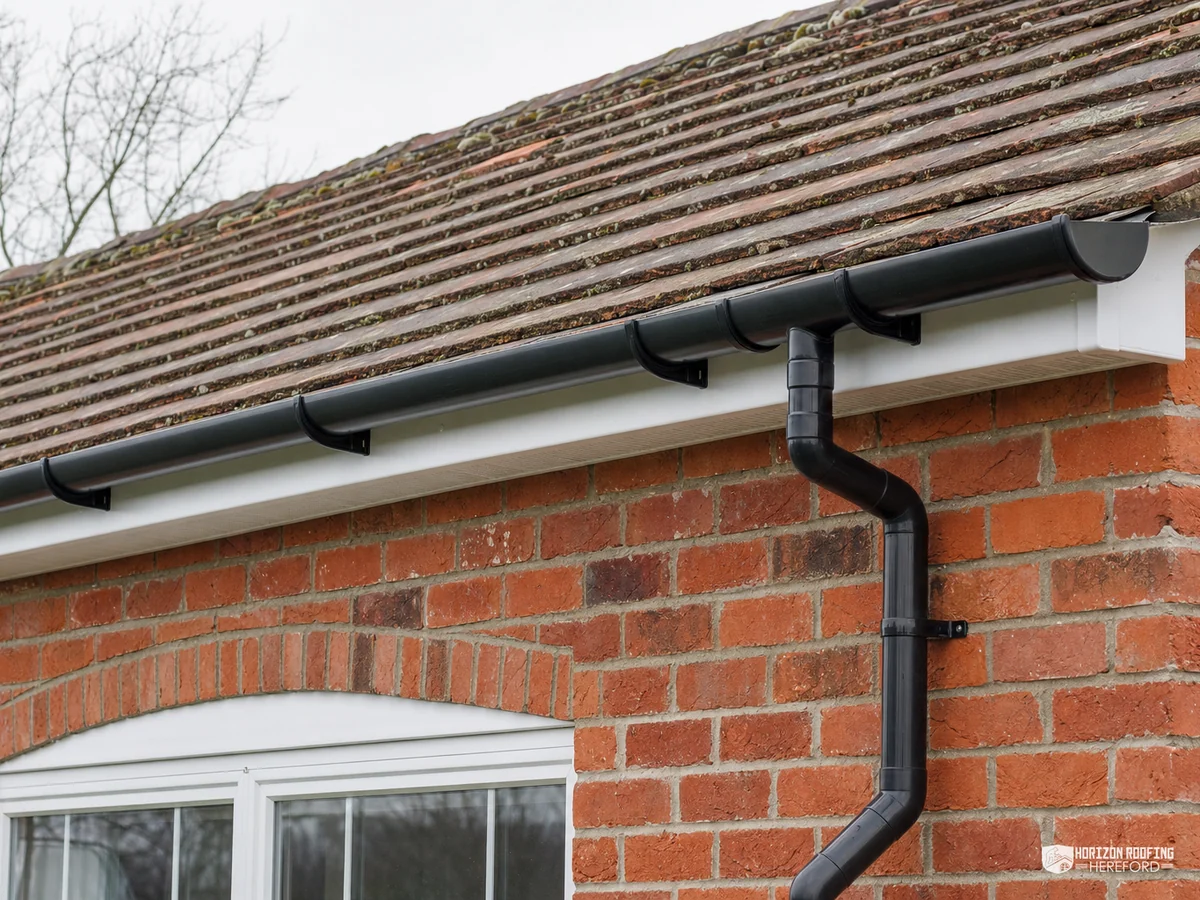
Any scaffold standing on the public road needs a section 169 licence under the Highways Act 1980, and we arrange the licence with our scaffolder. The licensing body is Monmouthshire County Council, and the National Park Authority has no part in that. If a gable end faces straight onto the lane, poles may land on the highway, so the frontage is looked at during the survey and not on the day. At the lower edge, the eaves course is laid double to throw water clear of the wall, and the gutter beneath has to catch it. Where the gutter has sagged, water misses it and runs down the stone, so we note the fall and the brackets as we go.

When the scaffold comes down, tiles that cannot be reused are cleared and the waste leaves with us. A tile that is sound but chipped is kept as a spare for later repairs. Our roof replacement page sets out the whole-roof process from survey to sign-off.

A stone tile verge at Llanvihangel Crucorney

SoundEdge tiles firm, bedding intact, gable wall dry
Needs workEdge tiles rock, bedding gone, stain on the gable

Llanvihangel Crucorney roofs: stone tile, the Park and consent

How is a stone tile roof at Llanvihangel Crucorney repaired?

We lift only the tiles that have split, slipped or lost their fixings, keep the sound ones and lay them again at the same gauge. Replacements are chosen for thickness, colour and texture, and we contact the quarries before any other covering is suggested. Every fault is photographed on the roof, so your report is built from pictures. A single written total follows the survey, and the site is cleared afterwards.

Which body handles planning for a house in Llanvihangel Crucorney?

Bannau Brycheiniog National Park Authority, because the village lies inside the Park. Monmouthshire County Council remains the building control body, so structure and insulation go to the council while the look of the roof goes to the Authority, and a repair can need an answer from each. Put any change you have in mind to the National Park Authority first, before a design is drawn.

Can I add a roof light or dormer to a Llanvihangel Crucorney house?

Inside the Park, a roof light or dormer is not permitted development, because the land is article 1(5) land. Both need planning permission from the National Park Authority, and a roof light also brings Building Regulations approval from building control. A listed house needs listed building consent as well. The planning guide for roof windows on this site is worth reading before a design is commissioned.

Is my Llanvihangel Crucorney house in a conservation area?

The way to find out is to check Bannau Brycheiniog National Park Authority's own conservation area list against your address. Ask the Authority too whether an Article 4 direction applies, since such a direction can remove permitted development rights. Do this before you choose a covering, a roof light or a dormer, because the reply may alter your options, and file the reply with your survey papers, so each later decision can point back to it.

Is Llanvihangel Court listed, and does that affect nearby roofs?

Cadw's records give Llanvihangel Court as Grade I (record 1919, designated 6 May 1952), with its Stable Block Grade I (record 19288) and Millbrook Grade II* (record 2858). A neighbour's listing does not bind your house, but it is worth checking your own address on Cadw's list, so you know where your own house stands before work is priced. For a listed building, section 88 of the 2023 Act requires works to be authorised.

Which council deals with scaffold licences and building control at Llanvihangel Crucorney?

Monmouthshire County Council deals with both. We arrange the licence with our scaffolder. Monmouthshire County Council's form lists a £108 administration fee, then £27 per week more to extend it, and wants at least 5 working days' lead time. Where a Llanvihangel Crucorney house faces the main road, the licence is in place before dates are set. Your written total already counts the scaffold, so the figure you sign covers it, and the survey tells you early whether the frontage needs a licence at all.

Book a stone-tile survey at Llanvihangel Crucorney

Tell us which side of the house shows the problem, include a snapshot, and expect a survey date back.

10-year workmanship guarantee, in writing