
01432 610152 Get a quote Call 01432 610152

Roofers in Mardy

Roof repairs and re-roofs in Mardy, on the edge of the Bannau Brycheiniog National Park.

A Mardy survey runs from the ridge to the gutter. You see photographs of each fault, then receive one total in writing.

Get a free quoteCall 01432 610152

Slate, a National Park boundary and Abergavenny nearby

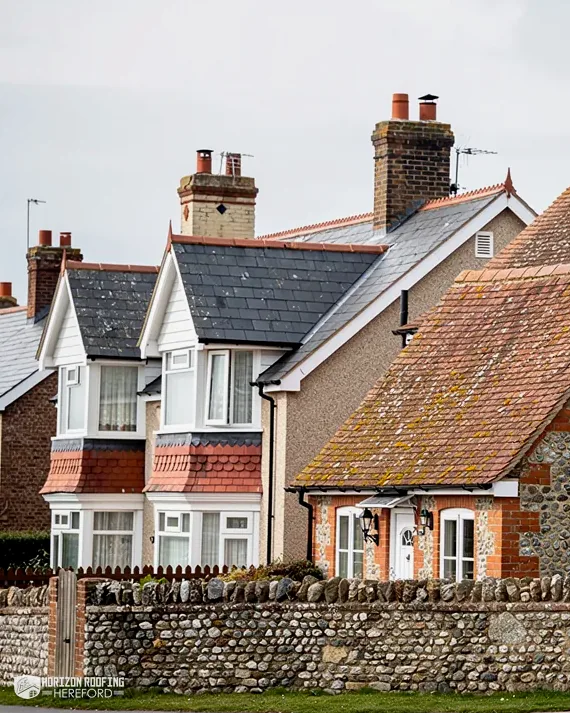
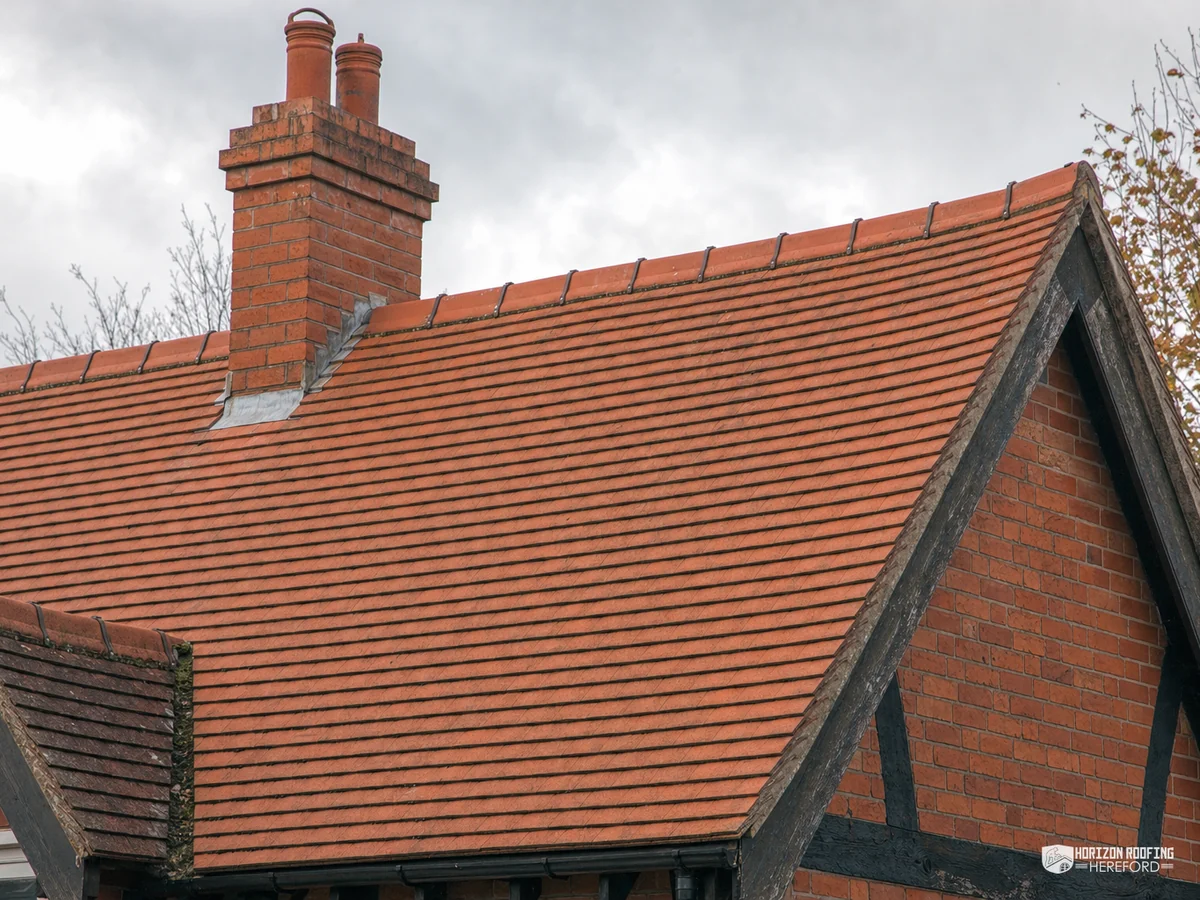
  • Older cottages with weathered clay tile roofs and brick chimneys behind a flint wall
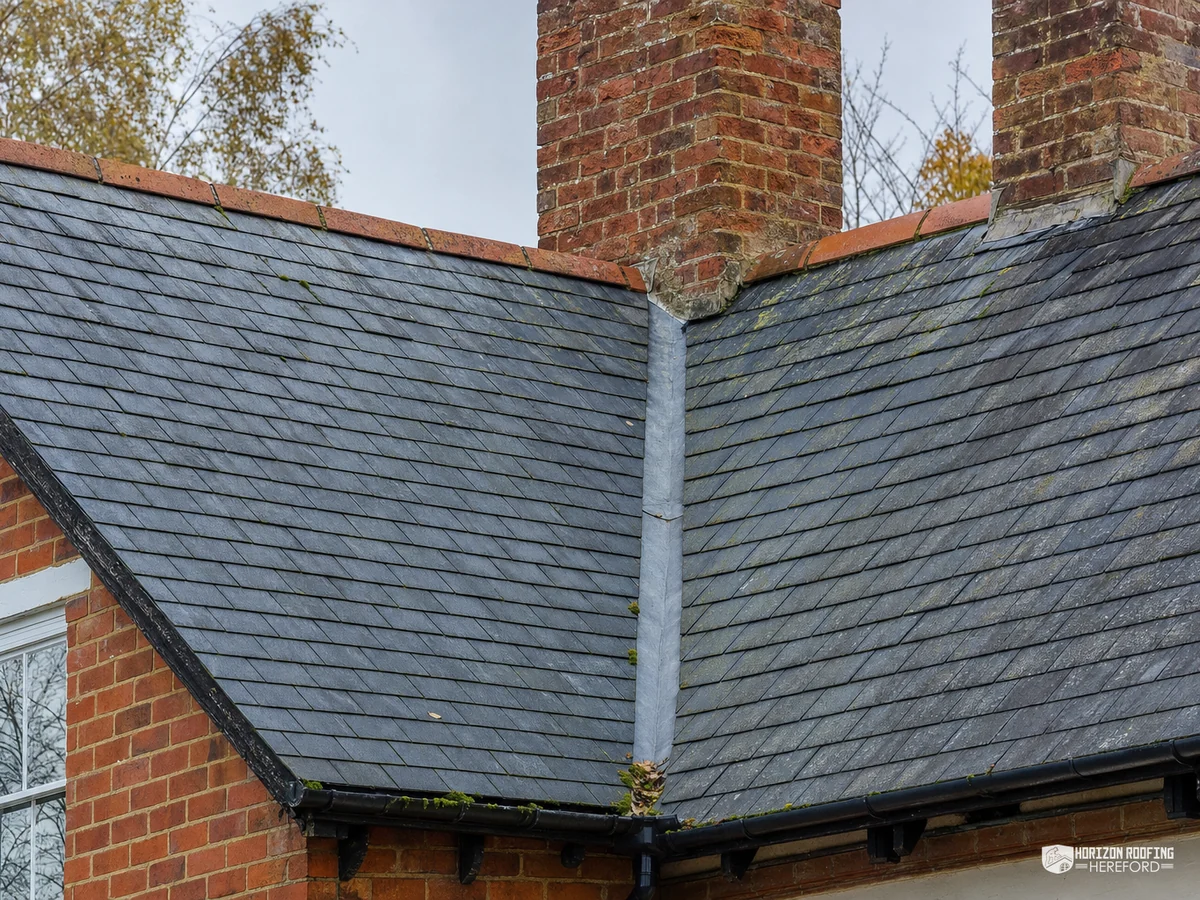
    Purple and grey banded slateCadw's listing records a Welsh slate roof banded in purple and grey.
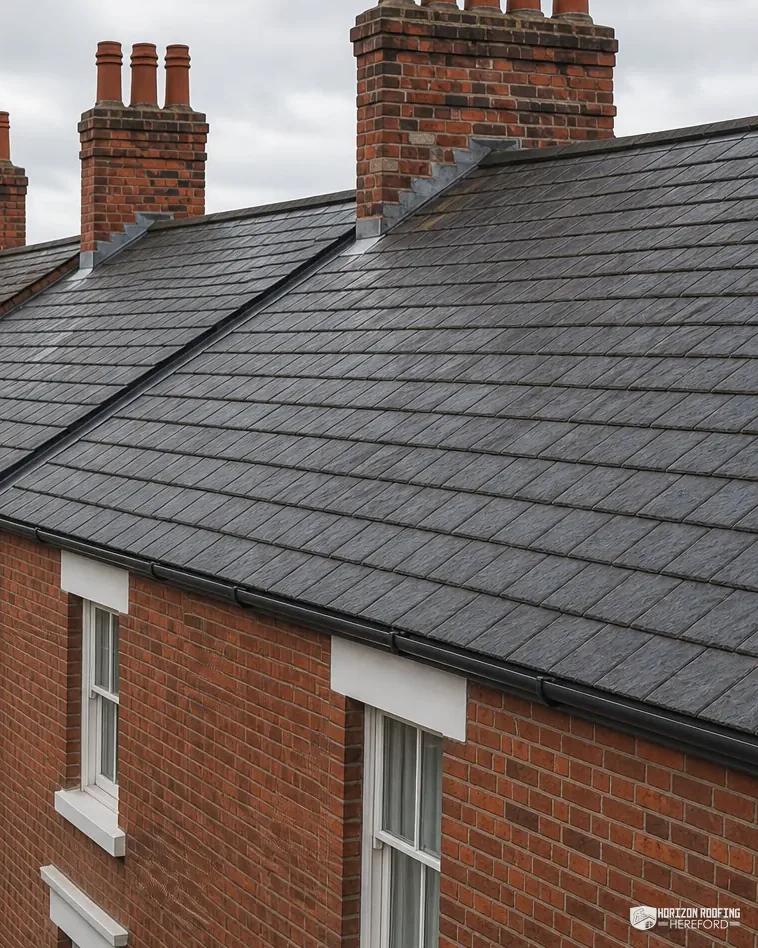
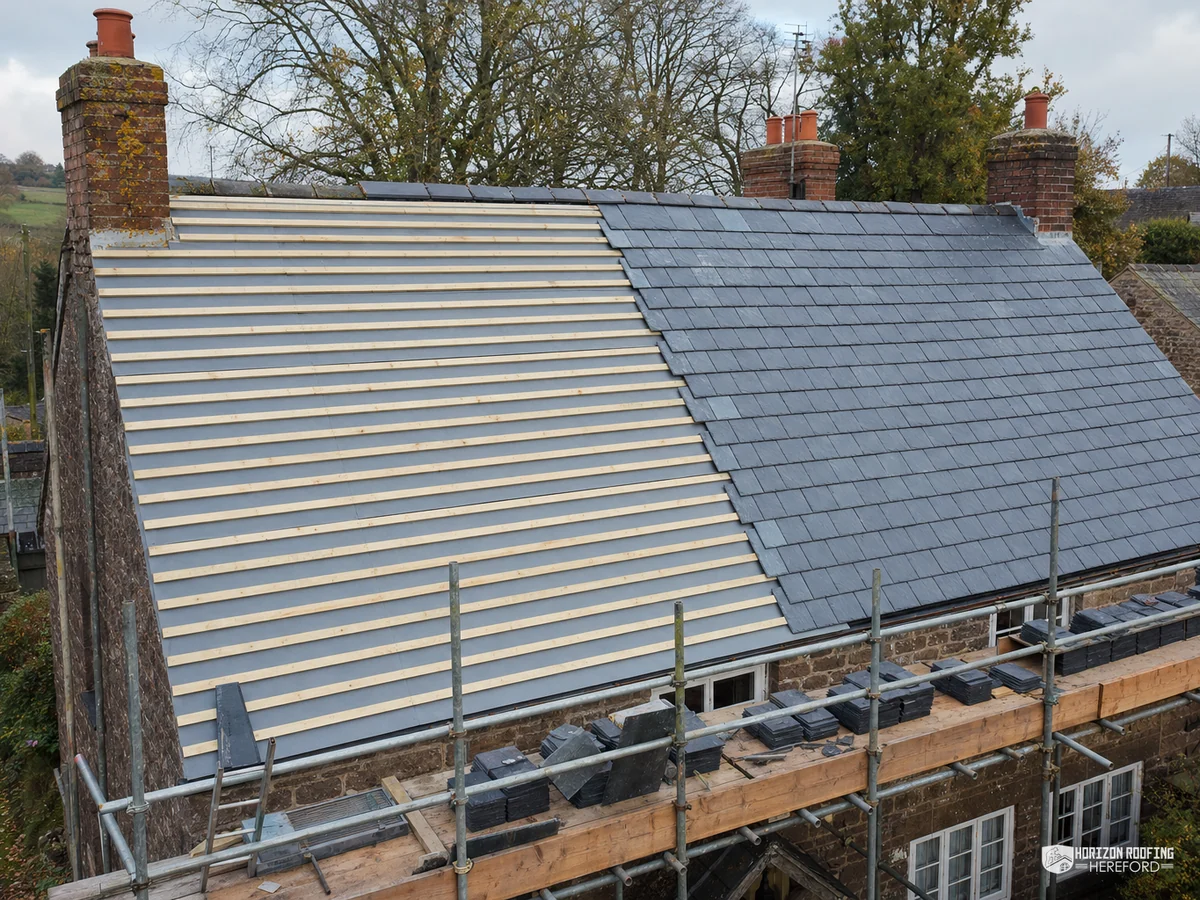
  • Slate roofs and chimney stacks along a red brick Victorian terrace
    The National Park boundaryAddresses inside Bannau Brycheiniog go to the National Park Authority for planning.
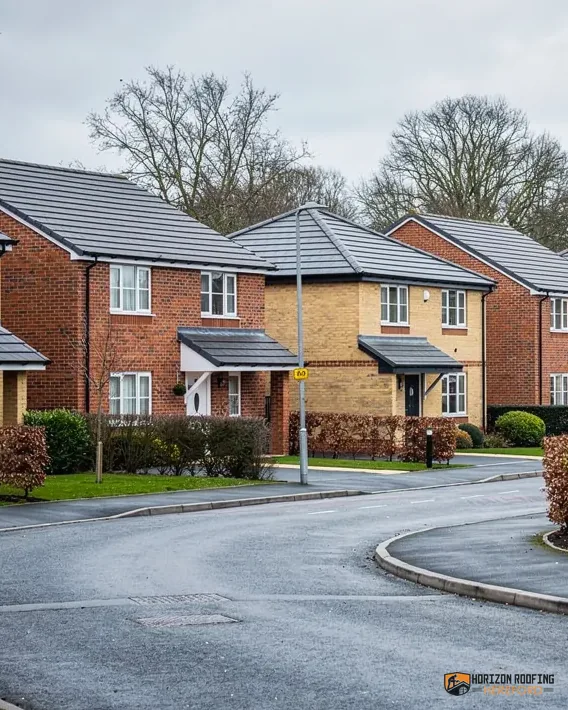
  • Newer homes with grey concrete tile roofs along a curving estate road
    Conservation areas close byAbergavenny and Pen-y-Fal conservation areas lie nearby on the council's list.

Mardy in the Hereford radius

Mardy on a street map, with a dashed circle around the town and the nearest towns we cover. Tiles © Esri; map data © Esri, HERE, Garmin, OpenStreetMap contributors.

Mardy roofs, slate to boundary

Slate bands, the roof edge and a National Park boundary to check

Our survey makes three stops in Mardy: the ridge and its wildlife questions, the slate slopes with their banded courses, then the eaves and the planning boundary, where the village meets Bannau Brycheiniog.

A drawn cut-away section through a Herefordshire border house: the front of the main roof is cut open to show the rafters, underlay, battens and slates, beside a black-and-white timber-framed gable. Numbered, from the ridge down: 1 Ridge and wildlife; 2 Banded slate; 3 Eaves and boundary.

Fig. 1 Mardy roof section: ridge, slope and eaves numbered in survey order.

Callout 1 of 3

The ridge, and what may be living under it

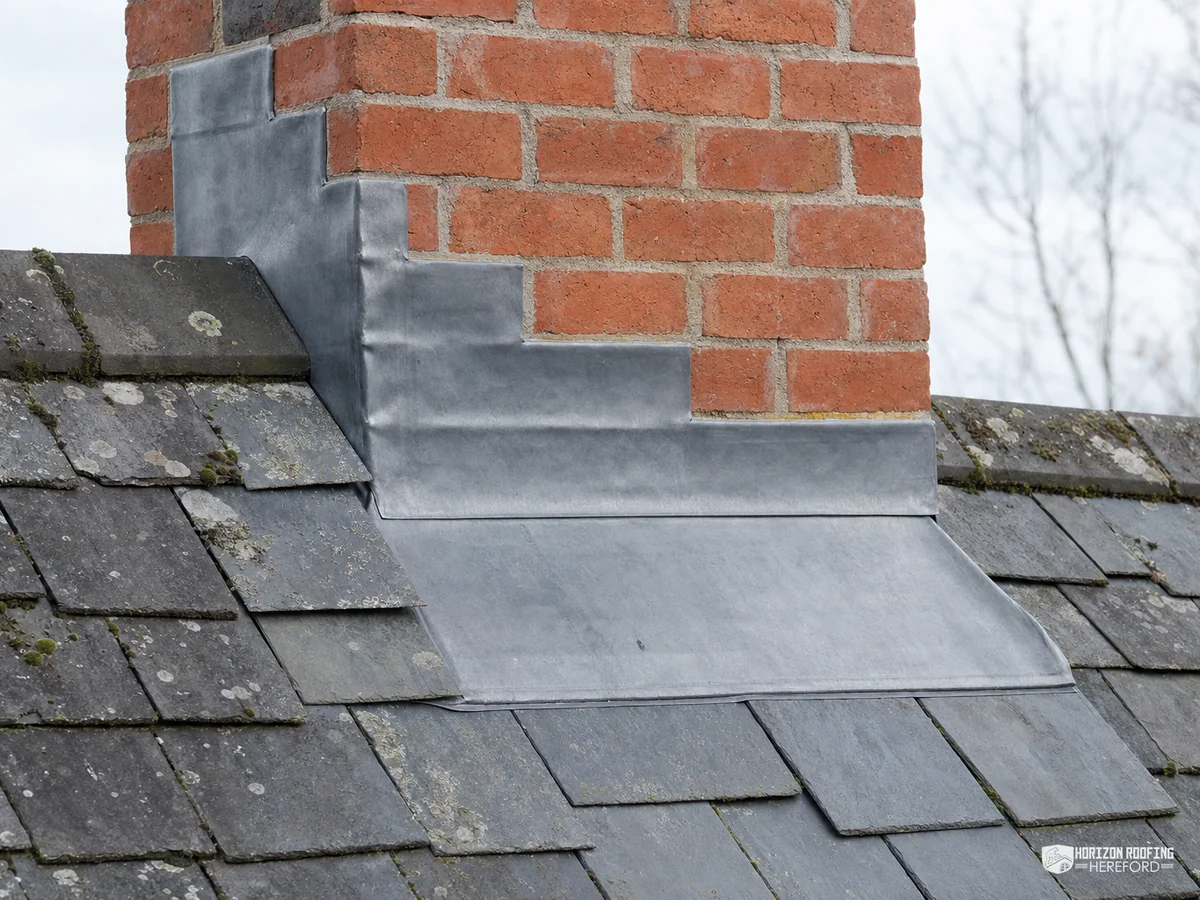
On a Mardy house we meet the ridge twice: first from the lane, to see whether the line sags, then from the ladder, to test each cap by hand. A ridge is where the two slopes finish against each other under a row of cap pieces, and the joint below them takes water from both sides. Loose caps, crumbled bedding and gaps at the gable ends are the faults we look for, and each one is photographed where it sits, with a second picture after the repair. Wind can lift the verge at a gable end as readily as it lifts a loose cap, so the two are checked together. Because the village sits close to open country, we also look for what has made a home under the covering before anything is lifted. From the loft we follow the ridge board and the rafters with a torch, watching for pale daylight and dark water staining along the timbers, which show faults that cannot be seen from outside.

Wildlife law bears on that. The Wildlife and Countryside Act 1981, section 1, makes it an offence to "intentionally" take, damage or destroy a wild bird's nest while it is in use or being built. For bats, section 9(4) covers disturbing one in a place it uses for shelter when done "intentionally or recklessly", and regulation 43 of the 2017 Habitats Regulations is stricter still: harm to a roost is an offence whether or not it was meant. In Wales a licence for work affecting bats comes from Natural Resources Wales, whose guidance covers every bat species and the roosts they use. If we find droppings, a nest or a bat in the loft, work stops at that point and you are told what the next step is.

Sound caps stay. A loose one is rebedded and mechanically fixed, since mortar by itself no longer counts as enough to secure a roof covering. In Wales the Building Regulations question for a repair is mostly one of scale: the Welsh Government says re-roofing "In most situations" needs approval, and its roof page names more than 25 per cent of the roof area as the line above which upgrading the insulation is normally expected. A ridge repair sits well below that. Because the work happens at height, we also agree where the ladders and any tower will stand before the day. Our roof repairs page explains how we handle leaks, loose caps and emergency make-safe.

Checked at a Mardy ridge

  • Caps that shift when pressed
  • Bedding cracked or missing at joints
  • Gable ends where the cap meets the verge
  • Droppings, nests or roosts under the covering
  • Daylight visible from the loft at the ridge

Before a cap is lifted, the loft gets a torch and a careful look.

Fig. 2 The ridge, drawn close

Callout 2 of 3

Banded slate: keeping the purple and grey in order

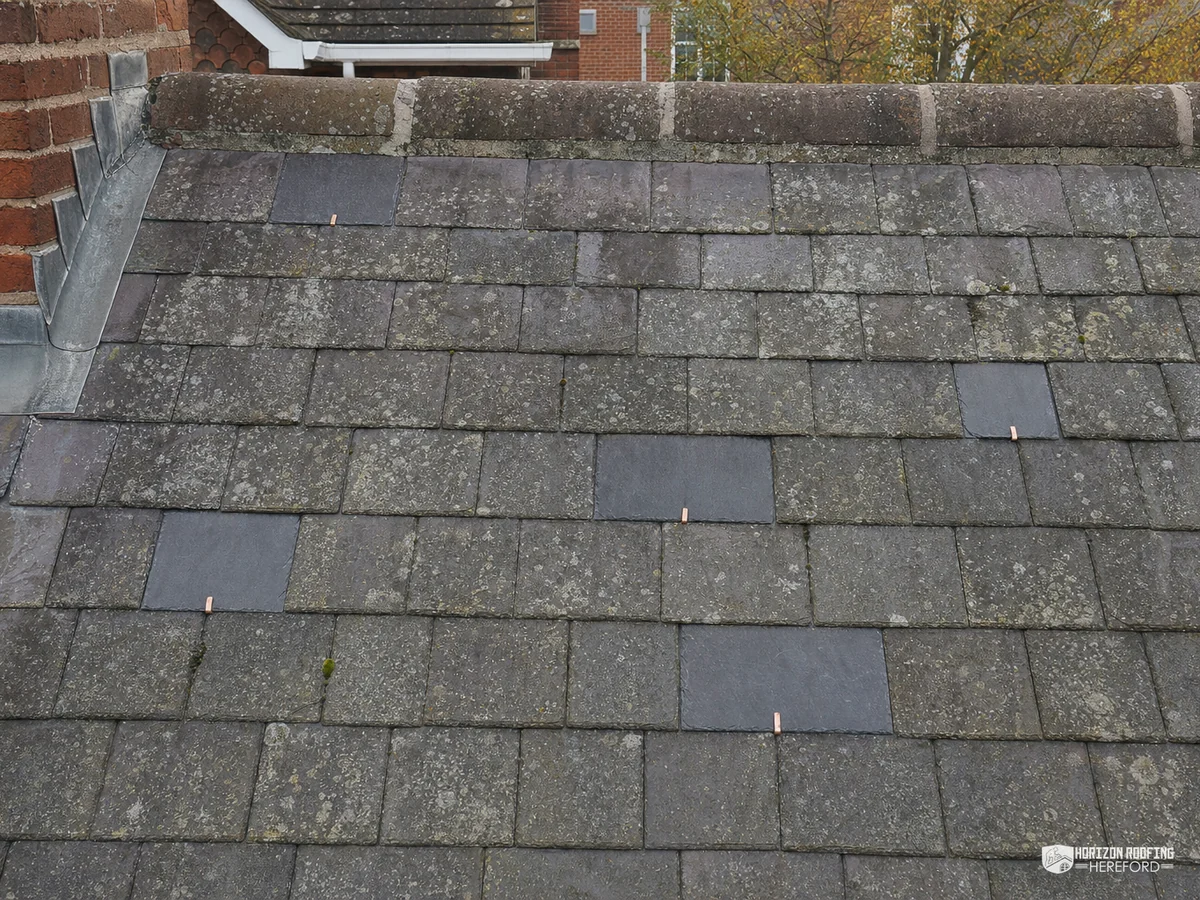
Cadw's listing description of St Teilo's House (Grade II, record 19320, designated 5 February 1998) records a "Welsh slate roof banded in purple and grey". Banding means the slates are laid in horizontal stripes of colour, and the stripes are part of how the house looks. That makes repair a sorting job as much as a fixing job. When a few slates have slipped, we keep the sound ones in the order they came off, replace the cracked ones with slates of the same tone, and set each course back so the bands run true. A repair that ignores the banding reads like a stain across the roof, and we photograph the pattern before and after so you can compare them. Sorting happens on the ground, course by course, with each pile laid out so you can see how many slates are sound enough to go back.

Slate is a long-lived covering. HomeBuilding puts Welsh slate at "100+ years", Spanish slate at "75-100 years" and reclaimed Welsh slate at "50-80 years", and each is a typical range, not a promise. In double-lapped slating each slate is overlapped by the courses above, so a slipped unit can have a neighbour with a failing fixing. Where the survey finds more than a few such neighbours, the honest answer may be a strip and relay of that slope, with the sound slates reused. Where it finds only the odd one, a repair will do. Reclaimed slate is an option for the odd replacement, since it carries the weathering of the original; HomeBuilding's lower range for reclaimed Welsh slate is the reason we check each unit for sound edges and a good fixing hole before it goes on.

Changing the covering is a different decision. Slate to tiles is the Welsh Government's own example of a different material, and it warns that Building Regulations approval is likely, since the checks cover structure, fire performance and energy use. For existing homes the Welsh Approved Document L allows a roof window 1.4 W/m²K or alternatively WER Band B as the minimum, and a rooflight 2.2, and a new Welsh edition applies from 4 March 2027. We would sooner keep the banded slate that gives the house its character, and the survey says plainly when that stops being possible. Our slate roofing page covers refixing and relaying in detail.

A banding question

Can a repair match purple and grey bands?

Yes, when sound slates are reused in their original order and replacements are chosen by tone against the existing courses. We hold samples against the roof in daylight, photograph the proposed pattern, and agree it with you before any new slate is fixed.

Fig. 3 The slopes, drawn close

Callout 3 of 3

Eaves, gutters and where the Park boundary falls

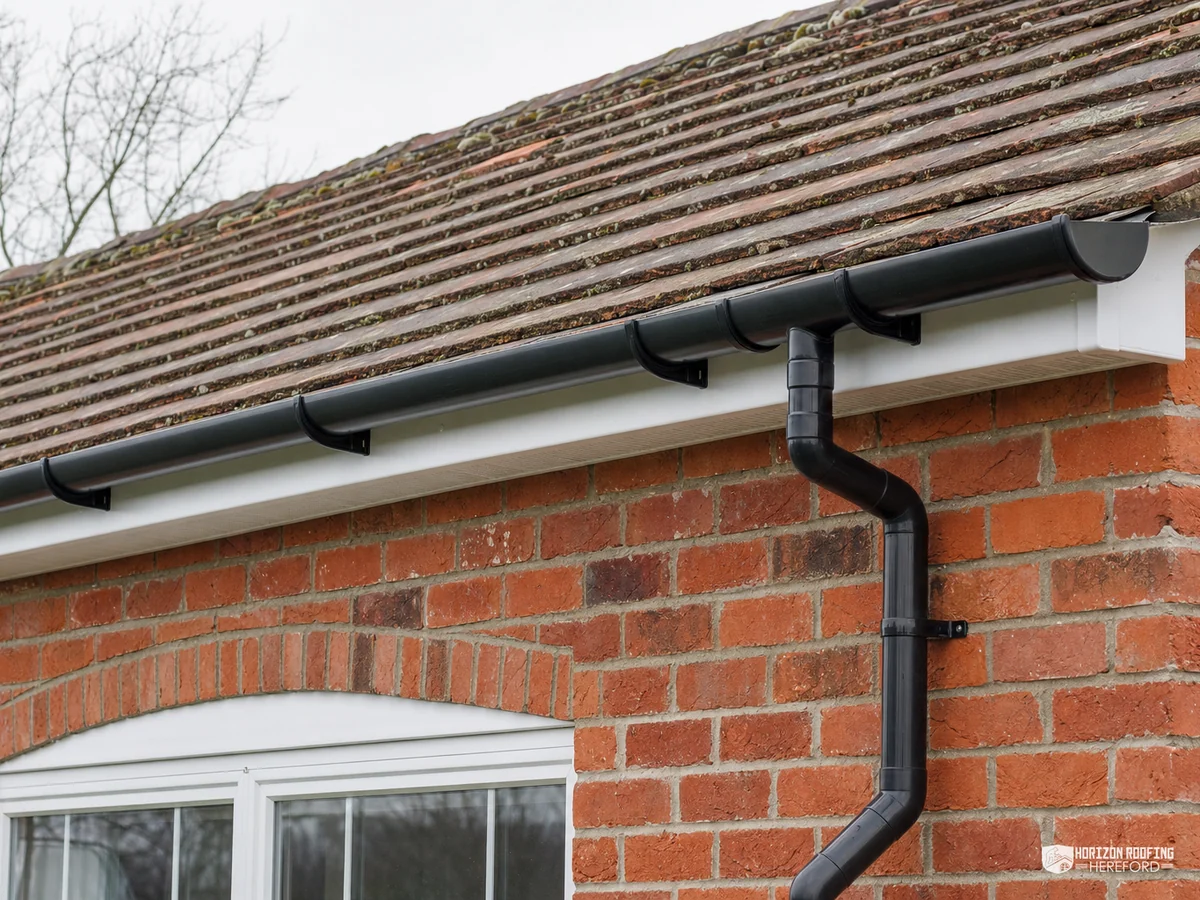
At the foot of the roof, the eaves, water leaves the slope and meets the gutter. Fascia: the board along the rafter ends that holds the gutter. Soffit: the panel tucked under the overhang. Brett Martin gives the gutter fall as "1mm for every 600mm", so a gutter that dips between brackets keeps a pool of water in it and lets it out at the joints. We look for stained walls beneath the joints, for brackets that have pulled, and for fascia timber that has gone soft where water has stood. The repair can be new brackets and re-set gutter lengths, not a new system.

If new insulation goes in, the eaves have to keep breathing. For a cold roof laid with high-resistance (HR) underlay, which is not vapour-permeable, Marley's guidance is 25mm of ventilation along the eaves for pitches of 15° or less and 10mm for steeper ones. Marley adds that a ceiling sealed well enough, with an air-permeable underlay above it, can rely on the 3mm gap that normal eaves construction leaves, provided its third-party certification terms are met. Our check covers the pitch, the underlay and the ceiling before we say which applies, and the quote reflects the answer. The wall head below is part of the check: a damp patch inside at ceiling height can point back to a gutter joint, so we match the stain to the fault rather than guess. Gutter work is photographed at the joints and brackets, so that you can see the fall for yourself and compare it with the figure above.

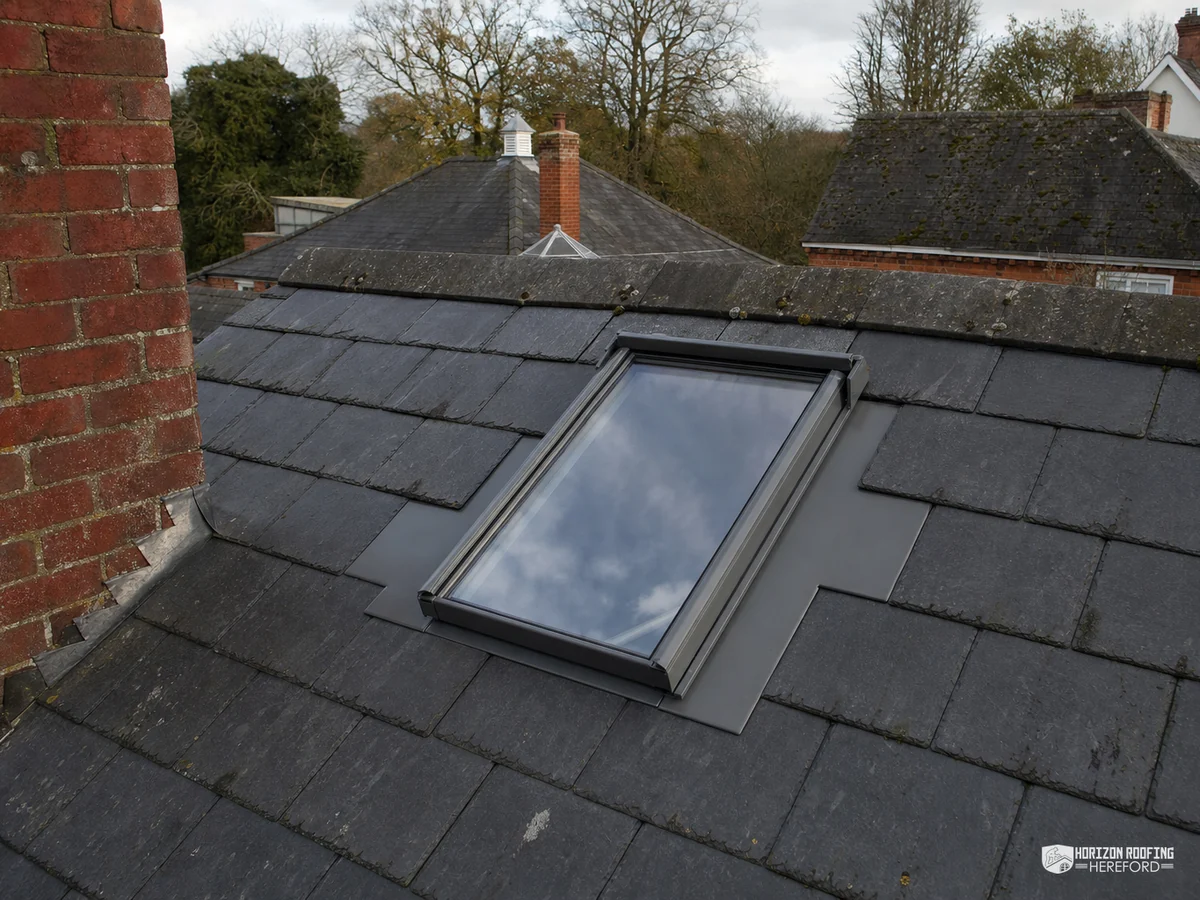
Now the boundary. Part of the area round Mardy lies inside the Bannau Brycheiniog National Park, but the planning authority for Mardy itself is Monmouthshire County Council. Addresses inside the National Park go to the National Park Authority, so check which side of the line a house is on before you plan a roof window; on National Park land in Wales, new roof lights fall outside permitted development. Our planning guide for roof windows gives the steps. The Abergavenny and Abergavenny Pen-y-Fal conservation areas lie nearby, and Article 4 directions are for the council to confirm. Building control is Monmouthshire County Council Building Control. We arrange the scaffold licence with our scaffolder.

An eaves gutter, sound and failing

SoundJoints dry, brackets firm, fascia solid underneath
Needs workSagging run, stained wall below, soft fascia board

Mardy roofs: slate, wildlife and the boundary

How do you match purple and grey banded slate on a Mardy roof?

Cadw's listing for St Teilo's House records a Welsh slate roof banded in purple and grey, which shows how much the pattern matters. On a banded roof we reuse sound slates in their original order, choose replacements by tone against the existing courses, and set each course so the bands run true. We hold samples against the roof in daylight and photograph the proposed pattern before any new slate is fixed.

Is my Mardy address inside Bannau Brycheiniog National Park?

Part of the area round Mardy is inside the National Park, but the planning authority for the place itself is Monmouthshire County Council. Addresses inside the National Park go to the National Park Authority, so check which side of the boundary yours falls on before you apply. We photograph the roof and note the address, so whichever authority you approach is given the same picture. The distinction matters because National Park land in Wales takes new roof lights out of permitted development.

What Building Regulations approval does a re-roof near Mardy need?

The Welsh Government says of re-roofing: "In most situations, this work will need Building Regulations approval." Its roof page treats more than 25 per cent of the roof area as the line above which better insulation is normally expected. A renovated roof should reach 0.16 W/m²K under Table 11.1 of the Welsh Approved Document L, and no worse than 0.35 where that is not feasible. Monmouthshire County Council Building Control or a registered building control approver handles the application.

Are there conservation areas near Mardy that affect a roof?

The Abergavenny and Abergavenny Pen-y-Fal conservation areas lie nearby on Monmouthshire County Council's list. Compare your address with the council's boundaries ahead of any change that would show from the road, and ask the council for its list of conservation areas if you are unsure which one is closest. Whether an Article 4 direction applies is for Monmouthshire County Council to confirm, since a direction can remove particular permitted development rights within the area it names.

Can the gutters on a Mardy house be replaced without a re-roof?

Yes. Gutters, fascias and soffits are separate from the slate covering, and the survey sorts a sagging run from a failed joint or rotten fascia timber. Brett Martin gives the fall as 1mm for every 600mm, which we check with a level before deciding between re-setting the old lengths and fitting new ones. Photographs of each joint and bracket go into the report.

What does scaffold on the road at Mardy involve?

Highways Act 1980, section 169, covers scaffolds that obstruct the road or pavement, and we arrange the licence with our scaffolder. At Monmouthshire County Council the fee is an administration charge of £108, with £27 per week to extend, and the form asks for at least 5 working days. Mardy lies roughly 22.2 road miles south-west of Hereford, a drive of about 34 minutes.

Book a Mardy survey from ridge to gutter

Say what you can see, or send two photographs, and we will come out, look at the roof and price the whole job in writing.

10-year workmanship guarantee, in writing