
01432 610152 Get a quote Call 01432 610152

Roofers in Llandogo

Roof repairs and re-roofs in Llandogo, a Wye Valley village with listed slate and sandstone buildings.

Llandogo is 27.6 road miles south of Hereford, about 42 minutes by car. Photographs and one written total follow every survey.

Get a free quoteCall 01432 610152

Slate, stone parapets and a listed lodge

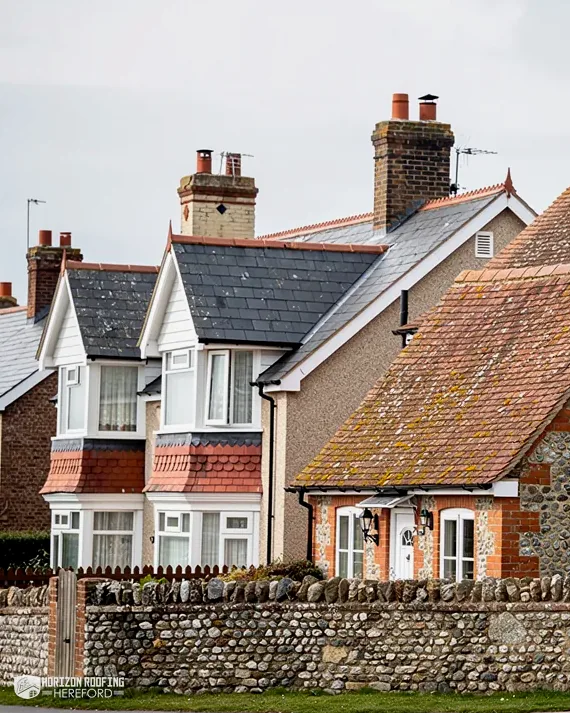
  • Older cottages with weathered clay tile roofs and brick chimneys behind a flint wall
    Welsh slate above red sandstoneA slate roof stays sound only while its fixings and laps do.
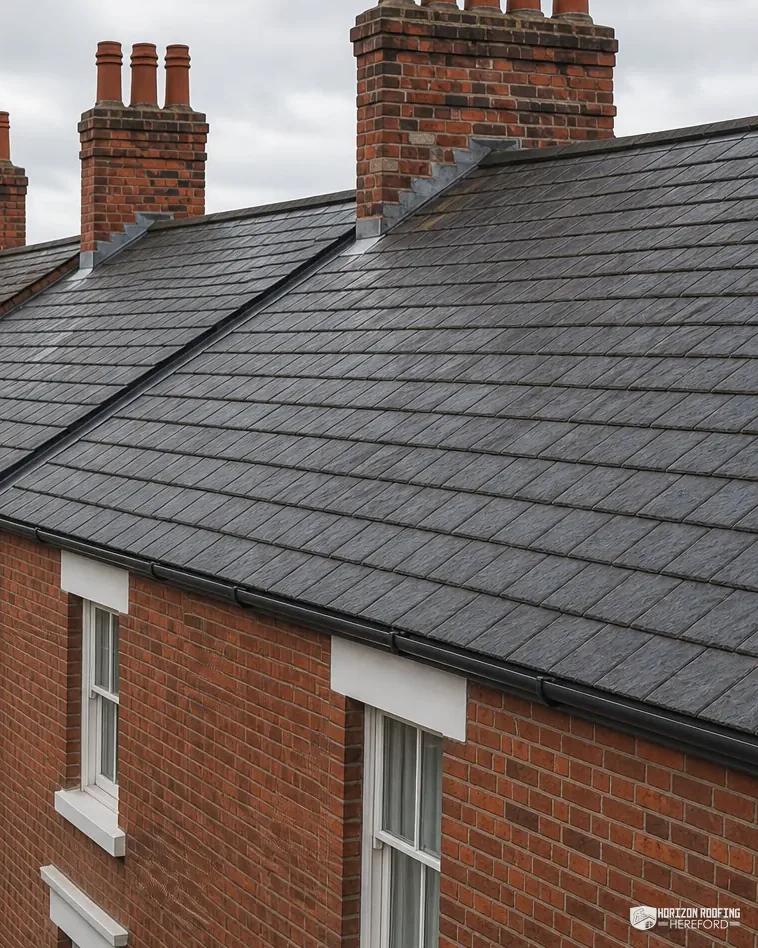
  • Slate roofs and chimney stacks along a red brick Victorian terrace
    Stone parapets and lead guttersBehind a parapet wall, the lead gutter carries all the water from the slope.
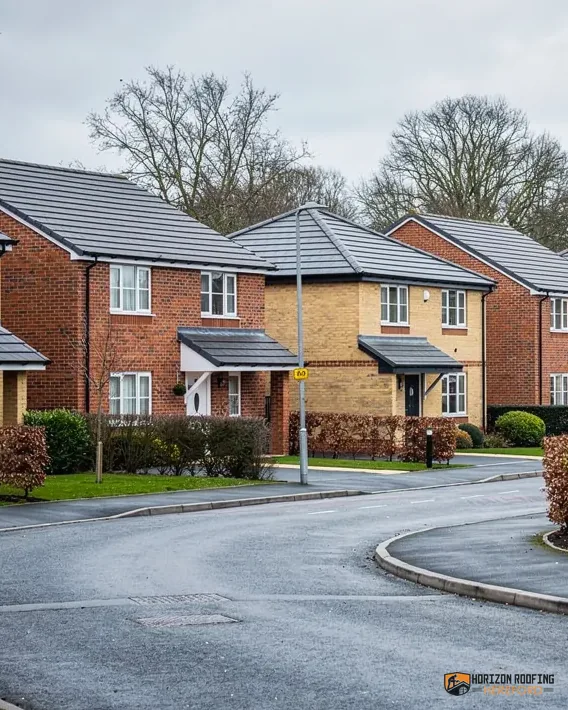
  • Newer homes with grey concrete tile roofs along a curving estate road
    Asbestos slate on the lodgeCadw's listing for Priory Lodge describes its roof as asbestos slate.

Llandogo near and far

Llandogo on a street map, with a dashed circle around the town and the nearest towns we cover. Tiles © Esri; map data © Esri, HERE, Garmin, OpenStreetMap contributors.

Slate, parapet and lodge in Llandogo

Welsh slate, stone parapets and a lodge roof, taken in three callouts

We begin on the slopes, where Welsh slate meets its fixings and laps, move to the lead behind a stone parapet, and finish at a sandstone wall with the rules that frame work in the Wye Valley.

A drawn cut-away section through a Herefordshire border house: the front of the main roof is cut open to show the rafters, underlay, battens and slates, beside a black-and-white timber-framed gable. Numbered, from the ridge down: 1 Slate slopes; 2 Parapet lead; 3 Lodge wall.

Fig. 1 A Llandogo roof in section, with slope, parapet gutter and wall head numbered.

Callout 1 of 3

Welsh slate over red sandstone at Llandogo

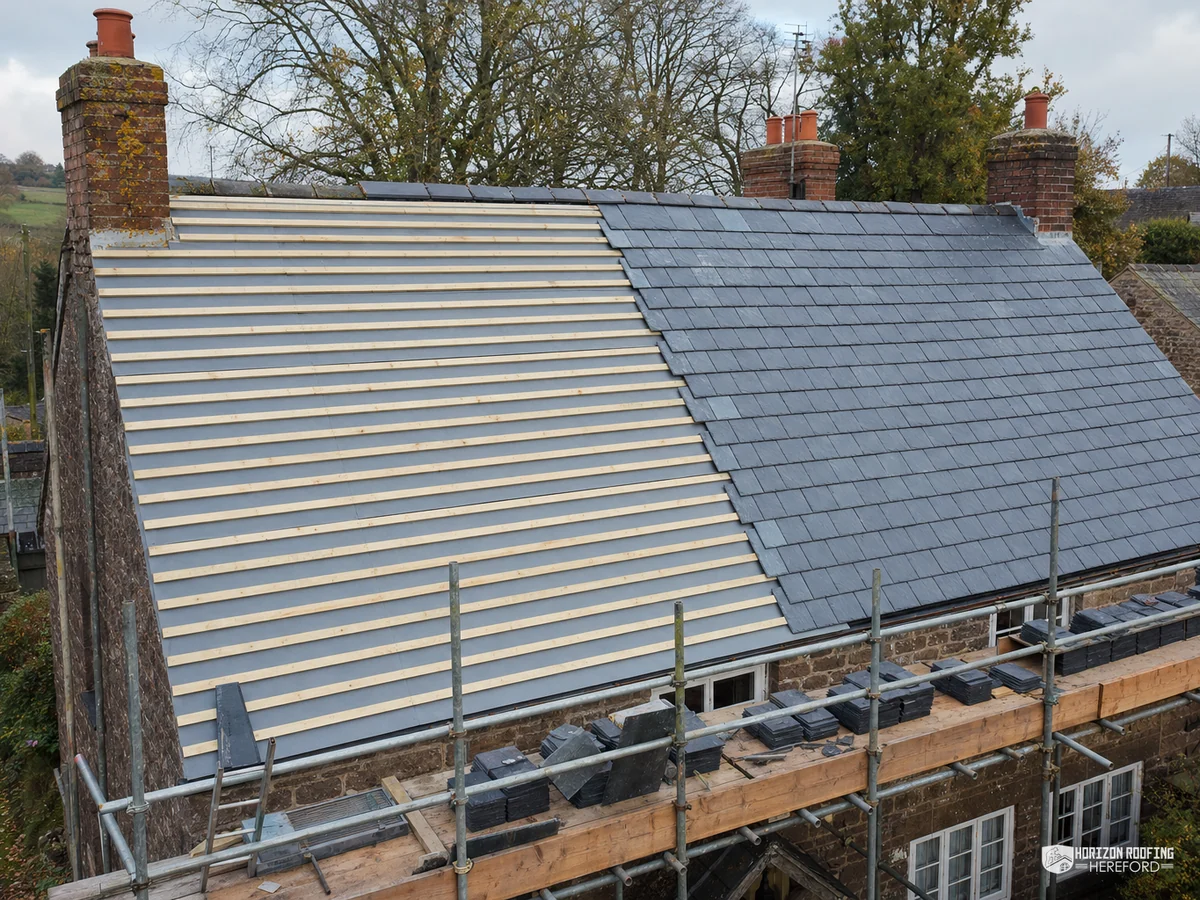
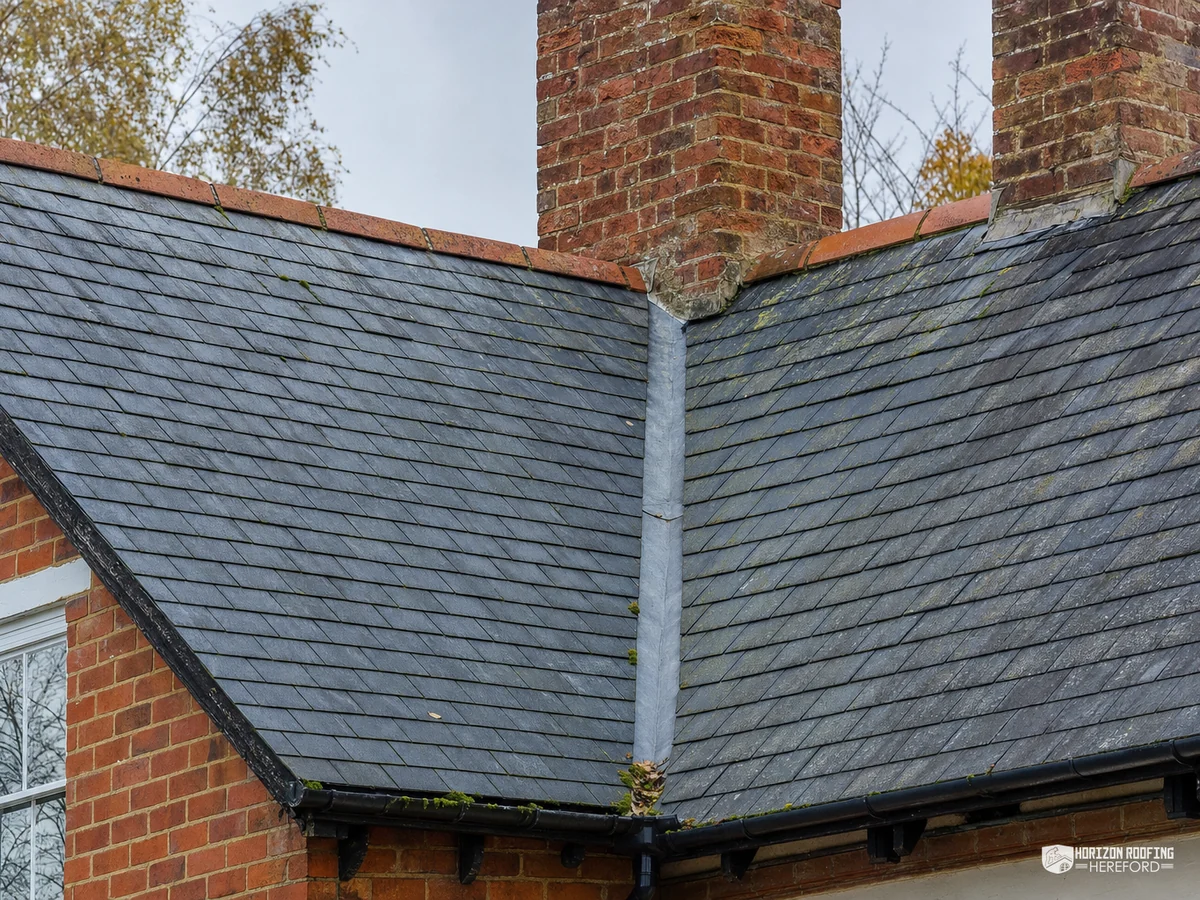
The survey starts on the slope, because that is where rain and wind arrive first. Cadw's listing for the Church of St Oudoceus, Grade II* (record 18575, listed on 18 July 1997), describes it as "Built of snecked red sandstone with Bath stone dressings under a Welsh slate roof with stone parapets and crucifix finials". Slate laid well keeps a roof going for decades, and the published figures are ranges rather than promises. HomeBuilding lists new Welsh slate at "100+ years", Spanish slate at "75-100 years" and reclaimed Welsh slate at "50-80 years". SPAB puts a well-slated roof at "likely to be more than 100 years".

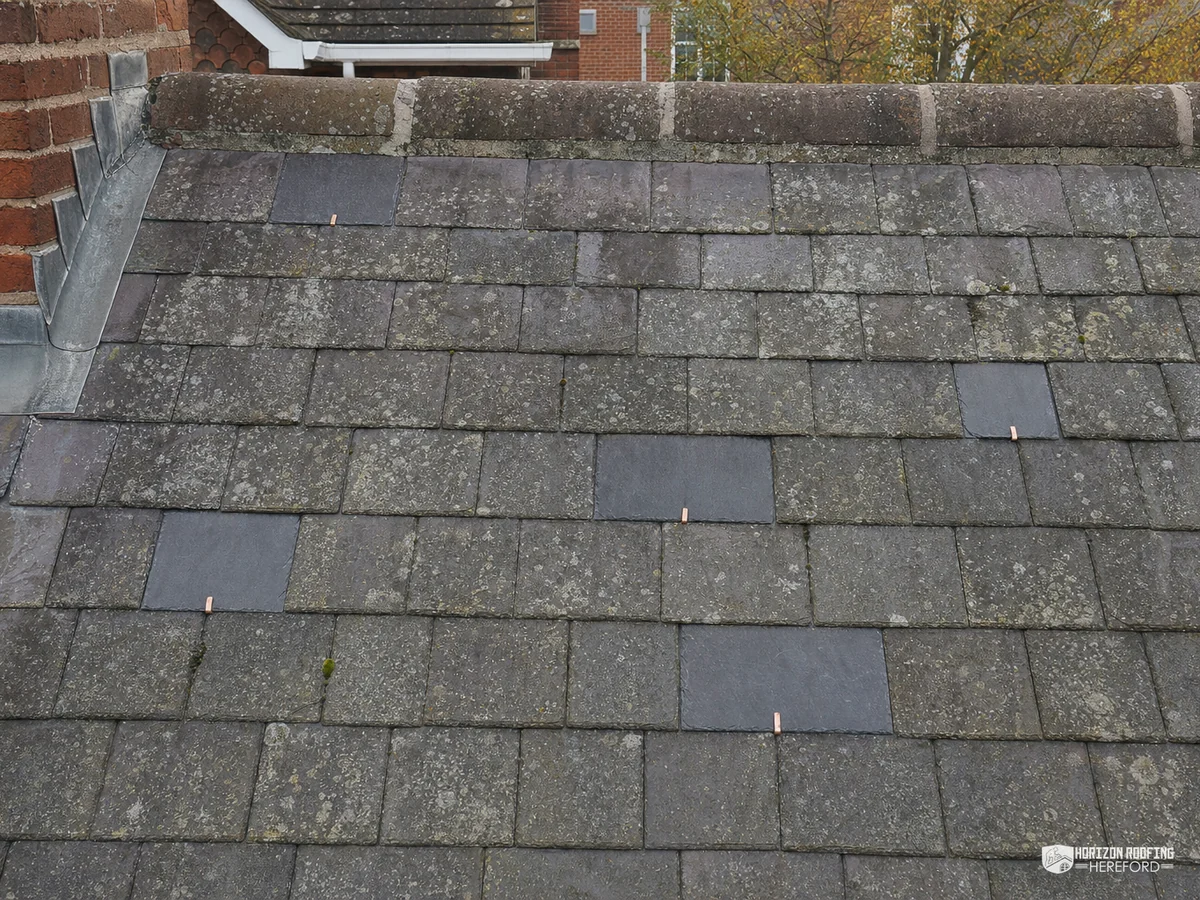
A slate hangs by a nail or two through its head, and once a nail has corroded the slate slips. We lift the courses along the lowest edge and look for slates that have slipped, cracked or begun to flake. SPAB observes that Welsh slate and stone roofs "are predominantly double-lapped", which is why we also measure the headlap: how far each slate reaches over the slate two courses below it. Pitch comes into it as well. Cupa, the slate maker, says that BS 5534:2014+A2:2018 "also indicates that the minimum roof pitch for natural slate is 20 degrees in the case of a project situated in an area with moderate exposure and with a slate 500mm long and a 115mm overlap". Cupa also rules out hook fixings below 25 degrees.

Welsh rules govern any re-roofing in Llandogo. The Welsh Government's page on re-roofing states: "In most situations, this work will need Building Regulations approval." On its roof page the Welsh Government draws a line at "less than 25 per cent of the area of a pitch or flat roof", below which an application is not normally needed. Swapping slate for tiles is its own example of a change of material where approval is likely, since weight, fire performance and energy use all have to be looked at. Monmouthshire County Council runs its own building control team from County Hall in Usk, and we contact it before a re-cover begins.

Every slipped slate, rusted fixing and open lap goes into the photographs, so you see the fault before any price is set. Our slate roofing page covers re-slating, and roof repairs covers the smaller jobs that do not need a re-cover.

Checked on a Llandogo slate slope

  • Slipped, cracked or flaking slates
  • The nail or hook at each slate head
  • Headlap on the lowest courses
  • Pitch against the fixing method
  • Bedding along the ridge and hips

A slate that has slipped shows you where its nail gave out.

Fig. 2 The slopes, drawn close

Callout 2 of 3

Lead gutters behind the Llandogo parapets

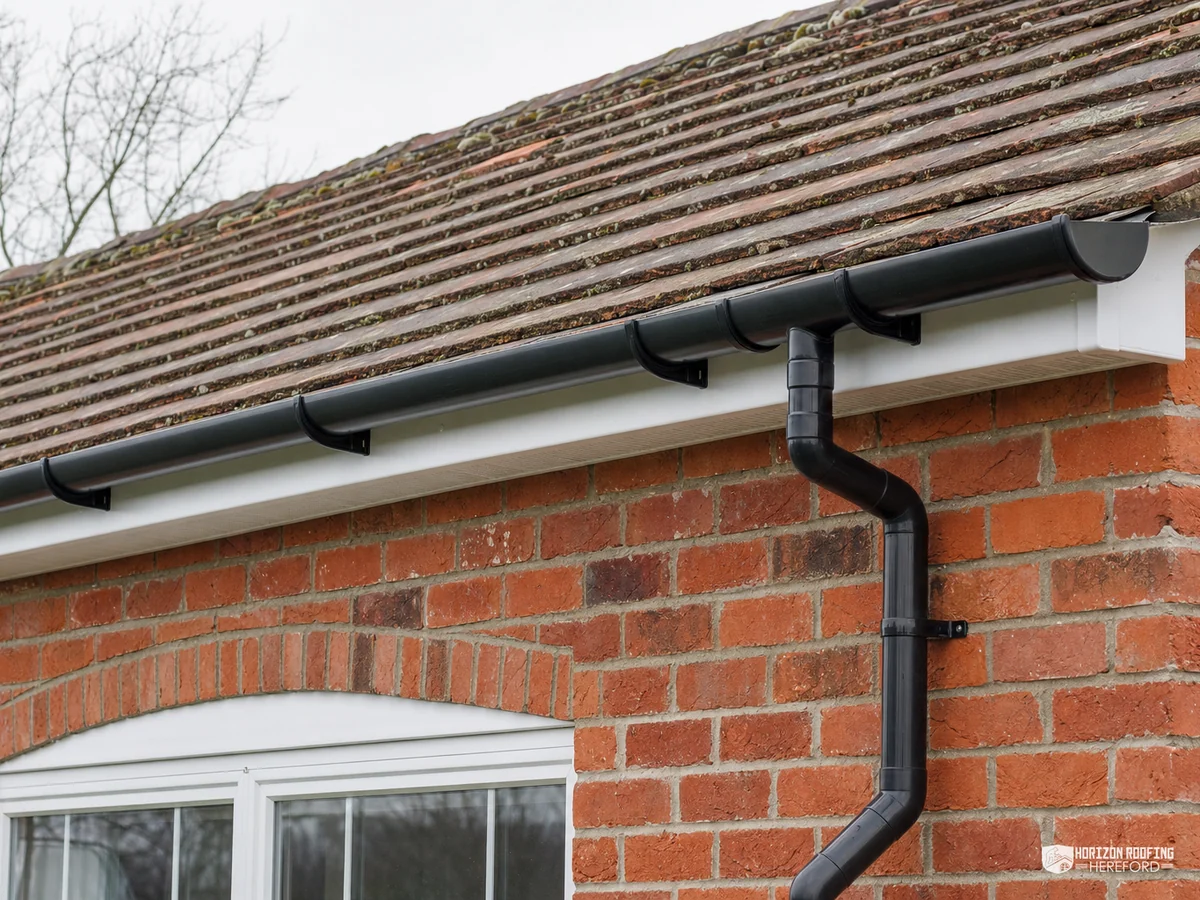
The second callout is the lead behind a stone parapet. A parapet is the low wall that rises above the edge of a roof, and the church's Cadw listing records "stone parapets" beside its slate. Where a slope runs down to a parapet, the rain has nowhere to spill over the edge. A lead-lined gutter behind the wall gathers it and carries it to an outlet. That gutter, the flashing turned up the wall and the joint where the two meet decide whether the stonework stays dry or darkens with damp.

Royston Lead prints a code for each thickness of lead sheet, with letters for the uses it suits. Code 3 is "Recommended for lead soakers only". Codes 5 and 6 are marked for flashings, valley gutters, parapets and box gutters, and Codes 7 and 8 for valley gutters, parapet and box gutters, and dormers. A box gutter is a lead channel set between two slopes or behind a parapet. The code we pick follows the job, and a long run is laid in sections so the sheet can swell in warm weather and shrink in cold without tearing.

MyJobQuote says correctly installed lead flashing "can last for over 80 years", a hedged line about flashings, not gutters. A sheet laid too thin for a wide gutter, or fixed down along its whole length, can split early. On the survey we follow every fold with a hand, look at the outlet, check for lead that has crept downhill and ask whether sealant has been smeared over a crack. Sealant over a split hides the fault, so we cut the bad section out and fit new sheet, and the photographs show you both stages.

Leaves and moss collect at an outlet, and a blocked outlet turns a gutter into a tank. We clear it, run water through and watch where it goes. If slates behind the parapet have slipped, the gutter and the slates are put right in one visit, so the scaffold goes up once. A parapet gutter is also a reason to put up a scaffold, because the wall edge is hard to reach from a ladder and the lead has to be worked from a stable platform. Our lead roofing page explains how sheet is cut, dressed and fixed.

The parts of a parapet gutter

Parapet
The low wall rising above the roof edge
Gutter
A lead-lined channel behind that wall
Flashing
Lead turned up the stone and tucked into a joint
Outlet
Where the gutter hands water to the downpipe
Fig. 3 Leadwork, drawn close

Callout 3 of 3

Sandstone, asbestos slate and the Wye Valley rules

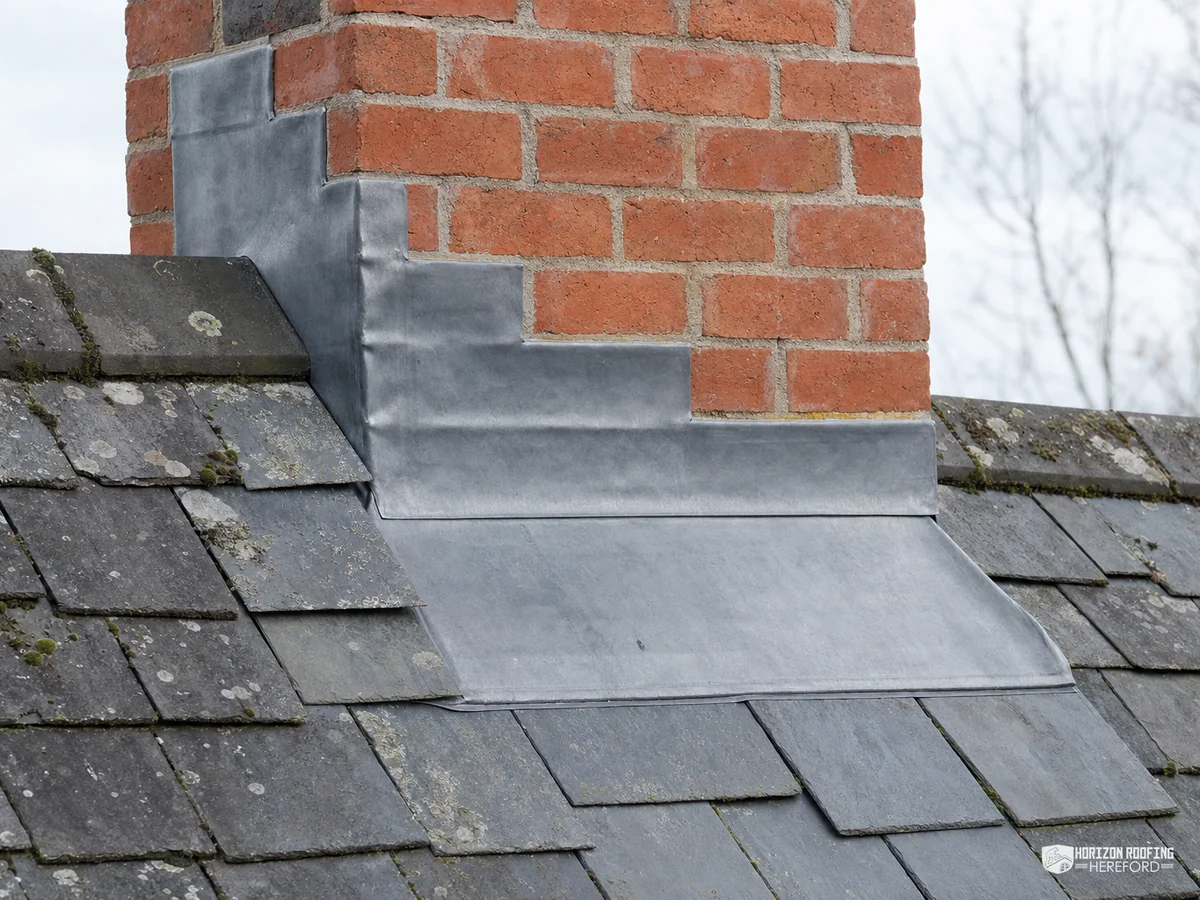
The last callout is the wall. Cadw's listing for Priory Lodge, Grade II (record 24931, listed on 28 February 2001), describes a lodge "constructed of red sandstone rubble with some ashlar dressings" and "an asbestos slate roof". Because the lodge is listed, work that would change its character needs consent under the 2023 Historic Environment (Wales) Act, and the church raises a separate question that the fourth answer below covers. Rubble is rough stone laid in irregular courses, and ashlar is cut stone at corners and openings. Where a roof meets a rubble wall, a strip of lead goes into a raked-out joint and the pointing around it is renewed in the same visit.

An asbestos roof is handled differently from natural slate. HSE tells owners to presume asbestos in any building that was built or refurbished before 2000, and its A14 guidance states "AC roofs are always fragile". Material "carefully handled/removed without breaking up" is non-licensed work in HSE's list, whereas asbestos cement that has been substantially broken up becomes notifiable non-licensed work. A lockable skip takes the sheeting, never an open one, and anything that needs a licence goes to a firm that holds one. Natural Resources Wales tells contractors that asbestos leaving a home must travel on consignment notes. Monmouthshire County Council directs householders with small amounts to the Five Lanes or Llanfoist recycling centres, by booking.

Llandogo lies inside the Wye Valley National Landscape, which carries the older legal name of Area of Outstanding Natural Beauty. That status shapes the rules, but the planning decisions are made by Monmouthshire County Council. In Wales the land is article 1(5) land, so permitted development does not stretch to new roof lights or dormers, and the council should be asked first. Our planning guide for roof windows sets out the rules.

The council also keeps a Llandogo conservation area that covers the centre of the village. Ask the council whether an Article 4 direction covers your street. Building control is done by the council or by a registered building control approver, and either one receives our photographs of the existing covering before work starts.

The roof-to-wall joint on a rubble wall

SoundFlashing tight in a raked joint, pointing full
Needs workFlashing lifted, pointing fallen out, stain down the stone

Llandogo roofs: slate, listings and the Wye Valley

Can the slates from an old Llandogo roof be used again?

Sound ones can be stripped, sorted by size and fixed back, which keeps the look of the original roof. HomeBuilding gives reclaimed Welsh slate "50-80 years" against "100+ years" for new Welsh slate; a re-covered Llandogo roof may well end up part old and part new. SPAB says a claim that stone or slate cannot be had should always be put to the quarries. Our survey tells you how many slates are fit to go back up.

What insulation standard applies if a Llandogo roof is renewed?

Table 4.1 of the Welsh Approved Document L gives 0.13 W/m²K for the roof when a dwelling gets a new one. Table 11.1 asks a renovated roof for 0.16, with 0.35 as the worst acceptable figure where 0.16 is not feasible, once more than 50 per cent of the element is renovated. Table 4.1 also sets 2.2 for rooflights, and 1.4 or WER Band B for roof windows. A newer Welsh edition arrives on 4 March 2027.

Llandogo is in the Wye Valley National Landscape, so can I add a roof light?

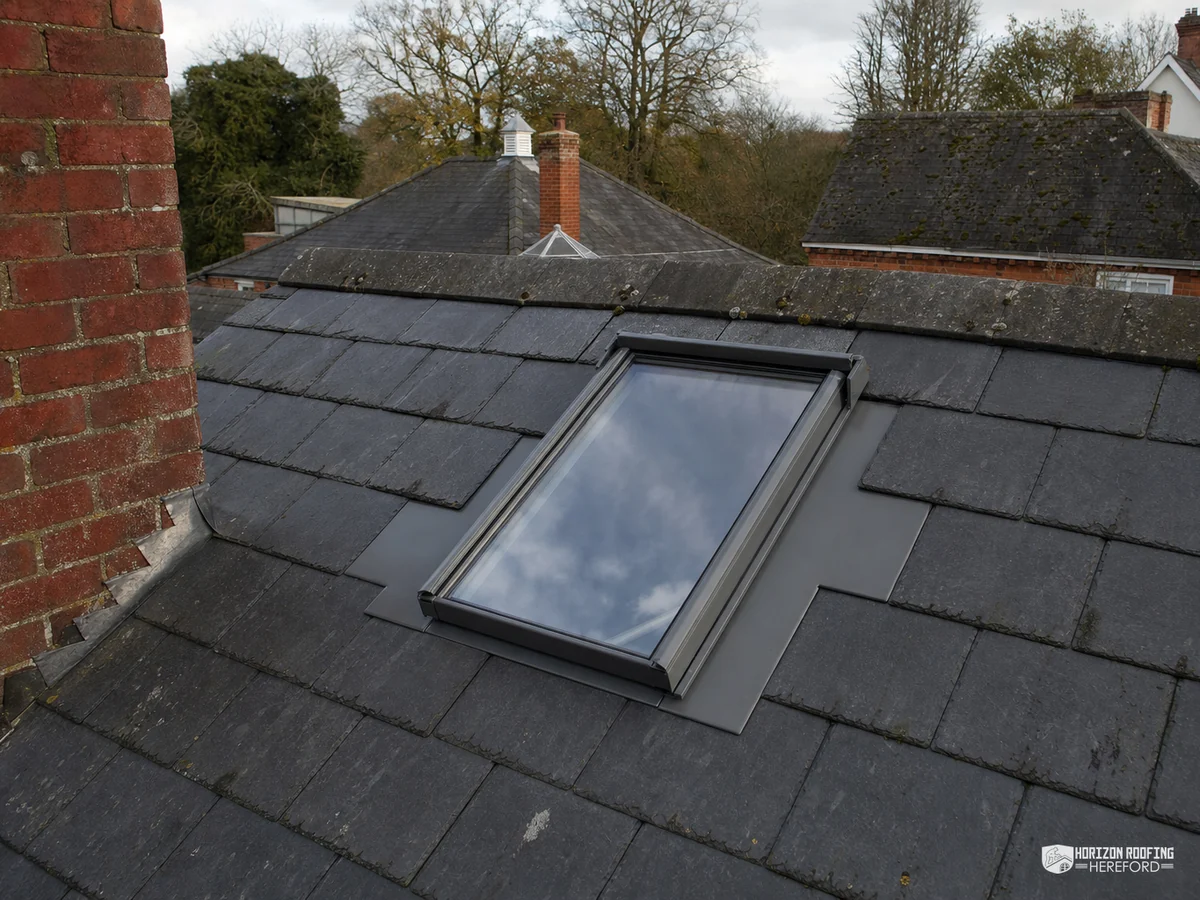
Only with planning permission, which you request from Monmouthshire County Council. Its Duty Planning Officer, on 01633 644831, takes "queries on whether you need planning permission". The Welsh Government adds that "Approval under the Building Regulations will generally be needed for the installation of a new rooflight", so Building Regulations and planning are two separate questions. We raise both with you before any window is ordered.

What consent does roof work on a listed Llandogo building need?

Section 88(2)(a) of the Historic Environment (Wales) Act 2023 covers "works for the alteration or extension of a listed building in any way that would affect its character as a building of special architectural or historic interest", and section 89 provides the authorisation: listed building consent. Both have applied since 4 November 2024. A church in use is exempt only if it belongs to a body on the Welsh list, so ask whoever governs it before any work.

What does Monmouthshire charge for scaffold on the highway at a Llandogo house?

£108 is the administration fee on Monmouthshire County Council's form, and each week of extension adds £27. The form asks for at least 5 working days before the scaffold is erected. Under section 169 of the Highways Act 1980 any scaffold obstructing the road or the footway must be licensed. We arrange the licence with our scaffolder, and each quote states whether scaffold is part of the total.

What if bats or a bird's nest turn up when a Llandogo roof is opened?

We stop at that spot and look. Natural Resources Wales says "All bat species are protected by law, including their breeding sites and resting places", and a licence from it is needed if disturbance cannot be avoided. Section 1(1) of the Wildlife and Countryside Act 1981 makes an offence of one who intentionally "takes, damages or destroys the nest of any wild bird while that nest is in use or being built". We photograph the find and agree the next step with you before anything is disturbed.

Get your Llandogo slates looked at

Tell us about the slates or the lead and attach a photo. We survey before we price.

10-year workmanship guarantee, in writing