
01432 610152 Get a quote Call 01432 610152

Roofers in Hanley Castle

Roof repairs and re-roofs in Hanley Castle, starting with the stacks and the valleys.

Every fault found on your own roof is photographed and shown to you before any work is agreed.

Get a free quoteCall 01432 610152

Clustered chimneys, many gables, a Grade II* church

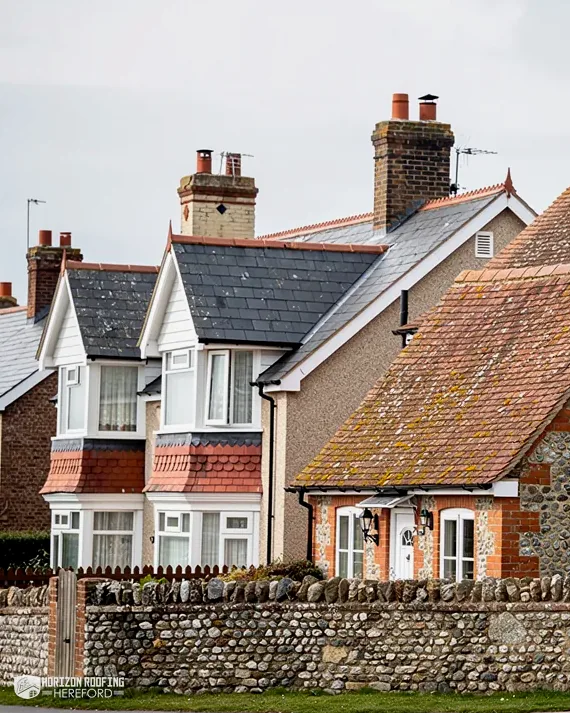
  • Older cottages with weathered clay tile roofs and brick chimneys behind a flint wall
    Clustered chimneysA 1924 account of Severn End describes numerous gables and clustered chimneys.
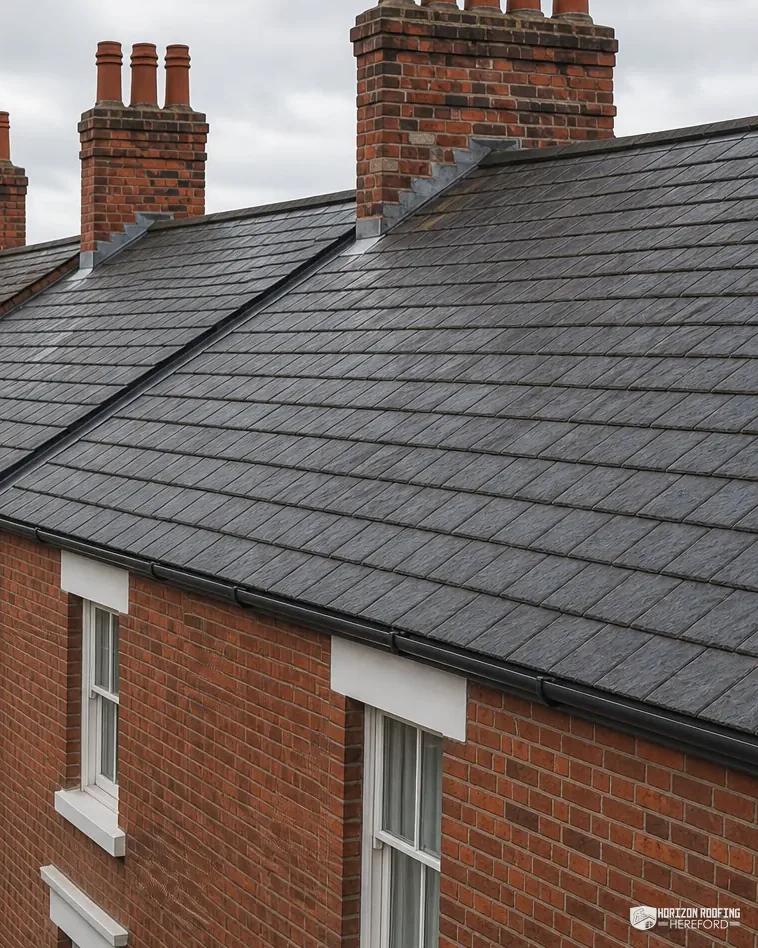
  • Slate roofs and chimney stacks along a red brick Victorian terrace
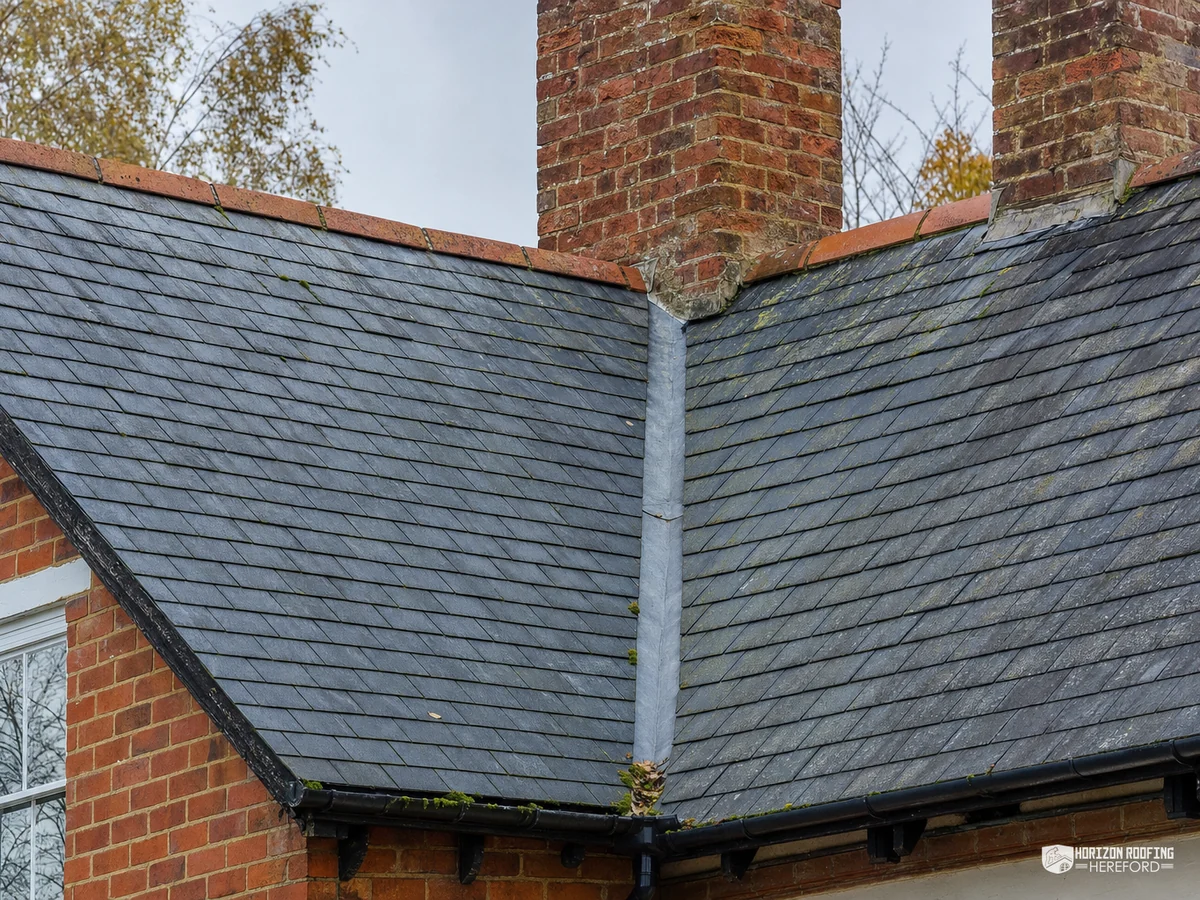
    Valleys between the gablesMore gables mean more valleys, and each valley takes the run-off of two slopes.
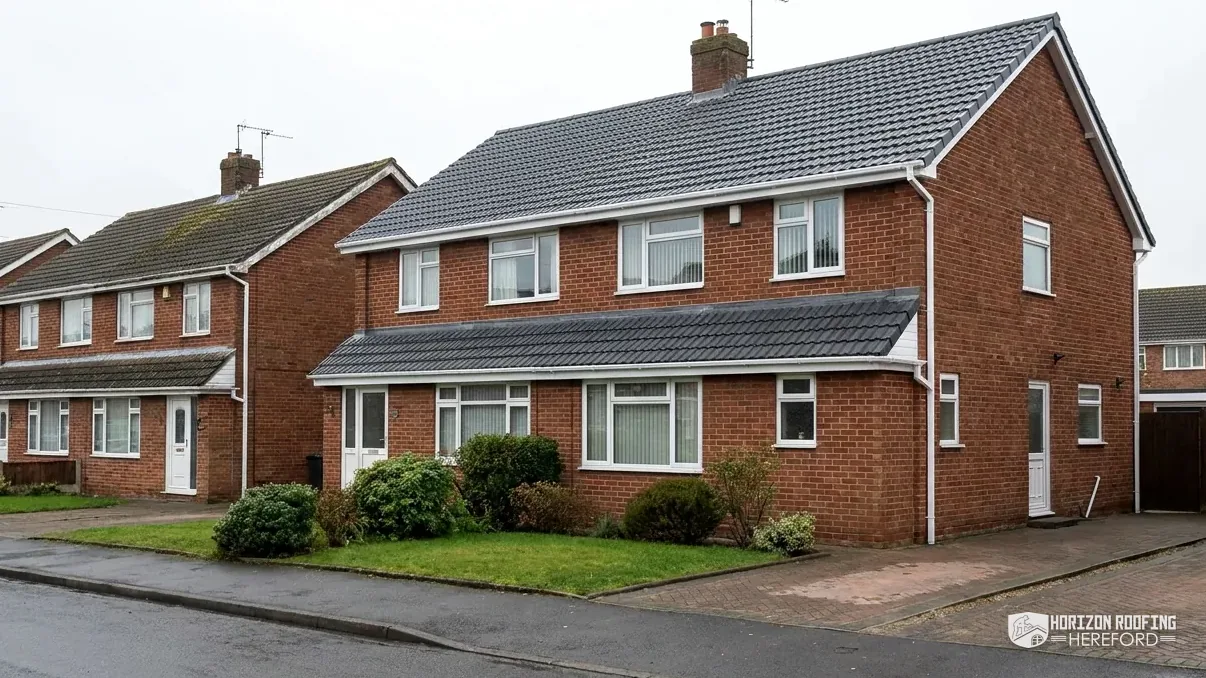
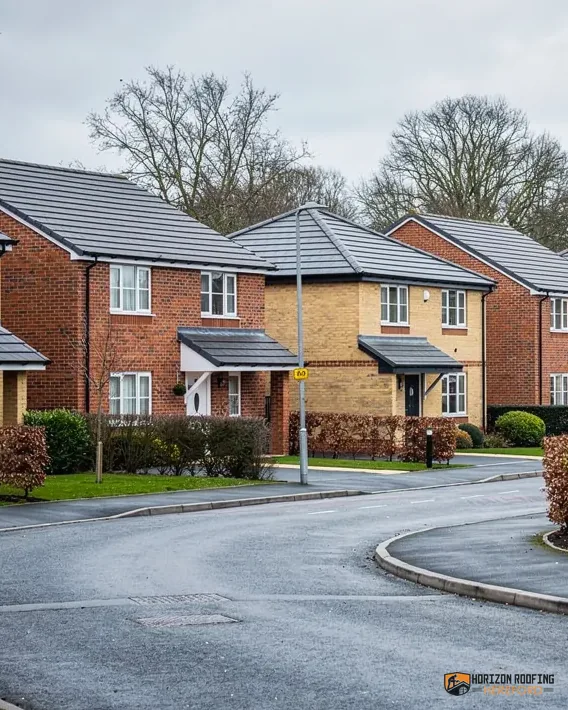
  • Newer homes with grey concrete tile roofs along a curving estate road
    St Mary's churchSt Mary's church carries a Grade II* listing, under list entry 1349232.

Hanley Castle from Hereford

Hanley Castle on a street map, with a dashed circle around the town and the nearest towns we cover. Tiles © Esri; map data © Esri, HERE, Garmin, OpenStreetMap contributors.

Hanley Castle roofs, stack to church wall

A Hanley Castle roof in three callouts: clustered stacks, gable valleys and a listed church

We begin at the chimney stacks, follow the valleys where gables meet, and finish beside St Mary's and the lodge on the Severn End drive, where the faculty system and the district council each take their turn.

A drawn cut-away section through a Herefordshire border house: the front of the main roof is cut open to show the rafters, underlay, battens and slates, beside a black-and-white timber-framed gable. Numbered, from the ridge down: 1 Clustered stacks; 2 Valleys; 3 Church and lodge.

Fig. 1 A Hanley Castle roof sliced open to show three callouts.

Callout 1 of 3

Clustered chimneys and the lead that keeps them dry

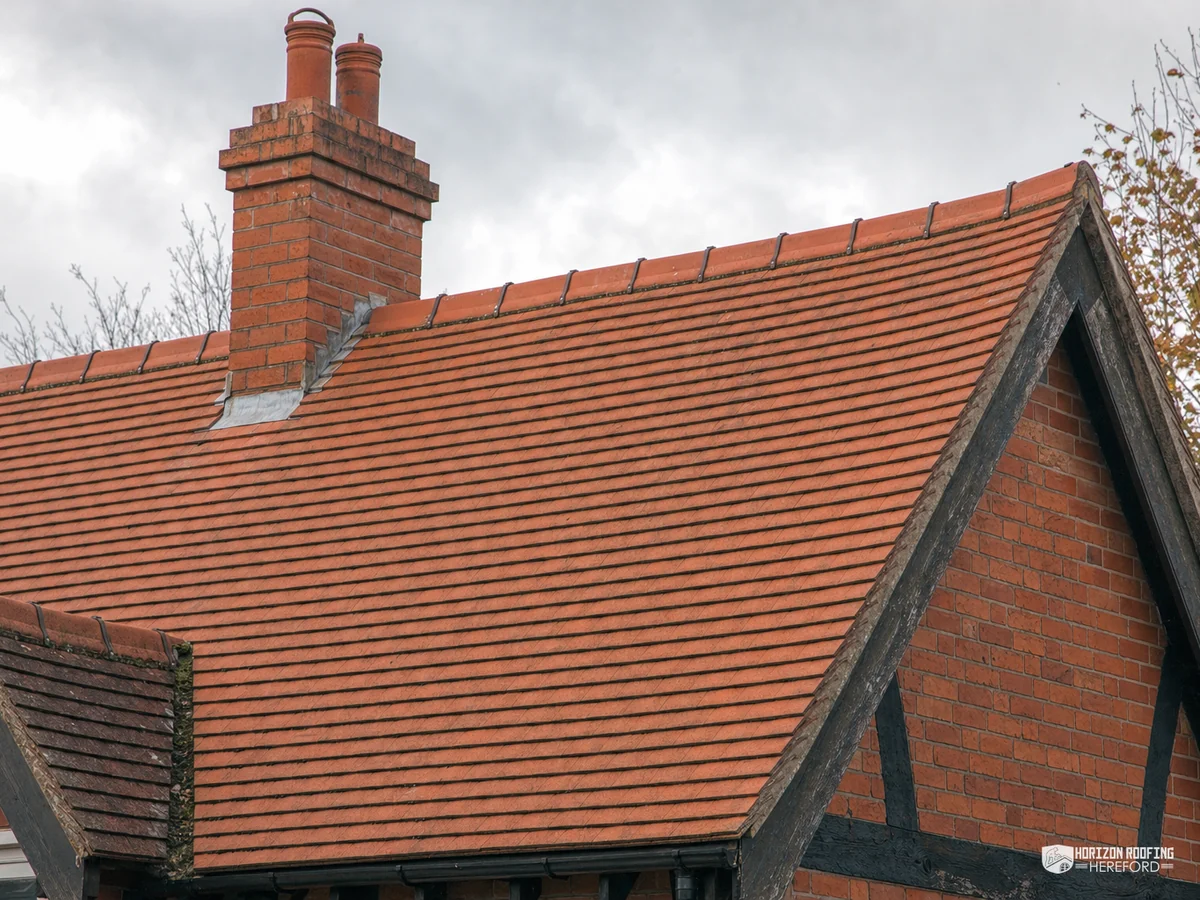
A chimney is a tower of masonry standing in the weather on all four sides, and a cluster of them multiplies the joints a survey has to read. The Victoria County History account of Hanley Castle parish, published in 1924, describes Severn End, about half a mile north-east of the village near the right bank of the Severn, as having "numerous gables and clustered chimneys". Whether the stacks on your roof are brick or stone, we ask the same three questions of each. Is the face sound? Are the joints full? Does the junction with the roof stay dry?

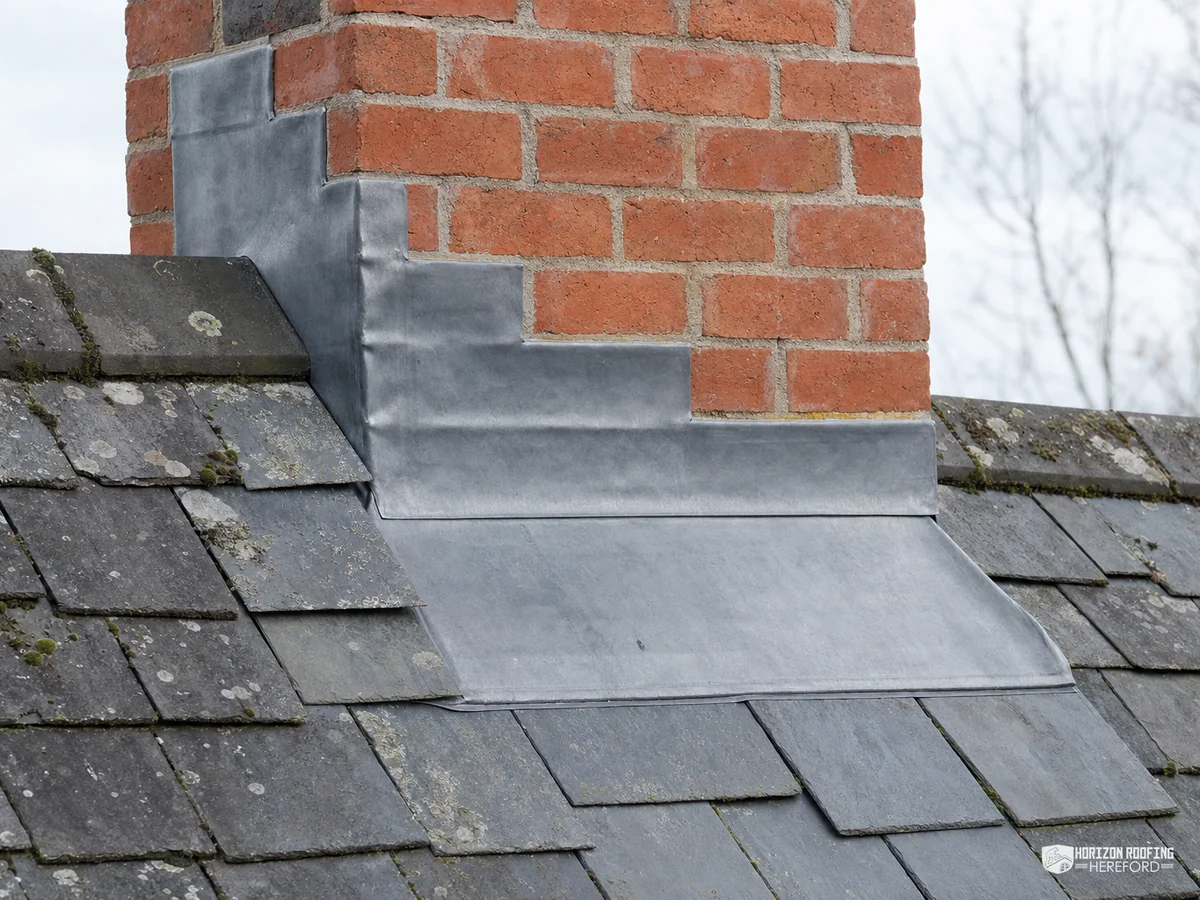
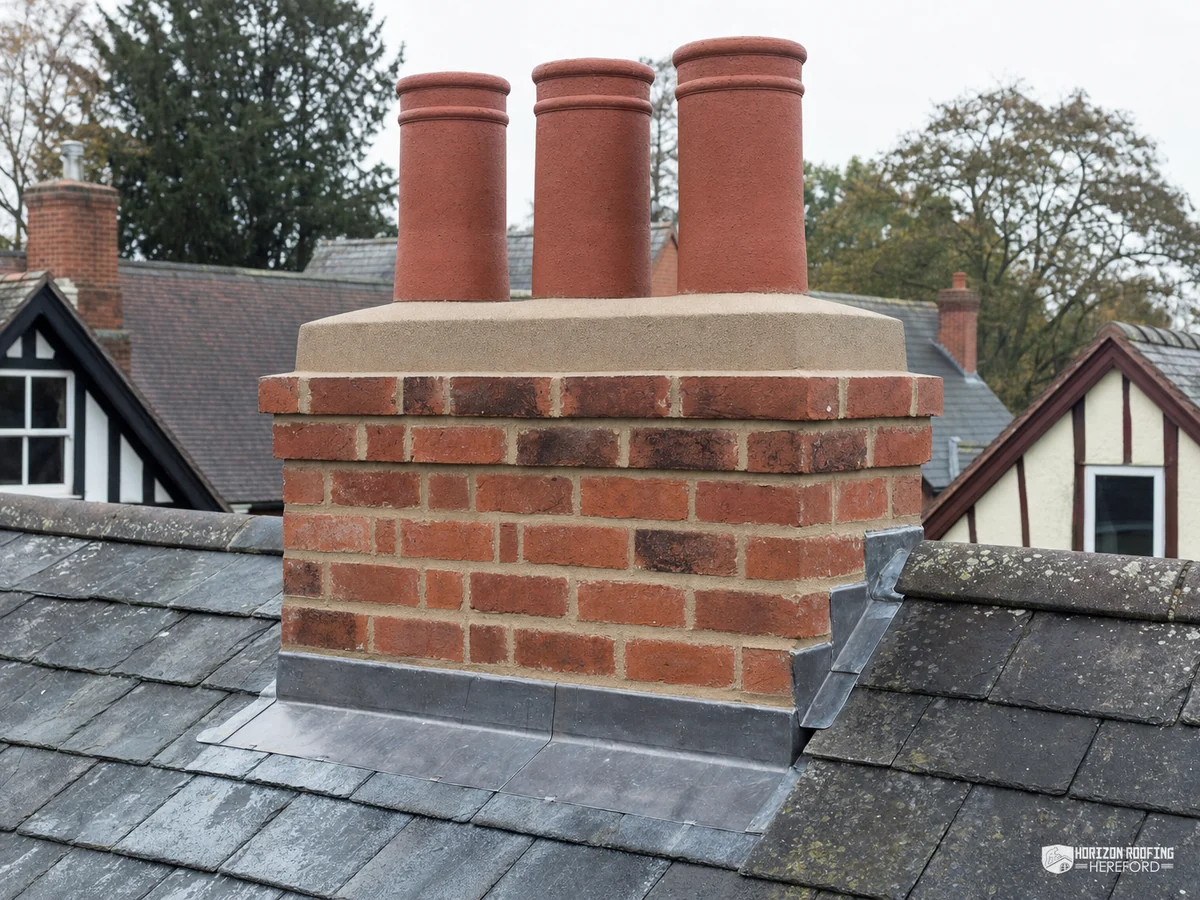
Where a stack leaves the roof, sheet lead seals the gap. Each flashing is held by its top edge, wedged into a raked joint, while its lower edge rests on the covering. Folded lead soakers go in beneath each course along the sides of the stack. Above the stack, a back gutter, a shallow trough of lead, steers the run-off round the chimney. In Royston Lead's table, Code 3 is "Recommended for lead soakers only" while Codes 4, 5 and 6 are listed for flashings. MyJobQuote says correctly installed lead flashing "can last for over 80 years", so sound lead stays put and the repair goes into whatever surrounds it.

Up top, three things get a look: the joints, the flaunching and the pots. Flaunching is the sloped mortar bed in which the pots are set. That level is hidden from anyone standing below, which is why every face of every stack is photographed for the report. A cracked bed is rebuilt. Lead that has split is renewed, because sealant over a split fails sooner than a lead dressing would.

Inside, we check the chimney breast in the loft for tide marks and fallen debris, and the underlay at the foot of the stack for tears. A stain that stops at the stack points to the flashing, while a stain that runs across the roof points somewhere else. With several stacks on one roof, each is numbered on the photographs so the report can be read stack by stack. Our chimney repairs page covers repointing, rebuilding and re-leading in more depth.

Where the weather gets in at a Hanley Castle stack

Stack face
Cracked units and open joints on every side
Flashing
Lead tucked into the joint and dressed over the covering
Soakers
Folded lead under each course beside the stack
Flaunching
The mortar collar that sets the pots
Back gutter
The lead tray that turns run-off round the stack

Each stack gets its own number in the photographs, so you can follow the report by eye.

Fig. 2 Chimneys, drawn close

Callout 2 of 3

Where many gables meet: valley gutters and their lead

Many gables means many valleys. Picture two slopes meeting at an inward corner: that line is the valley, and every drop of rain the pair shed ends up in one channel. A defect in that channel shows quickly, for example as a brown mark on a ceiling, well before anything can be seen from the garden. Hanley Castle roofs with a run of gables therefore get a longer look along their valleys than along their plain slopes.

Valleys come in several forms. An open valley shows a channel of lead between the tiles on either side, a laced or mitred valley hides the join under tiles cut to fit, and a valley gutter can sit out of sight behind a parapet or between two roofs. Royston Lead's table lists Codes 4, 5, 6, 7 and 8 for pitched valley gutters, so the gauge of lead is picked to suit the length and the exposure of each valley.

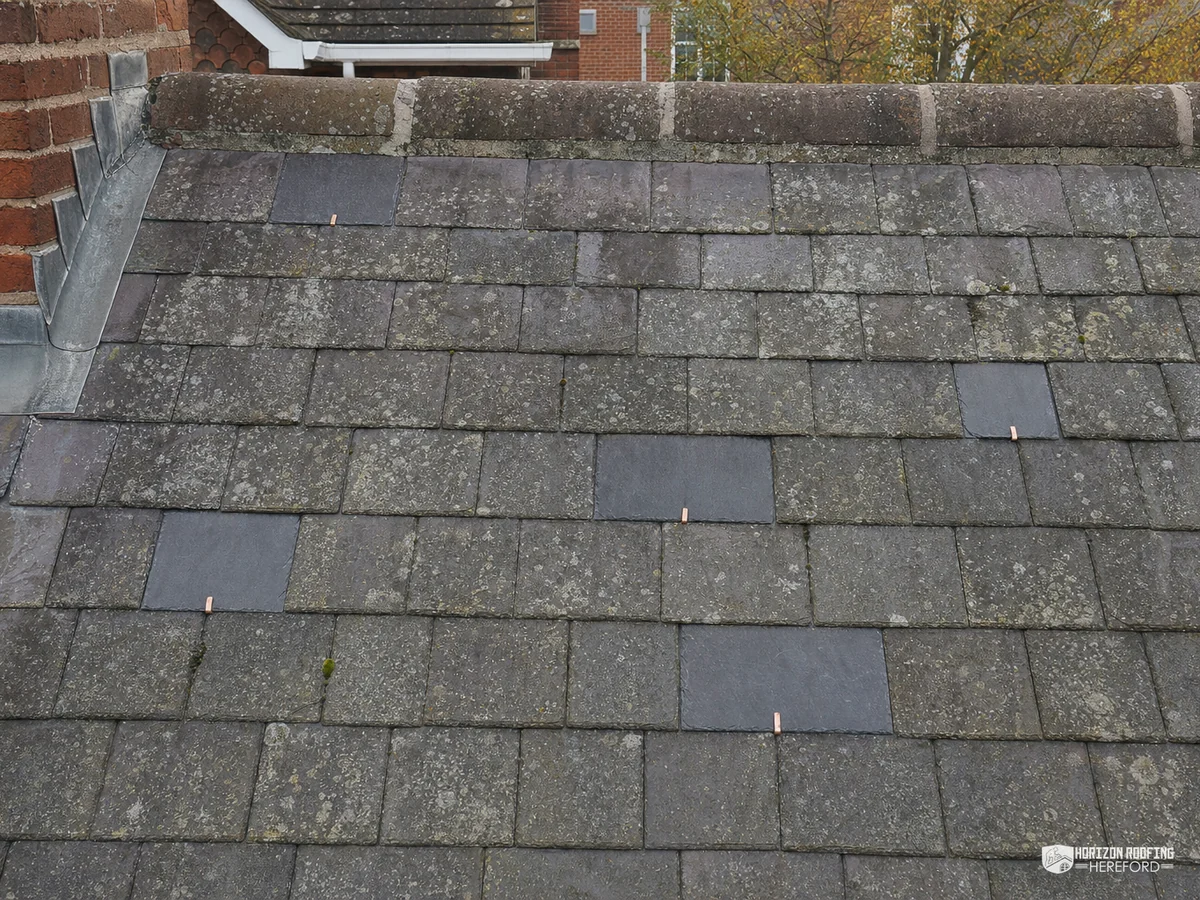
We follow each valley from ridge to eaves. At its edges the tiles are lifted to look for lead cracked across a fold, for debris packed into the channel and for tiles whose cut edges have broken away. Whatever has silted up is lifted out by hand, and the empty channel is photographed before any lead is touched, so the picture shows the state it was really in.

At the foot of a valley the water drops into a gutter or a hopper, the box that feeds a downpipe. If that outlet is blocked, the whole valley backs up, so the outlet is part of the same callout. A short length of failed lead can be cut out and a new piece lapped in. A channel that has gone thin from end to end is better re-leaded in one go, and the report says which of the two the photographs support. Our lead roofing page sets out how sheet lead is fitted and dressed.

A valley gutter on a Hanley Castle roof

SoundLead flat in the channel, tile edges whole and clear
Needs workLead split at a fold, debris packed in, tile edges broken

A valley is followed from ridge to eaves, never judged from one end.

Callout 3 of 3

St Mary's church, the lodge and the council's lists

St Mary's church in Hanley Castle carries a Grade II* listing (list entry 1349232, dated 25 March 1968). Other entries in the village include the Lodge at Entrance to Drive to Severn End and The Nibletts, both Grade II (list entries 1098812 and 1302442, each dated 23 February 1987), and The Old Vicarage, Grade II as well (list entry 1157239). A listing attaches to the whole building, so a roof is read together with the walls beneath it. Before quoting for any work, we take the exact name and description from the list entry, so that every letter to the council refers to the right record.

The Church of England congregation at St Mary's keeps a monthly pattern of worship, with Evensong at the start of each month and two Holy Communion services later in it. While it stays in use, work on its roof goes through the diocese's faculty system and not through listed building consent, and our photographs and written scope are prepared so they can travel with that application. Nothing is ordered, and no tile lifted, until the faculty answer is in hand.

For the houses, section 7 of the Planning (Listed Buildings and Conservation Areas) Act 1990 means consent must be in place for works that alter a listed building's special character. Listing leaves the permitted development rights of a house in place, with consent needed on top. Our planning guide for roof windows covers the rules for new openings.

Malvern Hills District Council's conservation area list includes a Hanley Castle conservation area, and its online map draws the boundary line. Look your address up on that map before deciding on a covering or a new opening. On Article 4, the council states: "At present there are no Article 4(2) Directions in force in Malvern Hills District Council."

Near a listed wall, the roof can be reached from awkward ground, with a lane or a churchyard path below. We note the access in the survey so the plan for ladders and scaffold is clear to everyone before the date is fixed. Our listed and heritage roofing page explains the approach to protected buildings, one photograph at a time.

What moves the price near a listed Hanley Castle wall

Covering
Reusing sound old tiles against buying matched ones
Consent
Time spent settling the scope with the council
Access
Lane width, path surface and where a scaffold can stand
Hidden timber
What the stripped slope reveals below the covering

One written total price, never itemised.

Hanley Castle roofs: stacks, valleys, church and gutters

Why do clustered chimneys on a Hanley Castle house leak at the lead?

Each stack has its own flashing, soakers and back gutter, so a cluster has several joints that can fail. Lead splits where heat has stretched it, lifts where its mortar key has crumbled, or is bridged by a sealant that has since cracked. The survey photographs every face of every stack and the lead around its base, so the failing joint is named instead of guessed at, and the repair is aimed at it. The loft side is checked too.

Can one failed valley be re-leaded without stripping the whole Hanley Castle roof?

The answer can be yes, because a valley is worked from its edges. The tiles beside the channel are lifted and numbered, the lead is renewed along the failed length or the whole run, and the tiles go back in order. If the battens beneath the channel have rotted, those are replaced first. The report states which tiles come up, and the photographs show the lead that is being replaced. Sound valleys elsewhere on the roof can be left alone, and the quote reflects only the work that is needed.

Which approvals come first for work on a Grade II* church roof in Hanley Castle?

First, contact the body that governs the church itself. In England the exemption from listed building consent reaches United Reformed churches, Baptist Union churches that a Schedule 1 trust corporation holds, Methodist chapels, Roman Catholic churches and Church of England buildings under the faculty system, whenever they are in use for worship. Buildings of other faiths, Unitarian and Quaker ones included, sit outside it, and so does a closed church; consent then comes from Malvern Hills District Council. St Mary's, still holding services each month, falls under the faculty route.

What do published guides put on lead flashing work for a Hanley Castle house?

MyJobQuote's chimney leadwork page puts a patch repair to the flashing at around £200 and a full replacement at around £570 on average, with full leadwork at £350 to £920, the spread turning largely on the need for scaffolding. Checkatrade (June 2026, ex VAT) lists lead flashing repairs at £50 to £70 per metre; that rate is not to be stretched across a length. Those figures describe roofs elsewhere in the UK; yours arrives as one written total price once the survey is done.

How much slope should a gutter at the foot of a Hanley Castle valley have?

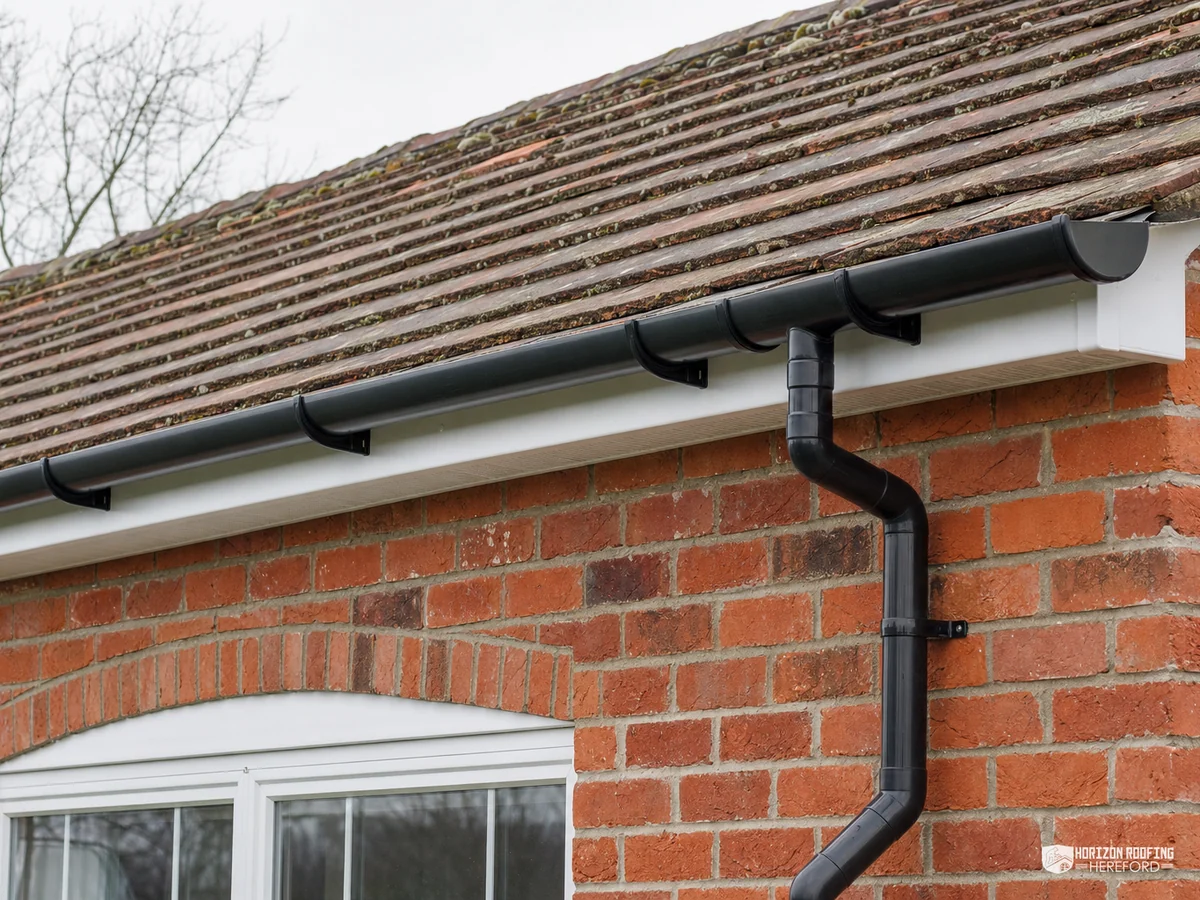
Brett Martin advises a fall of "1mm for every 600mm" along the run toward the outlet, so a level gutter holds water and a steep one spills it over the stop end. Where a valley discharges into a gutter, the hopper and the first downpipe are checked for blockage as well. MyJobQuote puts the average gutter replacement at around £1,000 to £1,600, with standard uPVC usually around £40 to £50 per metre.

How much notice and money does a Hanley Castle scaffold licence involve?

Worcestershire County Council's page says applications should be submitted "in good time" and gives no number of days. Worcestershire County Council charges £85 per week, then £65 for subsequent weeks, plus a £25 urgency surcharge for an urgent application within 2 days. The company contracted for the work is the one "required to apply", per Worcestershire County Council. On a Hanley Castle job the licence weeks are counted into the single written price.

Arrange a Hanley Castle stack and valley survey

Give us the road and the stack or valley that worries you, and the survey will begin there.

10-year workmanship guarantee, in writing