
01432 610152 Get a quote Call 01432 610152

Roofers in Worcester

Roof repairs and re-roofs across Worcester, from flat extensions to the shadow of Grade I landmarks.

Every defect is photographed before we price it, and the single written total follows the survey.

Get a free quoteCall 01432 610152

Grade I landmarks ringed by conservation areas

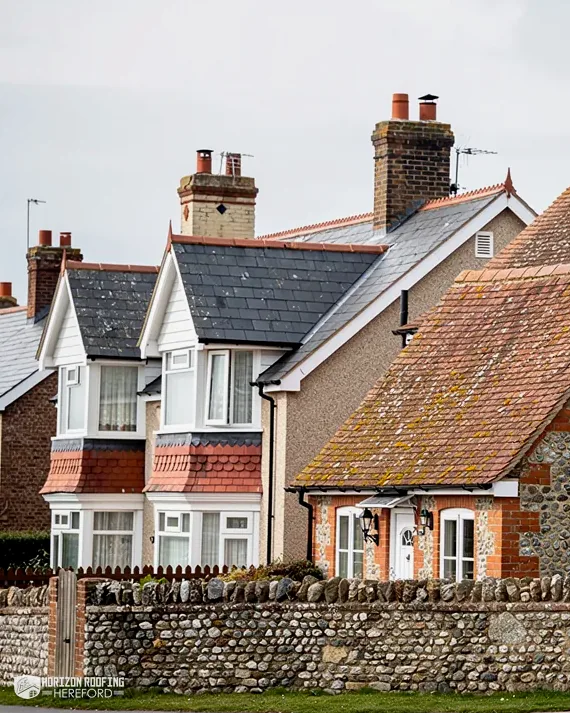
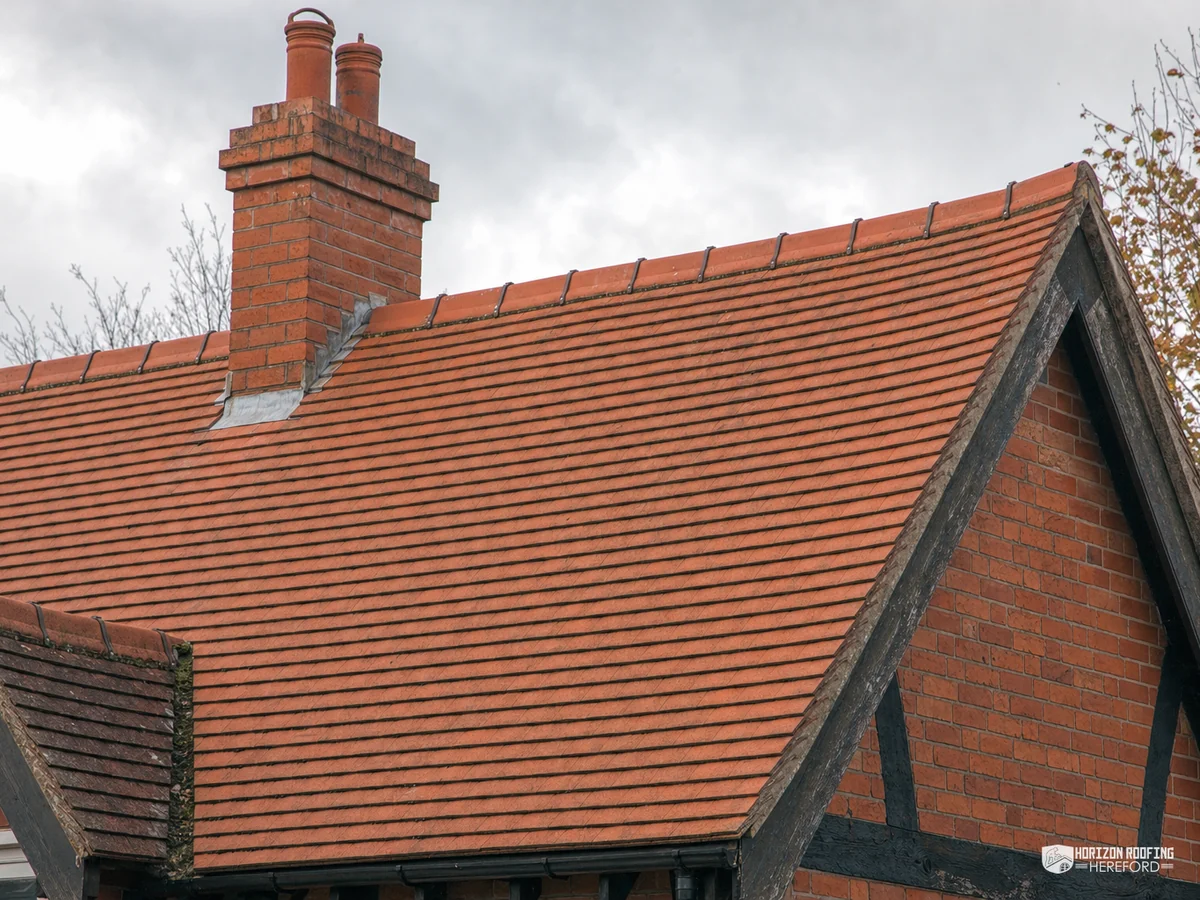
  • Older cottages with weathered clay tile roofs and brick chimneys behind a flint wall
    The Guildhall, Grade IThe Guildhall is listed Grade I, entry 1389921, first listed on 22 May 1954.
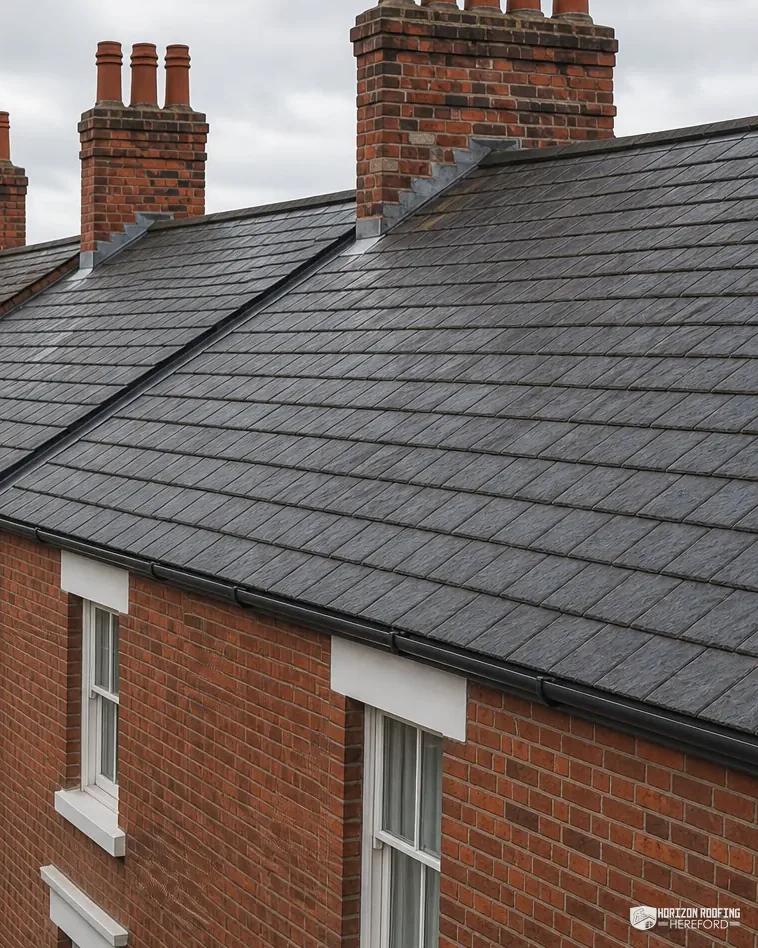
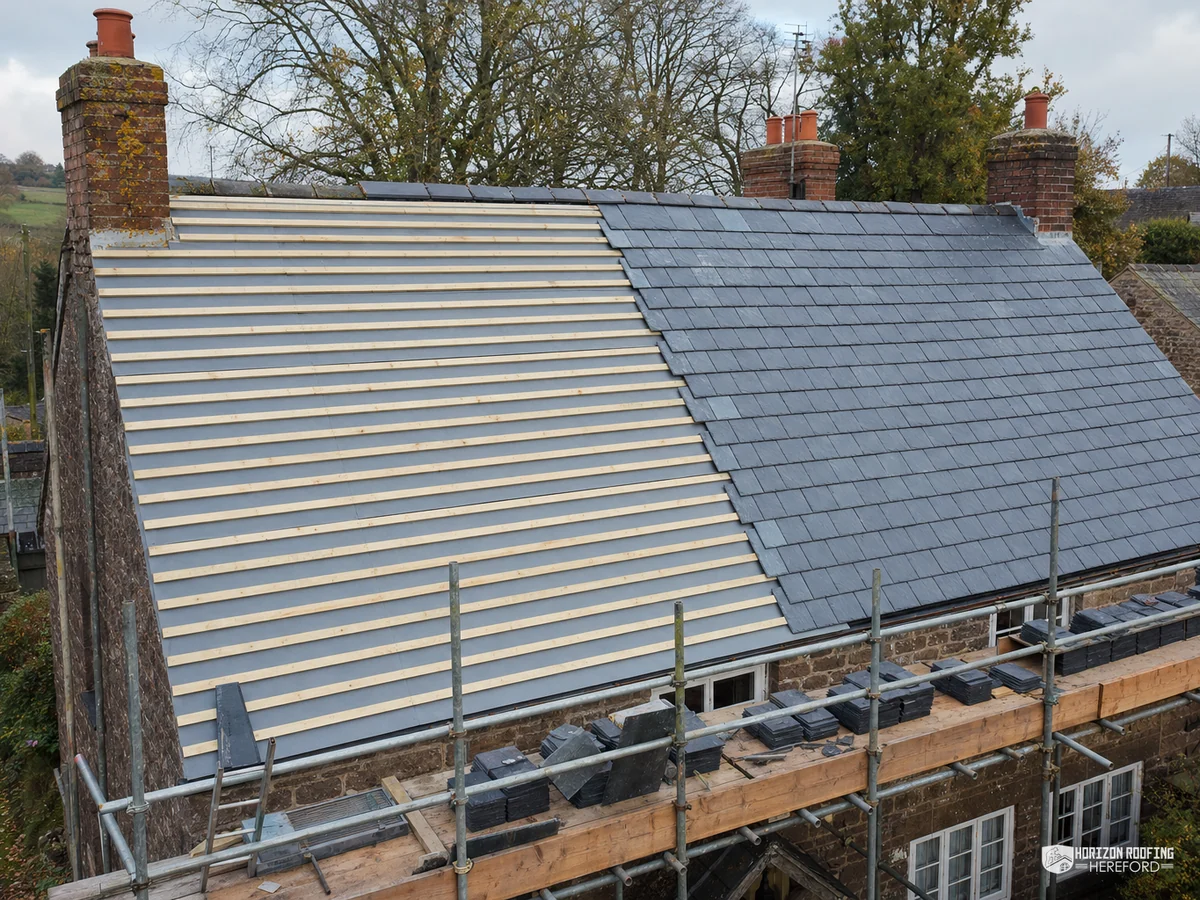
  • Slate roofs and chimney stacks along a red brick Victorian terrace
    The Greyfriars, Grade IThe Greyfriars carries a Grade I listing too, entry 1389859, dated 22 May 1954.
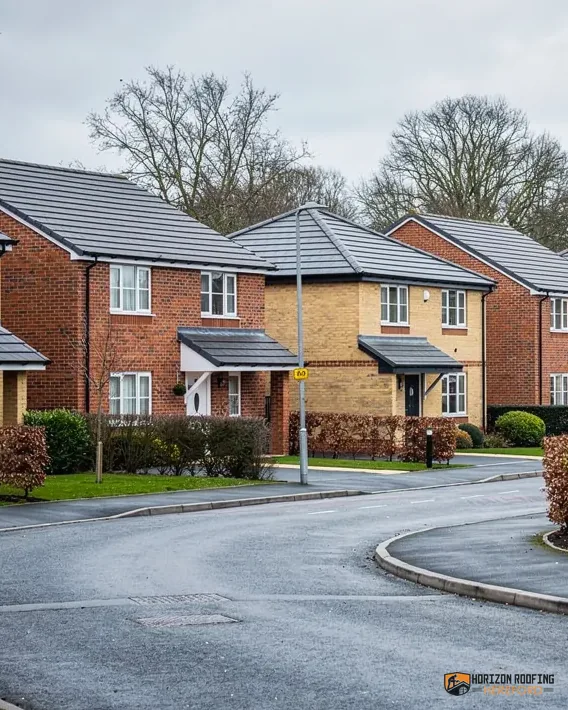
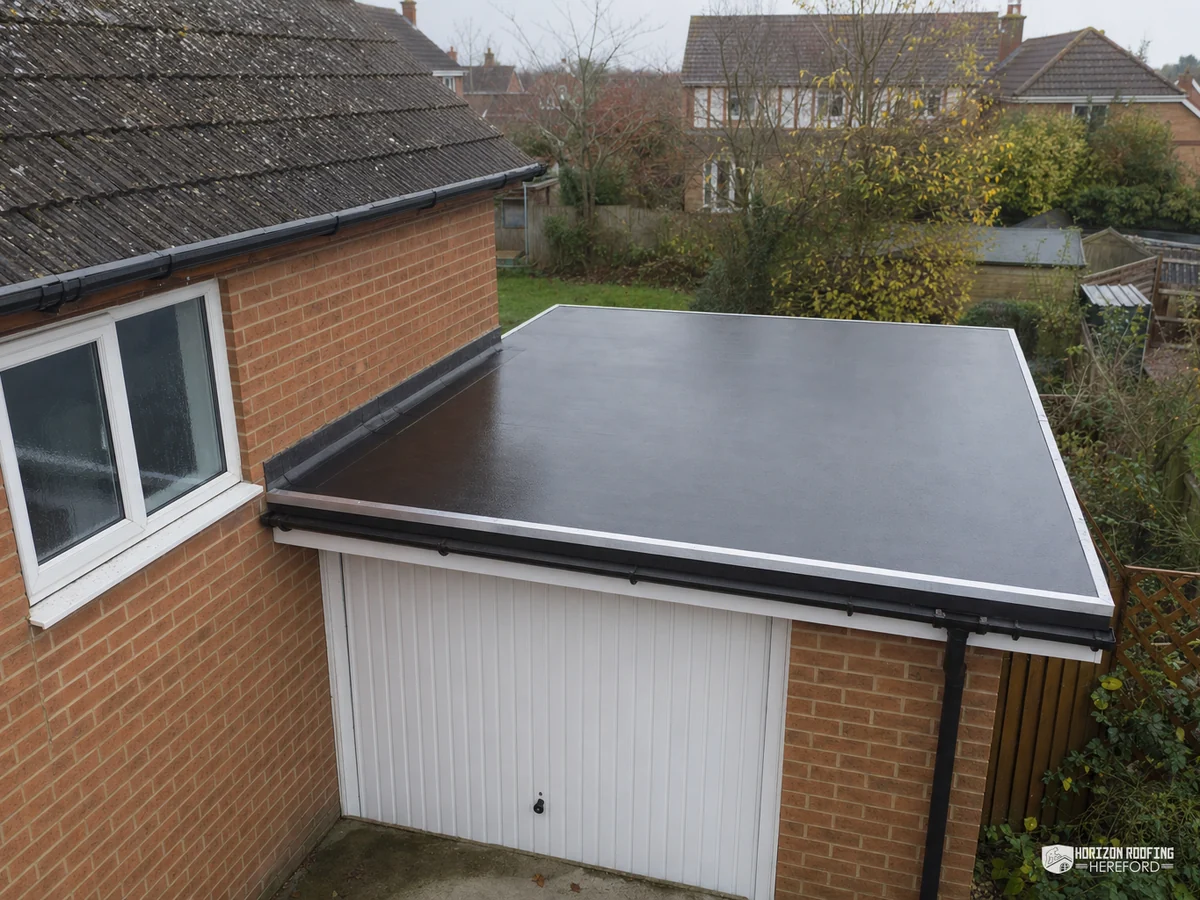
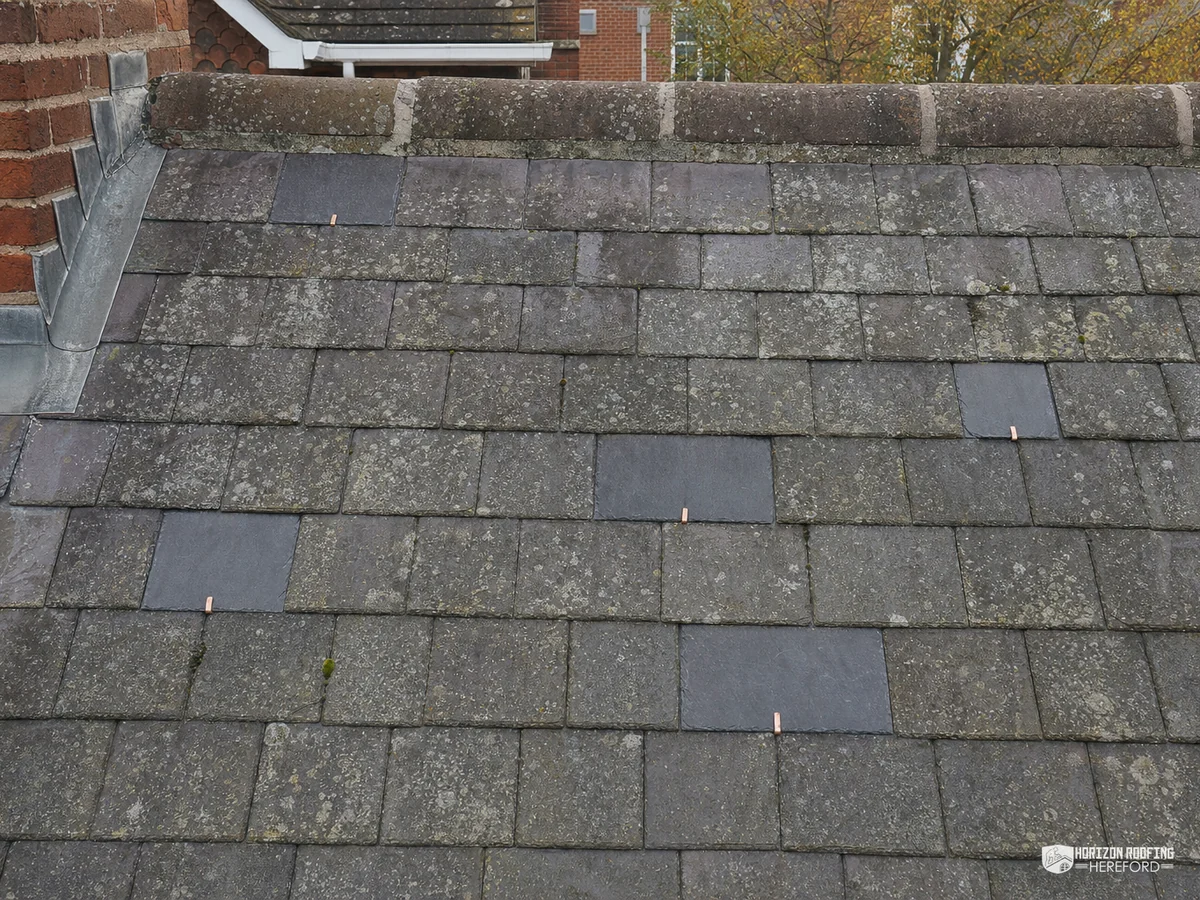
  • Newer homes with grey concrete tile roofs along a curving estate road
    Church of St SwithunThe Church of St Swithun and its railings are listed Grade I, entry 1063801.

Worcester, mapped

Worcester on a street map, with a dashed circle around the town and the nearest towns we cover. Tiles © Esri; map data © Esri, HERE, Garmin, OpenStreetMap contributors.

Worcester roofs, flat to Grade I

A Worcester roof from flat extension to Grade I neighbour

First the flat roofs on extensions and flat blocks; then the lead valleys and gutters that carry the water away; last the listed buildings and conservation areas that shape what a Worcester roof may be.

A drawn cut-away section through a Herefordshire border house: the front of the main roof is cut open to show the rafters, underlay, battens and slates, beside a black-and-white timber-framed gable. Numbered, from the ridge down: 1 Flat roofs; 2 Lead and gutters; 3 Protected streets.

Fig. 1 A Worcester roof in section: flat extension, lead gutter and listed wall.

Callout 1 of 3

Flat roofs: membranes, falls and edge details

Flat roofs are laid to a gentle slope, the fall, so that water leaves by an outlet or gutter and does not sit on the surface. BS 6229:2025 is the current British Standard for flat roofs, and it covers waterproofing membranes only. The NFRC quotes a "minimum 1:80 finished fall" for them, and IKO, a membrane maker, advises designing for 1:40. On a Worcester flat roof our survey looks first for water still lying on the surface after rain has stopped, because a pool tells us the fall has been lost somewhere along the roof.

The covering decides what comes next. Published lifespans disagree between sources, and each keeps its caveats, so both figures are given for each covering:

Two published lifespan ranges for flat roof coverings
CoveringHomeBuildingLess
EPDM rubber25 to 30 years30 to 50 years
GRP25 to 30 years25 to 40 years
Felt10 to 15 years10 to 20 years

Splits and blisters are only half the picture. Leaks on a flat roof can start at an edge: the trim at the perimeter, the upstand (the membrane turned up against a wall) or the collar around a rooflight. Each is checked by hand and photographed, so that a patch can be told apart from a sheet that is failing. Renewing the whole membrane also brings in the energy rules, because under AD L 2021 swapping the old waterproof membrane of a flat roof for a new one counts as renovation, which brings insulation figures with it. An outlet, the opening that lets water leave a roof, can be blocked by leaves or by a collapsed pipe behind it, so we clear it and pour water in to see how quickly it drains. Where a flat roof meets a pitched slope the junction is a flashing detail of its own, photographed from above and from the side.

Worcester has blocks of flats as well as houses. A flat is not a dwellinghouse under article 2 of the 2015 permitted development order, so the householder rights do not reach it, and what a roof over a flat needs is a question to put to Worcester City Council. Our flat roofing page covers repairs, overlays and replacement membranes, and each job begins with the same photographs of the same edges.

Checked on a Worcester flat roof

  • Water standing after rain
  • Splits, blisters and open laps
  • Perimeter trims and upstands
  • Collars around rooflights and pipes
  • Outlets, gutters and downpipes

Water still lying on the roof after the rain stops tells us the fall has been lost.

Fig. 2 Flat roofs, drawn close

Callout 2 of 3

Lead valleys and the gutters beneath them

A valley is the line where one slope runs into another across an inside corner; in lead, it is formed from one long sheet laid along that line. Every drop from both slopes passes down it, so it takes everything both slopes shed. A parapet is a short wall standing above the roof edge, and the gutter tucked behind it is lined with lead as well. In Royston Lead's cast-lead table each thickness carries a code, and Code 3 is "Recommended for lead soakers only", so it does not line a valley. We read the code against the job and name the one that went in.

Lead outlasts much of what surrounds it. MyJobQuote says lead flashing "can last for over 80 years", so sound lead stays in place. Zinc is the other metal to consider, and its maker, VMZinc, gives a life "in excess of 100 years". A split valley is cut out and relaid in new sheet with the laps and rolls dressed to shed water, since a patch laid over the split leaves the fault underneath it.

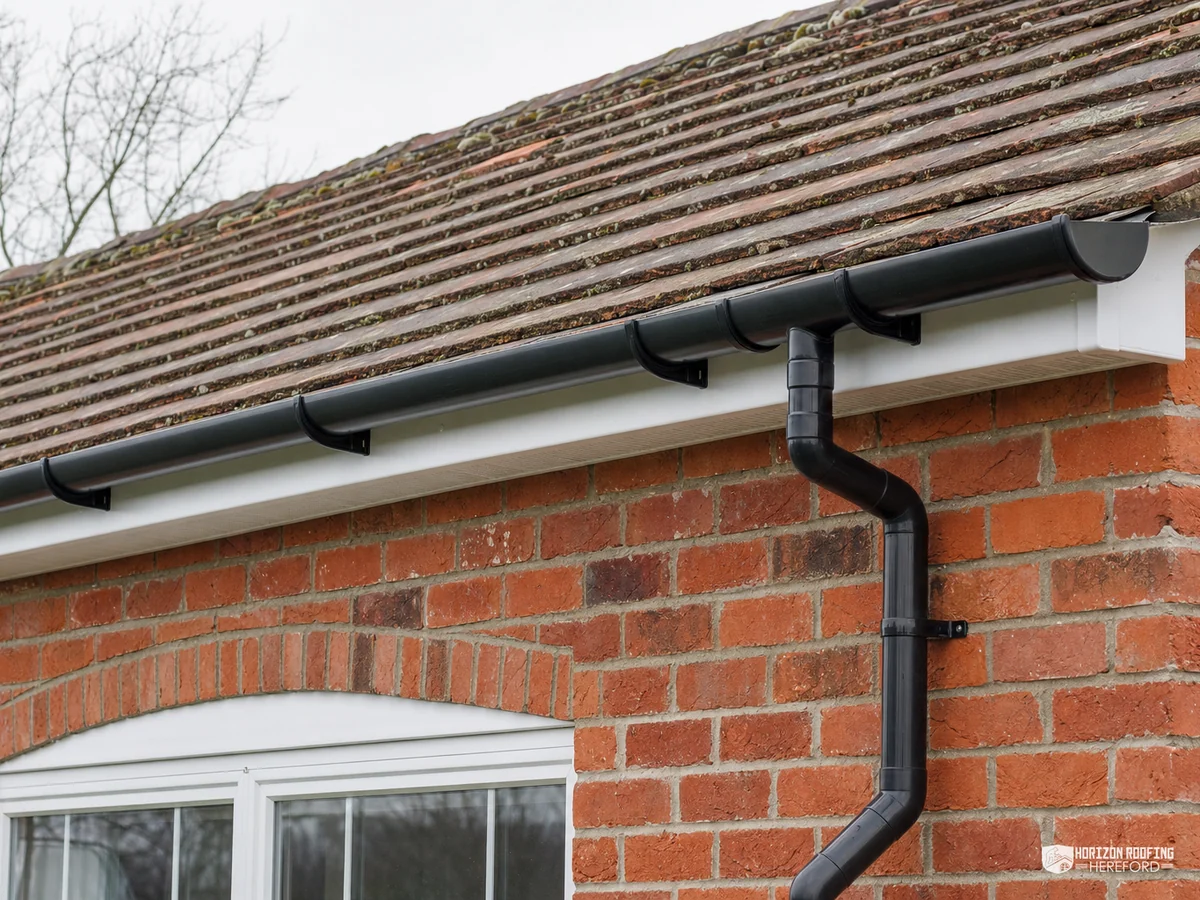
Below the roof edge, gutters and downpipes finish the job. Brett Martin advises a fall of "1mm for every 600mm" along a gutter, a slope too gentle to see by eye but easy to lose where a bracket has sagged. We run water through a gutter, watch where it stops, and take pictures of the staining that overflow has left on the masonry, because a damp wall beneath a gutter points to a run that is no longer draining. Where a gutter outlet drops into a downpipe, the joint is looked at for leaks, since a loose joint lets water run down the brickwork rather than into the drain.

The junction of valley and gutter gets the same attention, as it is the point where two channels meet and leaves collect. On a flat extension with a parapet, the lead, the gutter and the outlet are all checked in one pass so the whole path of the water can be followed from the slope to the drain. Guttering, soffits and fascias are covered by their own service, and the lead roofing page describes the sheet, the code and the dressing in more detail.

Lead and gutter work on a Worcester roof

Valley
Sheet laid in lengths with laps that shed water
Parapet gutter
A lead-lined channel behind the wall, with a fall to the outlet
Flashing
Lead tucked into the wall and dressed over the covering
Gutter fall
Brett Martin's 1mm for every 600mm, checked with water
Outlet
Cleared and tested so it takes the full flow
Fig. 3 Leadwork, drawn close

Callout 3 of 3

Conservation areas, Grade I buildings and the council

Worcester City Council holds these conservation areas in and around the city: Worcester and Birmingham Canal, Riverside, Historic City, Sidbury and Fort Royal, Foregate Street and The Tything, Britannia Square, Lowesmoor and Royal Infirmary. Your address may sit inside one, so ask Worcester City Council to confirm it, and the same council answers whether an Article 4 direction applies. The city holds Grade I buildings too, among them the Guildhall (entry 1389921), the Greyfriars (1389859), the Old Palace (1389763) and the Church of St Swithun (1063801), so work on a roof beside one of them is read against that background.

Under section 7 of the 1990 Act, anything that affects a listed building's character wants consent first, while permitted development rights stay in place. Dormers and roof windows follow separate English rules, which the planning guide for roof windows explains. A church roof depends on who governs the building. The Churches Conservation Trust now presents St Swithun's as "A new arts and music venue in the heart of Worcester city centre", and a Trust church takes listed building consent. Churches in use fall outside listed building consent where they belong to the Church of England (through the faculty system), a Roman Catholic diocese, the Methodist Church or the United Reformed Church, or to a Baptist Union church held by a Schedule 1 trust corporation. No such exemption exists for Quaker or Unitarian meeting houses, Churches Conservation Trust churches or closed chapels, which all need listed building consent. Where a flat extension abuts a listed wall, the junction is raised with the council early, because a flashing cut into old masonry changes the building itself.

Building control for a Worcester address is South Worcestershire Building Control, the joint service that Worcester City Council shares with Malvern Hills and Wychavon, or a registered building control approver. Where scaffolding closes off part of a Worcester street, section 169 of the Highways Act 1980 requires a licence, and Worcestershire County Council is the body that licenses scaffolds on its highways; the fee and the notice are covered in the questions below.

Photographs matter most on protected roofs. The report shows every junction along with the covering found there and the repair proposed for it, so the council can set the proposal beside the building it already knows. The listed and heritage roofing page describes how this works from the first visit, and the same record serves a lender, a buyer or a managing agent who asks what the roof is made of.

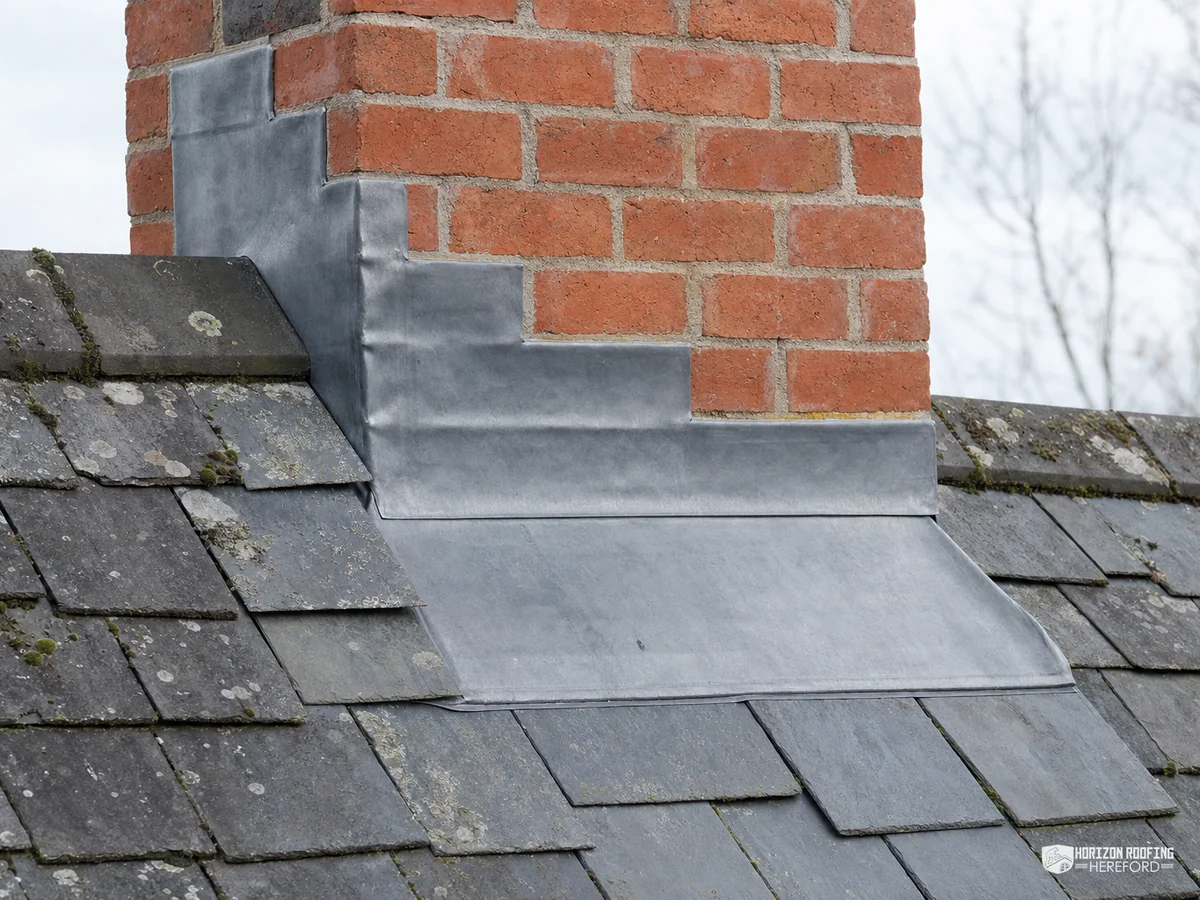
A lead flashing against a Worcester wall

SoundLead tucked tight into the wall, mortar intact
Needs workLead lifting from the joint, with loose or missing mortar

Worcester roofs: falls, lead, protected areas and licences

How much fall should a Worcester flat roof have?

BS 6229:2025 covers flat roof membranes, and the NFRC gives a "minimum 1:80 finished fall". IKO advises designing for 1:40. A roof that stays wet after a shower has lost part of its fall, and the survey measures where the water collects before a repair or a new membrane is proposed. The measurements and photographs go into the report, so the reason for the repair is visible to you and to anyone else who reads it.

Which Worcester conservation areas could touch a roof job?

Worcester City Council holds Worcester and Birmingham Canal, Riverside, Historic City, Sidbury and Fort Royal, Foregate Street and The Tything, Britannia Square, Lowesmoor and Royal Infirmary. Your address may fall in one, so ask the council to confirm it first. Ask Worcester City Council whether an Article 4 direction applies as well, since any direction would sit on top of the conservation area.

Who handles building control for a re-roof in Worcester?

South Worcestershire Building Control does, and a registered building control approver can do the job instead. Worcester sits in England, which means the Planning Portal's envelope test: where the work affects less than 25 per cent of the building envelope and less than 50 per cent of the roof as a whole, an application is normally unnecessary. Anything bigger is taken to building control before work starts.

Is the scaffold licence part of the quote for a Worcester roof?

As Worcestershire County Council explains, the firm you contract builds the licence into its costs within the quote, since it is "required to apply for licences". Worcestershire County Council's fee is £85 per week and £65 for subsequent weeks, plus a £25 urgency surcharge for urgent applications within 2 days. The licence rests on section 169 of the Highways Act 1980.

What price ranges are published for a flat roof?

MyJobQuote gives £1,500 to £6,000 for the average flat roof replacement in 2026, £80 to £120 per m² for installed felt, and around £1,050 as its average rubber roofing cost. For a felt single-garage roof, Which? (November 2025 survey, ex VAT) gives £1,400 to £3,500. These are ranges for other roofs around the UK. A per-m² figure is a unit rate, so it cannot be multiplied by your roof's area; yours comes in writing after the survey.

Can I change the roof of a flat in a Worcester block?

Householder permitted development does not apply, because the 2015 order defines a dwellinghouse so that it excludes a building containing flats. Any change to the roof over a flat is therefore a question for Worcester City Council before a covering is chosen. Any new covering on a renovated roof also raises the energy rules in AD L, so the insulation figures are settled before the covering is chosen.

Worcester roof, photographed before it is priced

Tell us whether the roof is flat or pitched, a house or a block, so that the survey fits the roof you have.

10-year workmanship guarantee, in writing