


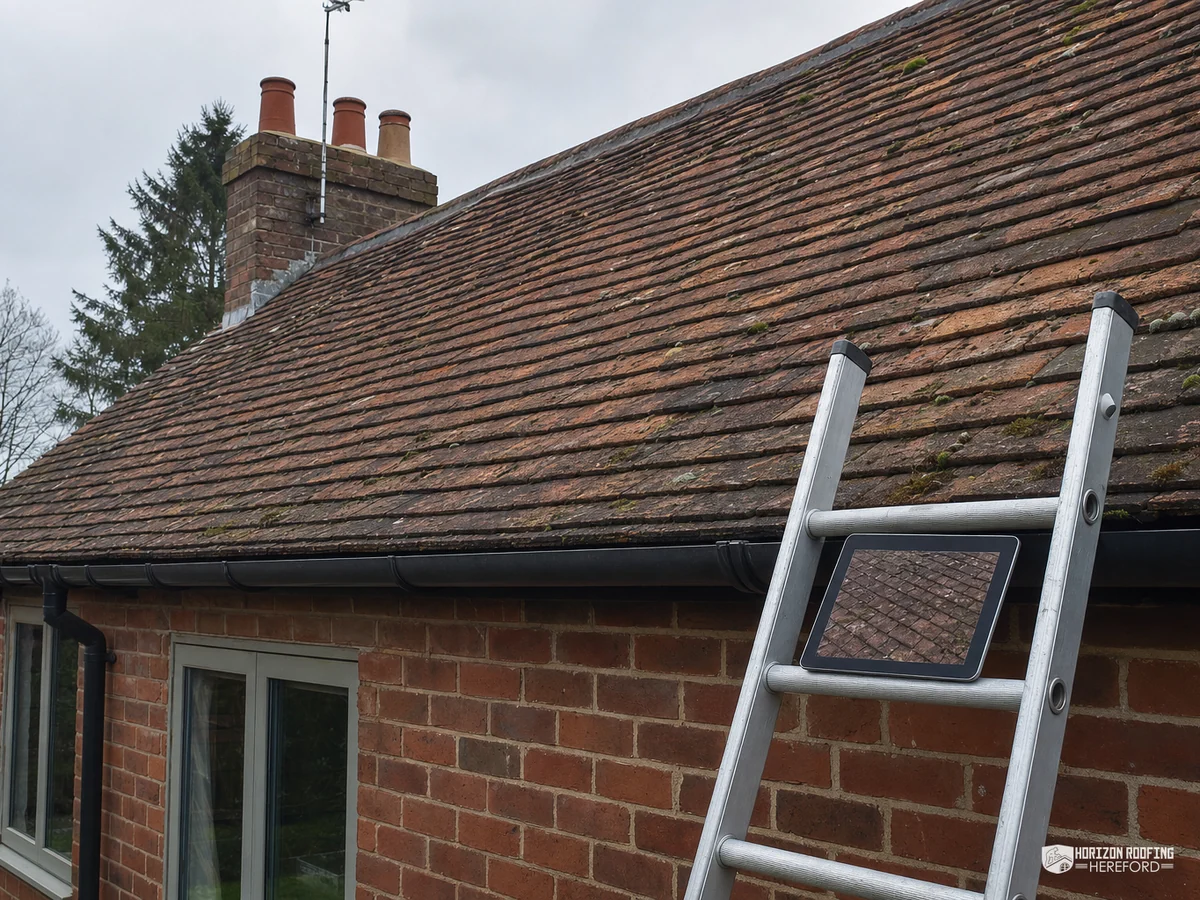
Callout 1 of 3
Gutter falls and fixings along the eaves
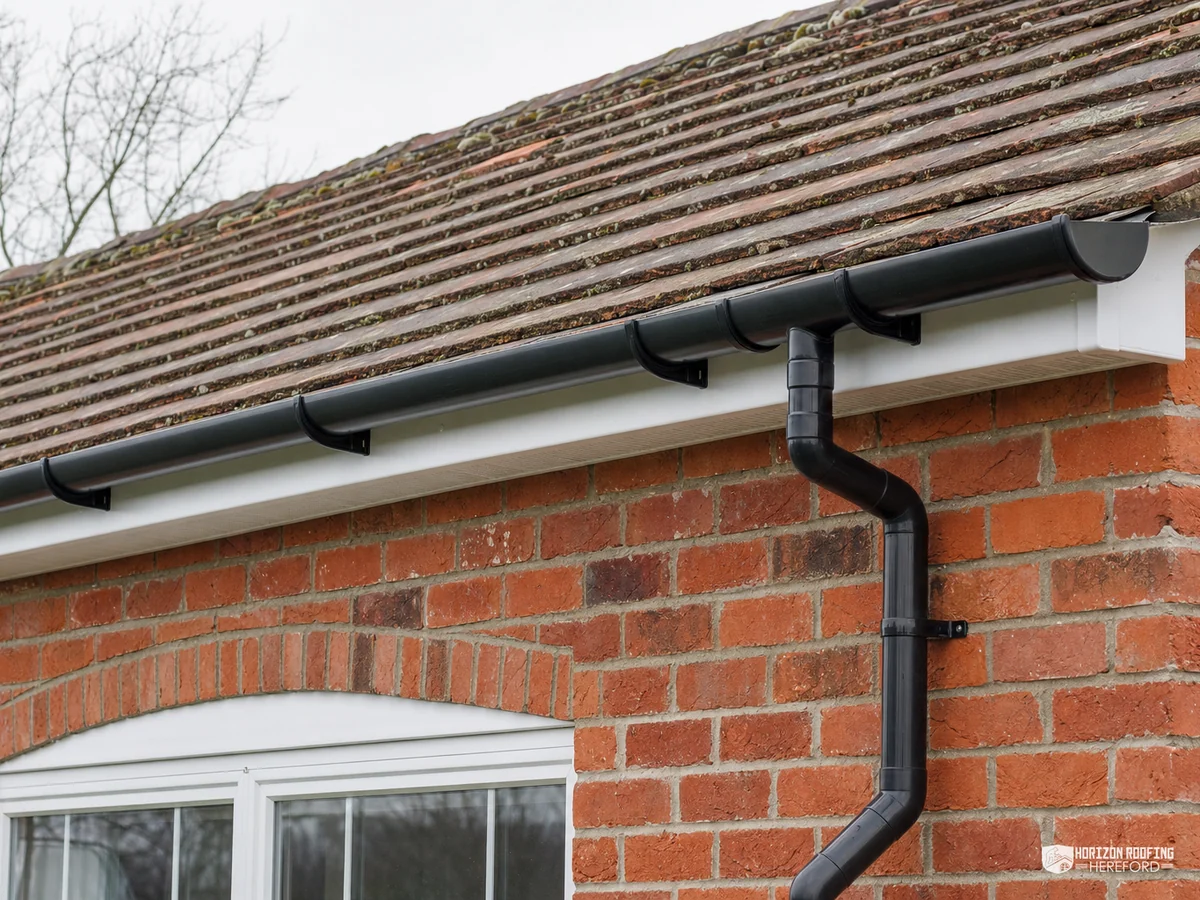
Rainwater leaves a roof through the gutter, so a survey follows it there before anything else. A gutter is the channel fixed at the foot of each slope, on the eaves, and it hands run-off to the downpipes. It can only do that if it leans the right way, and Brett Martin quotes the lean as "1mm for every 600mm". Along a 6 m run that comes to just 10 mm of drop, which vanishes the moment one bracket sags or a length has been refixed a little out of line.
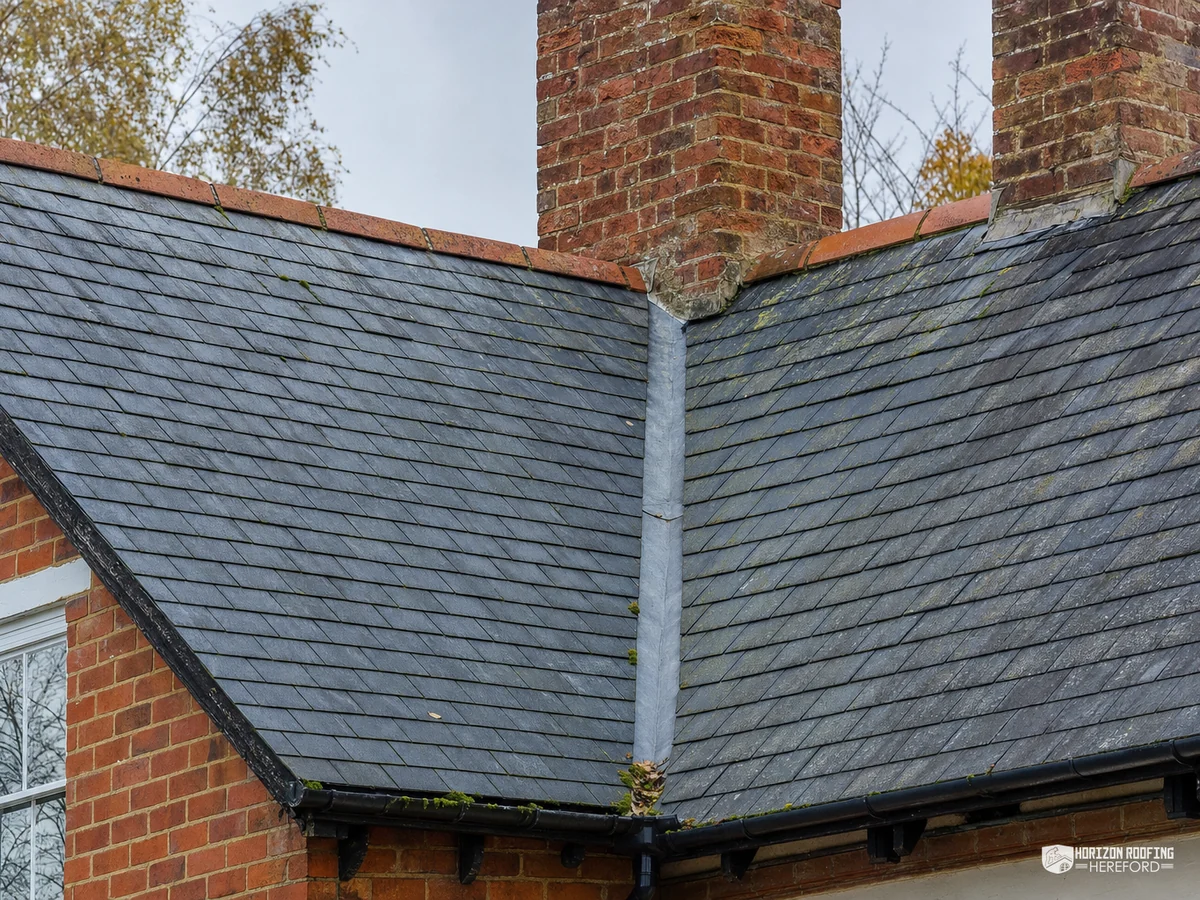
We stand at one end of a run and sight along it, then tip a bucket in near the high end and watch where the water travels. Water lying in a joint, a brown tide mark above the base of the channel, or a spill at the outlet each says the fall has gone. Brackets that have pulled out leave the channel drooping between them, and the droop traps leaf litter and silt that a clear run would carry off. Downpipes get the same attention: a bend packed with moss, or a clip that has dropped away, sends the flow back over the lip.
After that we look at what the gutter hangs from. The fascia board behind it can rot from the top edge, where overflow has soaked into the grain, and a gutter screwed into soft timber will not hold its line for long. Plastic Centre, a uPVC retailer and so an interested party, says plastic fascia boards "can typically maintain reliable performance for between 20 and 40 years". Read that as a range from someone who sells them, never as a promise about your boards.
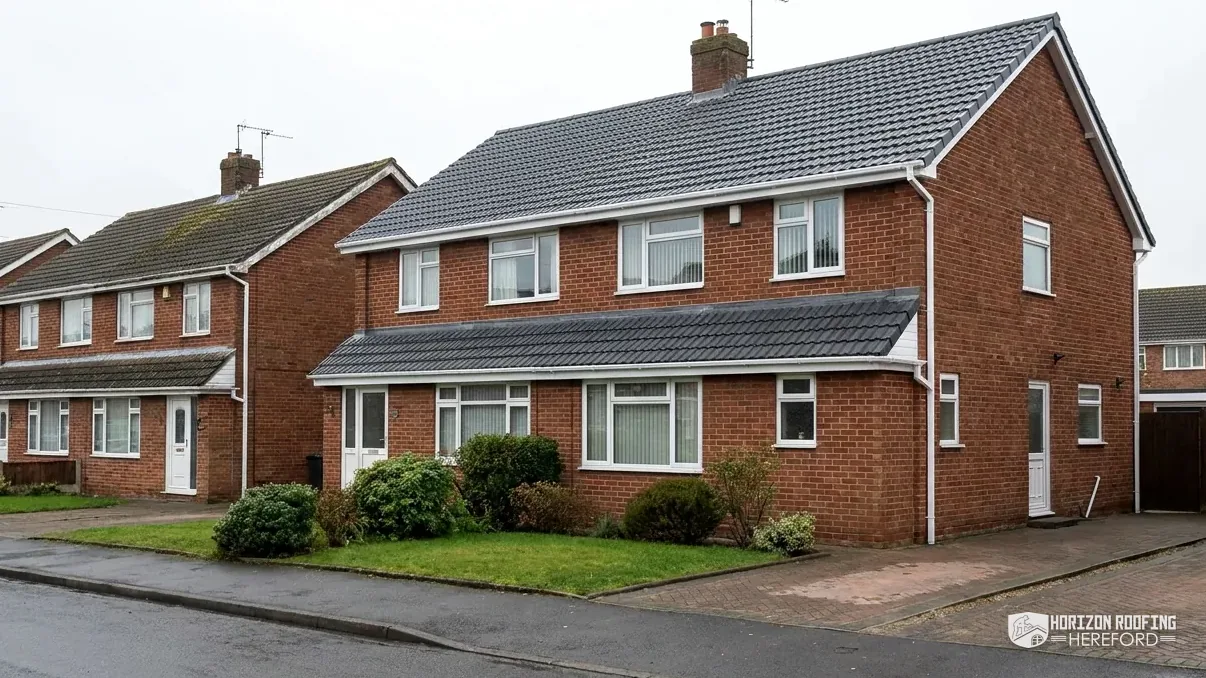
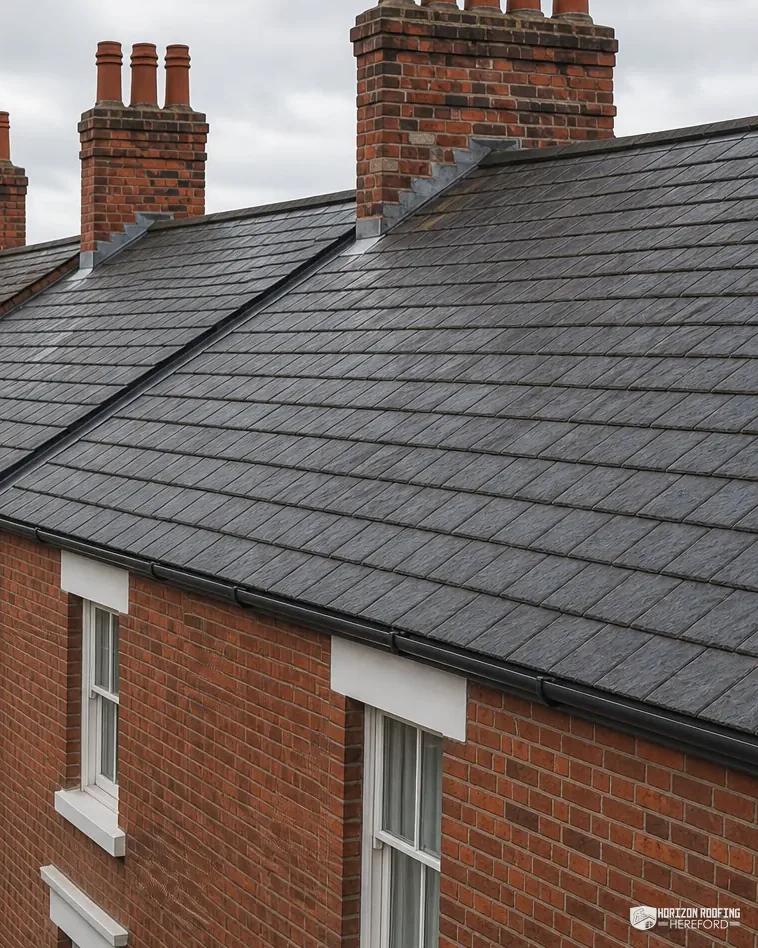
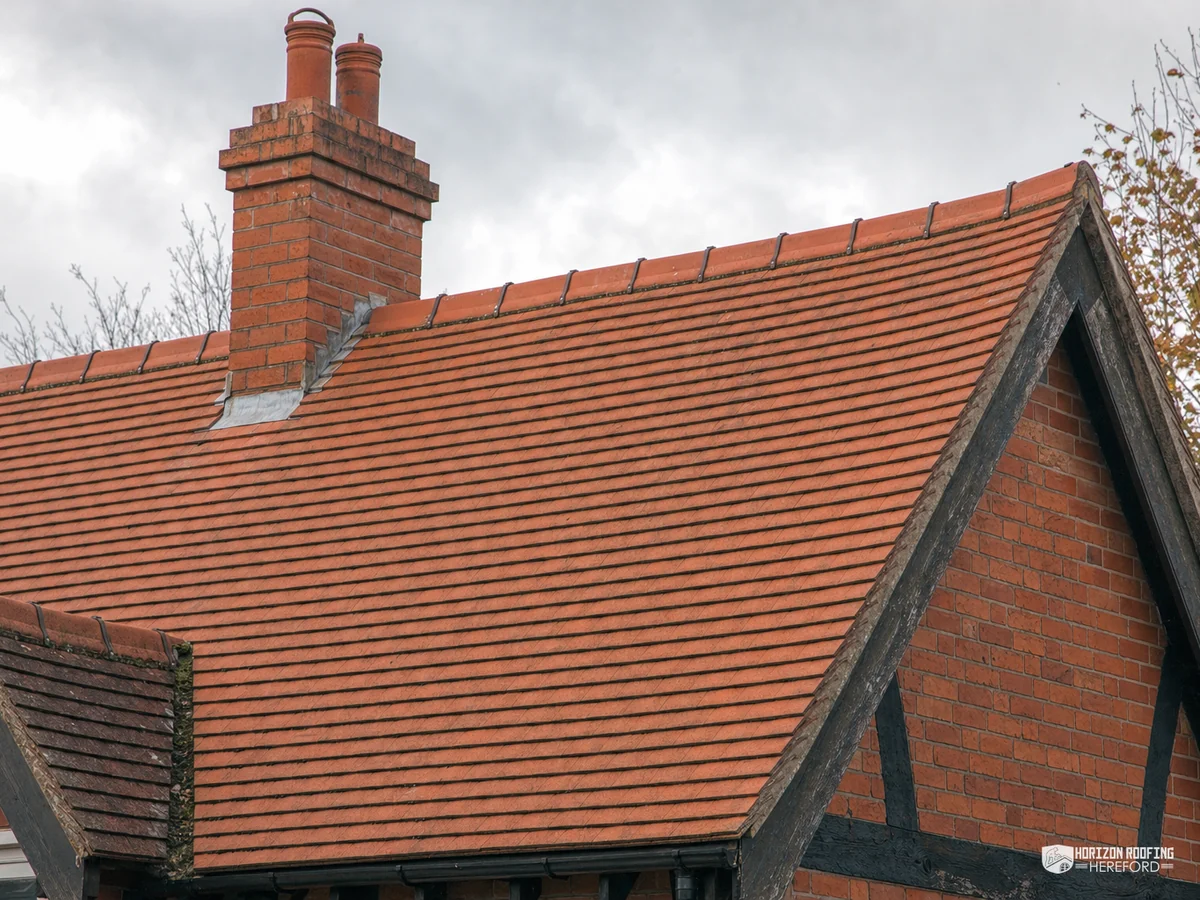
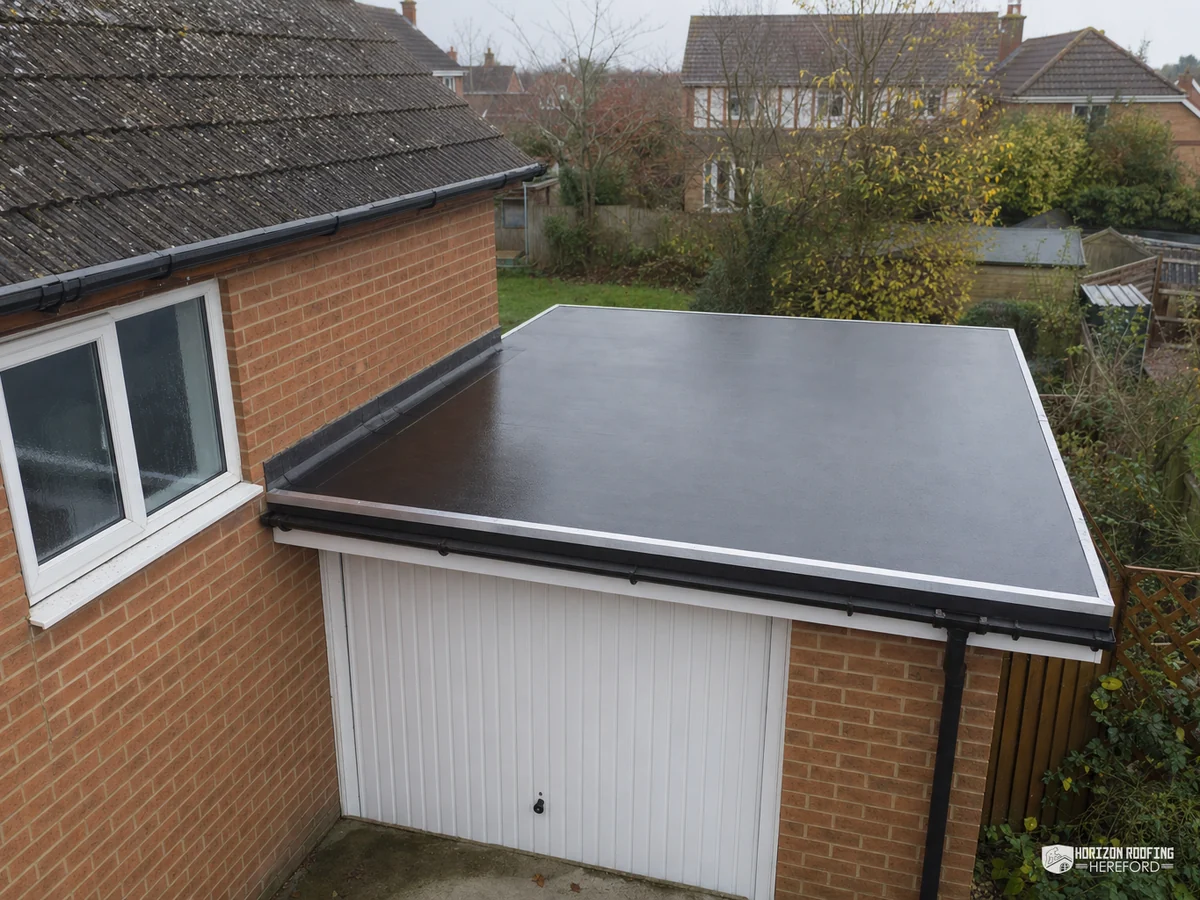
On a long run we also check the stop ends and the corners, since a corner is where two lengths meet and a seal has to hold. The photographs show every bracket, joint and outlet, so you can see whether the trouble is one loose fixing or a whole run that has dropped. Refixing a bracket is a small job. A board gone soft has to be dealt with first, because new guttering on rotten timber only moves the problem along. Our guttering, soffits and fascias page lays out the choices, and the price on paper follows the survey.
What we look at along a gutter run
- Fall
- 1mm for every 600mm, as Brett Martin sets it out
- Brackets
- Firm in the fascia and evenly spaced along the run
- Joints
- Dry at the seal once the rain has stopped
- Outlets
- Clear, with no silt standing above them
- Fascia
- Sound timber, not soft along its top edge
A gutter that holds water is telling you its fall has gone.