
01432 610152 Get a quote Call 01432 610152

Roofers in Woolhope

Lead, roof window and chimney work for Woolhope, 7.8 road miles south-east of Hereford.

Lead and stack are read first; photographs record each fault and a written total follows the survey.

Get a free quoteCall 01432 610152

Lead, windows and stacks in a Woolhope landscape

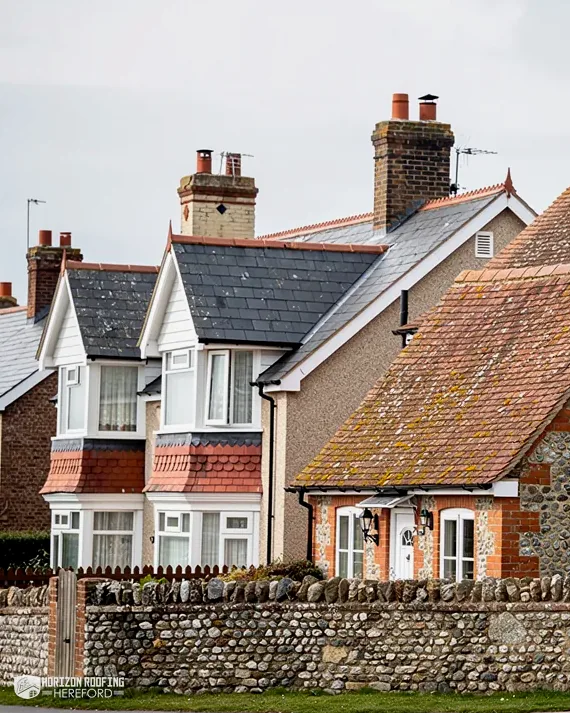
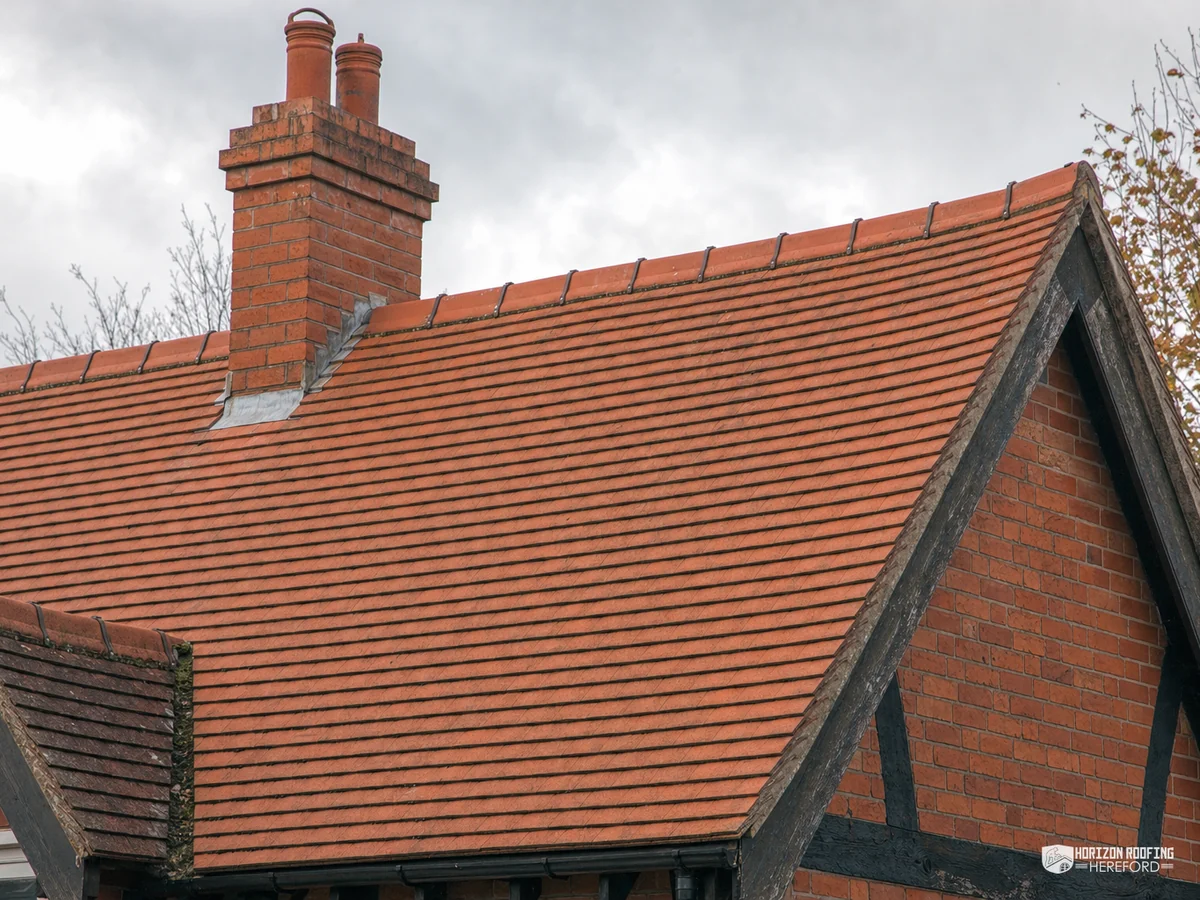
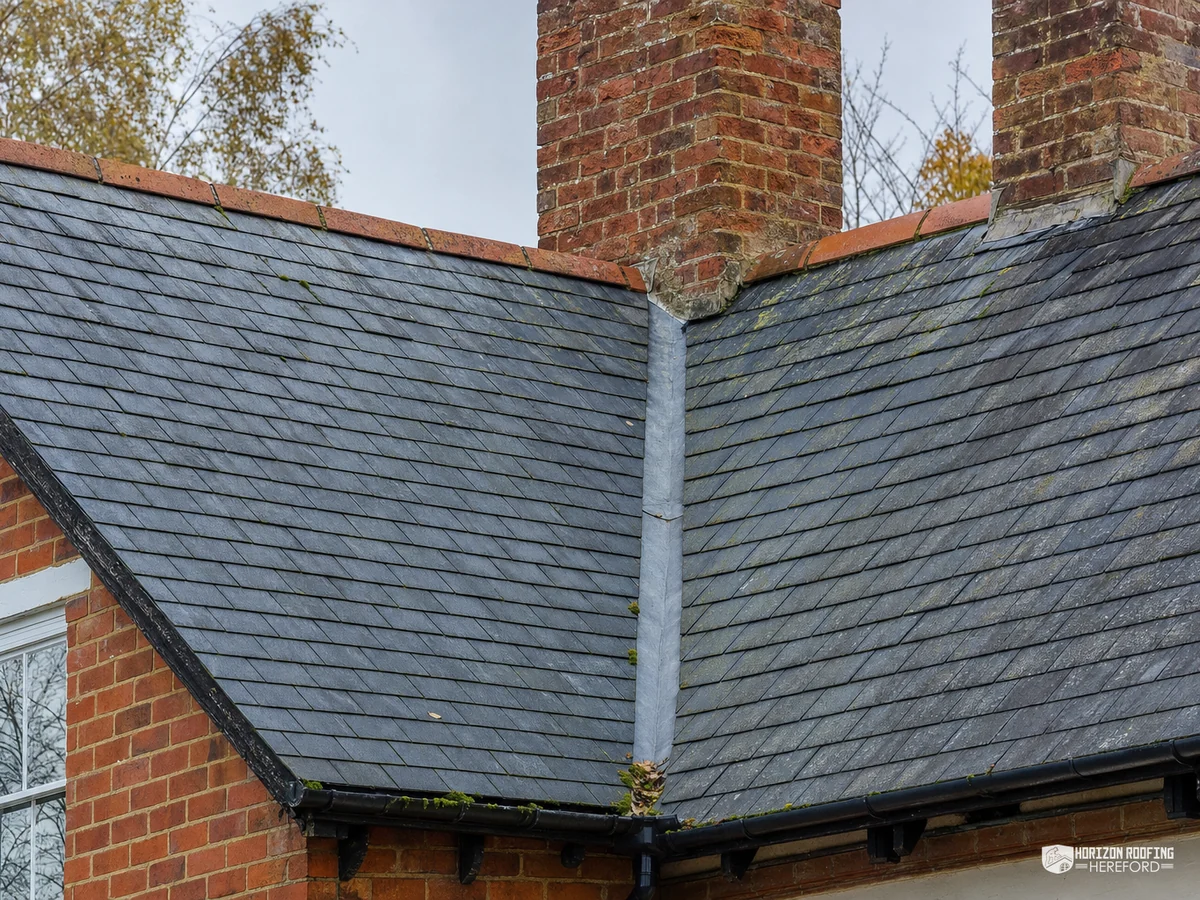
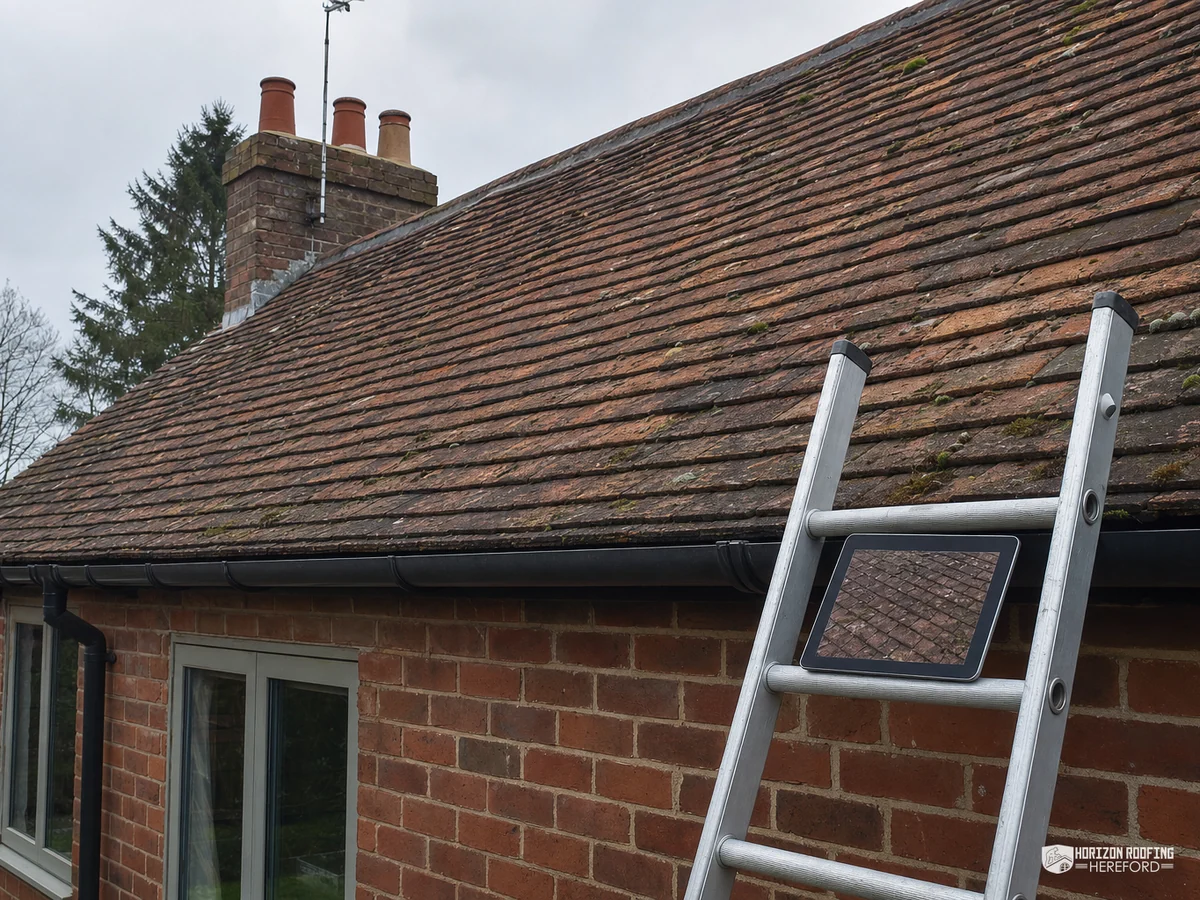
  • Older cottages with weathered clay tile roofs and brick chimneys behind a flint wall
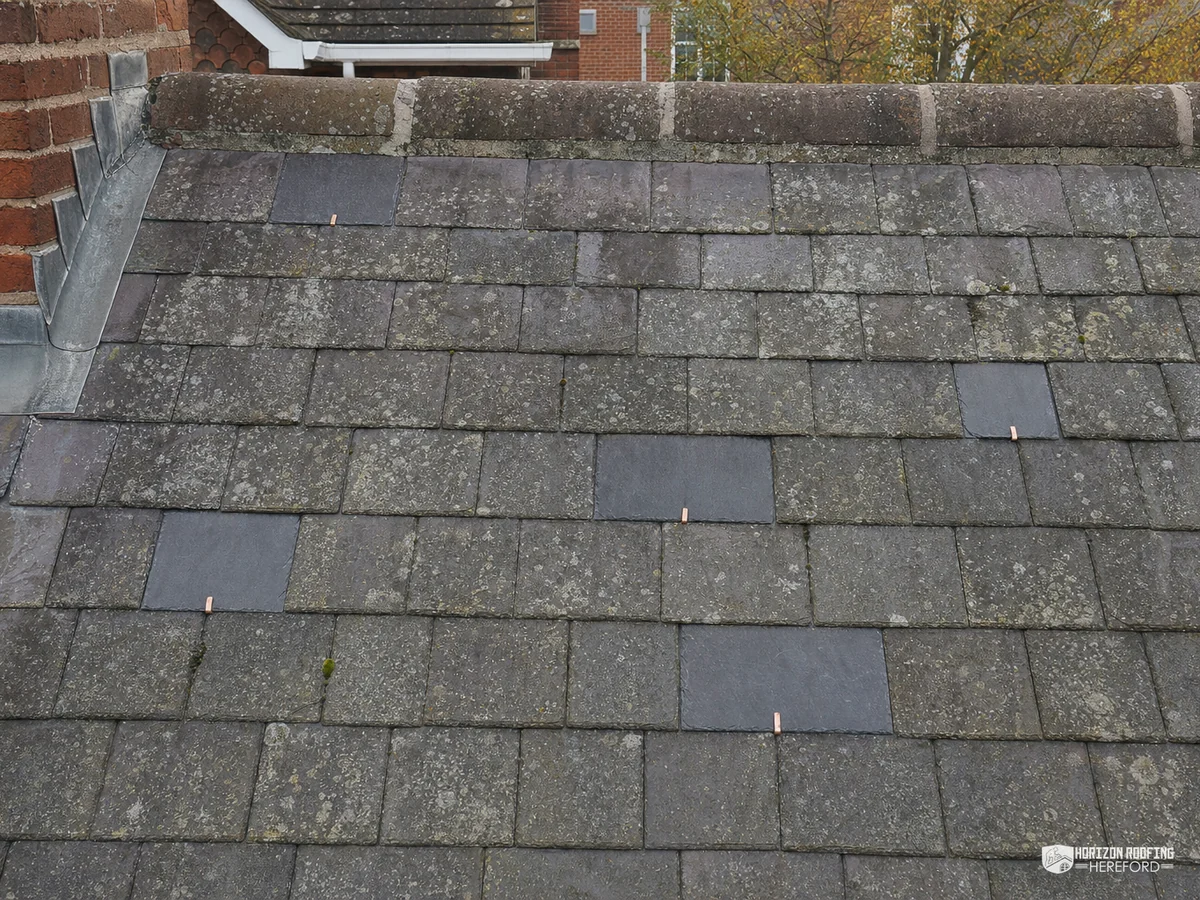
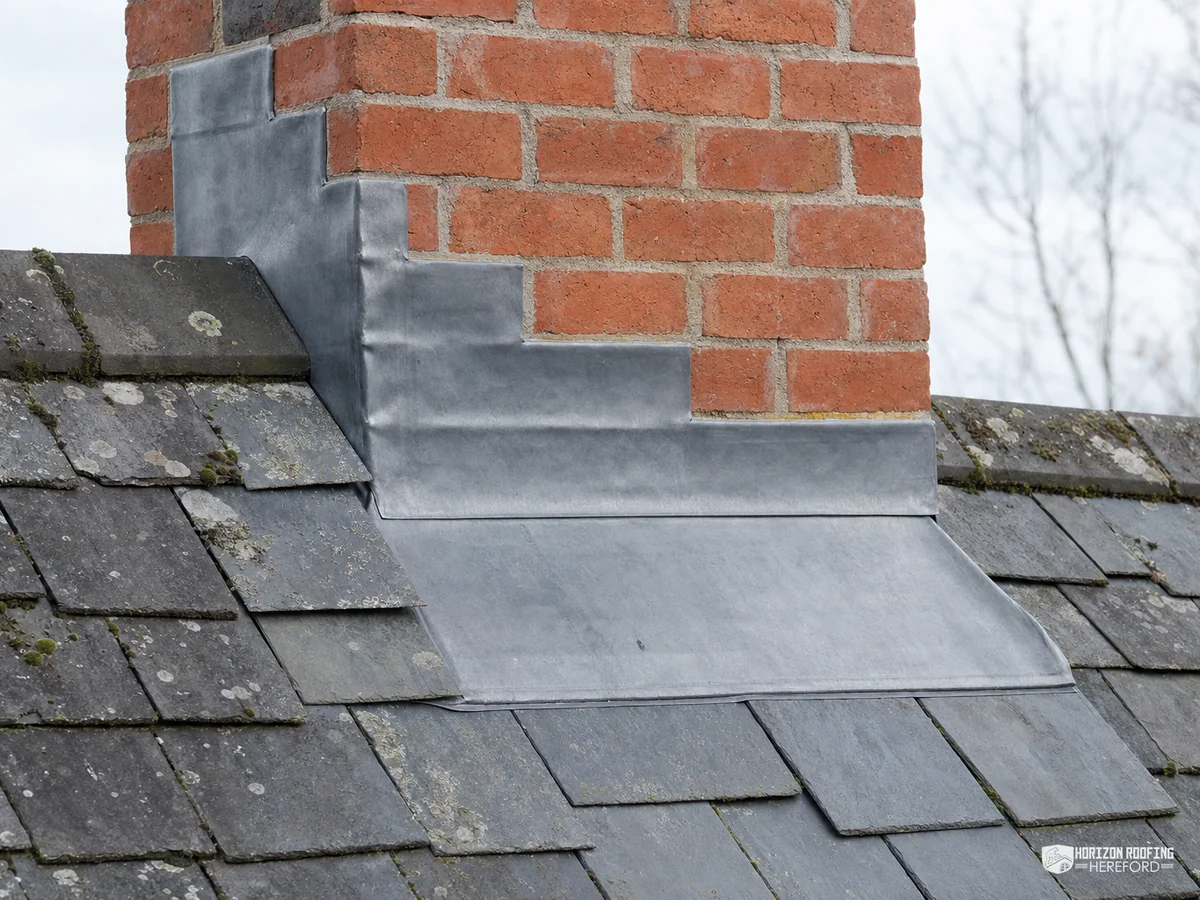
    Lead flashings and soakersLead at stacks and abutments splits where it has moved over the years.
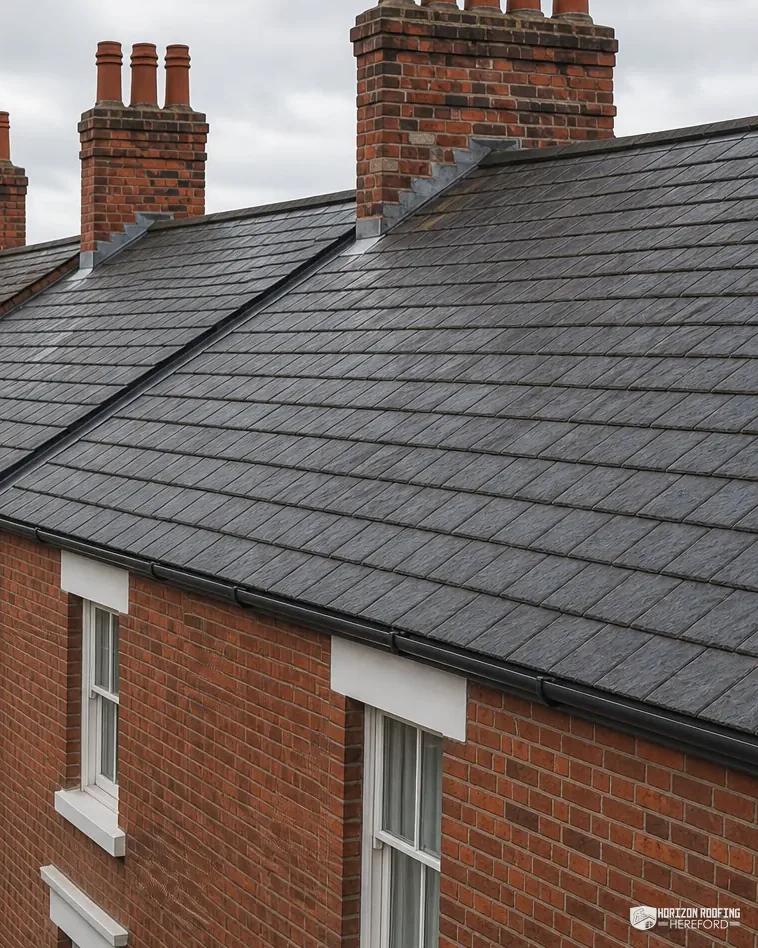
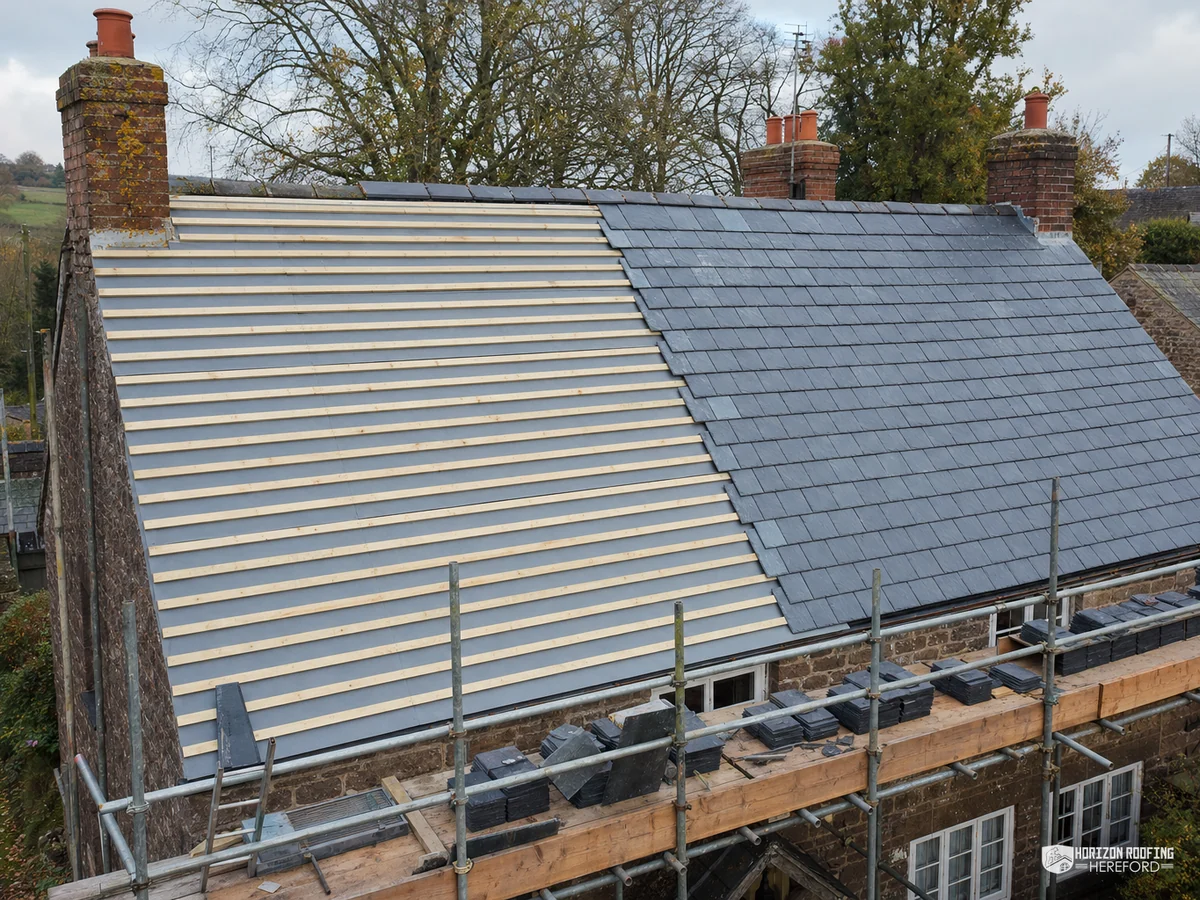
  • Slate roofs and chimney stacks along a red brick Victorian terrace
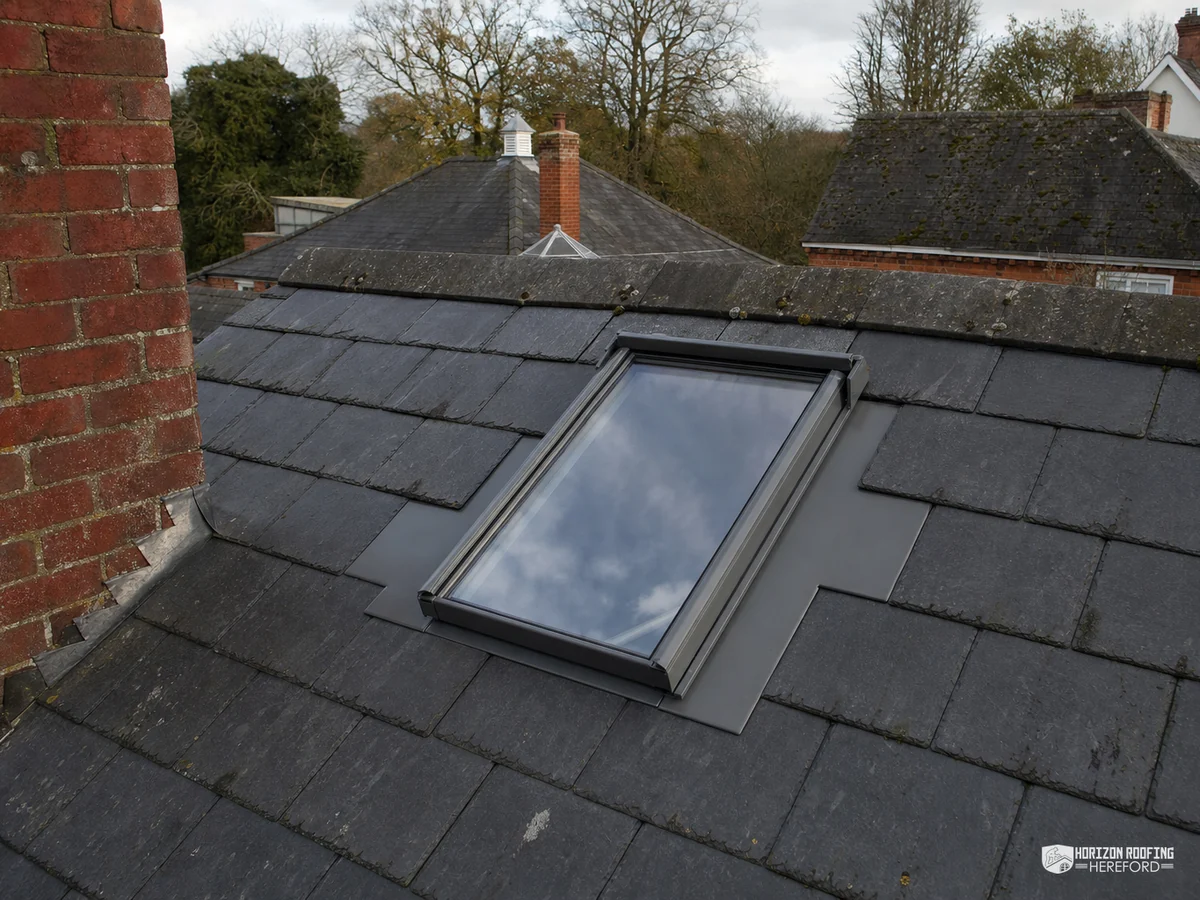
    Roof windows and the landscapeA dormer on Wye Valley land starts with the council.
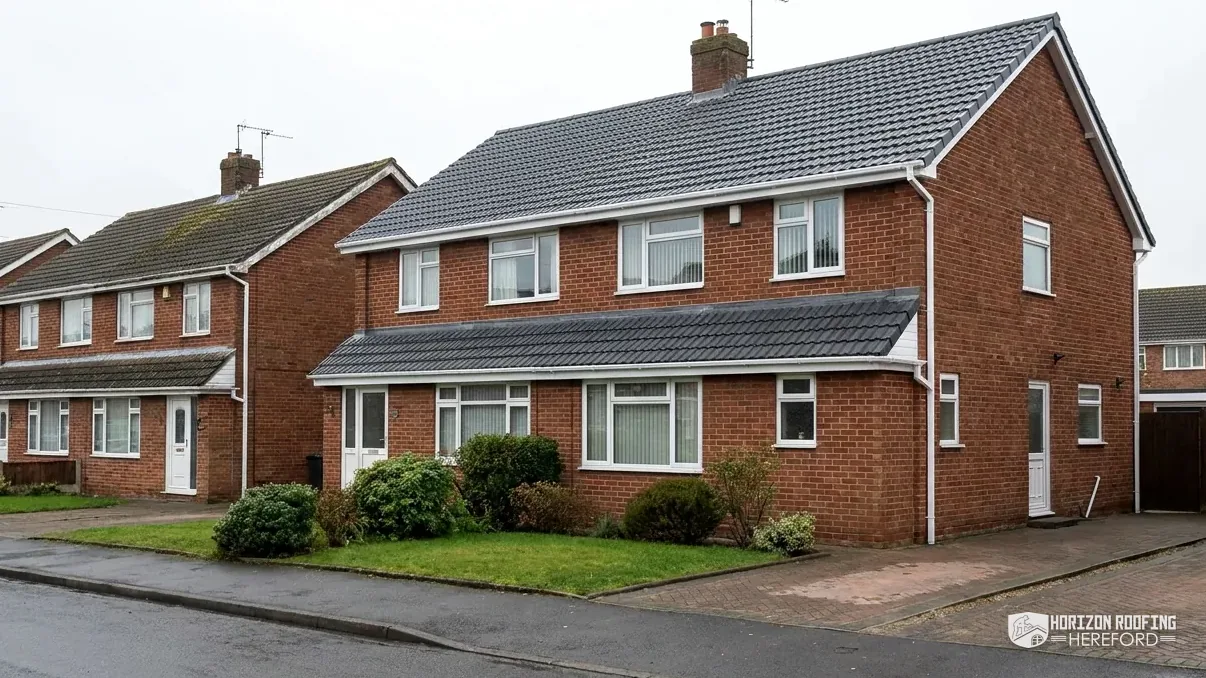
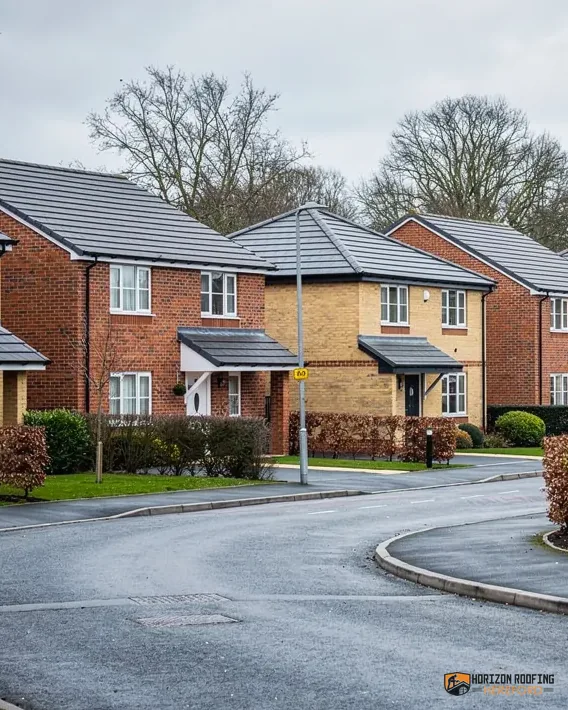
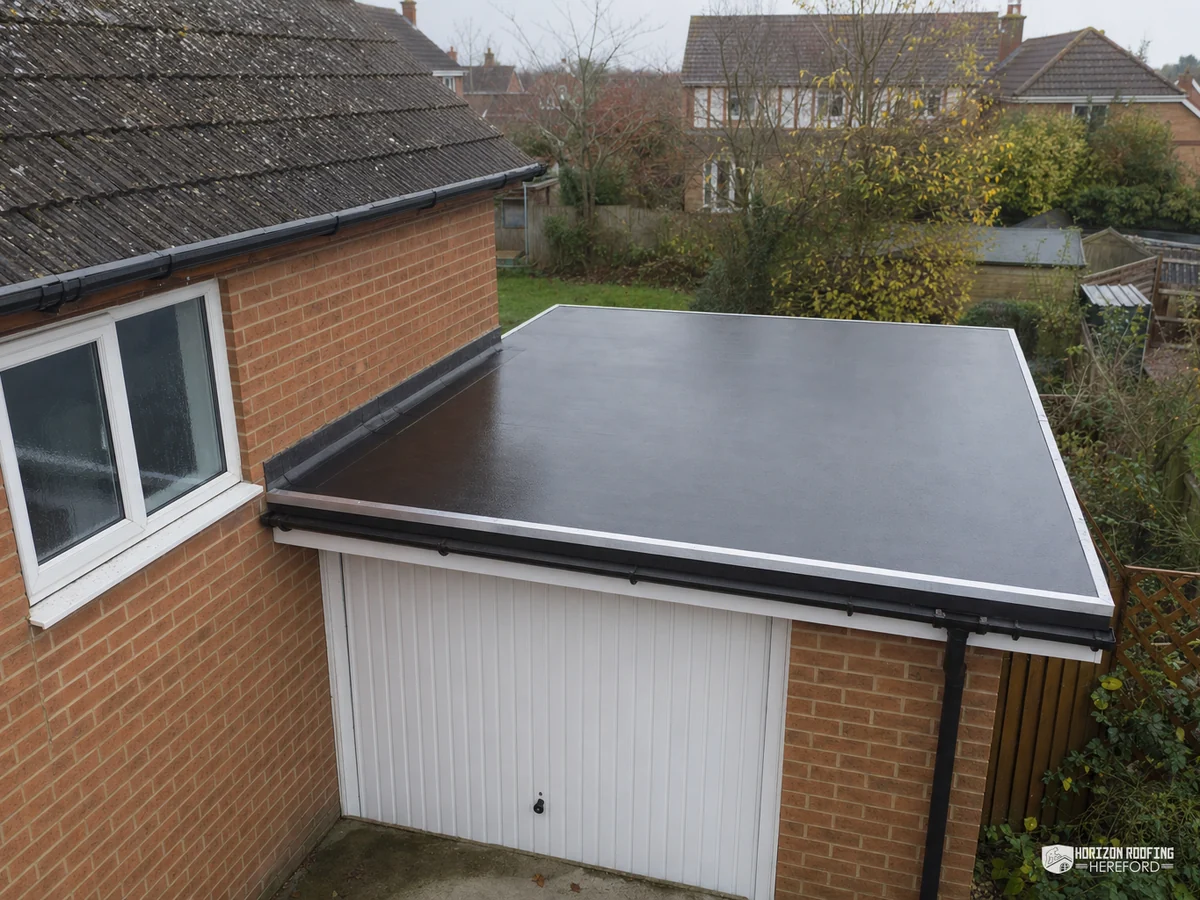
  • Newer homes with grey concrete tile roofs along a curving estate road
    Chimney stacks and potsA stack faces the weather on all sides; its crown needs a close look.

Woolhope and the roads in

Woolhope on a street map, with a dashed circle around the town and the nearest towns we cover. Tiles © Esri; map data © Esri, HERE, Garmin, OpenStreetMap contributors.

Woolhope's roofs, lead to chimney

Lead, roof windows and chimneys inside the Wye Valley landscape

A Woolhope survey begins with the lead that keeps the joints dry, turns to the roof windows and designations that govern change, and finishes at the chimney stacks, pots and listed buildings of the village.

A drawn cut-away section through a Herefordshire border house: the front of the main roof is cut open to show the rafters, underlay, battens and slates, beside a black-and-white timber-framed gable. Numbered, from the ridge down: 1 Lead work; 2 Roof windows; 3 Stacks.

Fig. 1 Section through a roof, with the three Woolhope callouts numbered.

Callout 1 of 3

Lead flashings and soakers on a Woolhope roof

Lead is the metal that protects a roof's awkward joints from the wet, and in Woolhope it earns that job at chimney stacks, at the walls of extensions and around any roof window. It bends, it can be dressed into a stone joint, and it moves with the weather. The Royal Commission's 1932 inventory gives a default description for monuments 2 to 35 of Woolhope, where no exception is noted: buildings "of the 17th century and of two storeys, timber-framed and with tile or slate-covered roofs". Where tiles or slates run up to a chimney or a wall, lead stands between the two.

Royston Lead's table pairs each thickness with a use. Code 3 is "Recommended for lead soakers only". Code 4 appears against four uses in the table (soakers, flashings, pitched valleys, dormers). Codes 5 and 6 appear against flashings, valleys, parapets and dormers. A Woolhope roof gets the code chosen for the job, and the choice is written into the report so you can check it.

Lead lasts a long time when it is laid well. HomeBuilding gives a lead flat roof 60 to 100 years, Less says 50 to 100, and MyJobQuote adds that lead flashing which is correctly installed "can last for over 80 years". That hedge is worth keeping: lead can last that long, and none of it is a promise. Lead fails early where it is pinned too tightly, because it expands and contracts and tears at its fixings. The signs are splits at folds, lifted edges, and stains in the loft below.

A repair is sized to the fault. A split along one fold can be patched if the sheet on either side lies flat. Where lead has failed along its length, replacement is the repair, and the photographs show why. The report also notes any sealant smeared over a joint, since sealant can hide a failed detail for a while and then let go.

On the stonework and brickwork around the lead we check the pointing, because a flashing tucked into a crumbling joint has nothing to hold it. Soakers are folded one at a time under the slates or tiles, so a stack with a long run of them shows its age at every course. Our lead roofing page goes further into flashings, soakers and valley linings.

Lead codes, as the table lists them

Code 3
Recommended for lead soakers only
Code 4
Soakers, flashings, pitched valleys, dormers
Code 5
Flashings, valleys, parapets, dormers
Code 6
Flashings, valleys, parapets, dormers
Fig. 2 Leadwork, drawn close

Callout 2 of 3

Slope windows and dormers inside the Wye Valley landscape

Woolhope sits inside the Wye Valley National Landscape, the working name Herefordshire Council says has replaced Area of Outstanding Natural Beauty since November 2023. The council adds that "The legal designation status remains unchanged". Planning applications for Woolhope go to Herefordshire Council. The National Landscape is a designation laid on the land, and it does not decide them.

In England Herefordshire Council weighs that designation when a Woolhope roof proposal reaches it. Its effect on roofs is specific, and it is felt most by anyone hoping for a dormer. A roof window is a separate question with conditions of its own, and our planning guide for roof windows sets them out for a house like yours.

Herefordshire Council's list also records a Woolhope conservation area, designated in 1978. Whether your address falls inside it is for the council to confirm, since nobody should settle a boundary by eye. The county has 64 conservation areas in all. Ask the council too whether an Article 4 direction applies at your address.

On the building side, AD L 2021 Table 4.2 asks for 1.4 or Window Energy Rating Band B in a roof window fitted to an existing dwelling. For a rooflight the figure is 2.2 instead, in W/(m²·K), so any quote should say which of the two is being fitted. AD L 2026 Table 3.2 repeats the same values from 24 March 2027.

A new window on a listed house can change the character of the roof, so listed building consent may be needed on top of the permitted development rights the house keeps. Where the window goes is both a structural question and a planning one, because it depends on the spacing of the rafters and on any timber crossing the opening.

Fitting a window means trimming rafters, framing the opening and flashing it in lead, which brings the work back to the first callout. The flashing kit chosen has to fit the slate or tile around it. The survey photographs the slope where the window would sit, the rafters from inside, and the lead already on the roof nearby. Our skylights page deals with both window types.

Windows in a landscape

Does the Wye Valley designation rule out a roof window in Woolhope?

A dormer here goes to Herefordshire Council first, and a roof window comes with conditions that the Woolhope reader finds in the planning guide. A listed house or the conservation area adds consent and permission points of its own. Ask Herefordshire Council before ordering anything.

Fig. 3 Roof windows, drawn close

Callout 3 of 3

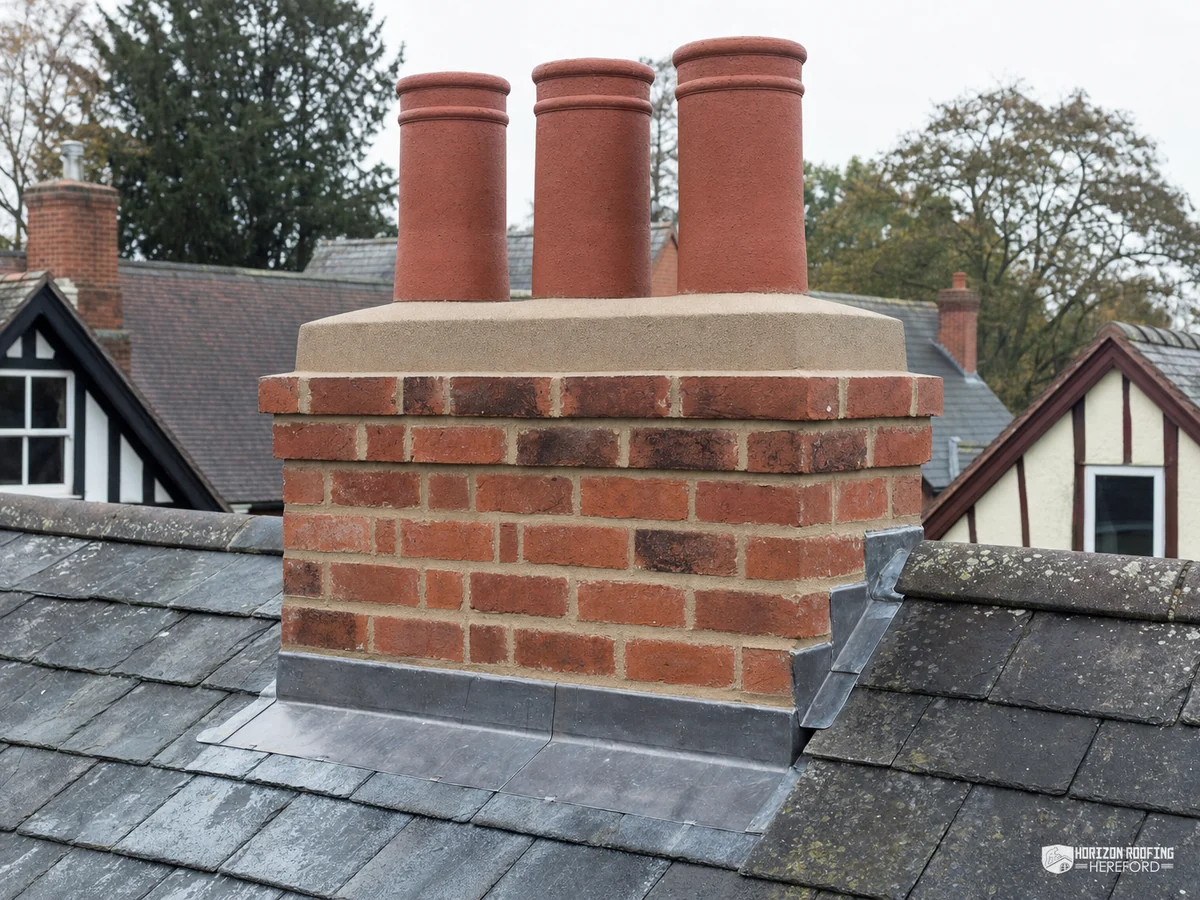
Woolhope's chimney stacks, pots and flaunching

The last callout is the chimney, which takes weather from all four sides. We examine its pointing, its pots and its flaunching, the sloped mortar collar that anchors the pots, and photograph each face for the report. Stacks seen only from the ground hide a good deal, and a cracked pot is easy to miss from the street.

Removing a stack or a breast altogether is another matter. The Planning Portal says "Building regulations approval will always apply when removing chimney breasts as they are part of the building's structure." If the breast is in a party wall, section 2(2)(g) of the Party Wall etc. Act 1996 lets the owner doing the work cut away a projecting chimney breast, jamb or flue, provided the neighbour is given at least two months' notice. The neighbour has 14 days to answer, and a dissent, or silence, leads to surveyors being appointed.

St George's Church holds Grade II* status (list entry 1156792, first listed 6 March 1967). The Old Vicarage is Grade II (list entry 1156833, first listed 4 December 1985), and so are the barn about 30 yards north-east of the Stone House (list entry 1098939) and The Court (list entry 1098959). All of them appear on Historic England's list. Stack work on any of these needs listed building consent under section 7 of the Planning (Listed Buildings and Conservation Areas) Act 1990. For the church in use, the denomination decides the route, so ask its own body first.

A stack needs scaffold, and where it stands on the road we arrange the licence with our scaffolder. Herefordshire Council asks for 10 days' notice before the scaffold goes up, so the survey date is set with that in mind.

A loft beside a stack can hold wildlife. Under section 9(4) of the Wildlife and Countryside Act 1981 someone who disturbs a bat in its shelter, or blocks the way in, commits an offence when acting "intentionally or recklessly". Natural England issues licences in England. If you have seen bats or droppings, tell us before the survey and the work is planned around them.

Building control for Woolhope is Herefordshire Council Building Control, on 01432 261938 or bce@herefordshire.gov.uk, and a registered building control approver is the alternative. Our chimney repairs page covers repointing, flaunching and rebuilds.

What sets the price of a stack job

Height of the stack
Taller stacks need more scaffold and more careful work
Repoint or rebuild
A rebuild takes more labour and more masonry than a repoint
Lead replacement
New flashings and soakers add material and fitting time
Pots and flaunching
Resetting pots means a fresh bed of mortar
Highway scaffold
A licence is needed where the scaffold stands on the road

One written total price, never itemised.

Woolhope roofs: lead, designations and listings

Is a patch enough for the lead round a Woolhope chimney, or must it be renewed?

A split along one fold can be patched when the lead either side lies flat. Lead failing along its whole length calls for replacement, and the photographs show which case you have. For scale, MyJobQuote's page of 22 September 2026 gives about £200 for patching chimney lead flashing and about £570 for a full replacement. Those are third-party figures for the whole country, and our own quote is a single written sum once the survey is done.

Could the Wye Valley National Landscape rule out a roof window in Woolhope?

It does not rule one out. A Woolhope dormer is for the council to see first. A roof window is governed by the conditions spelt out in our planning guide. Herefordshire Council decides applications, and the National Landscape does not. A listed house or the conservation area adds further checks, so put your address to the council before you order a window.

Does the Woolhope conservation area cover my house?

Herefordshire Council's list records a Woolhope conservation area, designated in 1978. Whether your address sits inside it is for the council to confirm, and the county has 64 in all. Ask the council as well about Article 4 directions. Restoring the old covering is one question and adding a roof window is another, which our guide covers for English houses.

What approvals does re-covering a Woolhope roof need?

Woolhope is in England. The Planning Portal's normal no-application range is work touching less than 25 per cent of the building envelope and less than 50 per cent of the roof, and above either figure building control gets involved. A swap that adds 15 per cent or more to the covering's weight carries its own approval requirement, and insulation brings in AD L 2021 Table 4.3.

What is needed before work on Woolhope's listed church or houses?

Listed building consent under section 7 of the 1990 Act, for any works affecting the building's character. St George's Church is Grade II*; an ecclesiastical exemption can apply to a church in use, and its denomination decides the route. The Old Vicarage is Grade II and needs consent for roof works that change it. Ask Herefordshire Council before any listed roof is touched.

Does taking down part of a Woolhope chimney need a party wall notice?

Only when the breast or stack stands within a wall you share. The neighbour must be given at least two months' notice and has 14 days to reply. The Planning Portal also states that whenever a chimney breast is removed, Building Regulations approval comes into play, which is a separate matter from the neighbour's notice. Disputes over the notice belong with a party wall surveyor and not building control.

Book a lead-to-chimney survey in Woolhope

Send a photograph of the lead, the window position or the stack, or describe the problem, and a survey date will follow.

10-year workmanship guarantee, in writing