
Callout 1 of 3
The ridge: mortar, clips and what the standard says
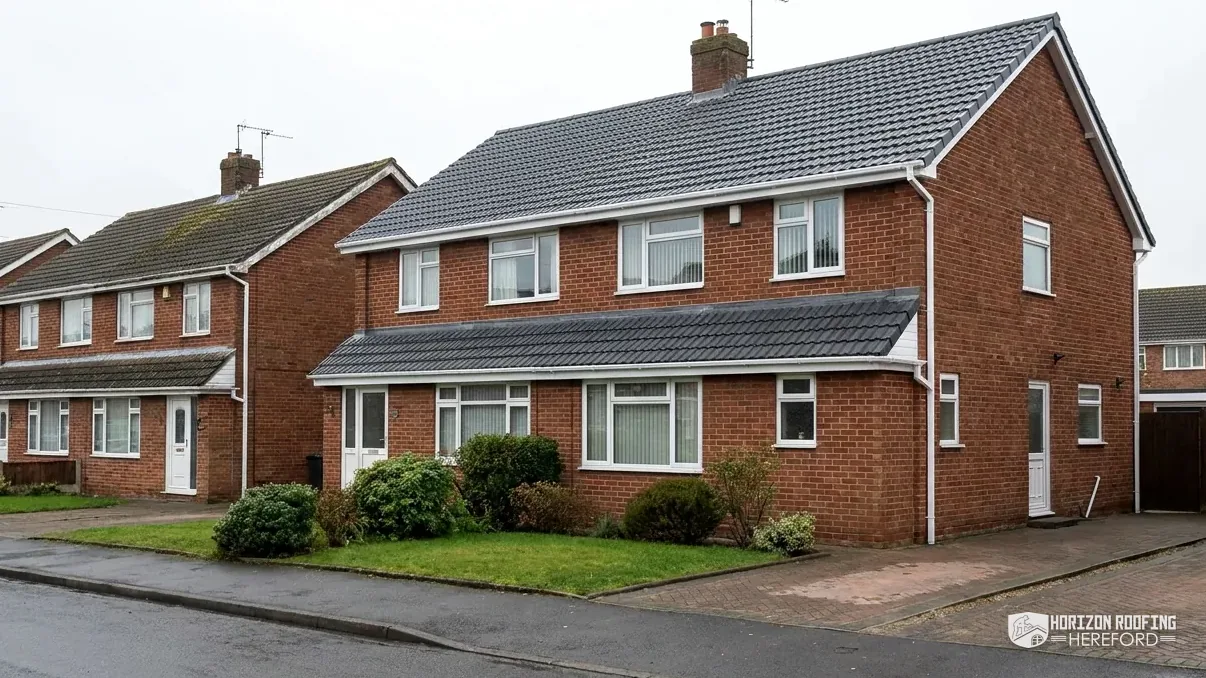
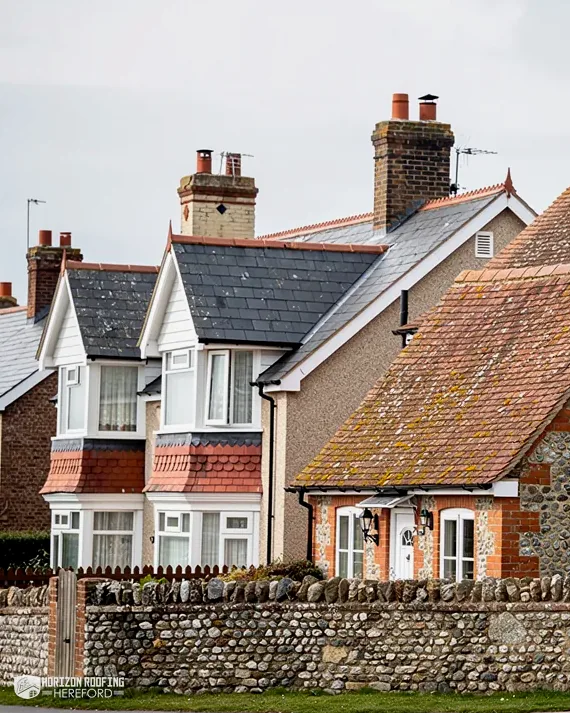
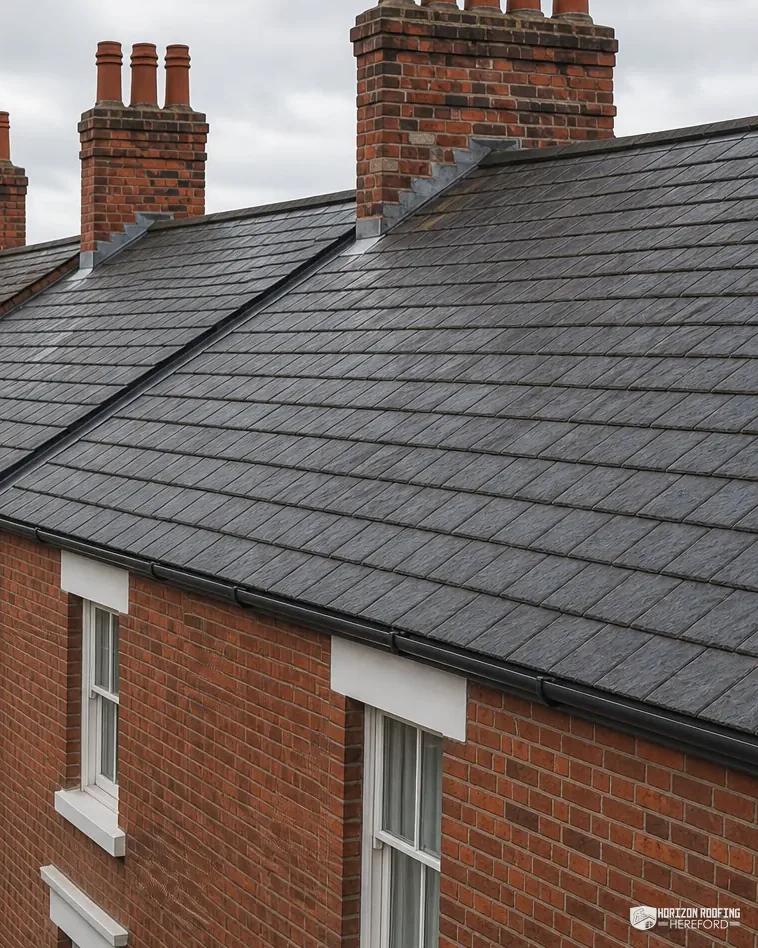
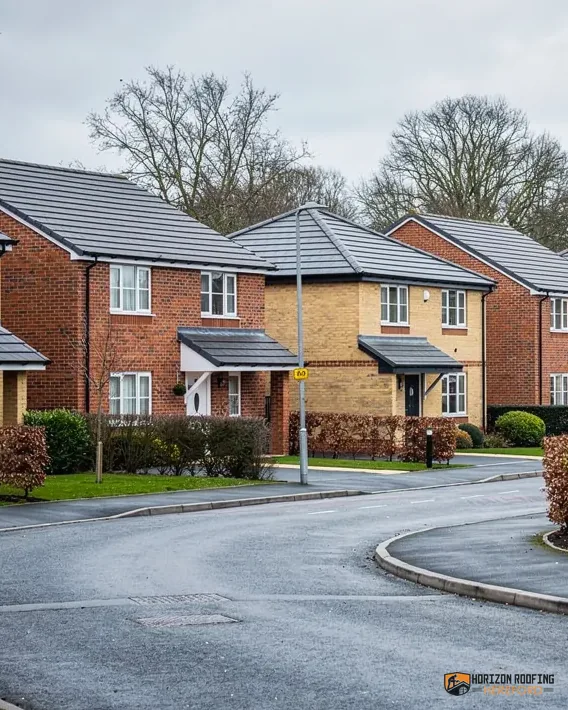
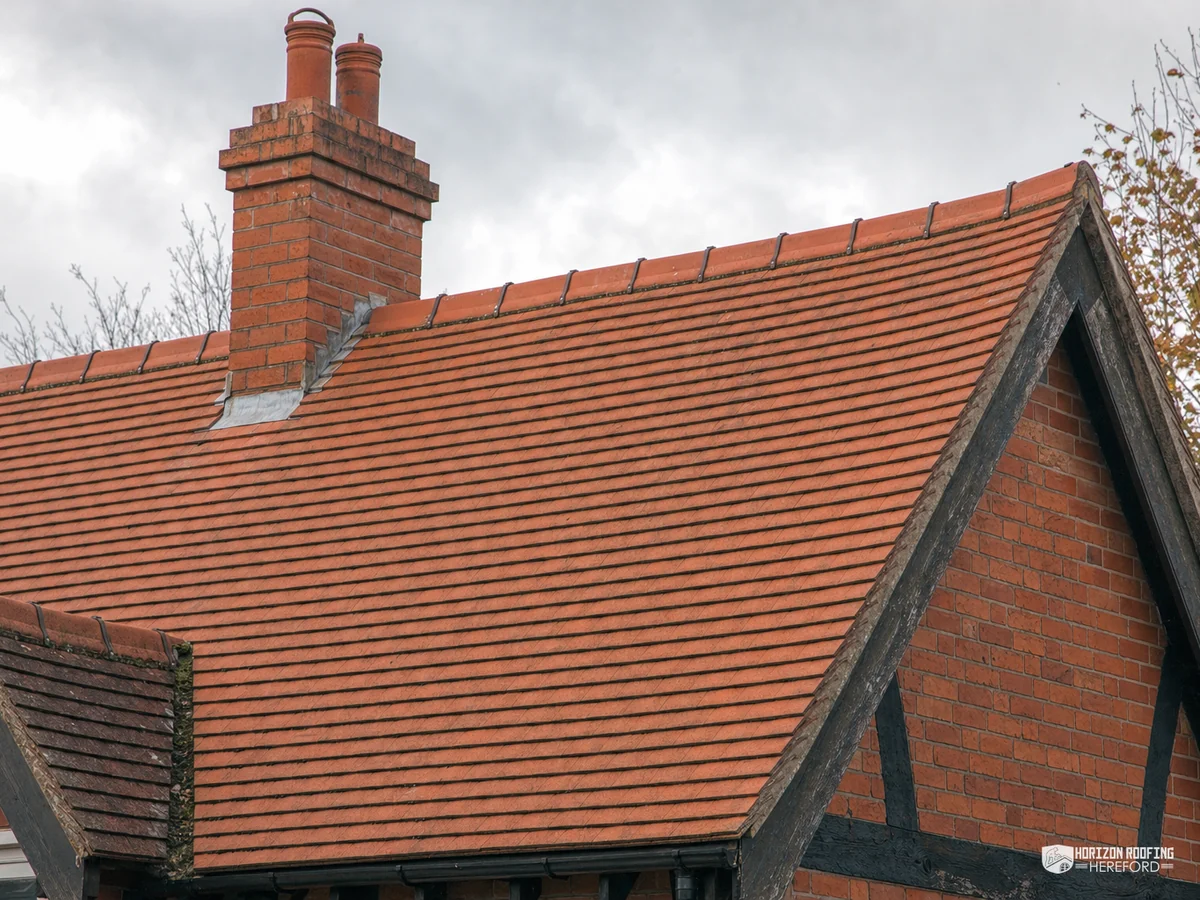
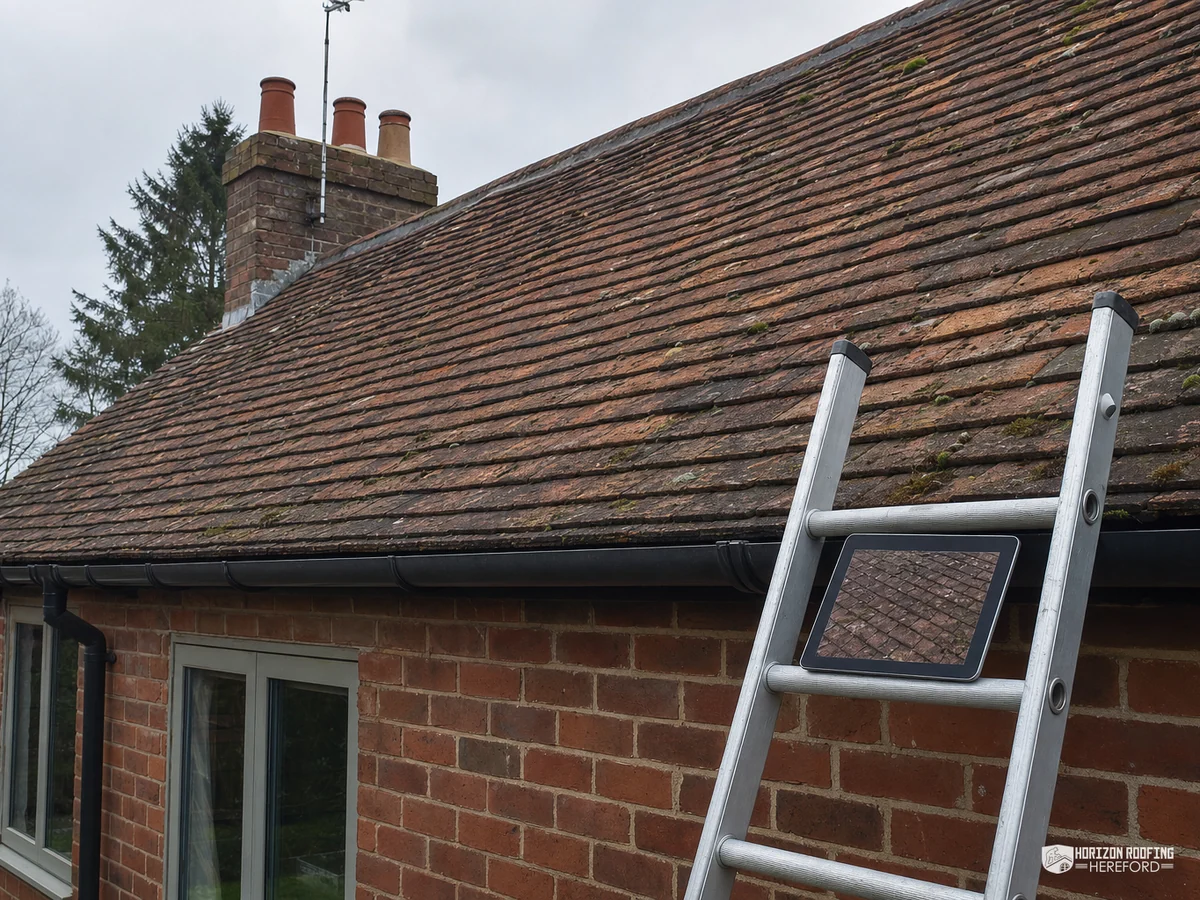
Our first callout is the ridge, the line of tiles along the top where the two slopes meet. Ridge tiles stand higher than any other piece of the covering, with nothing above them to shelter them, and the bedding that holds them gets brittle as it ages. We start here, from a ladder, and photograph every ridge tile, hip and end cap before turning to the slopes. A stretch of ridge that looks straight from the lane can still hide a rocking tile, so we handle the tiles one by one, and we note the pointing at the verge ends and the bedding under each hip in the same pass. If you can see the ridge from an upstairs window, a photograph taken there helps us decide what to bring. In 1932 the Royal Commission's inventory grouped the parish's monuments 5 to 23 as timber-framed seventeenth-century buildings of two storeys, unless it noted otherwise, with "roofs of tiles or slates", so a ridge on one of them may have been rebuilt several times already.
Fixing rules have changed. Marley states that "Installing to BS 5534 isn't required by law", and BS 5534:2014+A2:2018 is the standard in force for slating and tiling. The 2015 amendments made it clear, Marley adds, that mortar "could no longer be relied upon as the only means of securing the roof covering". Mortar is not banned. It means a ridge tile held by mortar alone is no longer enough on its own, and that clips, screws or a mechanical fixing are expected as well. BS 8612 covers dry-fix systems, where ridge and verge tiles are held by fixings and not by wet bedding.
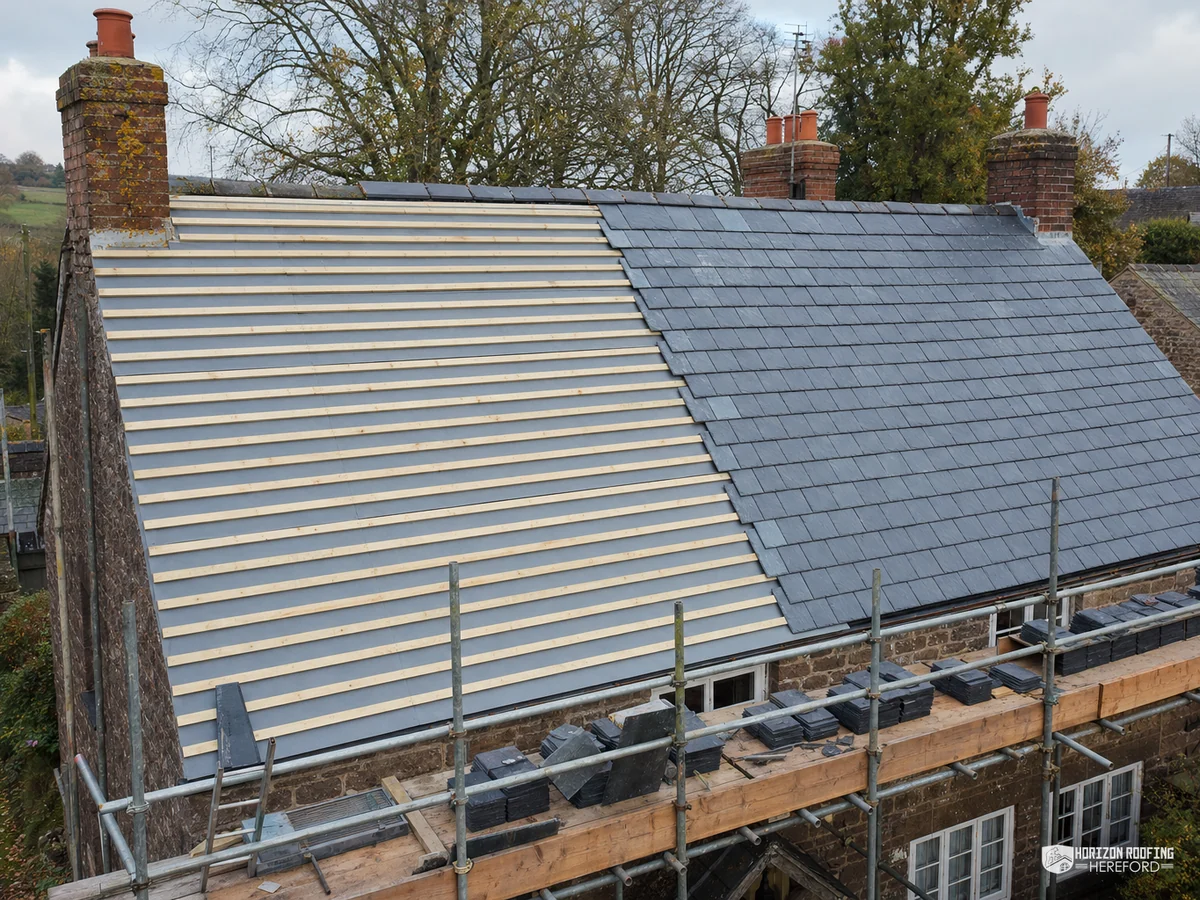
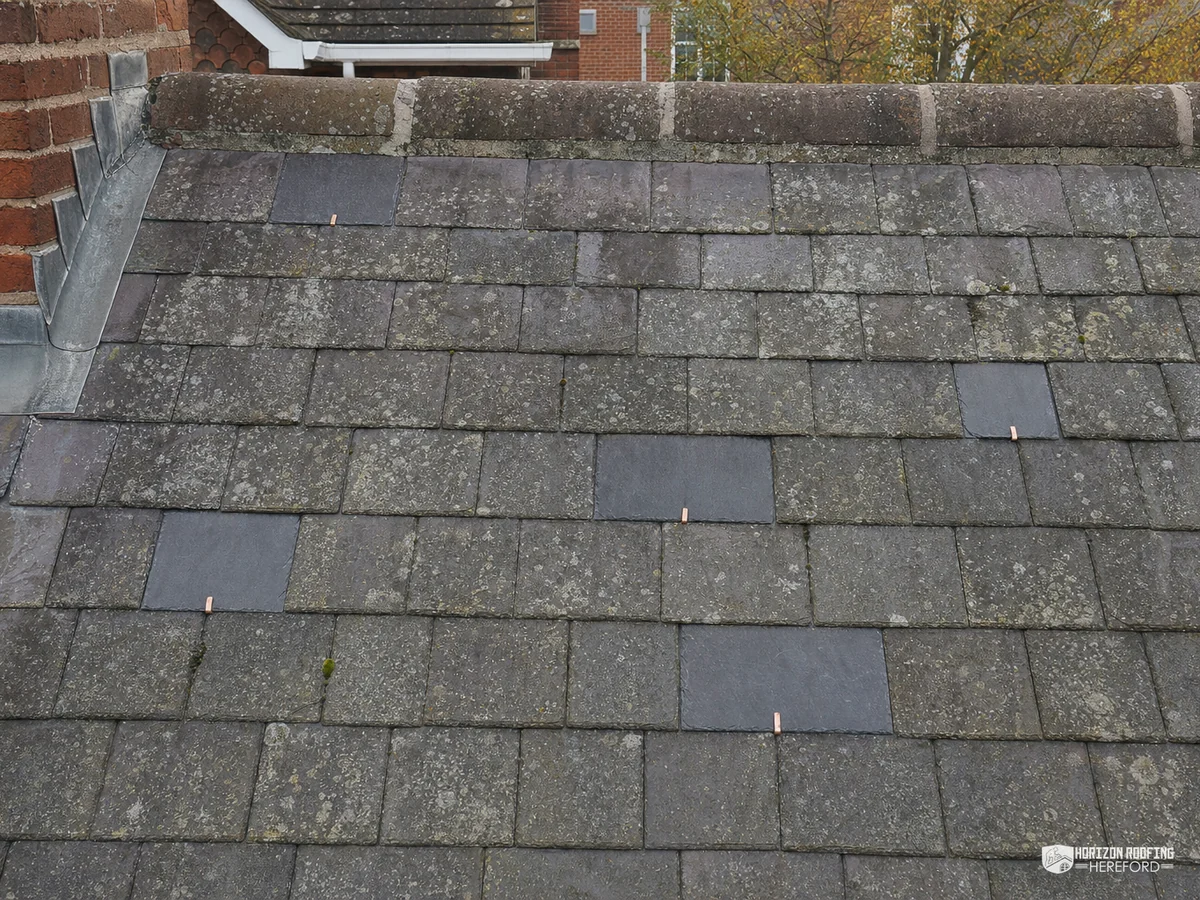
On the survey we tap along the ridge, looking for tiles that rock and for mortar that has crumbled or cracked away from the edge. A ridge that has simply lost some bedding can be rebuilt in its existing line. One with failed fixings, rusted clips or missing tiles needs more than a patch, and the report marks where the line falls. If the roof is also being re-covered, the ridge is rebuilt at the same time to match the new battens.
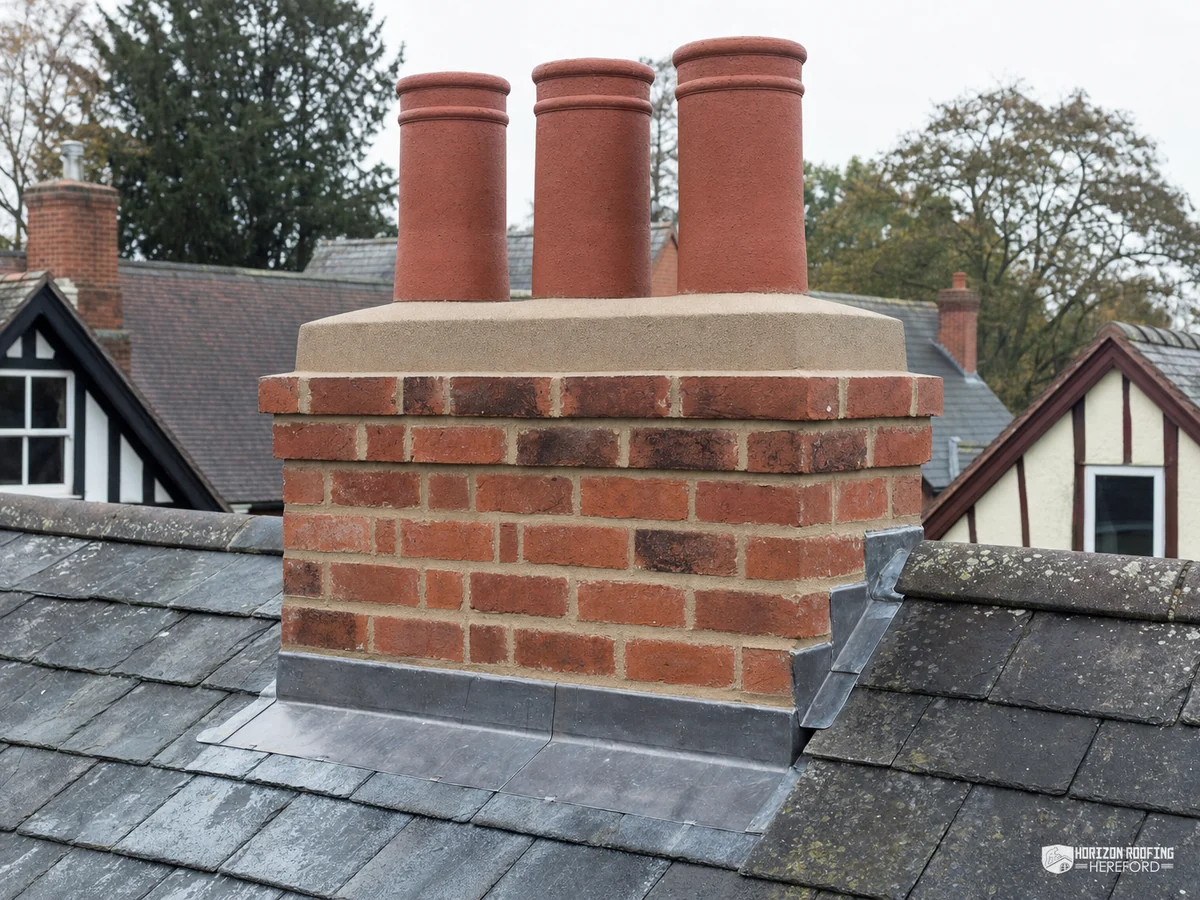
Verges, the sloping edges at the gable, get the same attention, and so do hips and the junction where a ridge meets a chimney. Our pitched roofing page covers how these details are formed on tile and slate roofs, and what every one demands of the fixings behind it.
Ridge fixing, as the standards put it
- BS 5534
- Current standard for slating and tiling
- Legal status
- Marley: not required by law
- Mortar alone
- No longer relied on as the only fixing
- Dry-fix
- BS 8612 covers the system