
Callout 1 of 3
Stone slates, slates and the ground beneath them
Herefordshire's stone roofing has a geology. The county's building stone atlas traces its stone roofing slate chiefly to the St Maughans Formation sandstones, and perhaps to sandstone bands in the Raglan Mudstone, and it notes numerous active permissions in the Golden Valley area, far to the west. Where stone slates survive on a St Weonards roof, a repair that ignores what kind of stone they are tends to end as a mismatch on the slope.
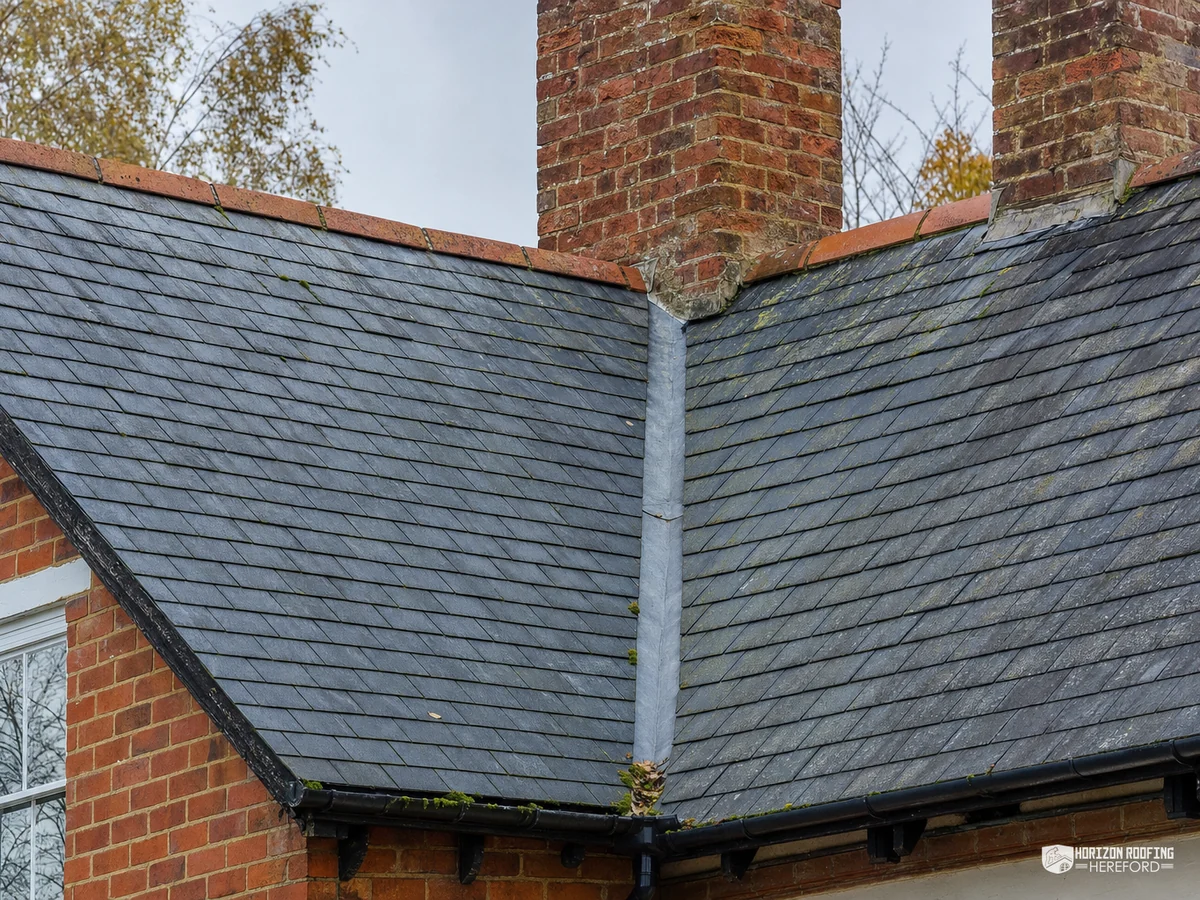
The Royal Commission's 1931 inventory gives the parish two useful entries. Of the parish church it says "the roofs are covered with stone slates", and a barn at Treago Farm is recorded with ashlar walls and a modern slate roof, modern in 1931. So stone slate and slate both appear in the written record of this parish, and a St Weonards survey starts by working out which of them, or which kind of tile, lies above your rafters.
Stone that has sat on a roof for centuries is sorted and reused before anything new is ordered.
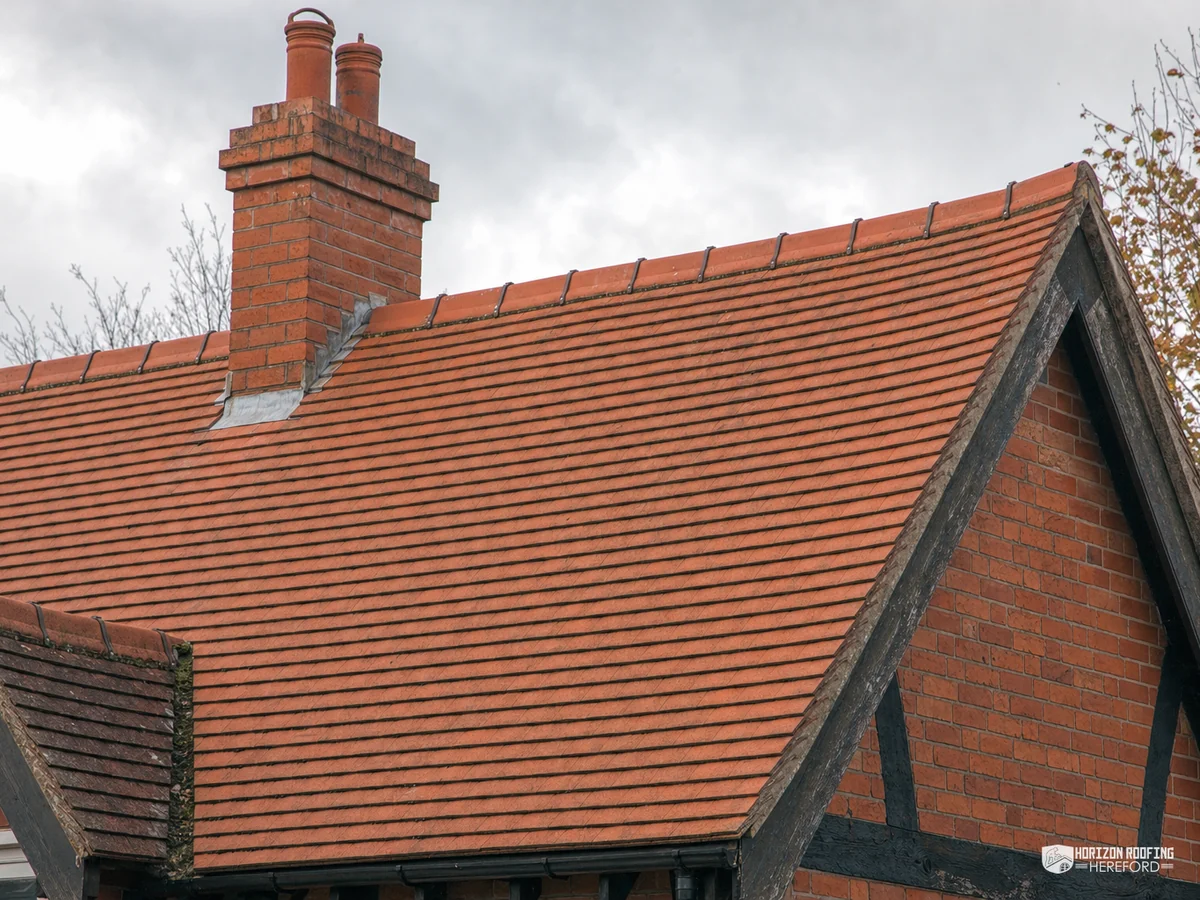
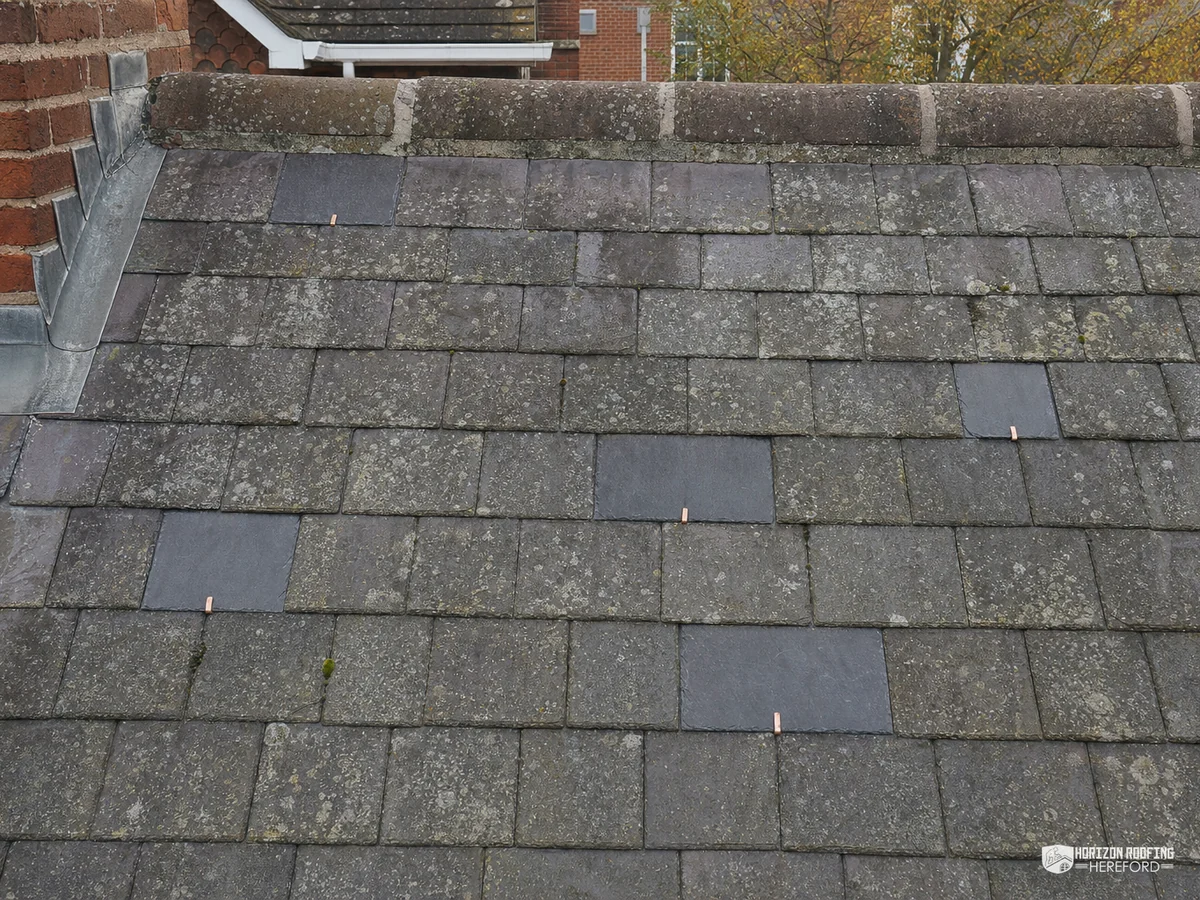
SPAB's technical note on the Welsh border counties calls such roofs predominantly double-lapped. Double lapping means each course reaches past the course below and onto the one below that, so the side joints always sit over solid stone. It also mentions purple varieties among Herefordshire's stone slates, and it adds that "many are changed to different stones or even to slates or fake stone slates". Matching colour and size matters for that reason.
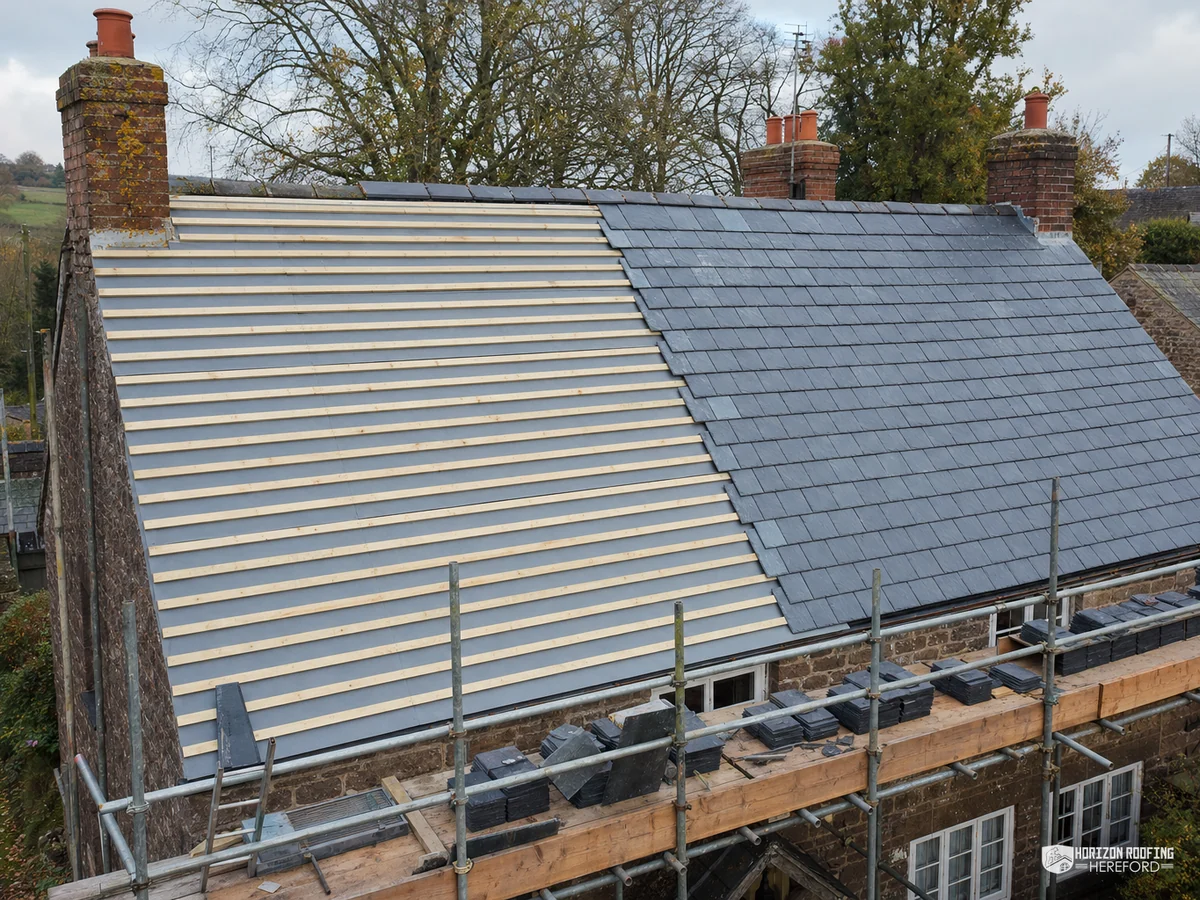
Stone slates and tilestones are heavy, so before a slipped section is relaid we look at the rafters, the battens and the wall plate that carry it. We lift a few courses, photograph what lies under them and replace only the pieces that have cracked or lost their fixing, keeping a running tally so you can see how much of the old stone is going back on. If the survey shows that the whole slope needs stripping, the sorted stone goes back first and new material fills the gaps. Our pitched roofing page covers full re-covers on older houses.
Words you may hear on a stone roof
- Tilestone
- A thin sandstone slab cut for use as a roof covering.
- Double-lapped
- Each course overlaps the next so joints are always covered.
- Batten
- The timber strip that the slates or stones are fixed to.
- Wall plate
- The timber along the wall top that carries the rafters.
Before stone slates are relaid
- Rafters sound along their full length
- Battens firm under each course
- Wall plate dry from the loft side
- Cracked pieces sorted from sound ones