
01432 610152 Get a quote Call 01432 610152

Roofers in Skenfrith

Roof repairs and re-roofs in Skenfrith, 15.1 road miles south of Hereford.

Stone slate or tile, we find the fault, photograph it where it sits and put a single price in writing.

Get a free quoteCall 01432 610152

Stone slates, a mill and a castle

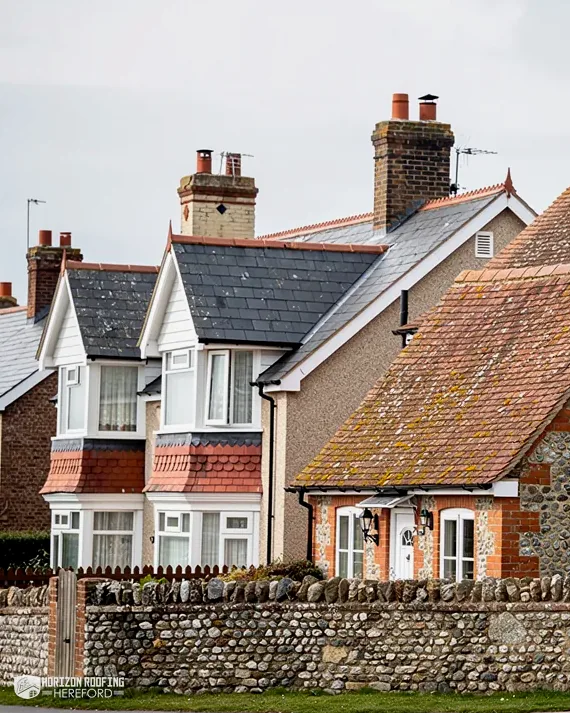
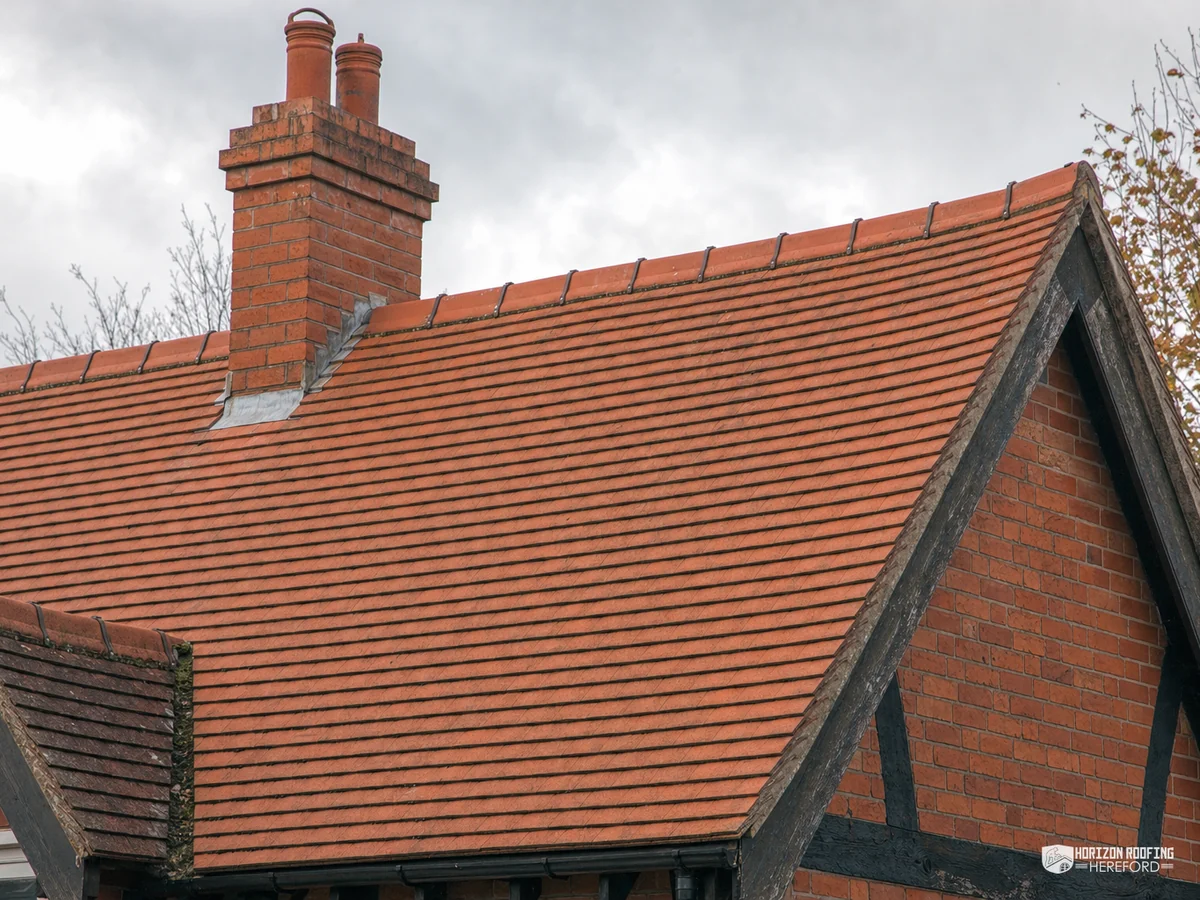
  • Older cottages with weathered clay tile roofs and brick chimneys behind a flint wall
    Small stone slates on the churchCadw's description of St Bridget records red rubble walls under small stone slates.
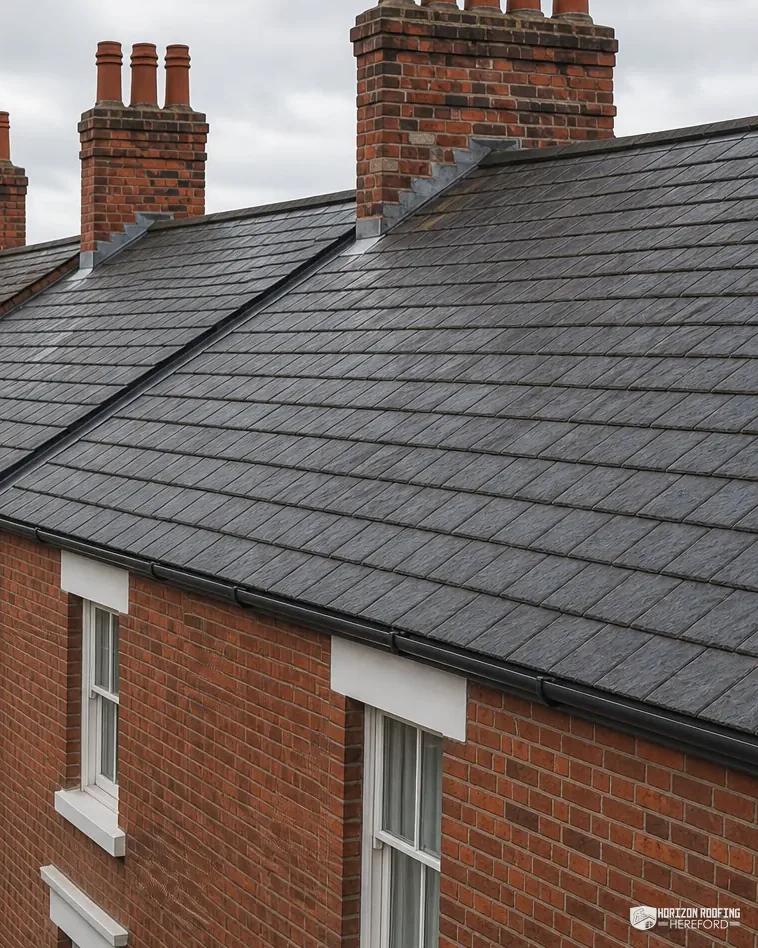
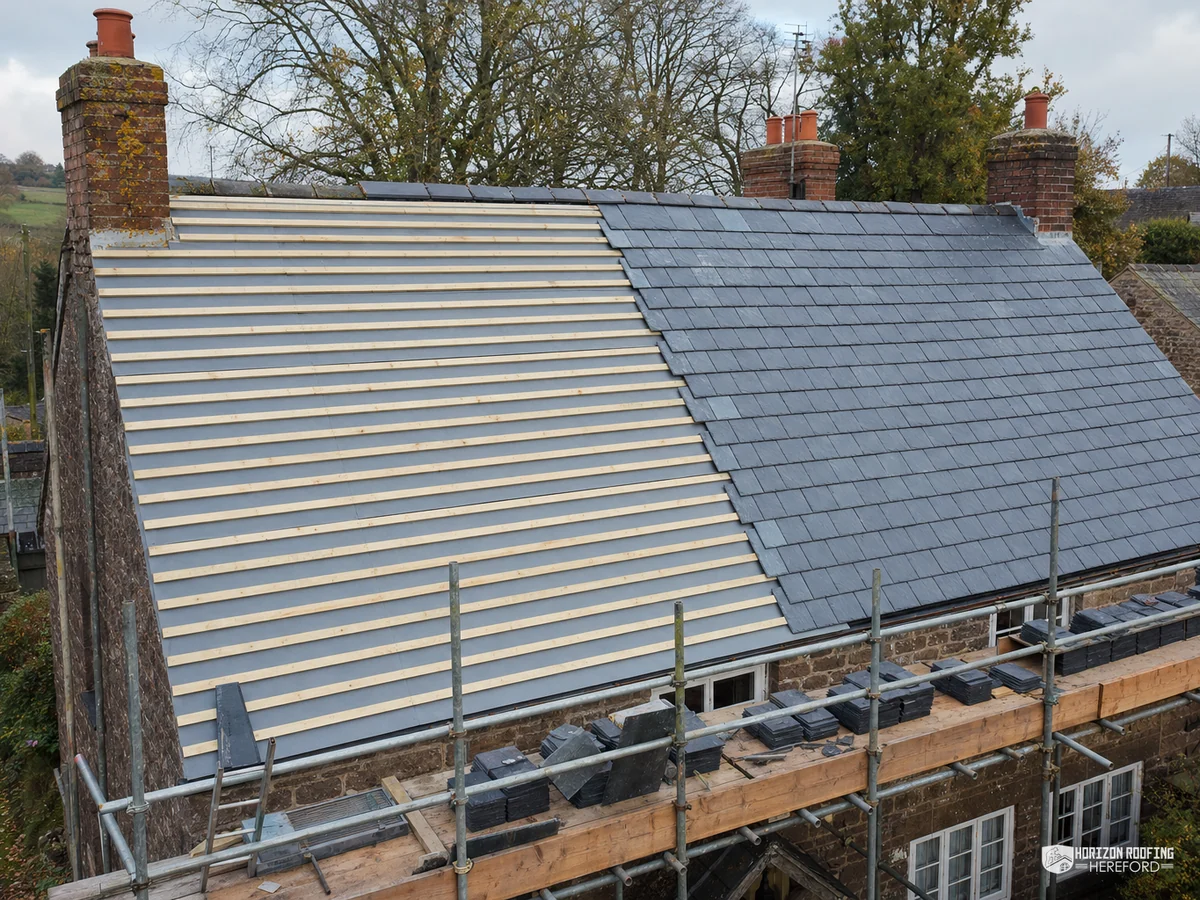
  • Slate roofs and chimney stacks along a red brick Victorian terrace
    Mill buildings of Grade IIMill House and Skenfrith Mill are Grade II, so their roofs carry listing rules.
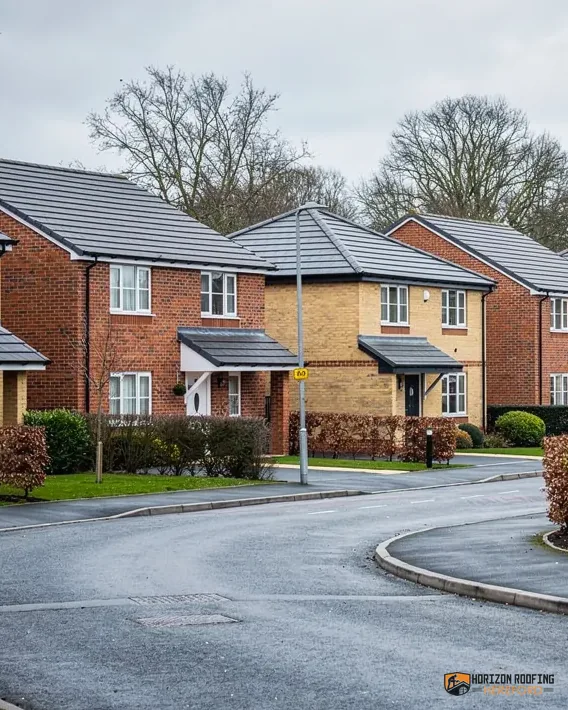
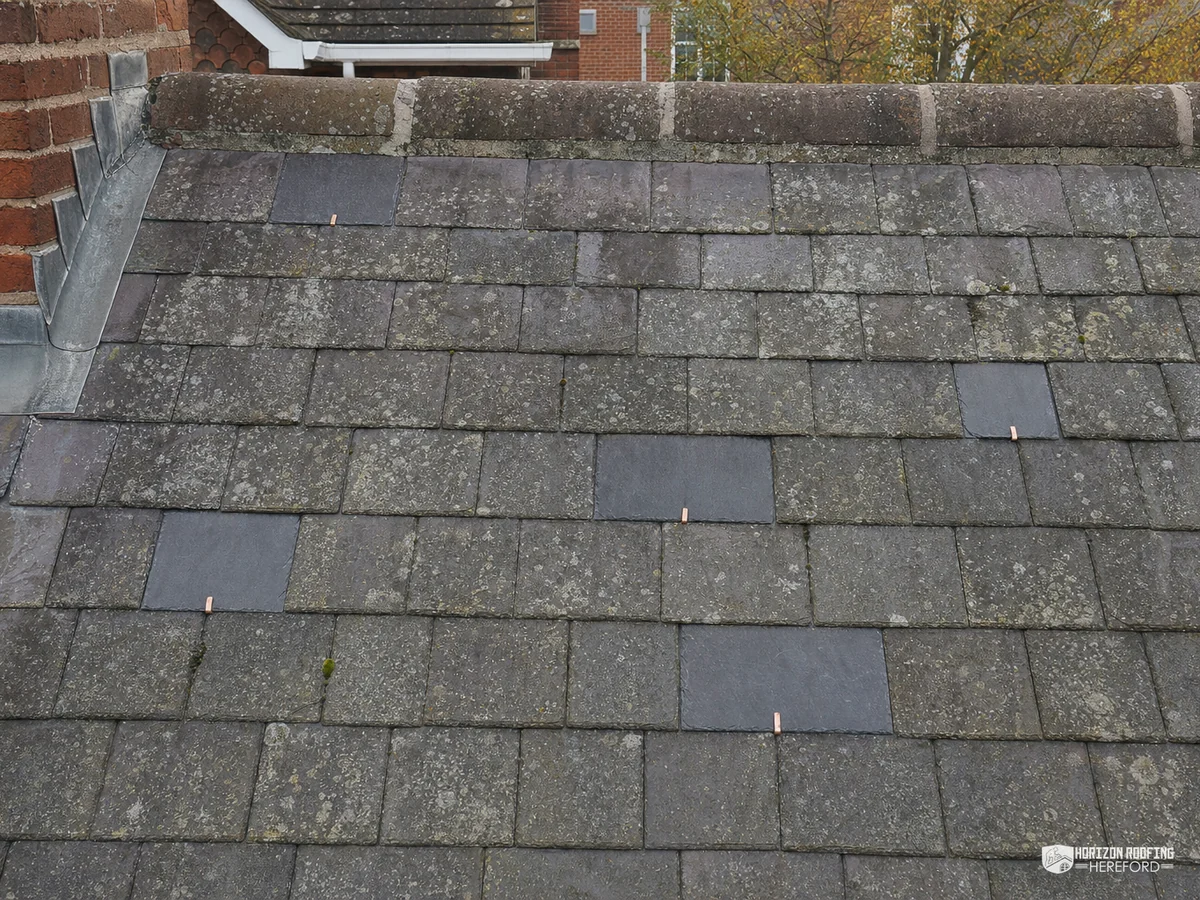
  • Newer homes with grey concrete tile roofs along a curving estate road
    Roof windows and conservation rulesThe village centre is a conservation area, so new roof lights have special rules.

Skenfrith and the roads in

Skenfrith on a street map, with a dashed circle around the town and the nearest towns we cover. Tiles © Esri; map data © Esri, HERE, Garmin, OpenStreetMap contributors.

Skenfrith roofs, from stone slate to roof window

Skenfrith surveyed: stone slates, the listed mill and the roof window

Our survey runs from the slope down: first the small stone slates and the rules for re-covering them, then the church, the mill and the conservation area, then the roof window and its approvals.

A drawn cut-away section through a Herefordshire border house: the front of the main roof is cut open to show the rafters, underlay, battens and slates, beside a black-and-white timber-framed gable. Numbered, from the ridge down: 1 Stone slates; 2 Listed village; 3 Roof window.

Fig. 1 A stone-slated house in section, with three Skenfrith callouts numbered from the slope up.

Callout 1 of 3

The church and its small stone slates

Skenfrith's best-recorded roof is the church's. Cadw's listing for the Church of St Bridget, Grade I, calls it "built of reddish random rubble with quoins, and the roofs are now of small stone slates". The word "now" matters. Roofs change over time, and that sentence describes the present covering of one church and says nothing of the houses around it. For your own roof, the survey finds out what is up there and how it was put on.

Small stone slates are thin pieces of sandstone, hung from the battens on pegs or nails. SPAB's technical note says roofs of this kind are "predominantly double-lapped", so every joint is covered twice. We judge a stone roof by what its stones are doing: splitting along their layers, slipping, or hanging from pegs and nails that have failed. Every fault gets its own picture, taken in place. Up in the loft we check for light showing between stones and for damp on the battens, and at the ridge we check the pointing and the bedding of the end stones. When one stone slips and its neighbours are sound, it can be changed without lifting a whole course; the neighbours are raised only far enough to slide the new stone into its place.

Where stones have to come off, the sound ones are sorted and laid again, and any replacement is matched for size, thickness and colour. SPAB says "Claims of unavailability or long delivery times should always be checked with the quarries", so we contact them before another covering is suggested. A move away from stone changes how the roof looks. Welsh permitted development covers a re-roof so long as the finished roof looks like the old one in its materials, as far as practicable, and in a conservation area it is wise to ask Monmouthshire County Council first.

The Welsh Government's own words for re-roofing are: "In most situations, this work will need Building Regulations approval." For a change of material, its page says approval is "likely to be needed", because stability, fire safety and energy efficiency have to be checked. A whole re-roof, from the first survey through to completion, is described on our roof replacement page.

Read on a stone slate slope

Stones
Split, slipped or lifting at the lower edge
Fixings
Pegs or nails that no longer hold
Laps
Gaps in the double lap between courses
Spares
Sound stones kept for reuse on site

The listing says the church roofs are now small stone slates, and the word now is the lesson: coverings change.

Fig. 2 The slopes, drawn close

Callout 2 of 3

The church, the mill and the conservation area

Skenfrith is a village of listed fabric. Cadw's records give the Church of St Bridget as Grade I (record 2082, designated 19 November 1953) and Skenfrith Castle as Grade II* (record 2083, designated 19 November 1953). Mill House is Grade II (record 25059, designated 19 March 2001), and Skenfrith Mill is Grade II as well (record 25048). Before you plan work on an old house here, find out whether it, or a building beside it, appears on that list.

Works to a listed building in Wales need authorisation under section 88 of the Historic Environment (Wales) Act 2023, and the authorisation is listed building consent under section 89. The Act came into force on 4 November 2024. A listed mill house keeps its permitted development rights, but those do not remove the need for consent, so pictures of the roof and a method statement go to Monmouthshire County Council before the first stone moves. What helps the council most is a clear record: the roof as found, each fault, and the stones that will be reused. We keep that record in the survey and send it with the application, so the council decides on your roof as it stands.

The body that holds St Bridget's sets its consent route. Under the 2024 Welsh regulations such a church is exempt while worship is its main use, and its roof work follows the Church in Wales's own system. The exemption stops at the church itself: a mill, a house or a minister's residence does not share it.

The Skenfrith conservation area, which Monmouthshire County Council lists, takes in the middle of the village. In Wales, a conservation area takes a new roof light out of permitted development. Check whether an Article 4 direction applies with Monmouthshire County Council as well. Building control sits with Monmouthshire County Council Building Control (based at County Hall, Usk), and you can instead choose a registered building control approver. Our listed and heritage roofing page covers protected roofs.

Terms for a listed village roof

Listed building consent
Authorisation from the council for works to a listed building
Exempt church
A place of worship outside the council's consent controls
Conservation area
An area the council protects for its character
Article 4 direction
A council direction that can remove permitted development rights
Fig. 3 Wall abutments, drawn close

Callout 3 of 3

Roof windows and rooflights in a conservation-area village

The third callout is the roof window, a window set into the slope and sealed to it with flashings. In Wales the rules for adding one come in layers. Planning comes first: in a conservation area a new roof light is outside permitted development, so you apply to Monmouthshire County Council. Building Regulations come second: a new rooflight will generally need approval from building control, and the unit itself is held to a figure.

Table 4.1 of the Welsh Approved Document L sets the figures: a window or roof window 1.4 or minimum WER Band B, a rooflight 2.2. WER stands for Window Energy Rating, and a lower U-value means less heat lost through the glass. Our survey notes the size of the opening, the rafters on each side and the condition of the felt and battens around it, because a new window cut into a tired slope will fail at its flashing before the glass is dirty.

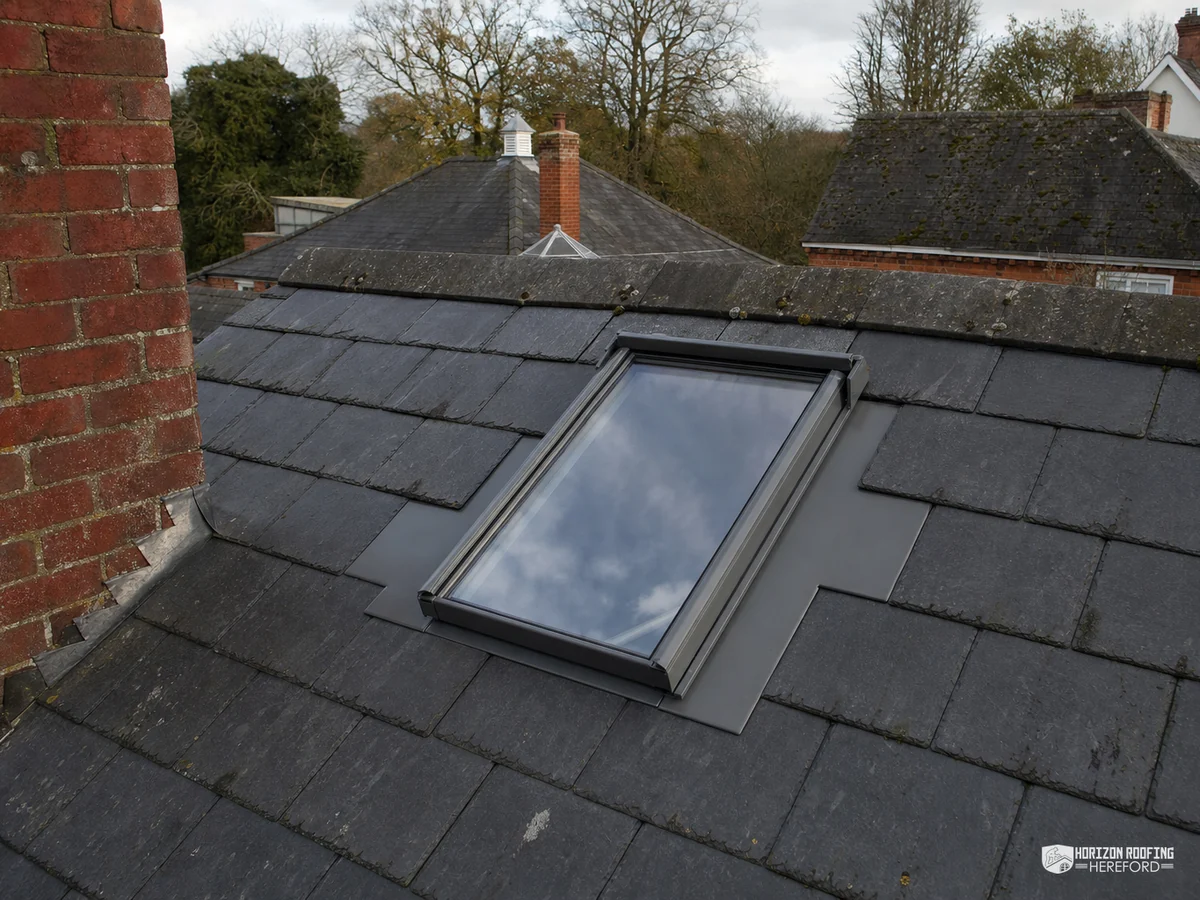
The sides of the frame are sealed with lead or with the maker's kit. Royston Lead's table lists Code 3 as "Recommended for lead soakers only", so the longer runs beside a frame use a heavier code. On a stone slate roof each flashing is dressed over the stones with care, since the surface is uneven and a gap of a few millimetres lets rain through.

A loft conversion also brings Welsh Approved Document B into play. Paragraph 3.6 gives two routes out of a converted loft, a protected stairway or a separate top storey with its own way out, and paragraph 3.20 adds automatic fire suppression as a third for open-plan layouts. Which of these suits a house is for building control to confirm. Renovating the roof itself is measured against Table 11.1, which asks 0.16 and accepts no worse than 0.35 where 0.16 is not feasible.

Where the house is listed, listed building consent is needed for the window as well. Our planning guide for roof windows sets out the planning detail, and our Velux and skylight installation page covers the fitting, flashing included.

A roof window flashing at Skenfrith

SoundFrame seated, flashing sealed to the slope, edges dry
Needs workGap at the frame, lifted flashing, stained reveal

Skenfrith roofs: stone slate, listing and roof windows

Can a small stone slate roof in Skenfrith be repaired in stone?

Yes, where sound stones can be kept and matching ones found. We lift only the stones that have split or slipped, lay the good ones again and match any new stone for size, thickness and colour. If a supplier says stone cannot be had, SPAB advises asking the quarries direct, and we do. Switching to a different covering alters how the roof looks, so inside a conservation area Monmouthshire County Council hears from us first. The report lists which stones stay and which go.

Does roof work on the Grade I church of St Bridget at Skenfrith need listed building consent?

Not where St Bridget's belongs to the Church in Wales and worship is its principal use; the 2024 Welsh regulations place such a church outside consent and the work follows the Church in Wales's own system. The exemption stops at the church itself, and it lapses if worship ends. Raise it with the church's governing body before any roof work starts; our part is the survey and photographs. A closed church or a chapel outside the Welsh list would need listed building consent from the council instead.

Are the mill buildings at Skenfrith listed?

Cadw's records show Mill House as Grade II (record 25059, designated 19 March 2001) and Skenfrith Mill as Grade II (record 25048). Skenfrith Castle is Grade II* (record 2083). For a listed building, section 88 of the Historic Environment (Wales) Act 2023 requires works to be authorised, and listed building consent under section 89 is how that is done, so ask Monmouthshire County Council first, and send the pictures of the roof with your question so the reply is about the building as it is.

Can a Skenfrith loft take a roof window?

In a Welsh conservation area a new roof light is outside permitted development, so you need planning permission, and Skenfrith has a conservation area covering the village centre. A new rooflight will also bring Building Regulations approval, as a general rule. For a roof window, Table 4.1 of the Welsh Approved Document L sets 1.4, or WER Band B as a minimum. A listed house needs listed building consent too, and we send the council pictures of the opening and the slope around it.

What approval does a Skenfrith re-roof need under Welsh rules?

The Welsh Government states that re-roofing will in most situations need Building Regulations approval. The Welsh Government's roof page adds that to "re-cover less than 25 per cent of the area of a pitch or flat roof" is not normally a case for an application, while repairing or replacing more than 25 per cent of the roof area is a case where improving the insulation would normally follow. Table 11.1 sets 0.16 for a renovated roof, and 0.35 is the worst acceptable figure.

What happens about the scaffold licence at a Skenfrith roof?

We arrange the licence with our scaffolder when scaffolding needs the highway. Monmouthshire County Council's current form states an administration fee of £108, plus £27 per week if the scaffold has to stay longer, and wants at least 5 working days' warning. Should Skenfrith poles need main-road space, the council is asked who licenses that stretch. The written total includes the scaffold, so the figure you accept is the whole figure for the job.

Arrange a slope-to-window survey in Skenfrith

Describe the stone slates as you see them outside, attach a snapshot, and our answer will name a visit date for the survey.

10-year workmanship guarantee, in writing