
Callout 1 of 3
Reading a Llanwarne slope by its covering
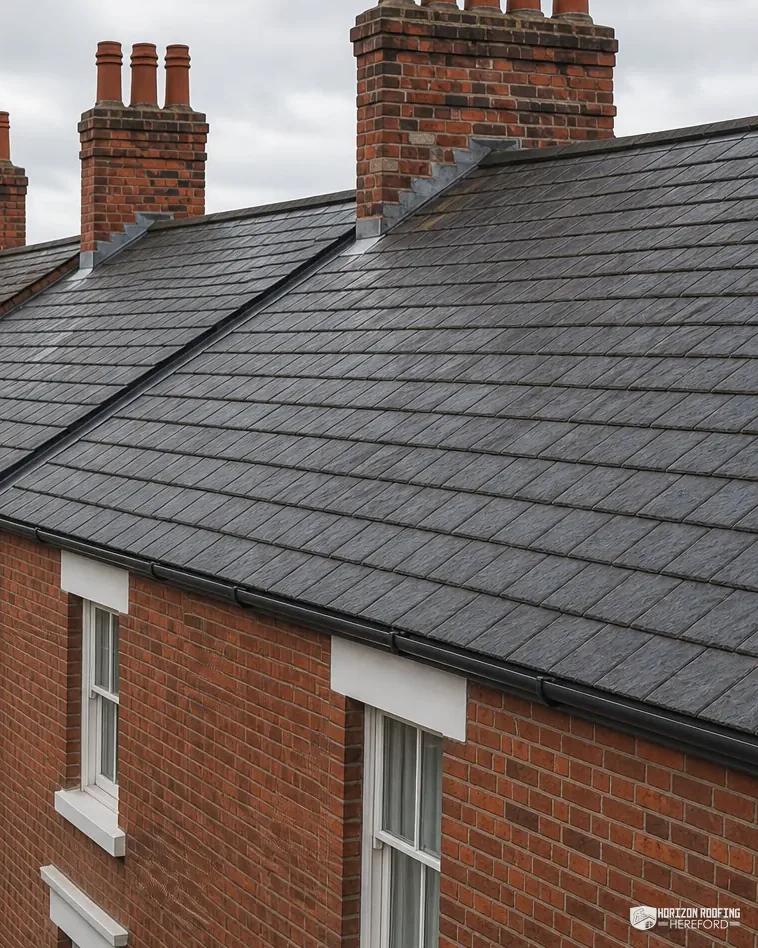
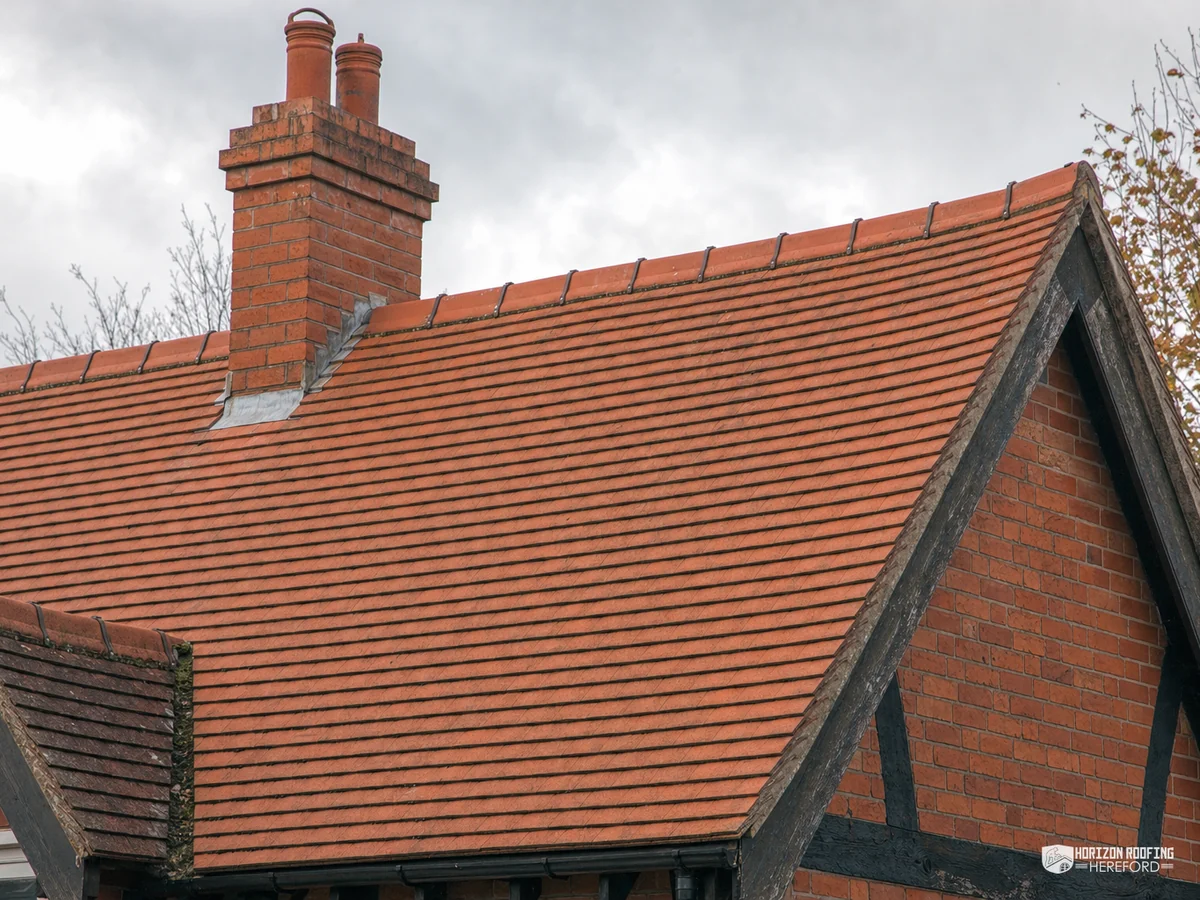
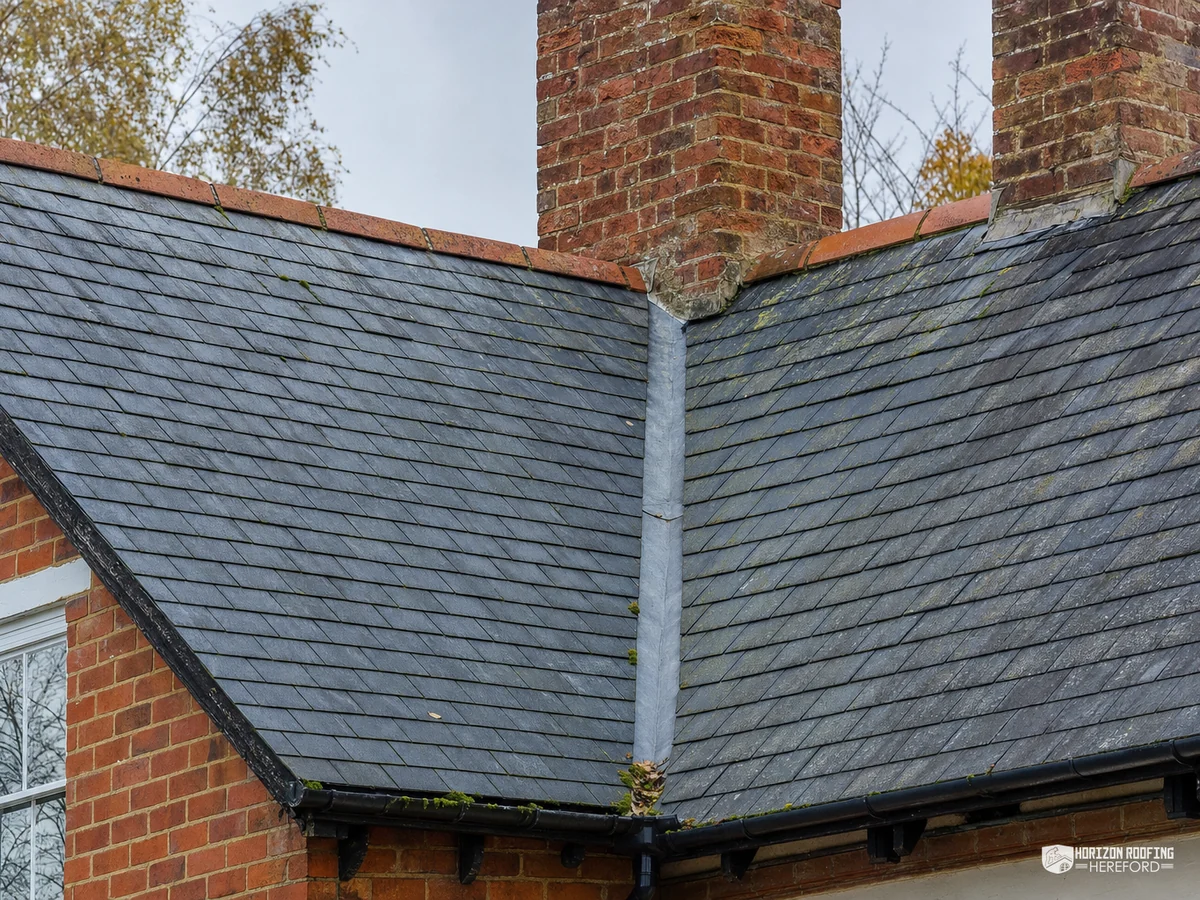
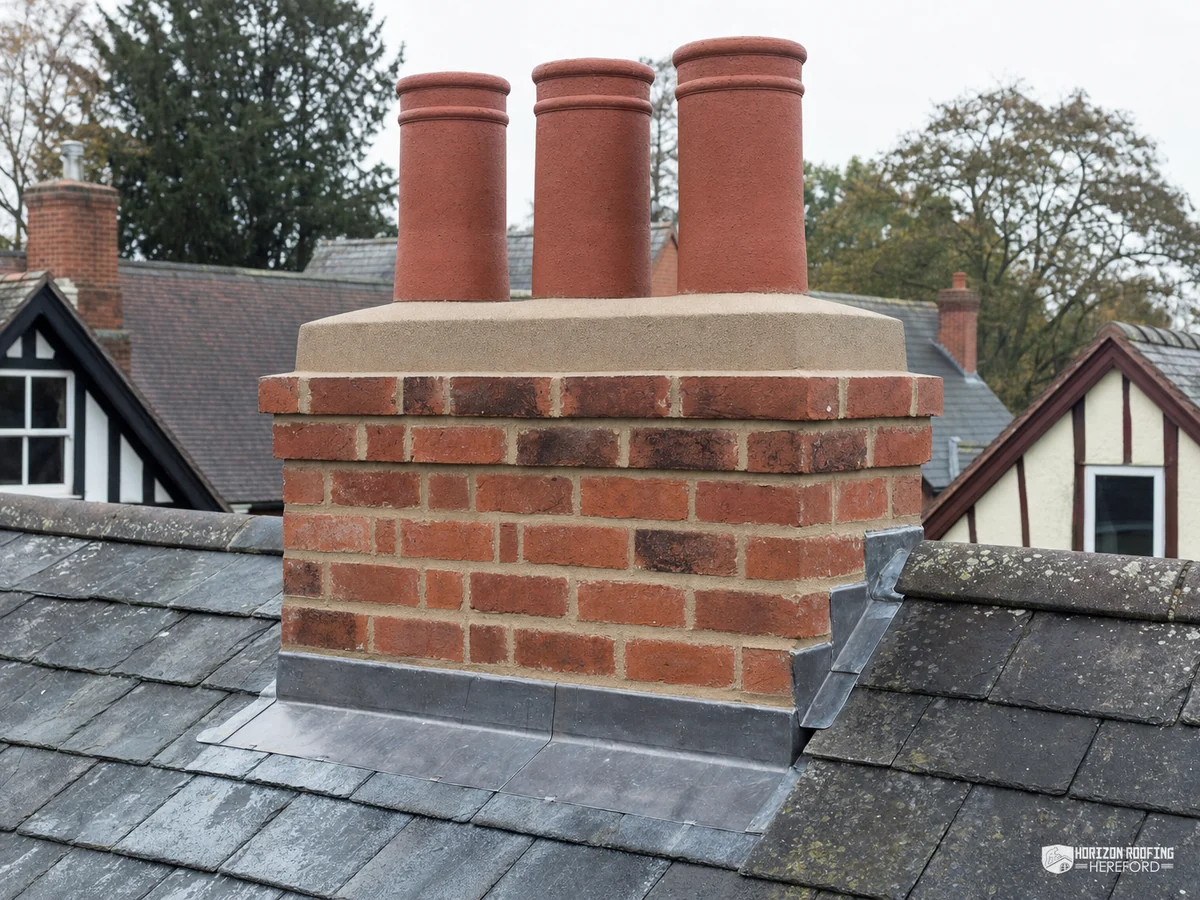
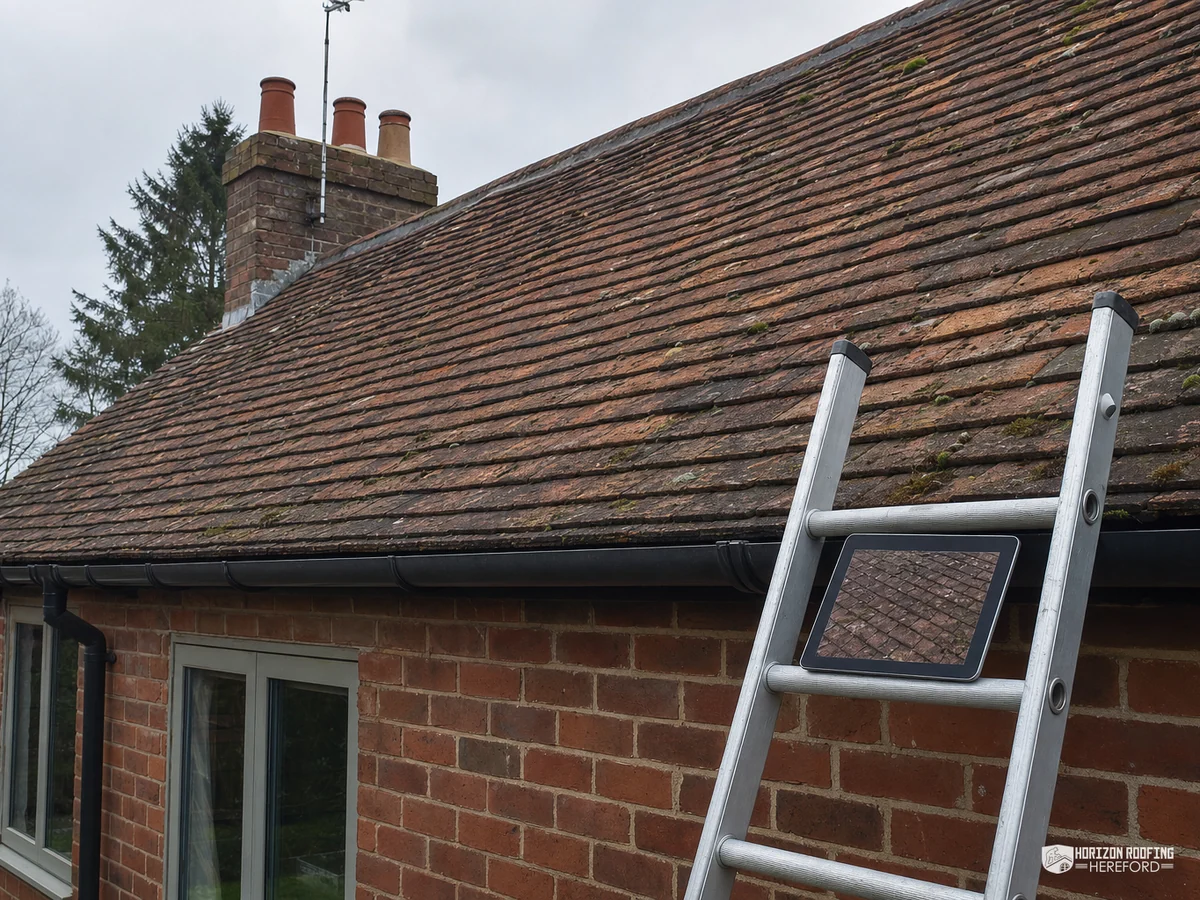
Before anything is priced, the survey puts a name to the covering on each slope. The name decides how long the covering can be expected to last, how steep the slope has to be and how much weight the rafters carry. Published lifespans are typical ranges and they disagree with one another. Marley gives its concrete tiles a life of around 60 years, while HomeBuilding allows plain concrete tiles 40-50 years, and we quote both because neither is a promise. For clay, Marley reports that the BRE set a minimum life expectancy of 60 years, a figure that covers clay tiles and no other. HomeBuilding gives Welsh slate 100+ years, and SPAB's note on slate and stone roofs states the life of a roof laid well in slate is "likely to be more than 100 years".
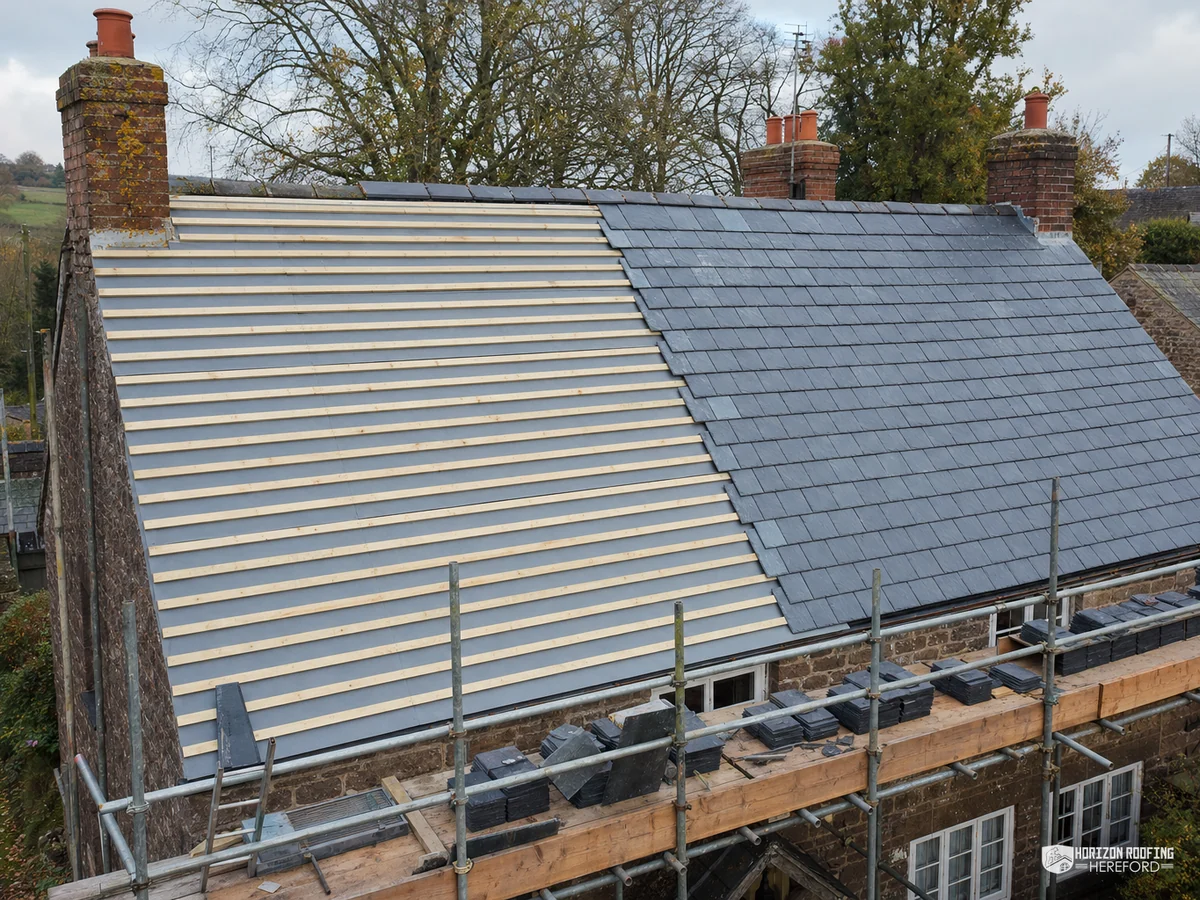
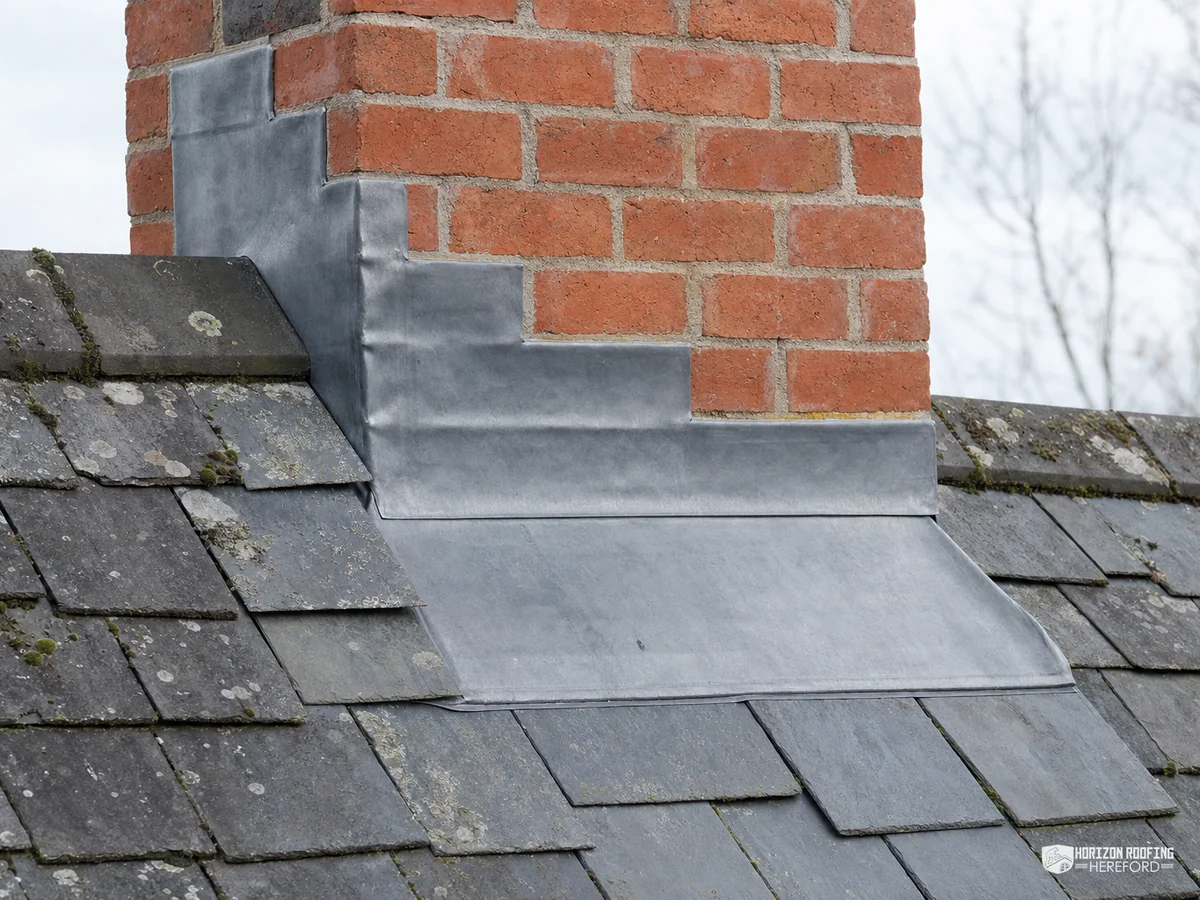
Those figures describe sound coverings on sound fixings. A slate held by rusted nails may need refixing long before its range is up, and a clay tile whose face has split is finished whatever the table says. We lift a few courses where a fault is suspected and photograph the battens and the underlay beneath, so you see what the covering is sitting on.
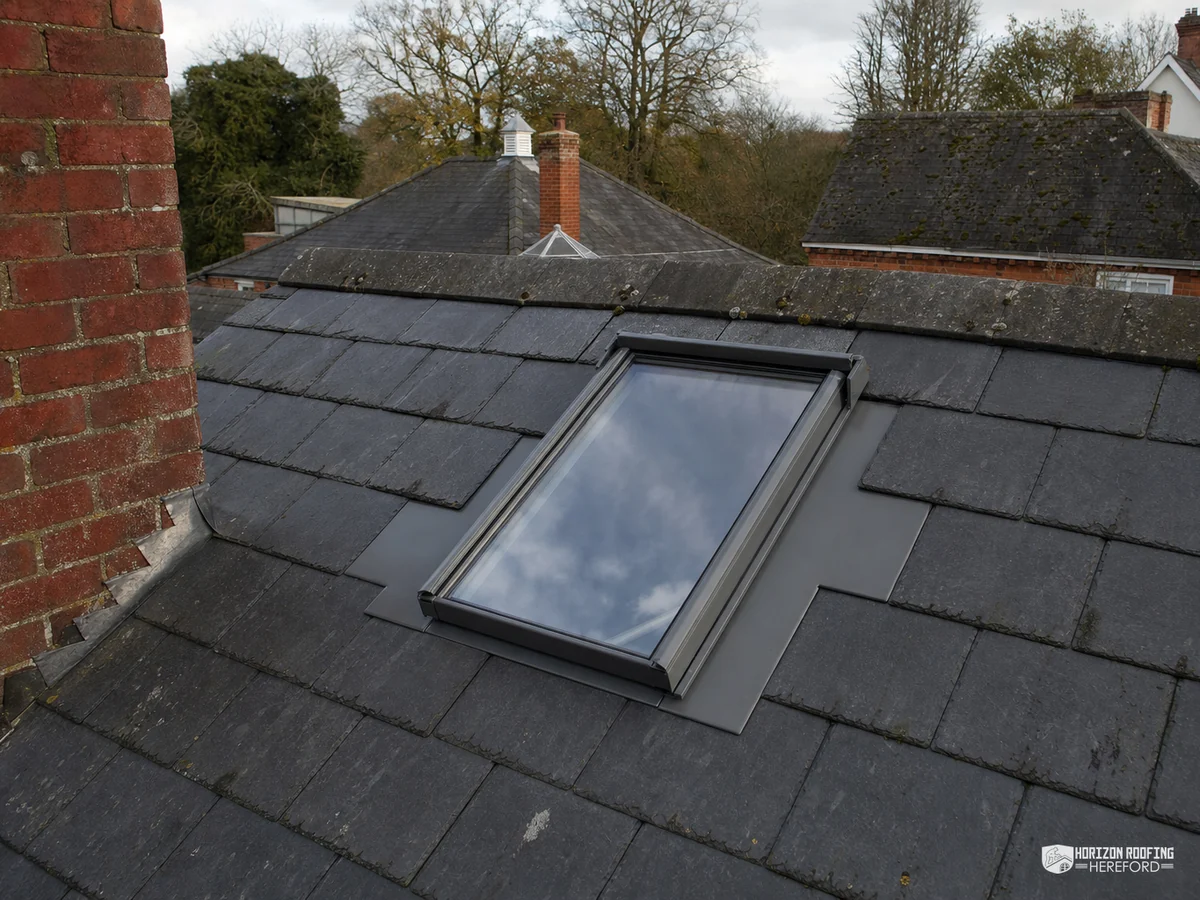
Pitch matters as well, and a replacement is chosen against the slope it will go on. Marley publishes a pitch limit for every tile in its range, from 12.5 degrees up to 40 degrees depending on the product. Cupa quotes BS 5534 as indicating a 20 degree minimum for natural slate, though only where exposure is moderate, with a 500mm slate and a 115mm overlap, and it says hook fixings should be kept off any pitch below 25 degrees. On stone tilestones the pitch of the existing slope is the guide.
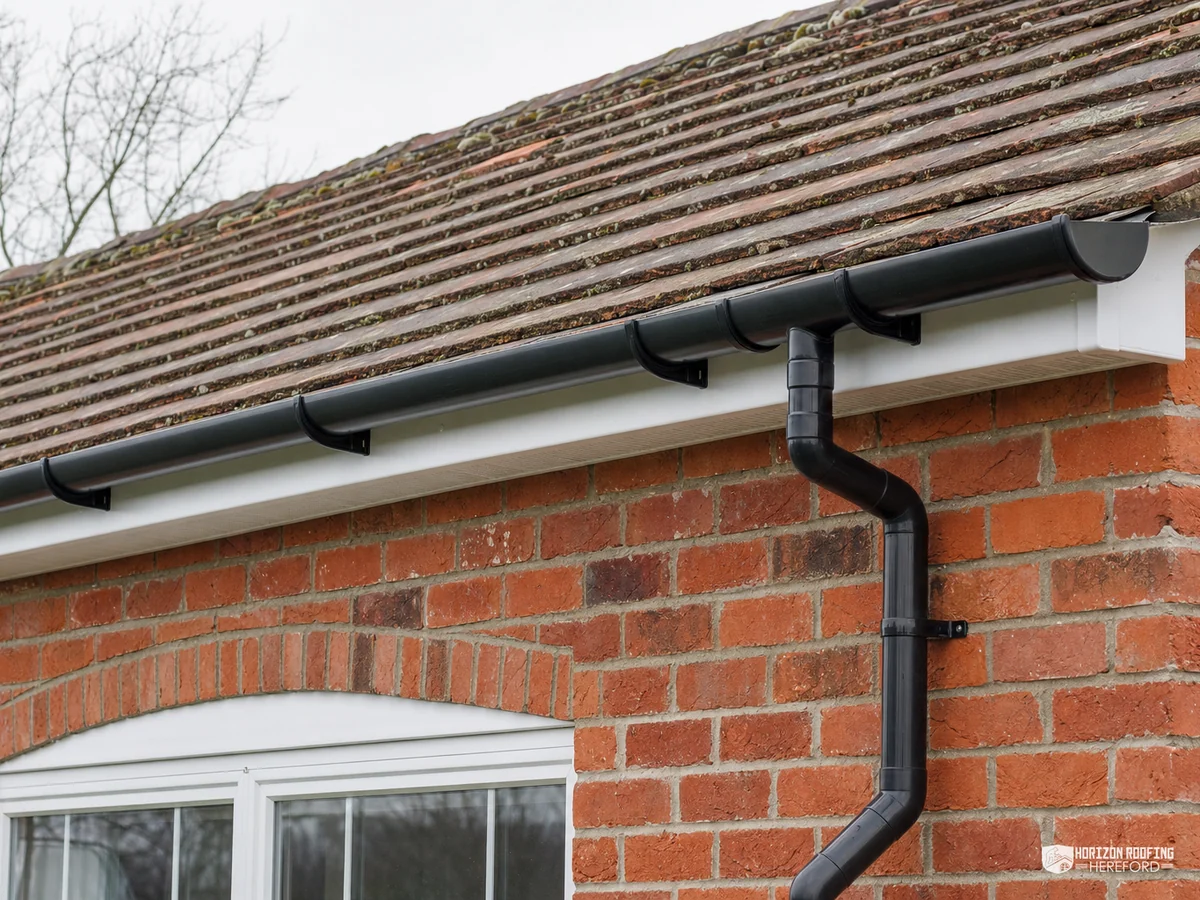
The layer beneath is the underlay. An HR (high resistance) underlay lets no vapour through, so Marley's cold roof advice asks for eaves ventilation of 25mm at pitches of 15 degrees or less and 10mm above that. A patch is right for a few slipped slates or cracked tiles on sound battens. Re-covering suits a slope whose fixings are spent across its whole width. Our pitched roofing page covers both, and slate roofing goes further into the older coverings.
Patch or re-cover?
Can a Llanwarne roof slope be patched, or does it need a new covering?
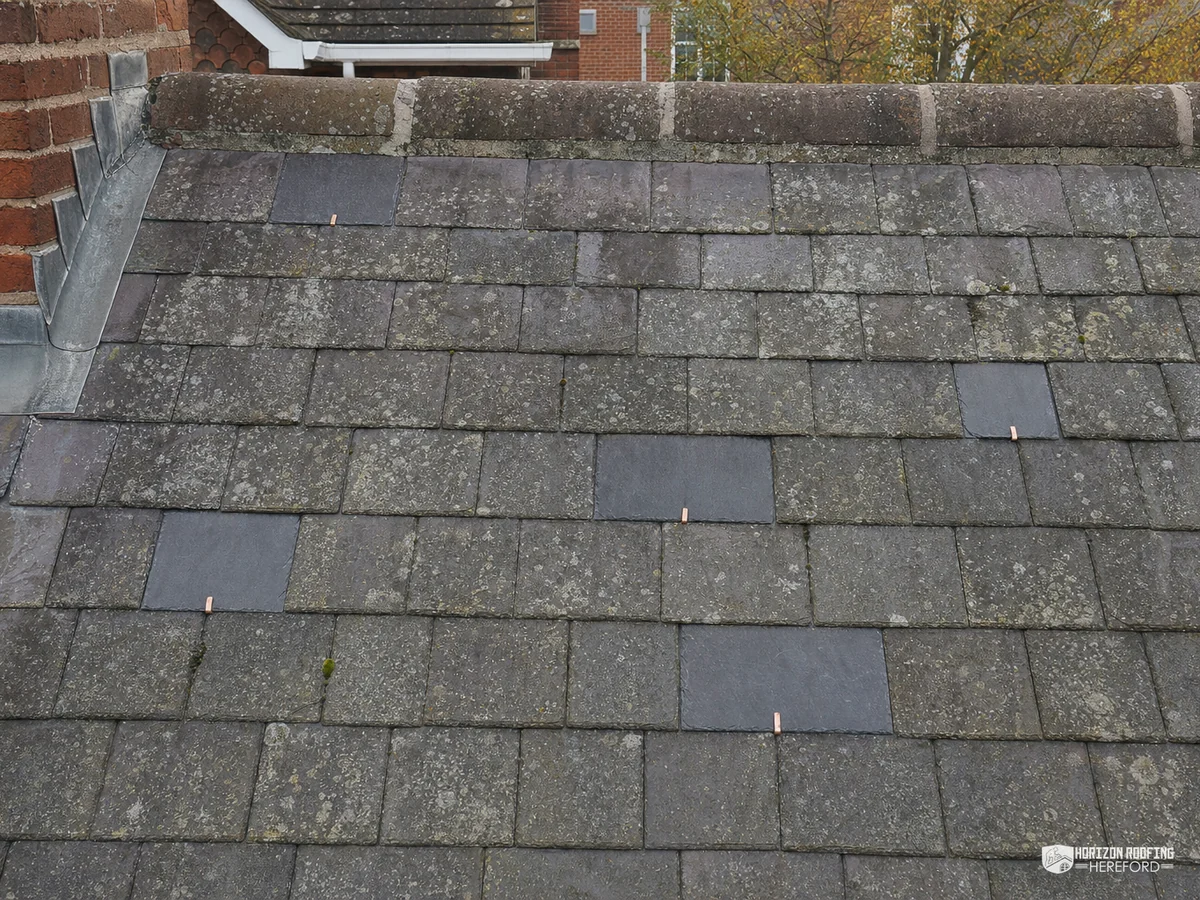
A patch suits a few slipped slates or cracked tiles on sound battens. Re-covering is the answer when fixings have failed across the slope, battens have gone soft or the covering has run to the limit of its range. The photographs from the survey show which of those applies.
A table gives the range, but only a lifted course shows what a particular slope is really made of.