
01432 610152 Get a quote Call 01432 610152

Roofers in Grosmont

Roof repairs and re-roofs for Grosmont, which lies 14.6 road miles south-west of Hereford.

Slate and stonework get read first; photographs of whatever has failed come with one total price in writing.

Get a free quoteCall 01432 610152

Slate, red sandstone and Welsh rules

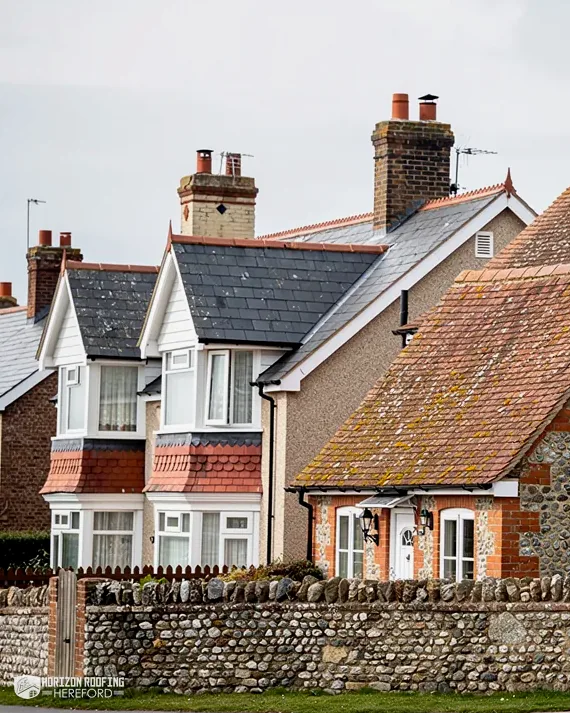
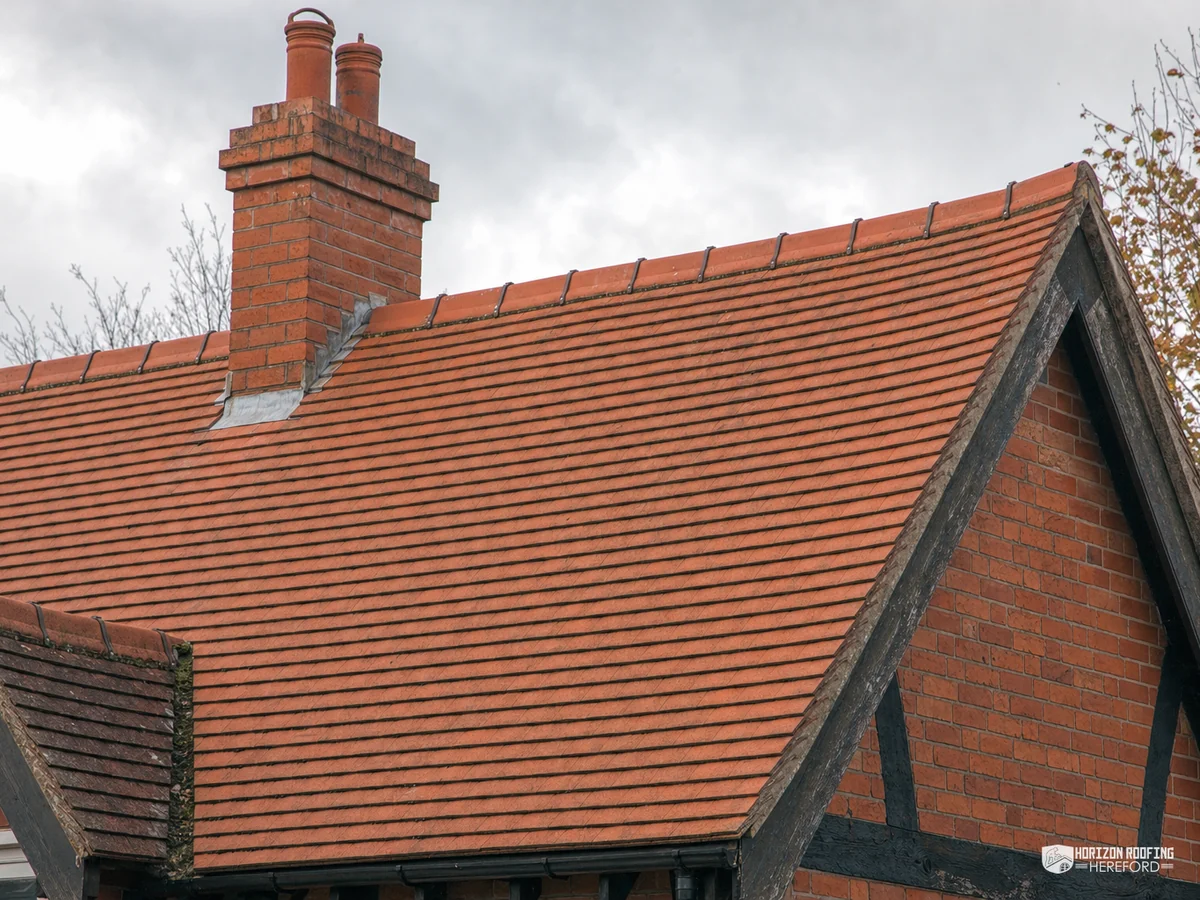
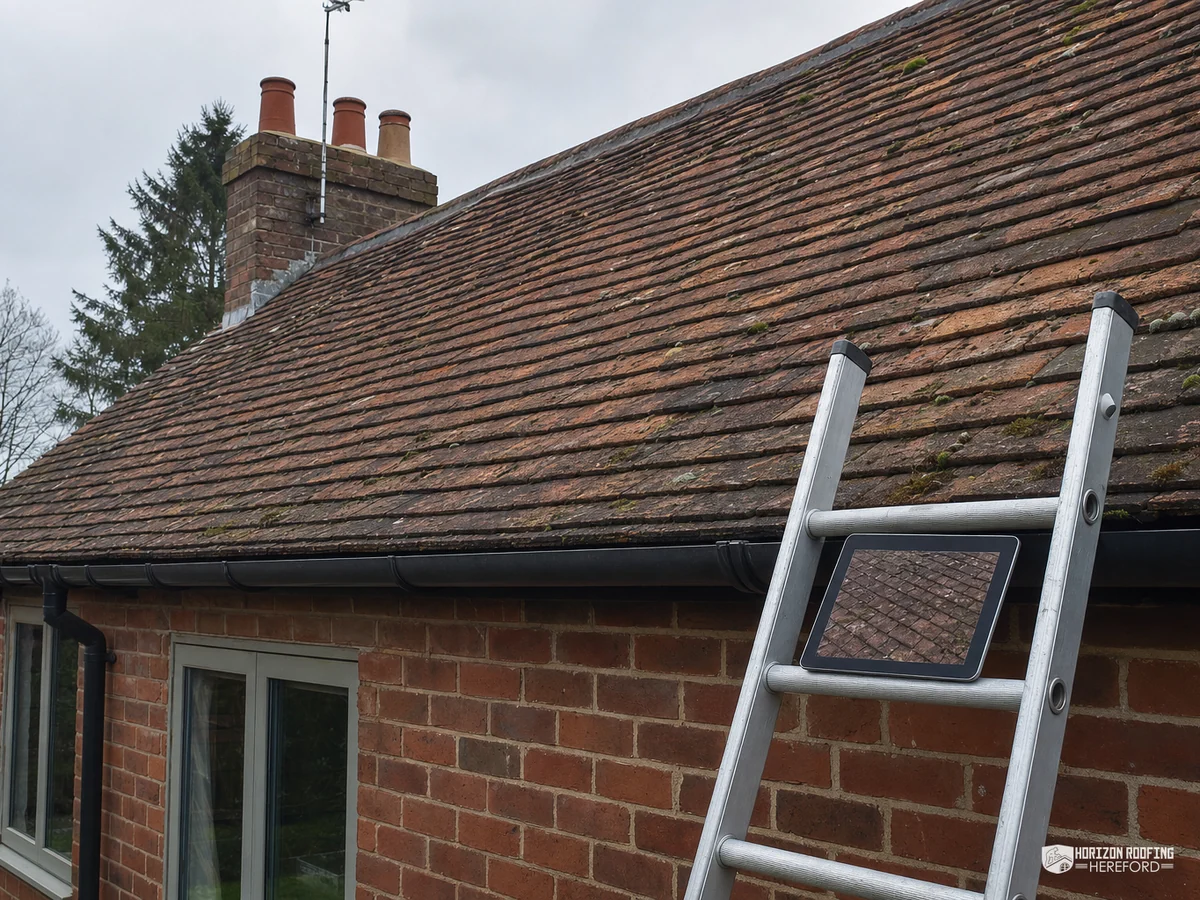
  • Older cottages with weathered clay tile roofs and brick chimneys behind a flint wall
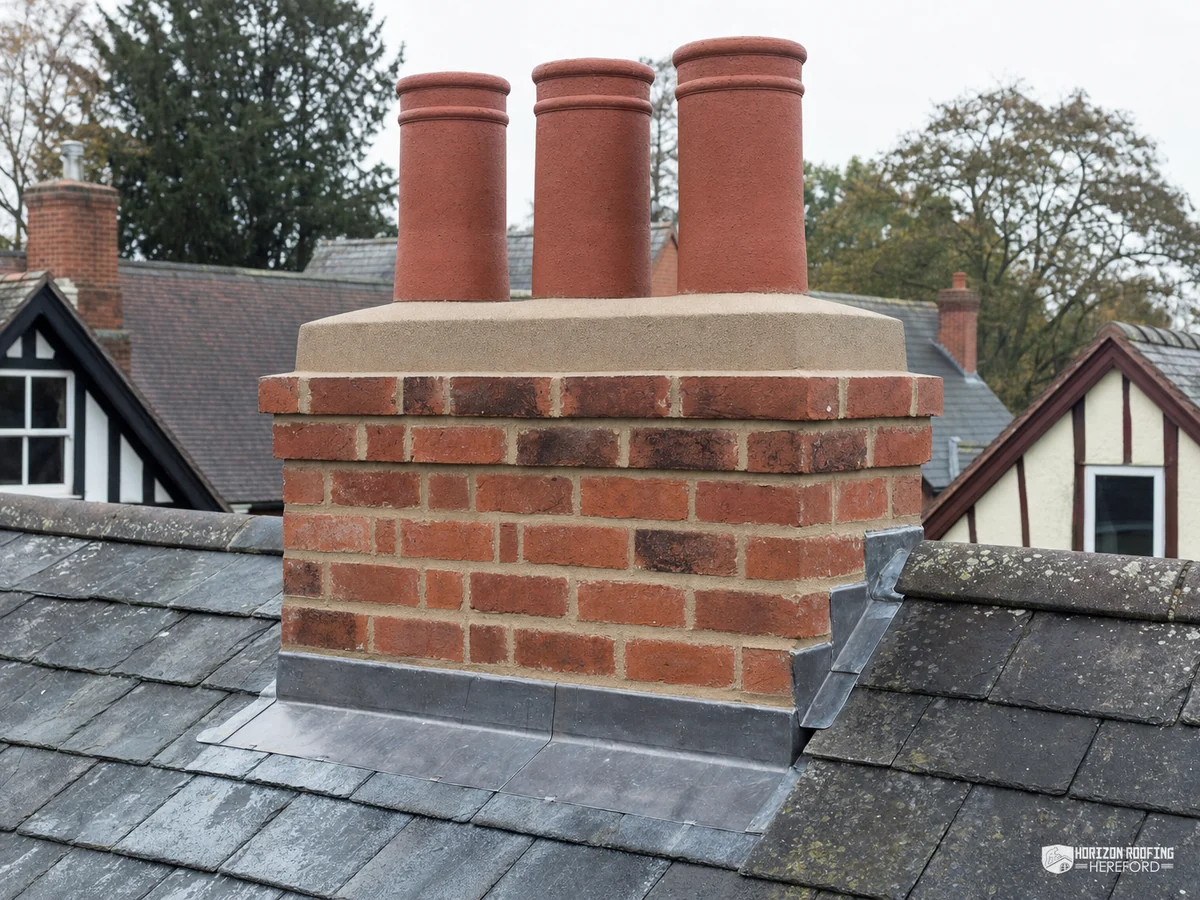
    Grade I church, red sandstoneCadw's description of St Nicholas gives red sandstone rubble walls under slate roofs.
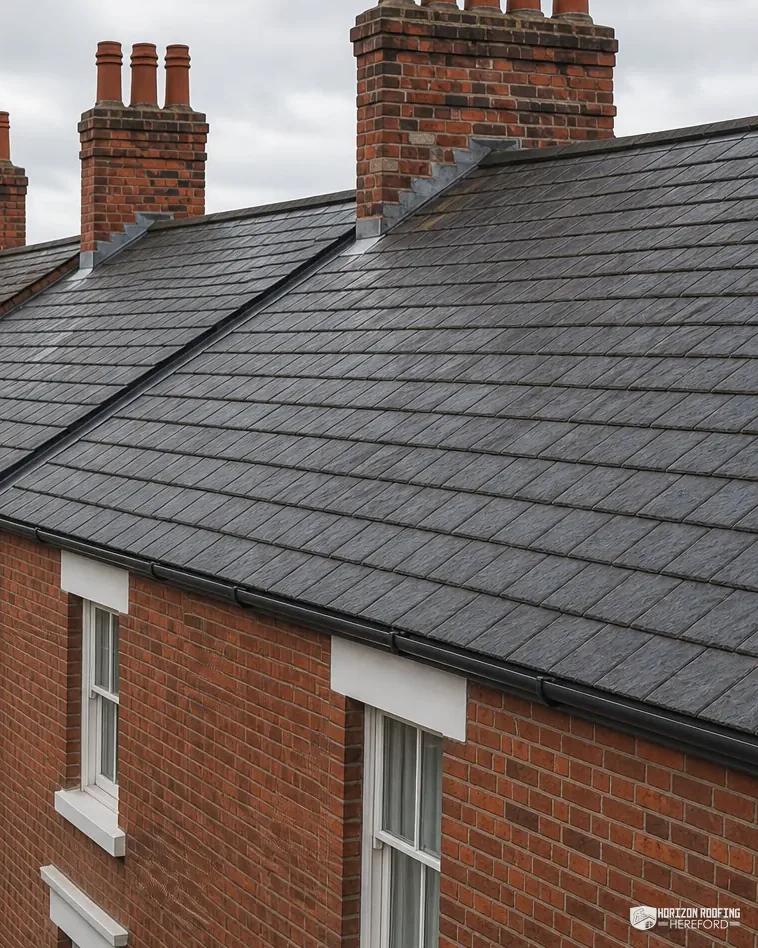
  • Slate roofs and chimney stacks along a red brick Victorian terrace
    Castle ruins and Grade II* housesHowell's House and Glyndwr, both Grade II*, need consent for changes to their character.
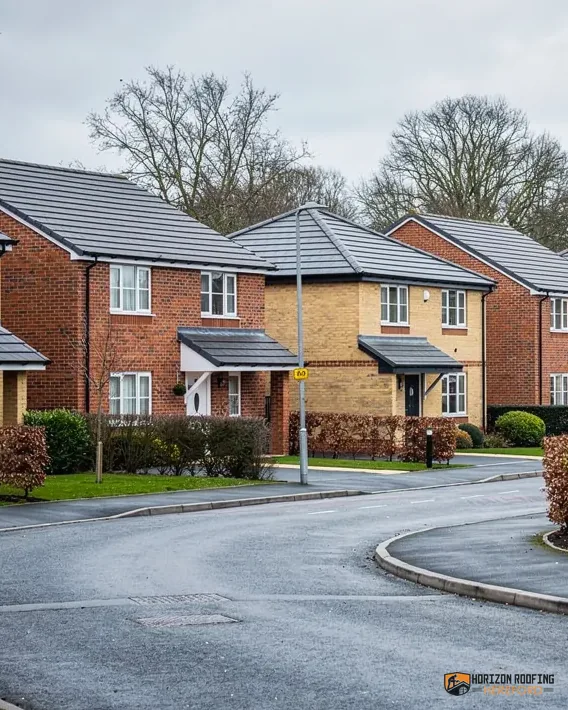
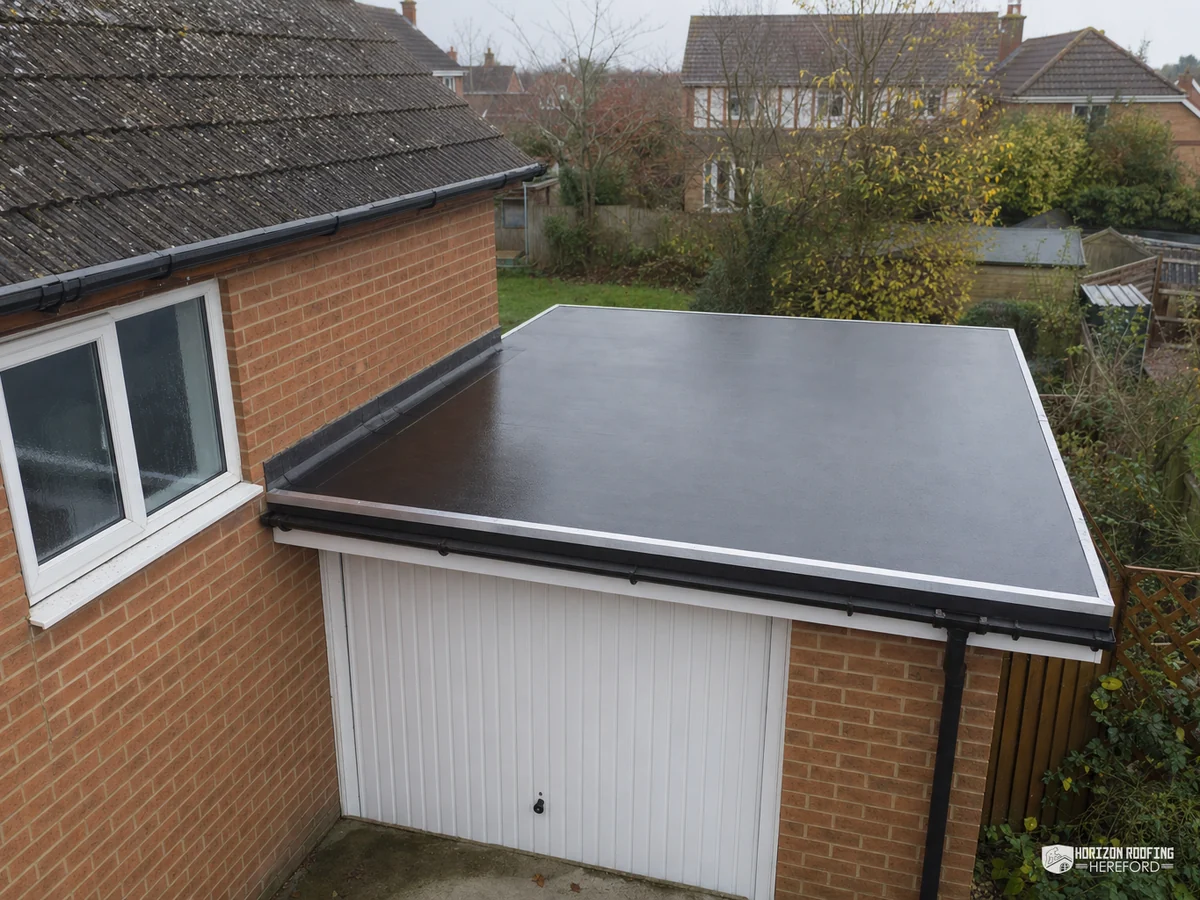
  • Newer homes with grey concrete tile roofs along a curving estate road
    Re-roofing under Welsh rulesIn Wales the Welsh Government says most re-roofing needs Building Regulations approval.

A map view of Grosmont

Grosmont on a street map, with a dashed circle around the town and the nearest towns we cover. Tiles © Esri; map data © Esri, HERE, Garmin, OpenStreetMap contributors.

Grosmont roofs, read from slate to gutter

Grosmont surveyed: slate and sandstone, the listed centre and the gutters below

In survey order: the slate slopes and the Welsh approval rules for a re-roof, then the Grade I church, the listed houses and the conservation area, then the gutter line and the scaffold on the road.

A drawn cut-away section through a Herefordshire border house: the front of the main roof is cut open to show the rafters, underlay, battens and slates, beside a black-and-white timber-framed gable. Numbered, from the ridge down: 1 Slate slopes; 2 Listed centre; 3 Gutters.

Fig. 1 A sandstone-walled house in section, with three Grosmont callouts numbered from the slope down.

Callout 1 of 3

Slate slopes and Welsh re-roofing law

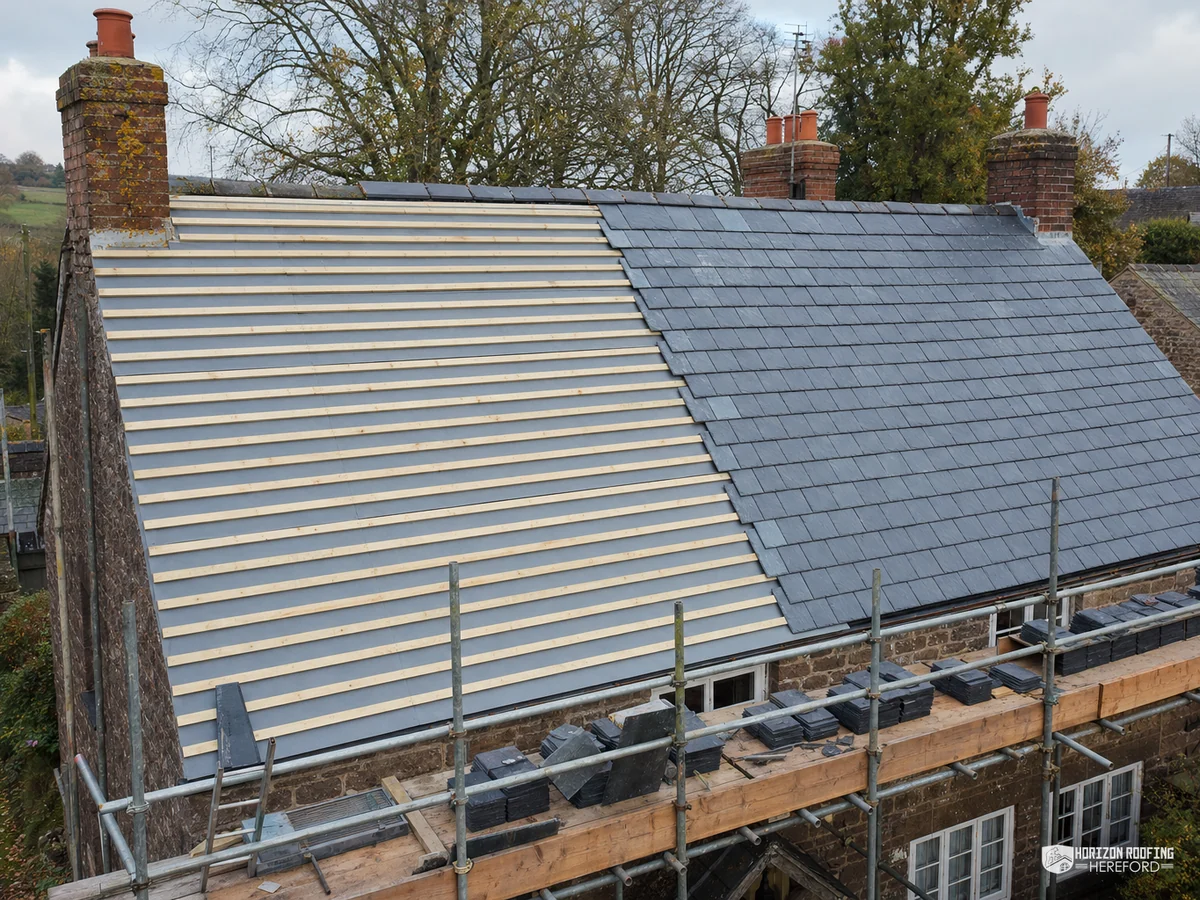
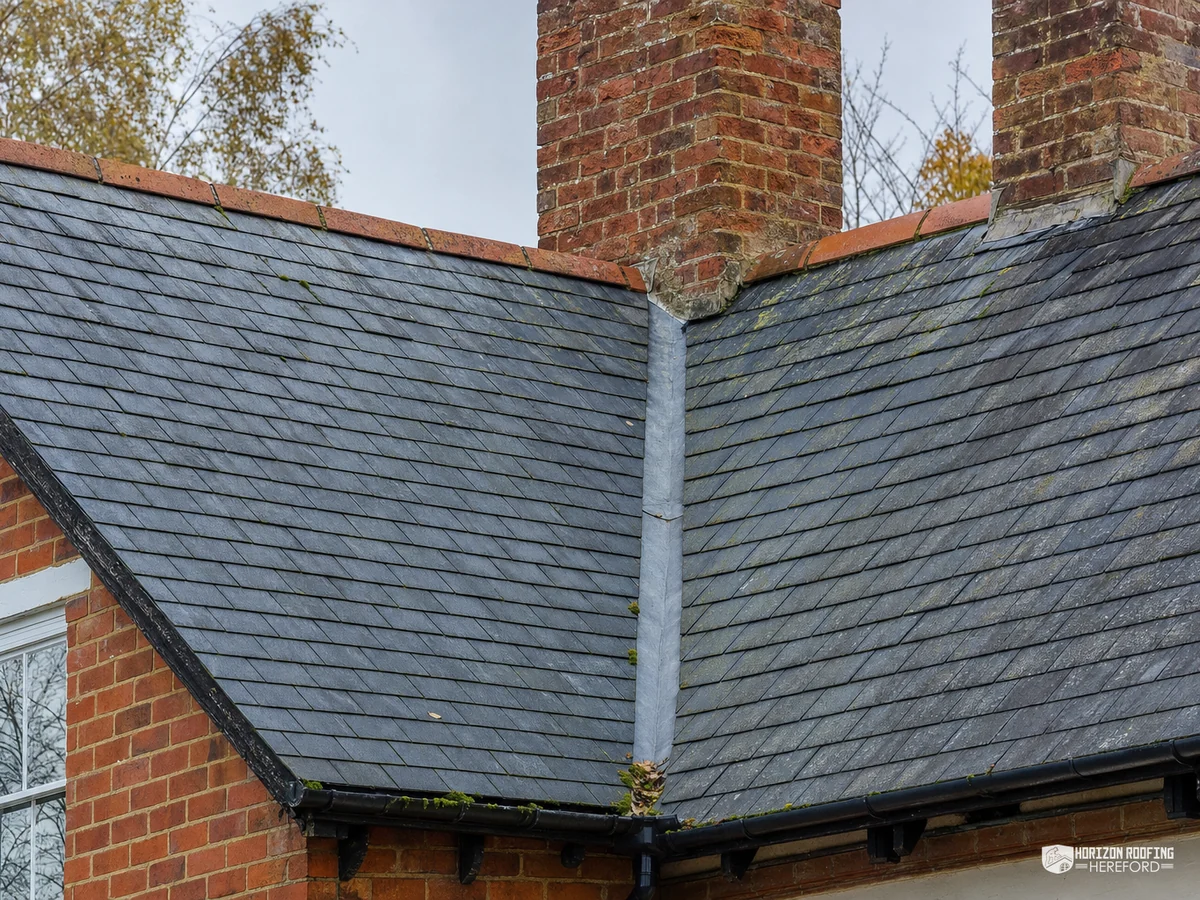
Callout one is the slope. The Cadw listing for the Church of St Nicholas, which is Grade I, describes it in these words: "Red sandstone rubble with some ashlar dressings, slate roofs". That is one church. It tells you what is on that roof and nothing about your house, so the survey reads yours: whether it carries slate, stone or tile, how each unit is fixed and what lies beneath. SPAB describes Welsh slate and stone roofs as "predominantly double-lapped", which means each course is overlapped by the one above so that every joint is covered twice, and we check those laps for gaps on every slope.

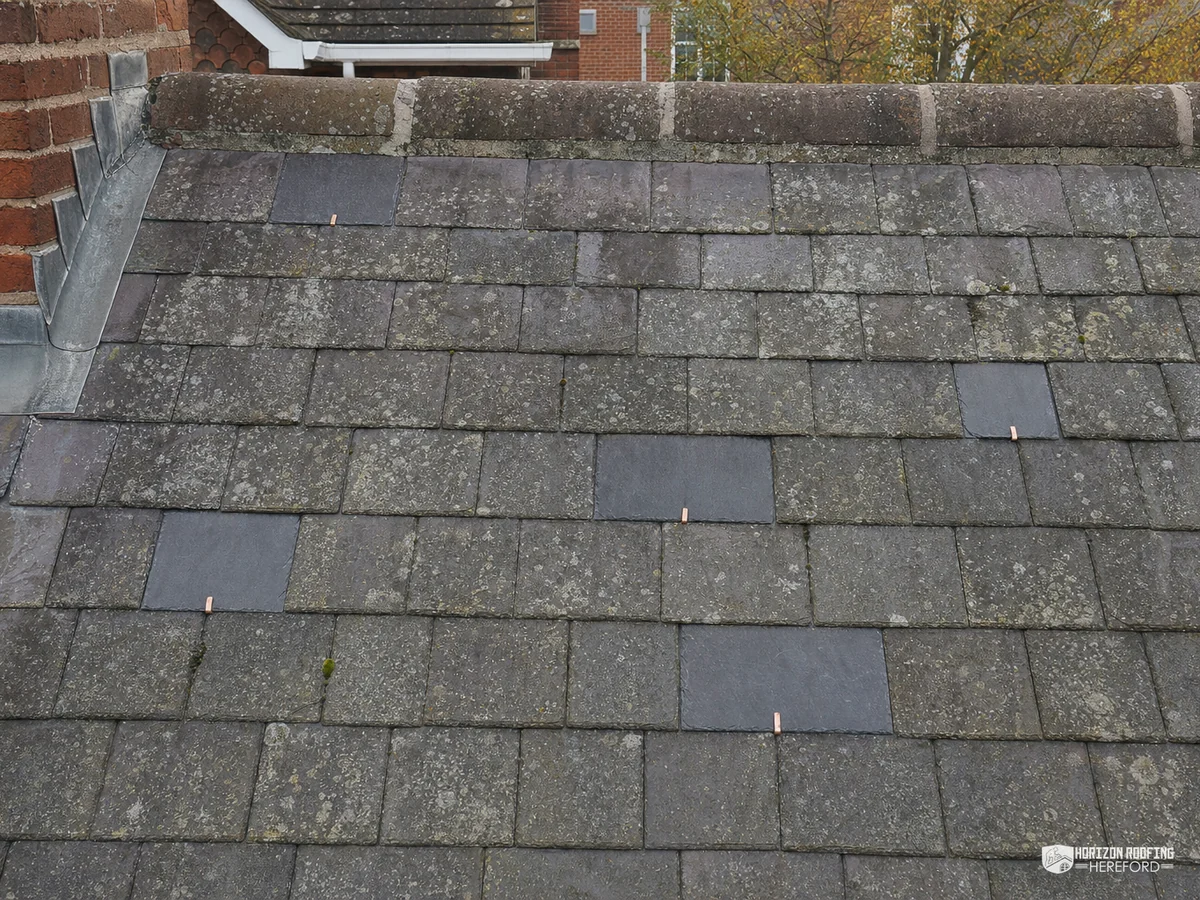
Natural slate lasts when it is sound, and that is why a repair is worth pricing first. HomeBuilding gives Welsh slate "100+ years" and reclaimed Welsh slate 50 to 80 years, while SPAB writes that a well-slated roof is "likely to be more than 100 years". These are typical ranges and never promises. A slate hangs from a nail, and when the nail corrodes the slate slides, so a few slipped slates in a row can be a fixing fault that a repair puts right without any need to strip the slope.

Grosmont is in Wales, so the Welsh Government's guidance governs a re-roof: "In most situations, this work will need Building Regulations approval." Slate to tiles is the example it gives of a different material, where approval is "likely to be needed" to check structural stability, fire safety and energy efficiency. The Welsh Government's roof page says that if you repair or re-cover less than 25 per cent of the area of a pitch or flat roof, you will not normally need to submit a building regulations application. Welsh Approved Document A counts a rise in roof loading of more than 15% as significant, so a heavier covering gets a structural check first.

Insulation follows the re-cover. In the Welsh Approved Document L, Table 4.1 sets 0.13 where an existing dwelling gets a new roof, and Table 11.1 sets 0.16 for a renovated roof, with 0.35 the worst figure acceptable where 0.16 is not feasible. Our slate roofing page goes further into natural slate.

Read on a Grosmont slate slope

  • Slates that have slid on rusted nails
  • Cracked slates and open joints between courses
  • Condition of battens seen from the loft
  • Ridge and verge bedding at each end
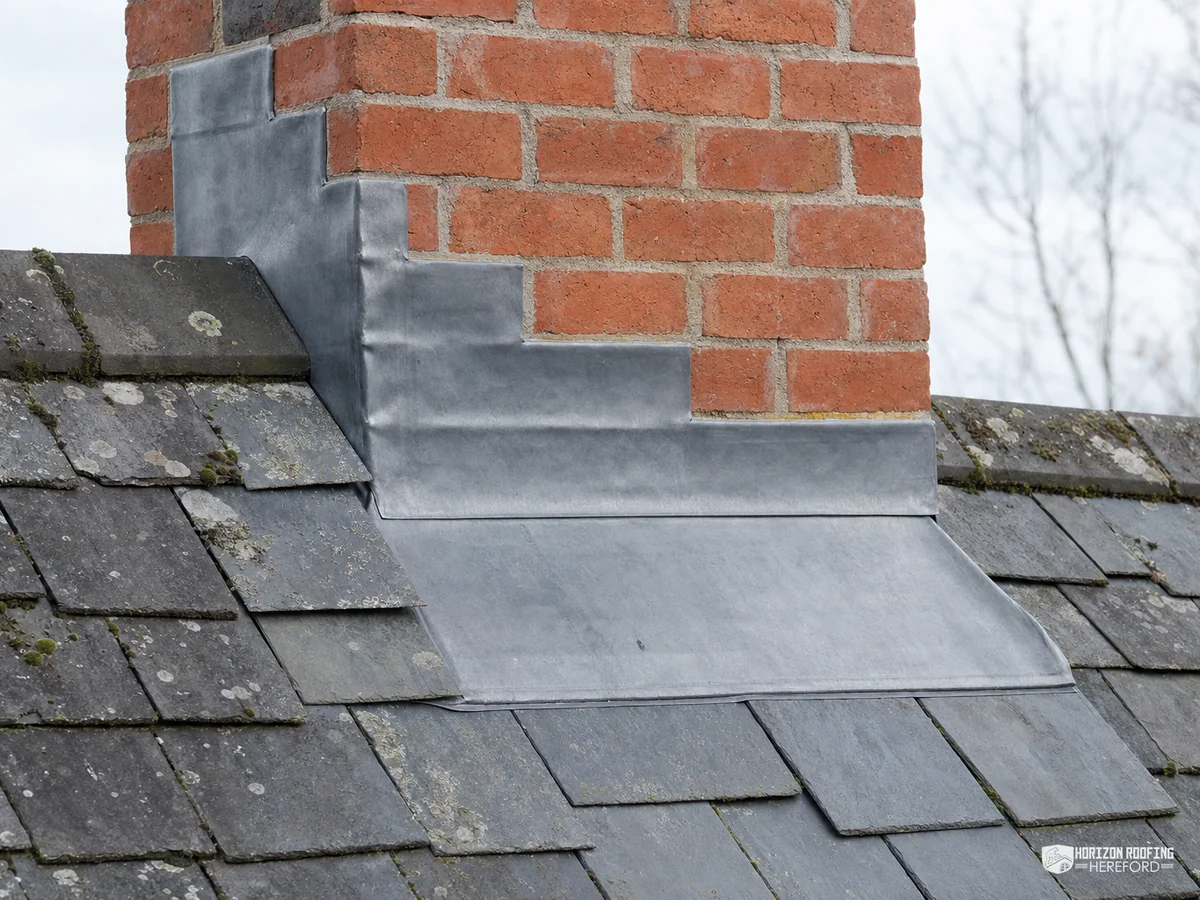
  • Lead at any stack or wall junction

A few slipped slates in a row can be a fixing fault, and a fixing fault is a repair.

Fig. 2 The slopes, drawn close

Callout 2 of 3

Listed buildings, St Nicholas and the conservation area

Cadw's records give Grosmont's Church of St Nicholas as Grade I (record 1947, designated 9 January 1956) and Grosmont Castle Ruins as Grade I (record 1949, designated 9 January 1956). Howell's House is Grade II* (record 24134, designated 19 October 2000), and Glyndwr, with its railed forecourt, is Grade II* (record 1952). A neighbour's listing is worth checking before any roof work is planned.

Since 4 November 2024, listed buildings in Wales have been governed by the Historic Environment (Wales) Act 2023. Section 88 forbids works that would affect a building's special character unless they are authorised, and section 89 provides the listed building consent that authorises them. A listed house keeps its permitted development rights, though consent is required as a separate step, so we put the survey photographs and the proposed method in front of Monmouthshire County Council before the first slate is touched.

Cadw calls St Nicholas a parish church; its owning body sets the route. Under the Listed Buildings (Exempt Religious Buildings) (Wales) Regulations 2024, a Church in Wales church is exempt for as long as it is used primarily for worship, so its roof work goes through the Church in Wales's own system and not through listed building consent. The exemption is for works by or on behalf of the church body, and a church counts only where worship is its primary use.

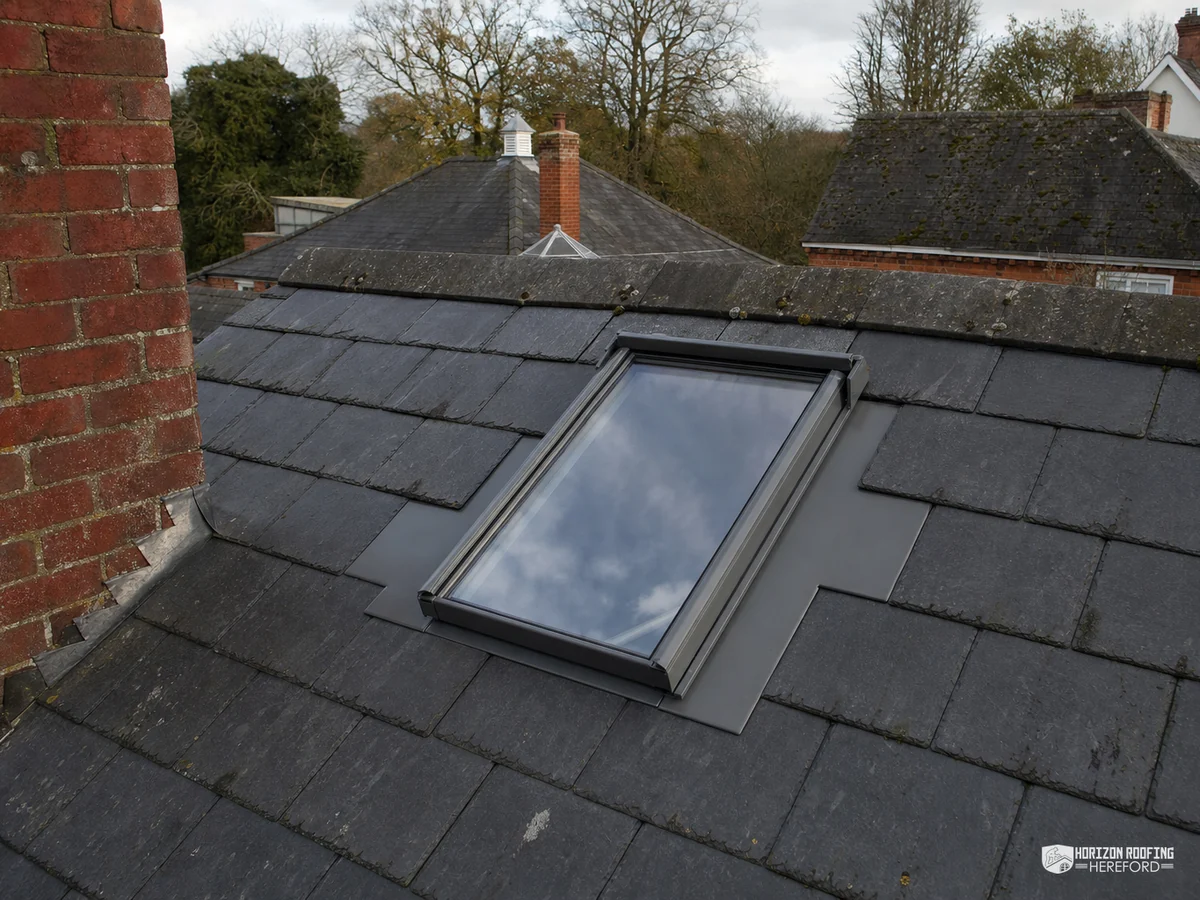
Monmouthshire County Council's Grosmont conservation area covers the centre of the village. Check whether an Article 4 direction applies with Monmouthshire County Council. A new roof light in a conservation area, a National Park or a National Landscape in Wales falls outside permitted development, which means planning permission, and our planning guide for roof windows explains the detail. Monmouthshire's Duty Planning Officer, reached on 01633 644831 from Monday to Friday, 10am to 2pm, answers the question of whether planning permission is needed.

Building control is Monmouthshire County Council Building Control, run from County Hall in Usk, or a registered building control approver. New Welsh building control rules came into force on 1 July 2026. Our listed and heritage roofing page describes our approach to protected houses.

Which law applies

Which law covers a listed house in Grosmont?

The Historic Environment (Wales) Act 2023 covers it, with section 88 requiring works to be authorised and section 89 setting out listed building consent. Ask Monmouthshire County Council before any work that could change the roof's character, and send the survey photographs with your question.

Fig. 3 Wall abutments, drawn close

Callout 3 of 3

Gutters, the road outside and the scaffold licence

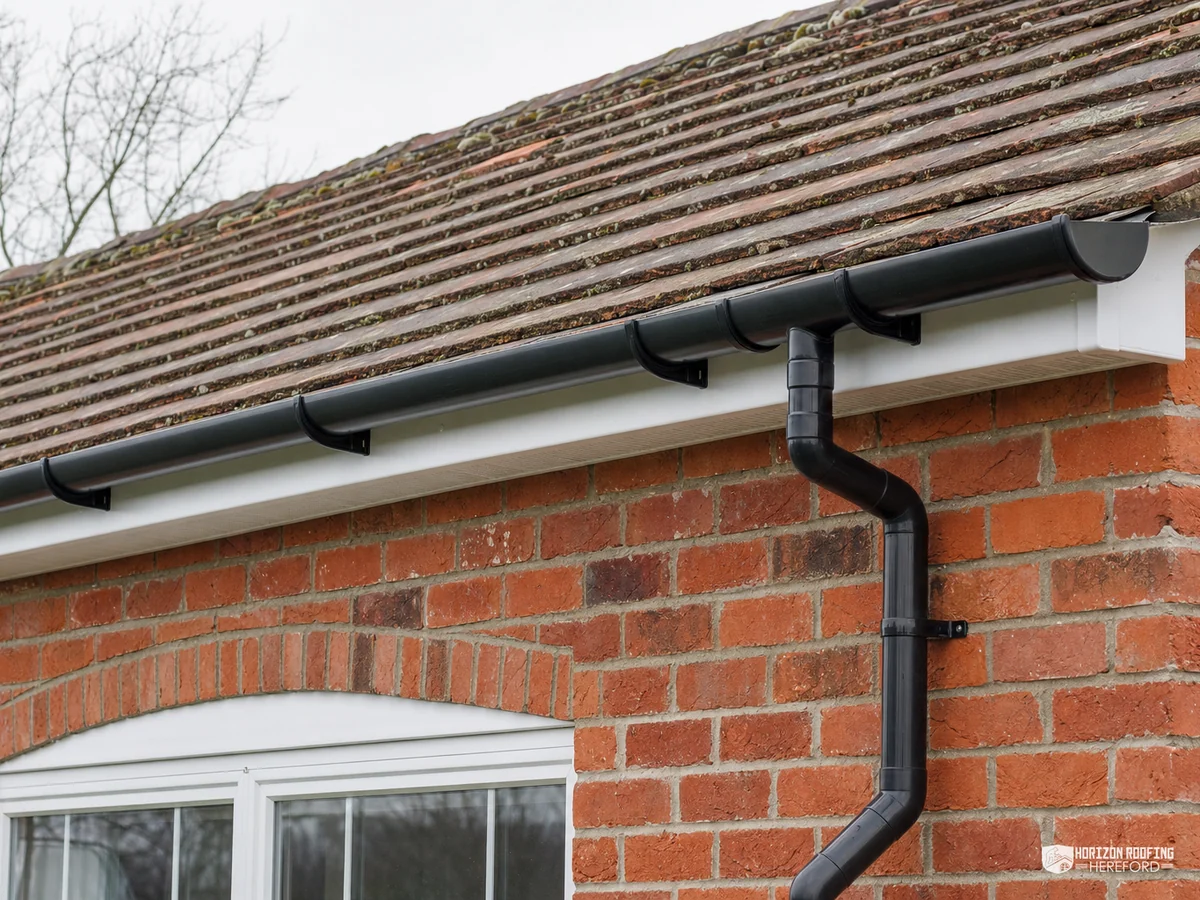
Callout three is the gutter line, where the roof hands its water to the wall. A gutter must slope to its outlet; Brett Martin, a gutter manufacturer, puts the fall at "1mm for every 600mm". On a long run a bracket gives way or a joint weeps, and standing water then sits against the fascia and the stone below. We run a level along each gutter, look at every joint from the ladder and photograph the sags, so you can see where the run has dropped. Swapping gutter materials on a listed house changes how the eaves look, so the council hears first, before any order is placed. Downpipes matter as much as the runs: a blocked gully at the foot of a pipe pushes water back against the sandstone, and we look there too. Cast iron, aluminium and plastic all have a place, and on a Grade II* house the council's view comes first, while on an ordinary house the choice is yours. Behind the gutter we check the fascia and soffit boards for soft timber, since a gutter that has dripped onto the boards for a long time may have rot behind it.

Any scaffold over Grosmont's road or pavement must hold a section 169 licence under the Highways Act 1980, and we arrange the licence with our scaffolder. Monmouthshire County Council sets an administration fee and wants a minimum of 5 working days' notice before erection. If a Grosmont house fronts a main road, Monmouthshire County Council is asked first.

When the work is done, the scaffold comes down, the slipped and broken units are cleared from the gutters and the lawn, and the waste leaves with us. Where an earlier repair used a different material, the photographs show each join, so the new work can follow the house and not the patch. Our guttering, soffits and fascias page sets out the gutter and eaves work in detail.

What sets the price of a Grosmont roof job

Reach
How high the work sits and how it is accessed
Covering
Slate, stone or tile, and how much is replaced
Extent of the fault
A few units, a whole slope or the full roof
Listed status
Matching materials and any consent the work needs

One written total price, never itemised.

Grosmont roofs: slate, listing and Welsh approvals

Can the slate on a Grosmont house be repaired instead of replaced?

A repair is the first thing we price, because slate is held by individual nails and a fault at the nails does not mean the slate has failed. We refix sound slates, replace cracked ones with a match for size and colour, photograph each one before it comes off, and say when a slope has run its course. SPAB advises checking any claim that slate is unavailable directly with the quarries, so we contact them first, before another material is mentioned.

Does the roof of Grosmont's Grade I church of St Nicholas need listed building consent?

Not while it is a Church in Wales church whose main use is worship, because the 2024 Welsh regulations exempt such a building and the work then goes through the Church in Wales's own system. Once worship stops the exemption lapses, and a minister's house is not a religious building. Before any roof work begins, take the matter to the church's governing body.

Do I need planning permission for a roof light in Grosmont?

In a Welsh conservation area, a new roof light falls outside permitted development, so it needs planning permission, and Grosmont has a conservation area covering the village centre. The gov.wales rooflight page adds that a new rooflight will generally need Building Regulations approval too. Monmouthshire's Duty Planning Officer, on 01633 644831 from Monday to Friday, 10am to 2pm, takes planning queries, and we send the survey photographs with the question so the answer is about your roof and not a general case.

What does the Welsh Part L ask for when a Grosmont roof is re-covered?

Table 4.1 of the Welsh Approved Document L sets 0.13 where an existing dwelling is given a new roof, and Table 11.1 asks 0.16 of a renovated roof, accepting no worse than 0.35 where 0.16 is not feasible. The whole element is improved where more than 50% of it is renovated. A new Welsh edition takes effect on 4 March 2027, and until then the current tables apply.

How does a scaffold licence work in Grosmont, and what is the fee?

We arrange the licence with our scaffolder when the scaffold needs the road or pavement. Monmouthshire County Council's form states an administration fee of £108, with extensions at £27 per week, and requires at least 5 working days' notice before erection. Where a Grosmont scaffold faces a busy road, the council is asked who licenses it before booking. The scaffold sits inside the written total, so the quote you sign is the full figure for the job.

Which building control service handles a Grosmont re-roof?

Monmouthshire County Council Building Control, or a registered building control approver of your choice. Approvers answer to the Building Safety Regulator, acting for the Welsh Ministers, whereas the Welsh Ministers themselves oversee council building control. New Welsh building control rules came into force on 1 July 2026, so we ask which route and which form applies before a strip starts, and we tell you the answer in the report before any work is booked.

A slate-to-gutter survey in Grosmont

Describe what you see from the garden, attach a photograph if you can, and we will reply with a survey date.

10-year workmanship guarantee, in writing