
01432 610152 Get a quote Call 01432 610152

Roofers in Llanigon

Clay tile, slate and lead on homes inside the National Park: roof work for Llanigon.

From Hereford, Llanigon is 21.6 road miles west, about 37 minutes' drive. You receive photographs of the roof and a single written total.

Get a free quoteCall 01432 610152

Llanigon roofs in clay, slate and lead

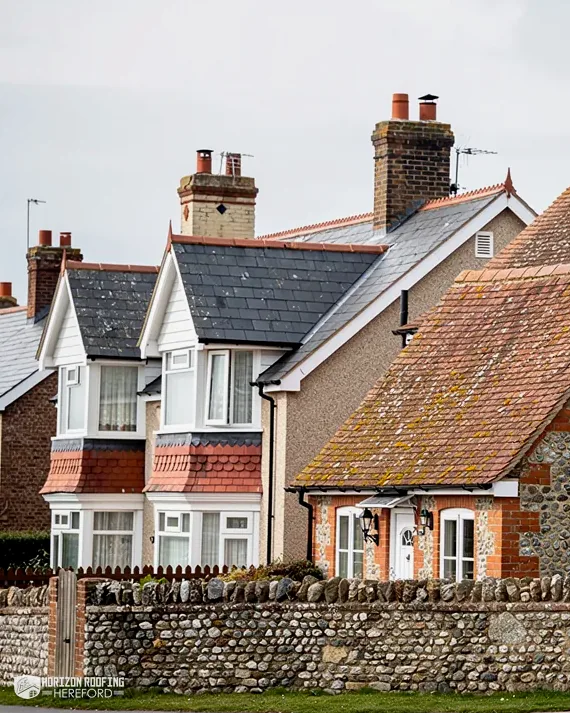
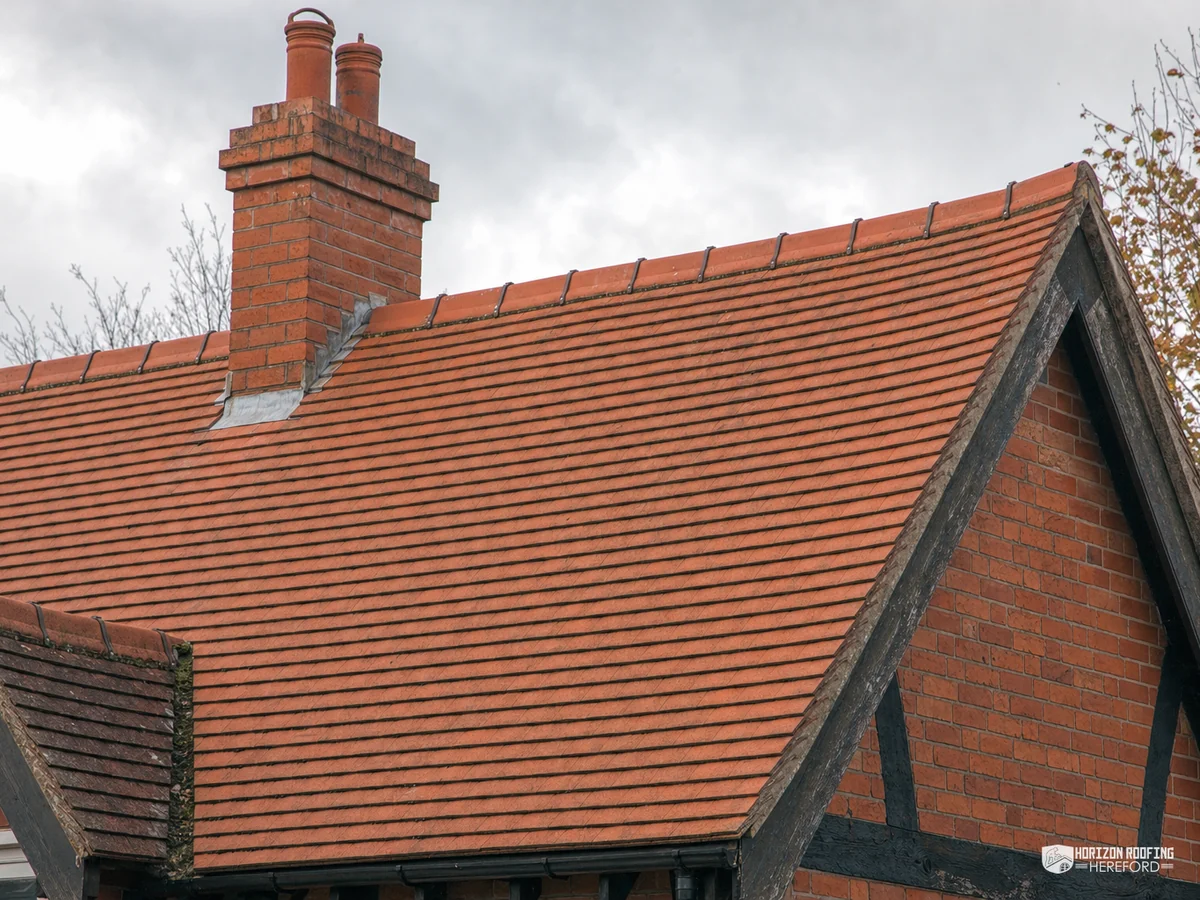
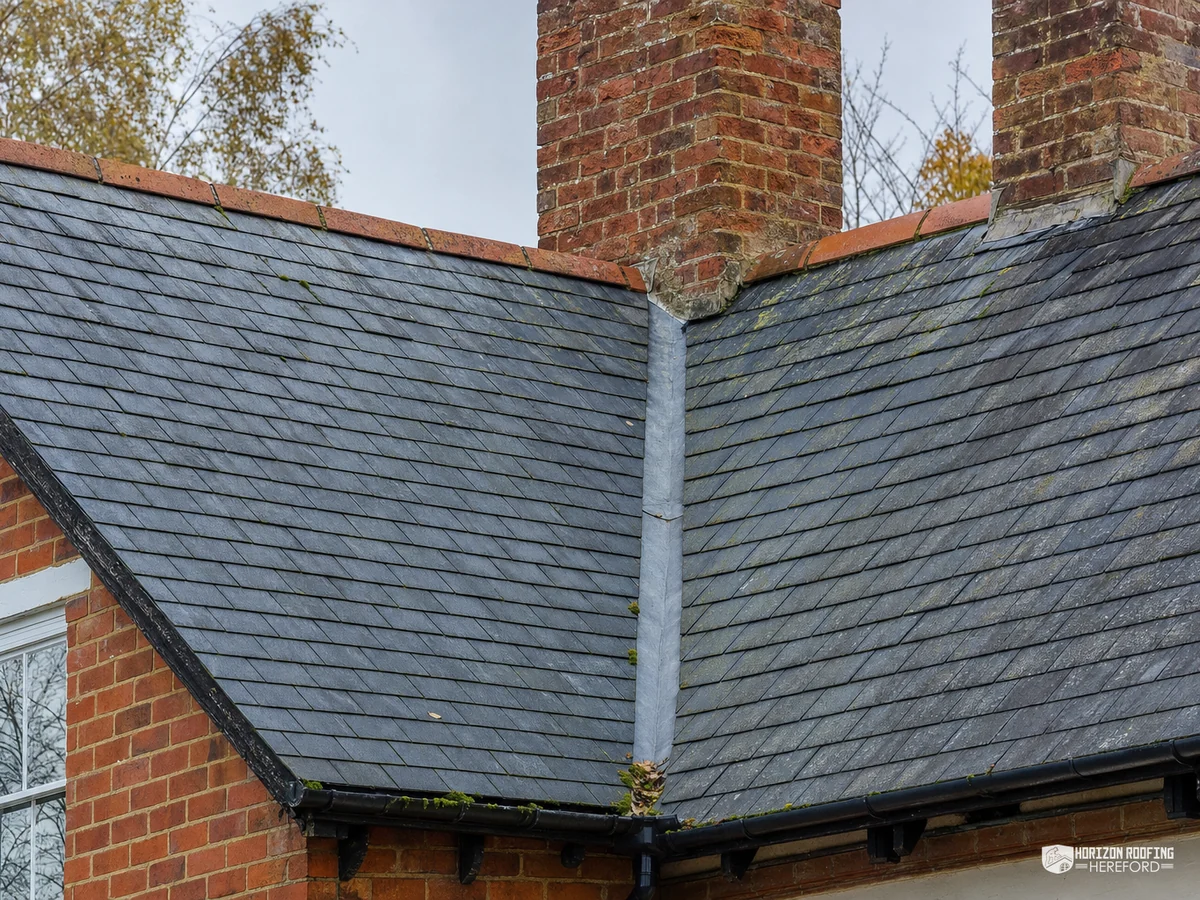
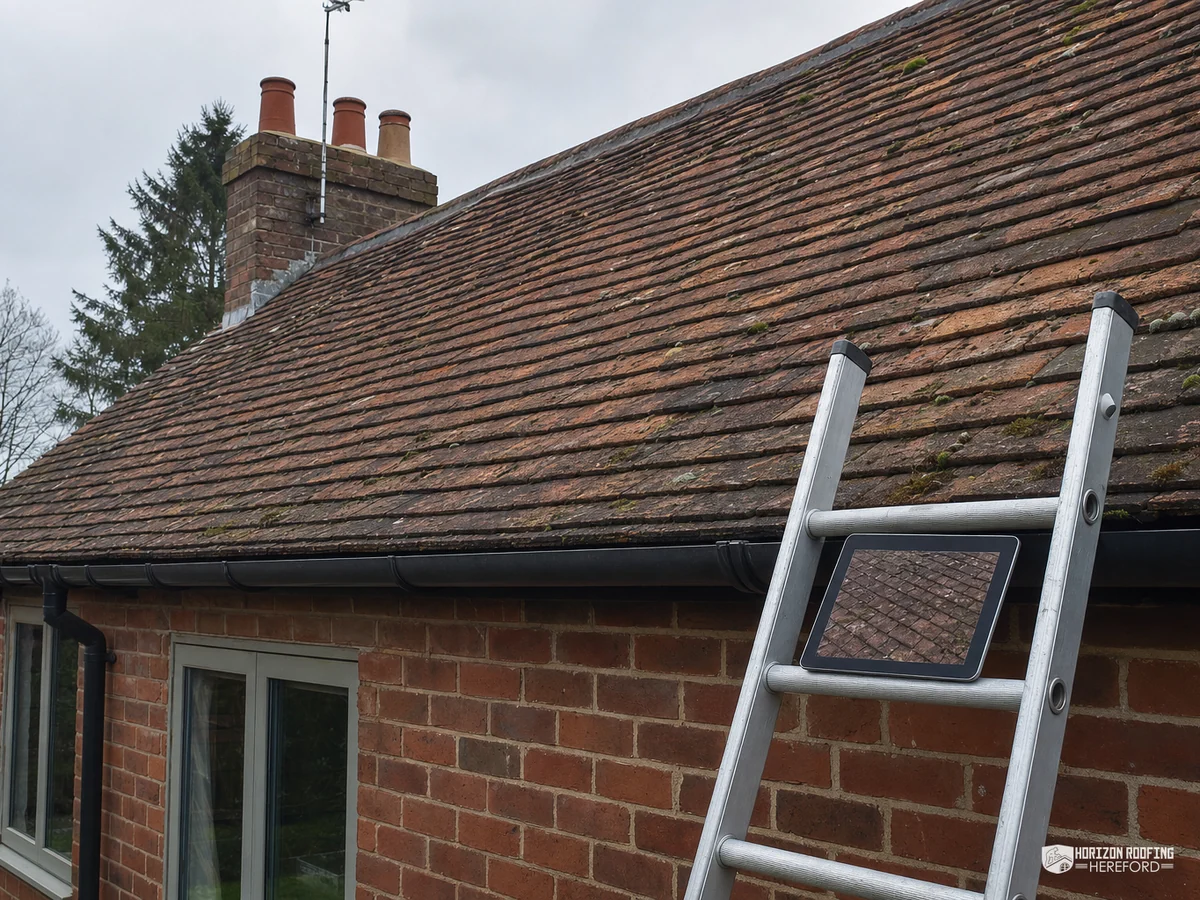
  • Older cottages with weathered clay tile roofs and brick chimneys behind a flint wall
    Clay tile on St Eigon'sCadw's listing for the church records clay-tile roofs on a stone building.
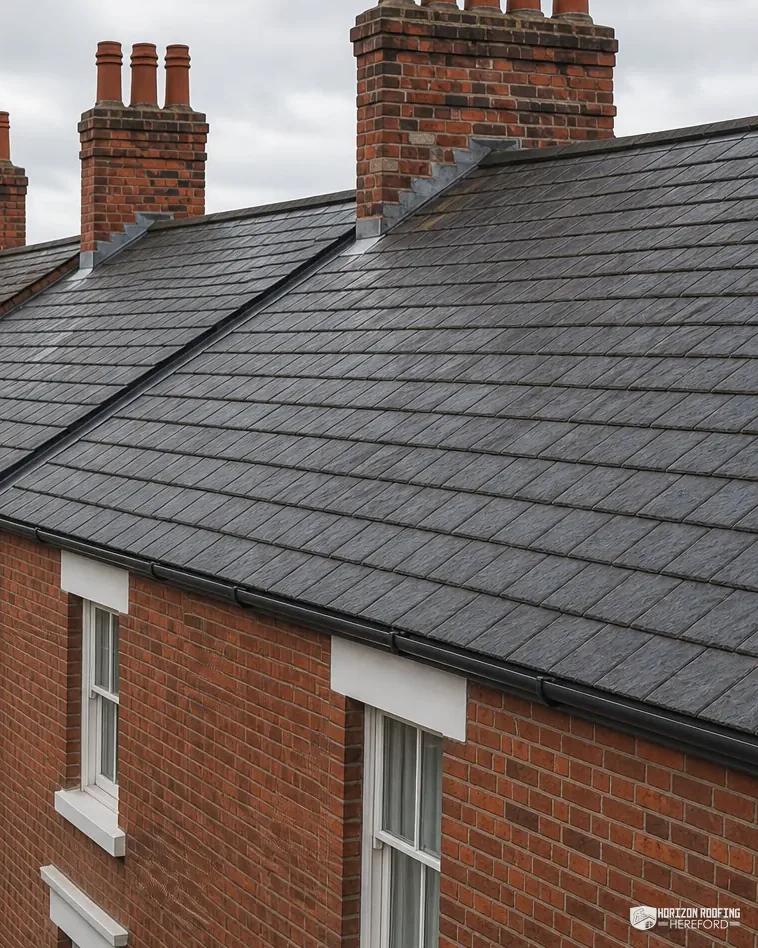
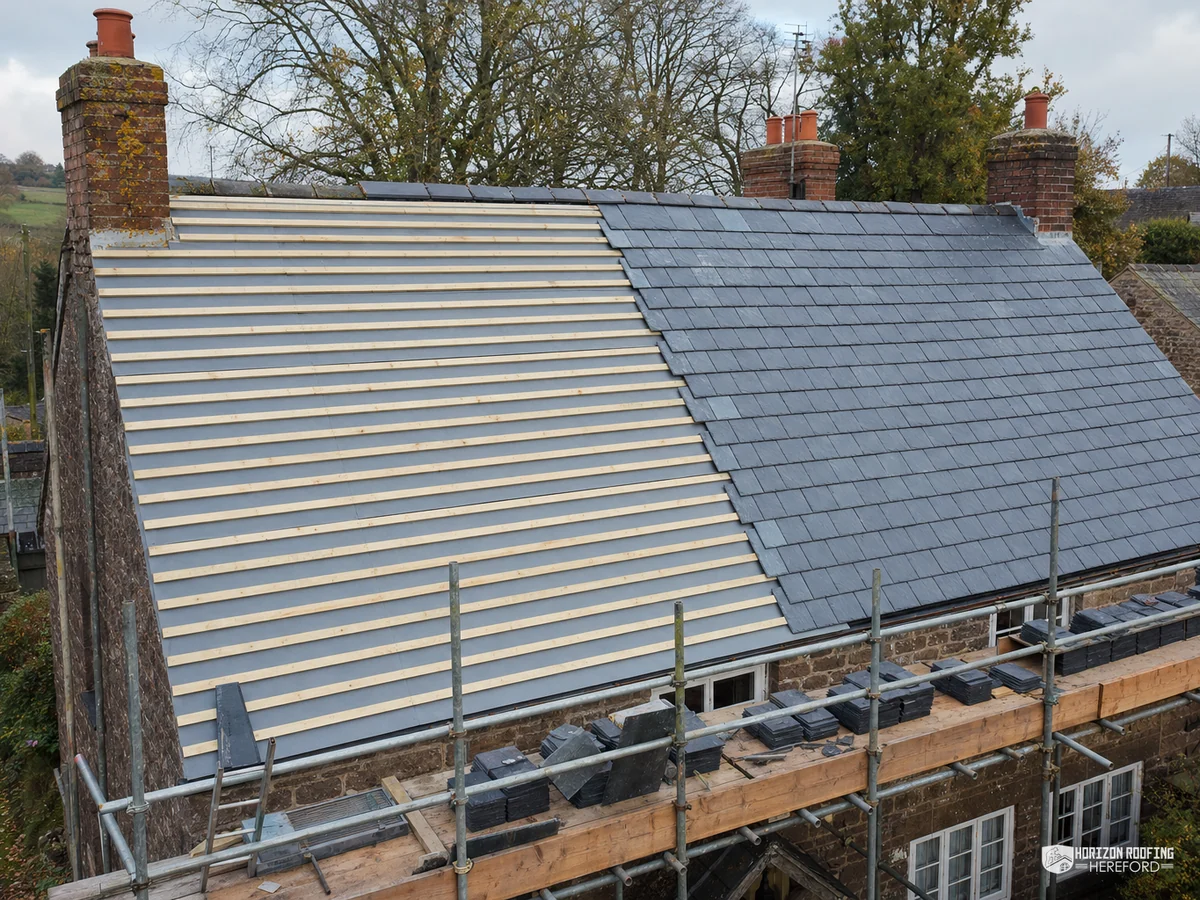
  • Slate roofs and chimney stacks along a red brick Victorian terrace
    Slate on Ty MawrCadw's listing for Ty Mawr, Grade II*, records slate roofs and roughcast walls.
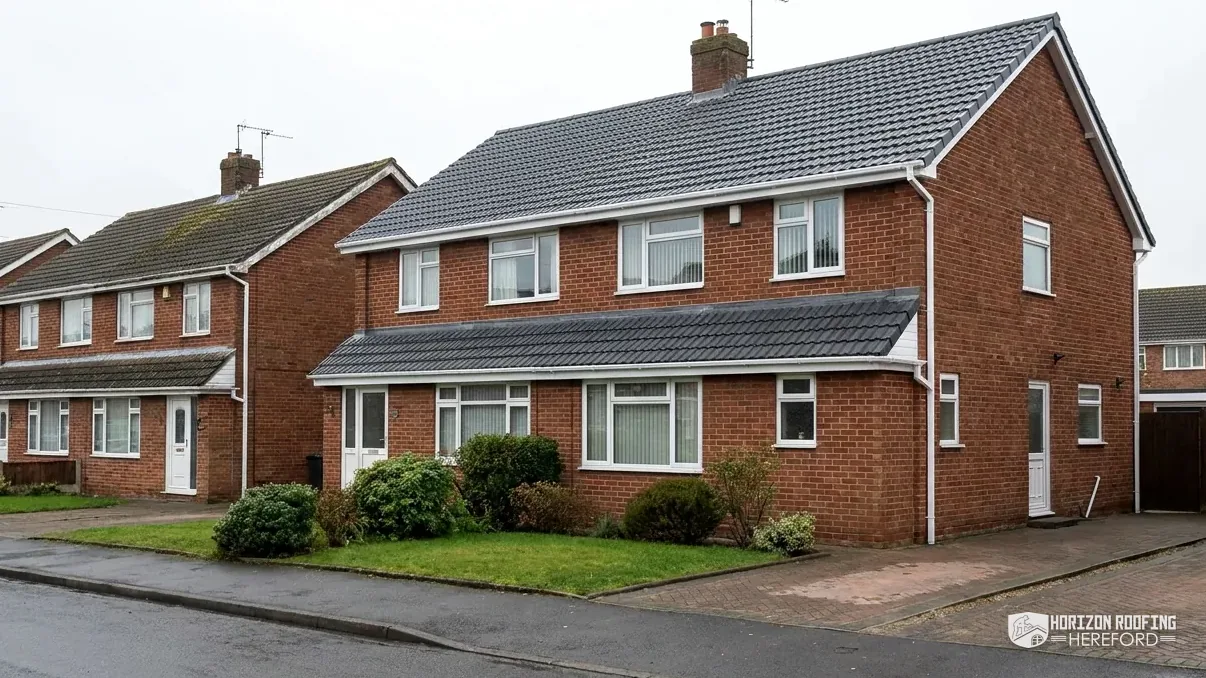
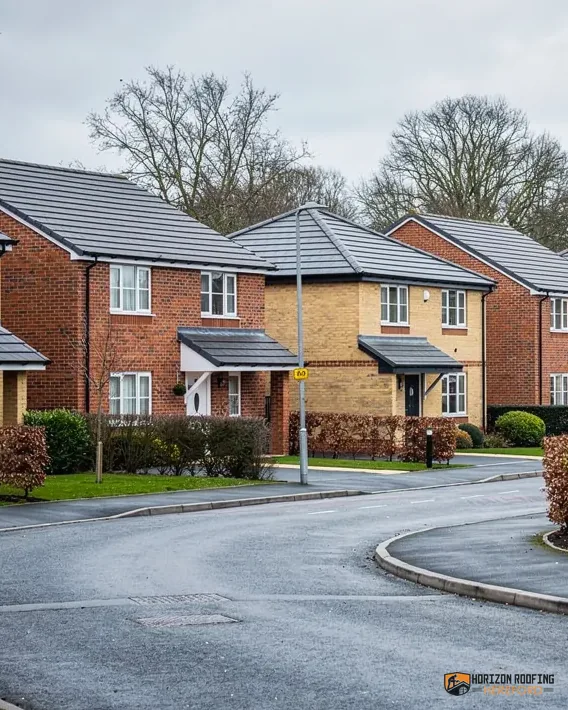
  • Newer homes with grey concrete tile roofs along a curving estate road
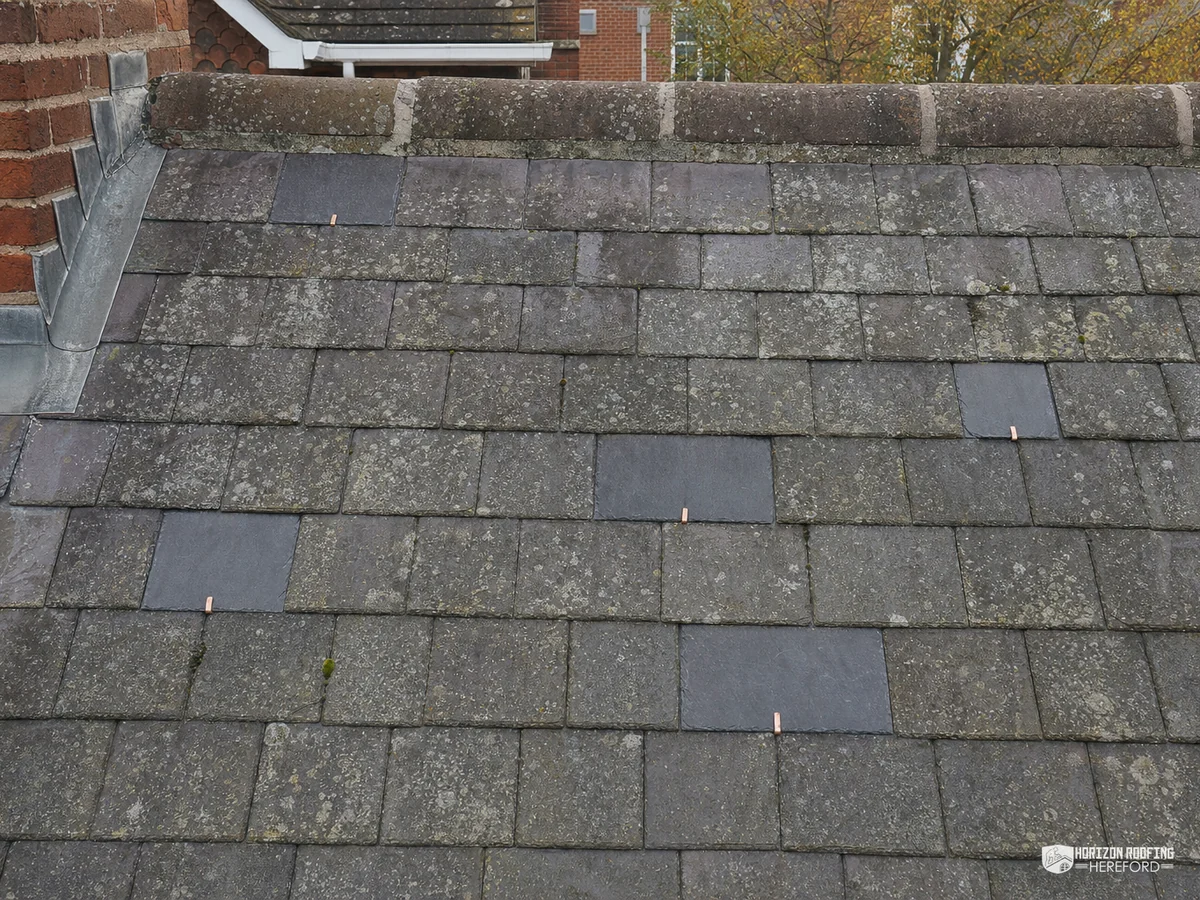
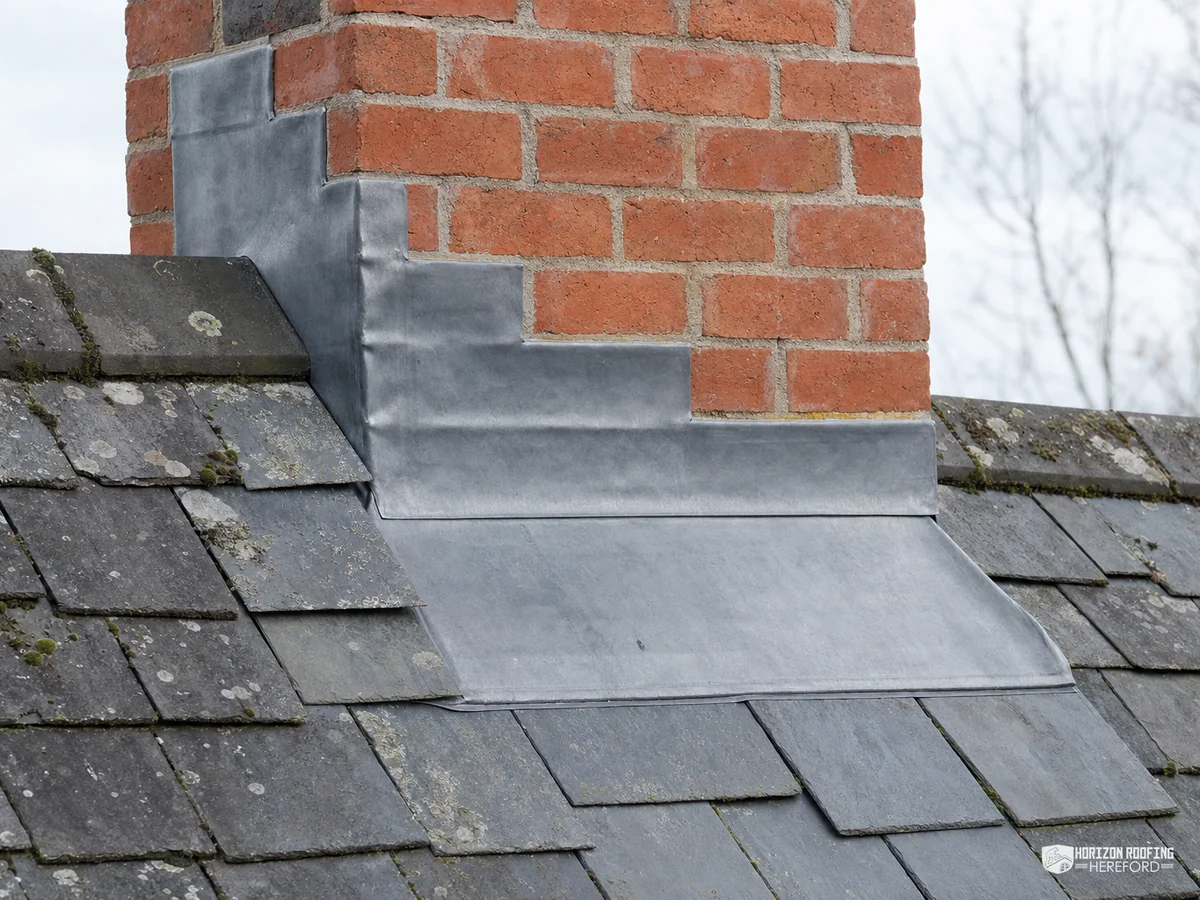
    Lead at every junctionLead flashings and soakers seal slate and tile where roofs meet walls and stacks.

Close to Llanigon

Llanigon on a street map, with a dashed circle around the town and the nearest towns we cover. Tiles © Esri; map data © Esri, HERE, Garmin, OpenStreetMap contributors.

Llanigon roofs, ridge to listed wall

Clay ridge, lead flashing and listed walls: three callouts in Llanigon

The survey goes from the clay-tile ridge to the lead that seals slate and tile at walls and stacks, then to the listed walls, where the National Park rules and Welsh consent law set the limits on any change.

A drawn cut-away section through a Herefordshire border house: the front of the main roof is cut open to show the rafters, underlay, battens and slates, beside a black-and-white timber-framed gable. Numbered, from the ridge down: 1 Clay ridge; 2 Lead work; 3 Listed walls.

Fig. 1 Ridge, lead flashing and listed wall, numbered on a Llanigon roof drawn in section.

Callout 1 of 3

Clay ridge tiles and the Welsh rule on matching

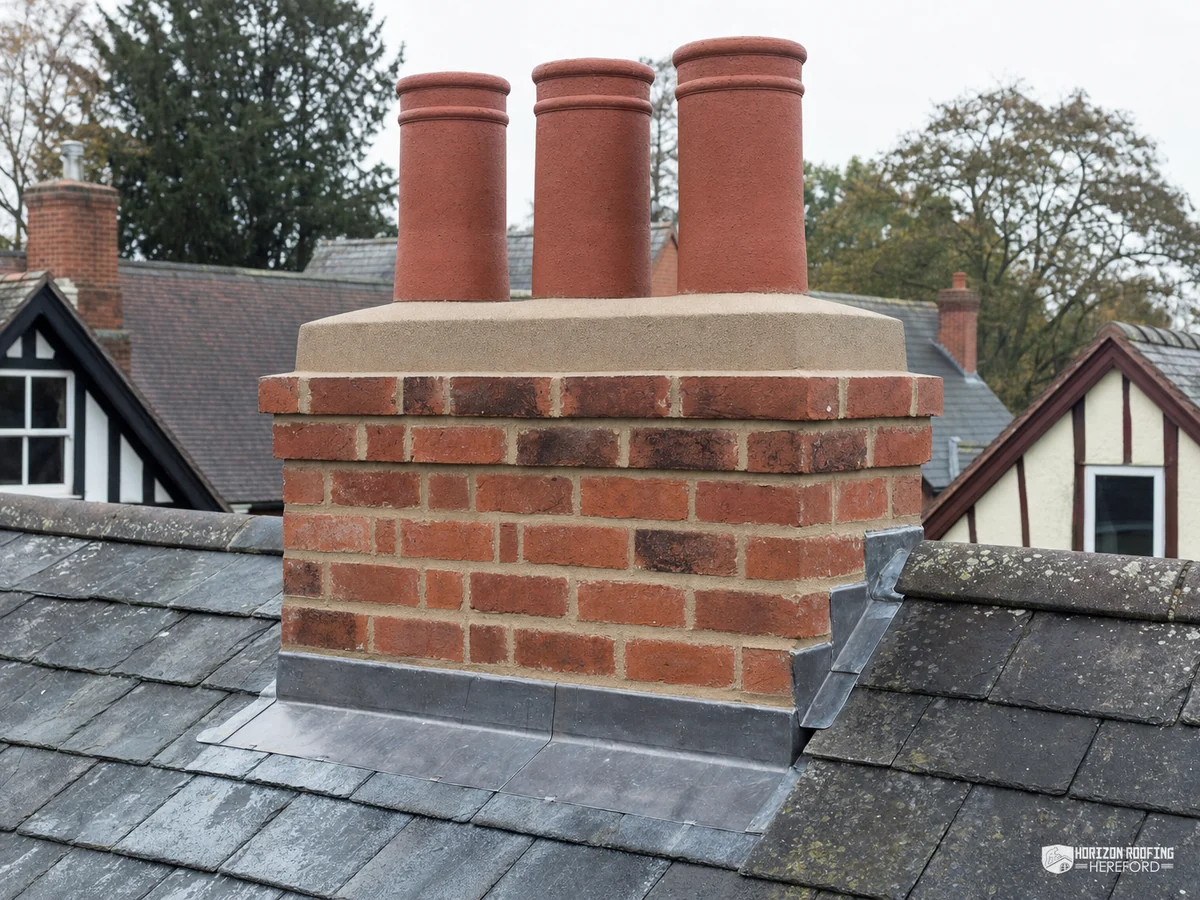
Cadw's listing description of the Parish Church of St Eigon, Grade II (record 6623, designated 28 September 1961), describes a stone church with clay-tile roofs, machine-made for the most part. Our survey of a clay roof opens with the ridge, where the two main slopes meet at the top, capped either by tiles bedded in mortar or by a dry system screwed and clipped down. Each capping tile is pressed by hand and the joints are traced for gaps, and the hips and the end tiles at each gable get the same treatment. Rain reaches the top course once a ridge has gone out of bed, so the bare course is photographed before new bedding goes on.

Machine-made and hand-made clay tiles look different in the hand, in their edges, their colour and the way they sit, which is why a repair on a clay roof begins with the tile already there. Marley, the tile maker, says "Installing to BS 5534 isn't required by law", but that since the 2015 amendments mortar "could no longer be relied upon as the only means of securing the roof covering". BS 8612 is the specification for dry-fix. For the tile itself, Marley reports that the BRE set a minimum life expectancy of 60 years for clay, and HomeBuilding's table gives clay tiles 60-80 years.

Welsh rules lean on appearance. The Welsh Government says that if a roof is re-covered in a different material, with slate to tiles as its example, approval under the Building Regulations is likely to be needed for structure, fire safety and energy. In planning terms, Welsh permitted development asks that the new materials match the look of the existing ones as far as practicable. A clay roof re-covered in clay is the simplest case, and a change of material is the one to talk through first, with the loft open and the old tiles in view.

Re-covering also raises the insulation question, which the survey answers with the loft open. Welsh Approved Document L, Table 11.1, sets 0.16 for a renovated roof, and no worse than 0.35 where 0.16 is not feasible. Our roof replacement page explains how a full re-cover is planned, and the survey says first whether a repair would do the job.

Matching an old clay roof

Why does a Llanigon repair begin with the existing tile?

Clay tiles differ in make, edge and colour, and Welsh rules ask new materials to match the old as far as practicable. Identifying the tile first lets the repair sit with the roof instead of standing out from it.

On a clay roof the repair starts with the tile that is already there.

Fig. 2 The ridge, drawn close

Callout 2 of 3

Lead flashings, soakers and valleys on slate and tile

Cadw's listing description of Ty Mawr, Grade II* (record 6612), records that "The front faces SW and is of one storey" and goes on to describe "roughcast walls and slate roofs". Wherever slate or tile butts up against masonry or another slope, lead seals the join, and the quality of lead work depends on thickness, dressing and the joint behind it. The flashing is lead let into the masonry and laid over the slates or tiles. A soaker is a little folded sheet, one per course, worked in beside a wall or stack. A valley gutter is the lead-lined channel at the meeting of two slopes.

Thickness follows Royston Lead's table, which gives each code its uses. Code 3 is "Recommended for lead soakers only". Codes 4, 5 and 6 are all listed for flashings, and Code 4 is also listed for soakers. Codes 4 to 8 are listed for pitched valley gutters, and Codes 7 and 8 appear against valleys, parapets and dormers but not against flashings. We take the code from the job and the exposure of the detail, not from habit, and the code chosen is written in the report beside the photograph of the junction.

Lead relies on the wall behind it. A flashing set in a joint where the pointing has gone soft peels away, so the joint is raked out and refilled first. According to MyJobQuote, a correctly installed lead flashing "can last for over 80 years". The wording is hedged, and the wall behind it decides whether a given flashing gets there. A crack in a valley shows as a stain on the ceiling, so the loft is checked at every valley and abutment, and each detail is photographed from outside and from inside.

Lead repairs sit between the slating and the masonry trades, which is why they repay care at the time, and why we photograph each junction before and after. Our lead roofing page covers flashings, valleys and lead flats, and the survey records which junctions on your roof have lead and what condition each one is in.

Royston Lead's table, as it reads

Code 3
Soakers only
Code 4
Soakers, flashings, pitched valleys, dormers
Code 5
Flashings, pitched valleys, parapets, dormers
Code 6
The same uses as Code 5
Codes 7 and 8
Valleys, parapets, dormers, not flashings
Fig. 3 Leadwork, drawn close

Callout 3 of 3

Listed walls, the Park Authority and Welsh consent

Llanigon lies inside the Bannau Brycheiniog National Park, designated in 1955, so planning decisions for the parish are taken by Bannau Brycheiniog National Park Authority. Ty Mawr is listed Grade II* (Cadw record 6612, designated 19 November 1963). The Granary and Stable at Ty Mawr (Cadw record 16101) and The Old Post Office (Cadw record 16100) are Grade II, as is the church. Llanigon community had 487 usual residents at the 2021 Census. From 4 November 2024 consent for listed buildings in Wales comes under the Historic Environment (Wales) Act 2023, where section 88 bars unauthorised works and section 89 provides for listed building consent.

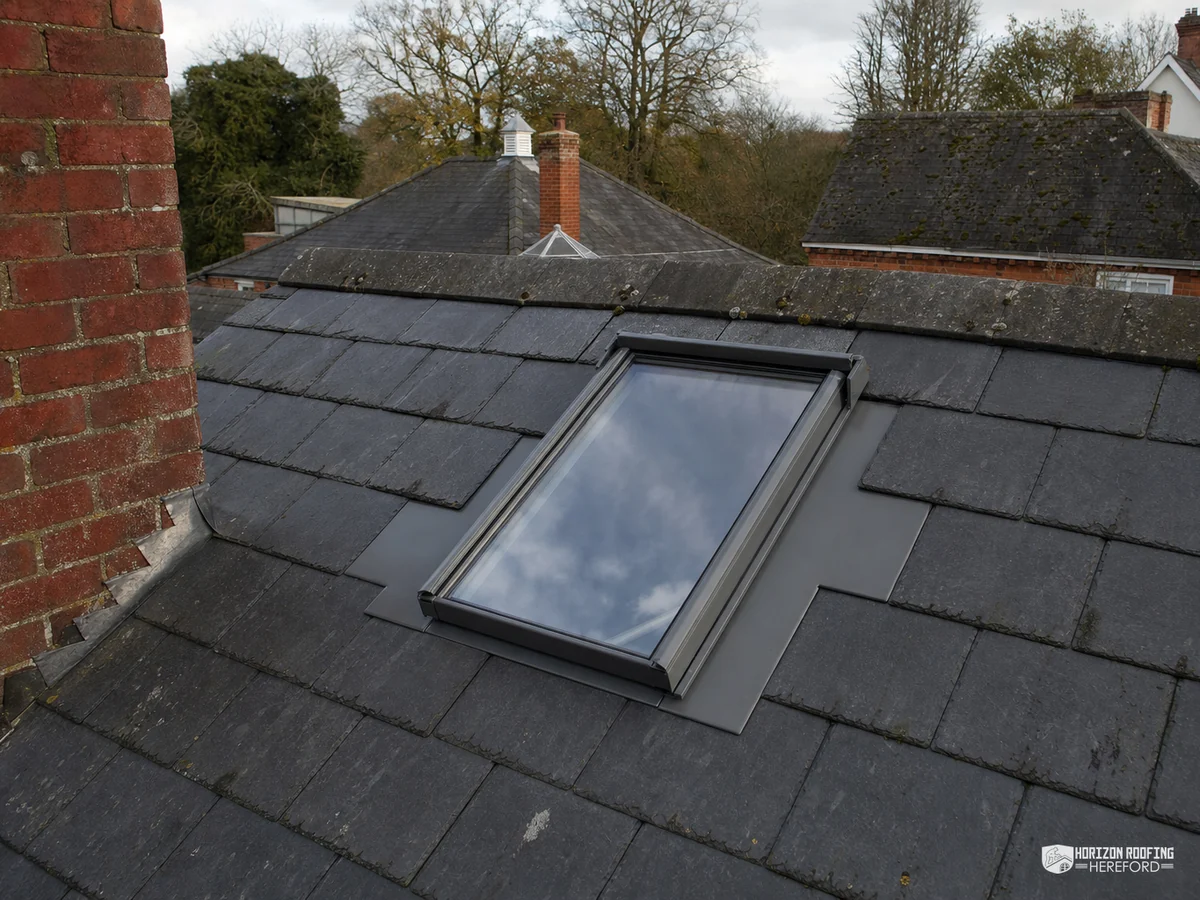
The Welsh list of exempt churches in use takes in Roman Catholic, Methodist, named Baptist Union and Church of England faculty buildings, along with the Church in Wales, and leaves out the United Reformed Church. Which, if any, applies to St Eigon's is a question for the church's own governing body. On a listed house, permitted development remains but consent is needed beside it. A roof light is outside what Welsh permitted development allows on National Park land, so a planning application to the Park Authority is the route. Our planning guide for roof windows explains how the rules differ from England's.

The nearest conservation area to Llanigon is Hay on Wye, held by the Park Authority, so ask the Authority if your own address lies within one, and also whether an Article 4 direction applies; the answer decides which consents come before the quote. Planning sits with the Authority, and building control stays with the council: the council's building control service or a registered building control approver. A highway licence under section 169 of the Highways Act 1980 covers scaffold on a lane, and we arrange the licence with our scaffolder.

When a listed or Park roof is involved, our listed and heritage roofing page shows how the report is prepared: the Cadw record number sits beside a photograph of every slope, and the covering is described in plain words. The council or the Park Authority can read it without a visit to the house first, and the same pictures serve again when the work is signed off.

What shapes the price of a Park roof

Consent
Whether the Authority or council must approve first
Matching
Finding clay, slate or lead that suits the old roof
Access
Where the scaffold stands on a narrow lane
Condition
What the survey finds under the covering

One written total price, never itemised.

Llanigon roofs: clay, lead and the Park rules

How do I tell whether the clay tiles on a Llanigon roof are worth keeping?

Look for tiles that have slipped or cracked and for a ridge that rocks, then ask what the loft shows. Marley reports a 60-year minimum life for clay tiles from the BRE, and HomeBuilding gives clay 60-80 years, so age alone is not a verdict. The survey photographs sound areas as well as faults, and a repair is the fair answer where the roof as a whole is in order. If it is not, the report says so and shows why.

Can a Llanigon house within the Park have a roof window?

Only through planning permission from Bannau Brycheiniog National Park Authority, because Welsh permitted development leaves roof lights out on National Park land. Building Regulations approval is a separate step. For a roof window the Welsh Approved Document L gives 1.4, or WER Band B. We explain both routes at the survey, before you commit to a design or order a unit.

Which conservation area should a Llanigon owner look up?

Hay on Wye is the closest, and it is a National Park Authority area. Put your own address to the Authority, together with the Article 4 question, ahead of any work that would alter how the roof looks from the lane or the fields around it. We make the same enquiry before writing a quote, so the figure reflects any consent that turns out to be needed.

What do guides say lead flashing costs near Llanigon?

Checkatrade's June 2026 guide, before VAT, puts ridge and lead flashing repairs at £50 to £70 per metre. That is a rate per metre, so it cannot be multiplied into a total for a house. On lifespan, MyJobQuote's hedged line is that well-fitted lead flashing "can last for over 80 years". Our price comes from the survey and arrives as one written total.

Does a scaffold on a Llanigon lane need a licence?

Yes, where it obstructs the highway: section 169 of the Highways Act 1980 requires one. We arrange the licence with our scaffolder, and the single written total includes the scaffold. Building control is the council's service or a registered building control approver, and the Park Authority has the planning role. We confirm the timing with you at the survey, so the licence is in place before the scaffold goes up.

What if a Llanigon roof repair disturbs a roost or a nest?

The job pauses at that spot. Natural Resources Wales says you must apply for a licence if work affects a protected species in Wales, and it describes every bat species and its roosts as protected. The Wildlife and Countryside Act 1981 also makes intentional damage to a wild bird's nest an offence while it is occupied or birds are still making it. The licensing advice then decides how the work proceeds.

Get the Llanigon roof read from the ridge down

Give us a few words on the roof, add a picture of a lead junction, and we fix a date for the visit.

10-year workmanship guarantee, in writing