
Callout 1 of 3
Lead on an older house: codes, soakers and flashings
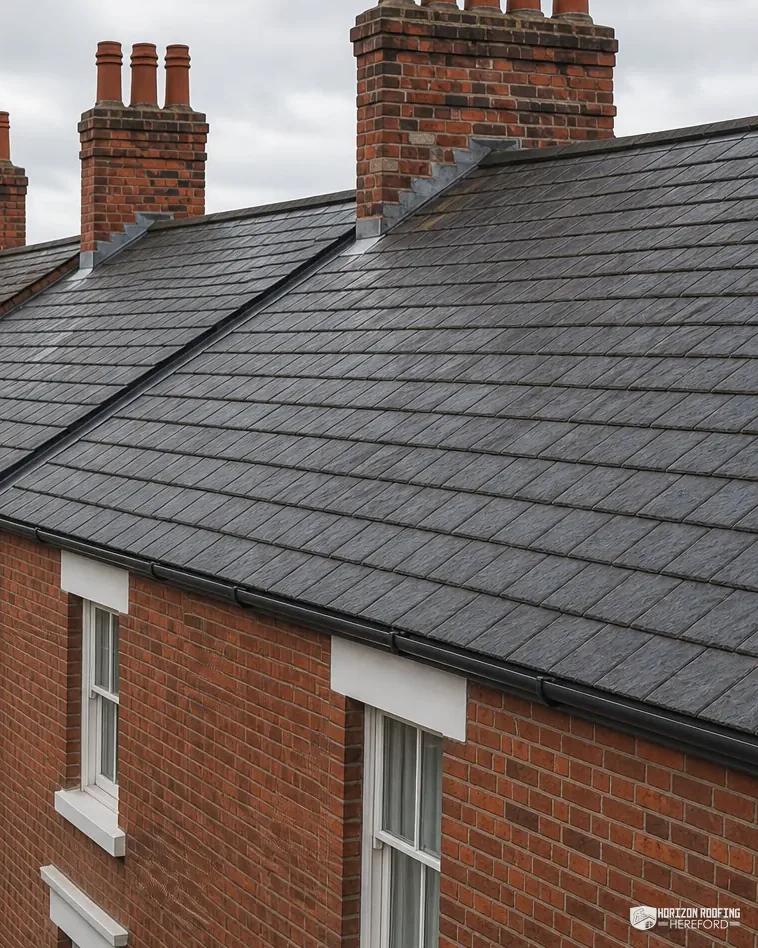
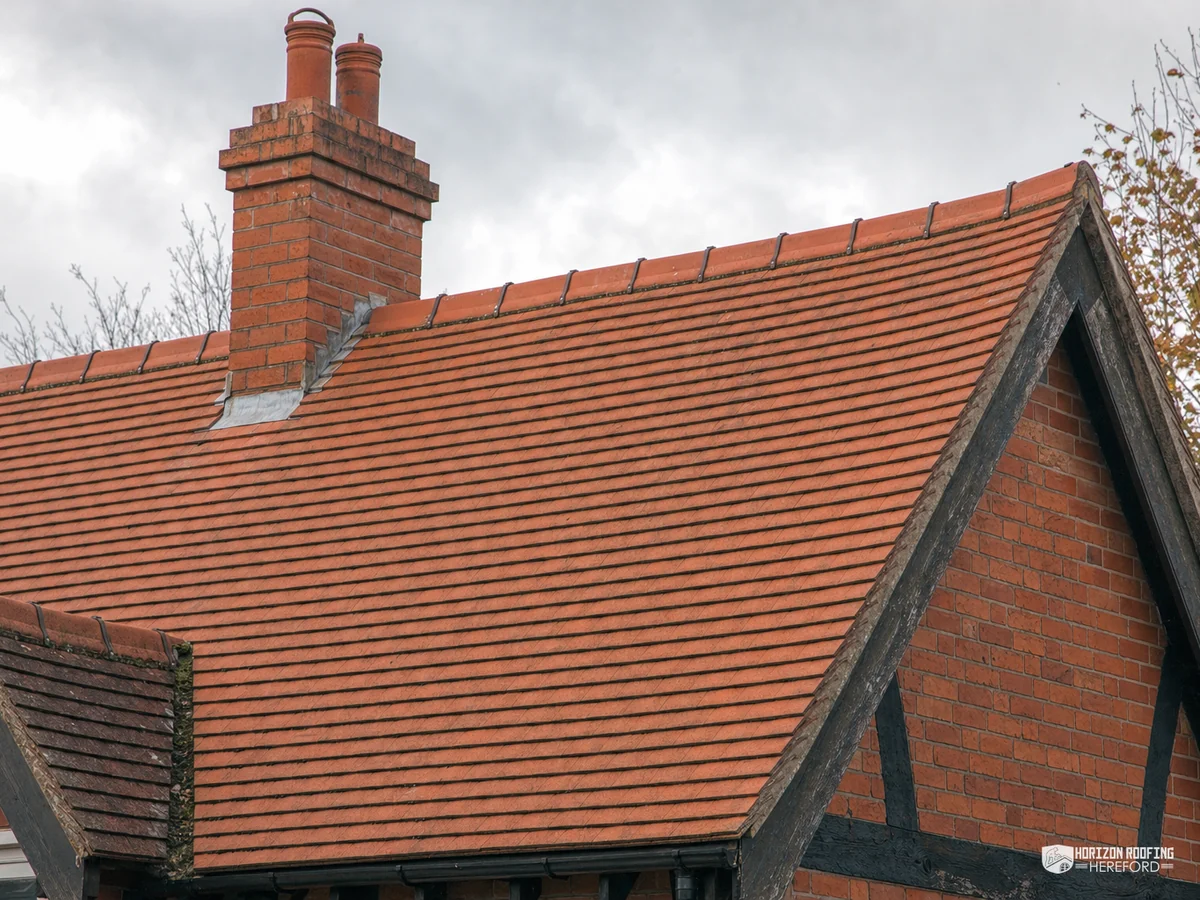
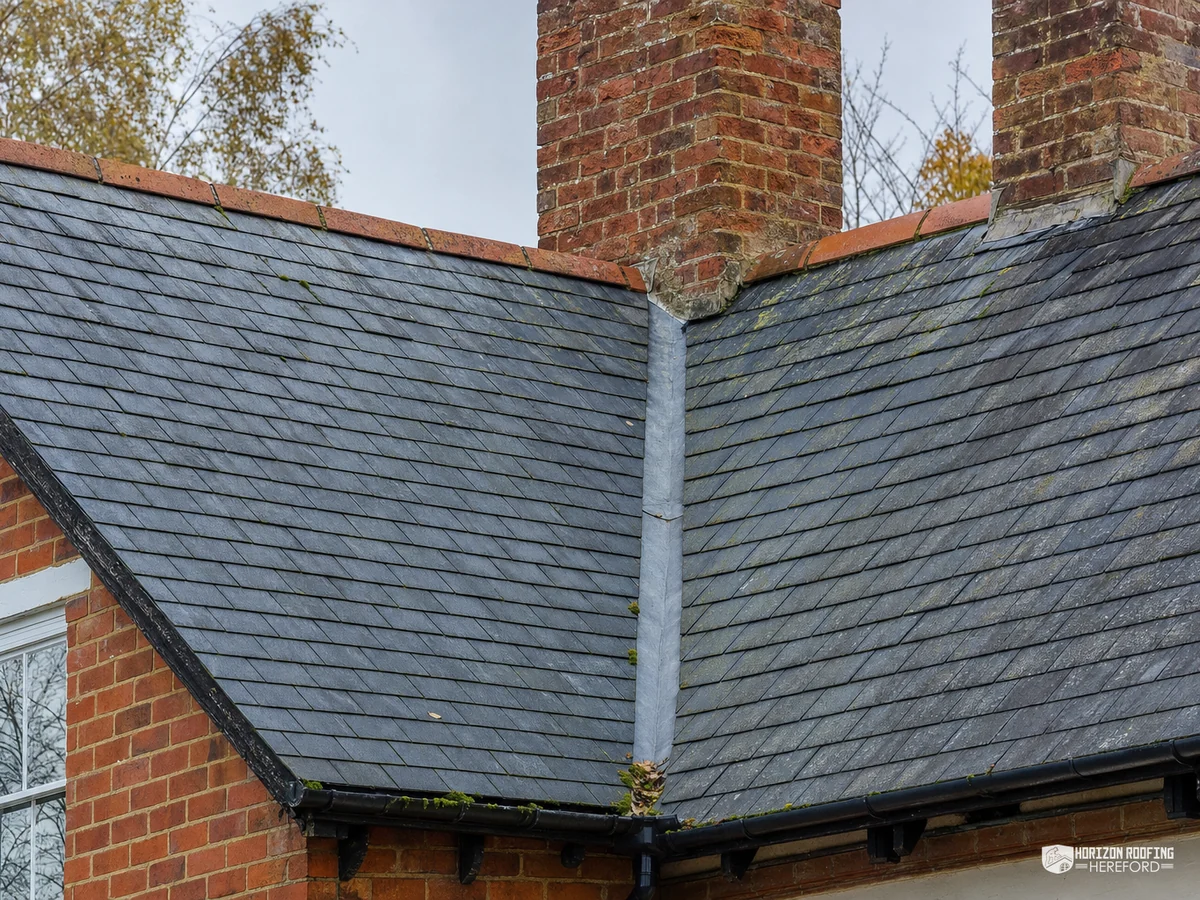
Lead is the metal that closes the gaps in a roof. It lies along every wall and chimney that rises through a slope, and it lines the valley where two slopes join. A listed house has plenty of such joints, so a Llyswen survey takes them first and the open slopes afterwards. A leak at an edge is easy to blame on the wrong tile, so the lead gets a proper look before any slope is condemned. That order spares you a repair in the wrong place, and it spares the slopes a disturbance they did not need. Where the lead is the whole fault, the report will say that a lead repair alone is the answer.
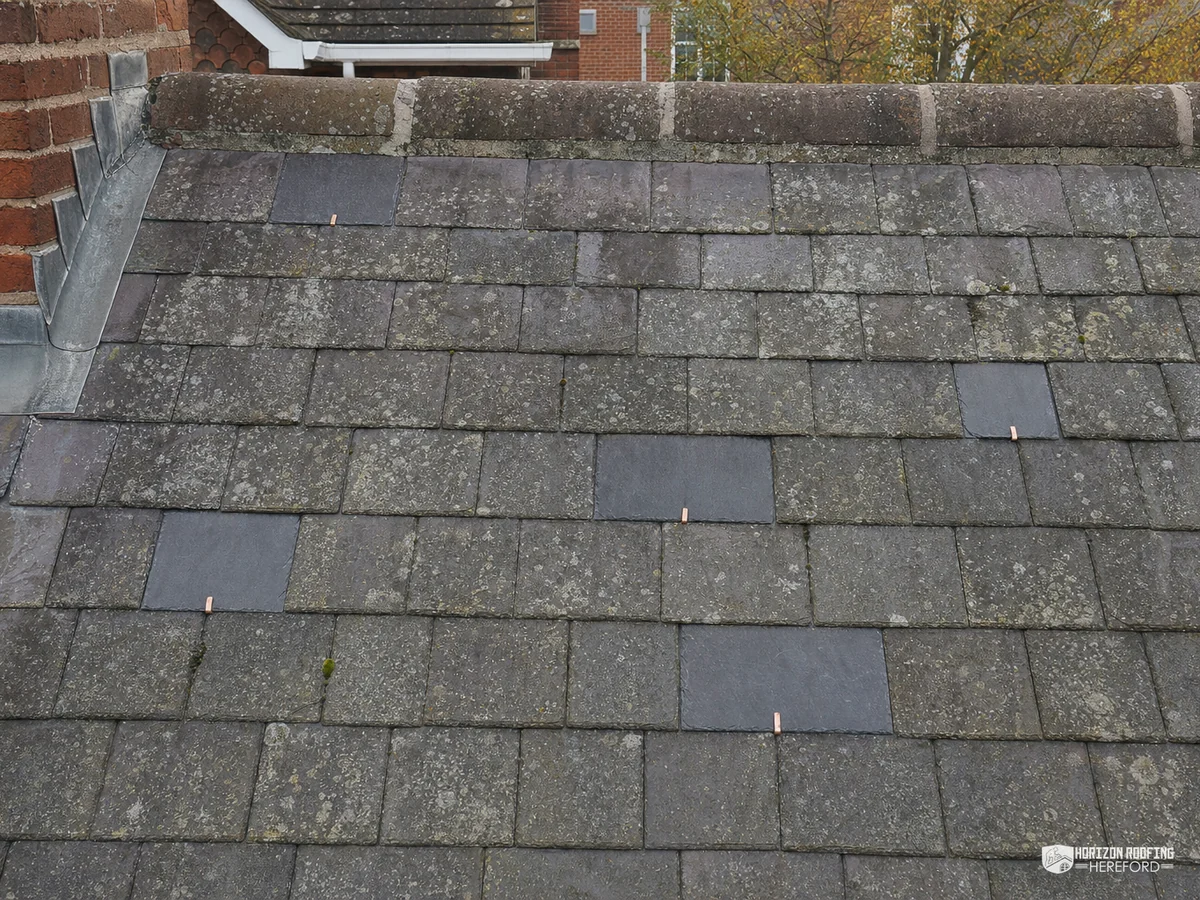
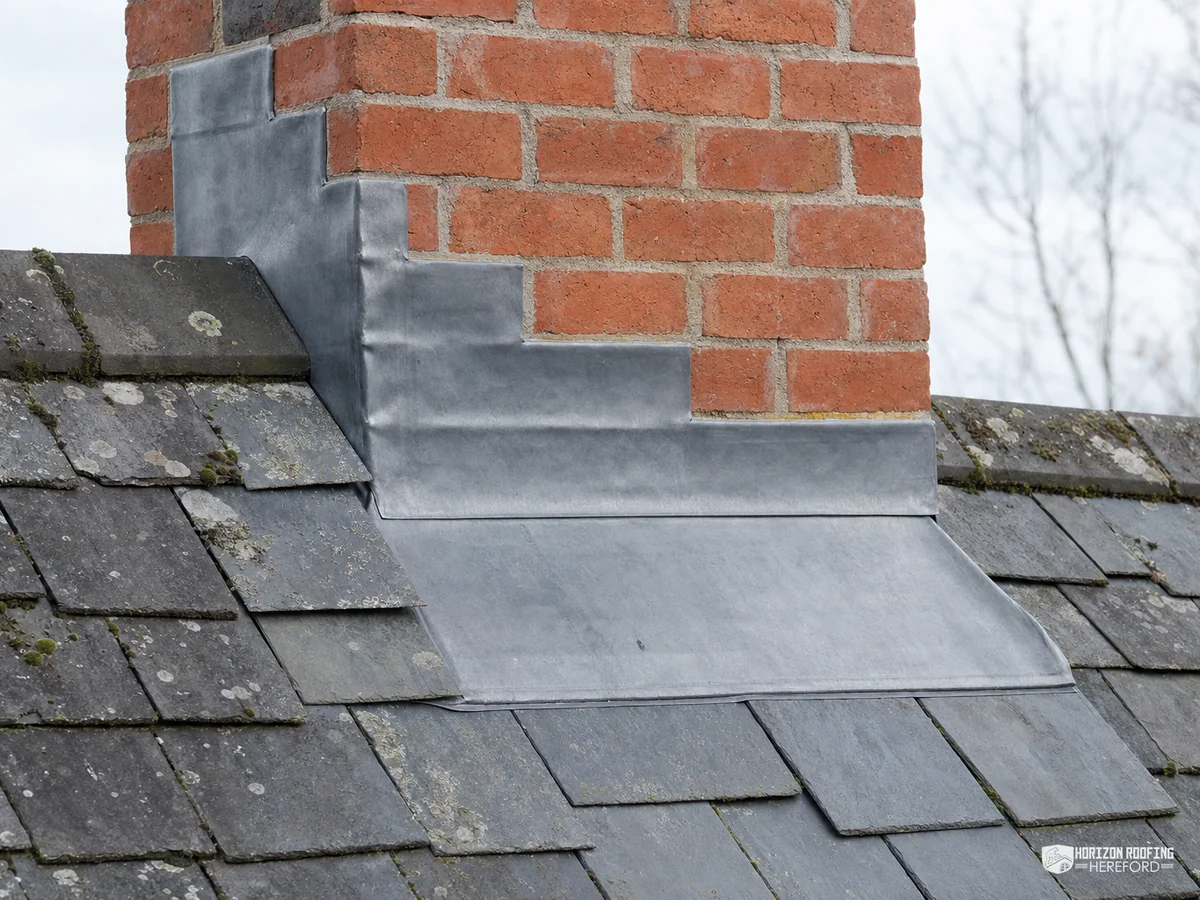
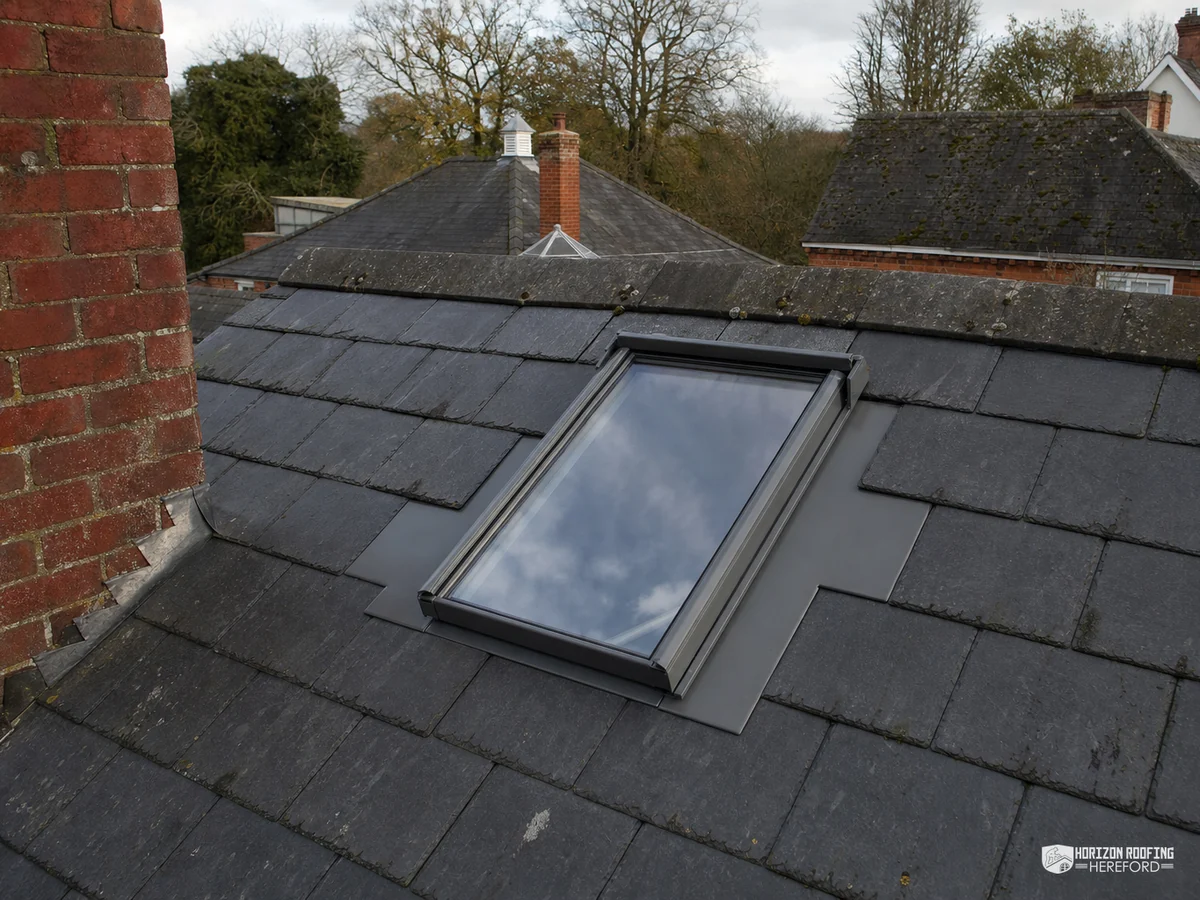
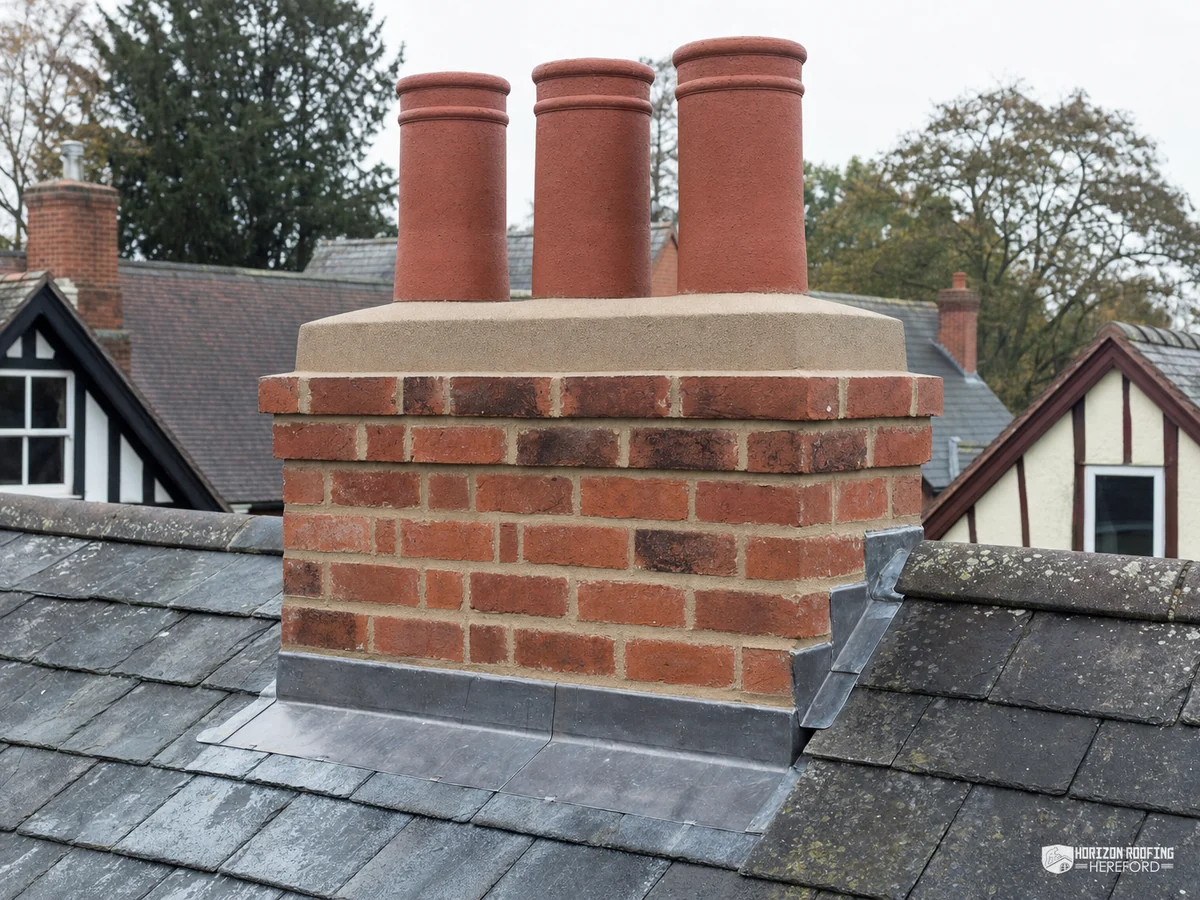
We think in three pieces of sheet. One is the flashing, a ribbon tucked into the wall joint and bent down across the slates below. Another is the soaker, a folded square slipped beneath every course beside the masonry. On the uphill face of a chimney, the back gutter, a shallow lead tray, turns the water aside to either flank. Royston Lead's table gives each grade of sheet a code: Code 3 is "Recommended for lead soakers only", while Codes 4, 5 and 6 are listed for flashings. Thin lead where a thicker grade belongs wears out early, so the grade is chosen for the position it fills.
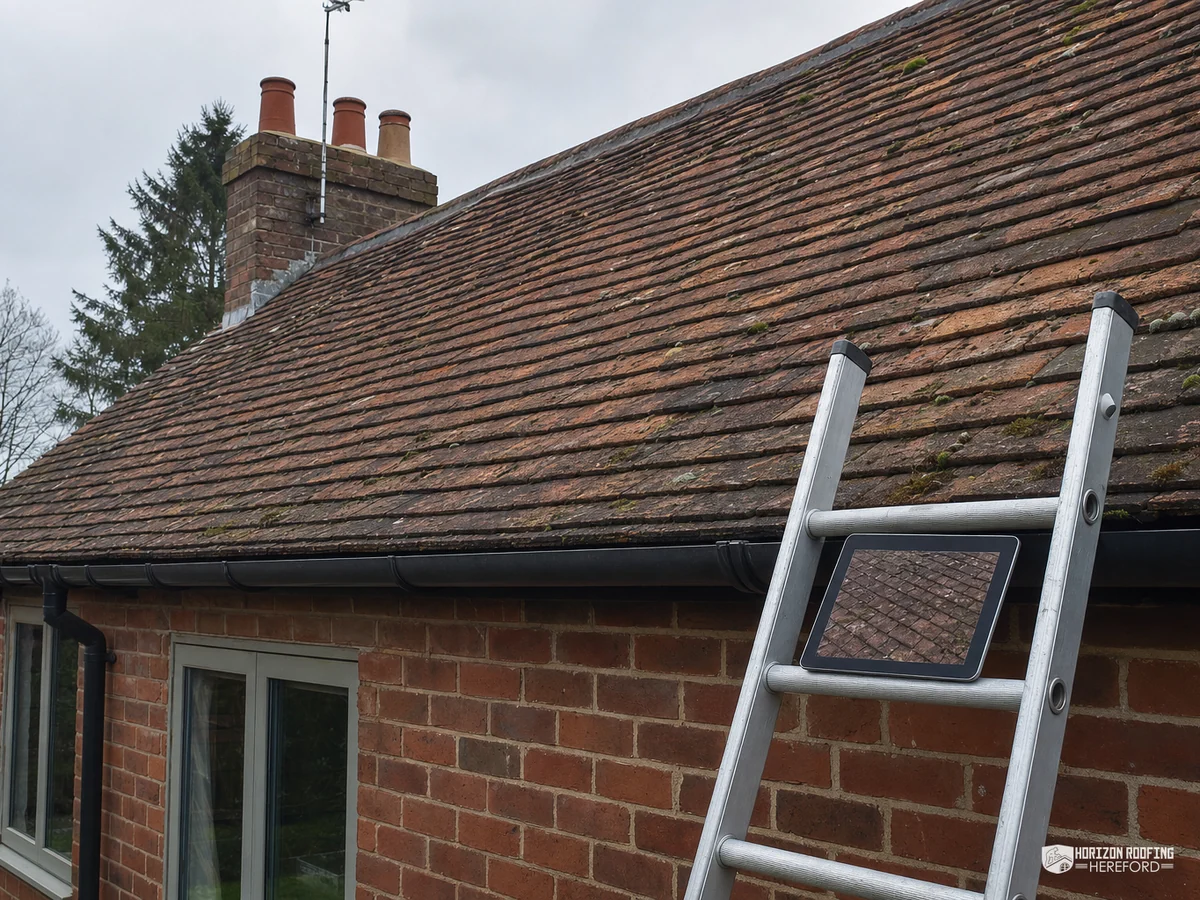
Lead splits at folds that were bent too tightly, creeps down a pitch under its own weight, and lifts at an edge where the wall joint has lost its mortar. We read each run with a torch and a gloved hand, then photograph the defect so that you can see it. MyJobQuote says lead flashing "can last for over 80 years", so a sound run is left alone and only a failed length is renewed. Judging which is which takes a close look at the fixings and the folds, and the photographs are there to back up the verdict. Any length that moves under a thumb, or that rings hollow against the wall, is marked for renewal.
Repairs are cut in and dressed, never smeared over. Sealant on a split hides it from the ground and does nothing about the movement that opened it. Our lead roofing page describes new leadwork, from valley linings to chimney trays, and how each piece is dressed so the metal can expand and contract without tearing.
Lead looked at on a Llyswen roof
- Splits along the folds
- Lead slid down the slope
- Wall joints that have lost mortar
- Soakers beside each wall or stack
- Valley linings clear of debris
Lead is cut in and dressed, not smeared over with sealant.