
01432 610152 Get a quote Call 01432 610152

Roofers in Glasbury

Slate roof repairs and re-roofs for Glasbury's chapel, old vicarage and village homes.

Glasbury is 25.2 road miles west of central Hereford, a 38-minute drive. A survey comes first and one written total follows.

Get a free quoteCall 01432 610152

Glasbury's slate roofs, valleys and listed barn

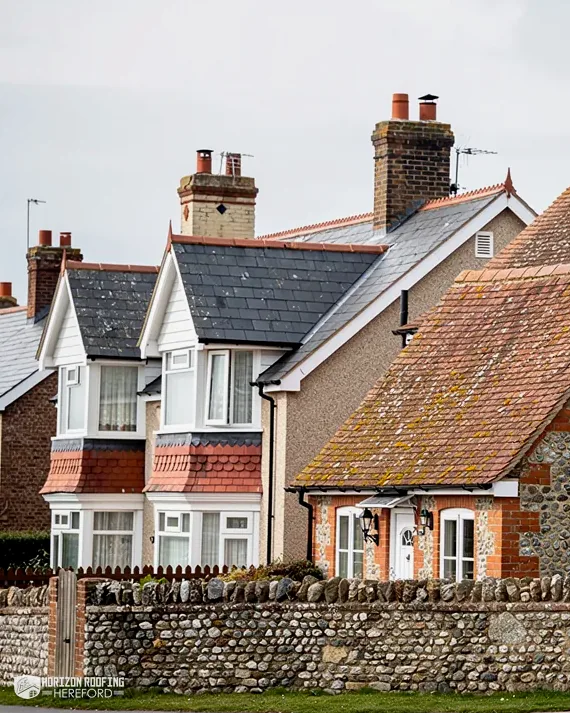
  • Older cottages with weathered clay tile roofs and brick chimneys behind a flint wall
    Slate on a Grade I vicarageCadw's record for the Old Vicarage describes small rubble stonework with a slate roof.
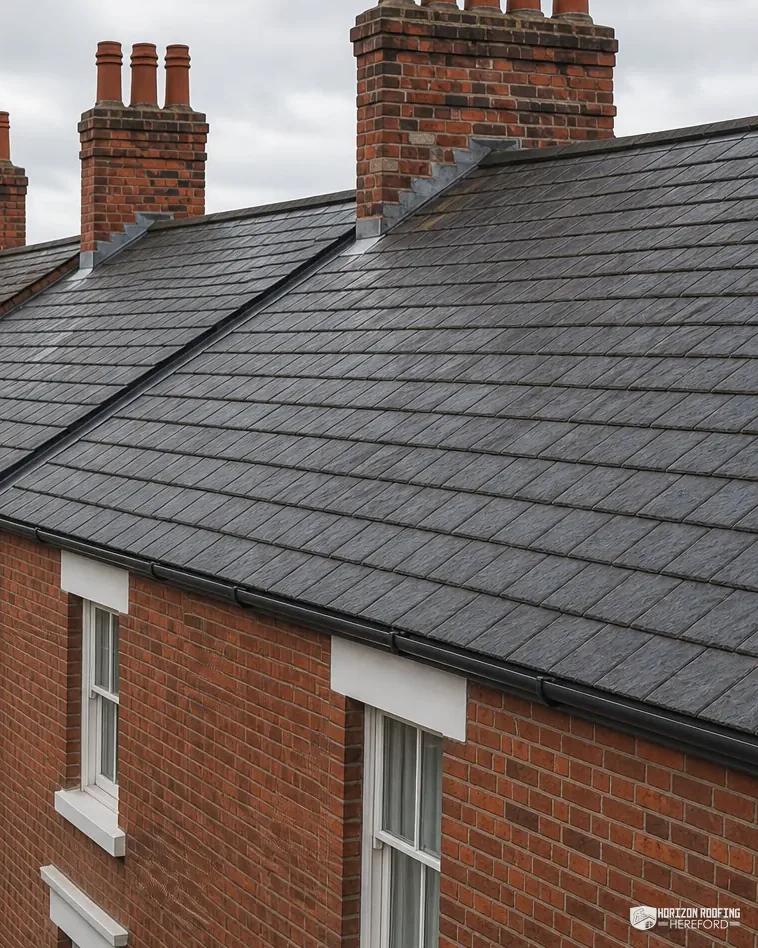
  • Slate roofs and chimney stacks along a red brick Victorian terrace
    A chapel under the Welsh rulesGlasbury United Reformed Chapel is Grade II; the URC is not exempt in Wales.
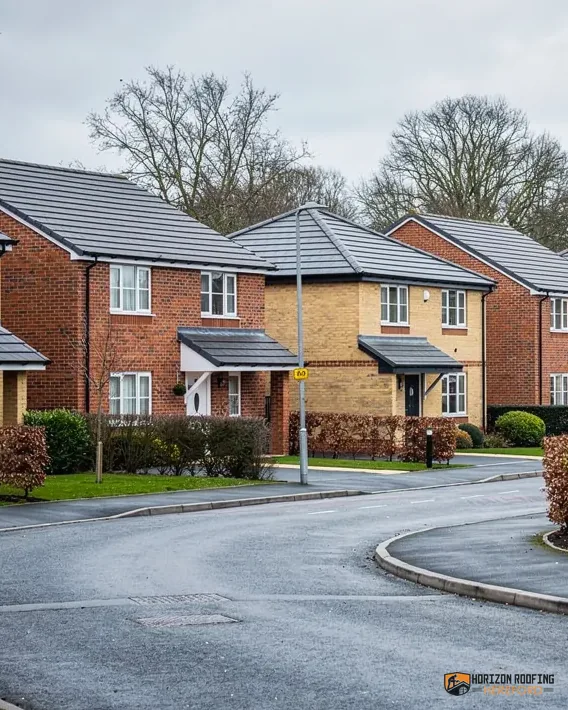
  • Newer homes with grey concrete tile roofs along a curving estate road
    Roof lights in the village centreIn the conservation area covering the centre, a new roof light needs planning permission.

The lie of Glasbury

Glasbury on a street map, with a dashed circle around the town and the nearest towns we cover. Tiles © Esri; map data © Esri, HERE, Garmin, OpenStreetMap contributors.

Glasbury's roofs: slate, lead and listing

Slate slopes, lead valleys and a chapel's consent in Glasbury

First come the slate slopes, then the lead-lined valleys between them, and last the chapel, the old vicarage barn and the consents that go with listing.

A drawn cut-away section through a Herefordshire border house: the front of the main roof is cut open to show the rafters, underlay, battens and slates, beside a black-and-white timber-framed gable. Numbered, from the ridge down: 1 Slate slopes; 2 Lead valleys; 3 Chapel and barn.

Fig. 1 A Glasbury roof in section: slate slope, lead valley and listed wall, numbered.

Callout 1 of 3

Reading slate on a Glasbury roof

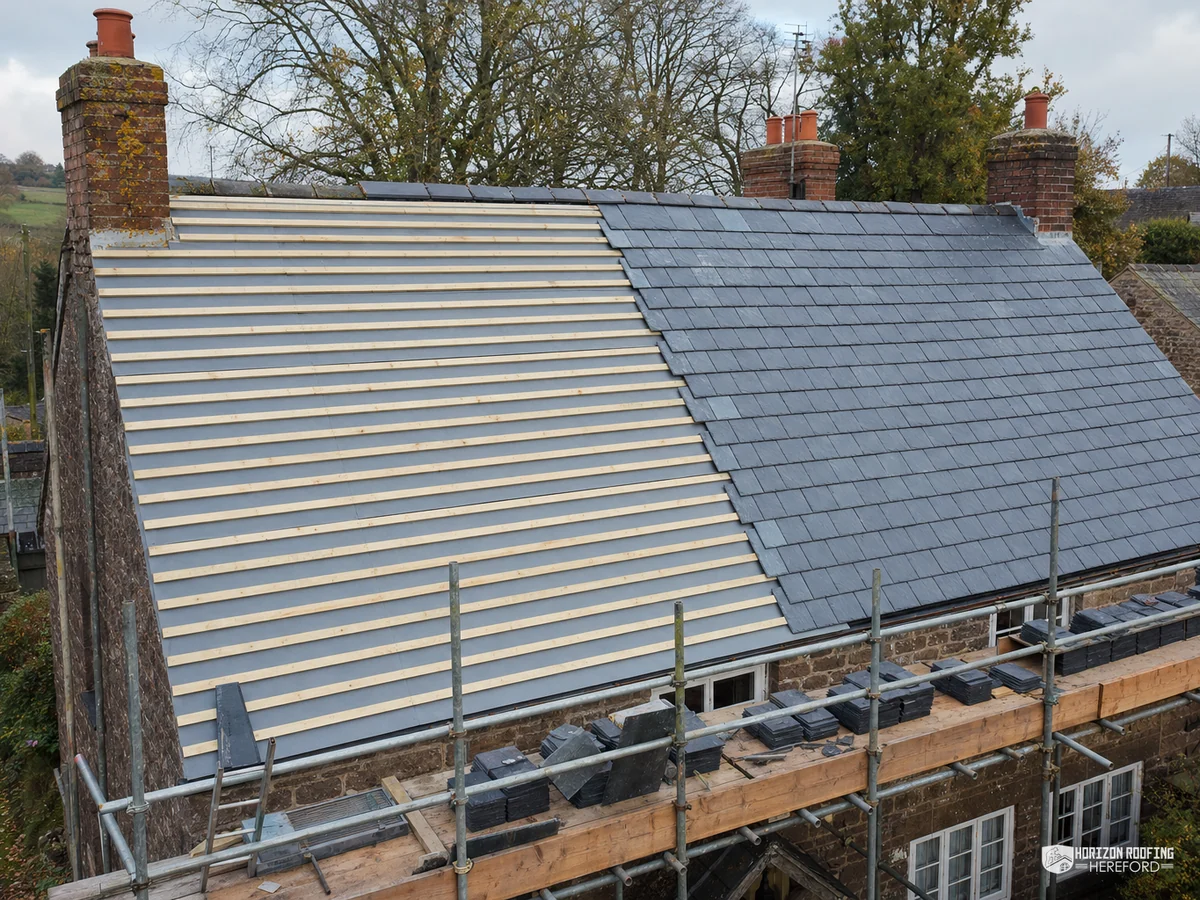
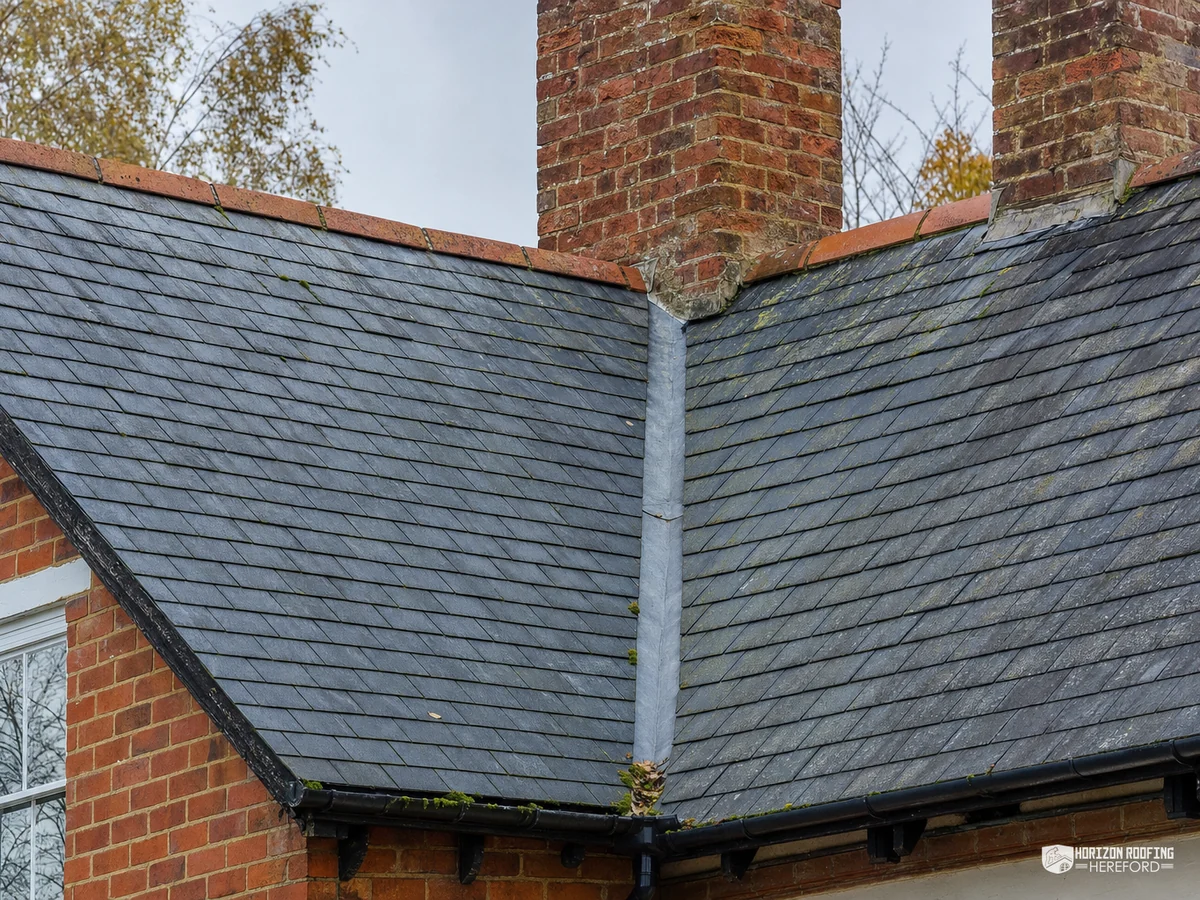
Two Glasbury records name their roofing. Cadw's description of the Old Vicarage, listed Grade I (record 8734, designated 25 February 1952), reads "Small rubble stonework with slate roof", and its entry for Glasbury United Reformed Chapel, Grade II (record 17174, designated 18 January 1996), reads "Slate roof". Slate is natural rock that splits into thin sheets, and each sheet is held on the battens, the timber strips beneath it, by a nail or a hook, in rows that overlap down the slope.

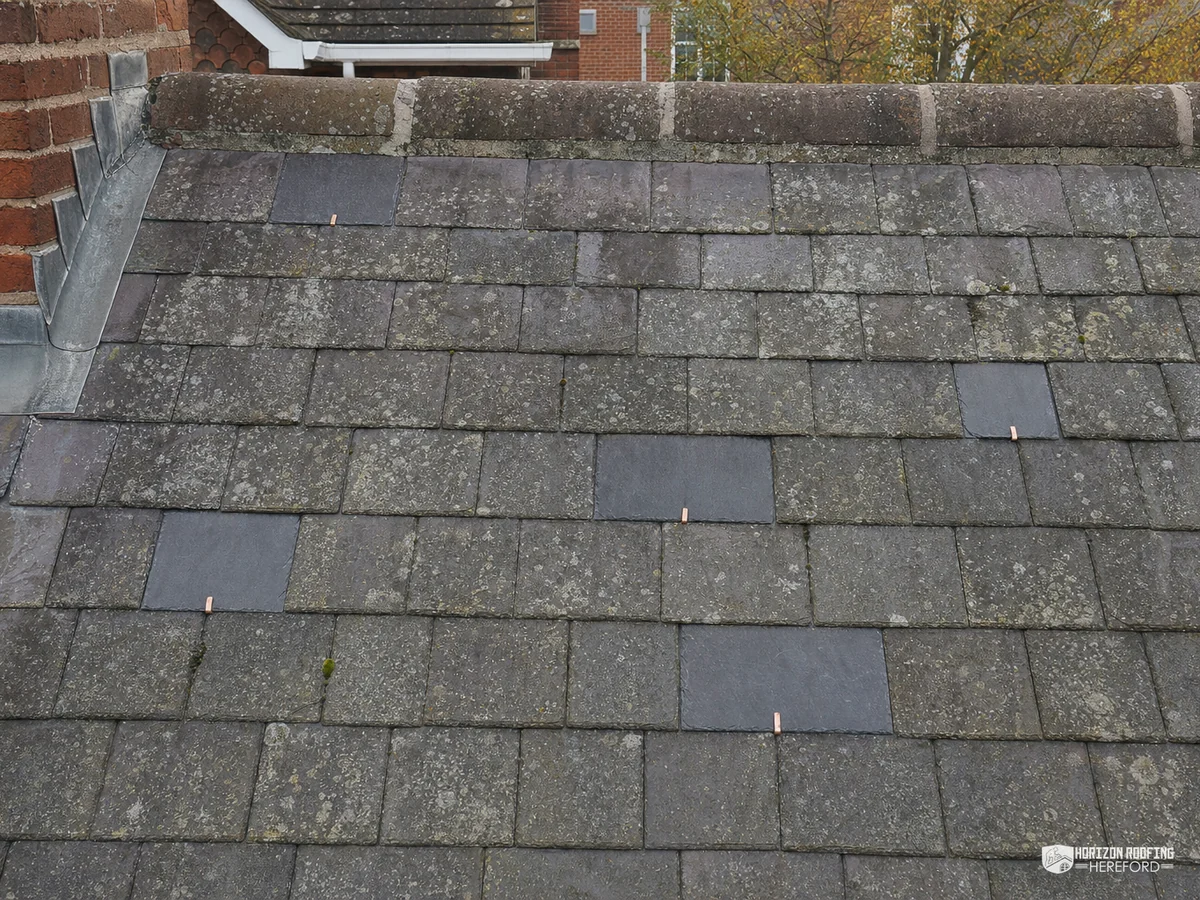
A slate roof fails in a few ways that a survey can tell apart. A slate can slip when its nail has corroded or the nail hole has torn. It can crack across its width, or flake in layers at the bottom edge. Each shows differently from the ground and from the loft, so we climb the slope and go into the roof void as well, and the report sets a photograph beside every finding with its place on the slope.

Lifespan decides repair against renewal. HomeBuilding lists Welsh slate at "100+ years", Spanish natural slate at "75-100 years" and reclaimed Welsh slate at "50-80 years". SPAB says that "the life of a well-slated roof is likely to be more than 100 years". Those figures describe the slate, and the fixings that hold it have a life of their own, so a roof can outlast its nails. A survey settles that by lifting a sample of slates and looking at what holds the ones around them.

Repair is the right answer when the slate is sound and the fixings have failed in places. Renewal is the answer when the fixings have gone across the slope. Either way the quote is one written total, and our slate roofing page covers stripping, sorting and relaying the slate that can be saved. Where a slate has slipped, the batten under it is checked for rot before a replacement goes on. After the slope we check the ridge and the verge on each gable, since the edges of a slate roof hold its last row in place.

Slate words in plain terms

Batten
The timber strip that the slates are fixed to
Underlay
The membrane laid beneath the battens
Fixing
The nail or hook that holds one slate
Lap
The overlap of one row of slates over the next

A roof can outlast its nails, so we look behind the slates.

Fig. 2 The slopes, drawn close

Callout 2 of 3

Where slopes meet: lead valley gutters

Valleys are the folds in a roof where two slopes come together, and everything both slopes shed runs down them. Where a valley is lined in lead, the lead forms a gutter laid beneath the slates at each side, and the slates are cut to a line along its edges. Royston Lead's table lists Code 3 for soakers only and Codes 4 to 8 against the pitched valley gutter, so the thickness of the sheet is matched to the job. Code 4 is 1.80 mm thick and Code 8 is 3.55 mm.

We trace a valley from the ridge to the eaves. The signs we look for are lead that has split along a fold, slate edges that have slipped back from the line of the gutter, and a channel dammed by moss or leaves so that water backs up behind the slates. The base of the valley, where it empties over the eaves, is the last place to check, because a lead gutter that ends short of the eaves drips on the wall.

Sound valley lead is worth keeping where it lies, because a valley that has not split gains nothing from being stripped. Reusing it means lifting the slates at the edges, looking at the underside of the sheet and putting everything back in the order it came off. When the lead has failed, it is renewed in a code suited to a valley, not patched with sealant.

On a roof with a wing or a dormer, each valley is a separate run with its own condition, so the report treats them one by one and photographs the lead at the top, the middle and the foot of each, so you can follow the whole run from your phone, one photograph after another.

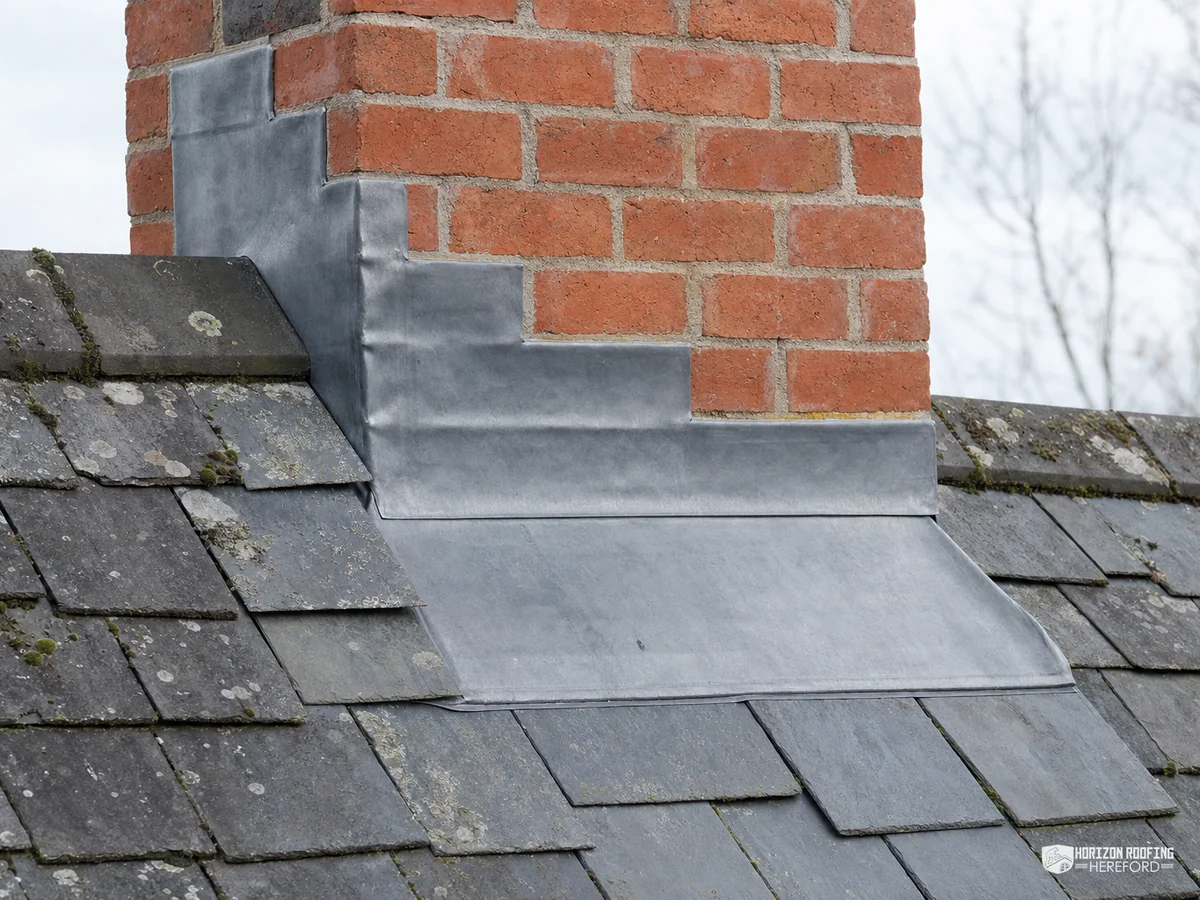
The same junction logic applies where a slate roof meets a wall, and our lead roofing page sets out flashings, soakers and gutters for the whole roof.

Royston Lead codes by thickness

Code 3
1.32 mm, listed for soakers only
Code 4
1.80 mm, soakers, flashings, valleys
Code 5
2.24 mm, flashings, valleys, parapets
Code 6
2.65 mm, flashings, valleys, parapets

A valley takes the water off two slopes at once, which gives its lead the hardest daily job.

Fig. 3 The valley, drawn close

Callout 3 of 3

The chapel, the vicarage barn and Welsh consents

Glasbury's listed buildings bring consent into any roof plan. The Old Vicarage is Grade I, the Barn at Old Vicarage, including its attached granary and stores, is Grade II* (Cadw record 8755), and the Green House is Grade II (record 8759). Under section 88 of the Historic Environment (Wales) Act 2023, works that would affect a listed building's character need authorisation, and section 89 sets out listed building consent. A listed house keeps its permitted development rights as well, though they do not replace that consent.

The chapel raises a point that is special to Wales. The Listed Buildings (Exempt Religious Buildings) (Wales) Regulations 2024 name the Church in Wales, Roman Catholic, Methodist, certain Baptist Union and Church of England faculty buildings as exempt, and leave the United Reformed Church off the Welsh list. Across the line in England a United Reformed church is exempt, so a source written for England gives the wrong answer here. For a building listed Grade II and called a United Reformed Chapel, listed building consent is the route to ask about.

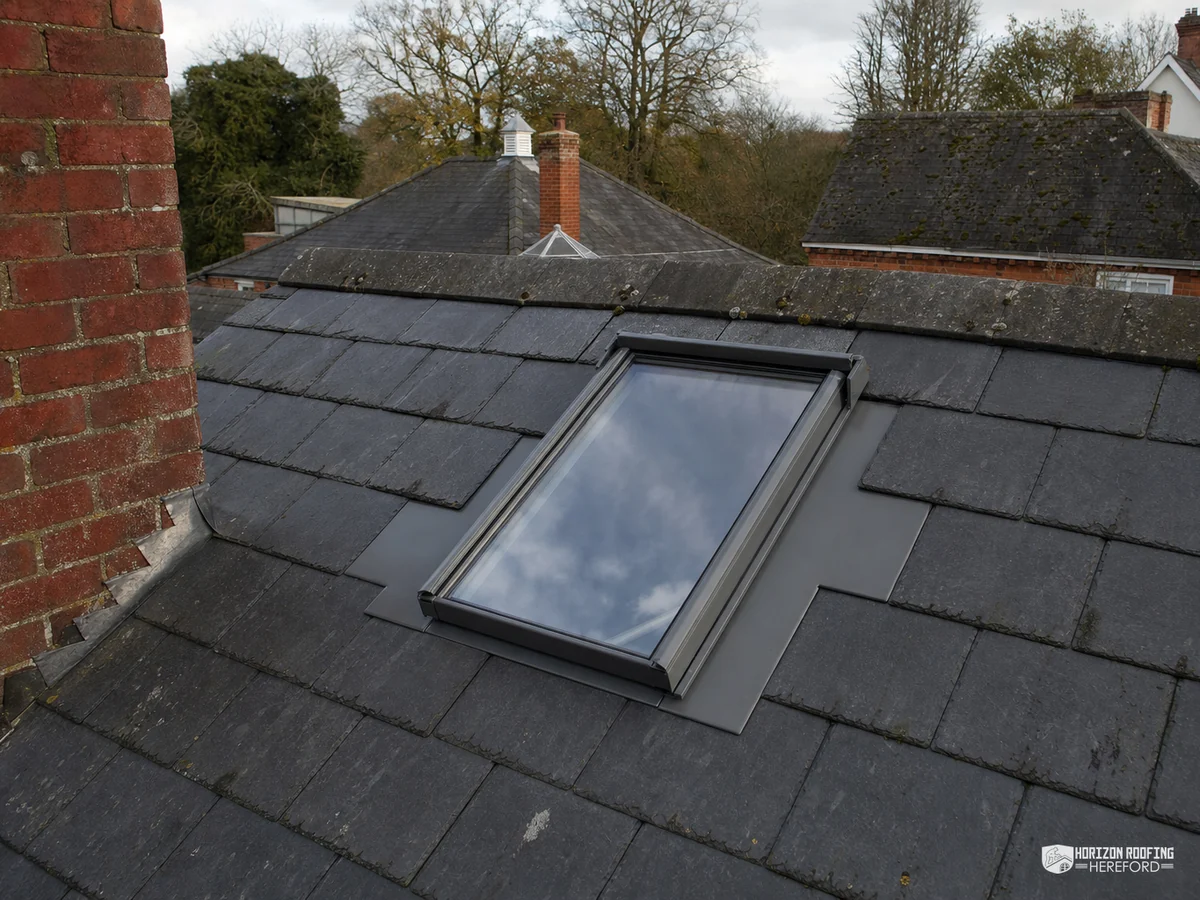
The Glasbury conservation area takes in the centre of the village, and Powys County Council is who to ask. Conservation areas are designated under Part 4 of the 2023 Act. Check with the council whether an Article 4 direction applies too, and read our planning guide for roof windows before any new opening is drawn. The Welsh Government says that "Approval under the Building Regulations will generally be needed for the installation of a new rooflight", so the building control question comes with the planning one.

Where an outbuilding roof is listed with the house, the survey photographs it in the same pass, so the consent conversation covers every roof under the listing at once. Cadw's entry for the barn names its attached granary and stores, so their roofs belong to the listing, and any plan that touches them starts with a photographed survey of the whole group. Our listed and heritage roofing page explains the order we work in on a protected roof: survey, photographs and price, all before any consent is sought.

The chapel rule gives different answers in England and Wales, so the border comes first.

A chapel roof

Does a chapel roof repair need listed building consent in Wales?

Where the building is listed and the work would affect its character, yes, unless the chapel belongs to a denomination on the Welsh exempt list, which omits the United Reformed Church. The council can tell you where your address stands before the work is priced.

Glasbury roofs: slate, lead and the chapel

Can the slates on a Glasbury roof be reused when it is stripped?

Sound slates can go back on, and the survey is where that is decided: we lift a sample, check the nail holes and tails, and photograph what comes off. HomeBuilding lists reclaimed Welsh slate at "50-80 years" against "100+ years" for new Welsh slate, so a reused slate carries less remaining life. The report separates the slates worth relaying from those to replace. Relaid slates go back to the original gauge and lap, and the quote is one total for stripping, sorting and relaying.

Does Glasbury United Reformed Chapel need listed building consent for roof work?

Cadw's record lists the chapel at Grade II (record 17174) with a slate roof. The 2024 Regulations leave the United Reformed Church off the Welsh exempt list, so listed building consent is the route for works that affect the character of the building. Across the border in England the exemption does include the URC, so guidance written for England gives the wrong answer for a chapel in Glasbury.

What does the Glasbury conservation area mean for a new roof window?

Powys County Council holds the Glasbury conservation area, which covers the centre of the village. A new roof light in a Welsh conservation area falls outside permitted development, so it needs planning permission. Ask the council whether an Article 4 direction applies at your address, since such directions can remove permitted development rights. Take photographs of the slope and a rough sketch of the opening along, and we will price the work once the answer is clear.

Must a re-slated Glasbury roof be insulated?

The Welsh Government says: "As a roof is defined as a thermal element, the work to re-cover a roof should also include for improving the thermal insulation properties of the roof." Table 11.1 of the Welsh Approved Document L gives 0.16 W/m²K as the target for a renovated roof, and accepts no worse than 0.35 where 0.16 is not feasible, with a 15-year payback as the economic test. Paragraph 11.14 extends that to the whole element once more than half of it is renovated, so we measure the slopes first.

What do published guides give for slate repairs near Glasbury?

Checkatrade's June 2026 repair rates, before VAT and based on up to 3 m², put natural slate at £150 to £220 per m². Because that rate is per m², it cannot be turned into a total for your roof. MyJobQuote's average for a fitted slate roof is around £7,800. Neither figure describes your house, and the survey is what produces a written total, with the scaffold inside it.

Are lead valleys worth keeping when a Glasbury roof is re-slated?

If the sheet is sound, yes: a valley that has not split can stay under the new slates. We lift the edges to inspect the underside, and replace the lead only where a fold has split or the gauge is too thin for a valley. The photographs show the old sheet and the new. MyJobQuote's chimney leadwork page gives full leadwork as "between £350 and £920, depending largely on whether scaffolding is required".

Book a slate and lead survey in Glasbury

Give us two lines on the roof, plus a photo if you can. The survey comes before the price, which is written.

10-year workmanship guarantee, in writing