
Callout 1 of 3
Stone tiles, scallop bands and a slate rear wing
Two Cadw entries tell a roofer a lot about Llanarth before the ladder goes up. The Church of Saint Teilo is listed Grade II* (record 1969, designated 9 January 1956), and Cadw describes its walls and roofs as "Sandstone rubble with freestone to tower and stone tiled roofs". Bryn Teg is listed Grade II (record 85515, designated 27 January 2006), with brick walls, tiled roofs that include scallop bands, and Welsh slate on the rear wing. Between them the records name stone tiles, tiles and slate, three coverings with three different rules of repair.
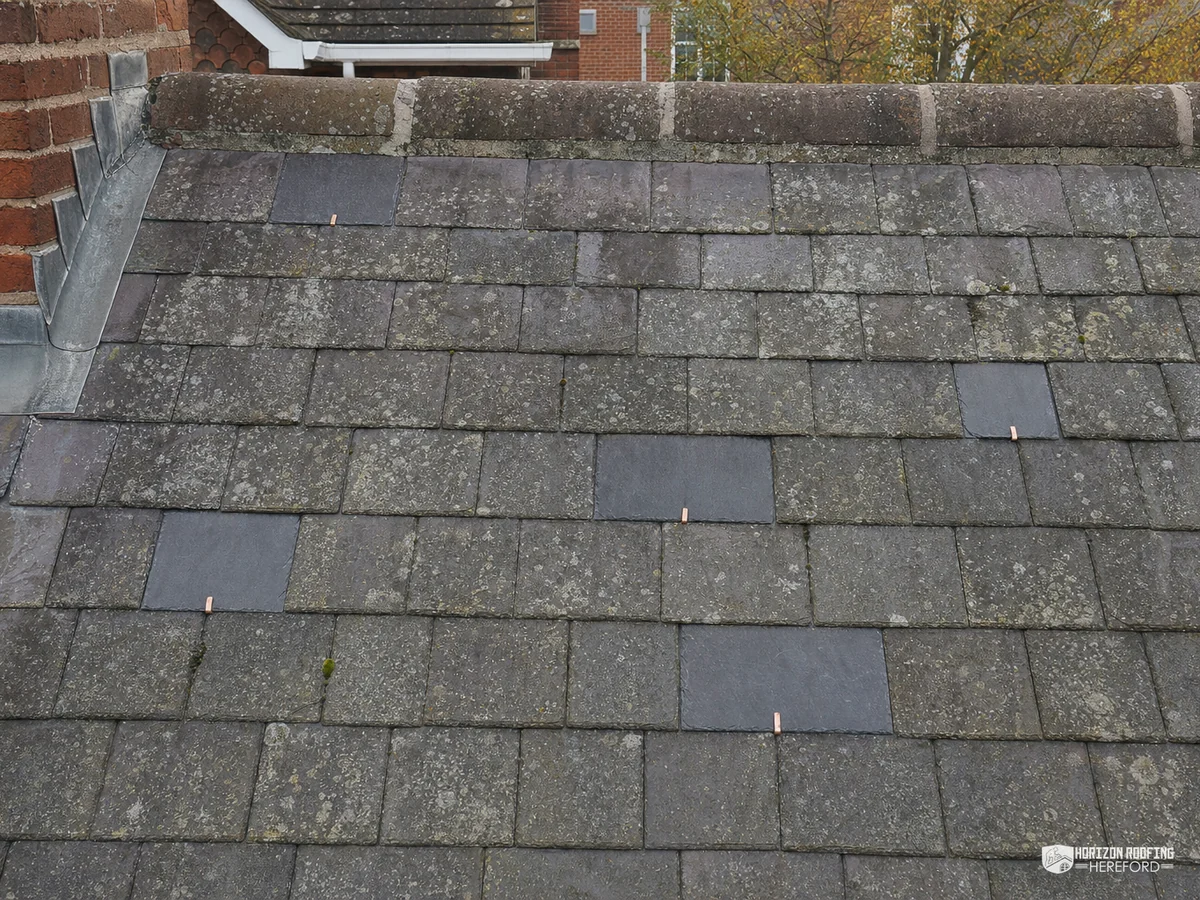
Stone tiles are cut from sandstone and hung in overlapping courses. Colour matters as much as size. SPAB writes that "Most stone slates in the region are shades of grey to brown", so a replacement is judged against the weathered stones beside it, not against a sample board. Weight matters too: the Welsh Government says approval for a different covering may be needed for structural stability, "applicable where the replacement tile will be significantly heavier or lighter than the existing". SPAB's technical note on slate and stone roofs for Wales and the Marches says Welsh slate and stone roofs "are predominantly double-lapped", so each course laps over two courses beneath it. When such a roof is repaired, sound stones go back, cracked stones are set aside, and any newcomers are chosen to match in thickness and colour. SPAB also advises: "Claims of unavailability or long delivery times should always be checked with the quarries." We follow that advice before telling anyone a stone cannot be had.
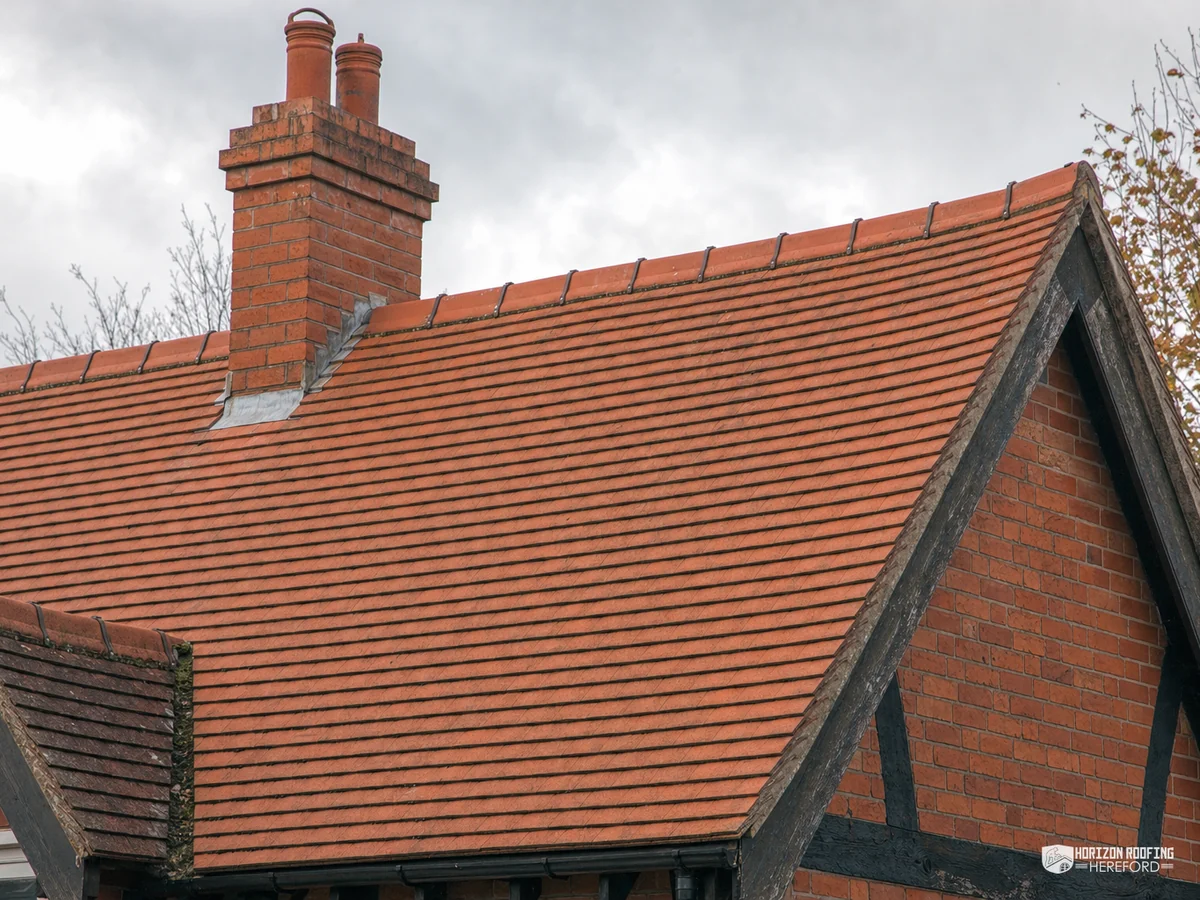
Scallop bands are rows of tiles with rounded tails, laid among plain tiles to form a pattern. A damaged band is repaired by putting back the same shape in the same place, because a patch of plain tile in the middle of a pattern reads as a mistake from the road. If the tiles are clay, Marley says the BRE determined a minimum life expectancy of 60 years for clay roof tiles. Concrete differs: Marley says around 60 years, where HomeBuilding gives plain concrete tiles 40-50 years.
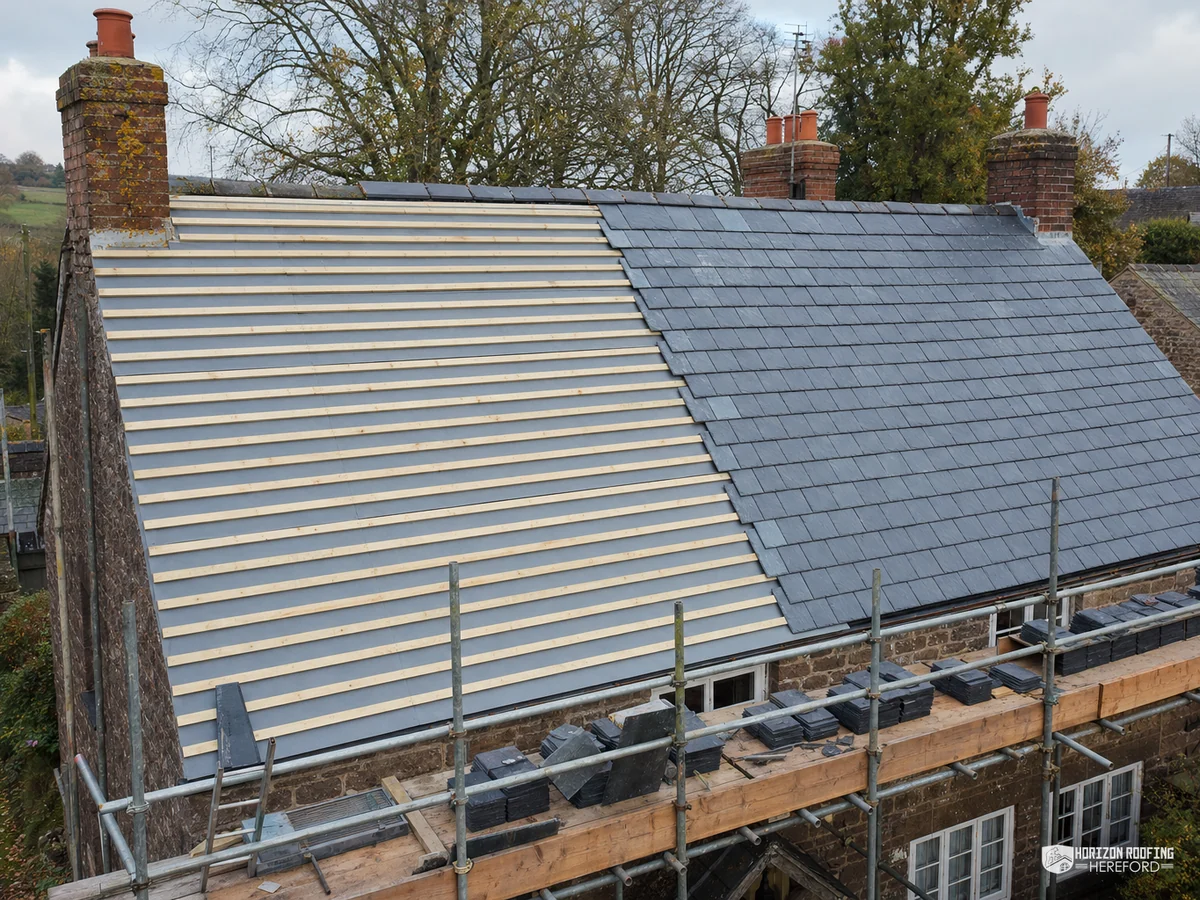
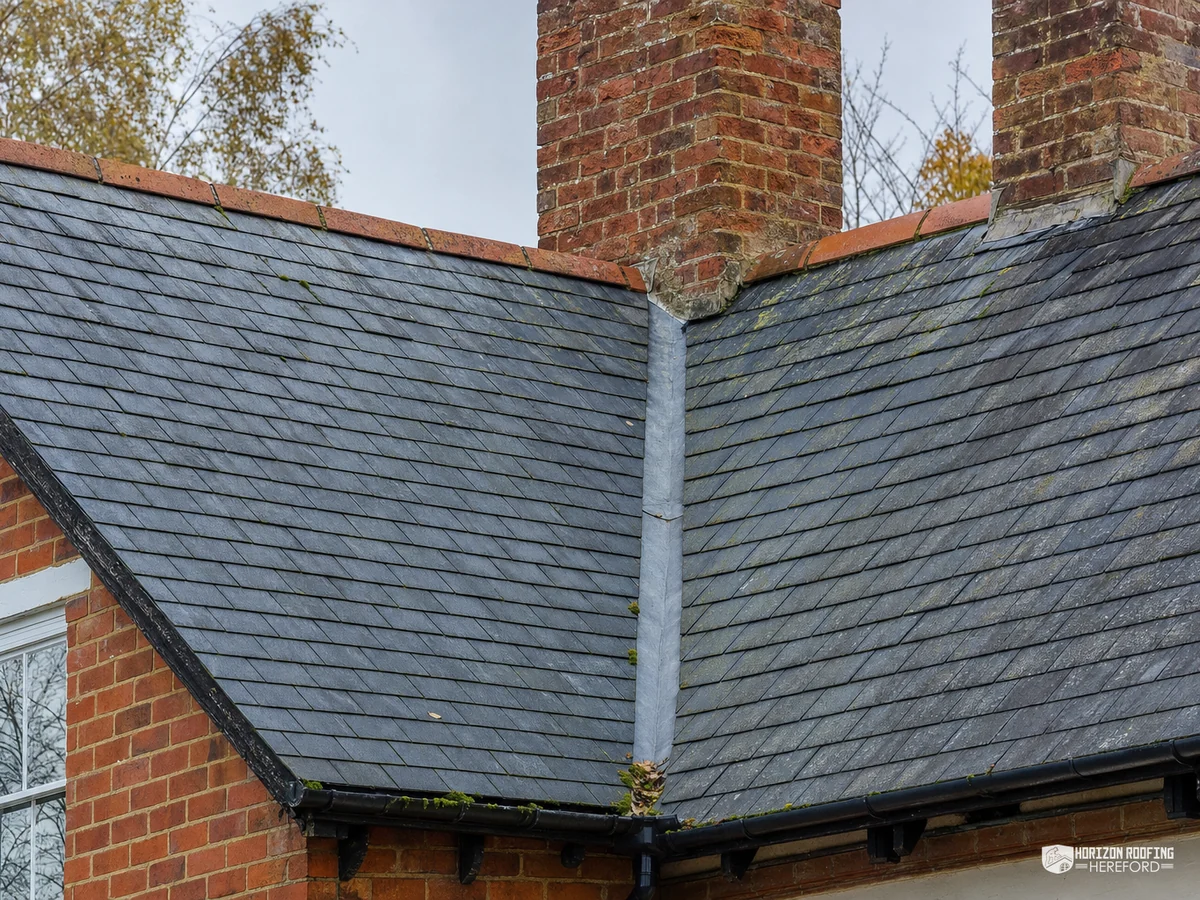
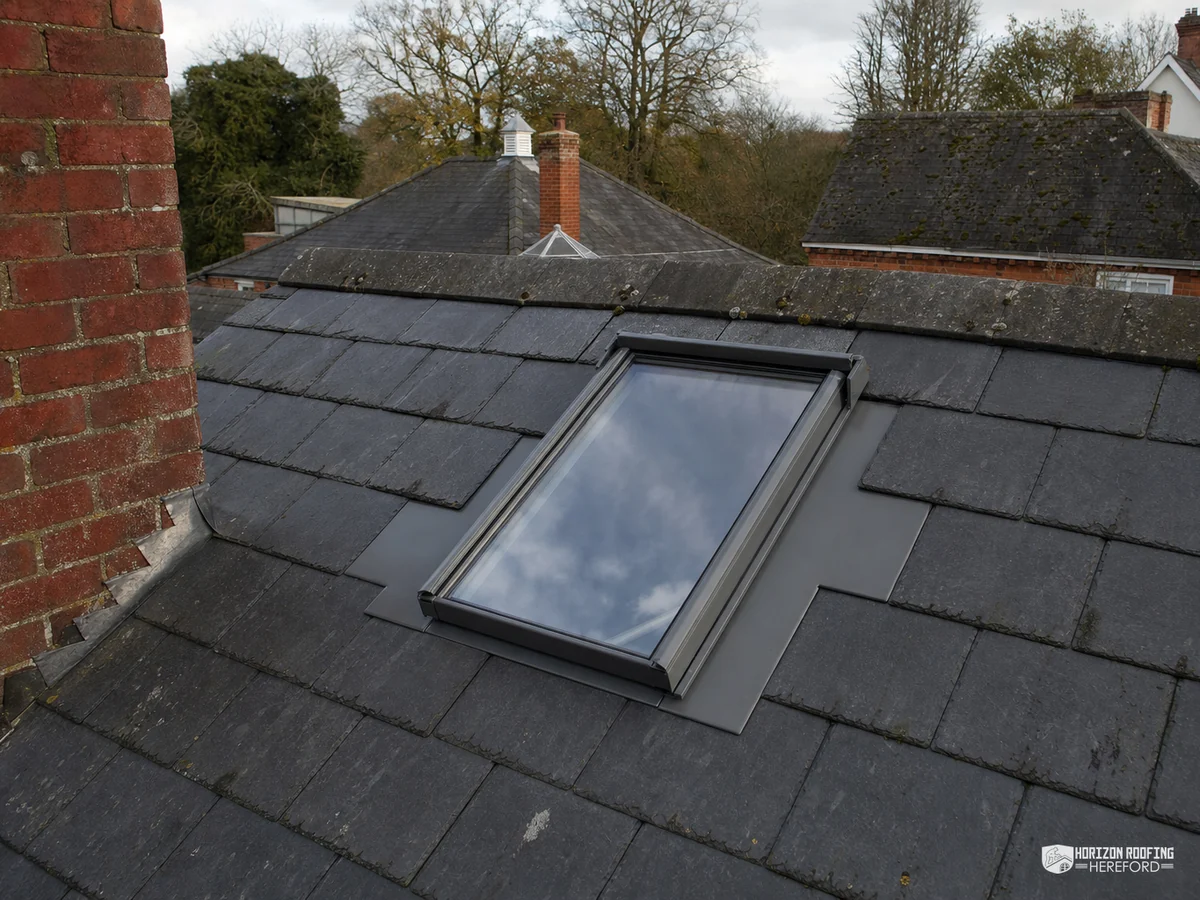
The slate wing at the back raises a further point. Cupa reports that BS 5534:2014+A2:2018 sets a floor of 20 degrees for natural slate under moderate exposure, a 500mm slate and a 115mm overlap, so the wing's pitch has to be known before slate is promised. Where a tiled slope abuts a slated one, the junction is inspected closely, because two coverings age and move at different rates. Our pitched roofing page covers tiled and slated slopes in full.
Coverings found in the Cadw entries
- Stone tiles
- Sandstone, double-lapped, sorted and reused where sound
- Scallop bands
- Decorative rows, kept in place and in pattern
- Plain tiles
- Matched for colour, profile and fixing
- Welsh slate
- Hung on nails or hooks to suit the pitch
On a roof with three coverings, the survey names each one before it suggests a repair.