
Callout 1 of 3
Stone slates on church and farm roofs
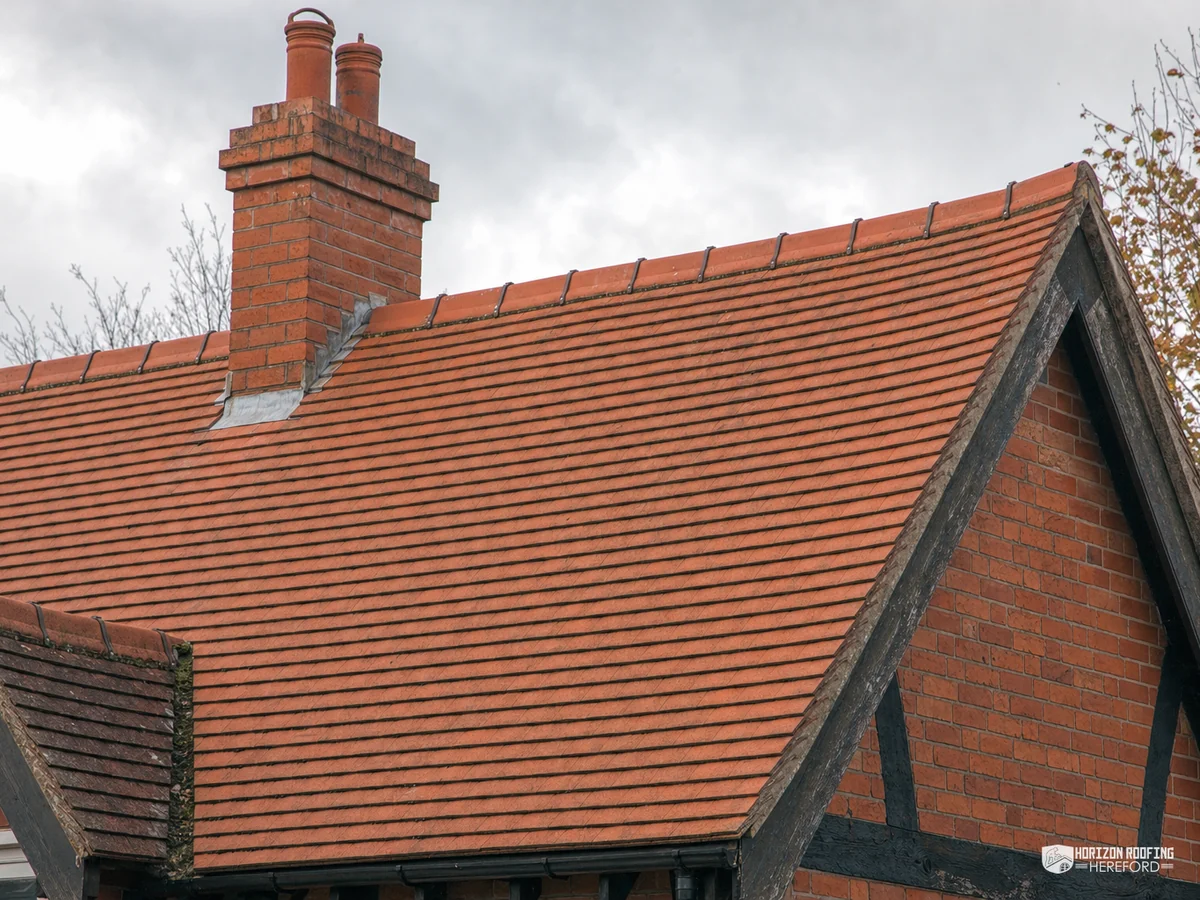
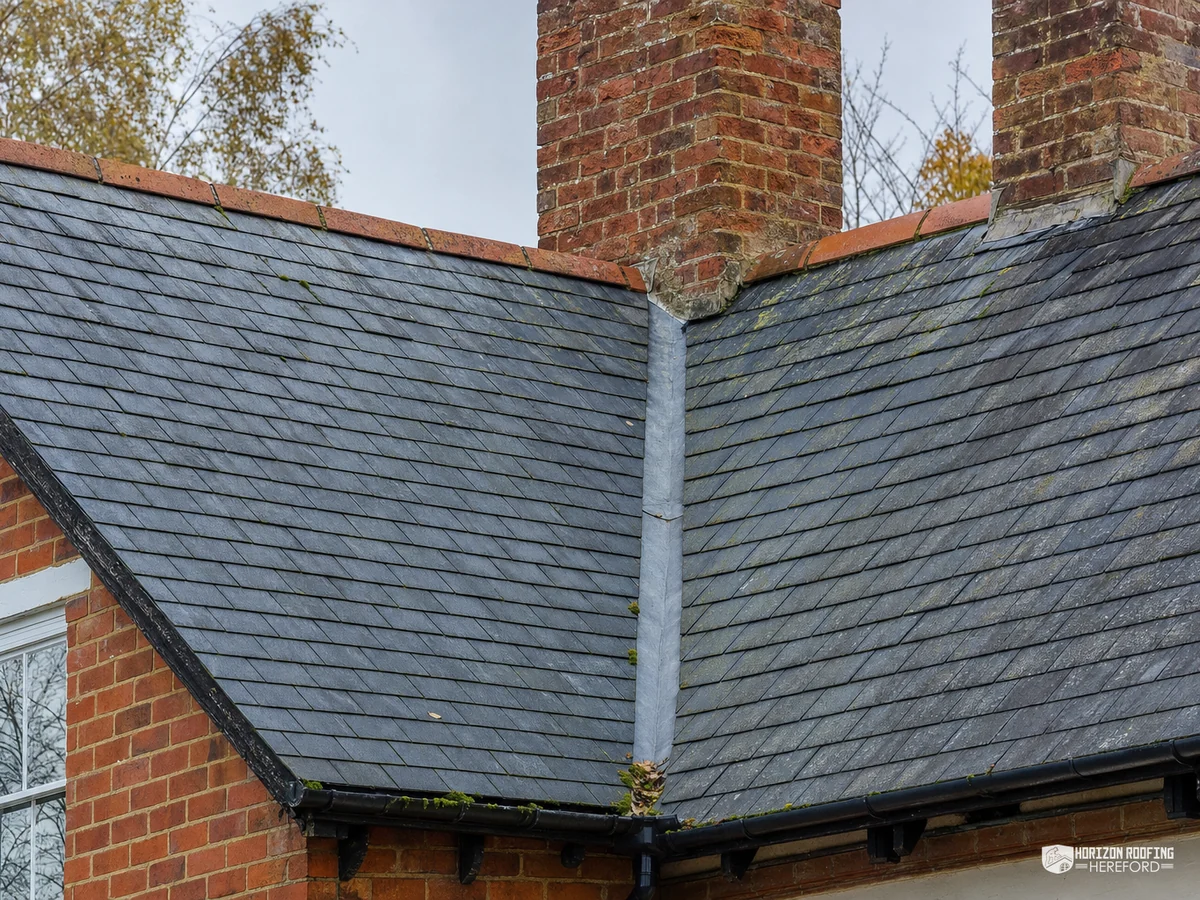
Stone is what the Royal Commission recorded on two Abbey Dore buildings. Volume 1 of its Herefordshire inventory (1931) records of the parish church that "the roofs are covered with stone slates and lead", and of Morehampton Park Farm that "the roofs are covered with stone slates." Those are two buildings, and the quotations say nothing about the rest of the parish, so we read your own roof before we say what it carries. Some houses in the parish will have been re-covered more than once, and the photographs show every layer we can see.
Stone slates are thin sandstone tiles, a traditional covering in this county. The Herefordshire Building Stone Atlas puts the St Maughans sandstones first among the sources of local stone roofing, and notes active permissions in the Golden Valley area. The SPAB technical note for Wales and the Marches calls the region's stone roofs "predominantly double-lapped". It also warns that many have been changed "to different stones or even to slates or fake stone slates", which is why a survey records what is on the roof before any change of material is suggested.
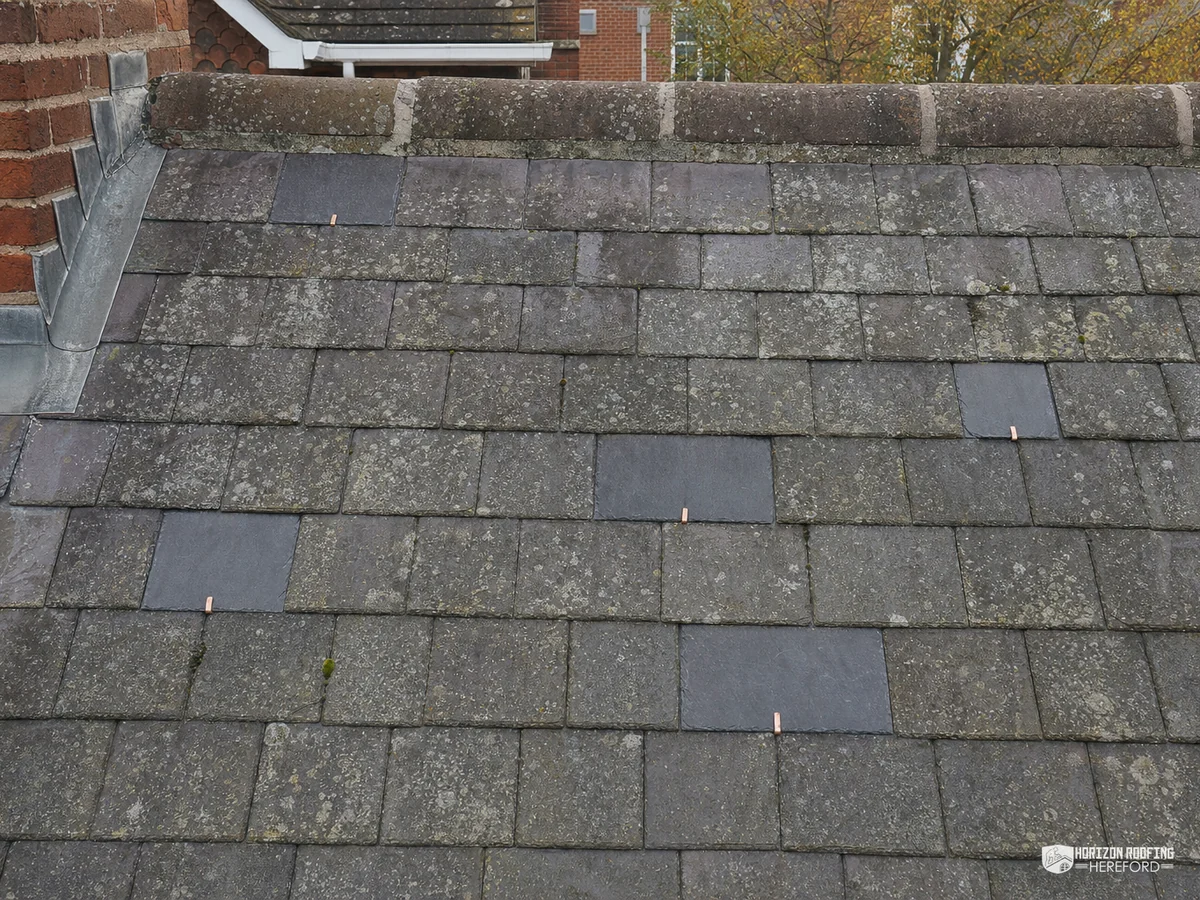
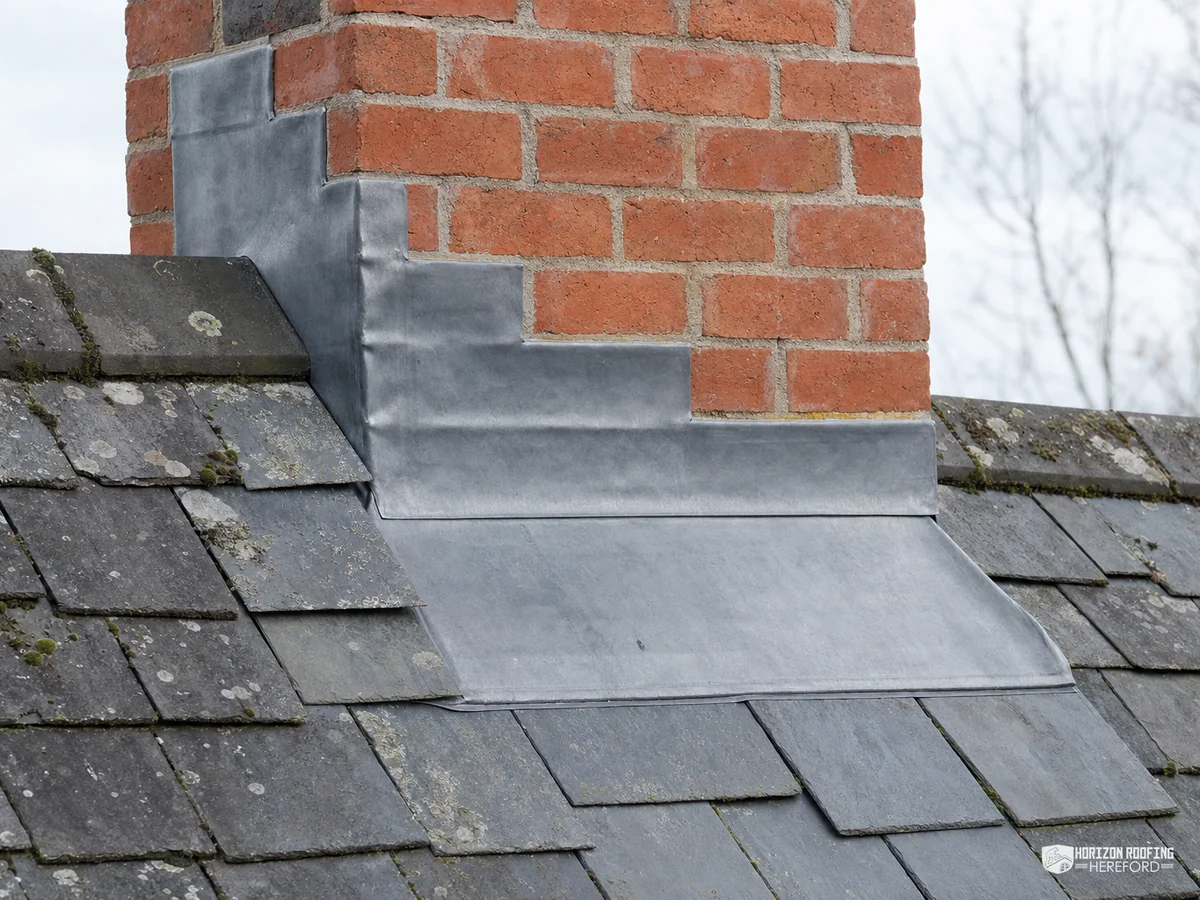
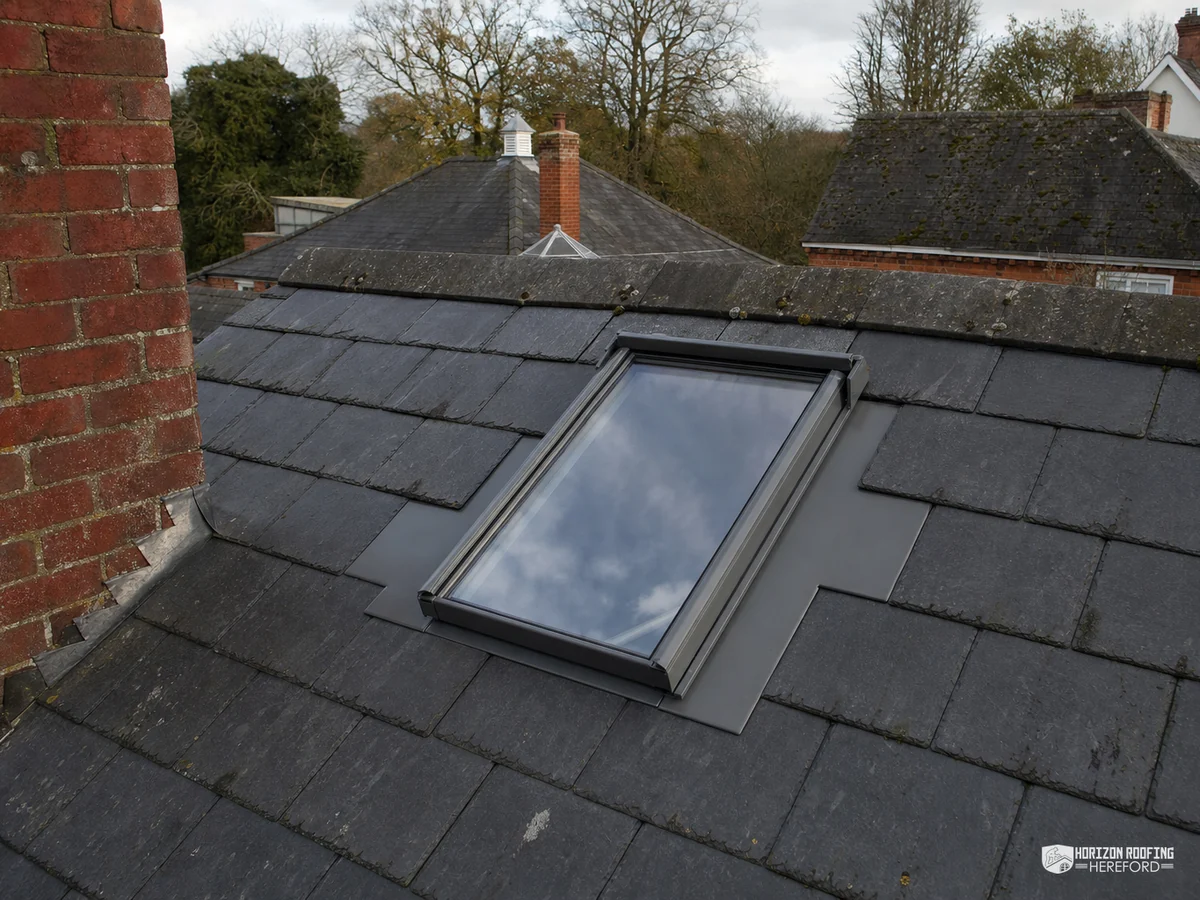
We look for stones that have slipped, cracked or split along their layers, for gaps where a course has opened, and for the pegs or nails that hold each stone. A roof with a few failed stones is a repair job, and each failed stone gets its own photograph, taken where it sits, so you can see it before it comes off. Where a section has to be stripped, the sound stones are sorted and laid again, and a replacement is matched to the old in size and colour. SPAB says that "Claims of unavailability or long delivery times should always be checked with the quarries", and we make that call ourselves before anyone is told a stone cannot be had. The answer goes into the report with the names of the quarries we asked.
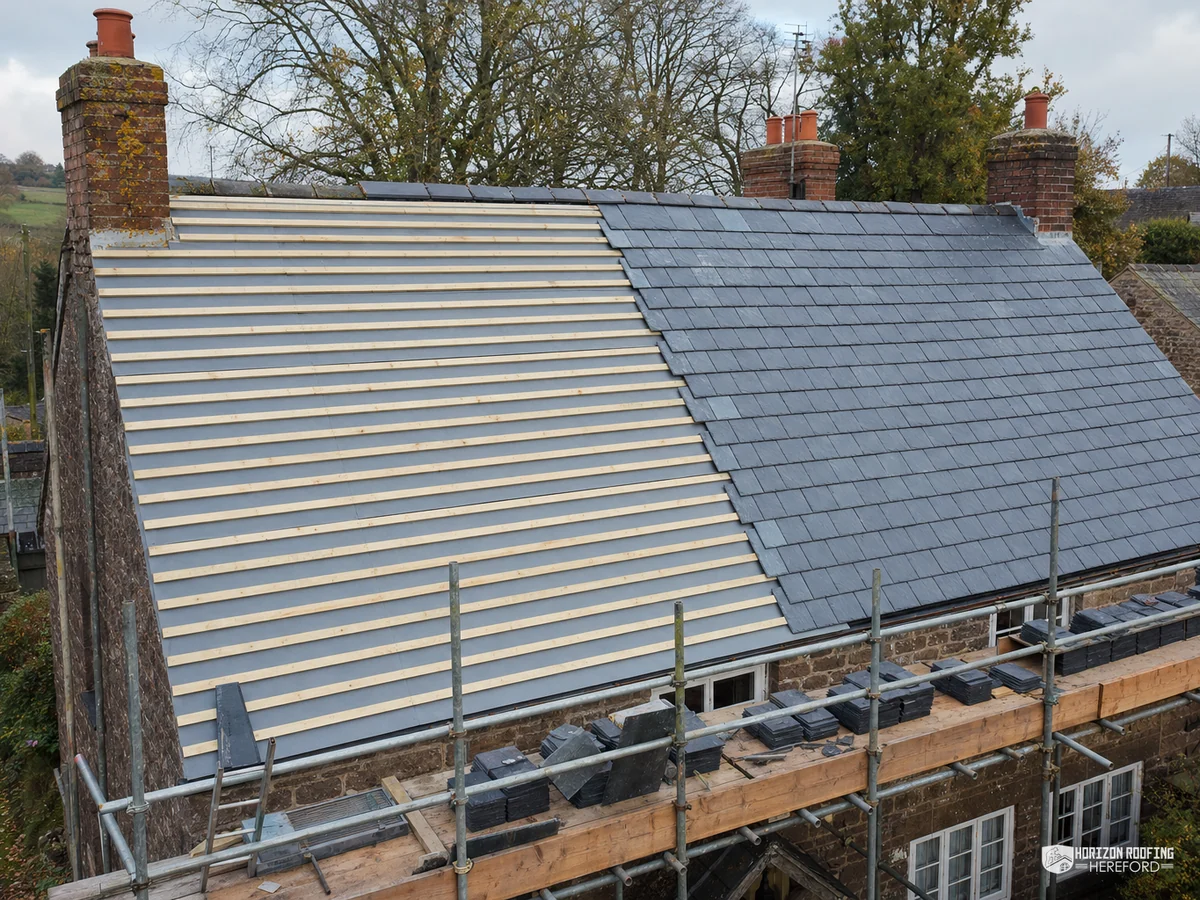
Re-covering a whole slope is a different decision. The Planning Portal test for England asks whether the work touches less than 25 per cent of the building envelope and less than 50 per cent of the roof, and Abbey Dore is in England. Changing to a lighter or a heavier covering is checked for load first, with Herefordshire Council Building Control or a registered building control approver. Our slate roofing page covers the neighbouring trade of natural slate.
What the survey records on a stone slate roof
- Stone condition
- Slipped, cracked or layered-off stones, photographed
- Courses
- Gaps and sagging runs between eaves and ridge
- Fixings
- Pegs or nails that no longer hold a stone
- Ridge and verge
- Bedding, capping and the edge at each gable
- Spare stones
- Sound stock on site that can be reused
A few failed stones are a repair, and the old stones that are still sound go back on the roof.