
01432 610152 Get a quote Call 01432 610152

Roofers in Cradley

Timber-framed gables, lead-flashed stacks and the Malvern Hills landscape, surveyed from the ridge down.

Photographs of each fault on your Cradley roof, then one price set down in writing after the survey.

Get a free quoteCall 01432 610152

Cradley's frames, stacks and listed halls

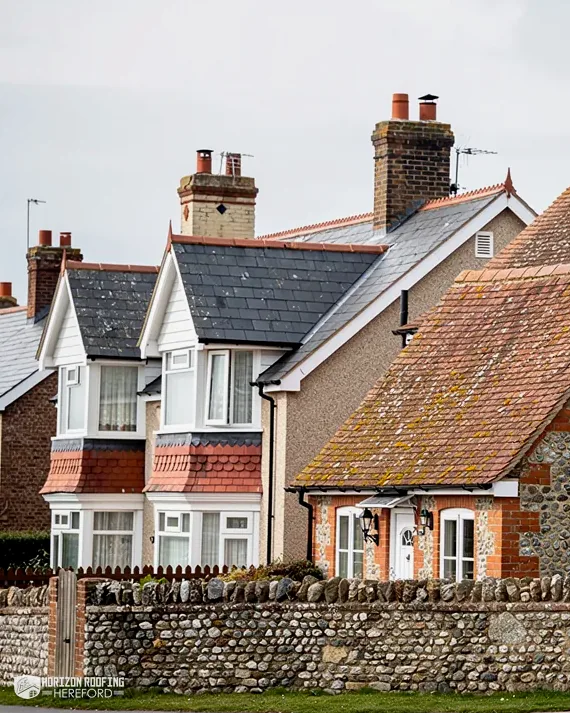
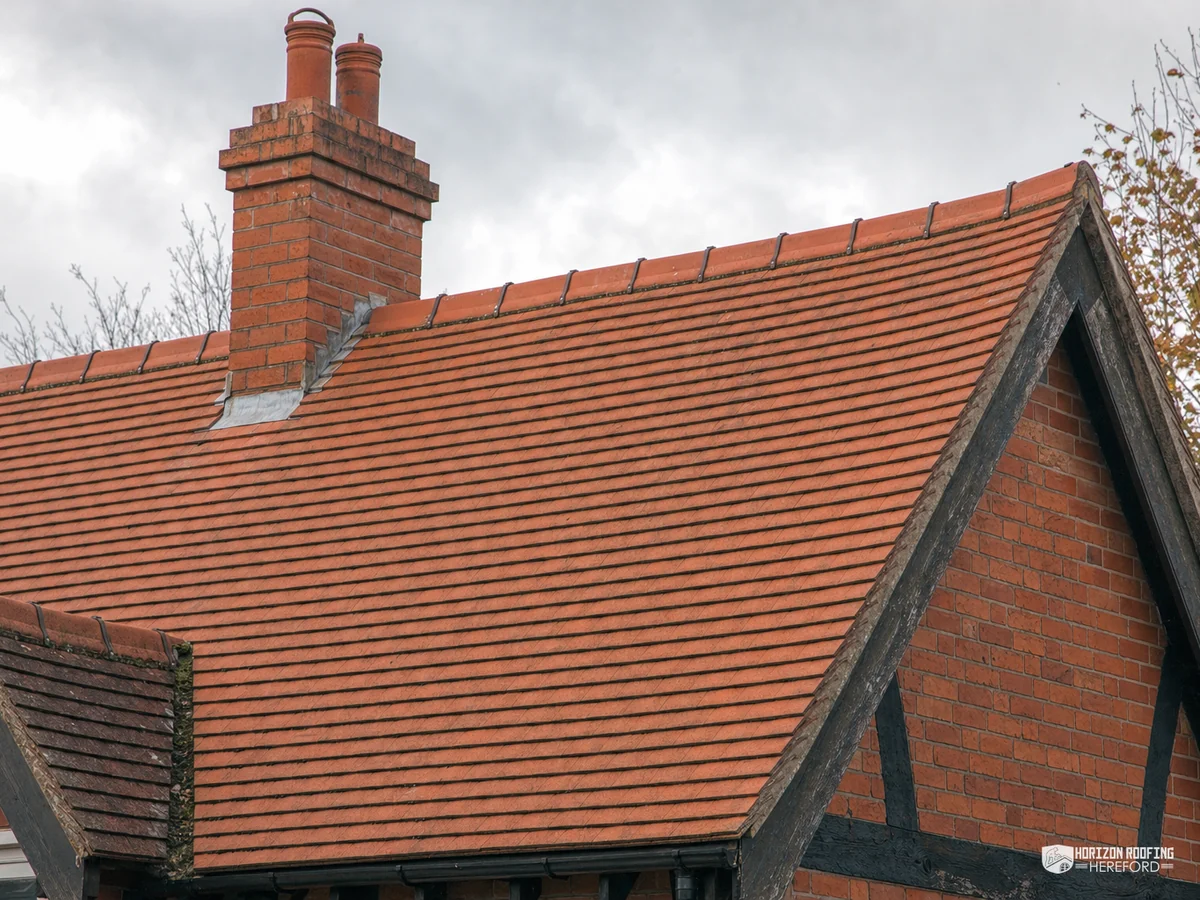
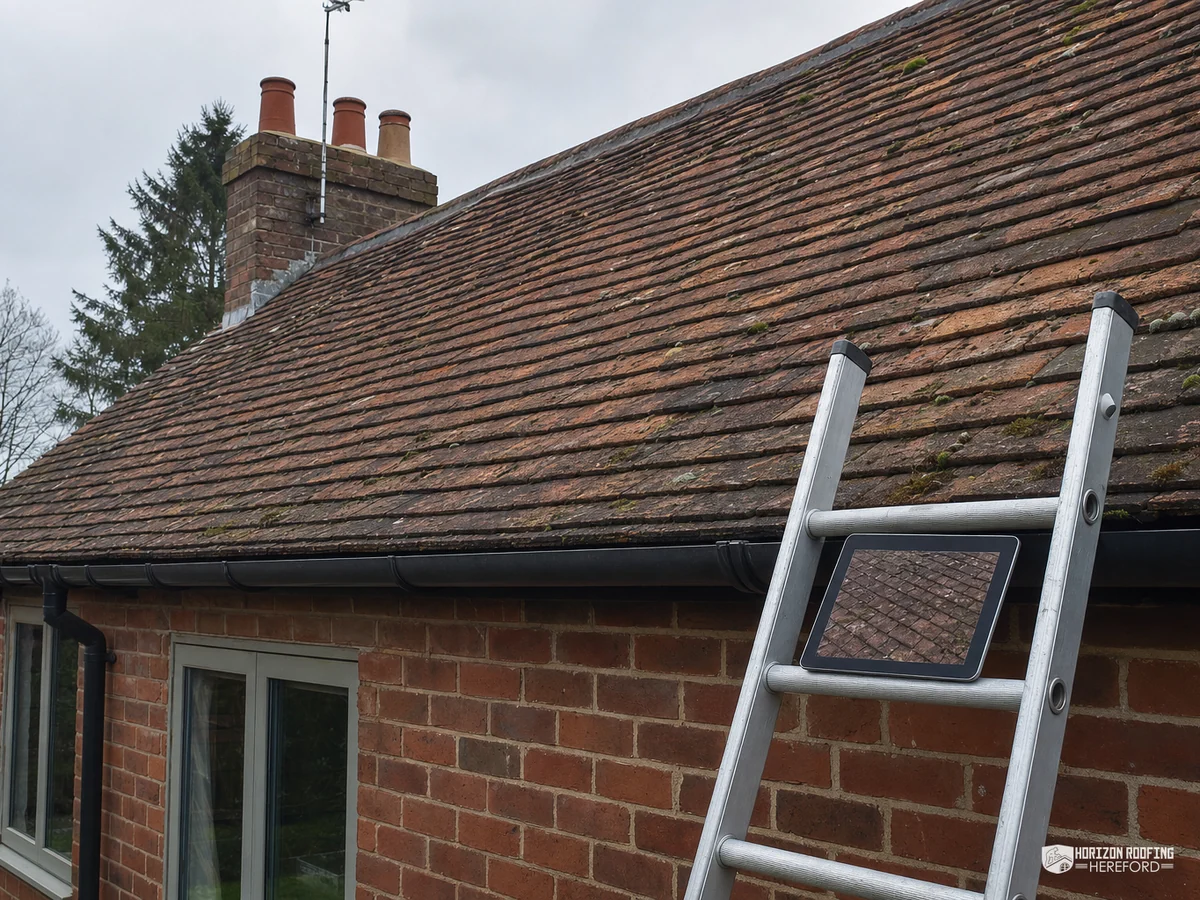
  • Older cottages with weathered clay tile roofs and brick chimneys behind a flint wall
    Seventeenth-century timber framesThe 1932 inventory recorded 17th-century monuments here as timber-framed, under tile or slate roofs.
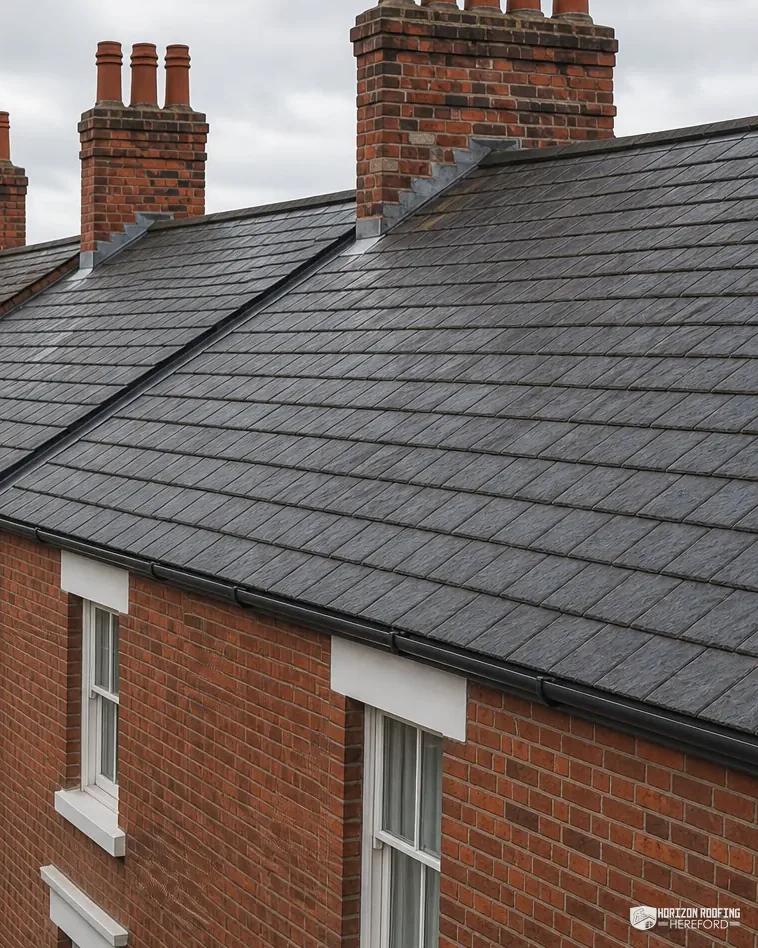
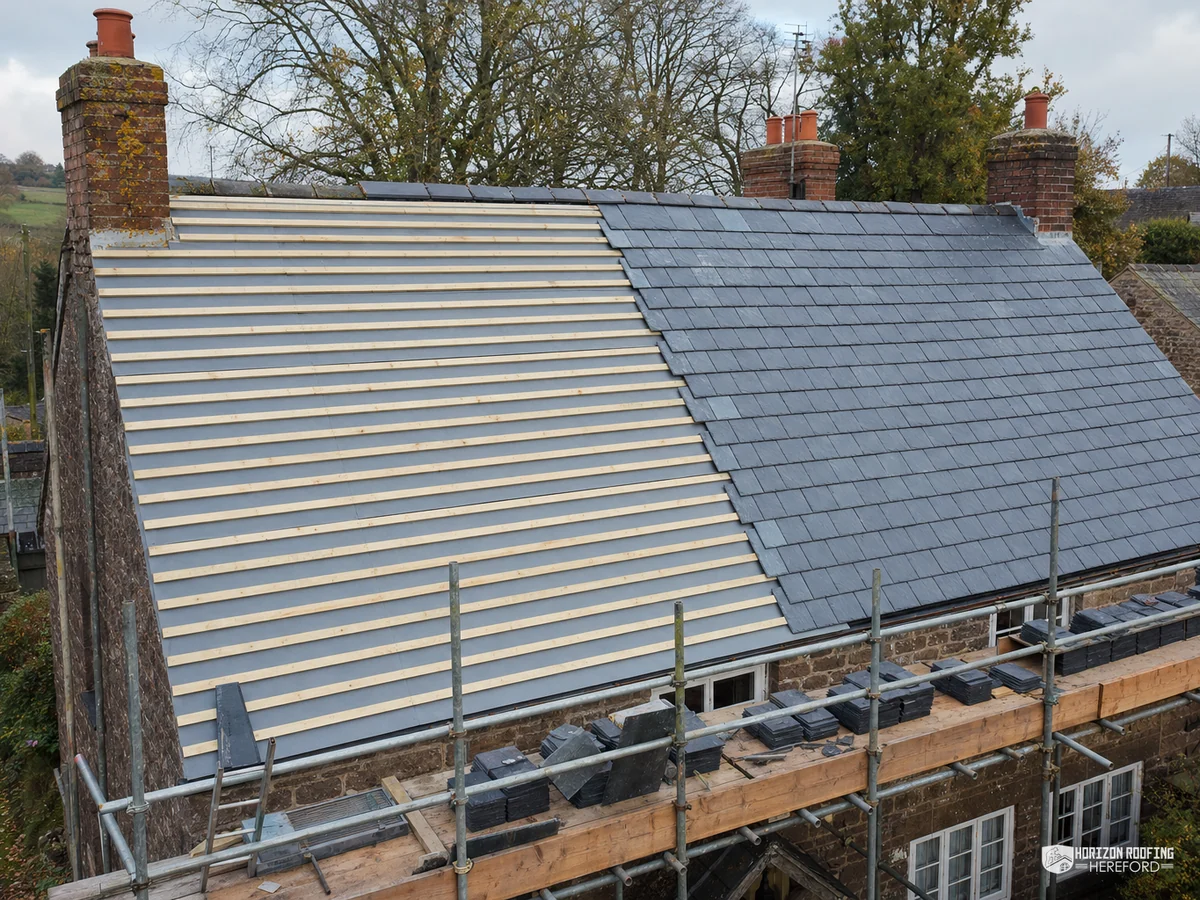
  • Slate roofs and chimney stacks along a red brick Victorian terrace
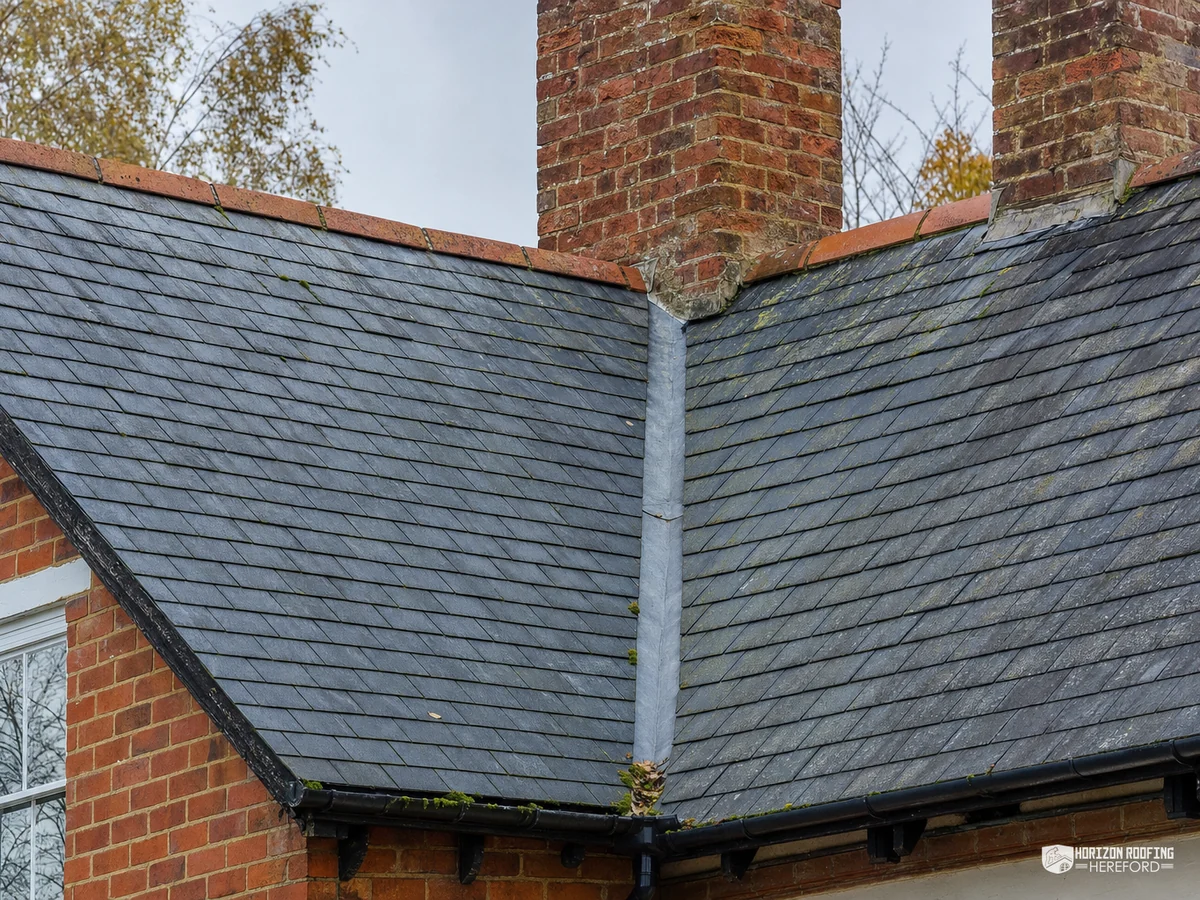
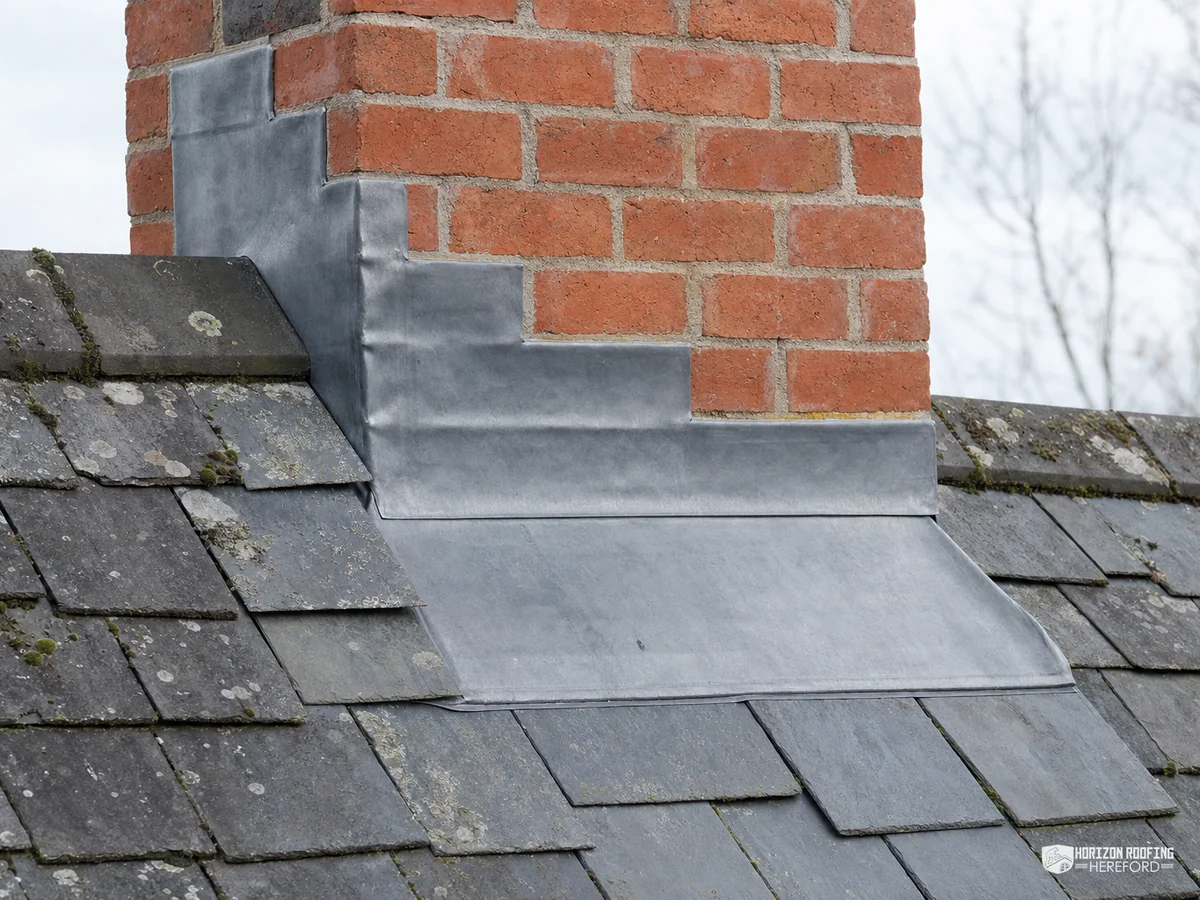
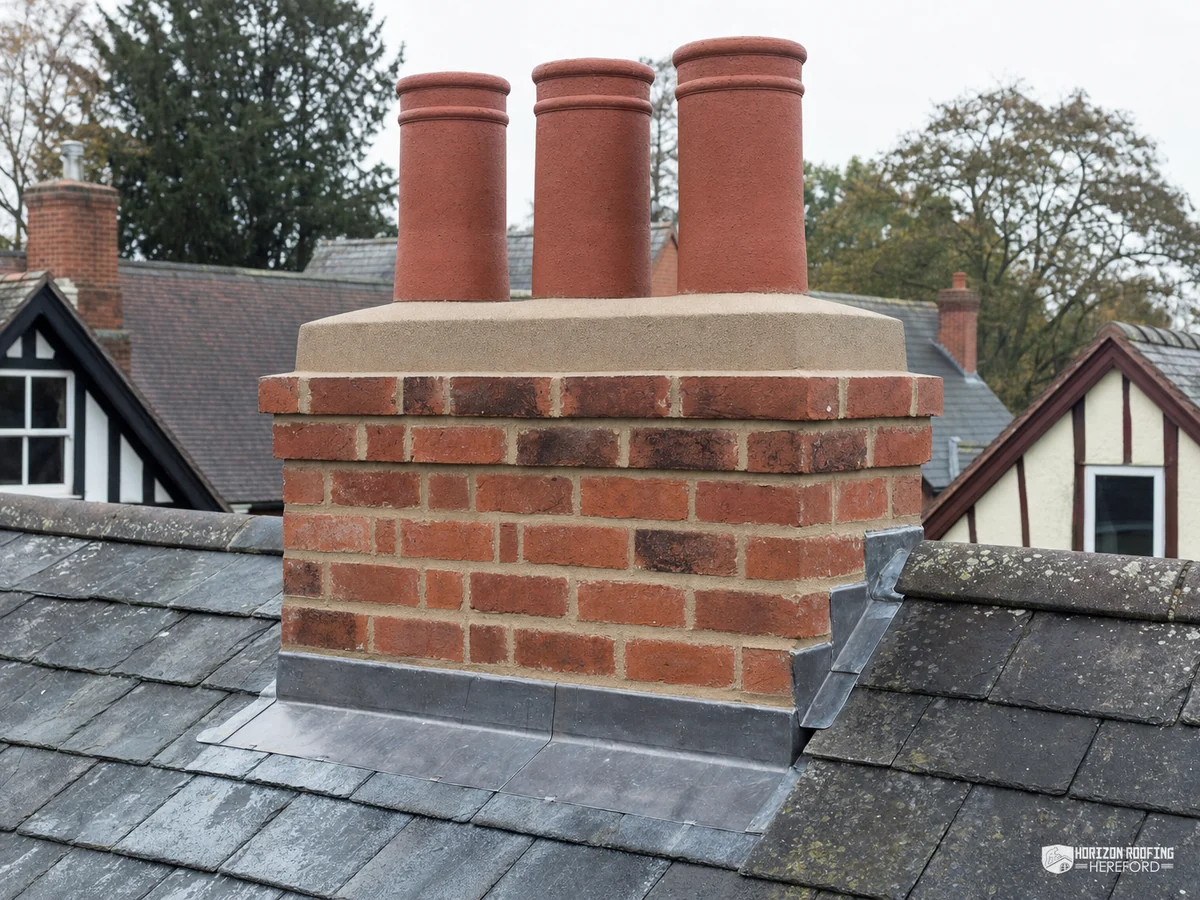
    Lead at stacks and wallsLead flashings at a stack can split or lift, and the joint is exposed.
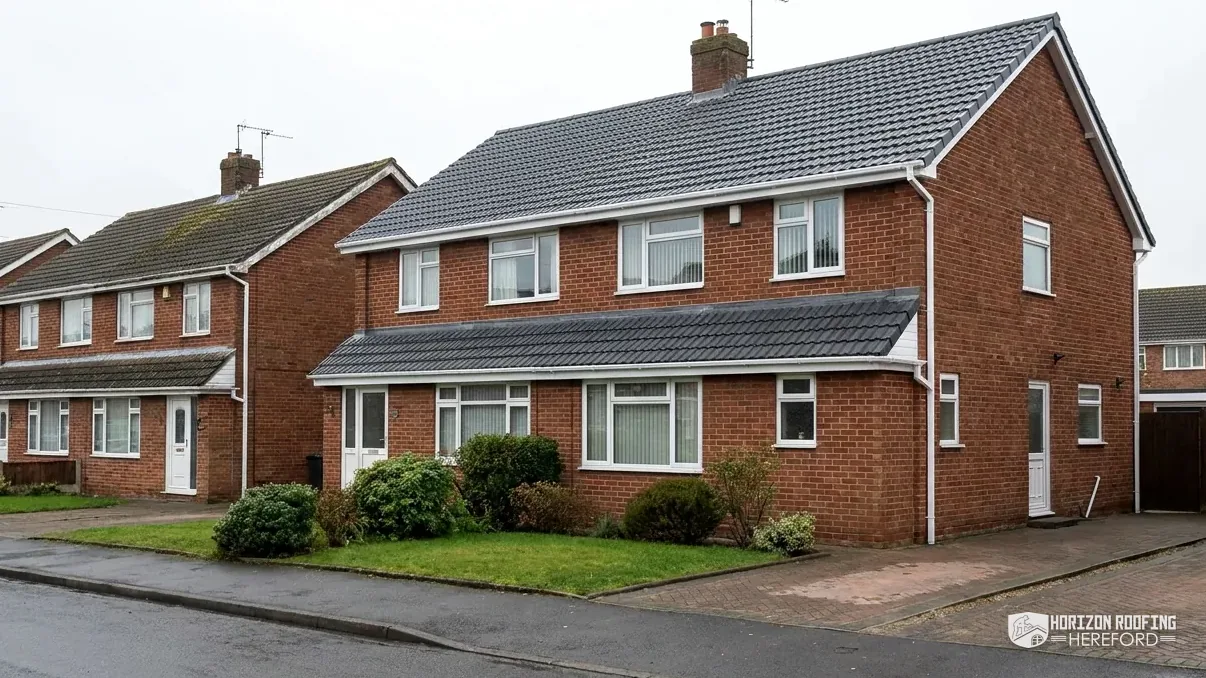
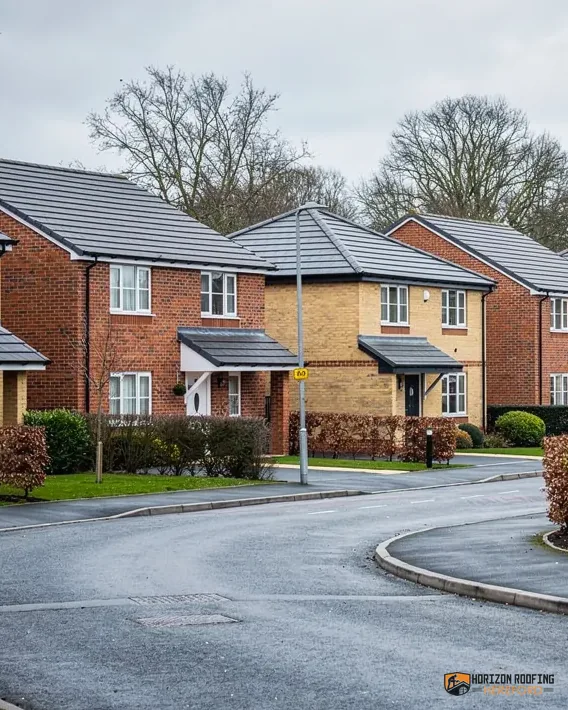
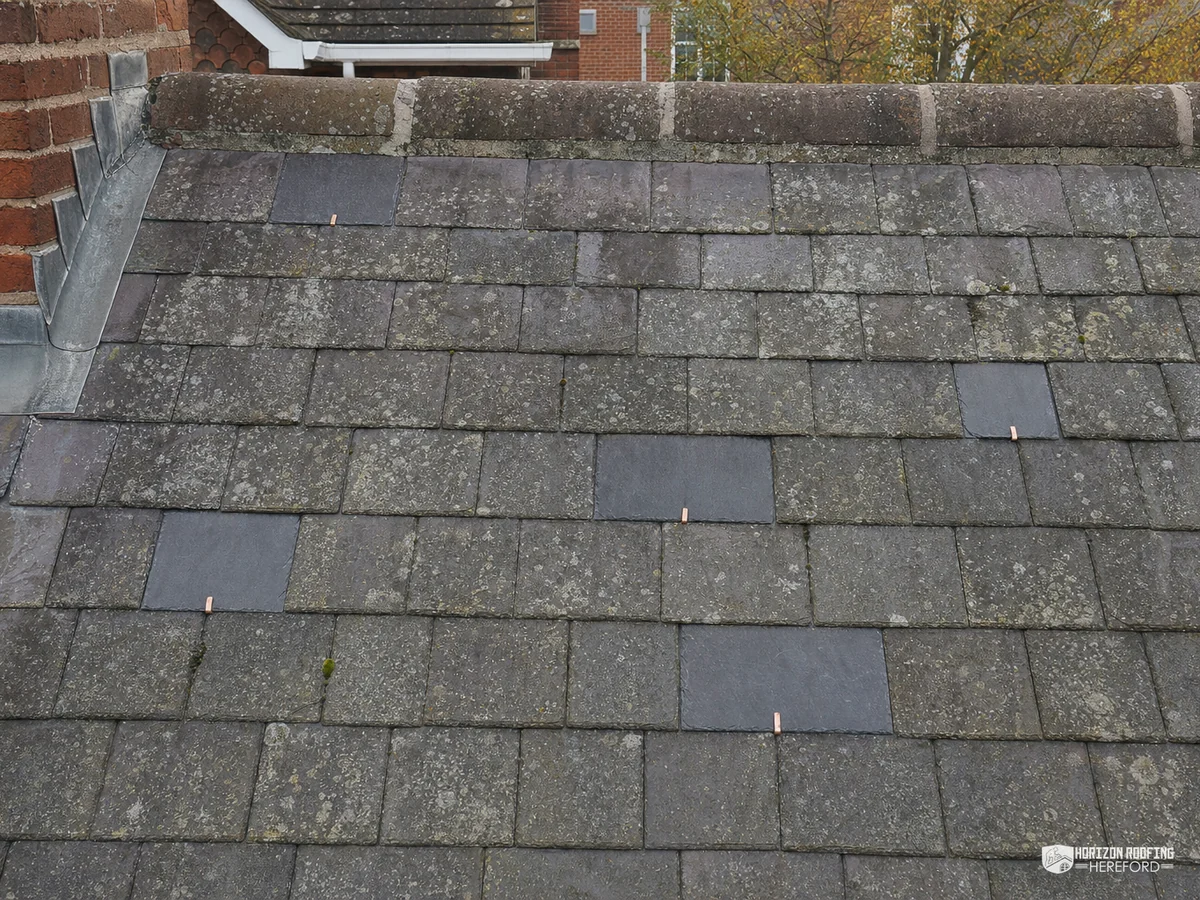
  • Newer homes with grey concrete tile roofs along a curving estate road
    Two Grade II* buildingsSt James's church and the Parish Hall (Old Boys School) are listed Grade II*.

How far Cradley is

Cradley on a street map, with a dashed circle around the town and the nearest towns we cover. Tiles © Esri; map data © Esri, HERE, Garmin, OpenStreetMap contributors.

Cradley roofs, frame to listed hall

Frames, lead and listings: three callouts on a roof in the Malvern Hills National Landscape

We begin at a timber-framed gable, move on to the stack and its lead, then finish at the listed church and hall, where the conservation area and the landscape designation set the rules.

A drawn cut-away section through a Herefordshire border house: the front of the main roof is cut open to show the rafters, underlay, battens and slates, beside a black-and-white timber-framed gable. Numbered, from the ridge down: 1 Framed gable; 2 Lead work; 3 Church and hall.

Fig. 1 Roof section with the three Cradley callouts marked from the gable down.

Callout 1 of 3

The gable of a Cradley timber-framed house

Callout one sits at a timber-framed gable, where the covering must end against a frame that moves. For Cradley the Royal Commission's inventory of 1932 is the written evidence: unless it says otherwise, the monuments numbered 6 to 45 in the parish are "of the 17th century and of two storeys, timber-framed and with tile or slate-covered roofs". The inventory describes what stood in 1932. A house can be re-covered later, so what you have today is whatever the loft and the slope show us, and the report records that and nothing older.

A frame never stands perfectly still. Oak dries, joints loosen and a gable can lean over time. The verge is the strip of covering that overhangs the gable end, and it is bedded or clipped to timbers that shift. Where the bedding has cracked away from the frame, we check whether the first rows of tiles have lifted. Up in the loft the wall plate gets checked, which is the timber lying along the top of the wall beneath the rafter feet, because soft or stained wood there tells us more than a mark on a ceiling does. We take a photograph of it from the loft side, so the evidence goes into your report with the rest.

Tile is the covering the inventory names first. Marley quotes the BRE's minimum life expectancy for clay roof tiles as 60 years, and HomeBuilding gives clay tiles "60-80 years". Those are typical figures and no promise, so an old clay covering can be sound, and we lift a few tiles to look at the nibs and the fixings before judging it. A tile that has slipped is replaced with one of the same size and colour where the supply allows, and a run of cracked ones is counted on the report before anyone mentions a bigger job.

Marley also notes that since the 2015 amendments mortar cannot be the only means of holding a roof covering on. BS 8612 covers dry-fix verge units, which clip the edge down mechanically. On a framed gable the bedded appearance can stay, with the clips tucked behind it, so the edge keeps its character and still has a fixing. Our pitched roofing page describes how a whole slope is stripped and relaid when a repair is not enough.

At a framed Cradley gable

Verge
Bedded and clipped, never left on mortar alone
Wall plate
Read from the loft for soft or stained timber
Top courses
Tiles lifted to inspect nibs and fixings
Eaves
Gutter fall and fascia checked for staining
Fig. 2 Timber frames, drawn close

Callout 2 of 3

Lead flashings and the stack they protect

Callout two is lead. Wherever a roof meets something upright, whether a stack, a wall or the cheek of a dormer, a strip of lead bridges the joint. Royston Lead sells cast sheet in codes from 3 to 8, and its brochure marks Code 3 as "Recommended for lead soakers only", the small folded pieces that tuck beneath each course where the stack stands. Flashings, the long strips tucked into the masonry and dressed over the covering, are listed for Codes 4, 5 and 6, and Codes 5 and 6 also suit parapet and box gutters. We choose the code from what the junction has to do, and the lead is worked with enough give to move without tearing.

The stack above the roof takes the wind and rain on every face. We photograph each face, the flaunching, which is the mortar cap holding the pots, and the pointing between the stones or bricks. MyJobQuote says correctly installed lead flashing "can last for over 80 years", a hedge and not a promise, and lead that is still doing its job stays where it is. Lead that has failed is renewed, not coated.

Taking a stack down is another kind of job. The Planning Portal says that "Building regulations approval will always apply when removing chimney breasts as they are part of the building's structure." Where the breast is shared with a neighbouring house, the owner serves a party wall notice, and at least two months must pass between that notice and any cutting, and a neighbour who has not replied within 14 days is taken to dissent, which opens the way to a surveyor. Our chimney repairs page sets out rebuilding and repointing.

The back gutter, which lies on the upslope side of the stack, is a lead tray that sends run-off round both sides, and because the slope delivers water straight at it, we trace leaks there early. Whether a stack is stone or brick, the repair starts with the same question: is the rain getting in at the lead, at the joints, or through the flaunching? The photographs answer it before a price is written, and a leak traced to one of the three is a repair and priced as one. If the stack is leaning or the stones are loose, that is reported separately and in plain words.

Lead that has split

Can a split flashing be sealed instead of replaced?

A bead of sealant hides a split without closing the path it opens. We replace the length of lead that has failed and dress the new strip into the joint, so the fix follows the junction and is not a patch laid over it.

Fig. 3 Leadwork, drawn close

Callout 3 of 3

Two Grade II* buildings and a conservation area

Callout three is the wall, where a roof meets a building that the law protects. The Church of St James carries a Grade II* listing (list entry 1082298, first listed 9 June 1967), and the Parish Hall (Old Boys School) is listed Grade II* as well (list entry 1082300, first listed 9 April 1952). Section 7 of the Planning (Listed Buildings and Conservation Areas) Act 1990 requires listed building consent for work that would affect a listed building's character. A hall is a secular building, so its roof work goes to Herefordshire Council. St James the Great is Anglican, with a said communion each Wednesday, so while worship continues its roof goes through the faculty system and not the council.

Herefordshire Council's list of designation dates gives the Cradley conservation area as designated in 1976. The county has 64 conservation areas in all, and the council holds each boundary. Inside one, a repair in matching material is maintenance. Swapping the tile colour or fitting a roof window alters how the street reads, so the council hears of it first, and we keep the before and after photographs on file for you. Ask the council whether an Article 4 direction applies to your address.

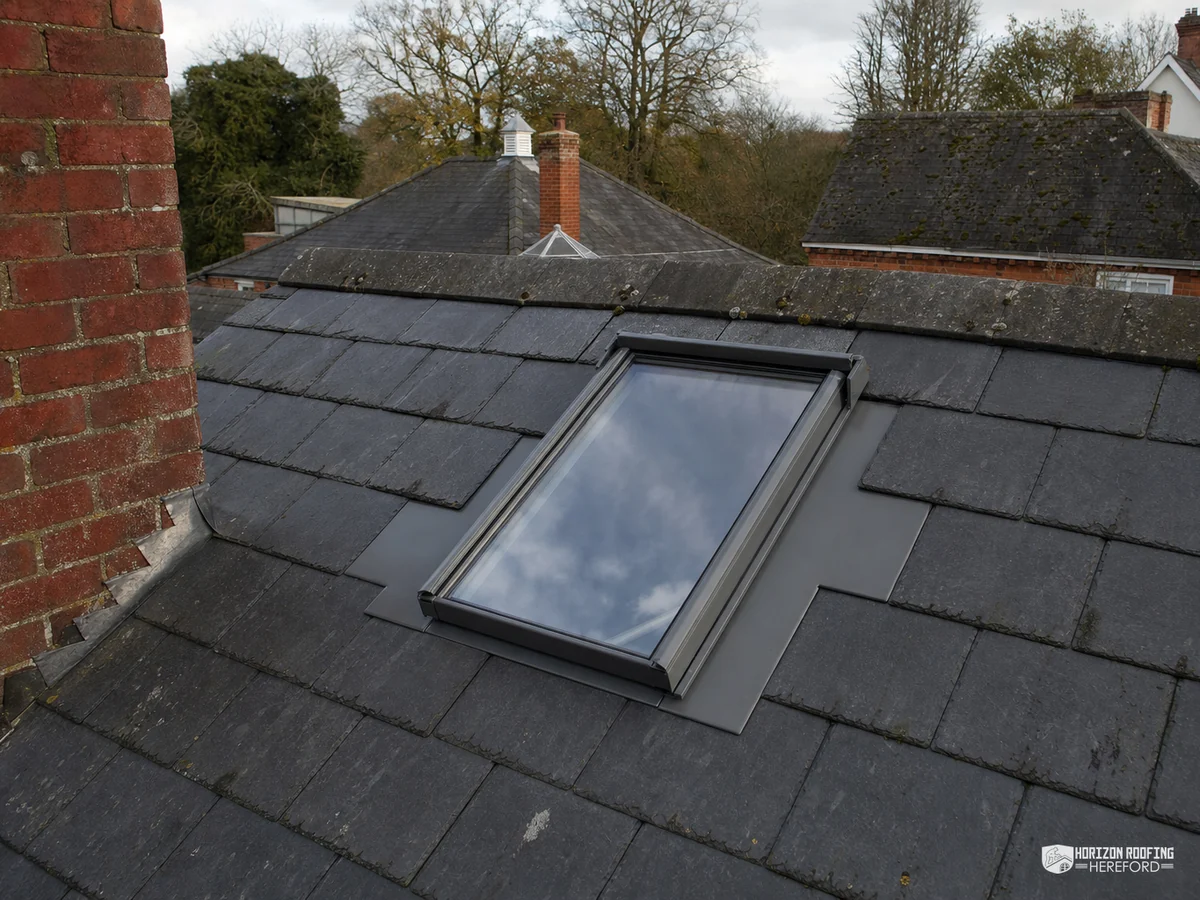
Cradley also lies inside the Malvern Hills National Landscape. The landscape's own planning page says that "It is the responsibility of the individual Local Planning Authorities to make decisions about planning applications, not the National Landscape Team or Partnership." For a Cradley address that authority is Herefordshire Council. For a Cradley dormer, that landscape means a word with Herefordshire Council comes first. Our planning guide for roof windows explains what applies to a window.

Building control for a Cradley address is Herefordshire Council Building Control, and a registered building control approver is the other route. Roof work that changes the structure, the insulation or the weight of the covering goes there before it starts. Our listed and heritage roofing page describes our approach to protected roofs, from the opening photographs through to the final piece of lead. Cradley is 16.8 road miles east of Hereford, about 28 minutes by road, so a visit to look at a listed roof can be made without a long wait.

Words on a listed Cradley roof

List entry
The reference number a listed building carries on the national register
Faculty
The consent route for Church of England church buildings in use
Article 4 direction
A council order withdrawing permitted development rights across a defined area
National Landscape
The working name for an Area of Outstanding Natural Beauty

Cradley roofs: frames, lead and listings

How is the gable of a Cradley timber-framed house repaired?

The verge is checked first, since it rests on timber that moves. Bedding that has cracked is cut out and re-laid, and each edge tile is clipped as well. In the loft we inspect the wall plate and the feet of the rafters for softness. The report carries photographs of the gable taken outside on a ladder and from within the loft, and the repair follows what they show, with any tile of doubtful fixing flagged beside it so that nothing is left unmentioned.

Is my Cradley house inside the 1976 conservation area?

That depends on where the house stands. Herefordshire Council's list of designation dates gives Cradley as designated in 1976, and the council keeps the map of the boundary, so look up your address on it before you plan anything. Inside the area, a new roof window or a change of covering colour deserves a conversation with the council first. Ask whether an Article 4 direction applies to your street as well.

Does the Malvern Hills National Landscape control roof work in Cradley?

No. It is a designation, and Herefordshire Council decides planning applications. It does touch dormers in England, a point our guide explains next to the conditions on roof windows. A like-for-like repair or re-roof is a separate question, and the survey says which of the two your roof needs. The guide is worth a read before a size or a position is chosen for any window.

What consent does roof work on St James's or the Parish Hall need?

Both are listed Grade II*, so section 7 of the 1990 Act applies to any work affecting their character. The Parish Hall needs listed building consent from Herefordshire Council before roof work starts. St James's is Anglican and still has weekly services, so any roof work there goes through the faculty jurisdiction; only if worship there ended would the council's consent take over.

Does a Cradley re-roof need Building Regulations approval?

The Planning Portal test applies in England, and it asks whether less than 25 per cent of the building envelope and less than 50 per cent of the roof is affected. Added insulation brings in Approved Document L, and until 24 March 2027 Table 4.3 gives 0.35 and an improved 0.16. Herefordshire Council Building Control answers questions on 01432 261938, and a registered approver is the other choice.

What happens about scaffold on a road in Cradley?

We arrange the licence with our scaffolder, because a scaffold that obstructs the highway needs one under section 169 of the Highways Act 1980. Herefordshire Council's fee is £167 for a maximum of one month, £123 for each extra month, and the council wants at least 10 days' notice. Calls about scaffold licences go to the Herefordshire Council Highways Licensing line, 01432 261800. Our written quote includes the scaffold.

Request a Cradley gable-to-stack survey

Tell us the address and add a photograph of the gable or the stack, and we will book a visit from Hereford.

10-year workmanship guarantee, in writing