
01432 610152 Get a quote Call 01432 610152

Roofers in Suckley

Slate, tile and lead roof repairs in Suckley, beside a listed church and farmhouses.

We look at the ridge first, photograph the faults you cannot see from the ground and write one total price.

Get a free quoteCall 01432 610152

What ages a Suckley roof

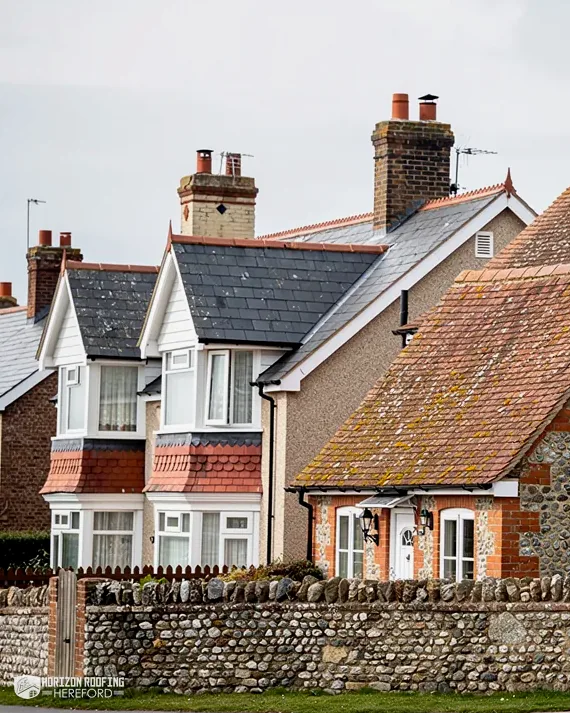
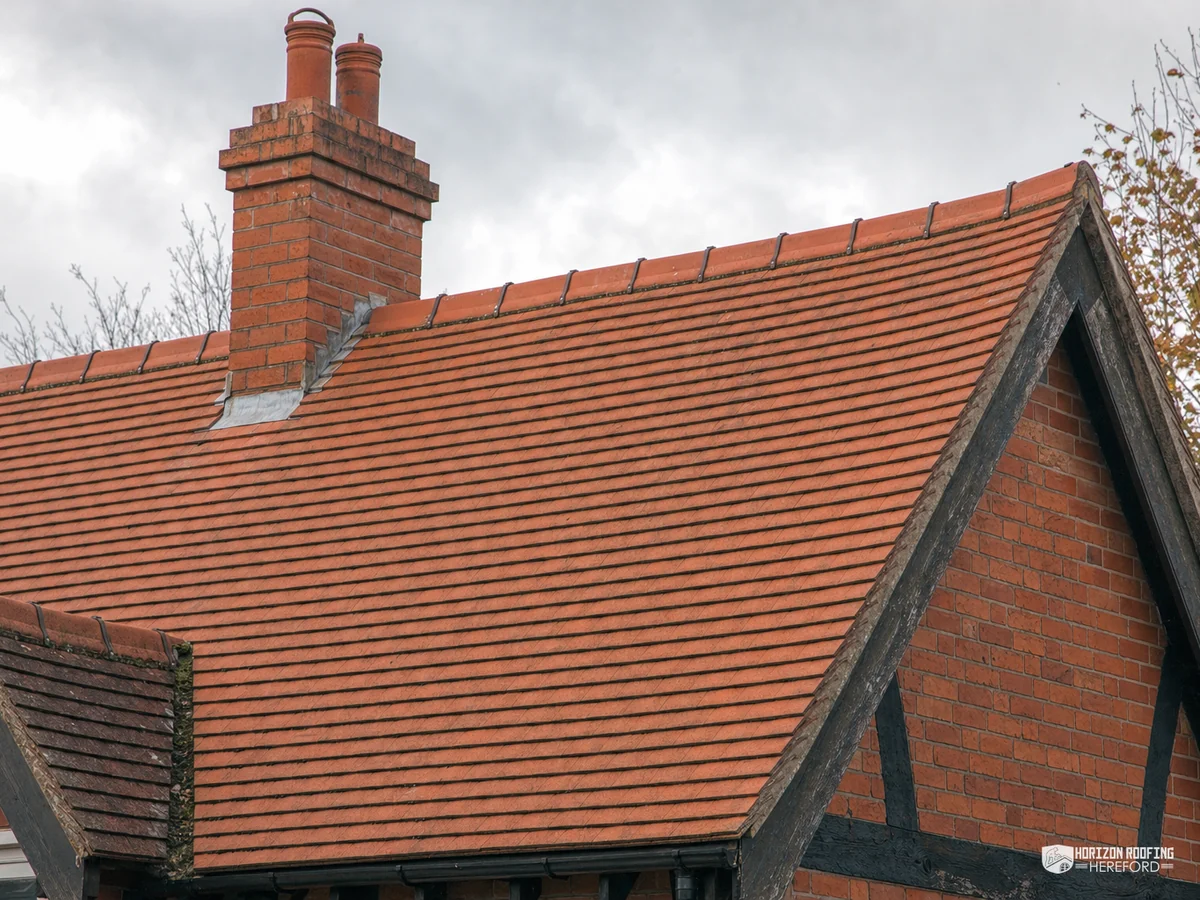
  • Older cottages with weathered clay tile roofs and brick chimneys behind a flint wall
    Slates that slipOnce a nail or hook rusts through, a slate slides and leaves a gap.
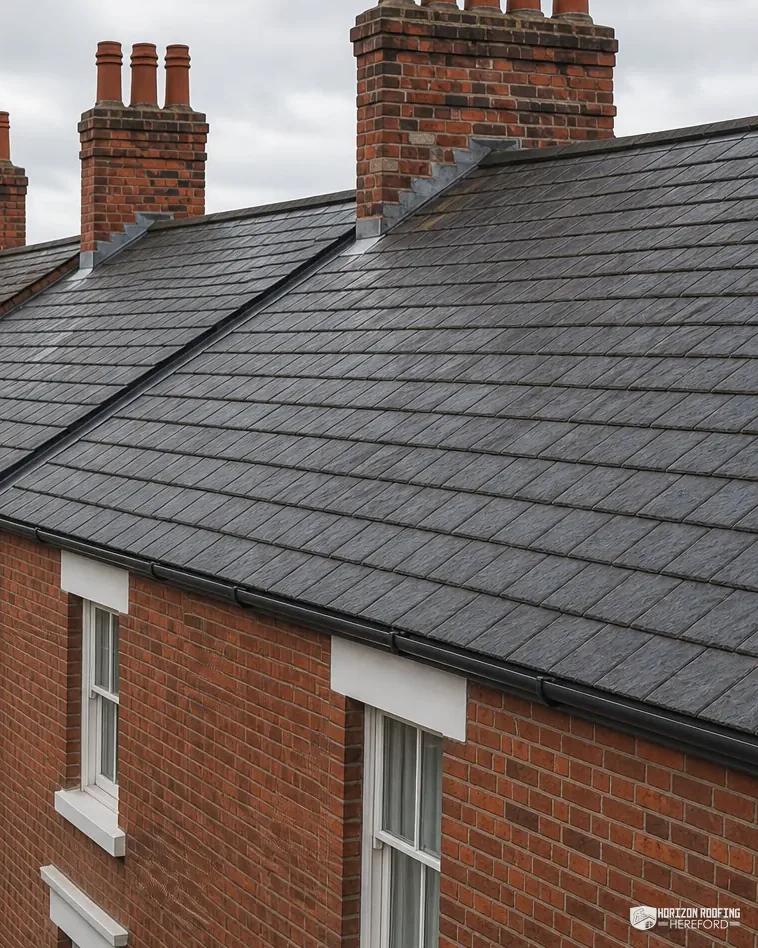
  • Slate roofs and chimney stacks along a red brick Victorian terrace
    Lead that has splitStiff or thin lead cracks along its folds beside a wall or chimney.
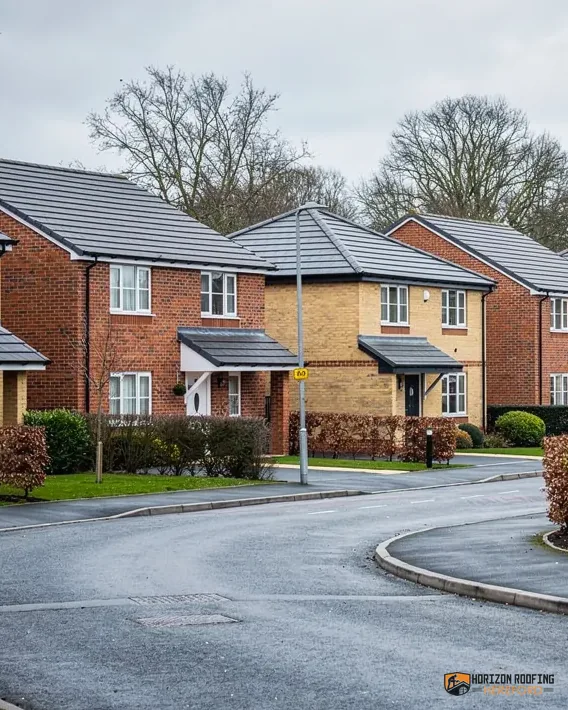
  • Newer homes with grey concrete tile roofs along a curving estate road
    A designation and a churchThe Malvern Hills landscape and a listed church both shape what is allowed.

Our patch around Suckley

Suckley on a street map, with a dashed circle around the town and the nearest towns we cover. Tiles © Esri; map data © Esri, HERE, Garmin, OpenStreetMap contributors.

Suckley roofs, slate to church wall

Three stops on a Suckley roof: the slate slope, the lead and the listed wall

We read a Suckley roof from the slate slope down to the lead that seals its joints, then out to the church and farmhouse walls and the hills designation beyond, naming the English rule at each stop.

A drawn cut-away section through a Herefordshire border house: the front of the main roof is cut open to show the rafters, underlay, battens and slates, beside a black-and-white timber-framed gable. Numbered, from the ridge down: 1 Slate slope; 2 Lead work; 3 Listed walls.

Fig. 1 Suckley section: slate slope, lead soaker and flashing, and a listed wall, numbered 1 to 3.

Callout 1 of 3

Slate and tile on the Suckley slopes

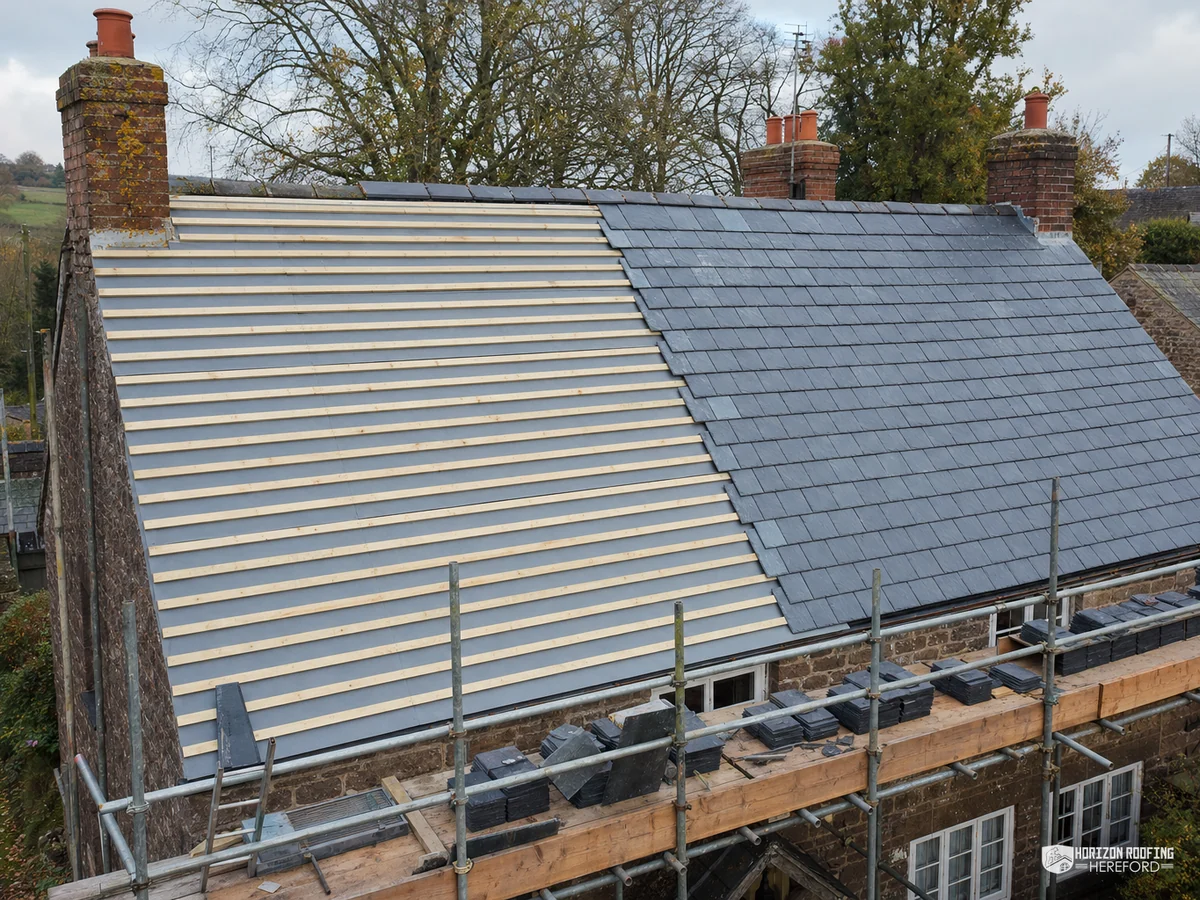
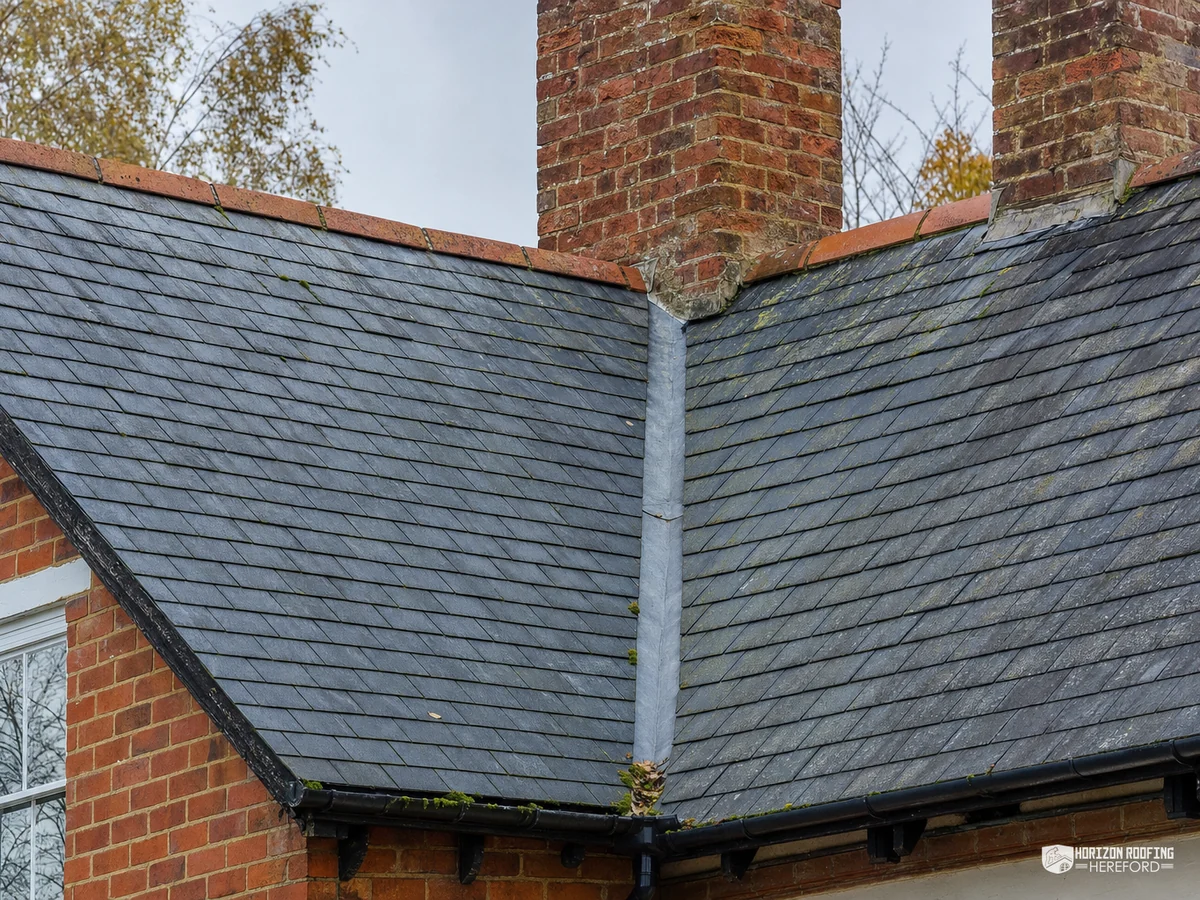
The Victoria County History of Worcestershire (1924) describes a house in the parish as "an early 18th-century three-storied brick building with a slate roof". A page of history cannot say what covers any house in the village today, so the survey starts with the covering in front of us. Slate hangs from battens by nails or hooks, and each slate laps the courses beneath it. The distance it laps the course two rows down is the headlap, and it is what keeps rain from creeping up between the slates.

The pitch of a roof limits what slate can do. Cupa, a slate supplier, says BS 5534:2014+A2:2018 "also indicates that the minimum roof pitch for natural slate is 20 degrees in the case of a project situated in an area with moderate exposure and with a slate 500mm long and a 115mm overlap", and it puts the limit for hook fixings at 25 degrees, with none below that pitch. Pitch is measured before any method is proposed. Where a slope falls short of what slate needs, that goes in the report, since the sensible response may be another covering altogether.

Lifespans are ranges, never promises. HomeBuilding lists Welsh slate at "100+ years", Spanish at "75-100 years" and reclaimed Welsh at "50-80 years". SPAB puts a well-slated roof's life at "likely to be more than 100 years". Those figures are why sound slates are worth saving: when a slope is stripped we sort them by hand, set aside any that have cracked, and relay the good ones with matching new slate where the gaps are. SPAB's advice on any claim that a slate is unavailable, or will take long to deliver, is to ask the quarries directly.

From the loft we read the underside of the same slope: daylight between battens, damp rafters, an underlay that has torn or gone brittle. Photographs of those marks go in the report beside the ones taken on the roof. Tile slopes follow a similar logic with different parts: nibs, clips and battens. Weight is the thing to watch with any replacement, because the Planning Portal asks for Building Regulations approval when a new material "increases the weight of the roof covering by 15 per cent or more". Our slate roofing page sets out relaying, repair and replacement in more depth.

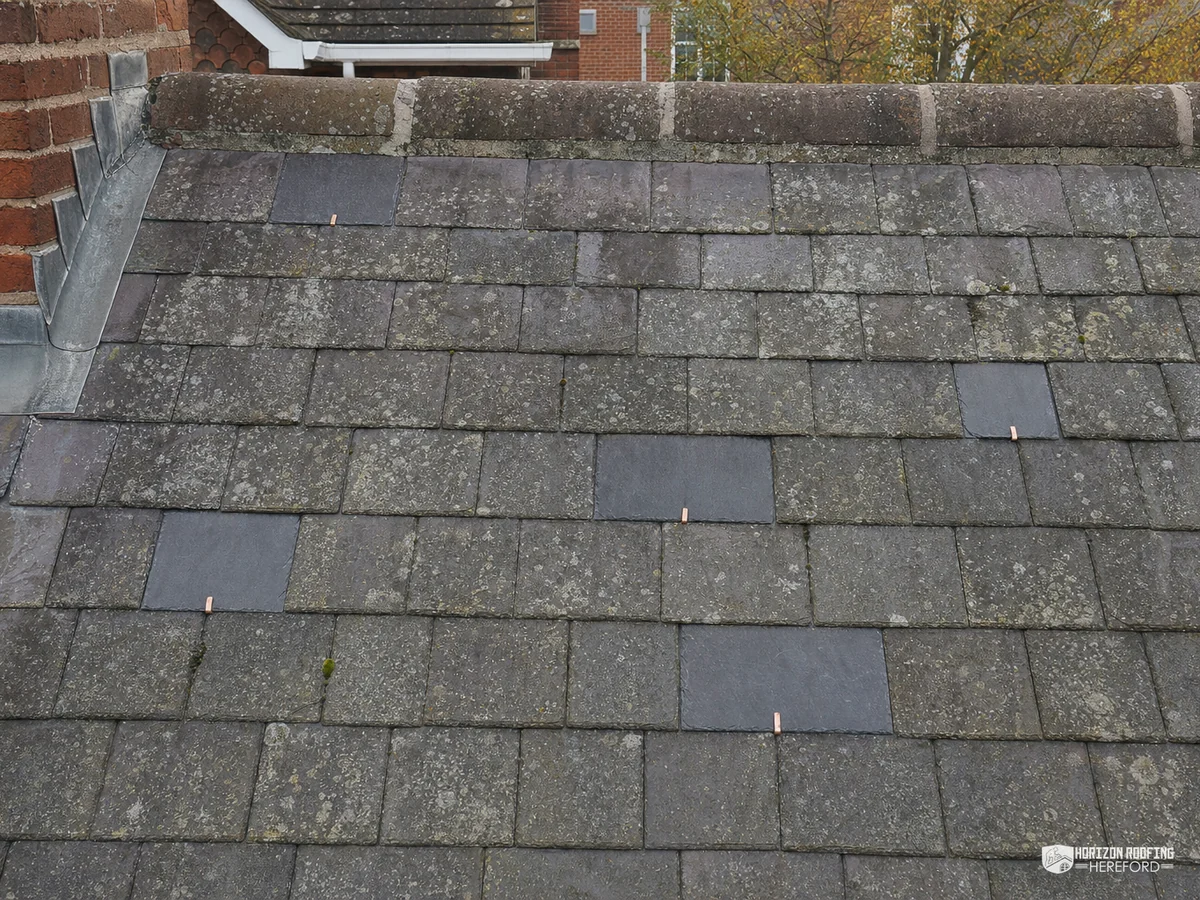
A slipped slate

Does one slipped slate mean the whole slope is failing?

Not by itself. A single slate can slip when its nail rusts, while the rest of the course stays sound. We check the neighbouring fixings and the battens beneath, and the photographs show whether you have one fault or a pattern.

Sound slates are worth saving, and the sorting is done by hand on the day.

Fig. 2 The slopes, drawn close

Callout 2 of 3

Soakers, flashings and valleys in lead beneath slate

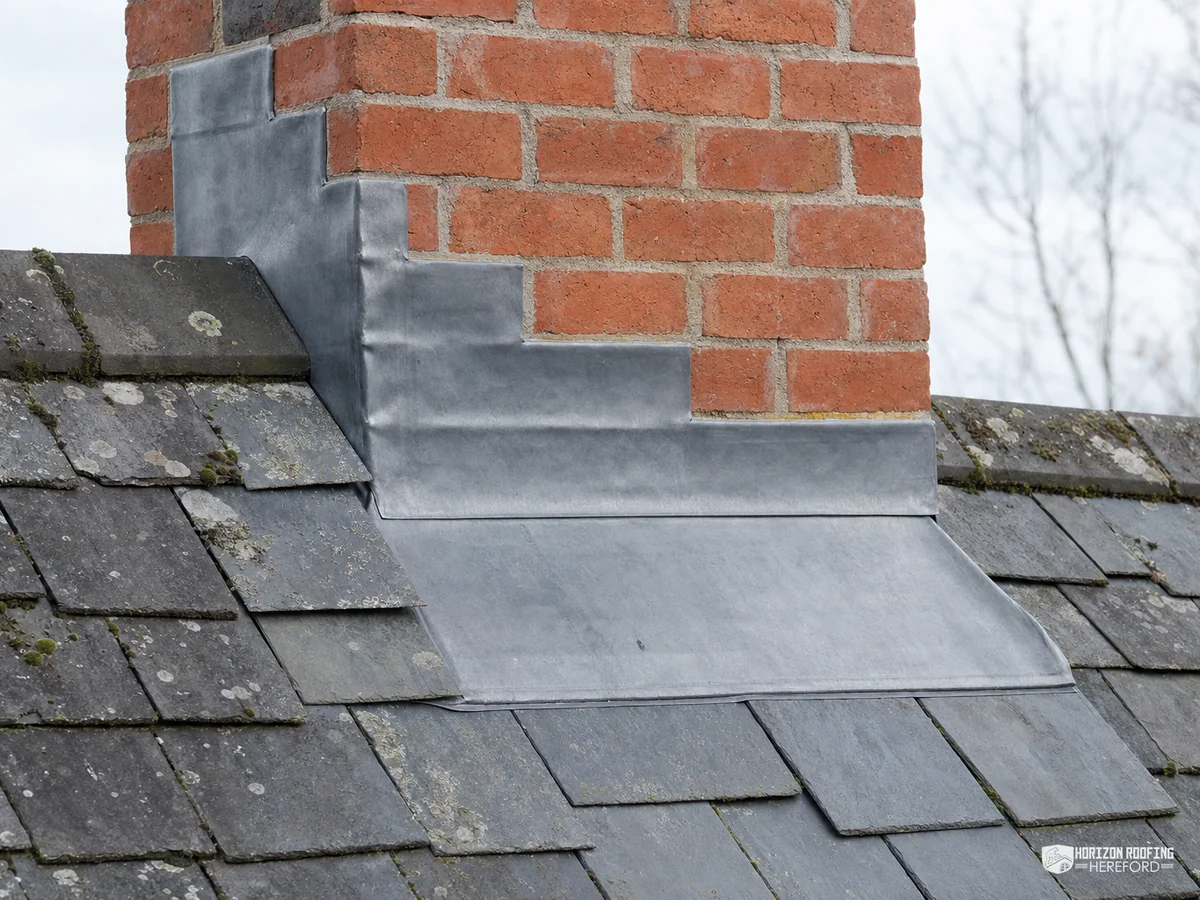
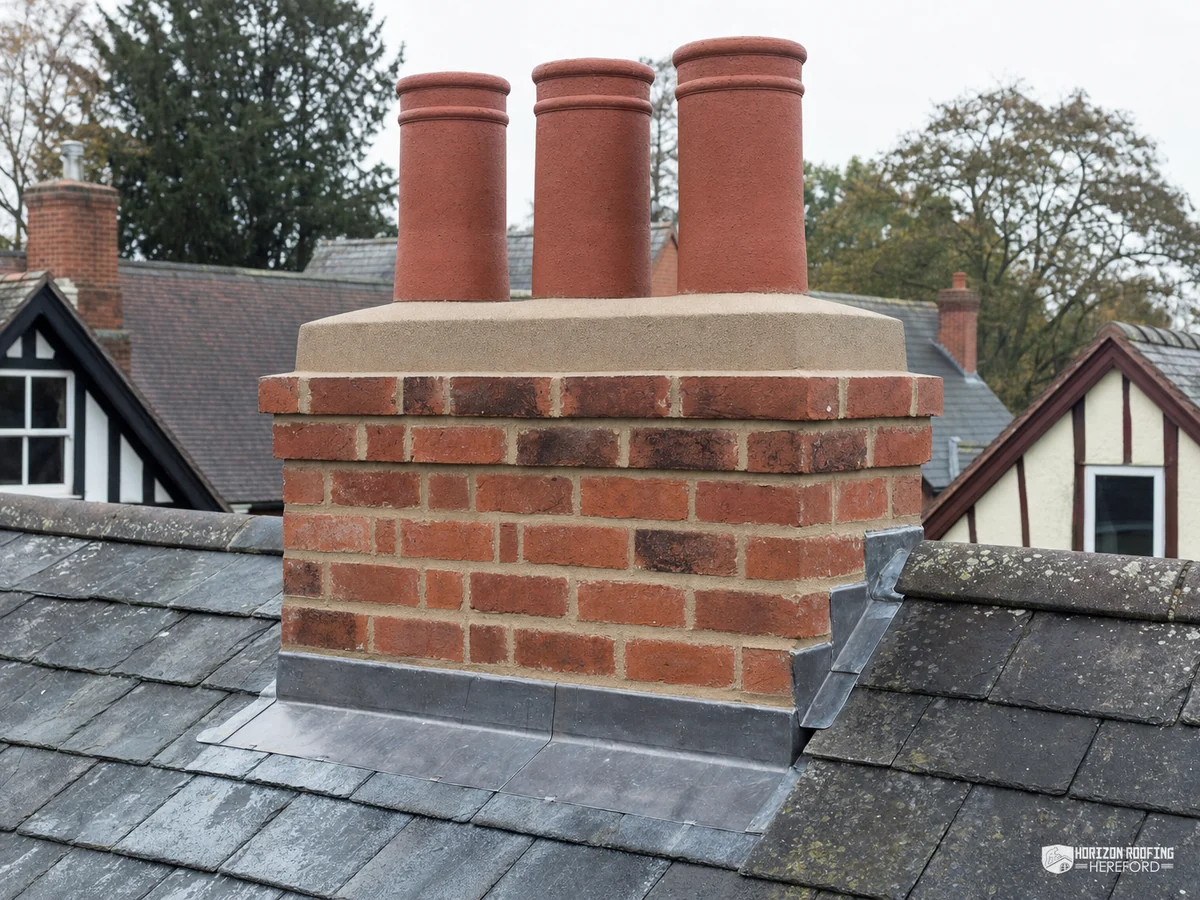
Lead is what keeps a slate roof dry where it meets something else. Beside a wall or stack the slates are interleaved with soakers, little bent sheets of lead tucked under each course. Higher up the wall, a flashing runs in a continuous strip, its upper edge cut into the mortar and its lower edge lapped over the slate. In the angle between two slopes, a lead-lined channel forms the valley. Royston Lead's cast sheet table gives every thickness a code number and lists the positions it suits: Code 3 is "Recommended for lead soakers only", Codes 4, 5 and 6 are listed for flashings, and Codes 4 to 8 carry the letter for pitched valley gutters.

The table also colours each code, which makes a sheet easy to identify on site: green for Code 3, blue for Code 4, red for Code 5, black for Code 6, white for Code 7 and orange for Code 8. The weight per square metre rises with the code, from 14.97 kg for Code 3 to 40.26 kg for Code 8. The code is picked to suit the position. A heavier sheet suits a wider valley or a more exposed flashing, while the lightest suits the small soakers under each slate.

Lead does not last for ever, and no promise is made here. MyJobQuote says correctly installed lead flashing "can last for over 80 years", which is a hedge about flashing and says nothing of a particular roof. Lead that fails early points to a cause, such as a joint that was dressed too tightly, movement in the wall it meets, or a sheet that was too thin for the job. We look for that cause before a new sheet goes in, and we photograph the old lead from both sides so you can see what was found. A flashing needs a little give where it crosses a joint, since lead moves with the weather.

Where lead meets a chimney, the work can reach into a neighbour's wall. Cutting a flashing into a neighbour's wall is a right under s2(2)(j) of the Party Wall etc. Act 1996, exercised by the building owner once notice has been served. Our lead roofing page covers soakers, flashings and valleys in more detail.

Royston lead codes in use at Suckley

Code 3, green
Recommended for lead soakers only
Code 4, blue
Soakers, flashings and pitched valleys
Code 5, red
Flashings, valleys and box gutters
Code 6, black
Flashings, valleys and box gutters
Fig. 3 Leadwork, drawn close

Callout 3 of 3

St John's, Lower Court and the Malvern Hills landscape

Our final callout is the wall, where listing and landscape settings steer the process. Suckley's parish church is Grade II under list entry 1302613 (first listed on 19 September 1984), and its dedication is to St John the Baptist. So are Lower Court (list entry 1302592) and Stocks Farmhouse (list entry 1302585), listed on 19 September 1984 as well, and The Old Rectory (list entry 1082166). LBCA 1990 s7 makes consent a precondition wherever the works would change a listed building's architectural or historic character. St John's is an Anglican parish church, so roof works there follow the faculty system while worship continues there, not listed building consent. Our listed and heritage roofing page explains how a proposal is prepared.

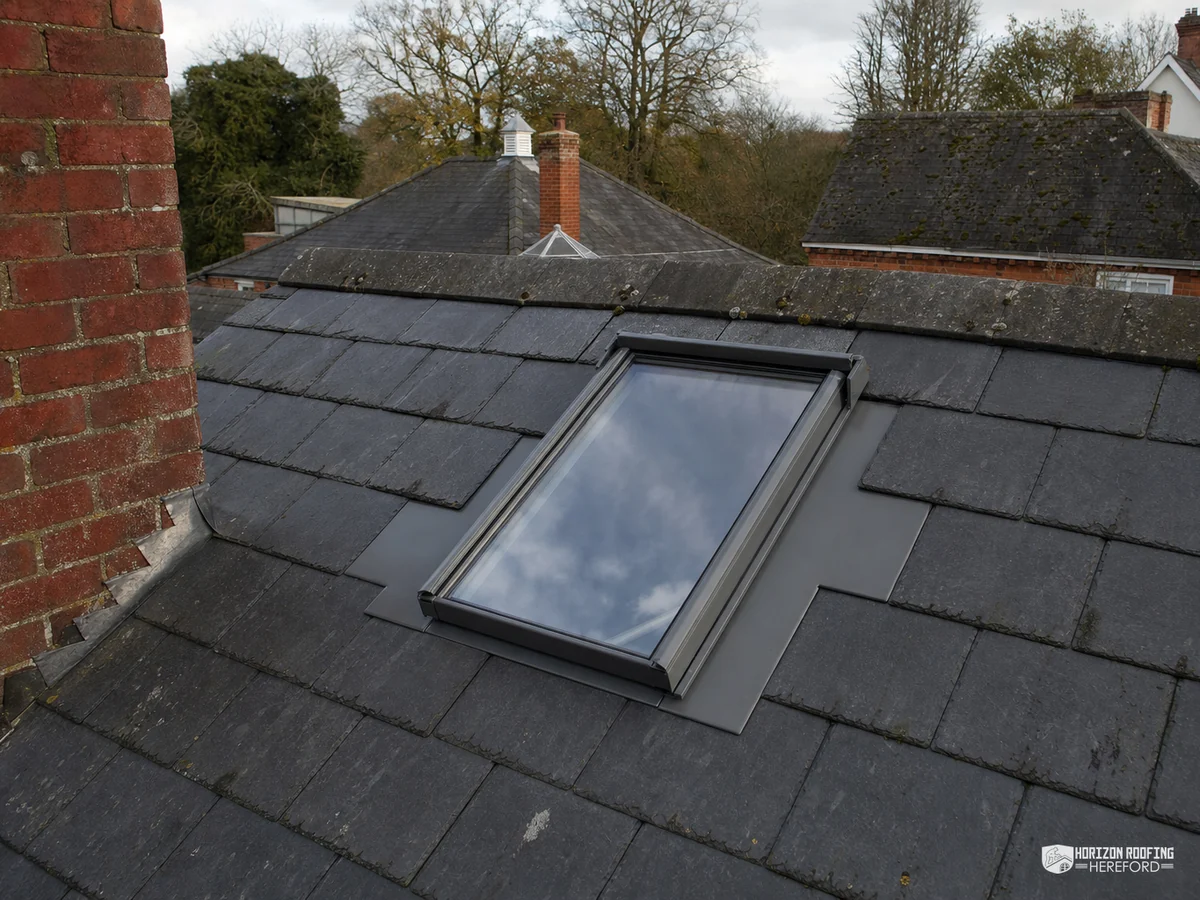
The Malvern Hills National Landscape, once an AONB, touches part of the area round Suckley. The designation does not decide planning; applications go to Malvern Hills District Council. For a Suckley dormer window the designation counts, so Malvern Hills District Council sees the plan first, while re-covering a roof follows the usual route. Our planning guide covers windows and dormers in full.

For conservation areas, Malvern Hills District Council keeps its own list, and that is where to check whether an area takes in your address. On Article 4, Malvern Hills District Council says no Article 4(2) Directions are in force at present. Building control comes from South Worcestershire Building Control, which brings together Malvern Hills District Council, Worcester City Council and Wychavon District Council, or from a registered building control approver.

Roof work to a farmhouse starts with the existing slates and timbers, photographed and recorded for the council. Sound materials are kept where they can be reused, and anything new is matched in size, colour and fixing, so the roof still reads as part of the farmyard it belongs to. We talk through the scaffold and the access at the survey, so the date is not held up by a licence.

Where slate meets an old stone wall

SoundSlates tight to the wall, lead dressed flat, no damp inside
Needs workLead lifted, gap at the wall head, stain on the plaster inside

Suckley roofs: slate, lead and a listed church

Can the slates on a Suckley roof be saved, or must they all be replaced?

They can be reused, but only a survey shows it. Sound slates are sorted by hand, cracked ones set aside, and the good ones relaid with matching new slate where needed. HomeBuilding gives Welsh slate 100+ years, and SPAB calls a century or more likely for a well-slated roof, so age alone is no reason to strip. A slope too shallow for its slate is another matter.

Does re-slating a Suckley roof need an application?

For England the Planning Portal sets two limits: less than 25 per cent of the building envelope and less than 50 per cent of the roof. Work below both limits normally calls for no application. A larger job goes to building control, here South Worcestershire Building Control or a registered building control approver. A heavier covering, at 15 per cent or more extra weight, needs Building Regulations approval and a structural check.

Does the Malvern Hills National Landscape limit work on a Suckley roof?

Its effect is on dormers, not on re-covering. Malvern Hills District Council decides any application, and a dormer is what to raise with it first, ideally before any drawing is commissioned. Whether the designation reaches your house depends on where it sits, which the council can confirm, and our planning guide walks through windows and dormers. Repairs and re-slating follow the ordinary rules.

Does St John's church in Suckley need listed building consent for roof work?

Not while it remains an Anglican parish church in use: it is Grade II (list entry 1302613), and works go through the faculty system. That exemption covers named denominations only. A closed church needs listed building consent from the council, as does any Unitarian or Quaker meeting house, since neither is within the exemption. We ask the church's own governing body which route applies before any work is priced.

Who applies for scaffold licences near Suckley, and what do they cost?

Worcestershire County Council says the company you contract for the scaffold is "required to apply for licences", and it charges £85 per week and £65 for subsequent weeks, with a £25 surcharge for urgent applications within 2 days. Its page adds that applications are reviewed on working days, Mondays to Fridays. The licence falls under the Highways Act 1980 s169, and the one written price carries the scaffold. Dates are agreed at the survey, so the notice period never catches you out.

What lead code suits a Suckley soaker or flashing?

Royston Lead's table lists Code 3 as "Recommended for lead soakers only", while Codes 4, 5 and 6 are listed for flashings. A wider valley or a more exposed flashing calls for a heavier sheet than a small soaker does. We choose the code on the roof, then dress the lead with room to move. MyJobQuote says correctly installed lead flashing "can last for over 80 years", which is a hedge and not a pledge.

Arrange your Suckley roof survey

Send a photo of the slates, the lead or the listed roof, and the price follows the survey in writing.

10-year workmanship guarantee, in writing