
01432 610152 Get a quote Call 01432 610152

Roofers in Cleehill

Roof repairs, re-covers and new roofs for Cleehill homes, inside the Shropshire Hills.

Our survey records every slope, valley and stack with photographs, so you see each fault before any price is agreed.

Get a free quoteCall 01432 610152

Cleehill slopes, valleys and a protected landscape

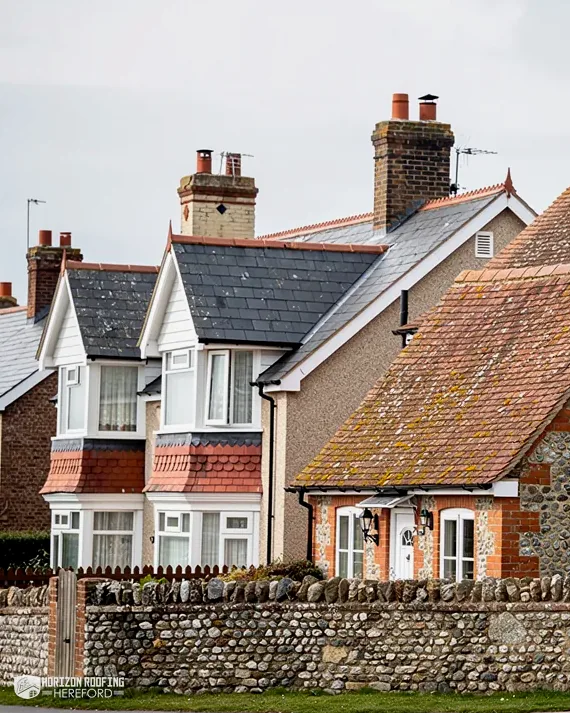
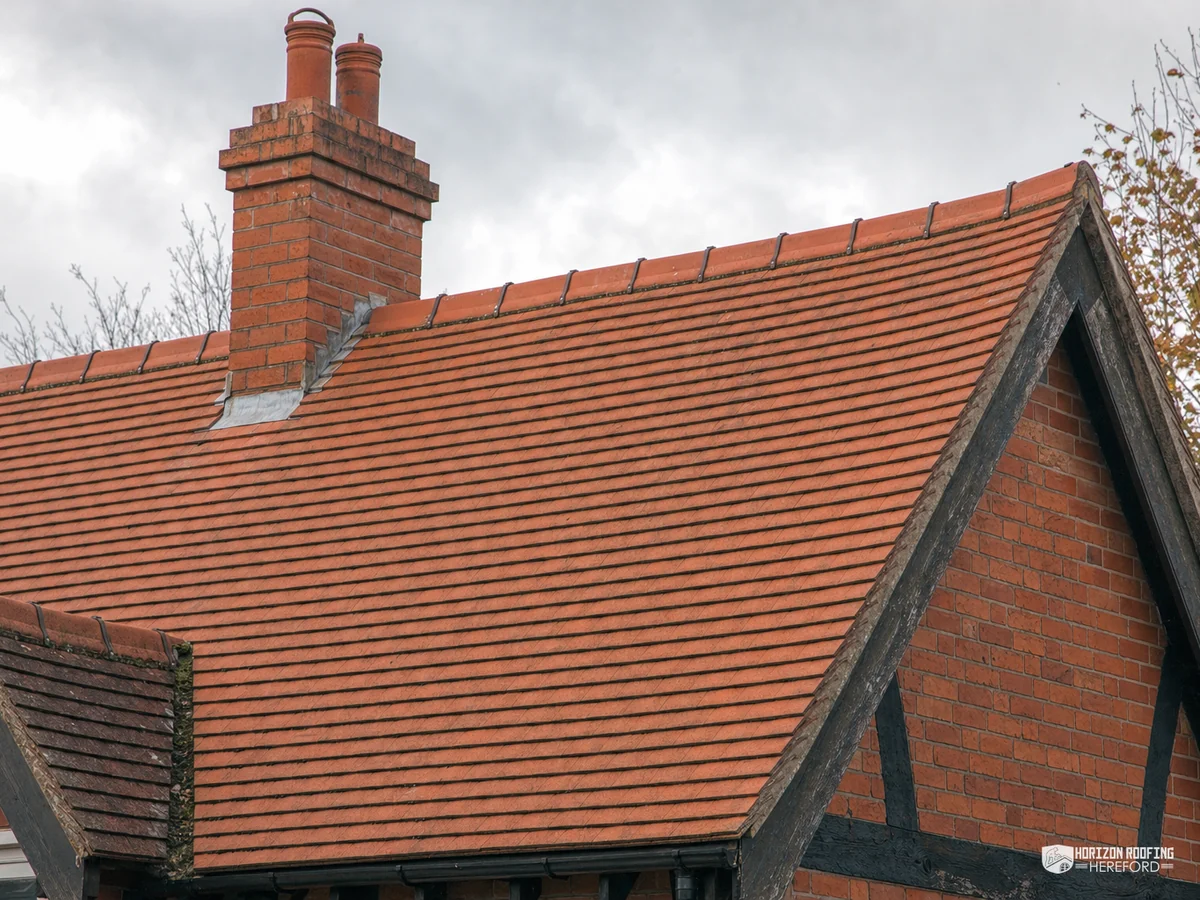
  • Older cottages with weathered clay tile roofs and brick chimneys behind a flint wall
    Slate, clay and concrete tileEach covering ages differently, so the survey names it slope by slope.
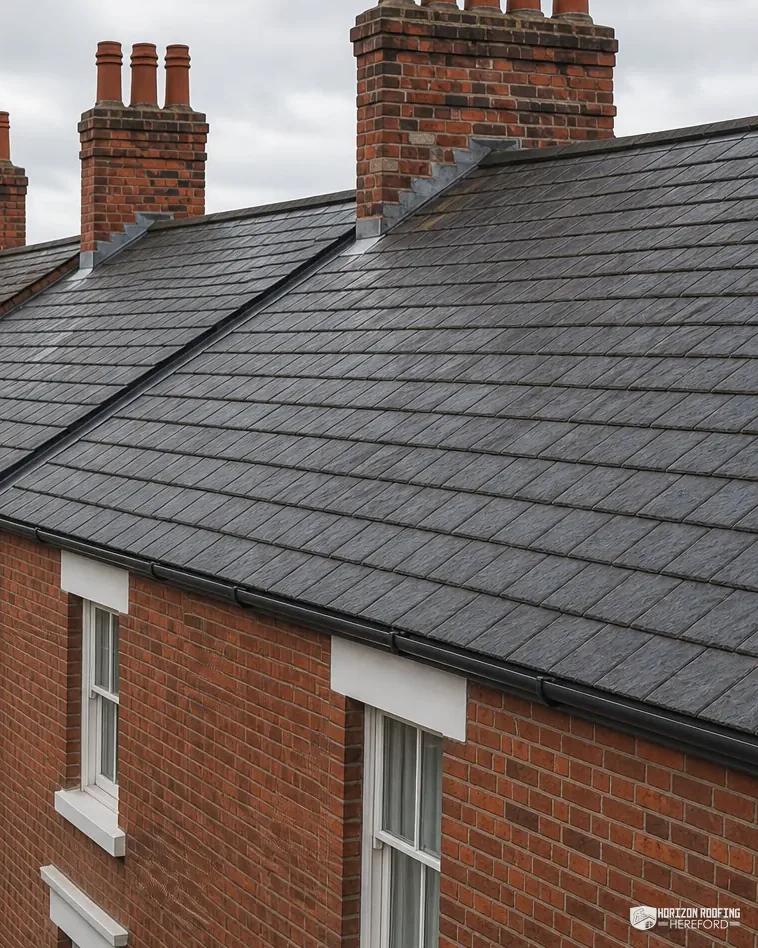
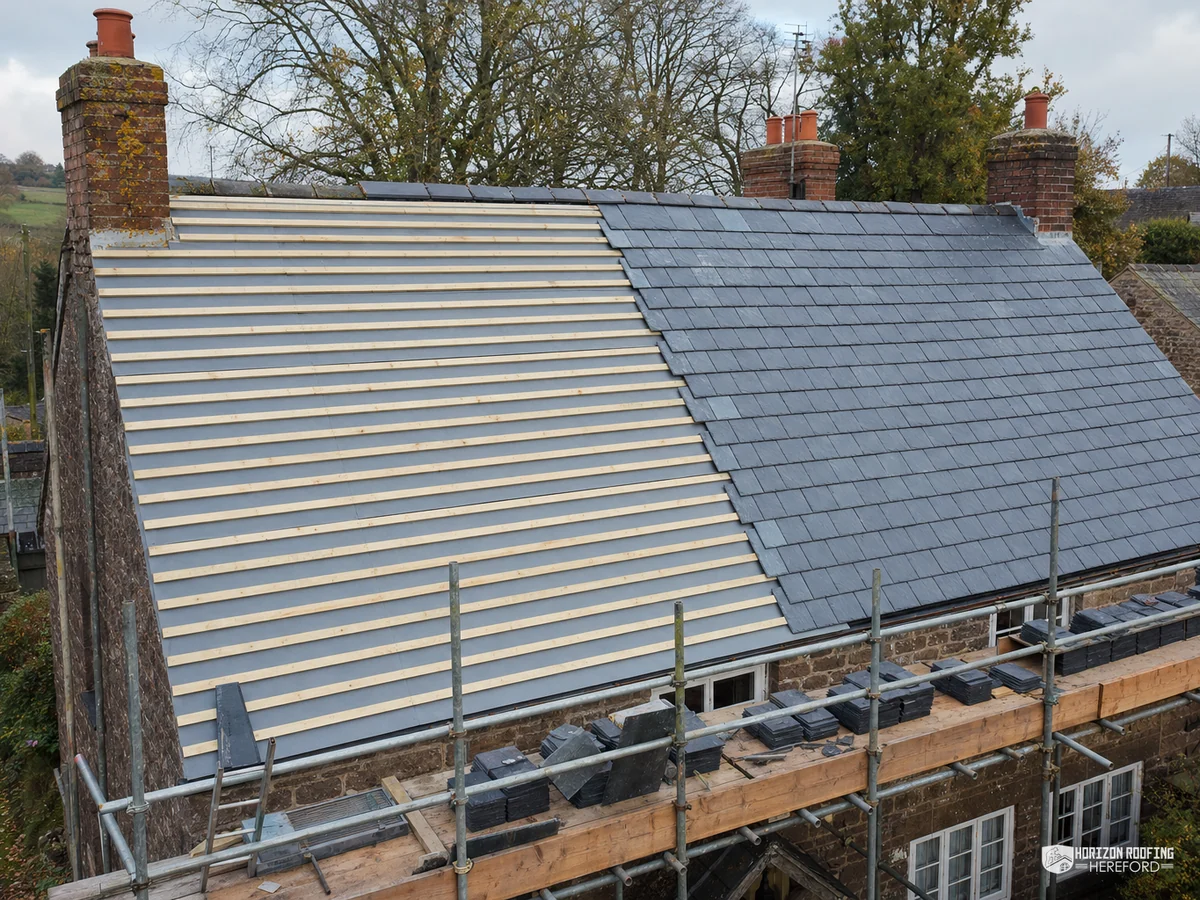
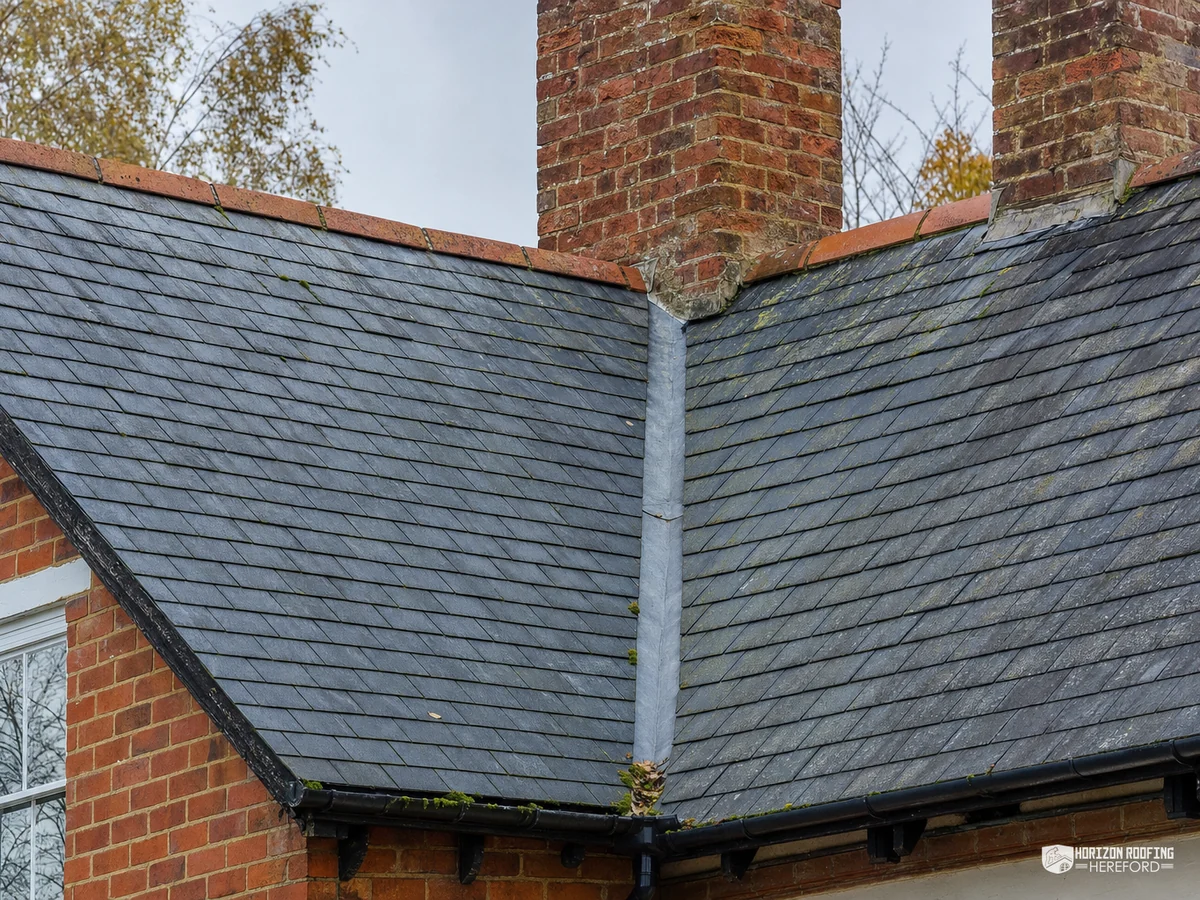
  • Slate roofs and chimney stacks along a red brick Victorian terrace
    Valleys that carry the run-offLead and debris gather in valley channels, so we open them up.
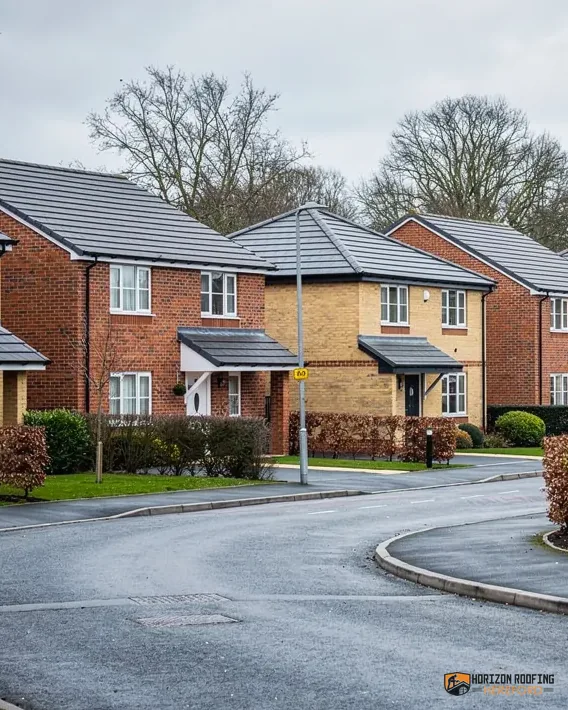
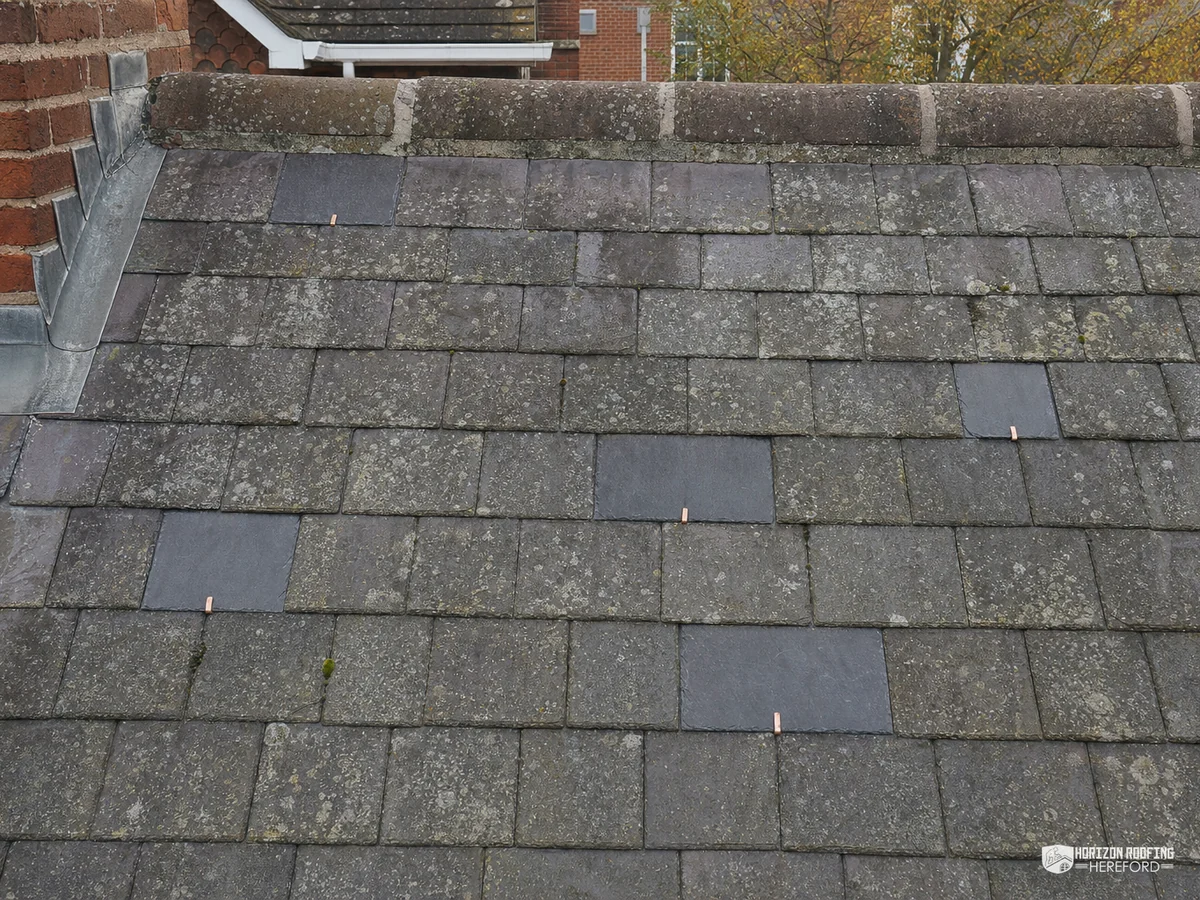
  • Newer homes with grey concrete tile roofs along a curving estate road
    Inside the Shropshire HillsDormers start with the council here; roof windows follow other rules.

Cleehill on our area map

Cleehill on a street map, with a dashed circle around the town and the nearest towns we cover. Tiles © Esri; map data © Esri, HERE, Garmin, OpenStreetMap contributors.

Cleehill roofs, slope by slope

Slopes, valleys and the hills rules: how we read a Cleehill roof

The Cleehill survey runs in three stops: what each slope is covered with and how long it should last, the valleys where slopes meet, then the National Landscape and conservation area points to settle before a dormer or new window.

A drawn cut-away section through a Herefordshire border house: the front of the main roof is cut open to show the rafters, underlay, battens and slates, beside a black-and-white timber-framed gable. Numbered, from the ridge down: 1 Slope covering; 2 Valley lead; 3 Hills and listings.

Fig. 1 A Cleehill roof in section: slope, valley and roof window, each one numbered.

Callout 1 of 3

Naming the covering on each Cleehill slope

The first question at a Cleehill house is whether the covering is mended or finished. We begin by naming what lies on each slope, because a street of mixed ages can carry slate, clay tile and concrete tile side by side, and each one wears out differently. A patch in a different material stands out from the lane for years, so the report records the covering, the size of the units and how they are fixed.

Published lifespans give a guide, always as ranges. HomeBuilding's table lists Welsh slate at "100+ years", Spanish natural slate at "75-100 years" and reclaimed Welsh slate at "50-80 years". SPAB says a well-slated roof has a life "likely to be more than 100 years". Clay is the one covering the BRE gave a figure for: Marley reports a minimum life expectancy of 60 years, for clay only. Concrete is where sources part. Marley expects "around 60 years" and adds that this is no promise of longevity, while HomeBuilding says "40-50 years". A badly fixed roof can fall short of any of these.

Beneath the covering sits the underlay, the membrane that catches what the covering lets through. HR underlay is not vapour-permeable. Marley says an air-permeable underlay under a well-sealed ceiling can rely on "fortuitous ventilation at the eaves" when the underlay's UKAS conditions are met. We note which kind lies under the covering whenever a slope is opened.

The angle of a slope limits what can go on it. Cupa says BS 5534:2014+A2:2018 "also indicates that the minimum roof pitch for natural slate is 20 degrees in the case of a project situated in an area with moderate exposure and with a slate 500mm long and a 115mm overlap", and for pitches under 25º Cupa excludes hook fixings. Tile makers publish a minimum pitch for each tile, so the data sheet is checked before a different tile is chosen for an old slope.

A handful of slipped units on sound battens, the thin timbers that the tiles or slates hang on, is a repair. When fixings have failed across a whole slope, replacement may be the sounder buy, and the report says so. Re-covering has its own test in England. The Planning Portal's is two-part: less than 25 per cent of the building envelope and less than 50 per cent of the roof affected. Our roof replacement page describes a full re-cover from strip to clean-up.

Read on each Cleehill slope

  • Which covering is on this slope
  • Cracked, slipped or missing units
  • Condition of the battens beneath
  • Fixings that have rusted or lifted
  • Earlier patches in another material

Slipped tiles over sound battens are a repair, and we price them as one.

Fig. 2 The slopes, drawn close

Callout 2 of 3

Valleys, lead channels and flat roof junctions

Where two slopes meet at an inside angle they empty into a valley, and everything the roof above sheds passes through that one channel. That load makes it a hard-worked strip, so the survey treats it with care. On a lead valley we lift the edge tiles to see the channel, look for splits along the creases and check the lap at every joint. Moss and leaf litter sitting in the channel keep water against the lead, and the photographs show where they have gathered. Pictures of the valley, before and after any work, go in the report.

A valley fails in one of two ways: the lead splits, or the covering beside it lets water cross the edge of the channel. Either shows as a stain beneath the valley, so we also check the timbers under it from inside the loft, since an old leak can darken the wood there before any mark reaches a ceiling below.

Royston Lead's table lists a pitched valley gutter under use letter C, and Codes 4 to 8 carry it. Code 3 is "Recommended for lead soakers only", so it never goes into a valley. The code is chosen to suit the run. MyJobQuote says properly fitted lead flashing "can last for over 80 years", and that applies to flashings, so a split valley is judged on its own condition and not on a number.

Moss needs care. Marley warns off high powered jet washing: it can damage slate or tile and cut its expected life considerably. We clear a valley by hand, which protects the lead and the edge of the covering together.

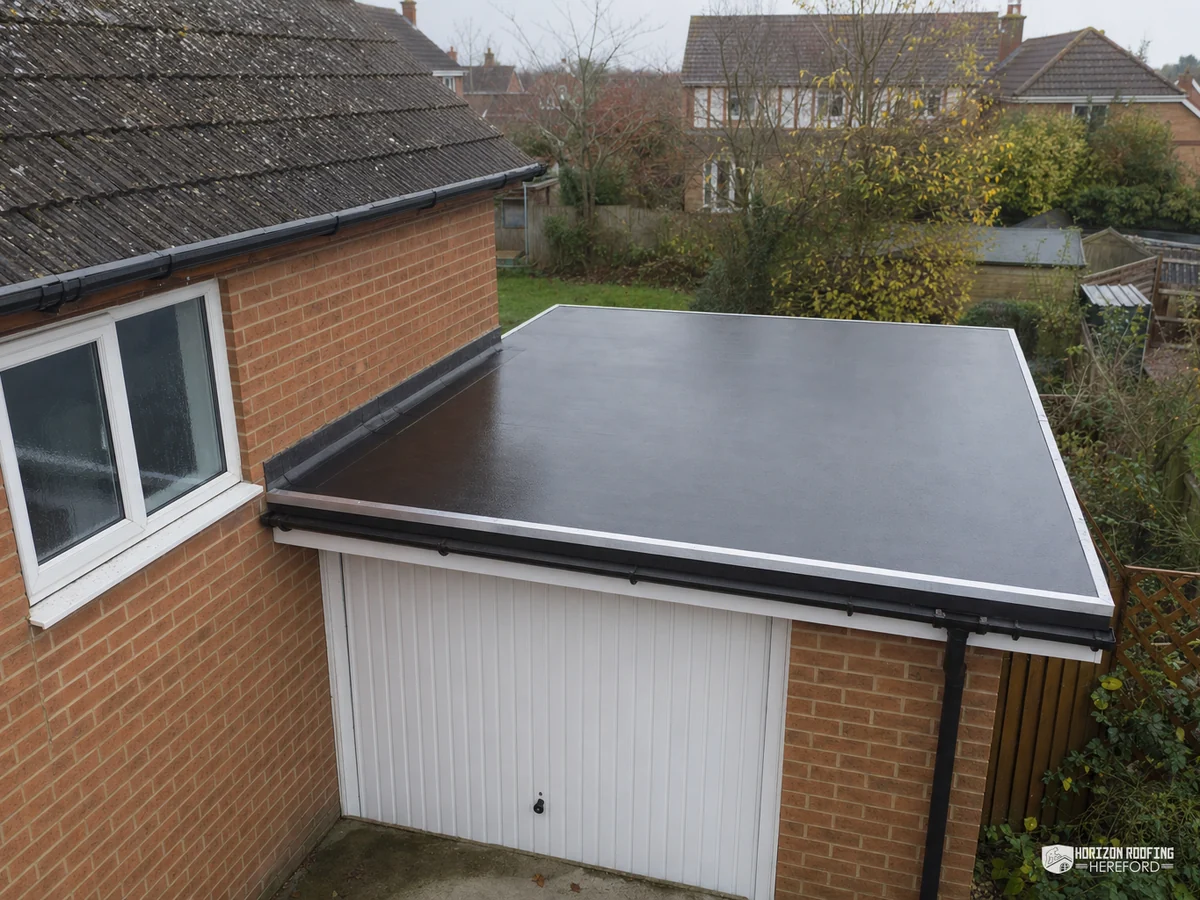
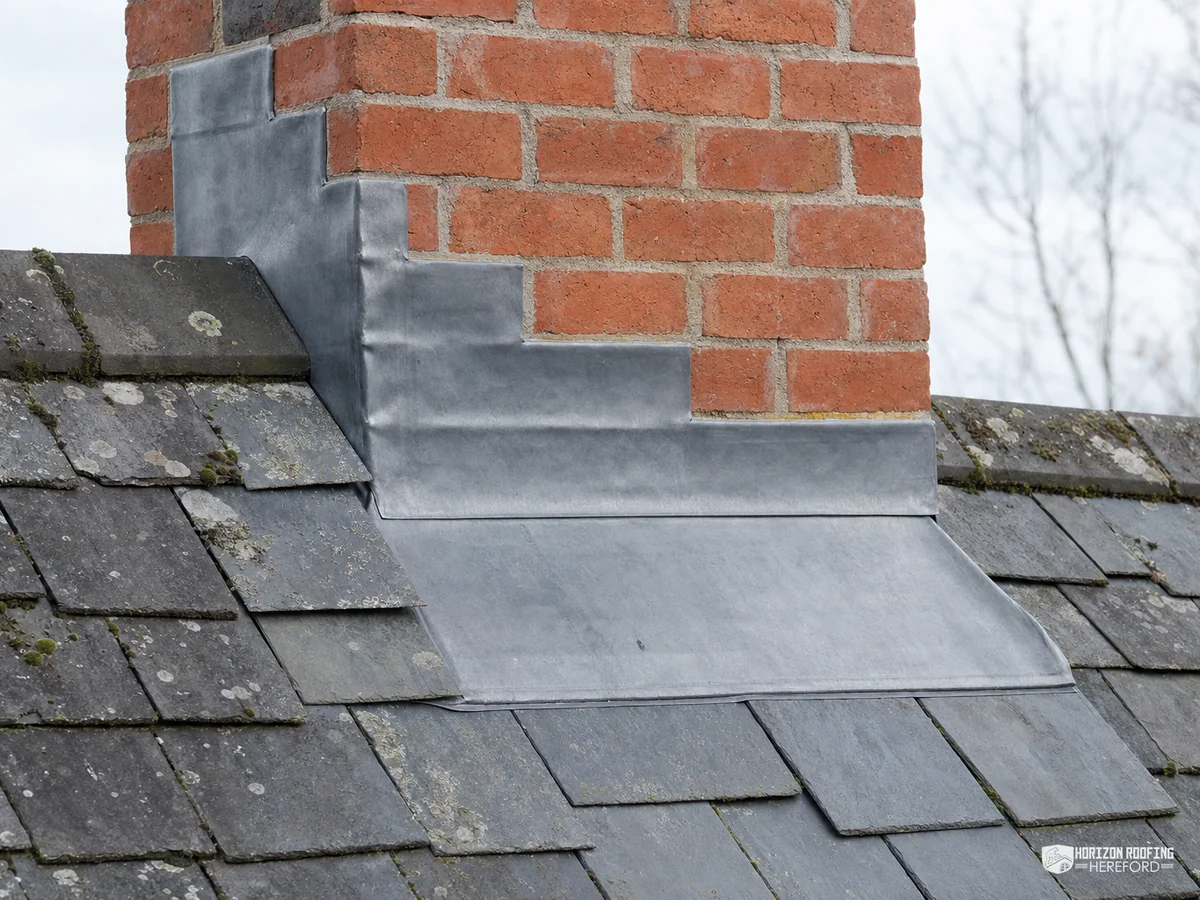
A flat-roofed extension meeting a pitched slope has a junction of its own. For the flat part, BS 6229:2025 covers membranes, and NFRC says it sets "a minimum 1:80 finished fall" for general roof areas. IKO advises designing for 1:40 to reach that figure. On the pitched side the lead is stepped up the wall and tucked under the covering. We photograph the fall, the outlets and the upstand before any new membrane goes over them. Our lead roofing page covers valleys and flashings in detail.

Lead valley, as surveyed

Edge tiles
Lifted to expose the full width of the channel
Creases
Checked for splits and fatigue along the lead
Laps
Measured at each joint and photographed
Debris
Moss and leaf litter cleared by hand
Lead code
Chosen for the run, never Code 3
Fig. 3 The valley, drawn close

Callout 3 of 3

The hills designation, Dhustone and Sunnybrae

Cleehill lies inside the Shropshire Hills National Landscape, the name now given to an Area of Outstanding Natural Beauty. Treat the label as a designation: Shropshire Council, not the landscape team, grants or refuses planning permission. Its practical effect is on planning. For a Cleehill dormer that means Shropshire Council first, and roof window conditions sit in the guide. The conditions for a roof window are in our planning guide for roof windows, which is worth reading before you choose a slope.

The Dhustone conservation area lies close to Cleehill, and Shropshire Council can say where its boundary runs. Whether your house falls inside is a question for the council too. Check whether an Article 4 direction applies with Shropshire Council too, since a direction can withdraw named permitted development rights across a defined area.

Sunnybrae is listed near Clee Hill: Grade II, list entry 1393207, first listed 13 March 2009. Section 7 of the Planning (Listed Buildings and Conservation Areas) Act 1990 applies to a listed house of your own, with consent needed for works that affect its character in addition to any permitted development right. The roof is photographed as found and the council's consent settled before a tile is lifted.

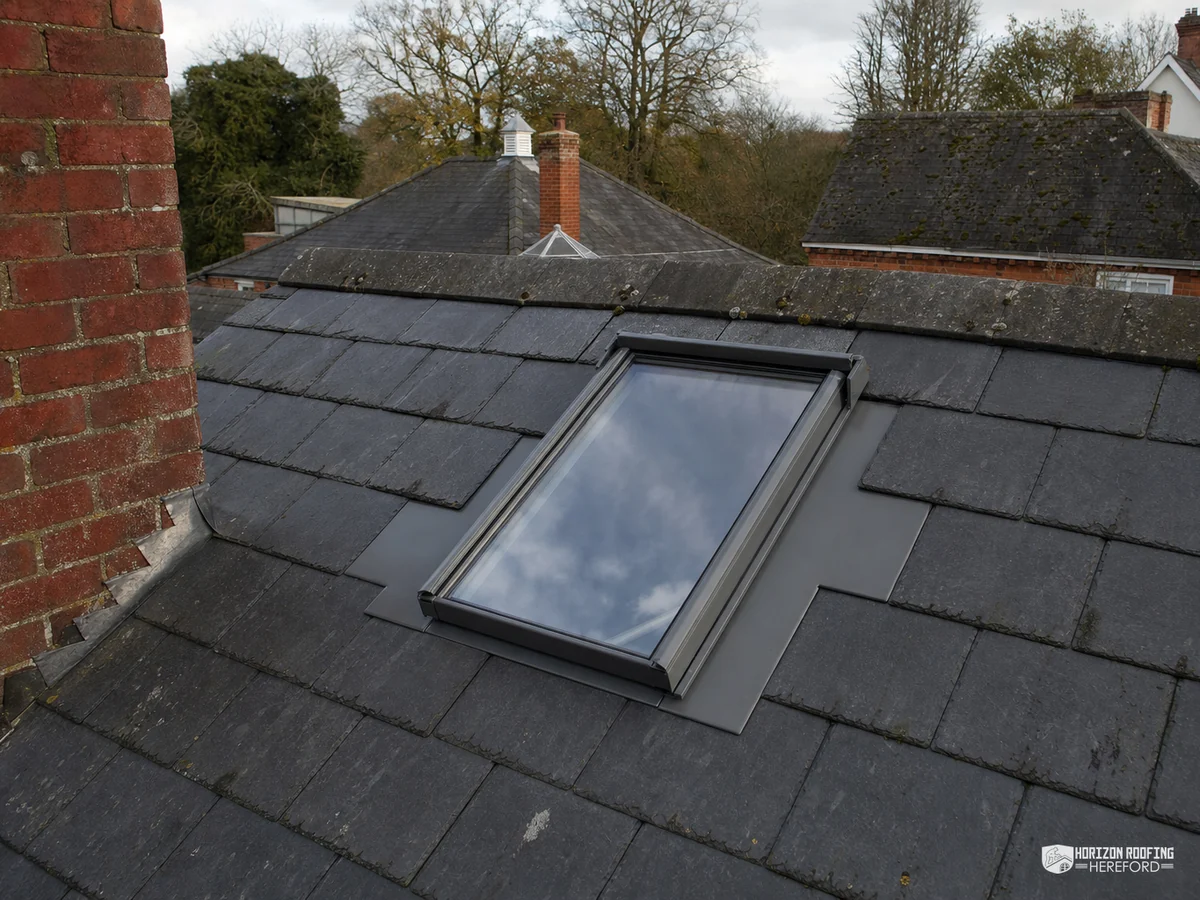
Energy rules follow the opening. In AD L 2021 Table 4.2 a rooflight is held to 2.2, and a roof window to 1.4 or WER Band B. Those tables give way to AD L 2026 Tables 3.2 and 3.3 on 24 March 2027. For a building control answer, ask Shropshire Council Building Control or a registered building control approver. Our skylights page covers fitting and flashing.

Cutting into a roof void can also disturb wildlife. GOV.UK names "repairing or replacing a roof" as one of the jobs that may affect bats, whose breeding sites and resting places are "fully protected by law", and a licence for work that cannot avoid them comes from Natural England.

What sets the price of a Cleehill roof

Roof size and pitch
How much covering goes on and how safely we can work
Covering chosen
Slate, clay or concrete, new or reclaimed
Access to the roof
The lane, the plot and any highway licence
Detail work
Valleys, stacks, flashings and roof windows
Timbers beneath
Battens and rafters found sound or in need of repair

One written total price, never itemised.

Cleehill roofs: slopes, valleys and the hills rules

How can I tell if a Cleehill slope needs repair or relaying?

We look at the fixings as well as the units. A handful of slipped or cracked tiles with sound battens beneath is a repair. When fixings have rusted or failed across a whole slope, or the battens are soft, replacement may be the sounder buy, and the report shows photographs of both options side by side. Lifespan tables help, but they are ranges, and a poorly fixed roof can fail well inside them.

Does the Dhustone conservation area affect roof work at Cleehill?

Shropshire Council's list includes Dhustone close to Cleehill, and the council can answer whether your own address is inside. In England, a dormer inside a conservation area goes before the council, and roof windows follow the conditions our guide lists. Ask Shropshire Council whether an Article 4 direction applies before you plan anything visible from the road. Swapping like for like falls outside what these rules target. Read the planning guide for the roof window conditions.

What should I do after storm damage to a Cleehill roof?

Photograph the damage before anything is moved. To judge a property's condition after a storm, the Financial Ombudsman Service says it will usually turn to expert reports and photographs, and it also says "Rain, hail or snowfall by itself can constitute a storm." Tell your insurer before permanent repairs, arrange a temporary repair if the roof cannot be left open, and keep every receipt. The claim stays between you and your insurer.

Can spray foam stay under a Cleehill roof?

That depends on the foam and on your lender. According to the Energy Saving Trust, closed-cell foam is not vapour permeable, while open-cell is the more vapour permeable; on rot, it says the risk "should be much lower" with open-cell. RICS reported in March 2023 that equity release mortgages were one area where lenders had raised concern, so ask your own lender before any foam goes in.

How is moss cleared from a Cleehill roof?

By hand, with a biocide treatment, because Marley does not recommend high powered jet washing: its page warns of damage to the surface of slate or tile and a considerably shorter life. Moss packed into a valley or against a ridge can hold water against the laps, so the survey records where it has gathered and whether the lead beneath needs attention.

What do published cost guides give for a new roof near Cleehill?

Which?, in a November 2025 survey excluding VAT, gives £7,000-£21,000 for replacing an entire roof, pricing an average house of three bedrooms. HomeBuilding puts a three-bedroom semi with a 65 m² roof in plain concrete tiles at £10,000 to £15,000, and says Welsh slate for the same house might reach £18,000. MyJobQuote's average is around £5,250. The sources differ widely, so use them as a broad guide only. After the survey, the figure we send is one total for your own roof, in writing.

Get your Cleehill slopes and valleys looked at

Tell us the address, attach a photo of the trouble, and our survey will lead to one total price, in writing.

10-year workmanship guarantee, in writing