
Callout 1 of 3
Verges on Weston's rubble gable walls
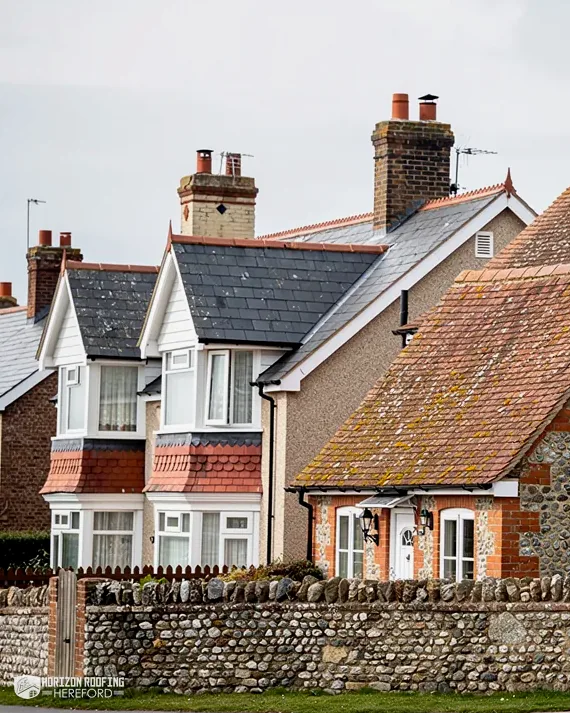
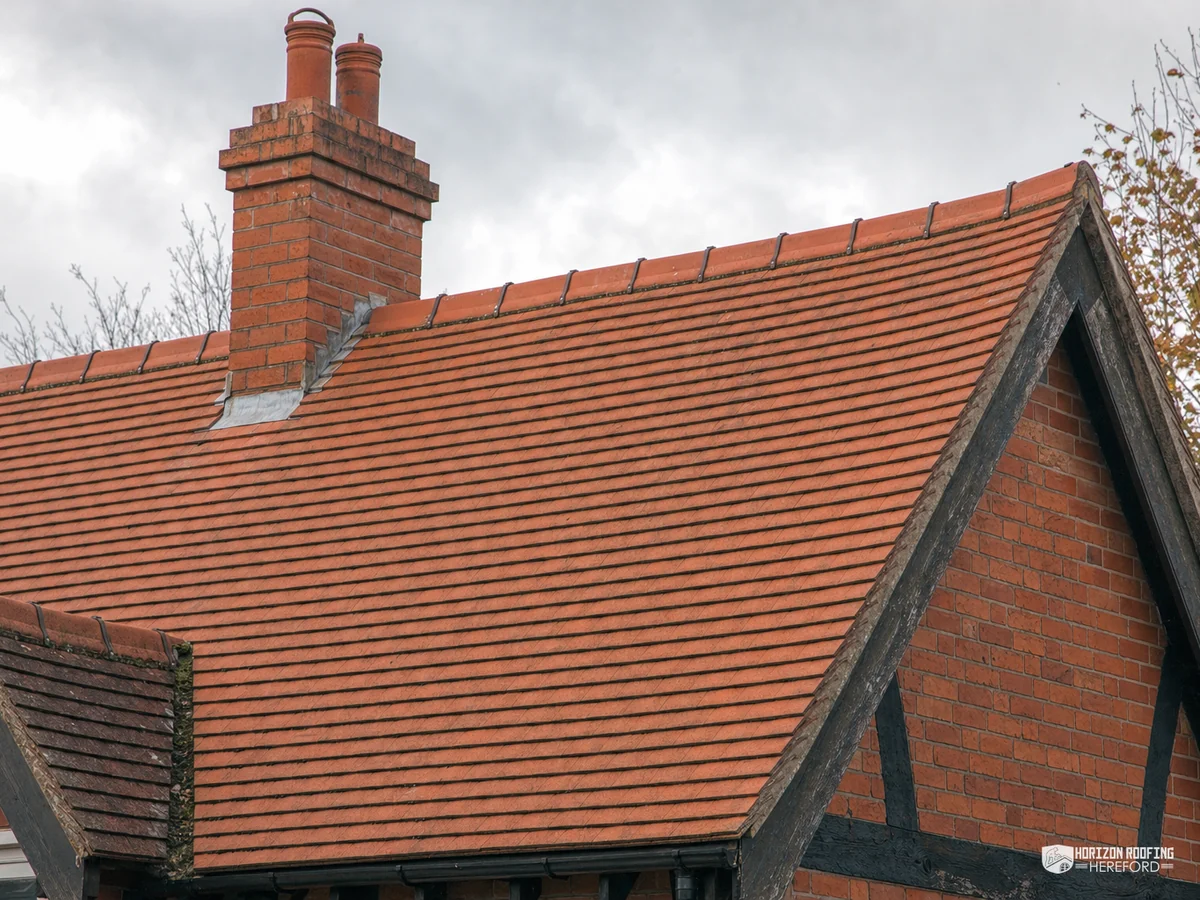
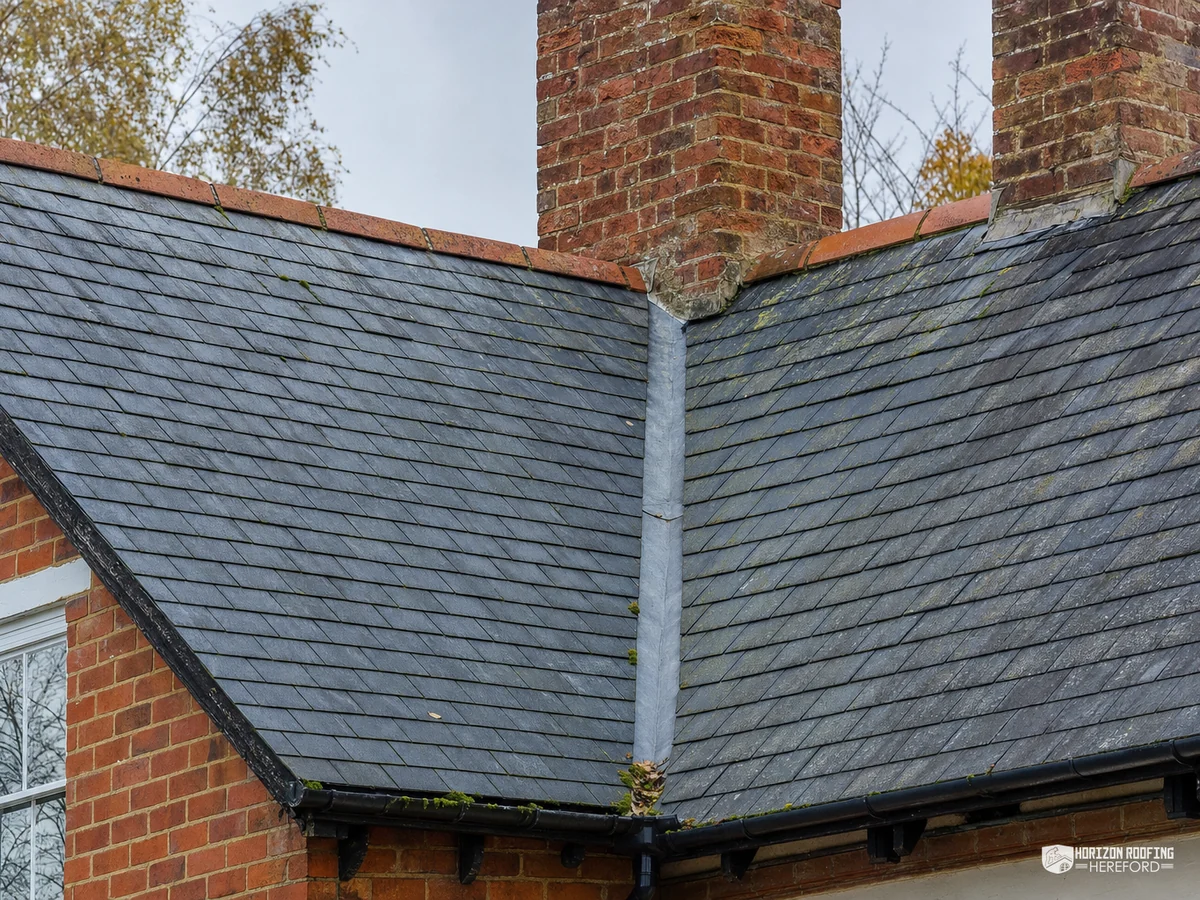
Our first callout is the verge, the overhanging edge above a gable. In 1932 the Royal Commission noted rubble walls for its monuments 9 to 15 in this parish, and roofs it described as "covered with tiles or slates". Of the Baptist Chapel it records that it "is of plastered rubble with a slate roof". Those lines describe what the commissioners saw when they visited. They do not describe your house today, so we read each roof as it stands.
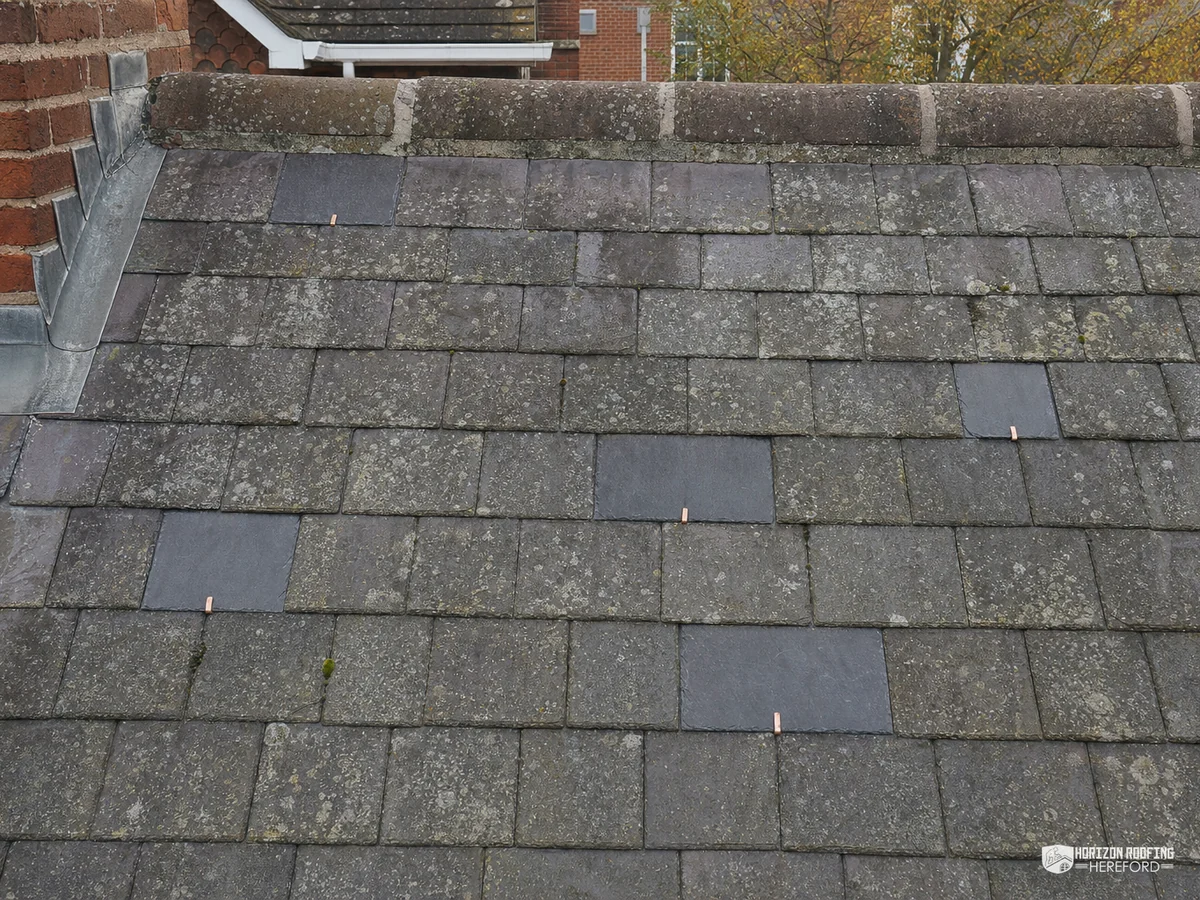
Rubble walling is rough, uncut stone laid in mortar, so the top edge of a gable is uneven. That matters at the verge. The covering has to be bedded onto an irregular surface, and as years pass the mortar bed shrinks, cracks or drops out. We check each verge from the ground, from the roof edge and from inside the gable end, where a thread of daylight at the wall top gives away lost bedding. We ask whether the end units sit tight, whether the bedding is full or hollow, and whether a stain has run down the face of the stone. A stain below a verge shows where the weather has been getting in.
There are two ways to finish a verge. The traditional way is mortar bedding under the end units. The other is a dry-fix verge held with clips and screws, which BS 8612 covers. Marley, the tile maker, says that "Installing to BS 5534 isn't required by law", and that since the 2015 amendments mortar "could no longer be relied upon as the only means of securing the roof covering". On a rubble gable we fix every verge unit mechanically and keep mortar for the bed and the look, so the repair sits comfortably against the wall.
Where the verge is sound but the pointing around it has gone, the job is small. Where the wall top has loosened, stones need relaying before any covering goes back, and that is a mason's task as much as a roofer's. The report says which applies, with a photograph of the wall top, because a loose stone under a new verge undoes the repair.
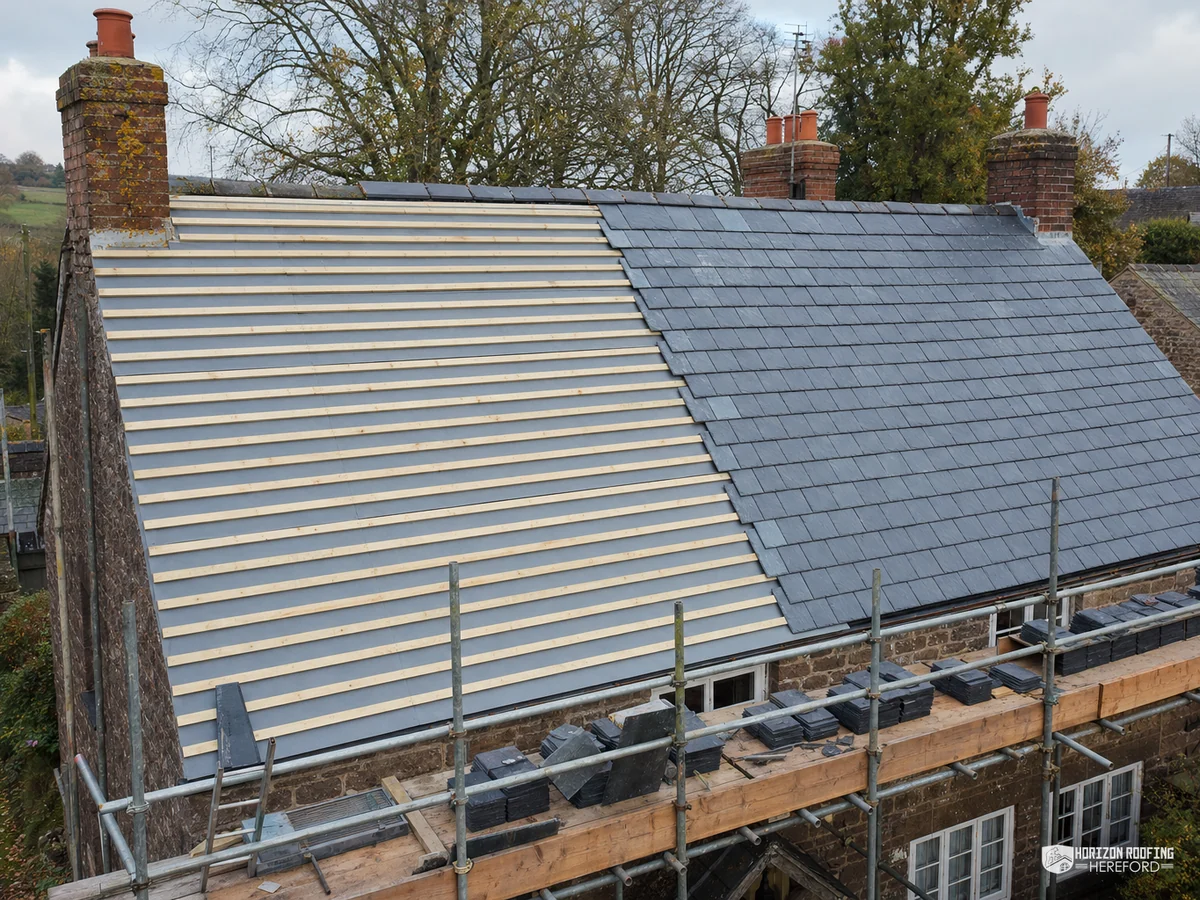
A full re-cover is judged by the Planning Portal's two limbs. An application is not normally needed while "Less than 25 per cent of the total 'building envelope'" is affected and "Less than 50 per cent of the roof is affected". Fitting a heavier covering raises a separate matter: the Portal says approval is needed if a new material "increases the weight of the roof covering by 15 per cent or more". Our pitched roofing page covers the coverings and fixings in more detail.
Checked along a Weston verge
- Verge units that rock or have shifted
- Bedding that has cracked or gone hollow
- Pointing round the top of the rubble
- A mechanical fixing on each verge unit
- Staining down the face of the gable
A stain below the verge shows where the weather has been getting in.