
01432 610152 Get a quote Call 01432 610152

Roofers in Talgarth

Slate and stone roof repairs in Talgarth, inside the National Park, under the Welsh rules.

Talgarth is 27.5 miles by road from central Hereford, in the west, about 45 minutes away. Each survey ends with a single written price.

Get a free quoteCall 01432 610152

Roofs in a Park town: Talgarth's listings

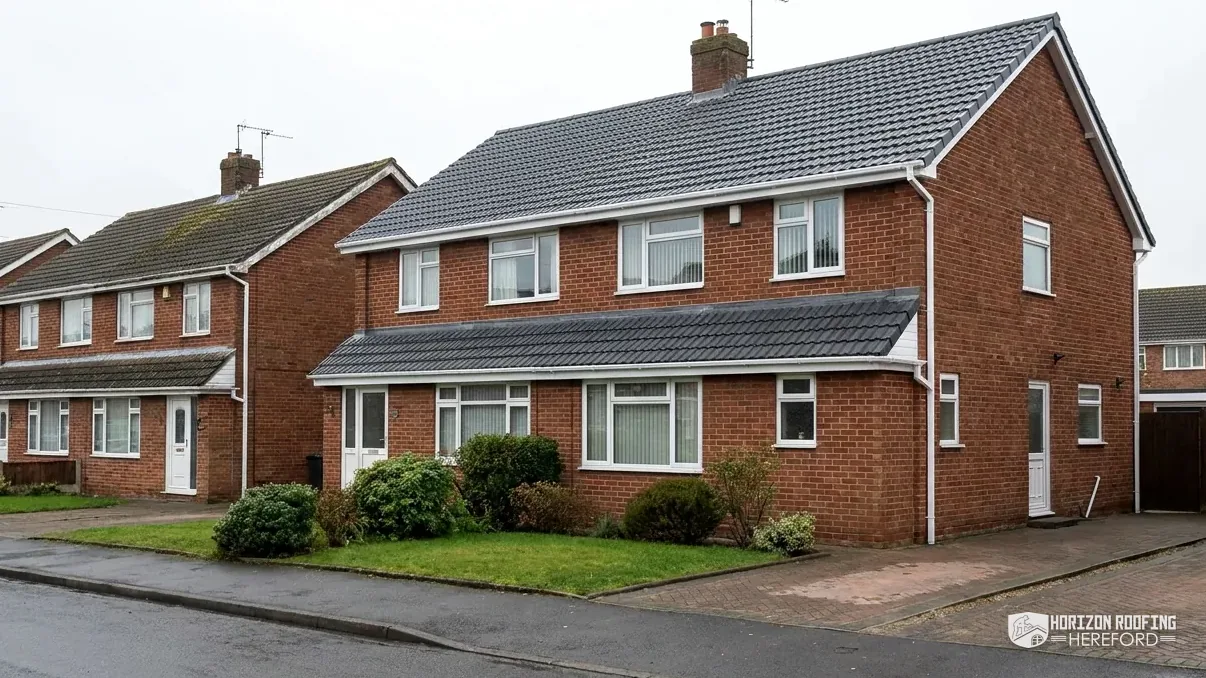
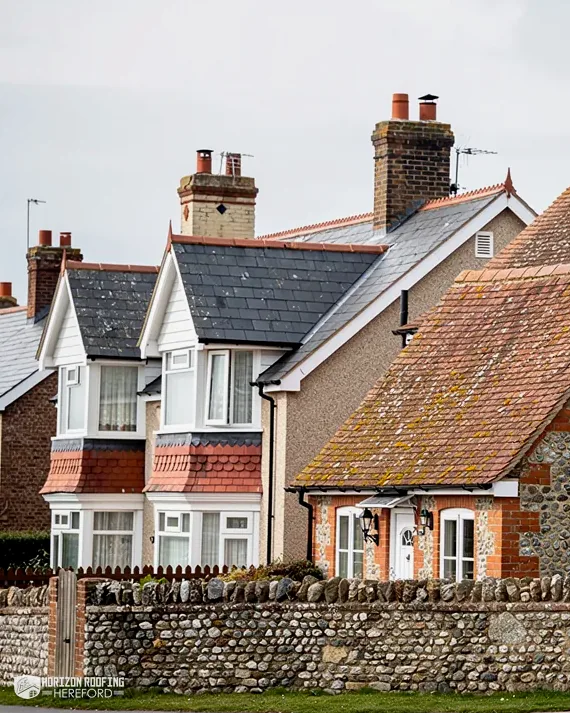
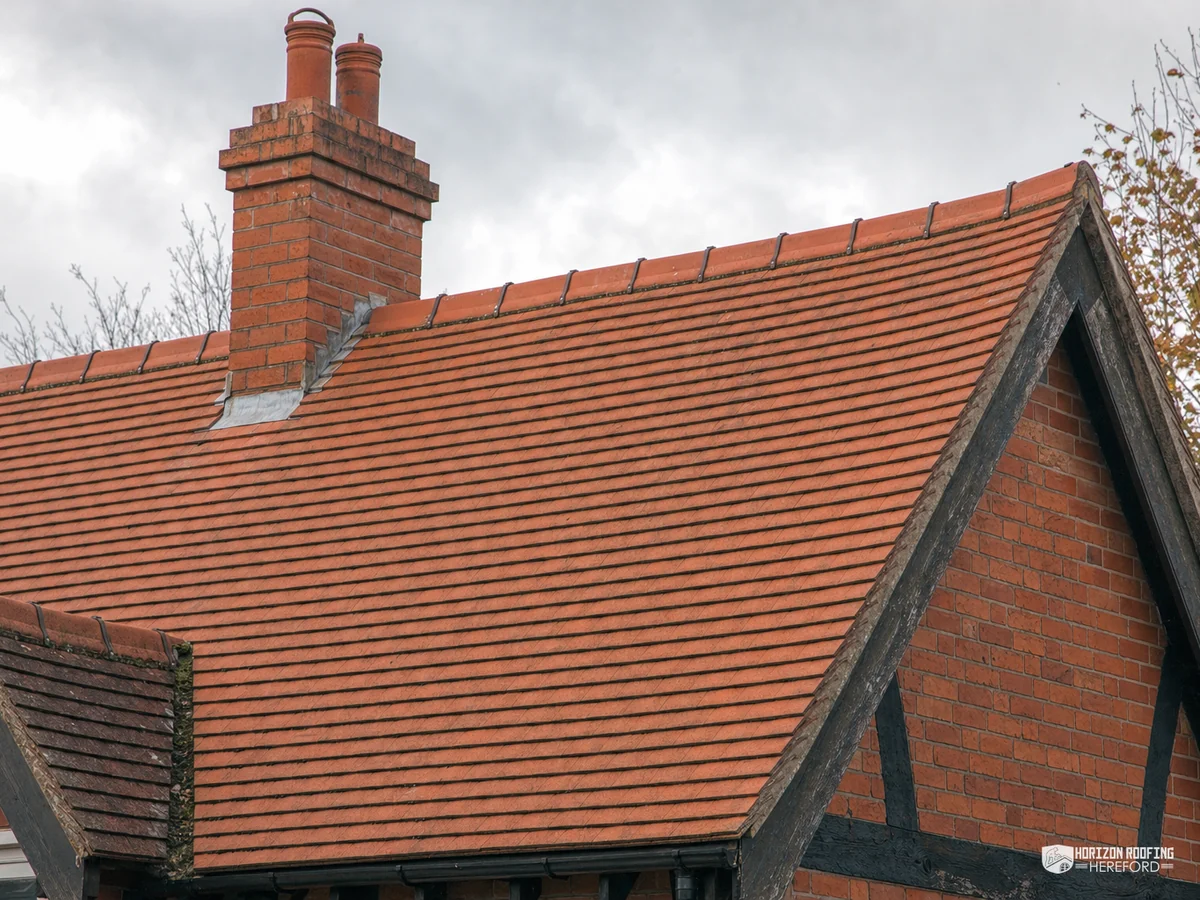
  • Older cottages with weathered clay tile roofs and brick chimneys behind a flint wall
    Stone slate on Tower HouseTower House is Grade II*, recorded with a stone slate roof and slate extensions.
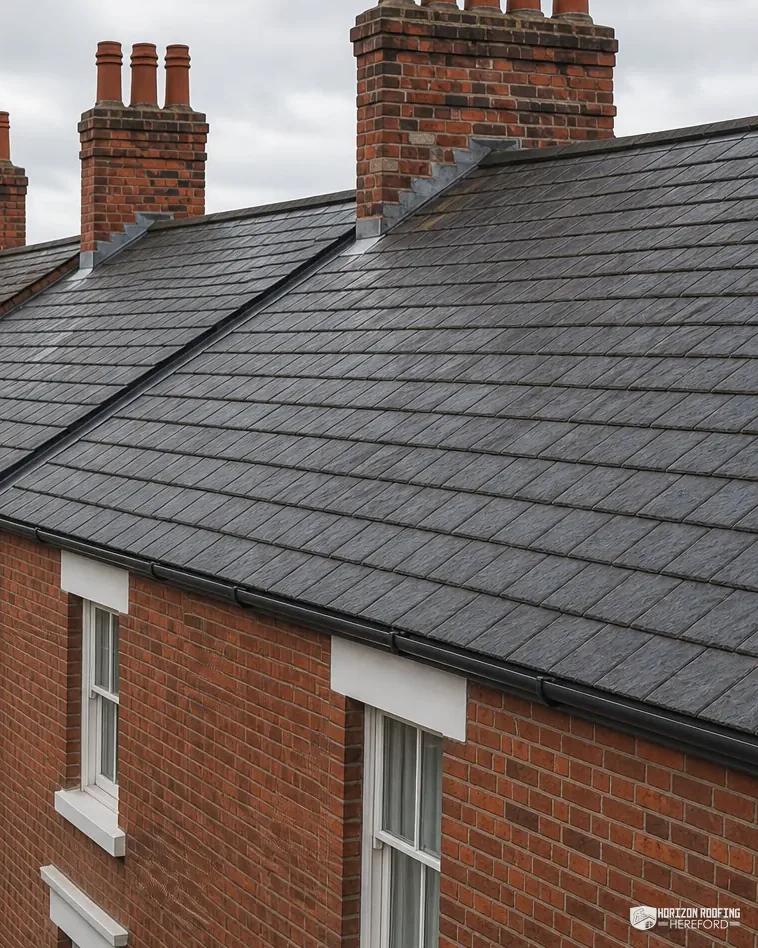
  • Slate roofs and chimney stacks along a red brick Victorian terrace
    Church roofs over red sandstoneSt Gwendoline's is Grade II*, with slate roofs over red sandstone.
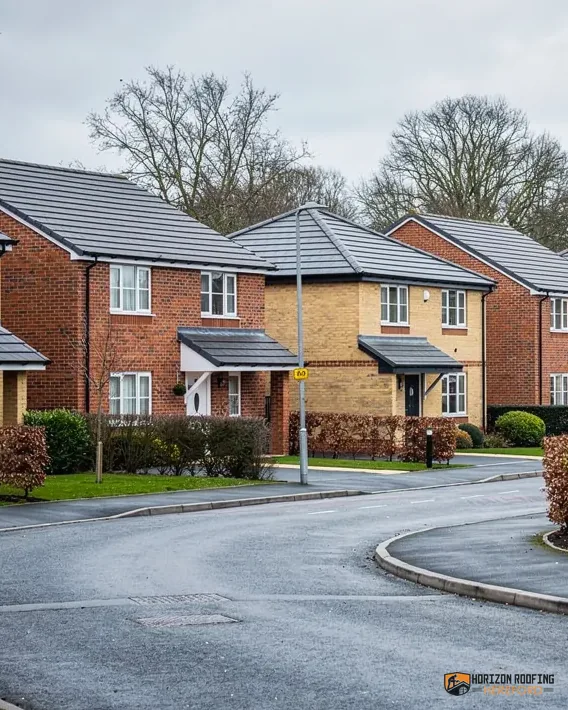
  • Newer homes with grey concrete tile roofs along a curving estate road
    Inside the National ParkA new roof light or dormer here goes to the Park Authority for permission.

The lie of Talgarth

Talgarth on a street map, with a dashed circle around the town and the nearest towns we cover. Tiles © Esri; map data © Esri, HERE, Garmin, OpenStreetMap contributors.

Talgarth roofs inside the Park

Stone slate, Park rules and a church roof: Talgarth in three callouts

We begin with the stone slate of a Grade II* tower house, turn to the rules that bind a roof inside the National Park, and finish with a sandstone church roof, where listing and bats both shape the work.

A drawn cut-away section through a Herefordshire border house: the front of the main roof is cut open to show the rafters, underlay, battens and slates, beside a black-and-white timber-framed gable. Numbered, from the ridge down: 1 Stone slate; 2 Park rules; 3 Church roof.

Fig. 1 Cut through a Talgarth roof: slope, window and wall, numbered one to three.

Callout 1 of 3

Stone slate beside slate on a Grade II* roof

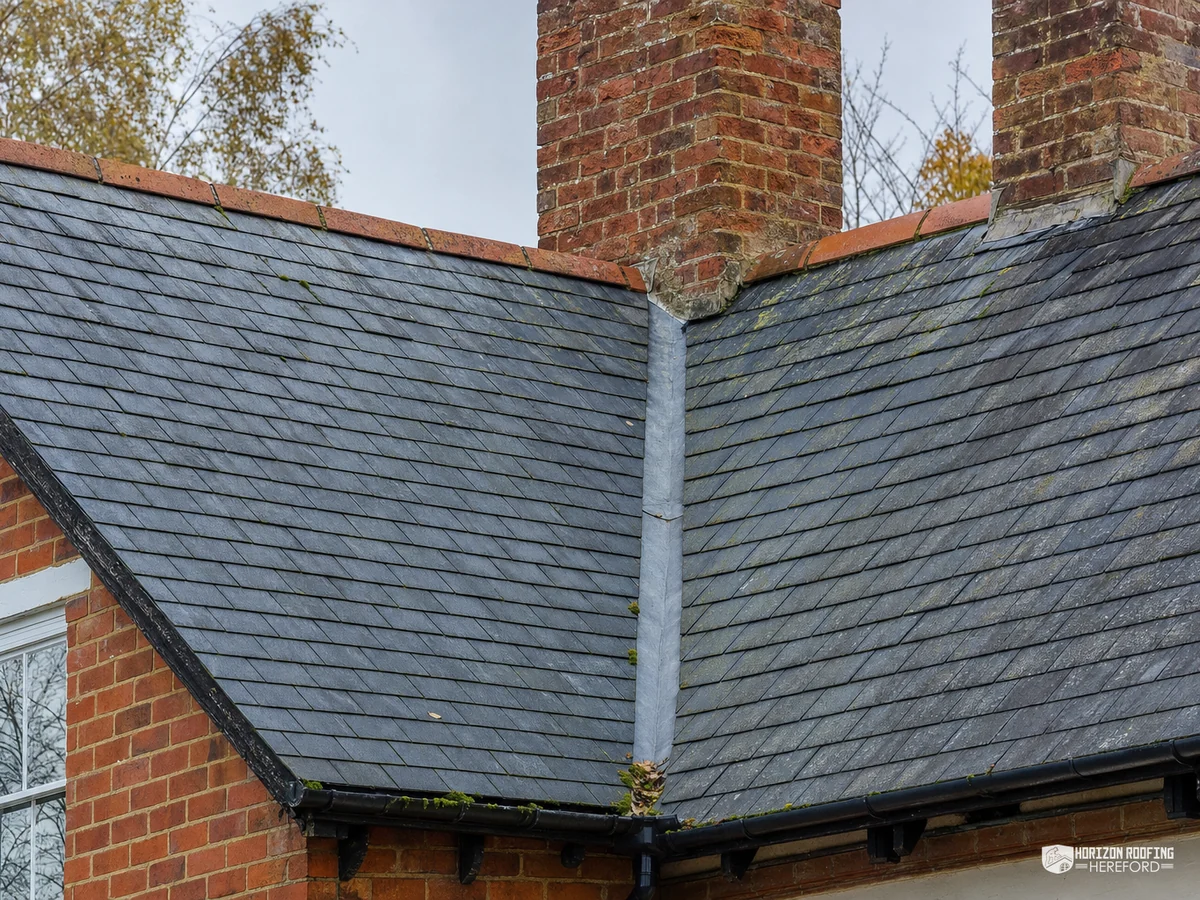
Cadw's listing description of Tower House, including its attached shop, in Talgarth (Grade II*, Cadw record 7502) reads: "Rubble stonework with stone slate roof, slate to extensions". That is two coverings on one building, stone slate on the main roof and natural slate on the later additions. A survey treats them as separate jobs, because each ages in its own way and each is mended with its own material.

In SPAB's guidance on this region's roofs, Welsh slate and stone are "predominantly double-lapped". In plain terms, the courses overlap with staggered joints, so a slipped stone leaves a gap two layers deep. Where an owner is told that matching stone cannot be had, SPAB's advice is to put the claim to the quarries, and that is our habit too. We ask the quarries first, and we keep the original stones wherever they can be saved.

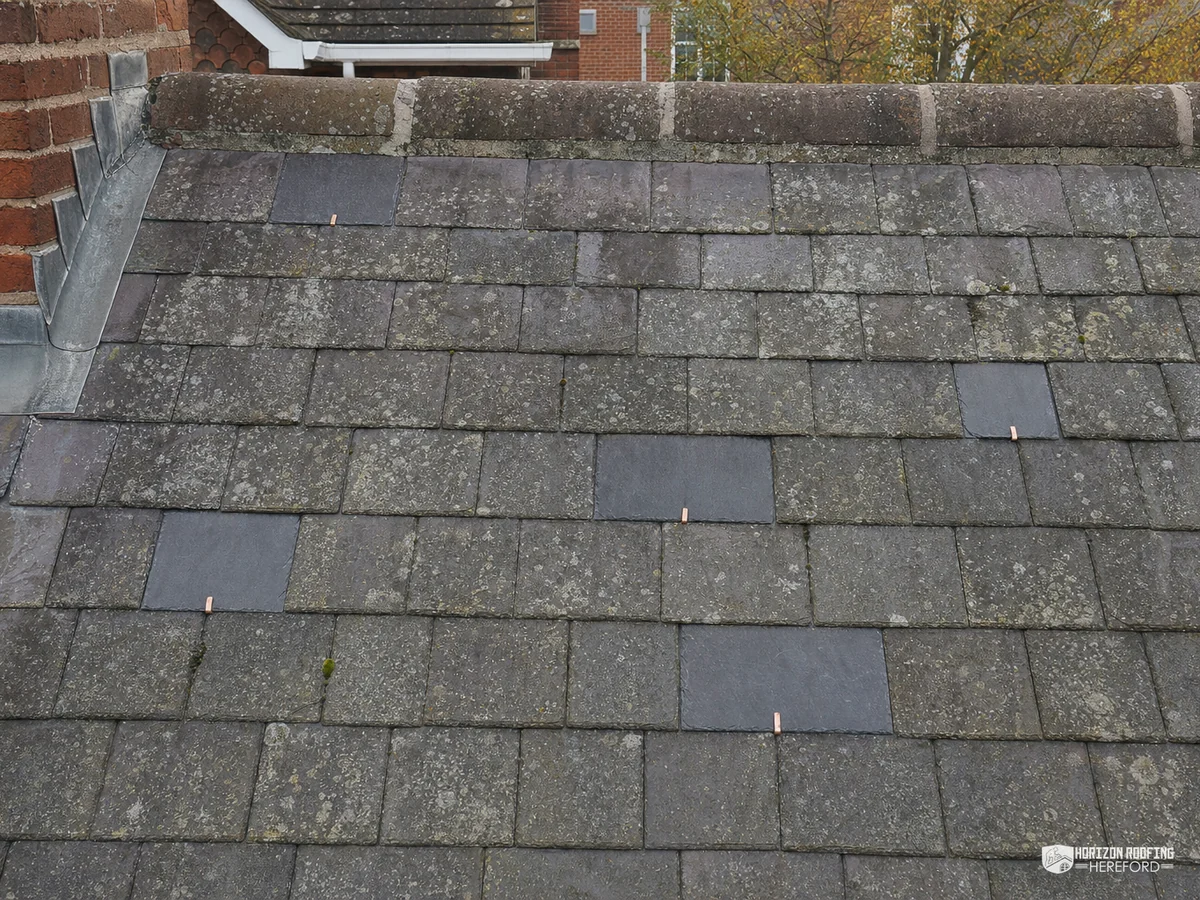
On the roof we look for stones cracked across their width, courses that have drifted out of line, and nails or pegs that have let go. From inside the loft the story is plainer than it is on the slope: daylight showing through a joint, or a pale stain on the timbers, marks the spot, and a torch held flat along the underside shows lifted stones. We picture each fault and note its place on the roof, so a mason or slater can find it again without a search. A stone slate roof earns its verdict from the state it is in this month, not from an age chart, and a repair that keeps the old stones working can be what the building needs.

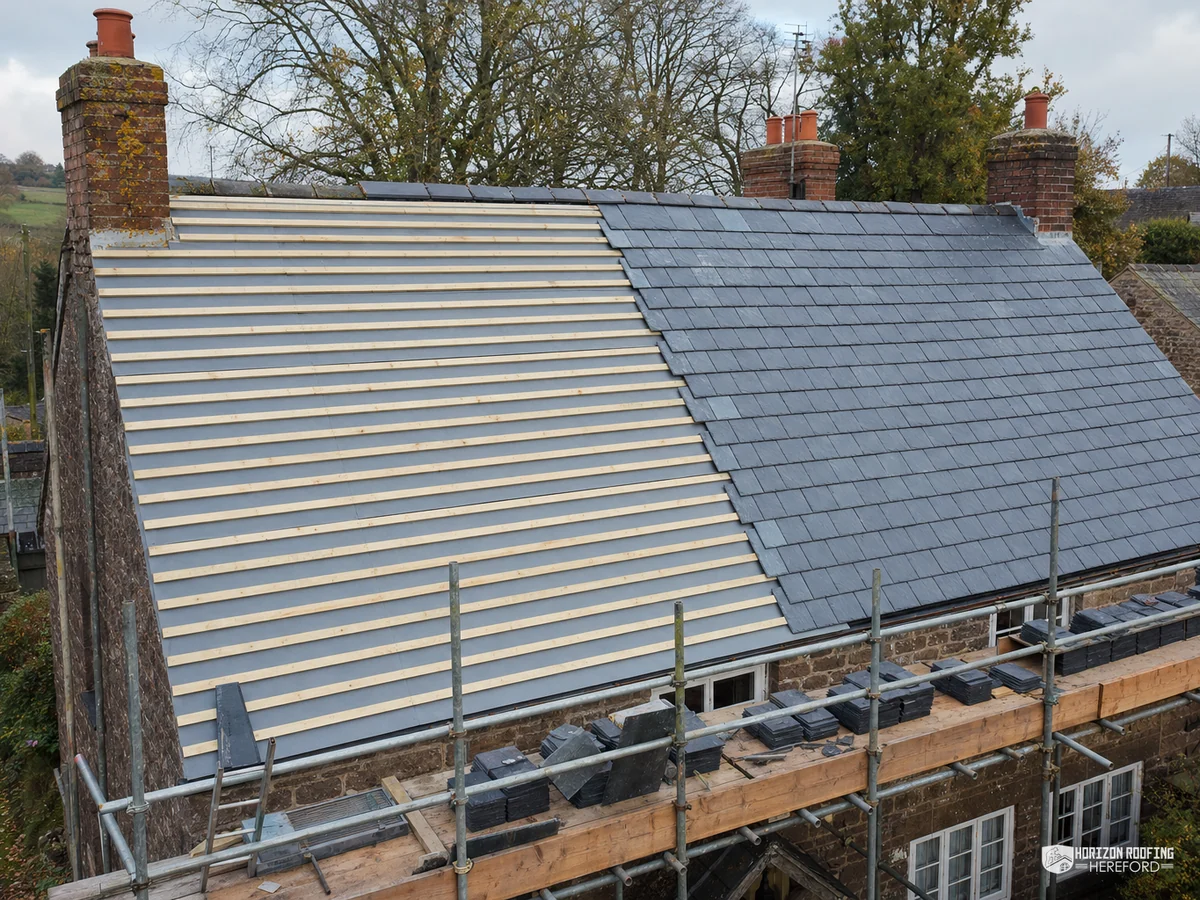
The slate on an extension has a different checklist. There, hooks are the fixing to avoid when the pitch drops below 25 degrees, Cupa advises, so the pitch is measured before a method is chosen. Nails, clips and bedding each suit certain jobs, and a mixed roof can need more than one. For natural slate on a main roof, our slate roofing page follows the process from the first course lifted to the last piece of lead dressed.

Stone slate courses on a Talgarth roof

SoundCourses in line, stones whole, laps tight and even
Needs workCracked stones, drifting courses, daylight at a joint

A stone slate roof is judged by this month's condition, not an age chart.

Callout 2 of 3

Inside the Park: roof lights, dormers, who decides

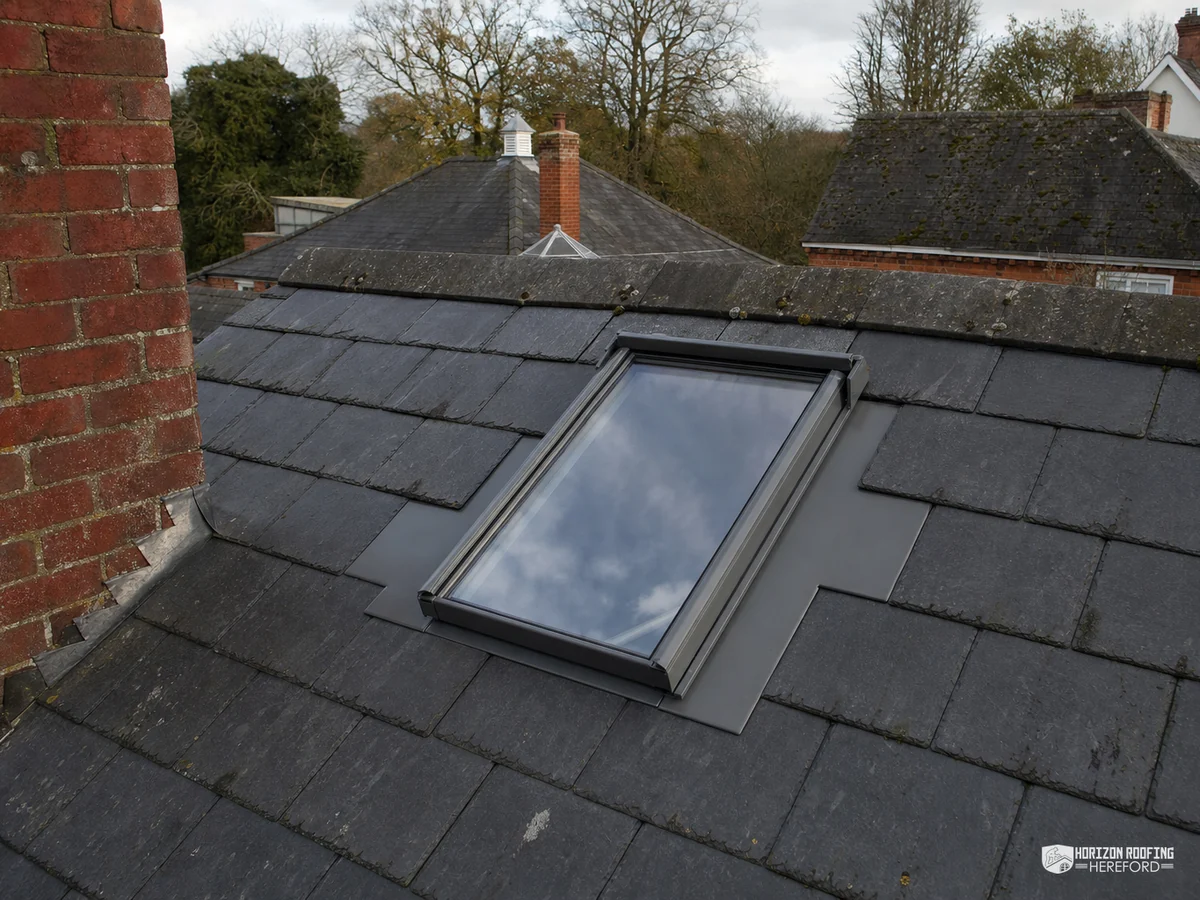
Talgarth lies inside Bannau Brycheiniog National Park, designated in 1955. Planning decisions for a Talgarth roof therefore go to the National Park Authority, and the land counts as article 1(5) land under the Welsh permitted development order. Permitted development leaves out both a new roof light and a dormer on that land, so each needs a planning application. Check with the National Park Authority before any drawing is made.

Repairs sit on the other side of the line, and routine upkeep belongs there. Re-covering is normally permitted development in Wales provided the materials look as far as practicable like the originals, and a like-for-like job on slate or stone slate does that. The sharper questions come with a new opening, a change of material or work to a listed building, and each of those starts with a conversation, not a delivery. Conditions for the Welsh position are gathered in our planning guide for roof windows, which is the place to start before you pay for a design.

The centre of Talgarth is a conservation area held by the Park Authority. If your house stands in or beside it, ask the Authority where the boundary runs, and put the Article 4 question to it for your address. Listing is a separate layer, and it applies whether or not the house stands in the conservation area. The Historic Environment (Wales) Act 2023 asks for consent before work alters what makes a listed building special, and Talgarth includes Grade II* buildings (Tower House and the church) and Grade II ones (Great House, and the former shop at the Olde Mason's Arms).

Building regulations are a different matter again, and a roof window needs them as well as planning. They are not the Park Authority's to administer, and they stay with the council's building control service or a registered building control approver. For a new roof window, the Welsh Approved Document L sets a worst acceptable figure of WER Band B or 1.4, with 2.2 for a rooflight. Our skylights page describes how a roof window is fitted and weathered once the permissions are in hand.

Who decides what in Talgarth

Planning
The National Park Authority
Building control
The council's service or a registered approver
Roof lights, dormers
Both need a planning application
Conservation area
Held by the Park Authority, over the town centre
Article 4
Check with the Park Authority for your address
Fig. 3 Roof windows, drawn close

Callout 3 of 3

Church slate, red sandstone walls and bats

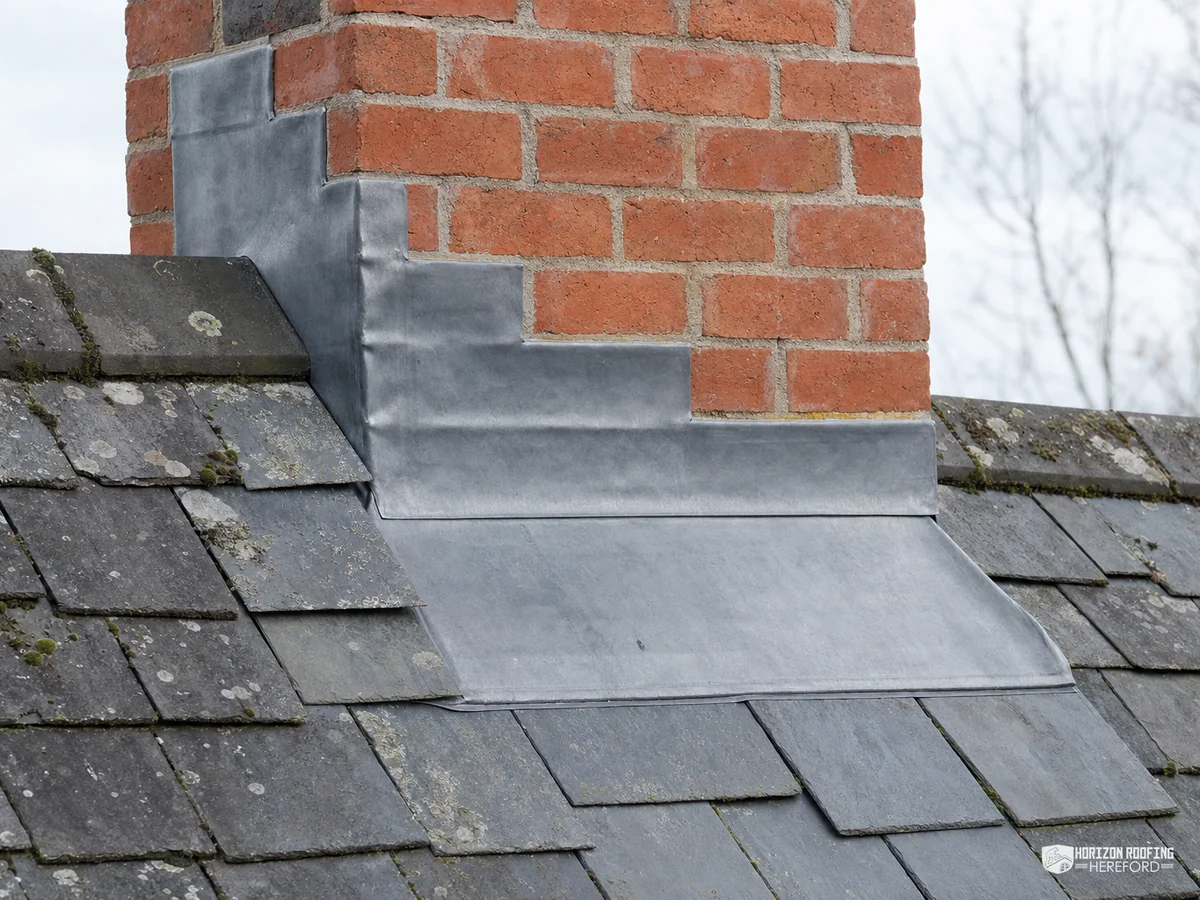
The Church of St Gwendoline in Talgarth is Grade II* (Cadw record 6636, designated 28 September 1961). Cadw's listing description records "Laminated rubble Devonian red sandstone with slate roofs". A slate roof on a rubble wall has long lines where covering meets stone, and those junctions, with their lead and mortar, are where a survey spends its time. Rubble is uneven, so each flashing is dressed to the wall as found and not to a straight edge drawn on paper. Lead that is cut to fit one stone will not sit on the next, which is why a church junction takes longer than its length suggests, and why the report counts the junctions before the price is set.

Cadw's record calls St Gwendoline's a parish church of the Church in Wales. Under the Listed Buildings (Exempt Religious Buildings) (Wales) Regulations 2024, Church in Wales buildings in active use for worship are exempt, which hands its roof repairs to the Church in Wales's own procedure in place of listed building consent; a church that closed would lose that and need consent like any listed building. Speak to the parish first and learn what approvals the Church in Wales needs, because the answer may fix the order of work and decide whether a scaffold can be booked yet.

A roof void in an old building can also shelter bats. A person commits an offence under section 9(4) of the Wildlife and Countryside Act 1981 by intentionally or recklessly disturbing a roosting bat or obstructing its access to the roost. Regulation 43 of the Habitats Regulations 2017 applies a stricter test to the roost itself: destroying it or a breeding site is an offence whether or not harm was intended. NRW puts it directly: "You must apply for a licence from Natural Resources Wales if you're doing any work that affects a protected species in Wales."

Before any slate is stripped, we look into the roof void for droppings, staining and other signs of use, and we stop if we find them. A bat survey and licence can set the timing of a whole project, and it is better learnt at the survey than halfway through a strip, with a church roof open to the sky and a congregation waiting on a date. A nest gets the same stop-and-photograph treatment, and a timetable is agreed with you around it before work resumes. For historic structures, our listed and heritage roofing page describes how such work is planned.

A bat survey can set the programme, so it is better learnt before slates come off.

What shapes a church roof price

Access
Height, ground conditions and scaffold reach
Covering
Slate quantity, fixings and any stone to replace
Leadwork
Length of wall junctions, valleys and gutters
Approvals
Consent route and the time it takes
Wildlife
Survey timing if bats are present in the roof void

One written total price, never itemised.

Talgarth roofs: stone slate, the Park and the church

How is a stone slate roof like Tower House's looked after in Talgarth?

Stone by stone. We find the cracked or slipped pieces from the slope and from the loft, photograph them, and report whether they can be refixed or need replacing. Where a stone is lost, the quarries are asked about a match before any other material is suggested. The roof is judged on its condition on the day, and the report lists each stone and what is proposed for it.

Is a new roof light allowed on a Talgarth roof?

Only with planning permission. Talgarth lies inside the National Park, which is article 1(5) land in Wales, and a new roof light there falls outside permitted development. The application goes to Bannau Brycheiniog National Park Authority, so check with it first. If the house is listed, listed building consent is needed too, and Building Regulations approval follows once planning is settled.

Where do I check whether my Talgarth house sits in the conservation area?

Ask Bannau Brycheiniog National Park Authority, which holds the conservation area over Talgarth's centre, and raise the Article 4 question with the Authority in the same message. Both answers should come in writing and be kept with the house papers. They decide how much roof work needs permission, and what the Authority will want to see drawn if a listed building is involved.

Does the Park Authority deal with Building Regulations on a Talgarth re-roof?

No. Building control stays with the council's building control service or a registered building control approver. The Welsh Government's guidance is plain: "In most situations, this work will need Building Regulations approval." At the survey we explain the two routes and let you pick one, so the approval and the building programme can run side by side. Any quote you compare should say which route it assumes.

Who is told if bats are found in a Talgarth roof?

Work stops and we show you what has been found. Roosts are protected, and in Wales NRW issues the licences. An ecologist's survey and a licence may be needed before the roof is touched, and that can move the start date. Finding out at the first visit, before slates are lifted, keeps any delay to a minimum and avoids half a roof standing open.

Can a shallow-pitched Talgarth roof be re-slated?

It depends on the pitch and the slate. Cupa says BS 5534:2014+A2:2018 indicates a minimum natural slate pitch of 20 degrees, on conditions: moderate exposure, a 500mm slate and a 115mm overlap. Hooks are ruled out below 25 degrees. We measure the pitch at the survey, before choosing a covering or a fixing, and the report gives the figure. Should the pitch prove too shallow for slate, the report lays out the coverings that do suit it.

Book a Park-aware roof survey in Talgarth

Describe the problem with the roof; a picture helps. We check the Park position, survey, then give one total.

10-year workmanship guarantee, in writing