
01432 610152 Get a quote Call 01432 610152

Roofers in Staunton on Arrow

Repairs and re-roofing at Staunton on Arrow, 17.8 road miles north-west of Hereford.

Slope, lead and gutters are inspected one after another, then photographs and one written total conclude the visit.

Get a free quoteCall 01432 610152

Slopes, lead and gutters at Staunton on Arrow

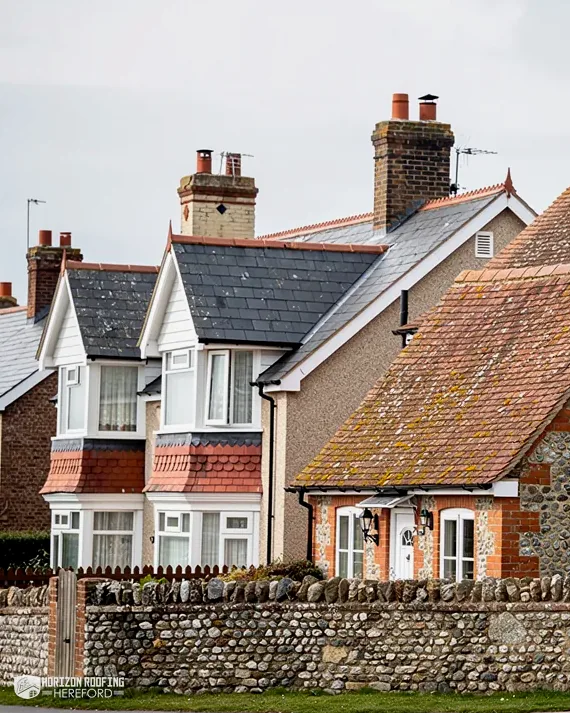
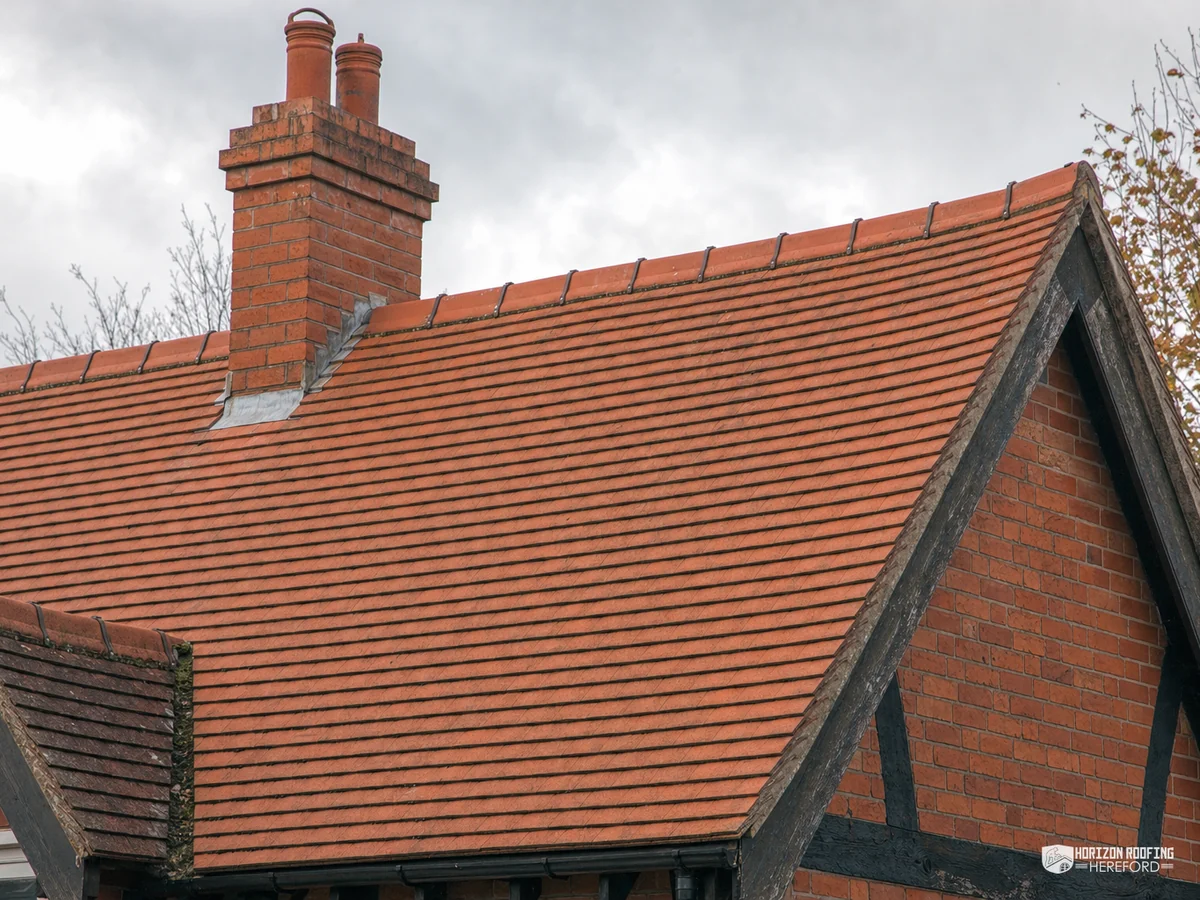
  • Older cottages with weathered clay tile roofs and brick chimneys behind a flint wall
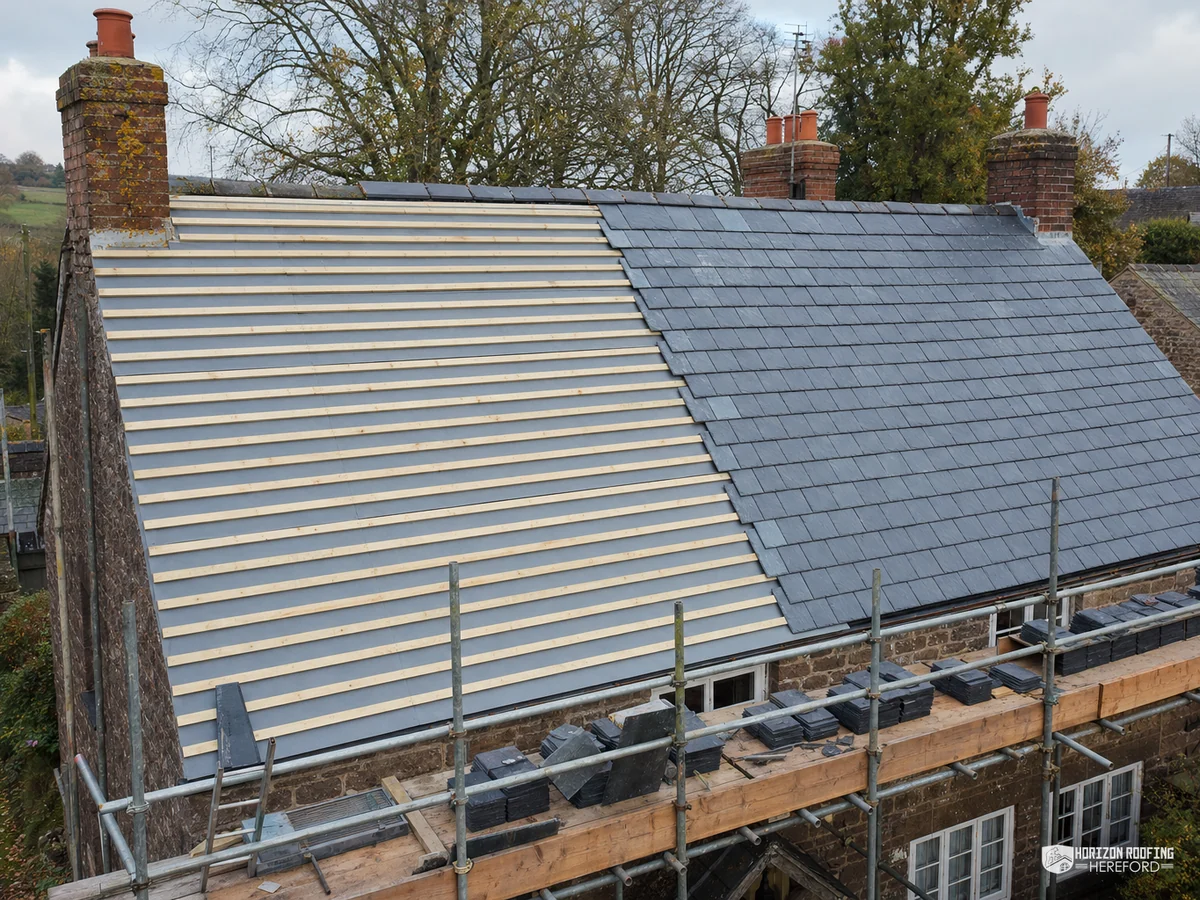
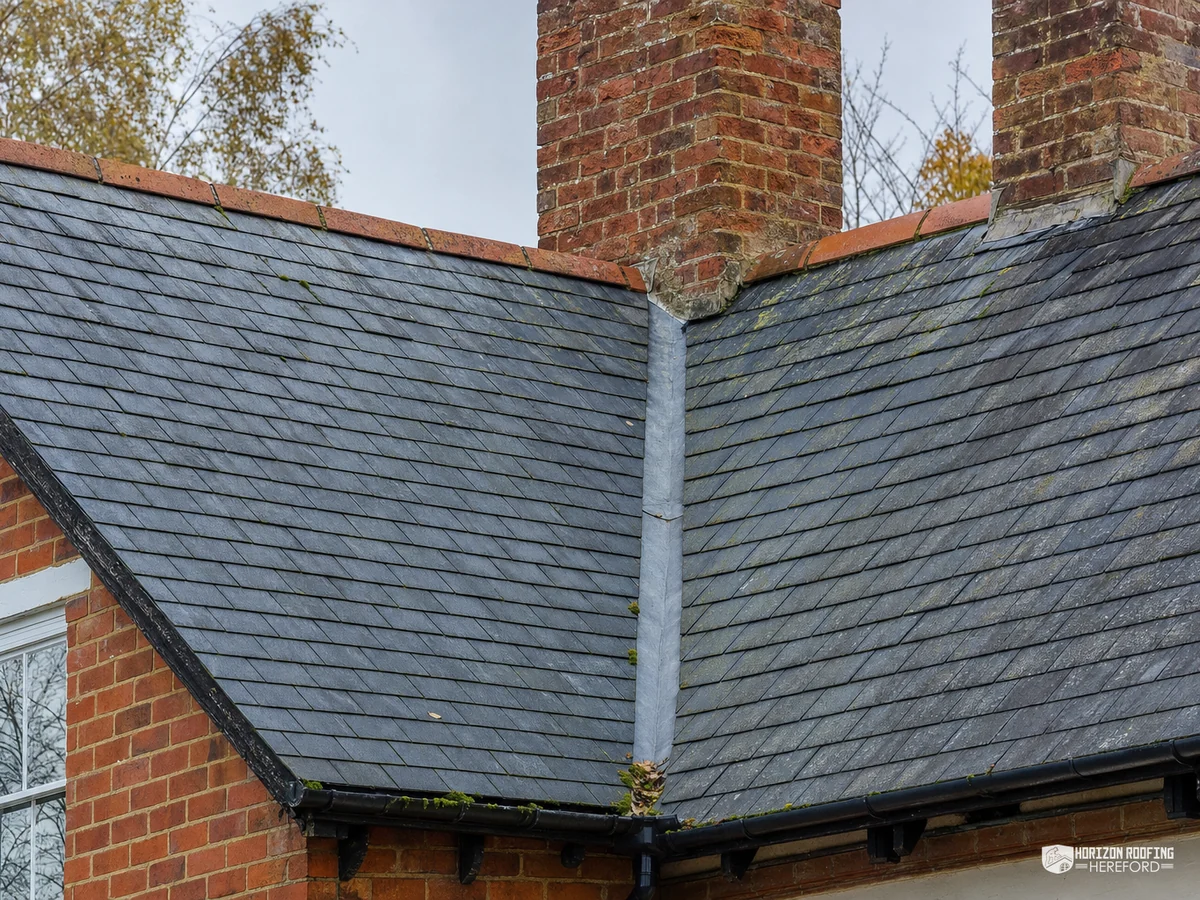
    Stone and slate slopesA stone slope is repaired by lifting the courses round the fault.
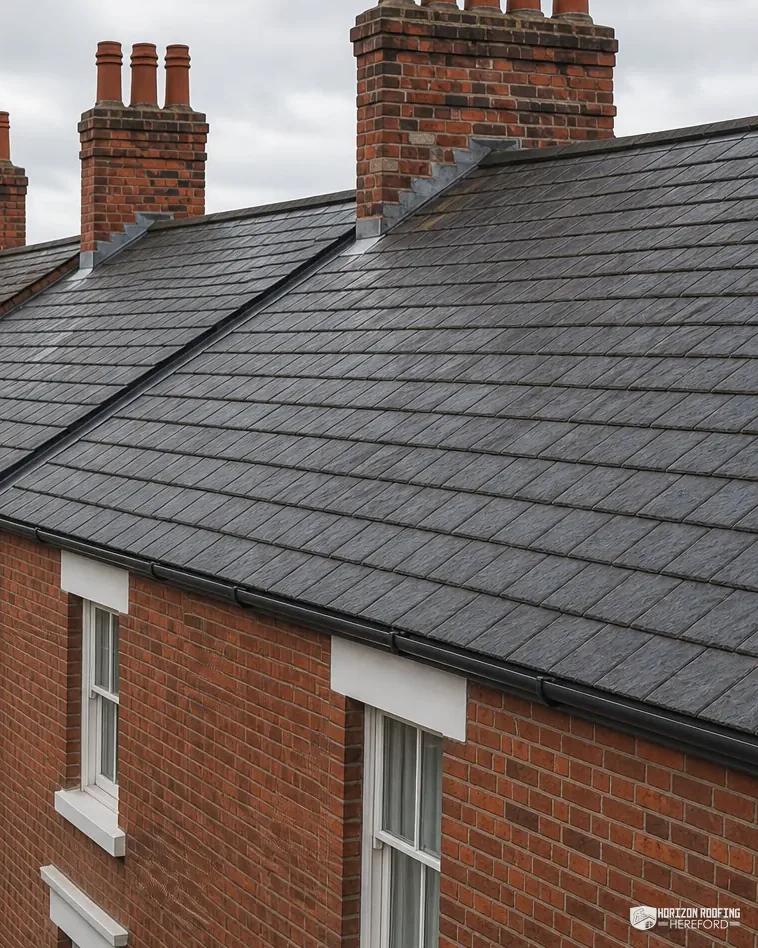
  • Slate roofs and chimney stacks along a red brick Victorian terrace
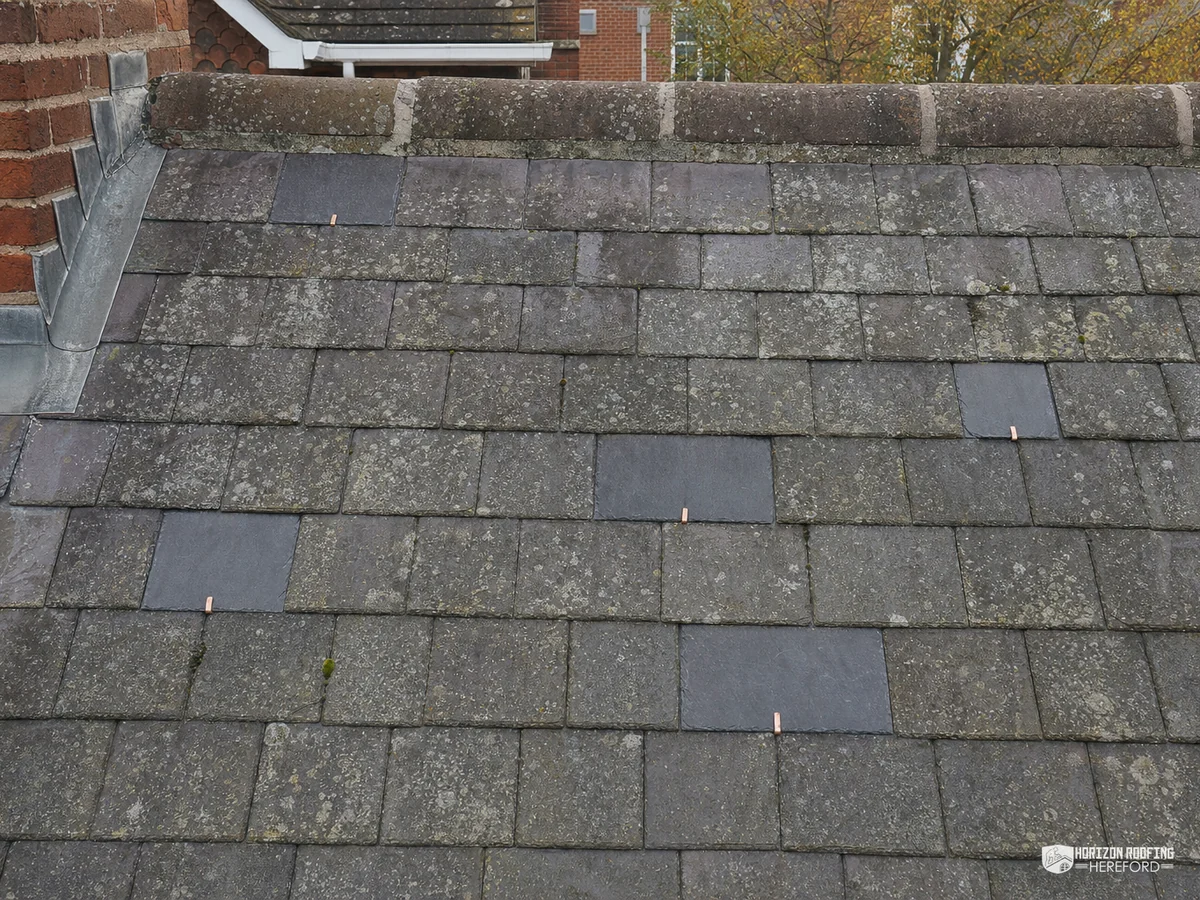
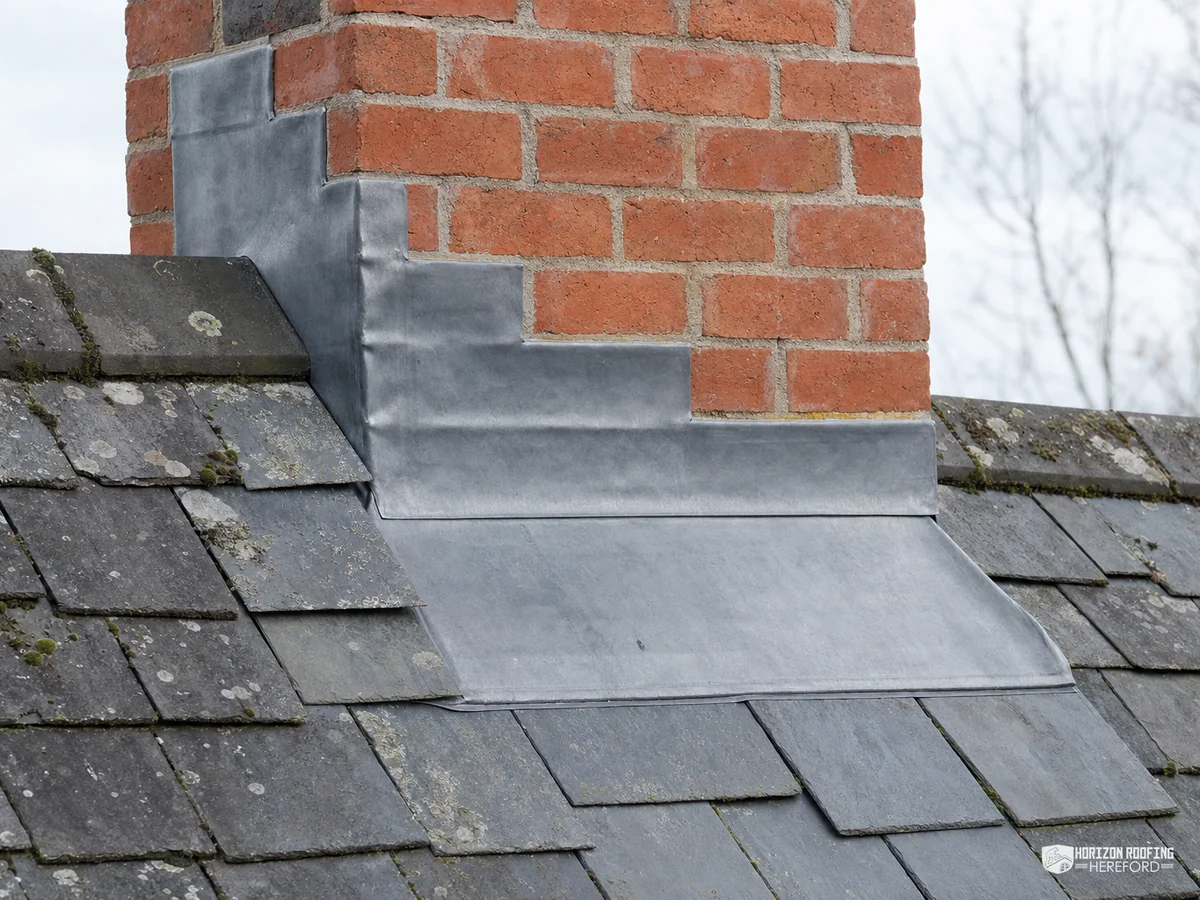
    Lead at the jointsLead flashings and valleys are checked for splits and lifted edges.
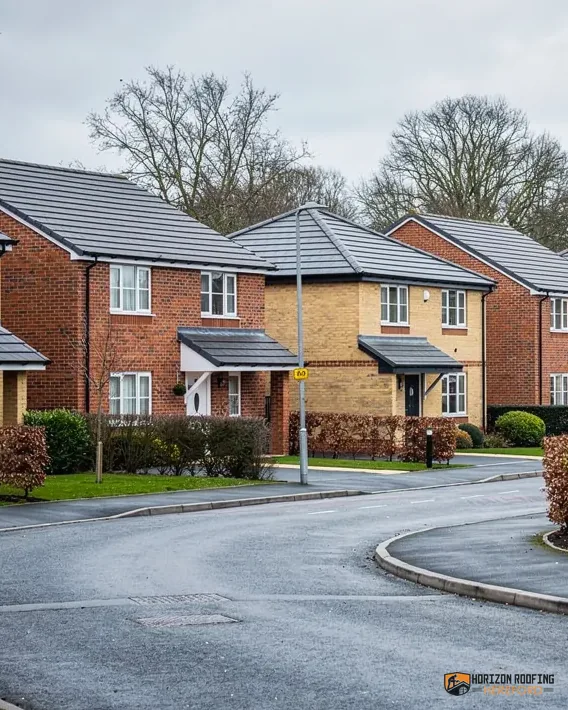
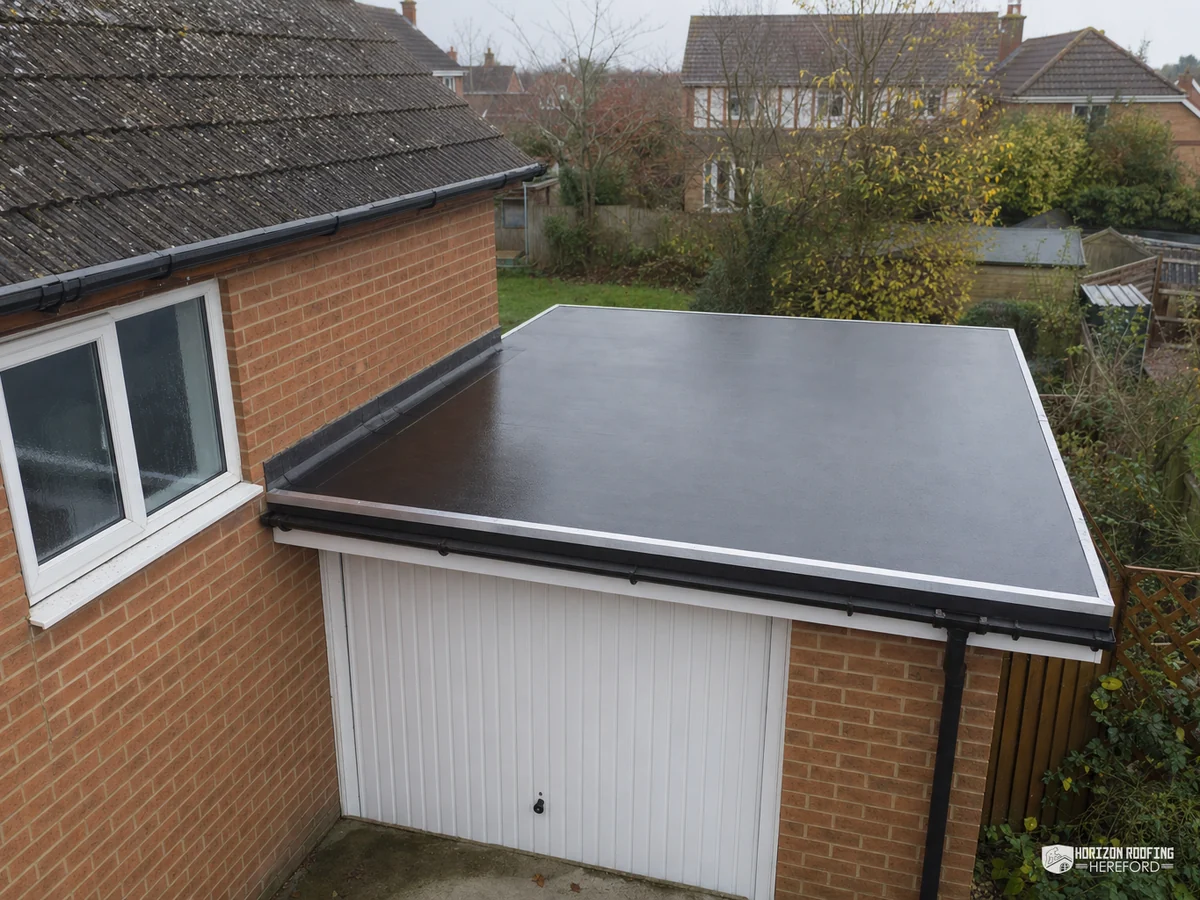
  • Newer homes with grey concrete tile roofs along a curving estate road
    Court of Noke, Post OfficeBoth are listed, so changes to the covering or ridge need consent.

Staunton on Arrow and surroundings

Staunton on Arrow on a street map, with a dashed circle around the town and the nearest towns we cover. Tiles © Esri; map data © Esri, HERE, Garmin, OpenStreetMap contributors.

Staunton on Arrow, slope by slope

Stone slopes, lead joints and rainwater goods at Staunton on Arrow

We begin on the slope, where the stone or slate on show must be matched by whatever goes back, then check the lead at the joints, then follow the rain down into the gutters and the listed buildings.

A drawn cut-away section through a Herefordshire border house: the front of the main roof is cut open to show the rafters, underlay, battens and slates, beside a black-and-white timber-framed gable. Numbered, from the ridge down: 1 Stone and slate; 2 Lead joints; 3 Gutters and listings.

Fig. 1 Staunton's slope, lead joint and gutter, numbered on one border house.

Callout 1 of 3

Stone tiles and slates on the Staunton slopes

Callout one is the slope. For its monuments 4 to 11 in this parish the Royal Commission recorded, in a 1934 entry, roofs of "stone or modern slates". Two coverings are named there, for eight buildings and a single date, so it is a hint about the past and nothing about the roof over your head. Yours could be stone, slate, tile or a mixture, and the survey establishes which before any repair is planned.

Local sandstone tilestones roof Herefordshire's traditional stone buildings, the county's building stone atlas explains, and it names the St Maughans sandstones as the chief source. SPAB describes stone and Welsh slate roofs in the region as "predominantly double-lapped", so every course sits partly over the one below and partly over the one beneath that. A slipped stone tile is mended by lifting the courses around it, never by forcing a tile into the gap.

Matching is the hard part. SPAB observes that many of these roofs now carry another stone, slate or imitation stone slates, and that supply claims "should always be checked with the quarries". We check before suggesting a swap away from stone. A stone tile's age says little, so we weigh each one by its condition and its fixings, and you see each one in the photographs.

Slate has firmer figures. HomeBuilding gives Welsh slate "100+ years", and SPAB says a well-slated roof is "likely to be more than 100 years". Cupa, a slate maker, advises against slate hooks below 25 degrees of pitch, so the pitch is measured on site and nails or hooks are chosen to suit. Where a slate roof is sound but tired at the eaves, replacing the worst courses can be enough.

Tile coverings have their own figures. Marley lists minimum pitches by product, with its plain concrete tile at 35 degrees and its clay Canterbury tile at 40, and each of those is a product, not a regional style. For clay tiles, Marley reports a BRE minimum life expectancy of 60 years, which applies to clay only. For concrete tiles Marley says around 60 years and HomeBuilding says 40 to 50, so we name both and read the condition of each tile on site.

Our slate roofing page covers slate work in depth. Staunton on Arrow lies in England, so the Planning Portal's tests govern a re-cover: less than 25 per cent of the building envelope and less than 50 per cent of the roof. Staying under both limits means an application is normally unnecessary, while a bigger scheme goes to building control.

Stone or slate?

Can a stone-tiled roof be repaired instead of re-covered?

Yes, so long as the tiles around the fault are sound. We raise the next courses up, re-lay the loose tiles in the same overlap and replace broken ones with a match. A slope that has failed across its whole face is another matter, and the photographs show which case you have.

A stone tile's age tells us little, so each one is judged on its own condition.

Fig. 2 The slopes, drawn close

Callout 2 of 3

Lead flashings, soakers and valleys

Callout two is the lead. At each place where a slope abuts a wall, a stack or another slope, a thin metal strip keeps the weather off the structure. Flashing is the name for that strip, which is tucked into a masonry joint and then lapped down across the tiles or slates. The soaker is a folded piece slipped beneath the courses where a slope runs alongside masonry. A valley or back gutter is the trough that carries run-off away.

Lead is bought by code. Royston Lead's table lists Code 3 as "Recommended for lead soakers only", and Codes 4, 5 and 6 for flashings and pitched valley gutters alike. Lead roofs sit outside BS 6229, which is for flexible membranes, and AD C cites BS 6915 for lead. Our dressing lets the metal expand and contract without tearing, so a hot afternoon does not open a seam. The report lists each junction in the order we met it, with a photograph beside the note, which keeps the findings easy to follow.

Lifespans are ranges. MyJobQuote says correctly fitted lead flashing "can last for over 80 years". None of that is a promise, and a joint that splits early gets repaired early. We look for lifted edges, hairline splits, sealant smeared over a failed joint, and mortar that has dropped from the course above a flashing.

A patch is possible when the surrounding lead is sound. Where it is brittle or cracked in several places, new lead is the better answer, and the photographs of the cracks show why. Sealant over a failed joint hides the fault for a season and nothing more. Our lead roofing page describes the codes, the dressing and the junction details.

Where a stack comes into it, the Planning Portal says "Building regulations approval will always apply when removing chimney breasts as they are part of the building's structure." Herefordshire Council Building Control is on 01432 261938, and a registered building control approver can act in its place.

Lead at each Staunton junction

Soakers
Code 3 lead, one under each course
Flashings
Code 4, 5 or 6, tucked into the joint
Valley gutters
Code 4, 5 or 6 sheet in a trough
Sealant
Never used in place of lead
Joint above
Repointed where mortar has fallen out
Fig. 3 Leadwork, drawn close

Callout 3 of 3

Rainwater goods, Court of Noke and the Pembridge boundary

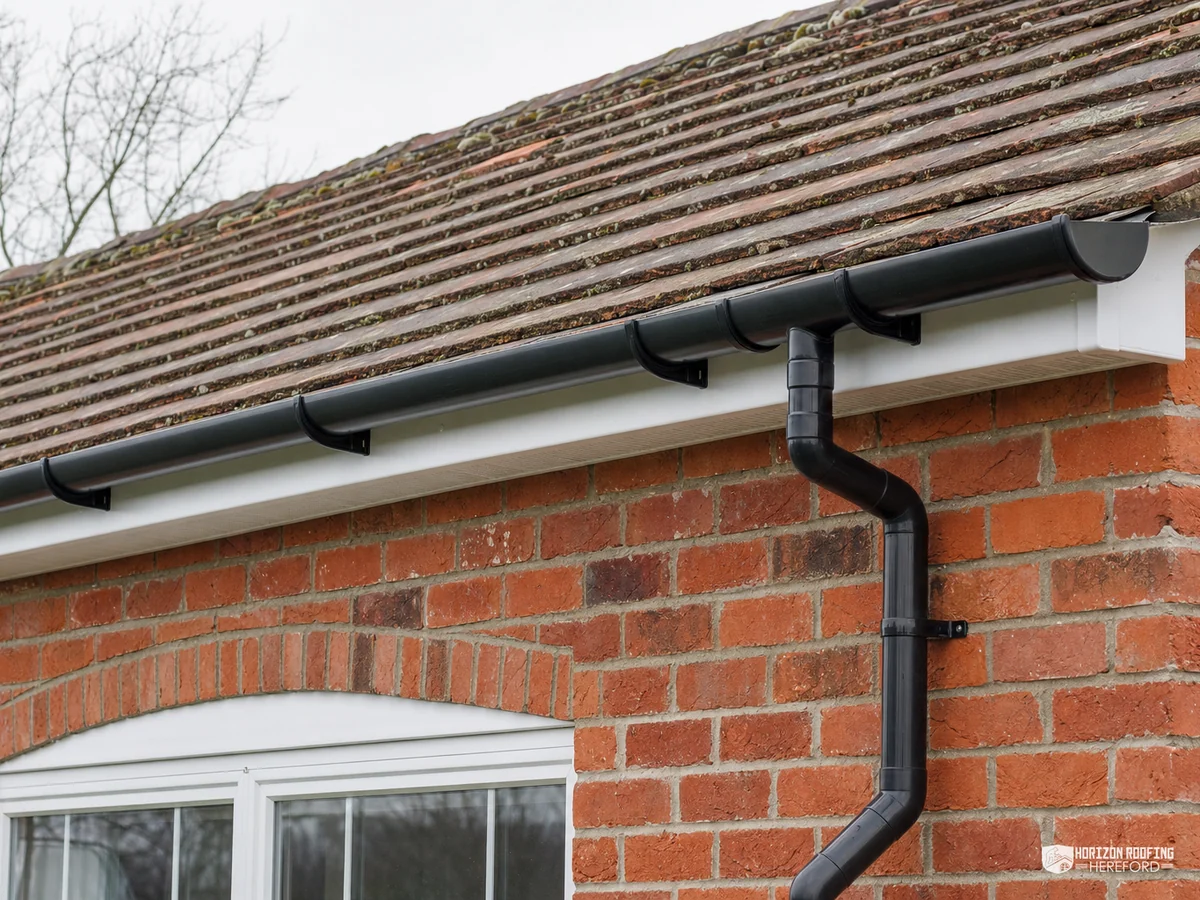
Callout three is the gutter, where everything the roof sheds is collected. The gutter maker Brett Martin puts the fall at 1mm for every 600mm. A run that droops between brackets holds a pool that spills against the wall. Brackets, joints and outlets all get examined, and the downpipe is cleared from top to bottom, since a blocked pipe backs water up the run. On an older house the gutters, brackets and downpipes are part of how it looks, so renewals follow the profile and fixings already there.

Staunton on Arrow has listed buildings, and works to their roofs and rainwater goods fall under consent rules. Court of Noke is Grade II* (list entry 1349923, first listed 19 August 1953). The Post Office is Grade II (list entry 1350039, first listed 17 December 1986), and so is St Peter's church (list entry 1049062, also first listed 17 December 1986). Under section 7 of the Planning (Listed Buildings and Conservation Areas) Act 1990, a house or shop of special interest needs listed building consent before work that would alter its character. Permitted development rights stay with a listed building, and consent is needed too.

St Peter's is Church of England, and for as long as Staunton's congregation worships there, its works follow the faculty route.

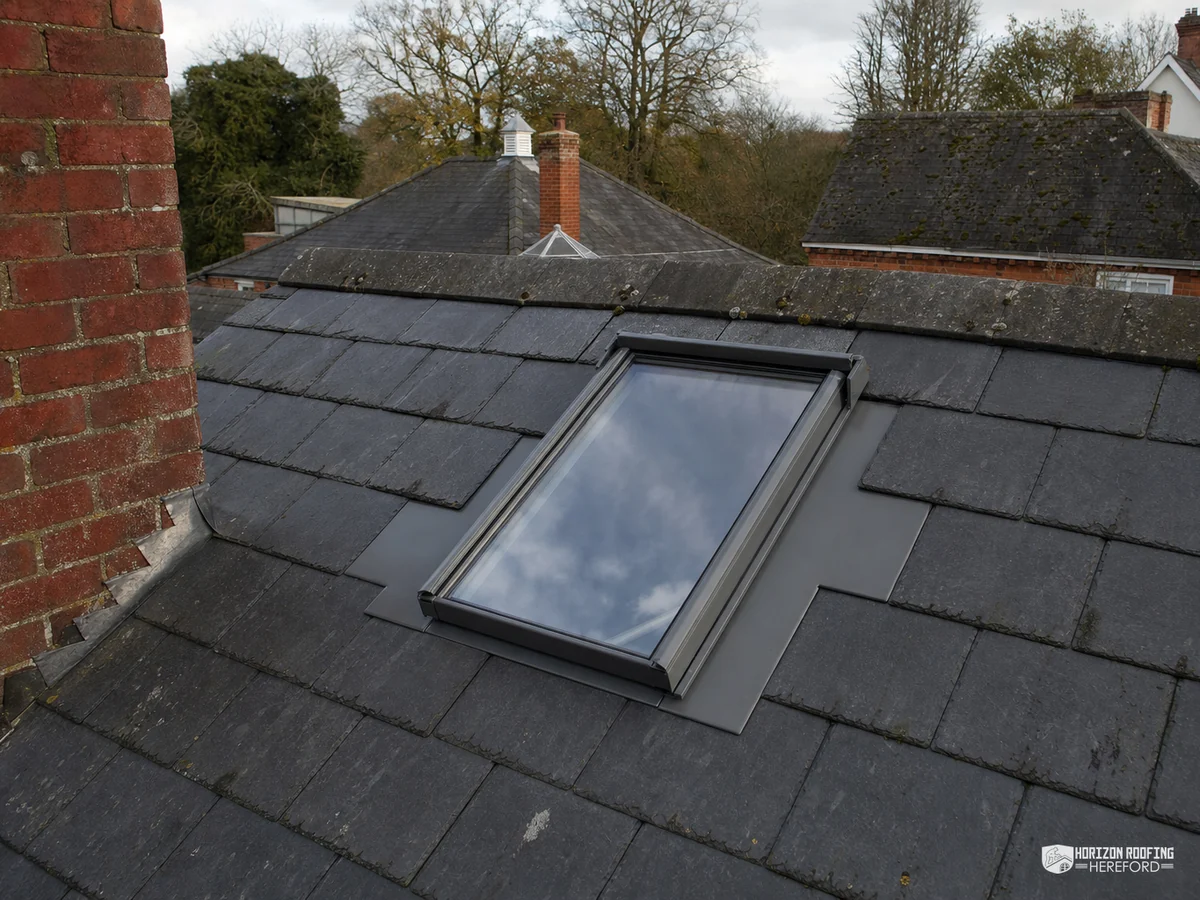
Pembridge has a conservation area nearby, and the stone atlas counts Pembridge among the Black and White Villages. That does not make your own address a conservation area address. Herefordshire has 64 conservation areas and the council publishes the list: look there, and ask Herefordshire Council whether an Article 4 direction applies. Our planning guide for roof windows sets out what changes on protected land.

Should the Staunton on Arrow scaffold have to stand in the road, a licence is required, which we arrange with our scaffolder; the fee and notice period are given in the questions below. Our guttering, soffits and fascias page deals with the whole roofline, including the fascia boards that carry the gutter.

A gutter run on an older house

SoundHung to a fall, joints tight, outlet and pipe clear
Needs workDrooping between brackets, joints weeping, outlet blocked with debris

Staunton on Arrow roofs: stone, lead and consents

How is a slipped stone tile mended on a Staunton on Arrow roof?

A stone roof is double-lapped, so each tile is held by the courses above it. To mend a slip we lift the neighbouring tiles, re-lay the loose one in its overlap and fix it, then put the course back. Broken tiles are replaced with a match in size and colour. Photographs are taken of the roof as found and again when done, giving you both sets for your records.

Are Court of Noke and the Post Office subject to listed building consent?

Court of Noke is Grade II* (list entry 1349923) and the Post Office is Grade II (list entry 1350039). Anything that alters a listed building's character calls for consent under section 7 of the 1990 Act, so the council hears from us before covering, ridge or flashings are altered. A like-for-like repair, too, gets discussed with the council beforehand, and our photographs go with that conversation.

Does a re-roof at Staunton on Arrow need Building Regulations approval?

Staunton on Arrow is in England, so the Planning Portal sets the line: a re-cover touching less than 25 per cent of the building envelope and less than 50 per cent of the roof can proceed without one in the normal case. A larger job, or a covering 15 per cent or more heavier, goes to building control for approval, and a registered building control approver can be used instead of the council.

Is Staunton on Arrow in a conservation area?

Pembridge has a conservation area nearby, but the boundary that matters is the one round your own property. Herefordshire has 64 conservation areas, and the council publishes the list and the maps, so check your address there. Ask the council too whether an Article 4 direction applies. What can go ahead without an application depends on the answer, so settle it before work is booked.

Who arranges scaffold permission on a narrow lane near Staunton on Arrow?

If scaffold must stand on the highway, Herefordshire Council issues the licence under section 169 of the Highways Act 1980: £167 for a maximum of one month, £123 per month after it, and the application should go in at least 10 days ahead. We arrange the licence with our scaffolder, while the quoted price covers the scaffold itself. If a Staunton on Arrow house faces a busy road, the council is asked who covers it.

Why do my Staunton on Arrow gutters overflow in a downpour?

Likely causes are a blocked outlet or downpipe, a run that droops between its brackets, and joints that have opened. Brett Martin gives the fall as 1mm for every 600mm, and a run that has sagged below it holds a pool of water. We clear the pipe, check the brackets, and say whether re-hanging the existing run is enough or new lengths are called for. The photographs of the outlet and the joints go into the report.

Book a survey for your Staunton roof

Send a photo or a short note about the problem, and we will visit, then put a single figure for the Staunton job in writing.

10-year workmanship guarantee, in writing