
Callout 1 of 3
Stone slates, modern cover and what lies beneath
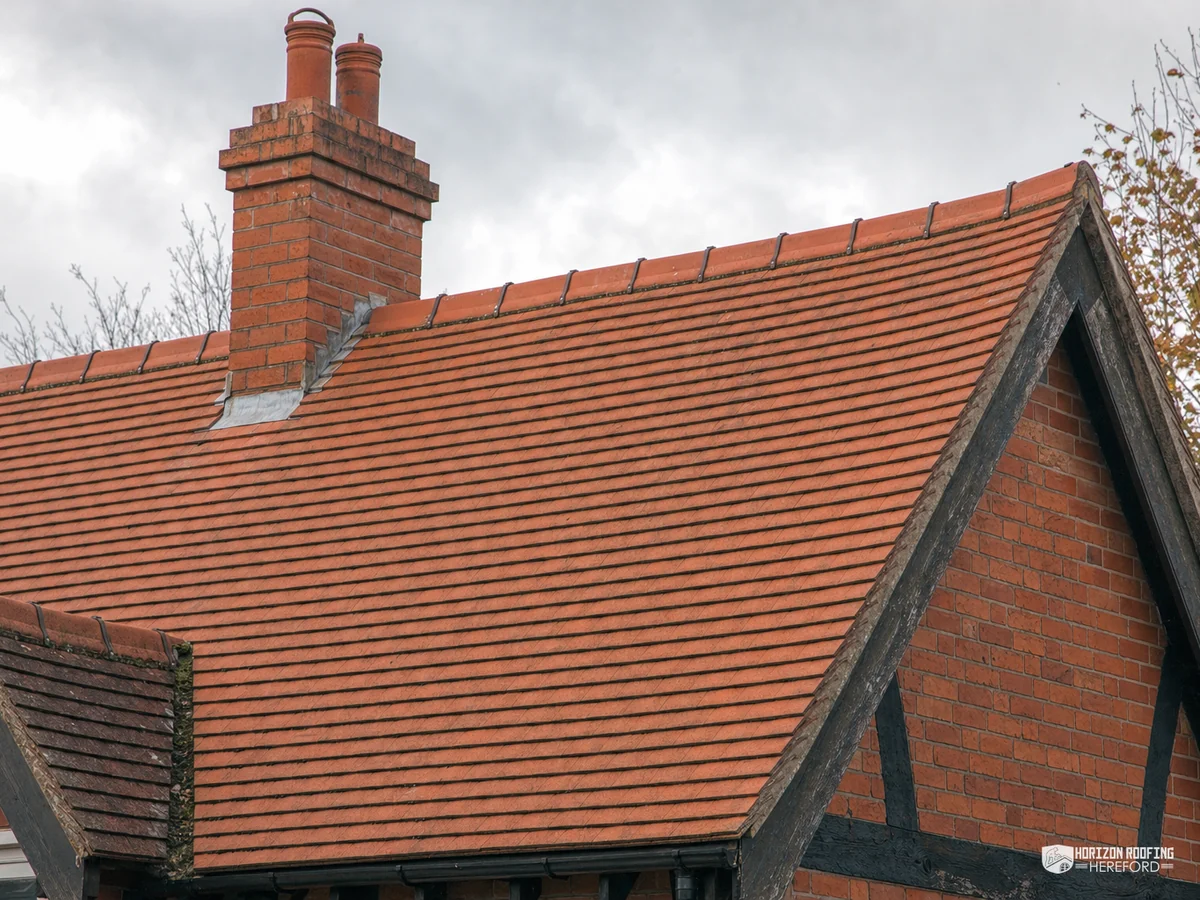
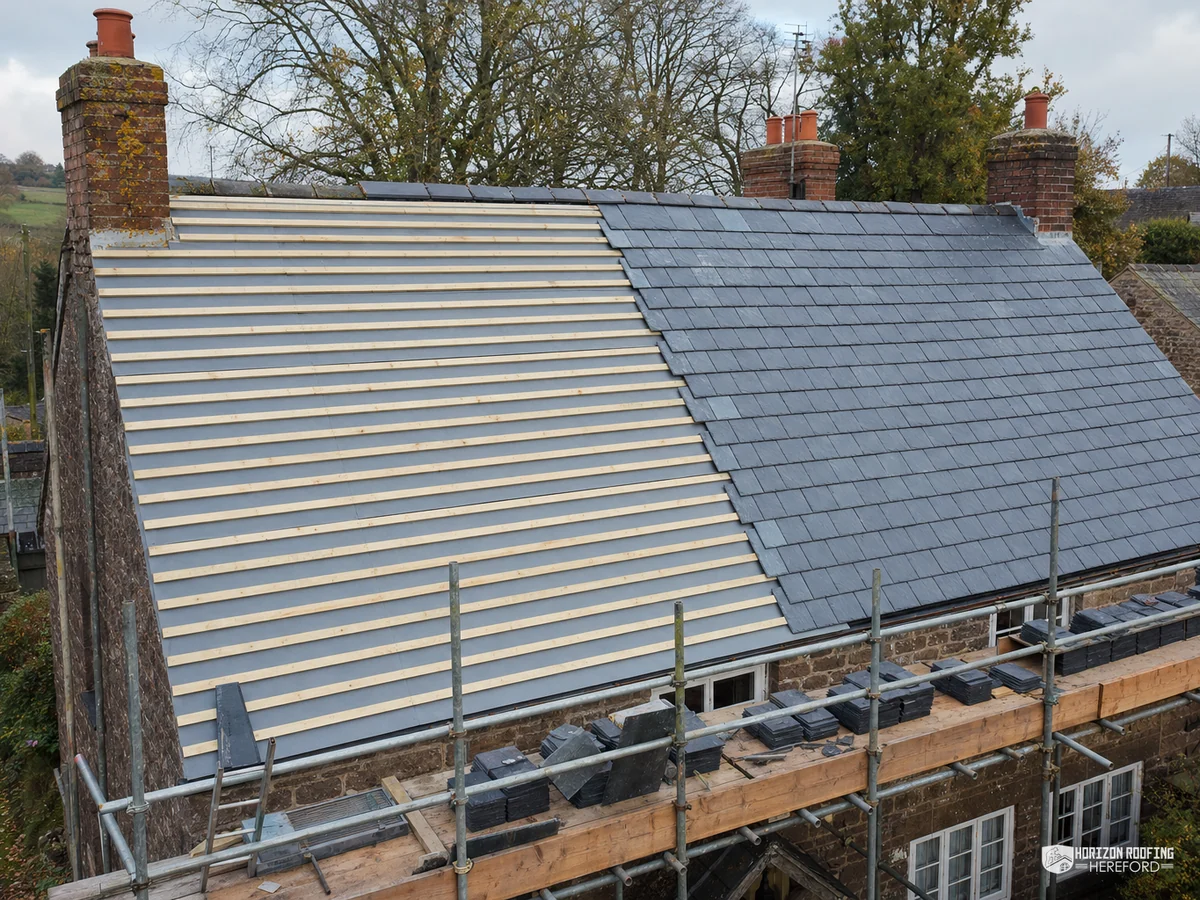
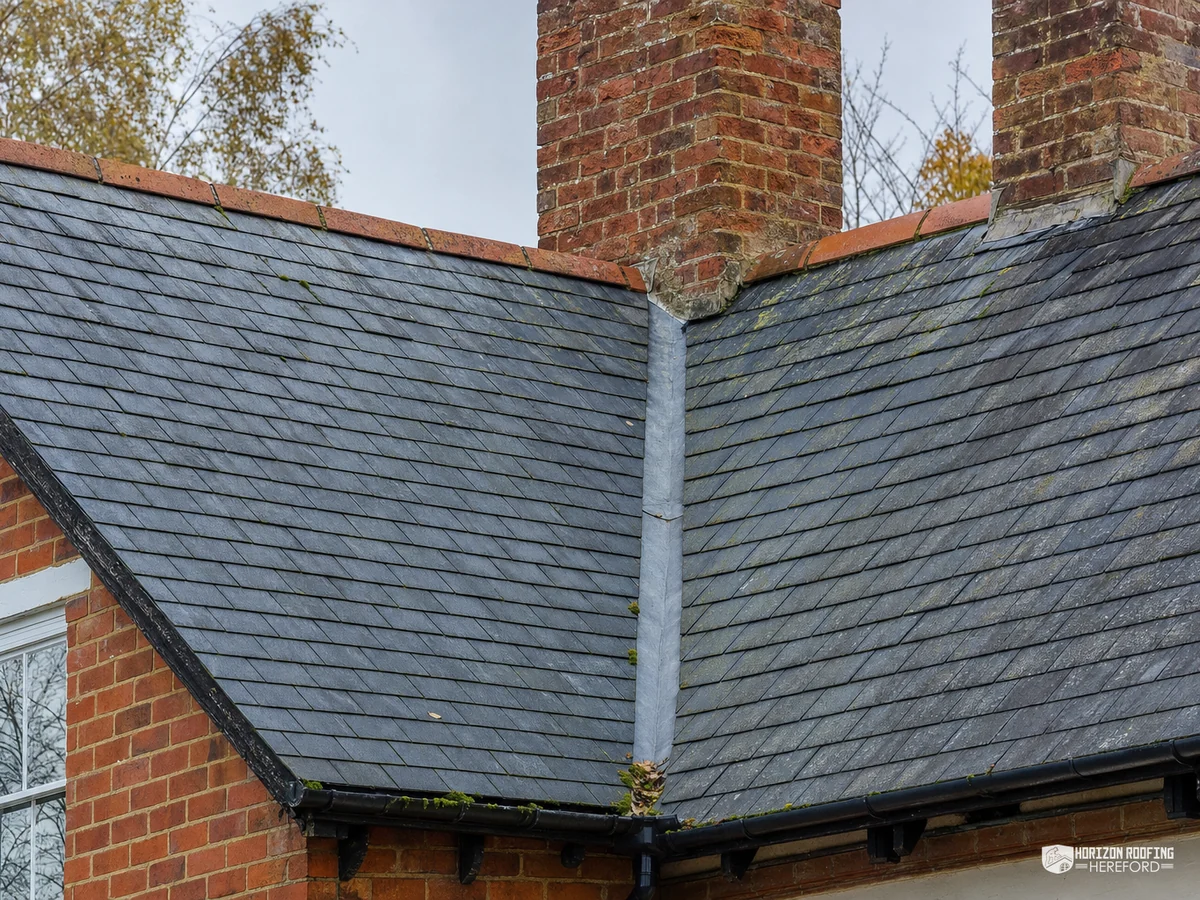
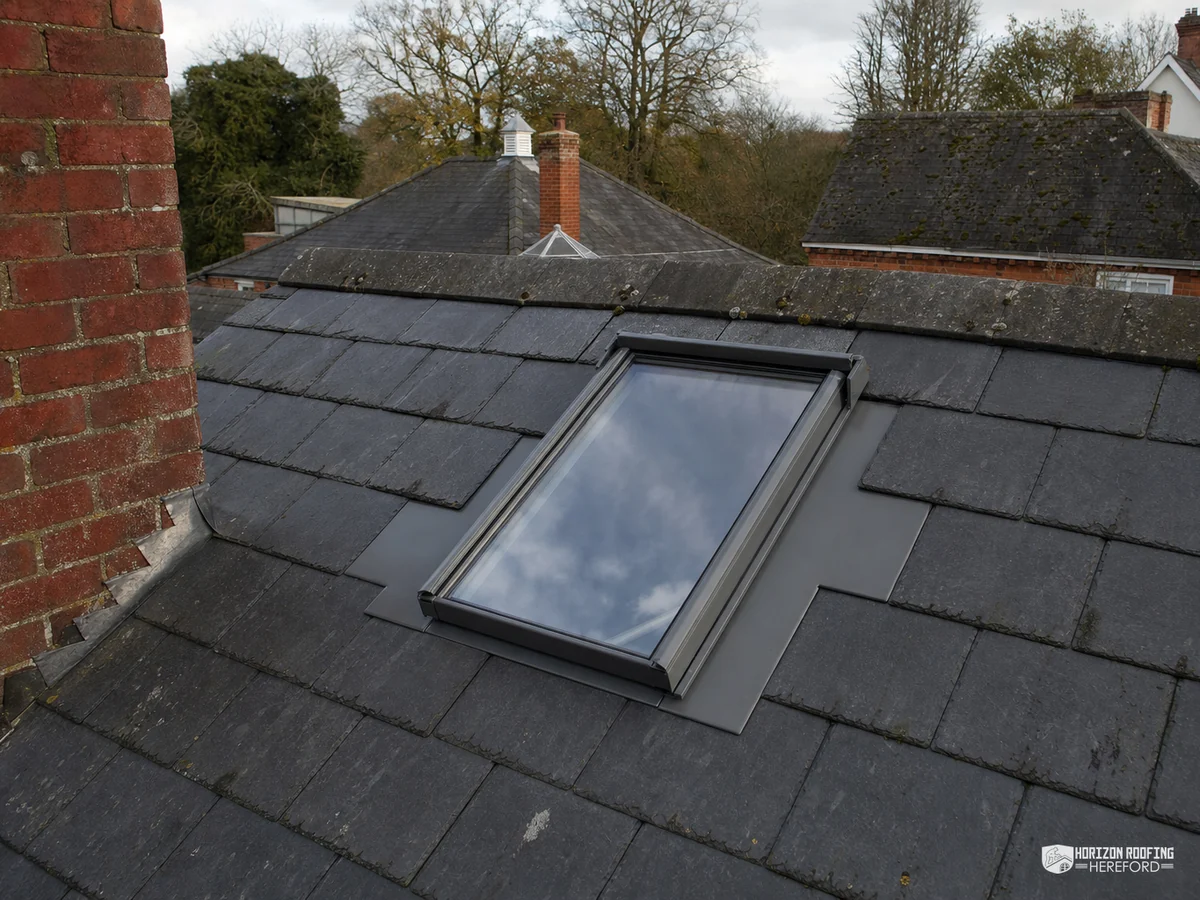
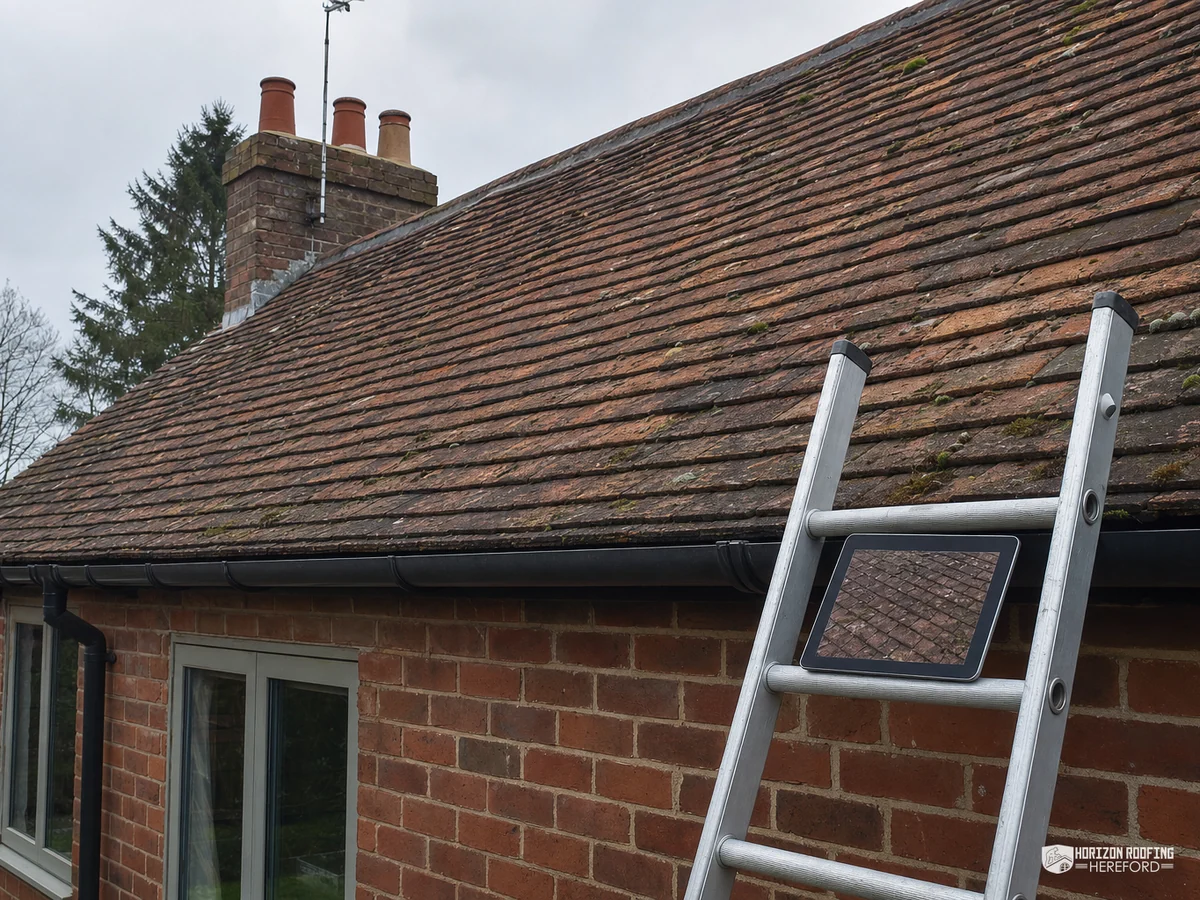
In 1931 the Royal Commission's Herefordshire inventory summed up its monuments numbered 7 to 17 in Dorstone parish in one line, with walls of rubble and roofs of "stone slates or modern material". Stone slates are sandstone, split thin and hung like tiles. The line does not say which house kept which covering, and a roof can be patched at any time after 1931, so the survey begins by finding out what is actually up there. We lift an edge where it is safe, photograph the courses and the fixings, and report stone, slate or something newer, slope by slope.
Herefordshire's building stone atlas says the St Maughans Formation sandstones are among the "principal sources of Herefordshire stone roofing", and it records many quarrying permissions still classed as active out in the Golden Valley area, on the county's far western side. SPAB's guidance covering Wales and the Marches adds that most stone slates there are grey to brown, but "there are some purple types in Herefordshire". It also regrets that "many are changed to different stones or even to slates or fake stone slates". Our aim is the opposite: sound stones are sorted, kept and re-hung, and a stone that has to go is replaced by one of matching size, colour and source.
A double-lapped roof is one where each stone covers the joint below it and also laps the course beneath that. The survey finds out whether yours is laid that way, because it decides how much a stone can be moved without disturbing its neighbours. If a supplier says no matching stone exists, or that it is weeks away, SPAB advises checking that claim with the quarries themselves, and we do the same before suggesting any other covering.
Swapping to a different material changes the load on the rafters. The Planning Portal says Building Regulations approval is required where a new covering is 15 per cent or more heavier, and AD A speaks of a change of more than 15% as significant, so the structure is checked before the decision. Our roof repairs page covers the smaller jobs, and each stone we lift is photographed for the report.
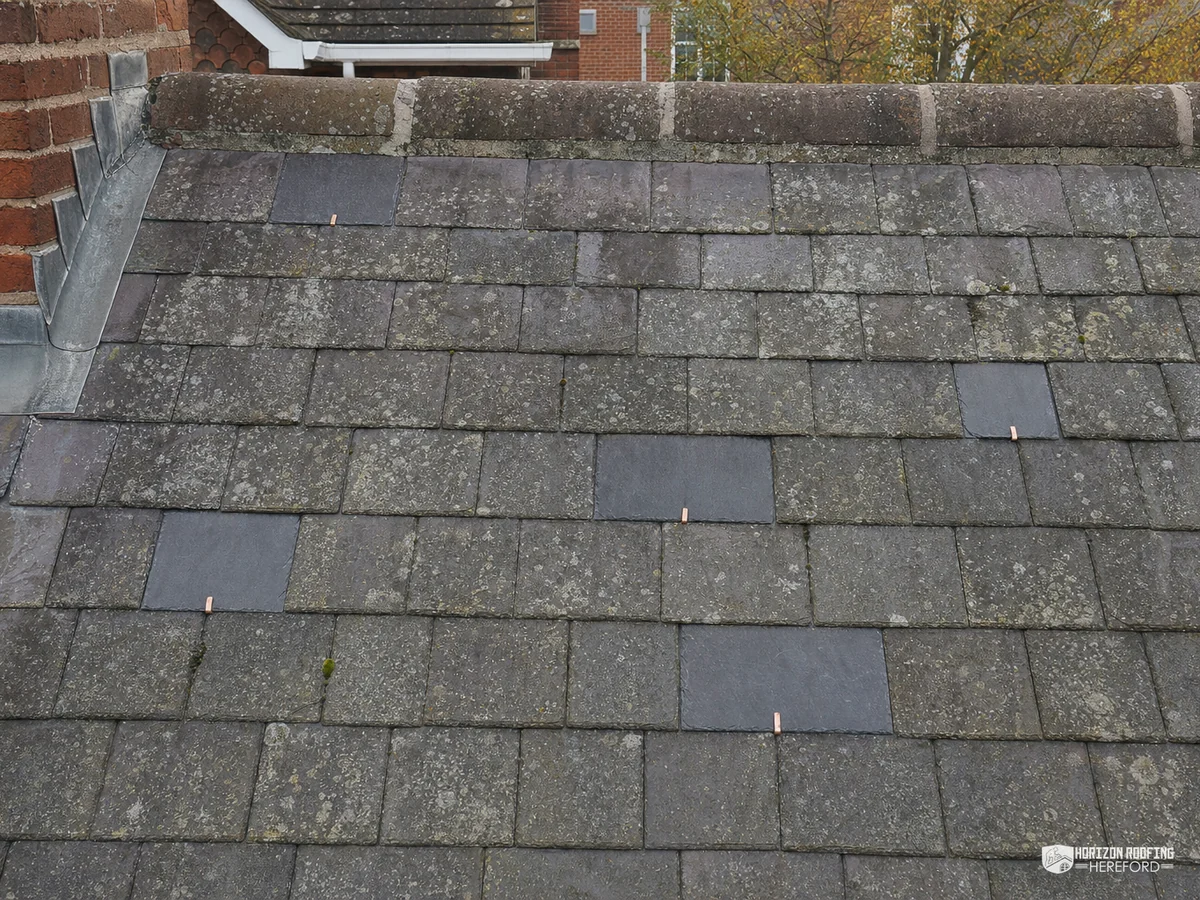
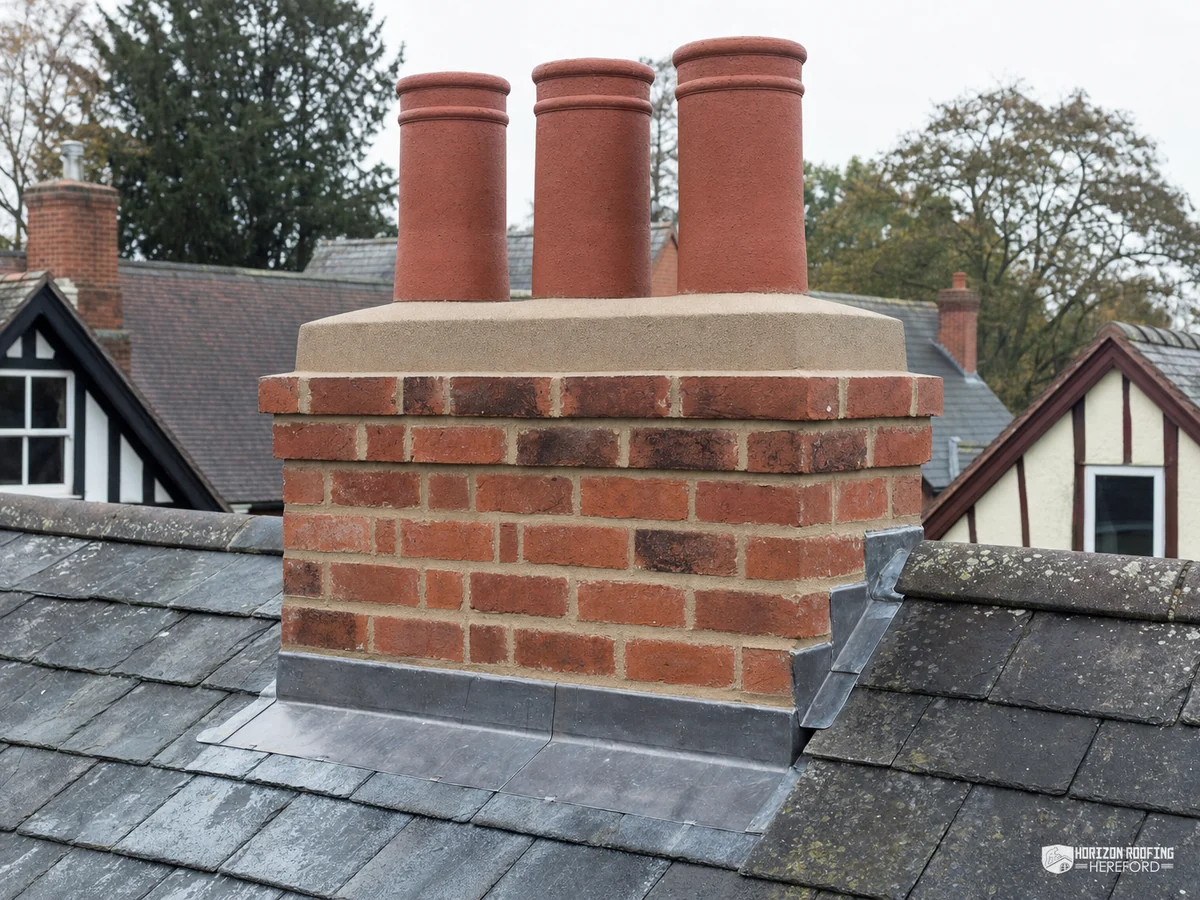
The ridge gets the same attention as the slope. Whatever the ridge is made of, its bed is checked for loose material and open joints. Marley says "Installing to BS 5534 isn't required by law", but the 2015 amendments made it clear that mortar "could no longer be relied upon as the only means of securing the roof covering". A rebuilt ridge is therefore fixed mechanically as well as bedded, and the photographs show the finished line.
Words you will meet on a stone-slate roof
- Stone slate
- A thin sandstone slab laid like a roof tile
- Tilestone
- Sandstone that splits readily into roofing slabs
- Double-lapped
- Each stone covers the joint below and laps the course beneath
- Course
- One horizontal row of stones across the slope
A stone roof is sorted before it is stripped, because most of its stones can go back.