
01432 610152 Get a quote Call 01432 610152

Roofers in Clungunford

Chimney, lead and roof repairs in Clungunford, 28 road miles north of central Hereford.

Expect a drive of about 46 minutes. The survey starts at the stack, every fault is photographed, and the price is one written total.

Get a free quoteCall 01432 610152

Stacks, lead and a Grade II* church

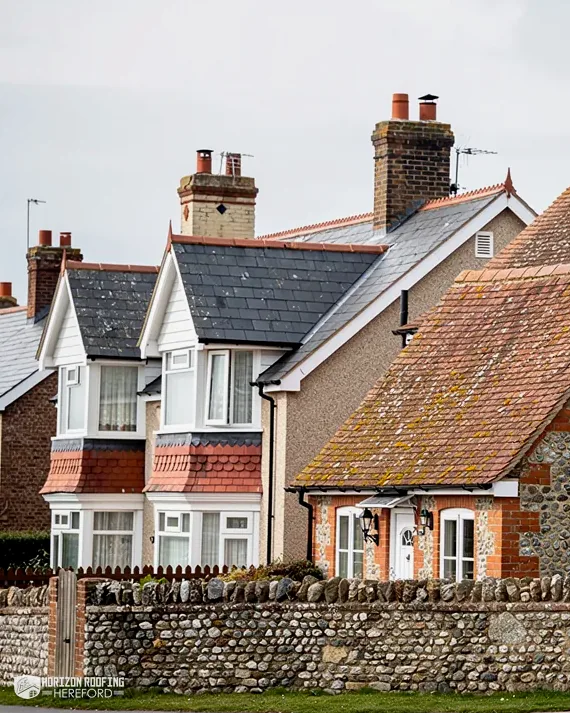
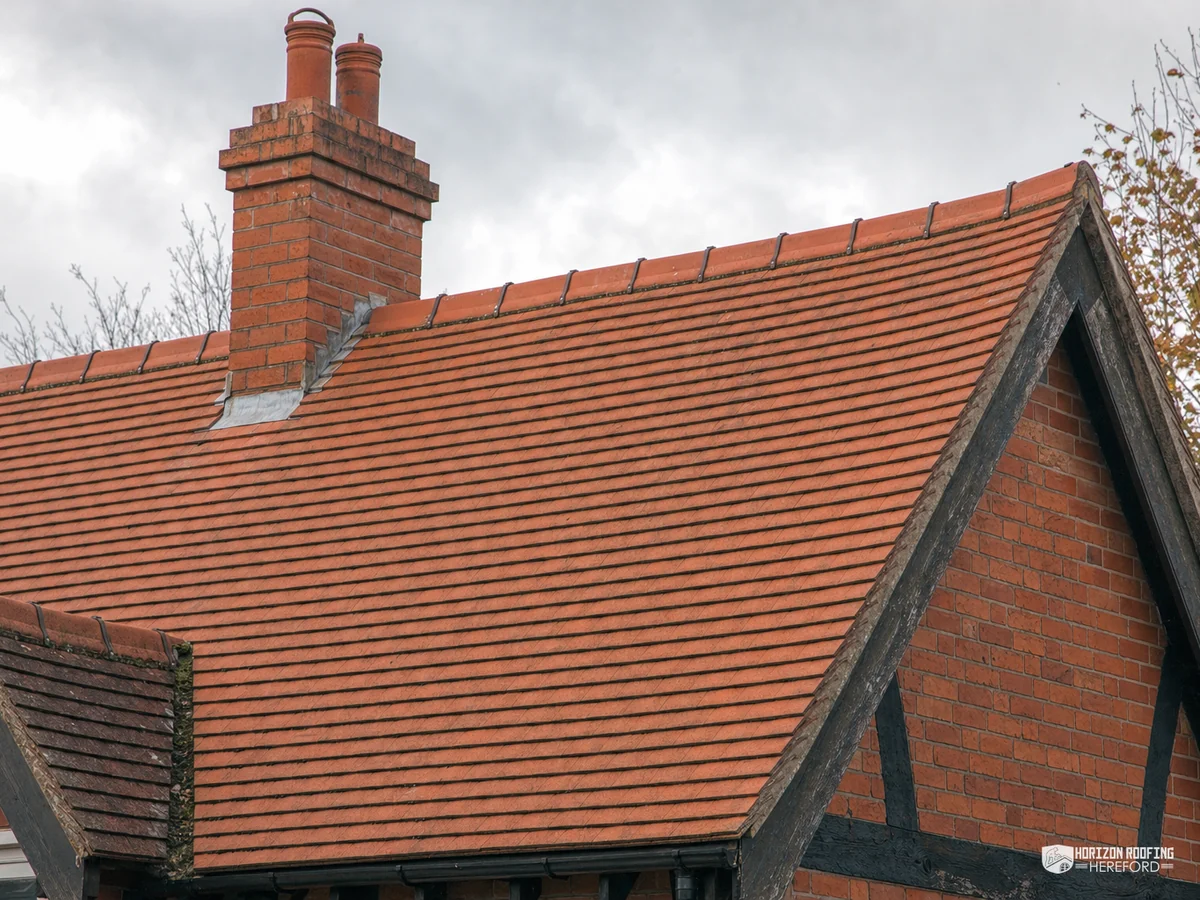
  • Older cottages with weathered clay tile roofs and brick chimneys behind a flint wall
    Clungunford FarmhouseA Grade II farmhouse, so chimney and roof repairs are agreed with the council.
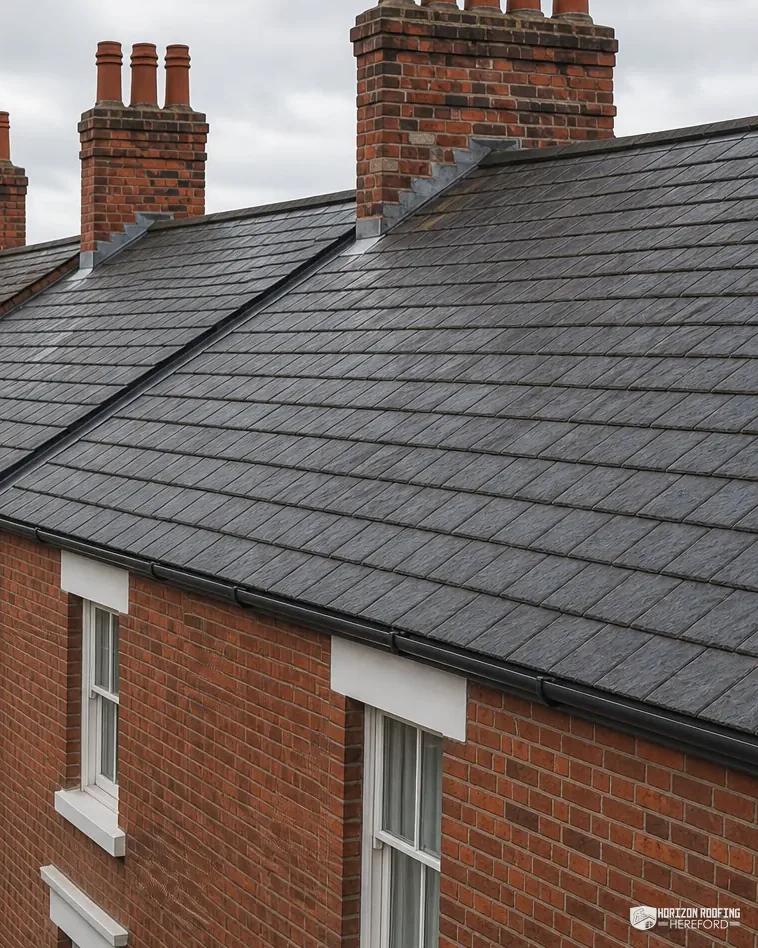
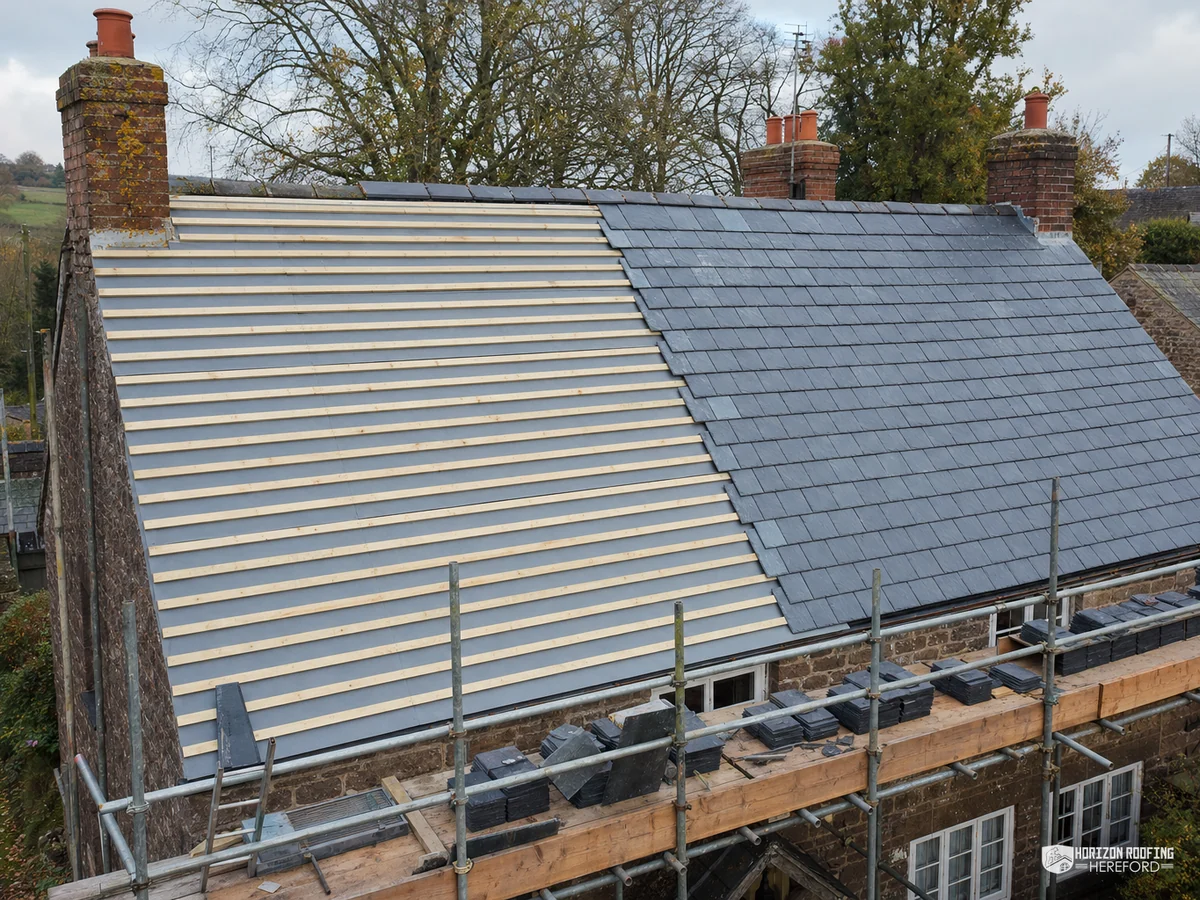
  • Slate roofs and chimney stacks along a red brick Victorian terrace
    Clungunford HouseGrade II too, so a chimney rebuild there starts with listed building consent.
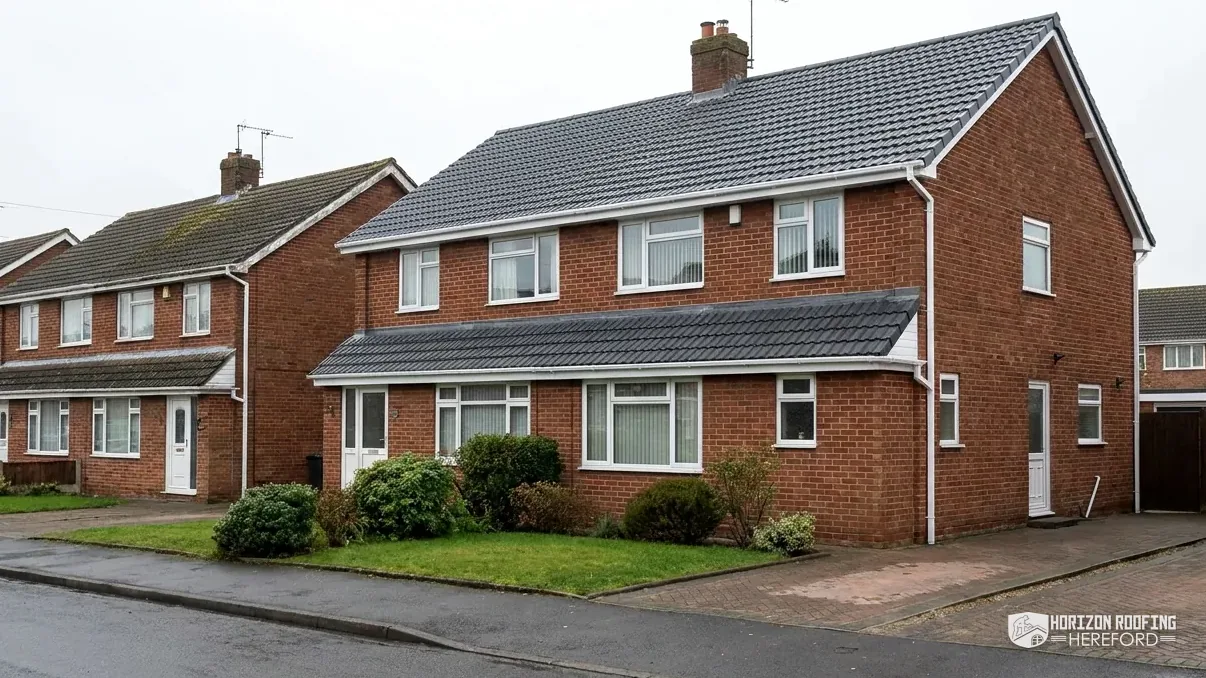
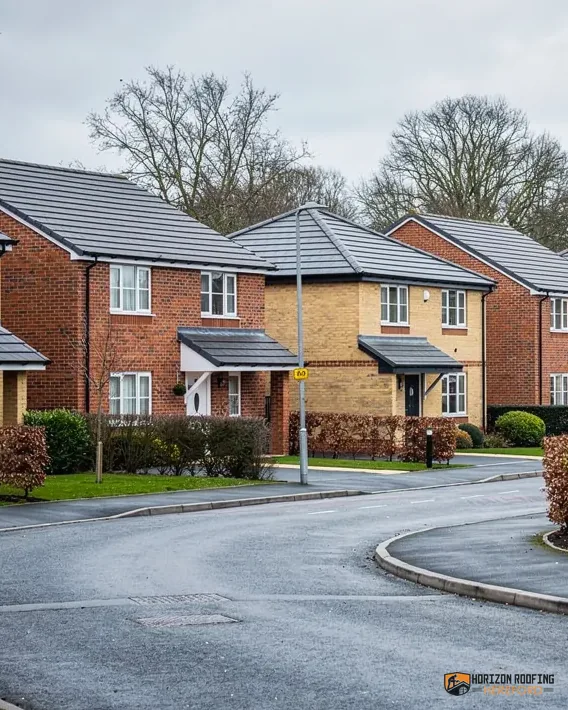
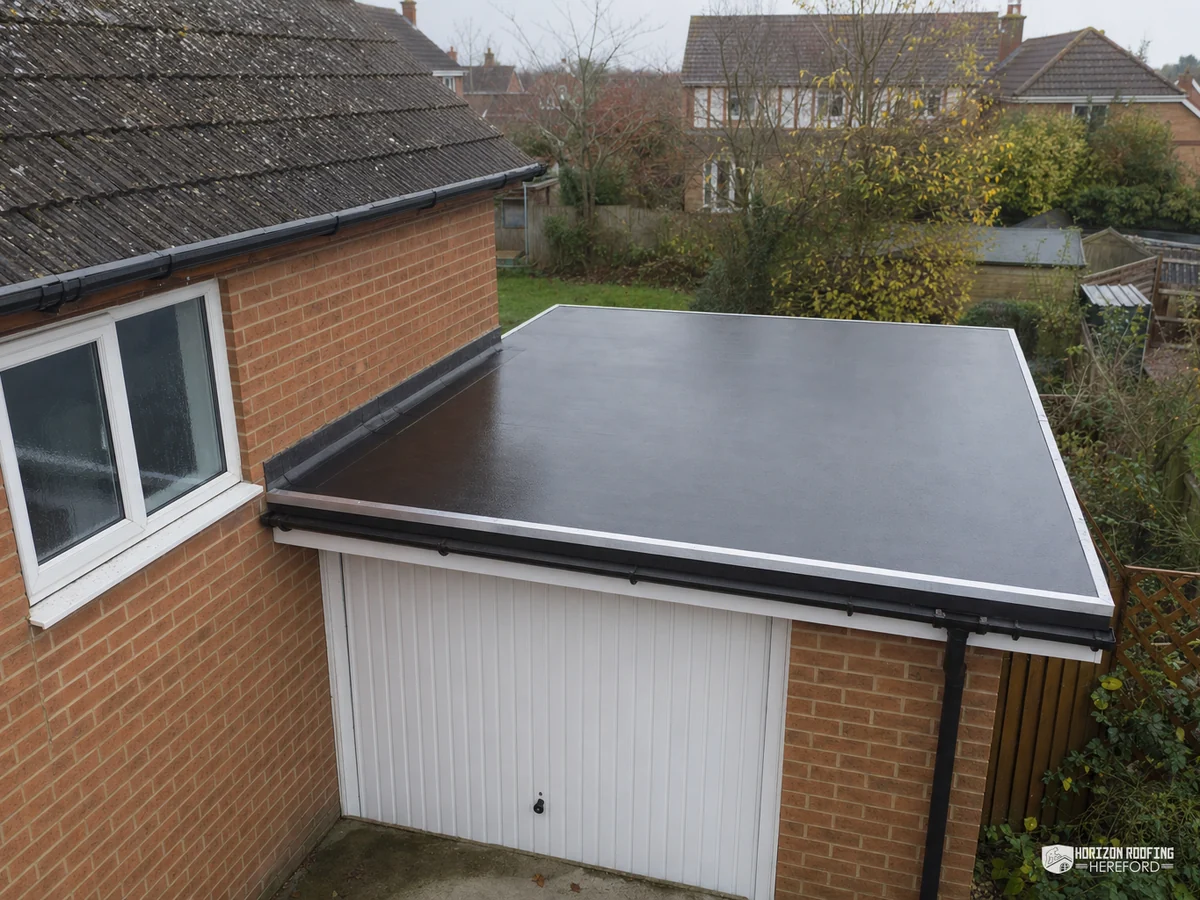
  • Newer homes with grey concrete tile roofs along a curving estate road
    St Cuthbert's churchGrade II*; while in use its roof works go through the faculty system.

A map view of Clungunford

Clungunford on a street map, with a dashed circle around the town and the nearest towns we cover. Tiles © Esri; map data © Esri, HERE, Garmin, OpenStreetMap contributors.

Clungunford roofs, from the stack down

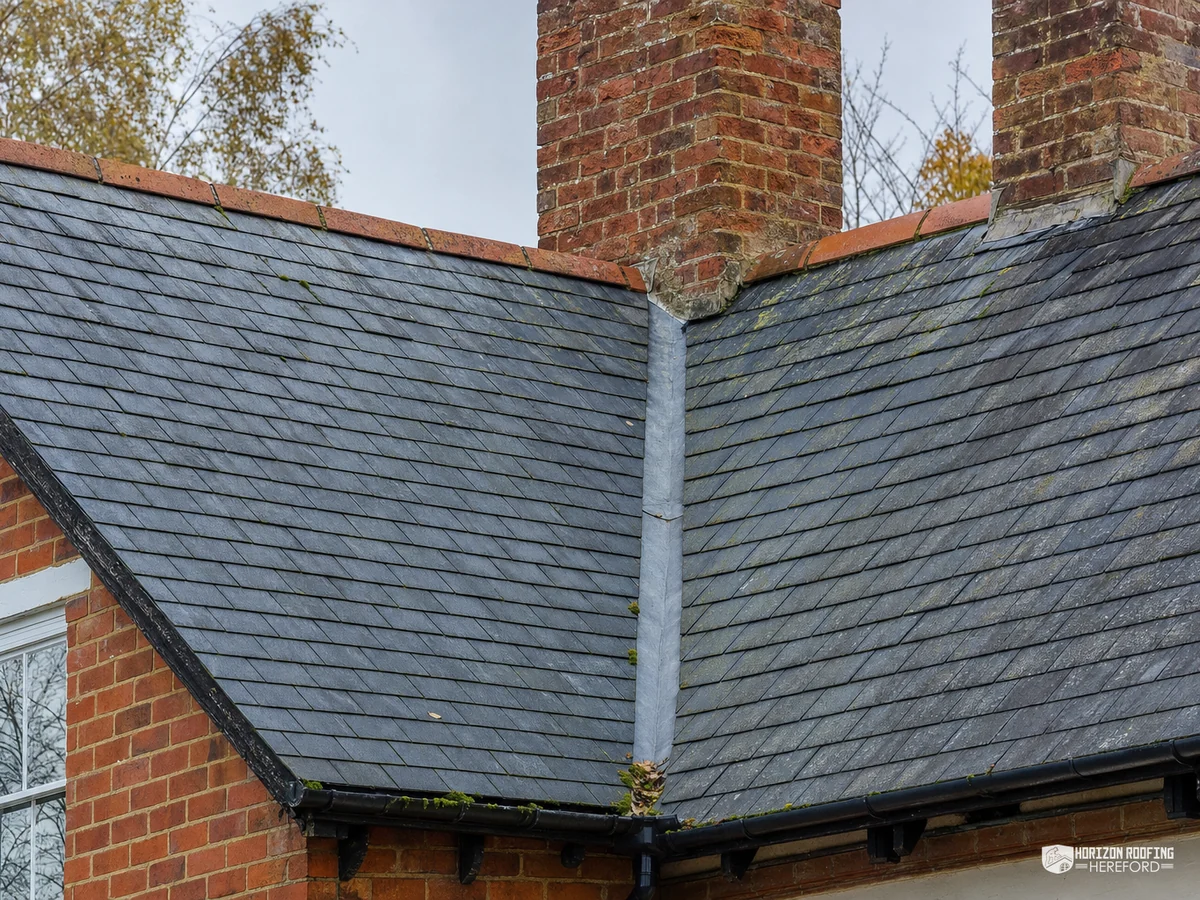
Clungunford surveyed: stacks and their lead, valleys and the listed walls

We begin at the chimney stack and its lead, move on to the valleys where two slopes meet, and finish at the Grade II* church wall and the farmhouses that carry listings.

A drawn cut-away section through a Herefordshire border house: the front of the main roof is cut open to show the rafters, underlay, battens and slates, beside a black-and-white timber-framed gable. Numbered, from the ridge down: 1 Stack; 2 Valley; 3 Listed walls.

Fig. 1 A village house in section, with stack, valley and wall head numbered.

Callout 1 of 3

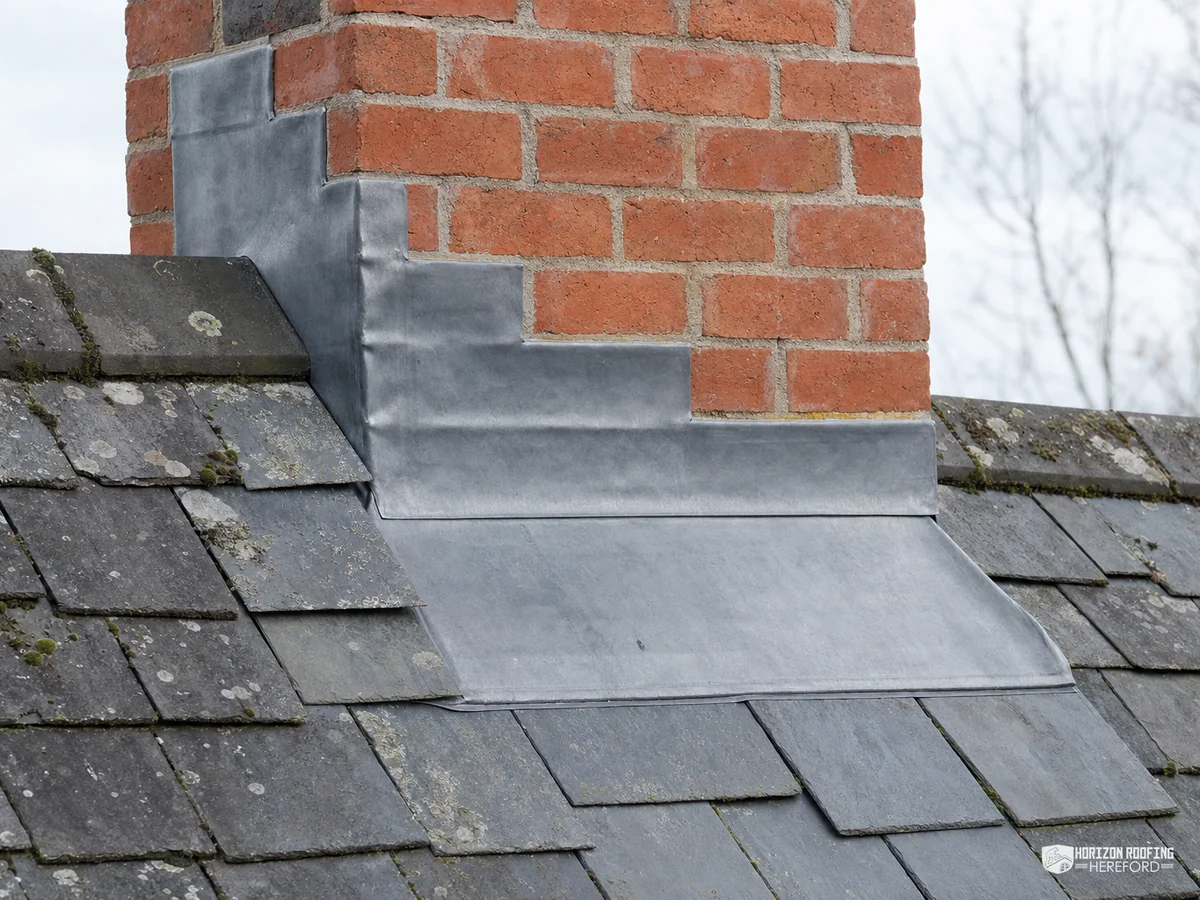
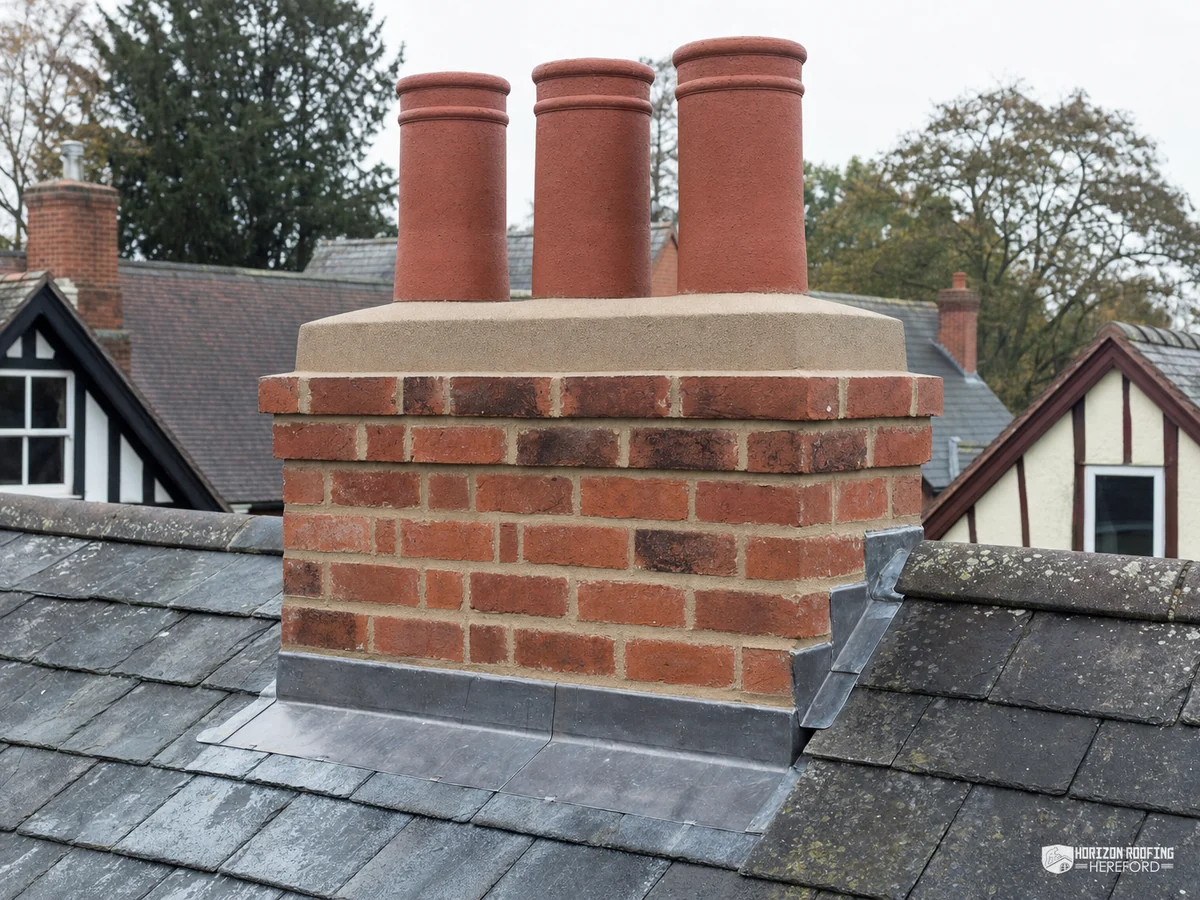
Pots, pointing and the lead on a Clungunford stack

Pointing means the mortar between the units, and on a chimney it faces the weather from four sides at once. We start at the stack because a fault up there can feed damp into the rooms below well before a mark appears on a ceiling. Clungunford Farmhouse (Grade II, list entry 1367014, first listed 28 May 1987) and Clungunford House (Grade II, list entry 1054948, first listed 1 December 1951) are both listed, so repointing, rebuilding or renewing lead on a stack is talked through with Shropshire Council as listed building work before a ladder goes up. We photograph every face of the stack, the pots, and the flaunching, which is the mortar bed that the pots stand in, and the pictures come with the report.

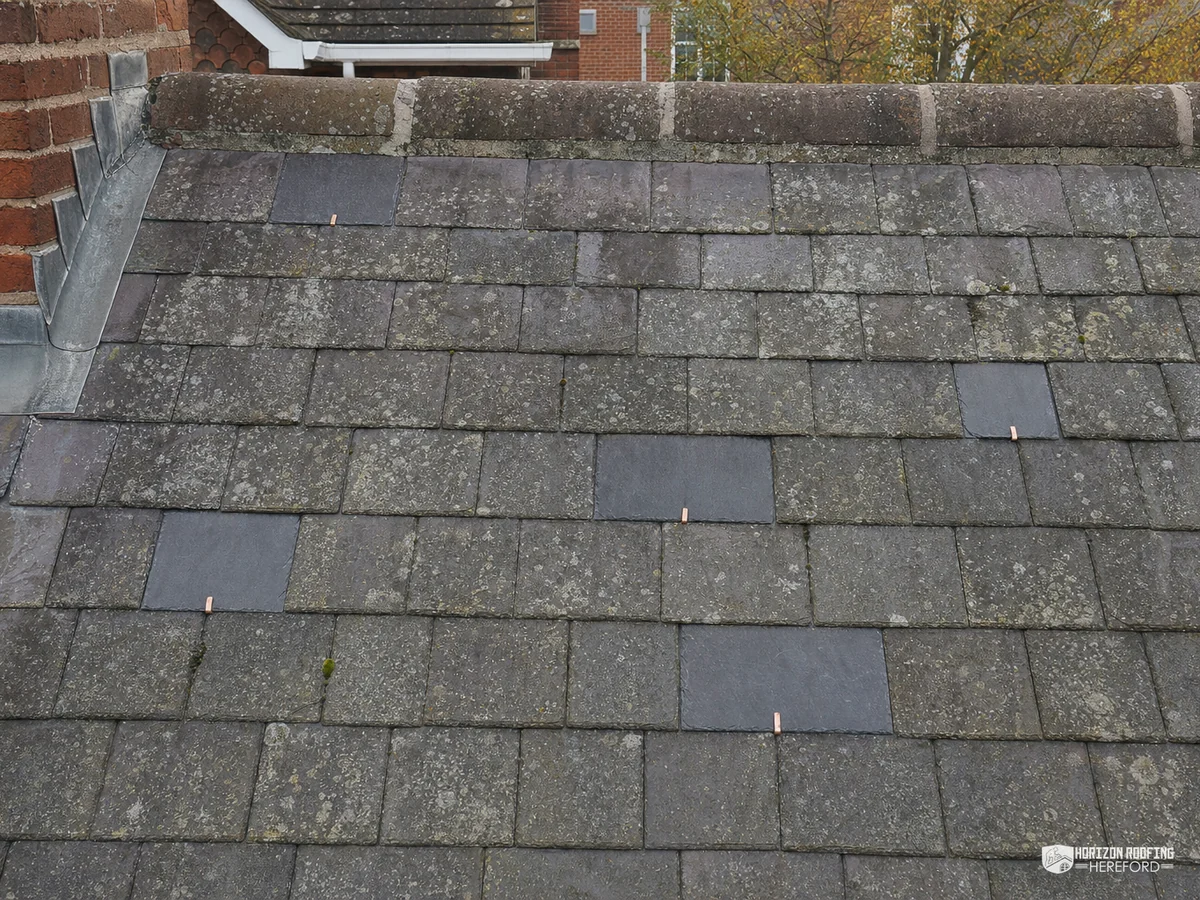
Lead does the joint work where the stack pushes through the covering. Three pieces matter. The flashing is lead pressed into a raked-out joint in the stonework or brickwork and laid down over the roof covering. The soakers are small folded sheets interleaved with the courses alongside. Behind the stack sits the back gutter, a lead channel that steers water out to the slopes either side. Royston Lead's table links thickness to use: Code 3 is "Recommended for lead soakers only", while Codes 4, 5 and 6 are marked for flashings. Split or lifted lengths are cut out and renewed, since sealant over a crack is no repair.

Rules enter the picture when a stack job grows. Taking out a chimney breast, the masonry that rises from the fireplace, brings the Planning Portal's line that "Building regulations approval will always apply when removing chimney breasts as they are part of the building's structure." Under the Party Wall etc. Act 1996, a breast cut away from a wall shared with a neighbour needs a notice from the building owner at least two months before work starts. A neighbour who has not consented in writing within 14 days is deemed to dissent, and surveyors are appointed.

A disused flue still has a stack above it to look after. Capping or removing the flue is a different job from repointing, and either way the pots, the flaunching and the top courses are the first things inspected. From the loft hatch we check the breast for damp, since moisture that has run down from a failed flashing leaves a stain there. MyJobQuote gives lead flashing a hedged "can last for over 80 years" if fitted properly, which is a reason to repair good lead and not strip it. Our chimney repairs page covers repointing and rebuilds in more depth.

Parts of a Clungunford stack we look at

Pointing
Raked out and refilled where joints have opened
Flaunching
The sloped mortar collar round the pots
Pots
Checked for cracks and a firm seat
Flashings
Lead tucked into joints, dressed over the covering
Back gutter
The lead trough that turns water round the stack

Trouble at the stack shows indoors late, so the survey looks there first.

Fig. 2 Chimneys, drawn close

Callout 2 of 3

Valleys, where two slopes pour into one channel

A valley is formed at any inside angle between two slopes, and both of them empty into it. It drains a double load, which is more than any flashing on a wall has to handle. A lead-lined valley is a trough set between the slopes, with the tiles or slates on each side cut back to leave a strip of lead open to the sky, and the width of that strip decides how easily the channel clears itself. A house with an L-shaped plan or a cross-wing has at least one, and a farmhouse extended over the years can have several.

The faults are simple ones. Leaves and moss pile up, a split opens along a fold, or a unit at the edge lifts and lets water run beneath it. A blocked valley throws its water over the side, and the stain on a ceiling can appear some way from the real fault, which is why the loft visit matters as much as the climb. We clear the channel, check the lead for splits and lifted edges, and look at every unit that touches it. The valley is photographed from both ends and the middle, with the width of the open lead recorded, so the report shows you its condition and not only our opinion.

Royston Lead's table lists Codes 4 to 8 for pitched valley gutters, so a valley takes thicker lead than a soaker does, and the code is chosen for the job in front of us. A valley's life turns on what lands in it, since overhanging trees, a blocked outlet or a cracked edge unit can each cut it short.

Where reaching a valley means stripping a whole slope, the share of the roof touched starts to matter. The Planning Portal asks whether less than 25 per cent of the building envelope and less than 50 per cent of the roof is affected before an application is normally needed in England. A like-for-like lead repair stays well inside that, while a strip-and-relay of both slopes may not. We read that out at the survey, with the valley photographed, so the extent of the job is agreed before the written total is set. For a listed house, listed building consent is a separate step on top.

A question about valley stains

Why can a valley fault stain a ceiling far from the valley?

Water that spills over the side of a blocked valley runs under the covering and can travel along the timbers before it drips, so the stain and the fault may sit some distance apart. That is why we check the channel and the loft together.

Fig. 3 The valley, drawn close

Callout 3 of 3

Church wall, farmhouses and the rules around them

At the wall head the roof ends against masonry, and the council's lists take over. Whatever runs off the roof there streaks the wall below, so we study the stonework for green marks and damp as well as the lead above. St Cuthbert's church is listed Grade II* (list entry 1367013, first listed 21 March 1968). An Anglican church with a weekly Thursday meditation, St Cuthbert's has its roof works settled under the faculty jurisdiction while it stays in use, so they bypass listed building consent from the council. Four other bodies keep systems of their own for buildings in use: the Methodist Church, Roman Catholic dioceses, the URC and, where a Schedule 1 trust corporation holds the chapel, the Baptist Union. A Unitarian or Quaker meeting house, a closed chapel and a Churches Conservation Trust church all need listed building consent.

The houses are another matter. Clungunford Farmhouse, Number 1 and 2 (list entry 1054947, first listed 28 May 1987) and Clungunford House are all Grade II. Section 7 of the Planning (Listed Buildings and Conservation Areas) Act 1990 requires listed building consent for works that affect a building's special character, and the permitted development rights a listed house keeps do not replace it. Materials and method are agreed before a unit comes off, and our photographs travel with the application. Old roof voids can hold bats, and GOV.UK says "All bat species, their breeding sites and resting places are fully protected by law", with licences coming from Natural England in England, so a loft and the eaves are checked before a strip begins.

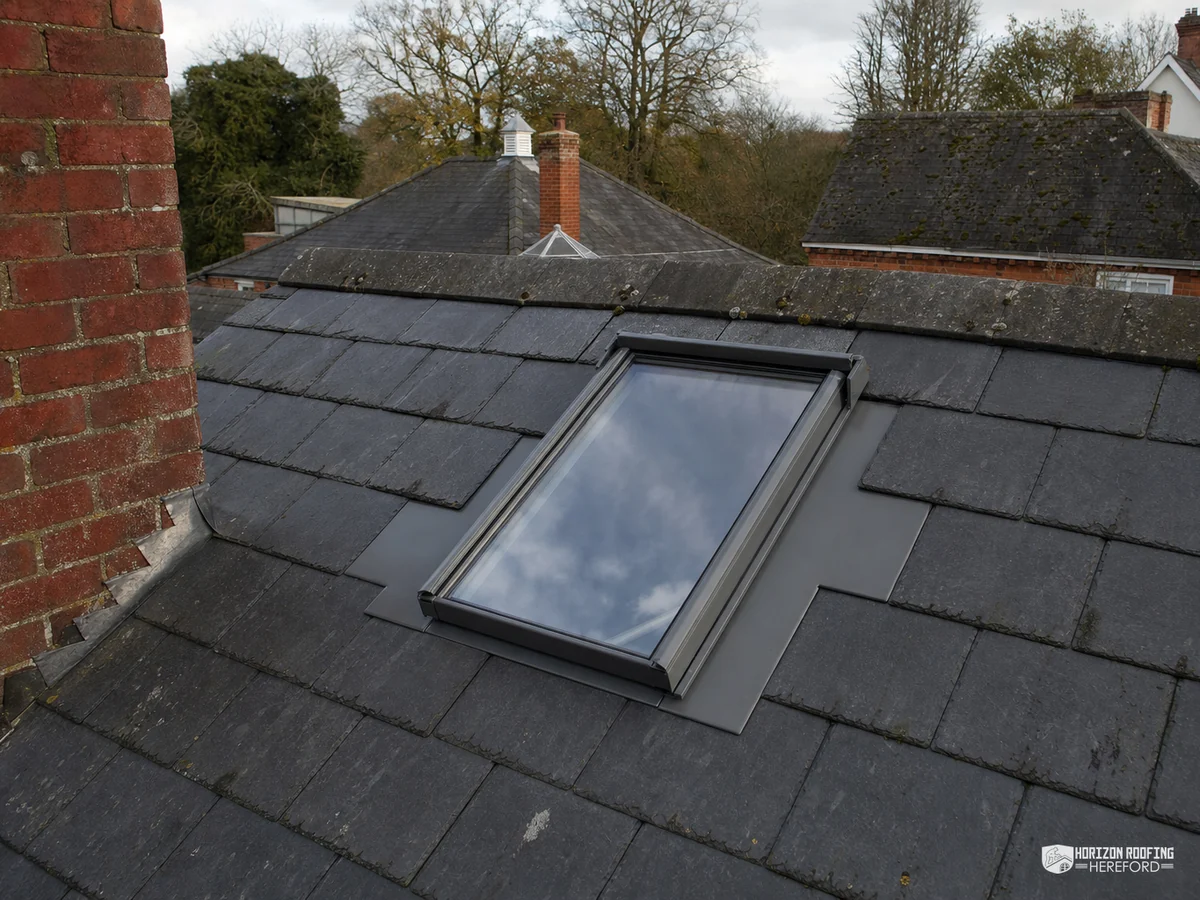
Shropshire Council records a conservation area named Clungunford, so ask the council if your address sits within it, and check whether an Article 4 direction applies with Shropshire Council, since a direction strips some permitted development rights from a defined area. The Shropshire Hills National Landscape overlaps some of the ground around Clungunford. That designation does not decide planning, because Shropshire Council does, but on the English side it still counts for any Clungunford dormer. Our planning guide for roof windows sets out what applies to a window in the slope.

Building control for a Clungunford address is Shropshire Council Building Control on 01743 258710, and a registered building control approver can act in its place. Our listed and heritage roofing page explains how we plan work on protected buildings.

Where a church roof meets its wall

SoundLead seated, joint tight, wall face dry below
Needs workLifted lead, open joint, damp staining on the wall face

Clungunford stacks, lead and listings answered

Does repointing the chimney of Clungunford Farmhouse need listed building consent?

The farmhouse is Grade II (list entry 1367014, first listed 28 May 1987), and works that would harm its character need listed building consent under section 7 of the 1990 Act. Whether a repoint counts is for Shropshire Council to say, since it turns on the mortar and the joint style. We photograph the stack and describe the existing mortar, so the council has what it needs before any work is priced.

Which lead code goes round a chimney stack in Clungunford?

Royston Lead's table marks Code 3 as recommended for soakers only, and lists Codes 4, 5 and 6 for flashings, so one stack can carry more than one code. We choose them on site from the length of each run and how exposed it is. MyJobQuote puts the life of well-fitted lead flashing at over 80 years, a figure worded as a possibility, not a pledge.

How does a party wall notice work for a shared chimney breast in Clungunford?

Under the Party Wall etc. Act 1996, an owner who wants a shared breast cut away must give notice at least two months before starting work (section 3). A neighbour silent for 14 days is deemed to dissent (section 5), and surveyors are then appointed (section 10), while written consent avoids all that. Party wall questions go to a party wall surveyor, not to building control.

Is my Clungunford house inside the conservation area, and does that stop a re-roof?

Shropshire Council records a conservation area named Clungunford, and the council can tell you where the boundary runs. In England a dormer is what a conservation area touches, and the guide covers a new covering and a roof window too. Ask the council about Article 4 too: where a direction covers your street, some rights that a house normally has are taken away.

What does Shropshire Council charge for scaffold on a Clungunford lane?

Section 169 of the Highways Act 1980 covers scaffold on the highway, which needs a licence. Shropshire Council's fee for a scaffolding or hoarding licence is £200, with no period stated, and it needs ten working days, Saturdays excluded, between application and erection. We arrange the licence with our scaffolder, and the written total covers the scaffold and the licence together.

Where does a Clungunford re-roof go for building control?

Shropshire Council Building Control answers on 01743 258710, and a registered building control approver is the alternative. If the roof is renovated, AD L 2021 Table 4.3 gives a threshold of 0.35 and an improved figure of 0.16, with AD L 2026 Table 3.3 taking over from 24 March 2027. We confirm which route applies before a price is written for the job.

Which Clungunford stack needs a look first?

Tell us what you can see or send a photo, and the visit that follows produces a single written total.

10-year workmanship guarantee, in writing