
01432 610152 Get a quote Call 01432 610152

Roofers in Clifton upon Teme

Clifton upon Teme's roofs, from a tiled Grade II* church to listed houses in the Village.

We start with the slope and the eaves, send you photographs of anything wrong and write out a single total price.

Get a free quoteCall 01432 610152

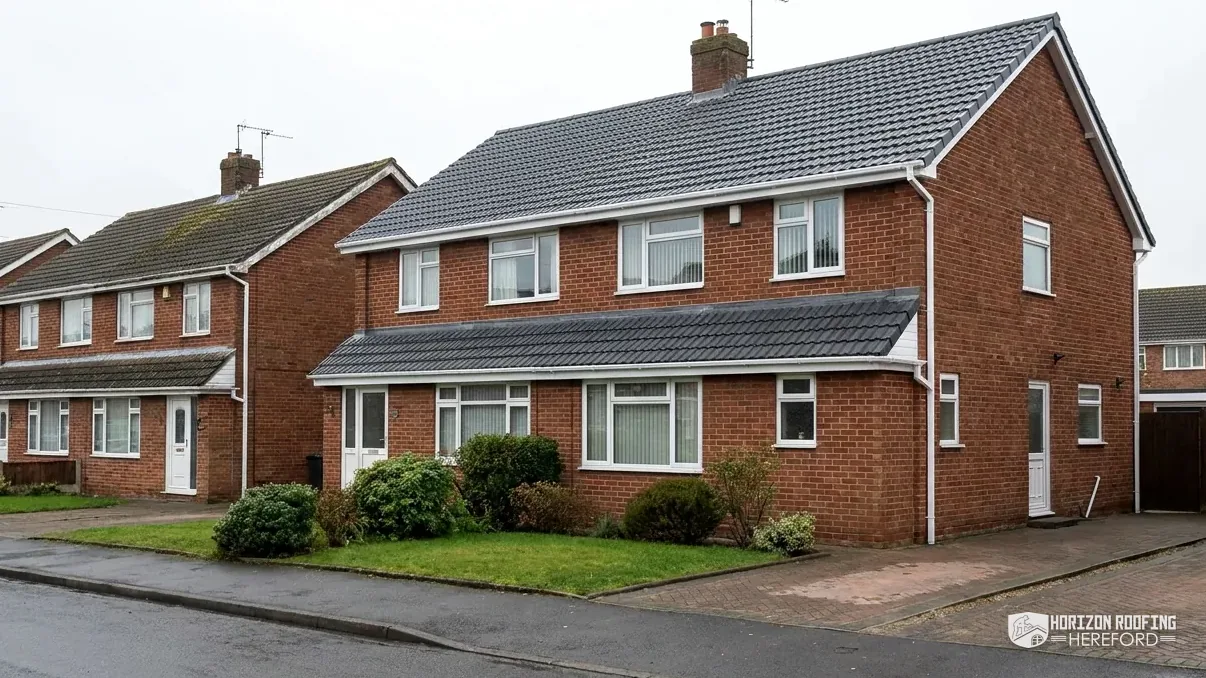
Clifton upon Teme roofs, church to Village

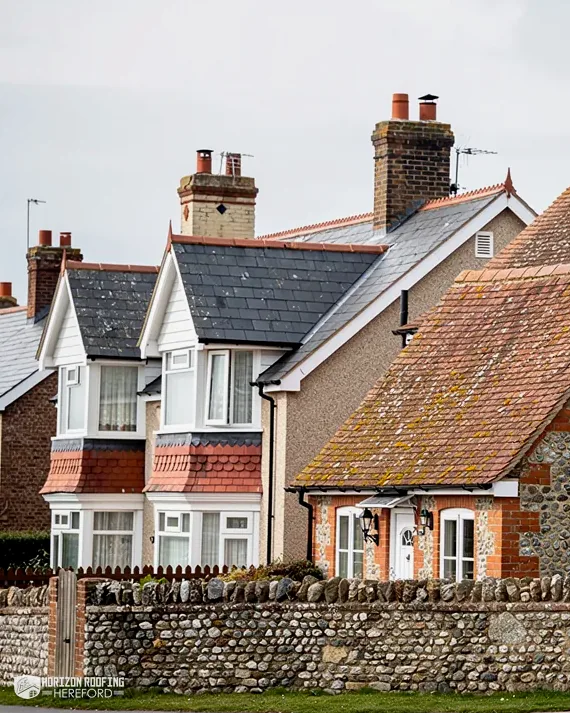
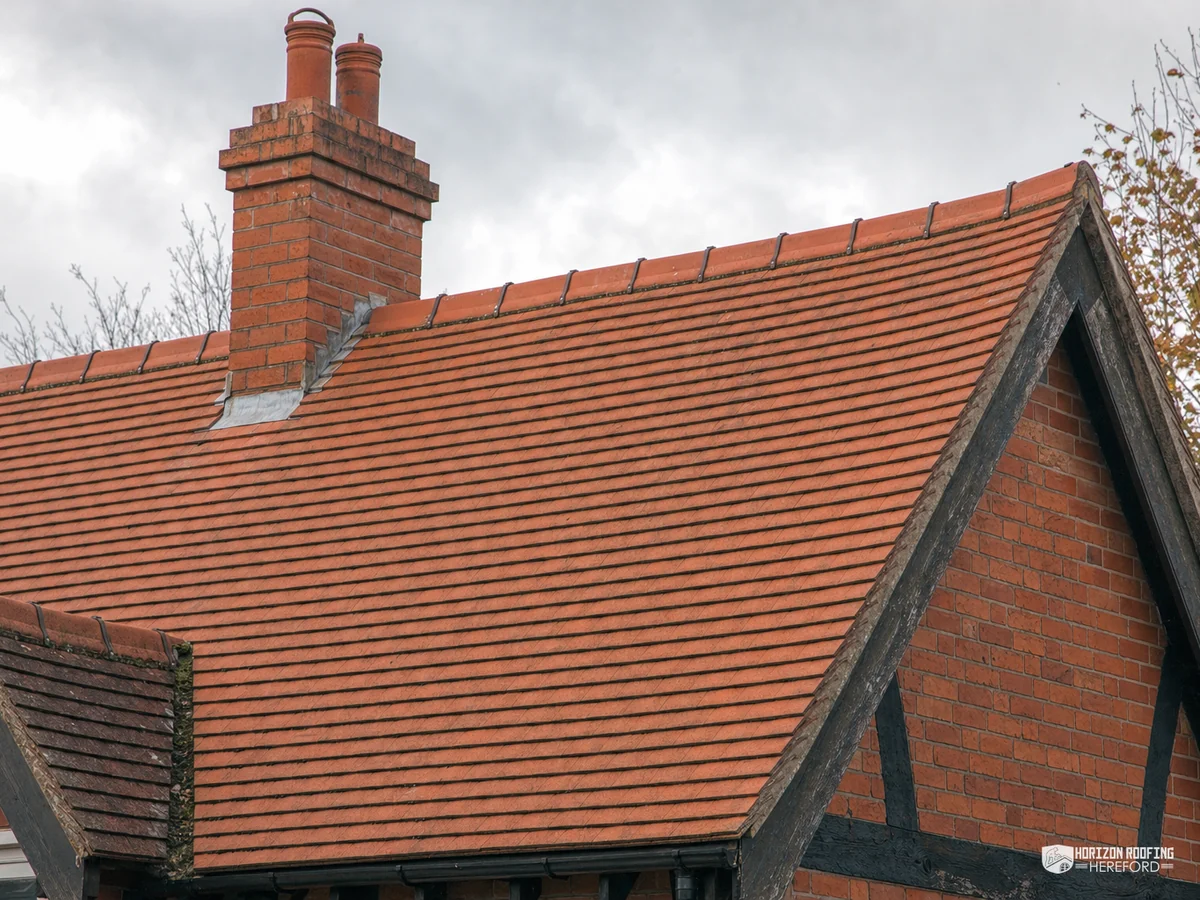
  • Older cottages with weathered clay tile roofs and brick chimneys behind a flint wall
    A tiled sandstone churchA 1924 account has a sandstone church under tiles, so each tile counts.
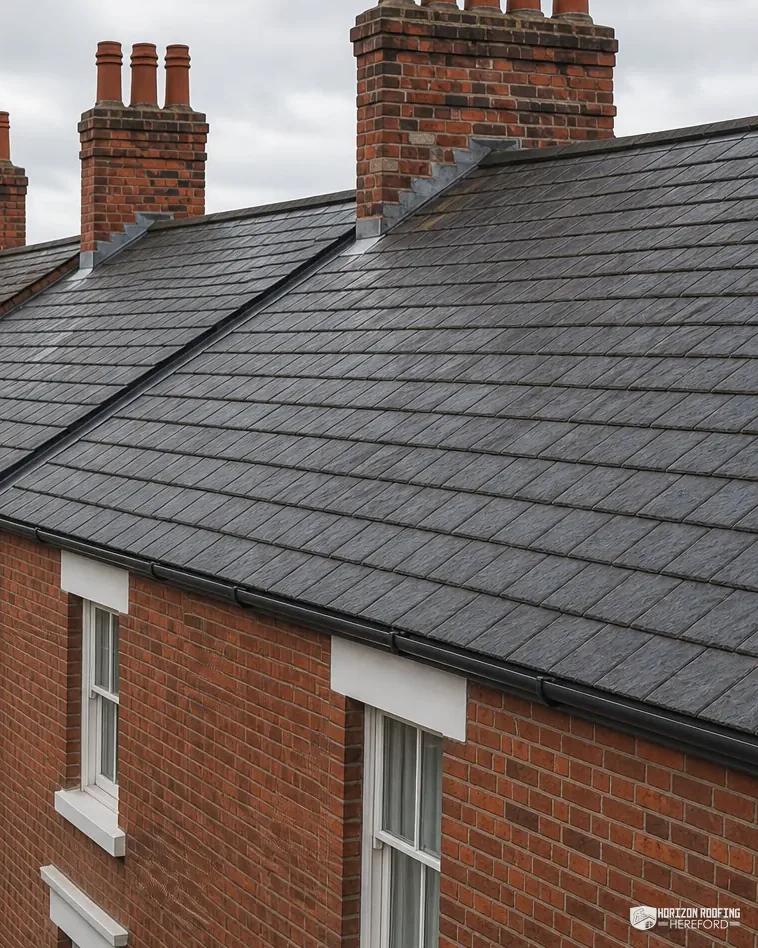
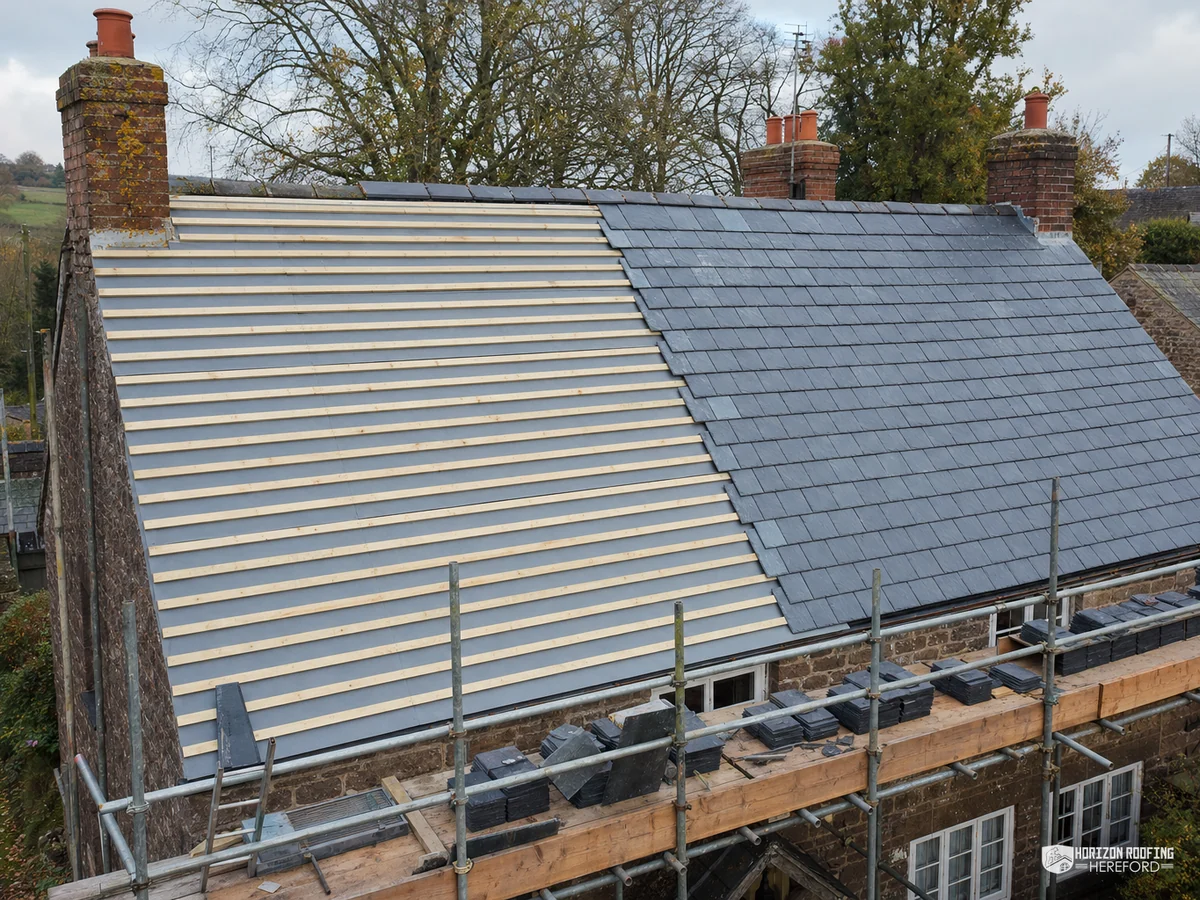
  • Slate roofs and chimney stacks along a red brick Victorian terrace
    Listed houses in the VillageListed houses on the village street need consent and a highway licence.
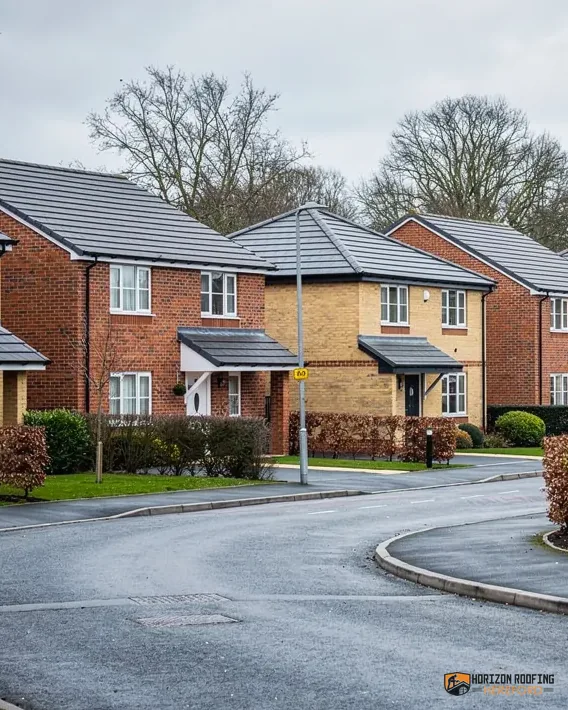
  • Newer homes with grey concrete tile roofs along a curving estate road
    The conservation area listMalvern Hills' conservation area list is the first thing to check.

Clifton upon Teme and the miles from Hereford

Clifton upon Teme on a street map, with a dashed circle around the town and the nearest towns we cover. Tiles © Esri; map data © Esri, HERE, Garmin, OpenStreetMap contributors.

Clifton upon Teme: church tiles to Village eaves

Church slope, listed street, conservation area: Clifton upon Teme in three callouts

Our survey of a Clifton upon Teme roof climbs from the church slope to the village eaves and ends at the conservation area, with the consents and the building control route that bind any repair.

A drawn cut-away section through a Herefordshire border house: the front of the main roof is cut open to show the rafters, underlay, battens and slates, beside a black-and-white timber-framed gable. Numbered, from the ridge down: 1 Church slope; 2 Village eaves; 3 Village wall.

Fig. 1 Church slope, village eaves and conservation wall, numbered in survey order.

Callout 1 of 3

A tiled church roof over sandstone walls

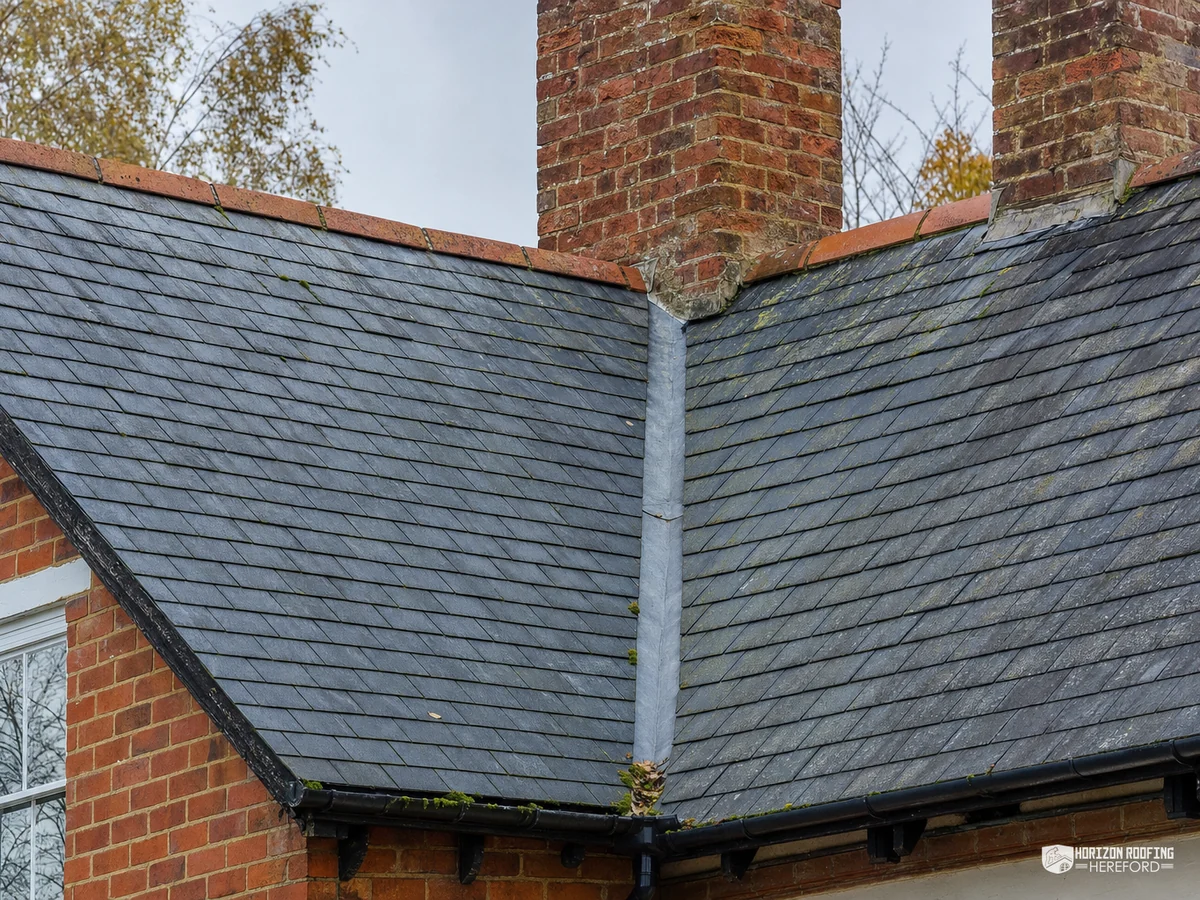
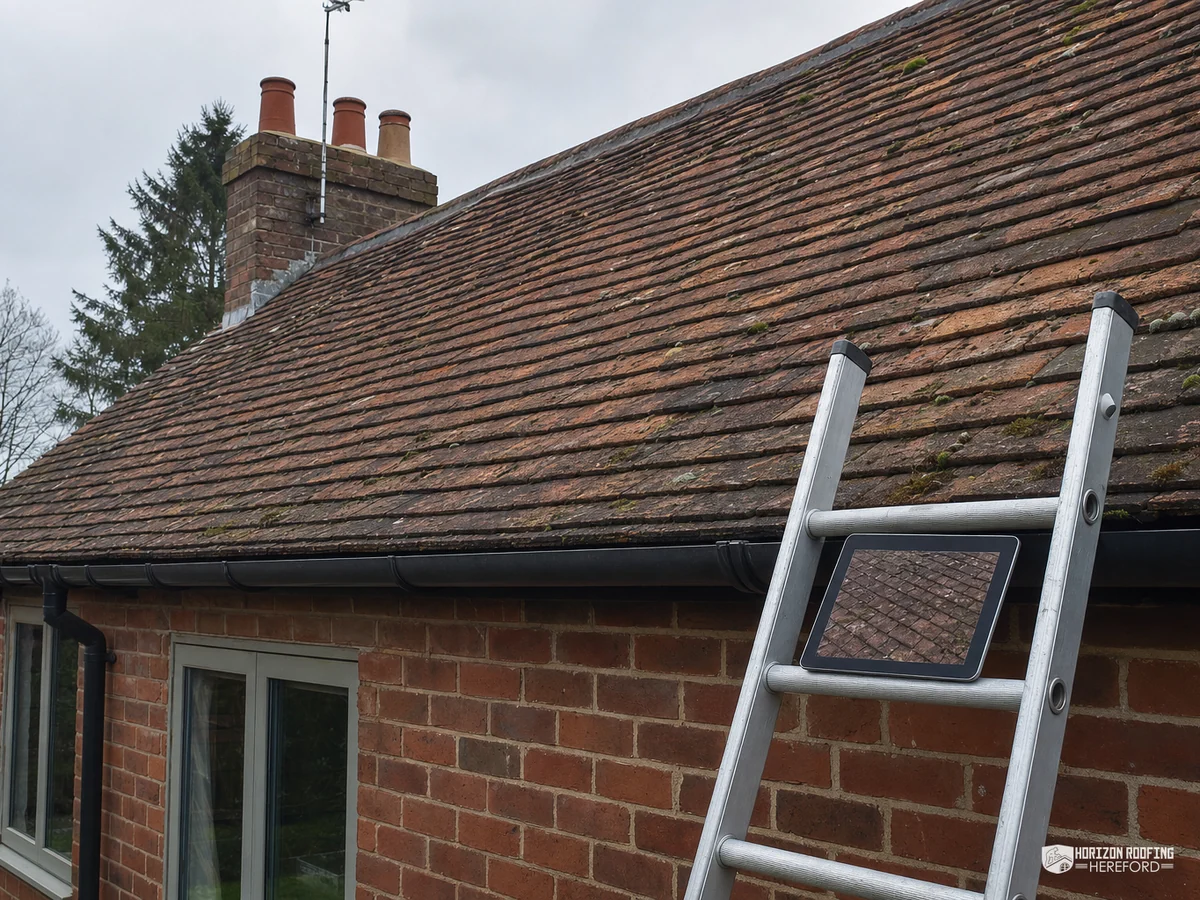
The survey starts on the slope of the church. A Victoria County History account of 1924 says that "The church is built of coursed sandstone, plastered internally, and is roofed with tiles." Coursed sandstone is stone laid in level rows, and the roof above it is a tiled slope, with battens, thin timber strips, carrying each tile and an underlay beneath them. That description is more than a century old, so we do not assume what is on the roof today. We identify the tile in front of us, because clay, concrete and fibre cement age at different rates.

The Church of St Kenelm is listed Grade II* (list entry 1083009, first listed 29 July 1959). St Kenelm's sits in the Anglican benefice whose service lists cover Clifton, the Shelsleys and Harpley, and while the church remains in use for worship, its roof works are decided through the diocese's faculty system, with no listed building consent from the council. That is the ecclesiastical exemption, and it holds only while the building is in use; a closed church needs consent. The faculty route is where any roof plan for the church begins.

Published lifespans differ by material. HomeBuilding lists clay tiles at "60-80 years" and fibre cement tiles at "30-40 years", and Marley quotes the BRE's minimum life of 60 years for clay roof tiles alone. A range describes a new roof in general, never yours in particular, and a tile past its range can still be sound. For that reason the survey looks at tiles one by one: face, edges, nib and fixing.

Stone takes the runoff from the roof above it. A gutter that overflows or mortar missing at a verge stains the wall below, and a stain in a photograph shows where water is leaving the roof. A slipped or cracked tile is a repair, and a covering failing across a whole slope is a re-cover. The report says which applies, with photographs from your own roof. Our roof repairs page covers replacing single tiles and rebedding the ridge and verges.

Checked on a Clifton upon Teme tiled slope

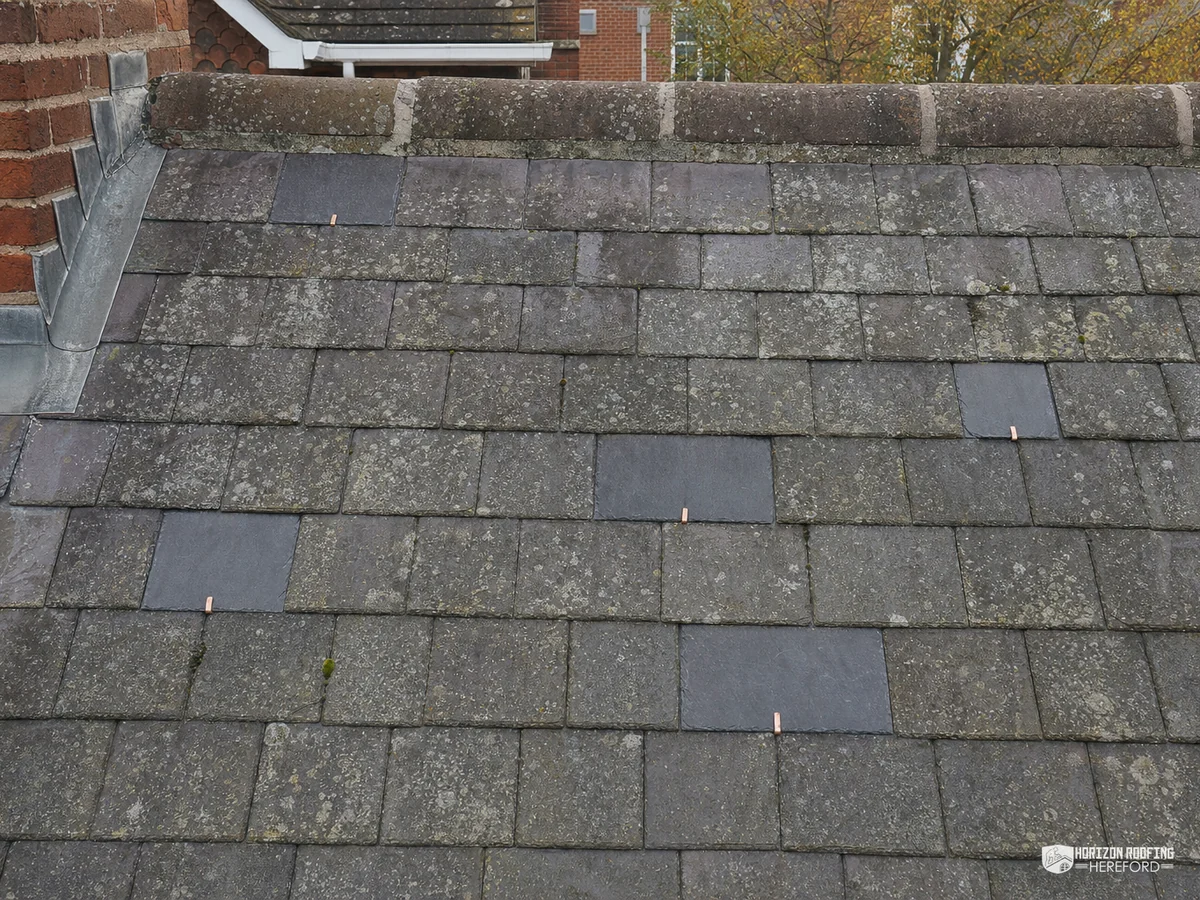
  • Tiles cracked, flaking or slipped
  • Nibs and fixings on any loose tile
  • Battens and underlay under a lifted tile
  • Ridge capping and verge mortar
  • Stains on the wall below the eaves

Stone takes the runoff from the roof above it, so the stain below shows where water is leaving.

Fig. 2 The slopes, drawn close

Callout 2 of 3

Eaves and gutters on a listed village frontage

The second callout is the eaves, and here they belong to the street. Among the listed houses on the street called the Village, 24, the Village (list entry 1157231), 26, the Village (list entry 1098647) and 22, the Village (list entry 1098646) are all Grade II, each first listed on 21 September 1984. On a listed frontage the gutters, the fascia and the eaves course belong to the way the house reads from the road, so a change of gutter material or profile goes to Malvern Hills District Council before price comes into it.

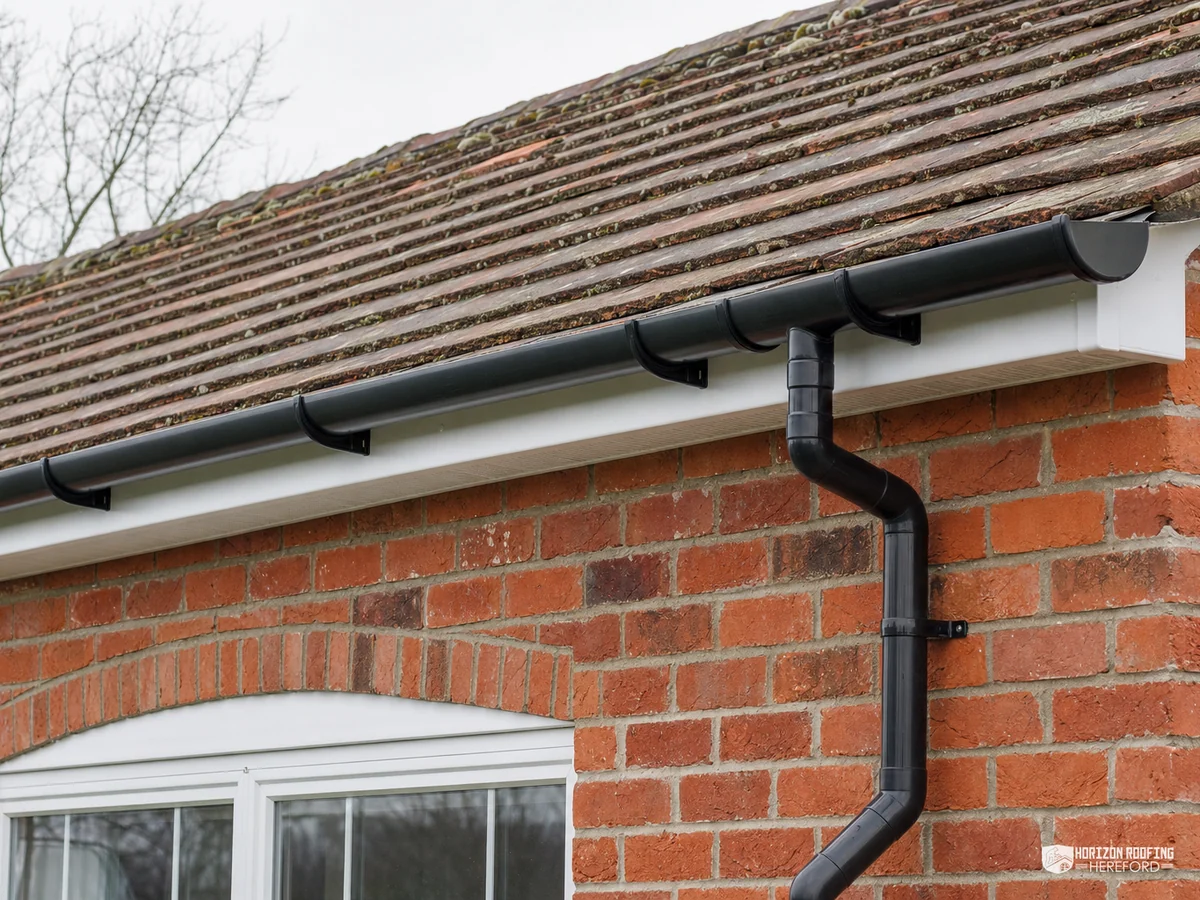
Gutters on a street frontage empty onto the road or into the drains beneath it, so a failed downpipe or a blocked hopper head throws water across the footway as well as down the wall. We trace each run from the gutter to the ground, photograph the outlets and report on the fascia behind the gutter.

A scaffold on a village street obstructs the highway, and section 169 of the Highways Act 1980 makes a licence a condition. Worcestershire County Council is the licensing body, and its page describes the contracted company as "required to apply" for it.

Inside the roof space, the foot of each rafter and the wall plate, the timber running along the top of the wall, are the places that show a long-running eaves leak. Dark staining on the timber, softness under a fingernail and a smell of damp are the signs, and none of them can be seen from the street. We photograph what is there and mark on the report which rafter feet are affected, so a repair can be scoped to the length of eaves that needs it.

Householder jobs carry health and safety duties too. Under regulation 7(1) of the Construction (Design and Management) Regulations 2015, the client's duties go to the sole contractor, or to the principal contractor on a job with several; a written agreement can send them to the principal designer instead. Where one contractor works alone, regulation 15(5) makes the construction phase plan that contractor's task, to be ready ahead of setting up the site. Our guttering, soffits and fascias page covers the eaves work itself.

Who carries the paperwork

Whose duties does regulation 7(1) of CDM move?

A domestic client's. They go to the sole contractor, or to the principal contractor when several firms work on the job, and a written agreement can send them to the principal designer. A construction phase plan is needed on every project either way.

On a listed frontage the gutter belongs to the picture the house presents to the road.

Fig. 3 Eaves and gutters, drawn close

Callout 3 of 3

The conservation area and the route through building control

The last callout is the wall at the edge of the village, and here it stands for the conservation area. The village is 22 road miles from central Hereford, in a north-easterly direction, and the 2021 Census counted 839 usual residents in the parish (ONS). The station at Worcester Foregate Street is 9.4 miles off as the crow flies. Malvern Hills District Council's conservation area list includes an area it names Clifton-on-Teme. Check your address against the council's map before you change how a roof reads from the road, because a conservation area alters the route for a dormer, and the guide explains where a roof window stands. Our planning guide for roof windows sets out how.

In a conservation area the planning route runs through the council, which reports no Article 4(2) Directions in force at present. Our report records the existing covering, its fixings and its condition, with photographs, so that the council sees what is there before it decides.

Building control for a Clifton upon Teme address is South Worcestershire Building Control, a partnership of Worcester City Council, Wychavon District Council and Malvern Hills District Council. A registered building control approver offers the private alternative. Either one will want to know the covering, the weight of any new covering and the insulation, so those are written into the survey from the start.

A conservation area also affects the practical side of a job. Scaffold, skips and deliveries all have to work on a village street, so access, the order of the work and the days the road is occupied are agreed before the start. The written price reflects that plan once the survey is done.

The listed frontage in the Village and the church are the obvious places to start reading about protected roofs, and the listed and heritage roofing page explains how a survey of one is carried out.

What sets the price in Clifton upon Teme

Listing
Whether consent must be settled first
Conservation area
Whether the council must see the plan
Scaffold
How long it stands on the highway
Covering
Matching the existing tile and its fixings
Condition
What the survey finds under the covering

One written total price, never itemised.

Clifton upon Teme roofs: church, street and consents

How can I tell a tired tiled roof from a sound one in Clifton upon Teme?

Look first for slipped, cracked or flaking tiles and for a ridge that has dipped, then at the gutters for plants or stains on the wall beneath. Inside the loft, daylight through the covering and damp battens are the signs to check. HomeBuilding lists clay tiles at 60-80 years and fibre cement at 30-40 years, but a range cannot tell you about your own roof. We photograph tile by tile and tell you which the roof needs: a repair, or a full re-cover.

Does roof work on St Kenelm's church need listed building consent?

St Kenelm's is listed Grade II* (list entry 1083009, first listed 29 July 1959). The faculty system of the diocese, not Malvern Hills District Council, decides roof works for as long as services are held in the building; that is the ecclesiastical exemption. Once a church closes, the exemption ends and listed building consent applies. We would not start until the faculty is in place, because the order of events is fixed by that process and not by our diary.

What changes for a roof inside the Clifton-on-Teme conservation area?

Malvern Hills District Council's list includes a Clifton-on-Teme conservation area, so ask the council whether your address is inside it. Malvern Hills District Council should see a Clifton dormer first, and the guide to roof windows and planning on this site lays out the rules for England. The council reports no Article 4(2) Directions in force at present. A re-cover and a new roof opening raise different questions, and the council answers both.

How much does Worcestershire charge to scaffold a house on the Village street?

Worcestershire County Council charges £85 per week and £65 for subsequent weeks, with a £25 urgency surcharge for urgent applications made within 2 days. Worcestershire County Council's page describes the contracted company as "required to apply" for the licence. The licence follows from section 169 of the Highways Act 1980 and is needed where scaffolding obstructs the highway. The scaffold is included in our written price.

Whose health and safety duties apply to a householder's roof job in Clifton upon Teme?

Regulation 7(1) of the Construction (Design and Management) Regulations 2015 moves the client's duties off a householder. They land on the sole contractor, on the principal contractor if several firms are involved, or on the principal designer by written agreement. When only one contractor is on the job, regulation 15(5) gives it the construction phase plan to prepare before work on site begins, and which arrangement fits your job is settled when the written price is given.

Does a new conservatory roof in Clifton upon Teme need Building Regulations approval?

The Planning Portal says a new roof "must comply with building regulations to ensure it is structurally safe, energy efficient and properly ventilated", so ask your building control body first. The exemption in AD L paragraph 0.14 applies only when every condition holds: ground level, a floor area that "does not exceed 30m2", glazing to Part K, a separating wall, door or window kept or replaced, and the house's heating system not extended into the conservatory. The exemption fails if any one condition does.

Book a slope-first survey in Clifton upon Teme

Give us the address, say what worries you about the roof, and we will agree a time to climb up and look.

10-year workmanship guarantee, in writing