
Callout 1 of 3
Gable ends and the verges that finish them
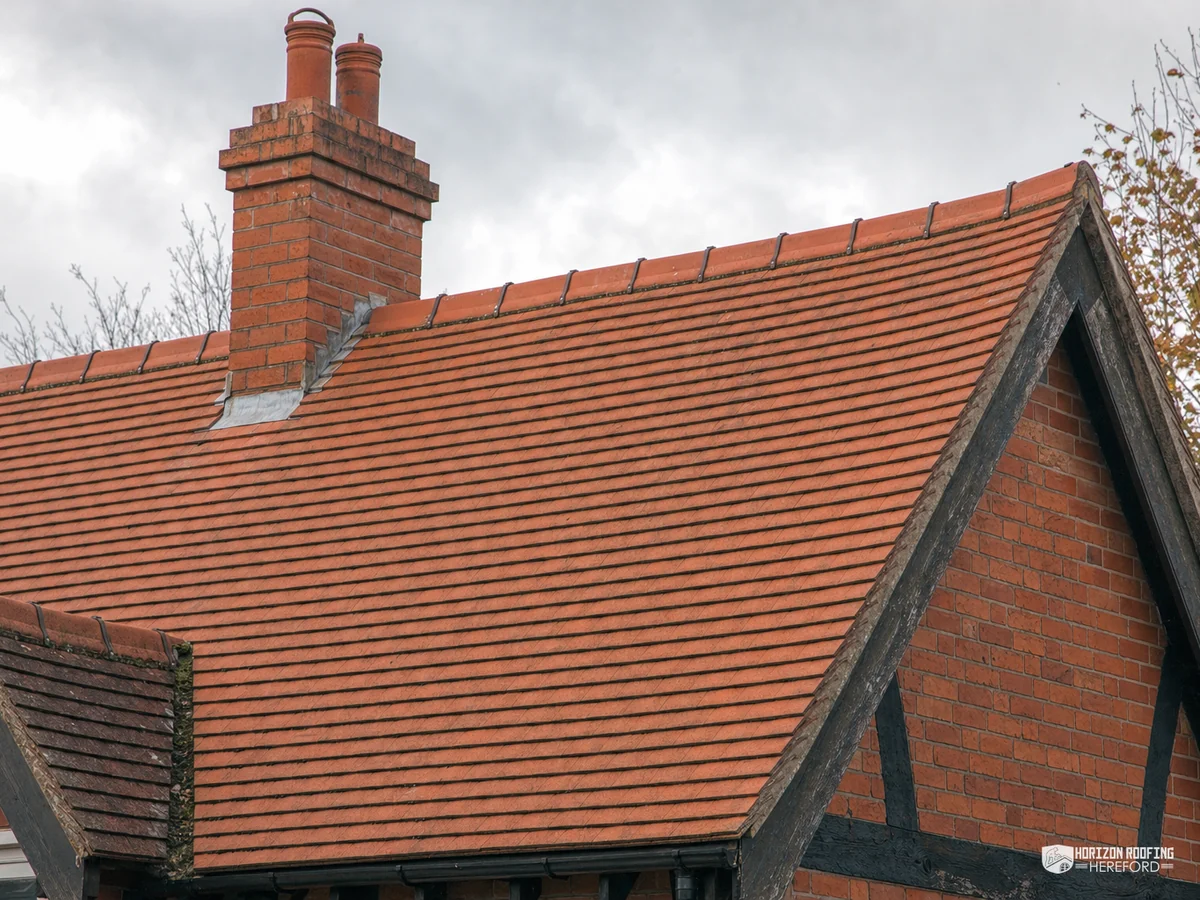
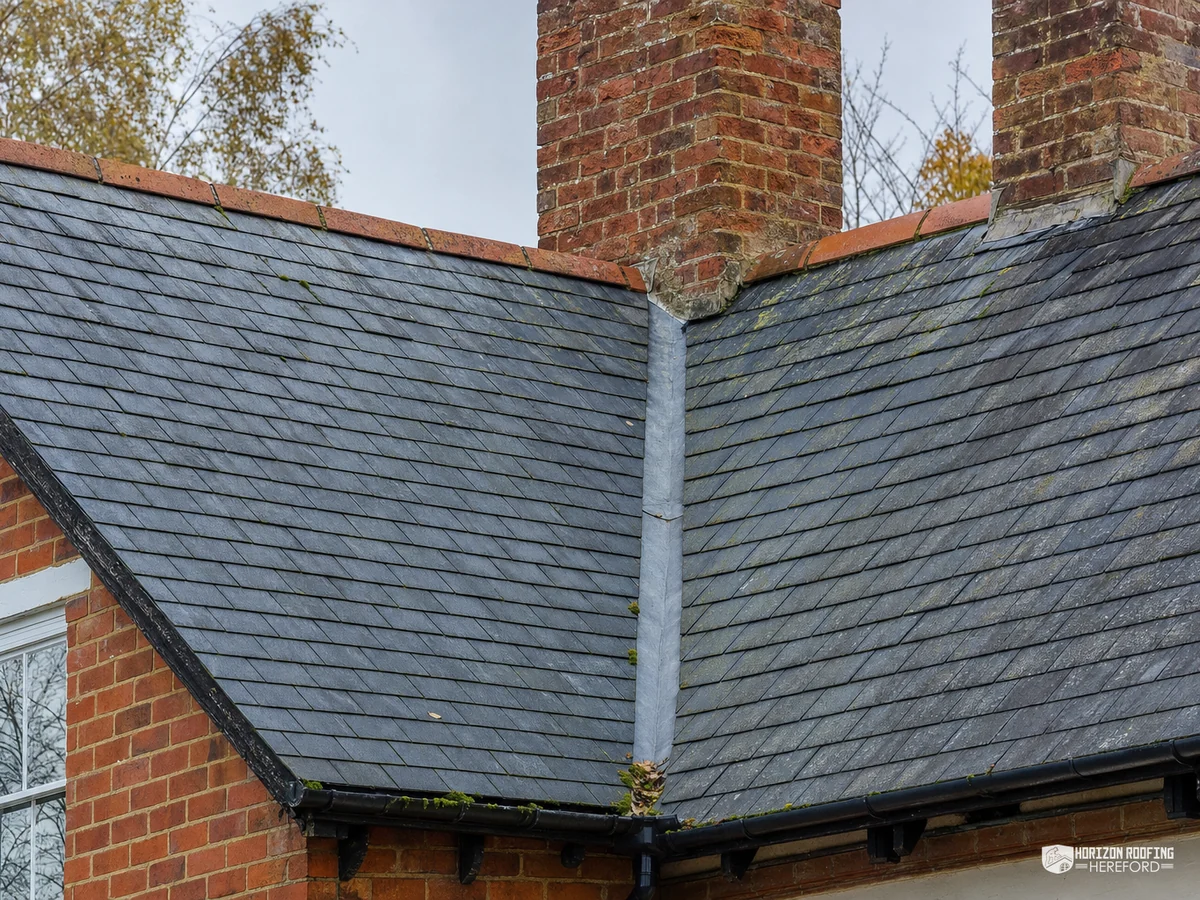
We start a Bushley survey at the gable ends. Where a roof ends at a gable wall, the last few courses form the verge, and its tiles or slates overhang the wall, throwing rain off beyond its face. Wind lifts that edge before it lifts anything else, which is why we look there first. Bushley has several listed houses. Paynes Place is Grade II* (list entry 1082219, first listed 11 August 1952), Wellingtonia House is Grade II (list entry 1082216, first listed 30 May 1984) and Church Farmhouse is Grade II (list entry 1082214). At the 2021 Census the parish had 372 usual residents.
A traditional verge is finished in mortar. Beneath the overhang sits an undercloak, a thin row of slate or tile set down to carry the last tiles, and the gap between them and the wall is pointed with mortar. Mortar cracks as a roof moves, and once pieces drop out the end tiles lose their bed. A dry verge swaps the mortar for a clip or cap fixed to the batten, and dry-fix verge parts are covered by BS 8612.
Wind lifts a roof edge before anything else, so the gable ends get looked at first.
At each gable we sight along the edge. A wavy line means a tile has dropped. A missing mortar bed means the end tiles are held by weight alone. Staining on the wall below shows where rain has been running down the face of the gable. Pictures of every gable go into the report. Cracked but firm mortar is raked out and repointed, and where several end tiles have slipped we re-lay the whole verge so it is sound to its full length.
On a listed house the existing verge detail can be part of the character, so we copy it rather than substituting a modern kit, and the council hears about it before work starts. Our roof repairs hub sets out the smaller jobs and what a survey photographs.
A question about verges
Can a cracked verge be patched without re-laying it?
Yes, when the mortar is firm and the end tiles are tight. We rake out the cracked joint and point it again. If the undercloak has moved or several end tiles are loose, patching only hides the fault, and we recommend re-laying the length.