


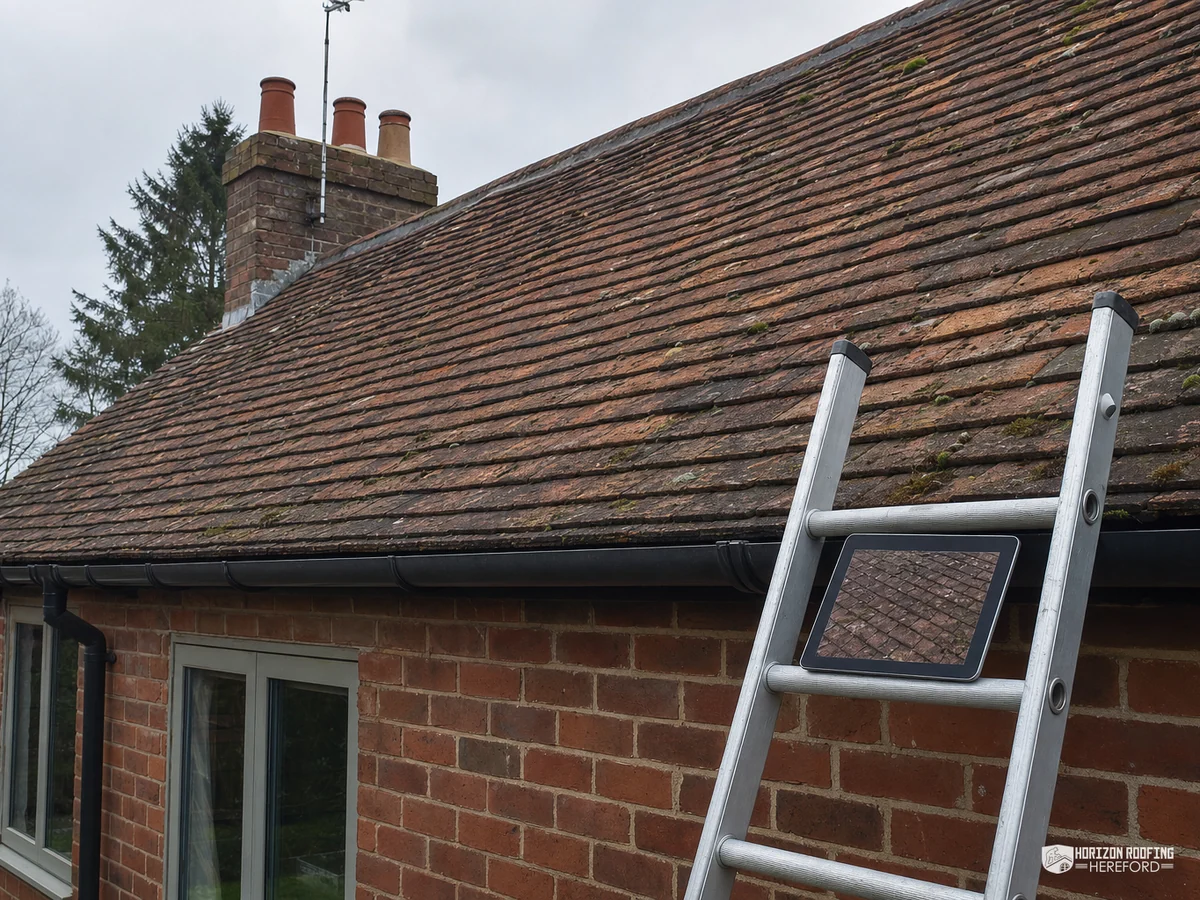
Callout 1 of 3
Valley gutters where two Bredenbury slopes meet
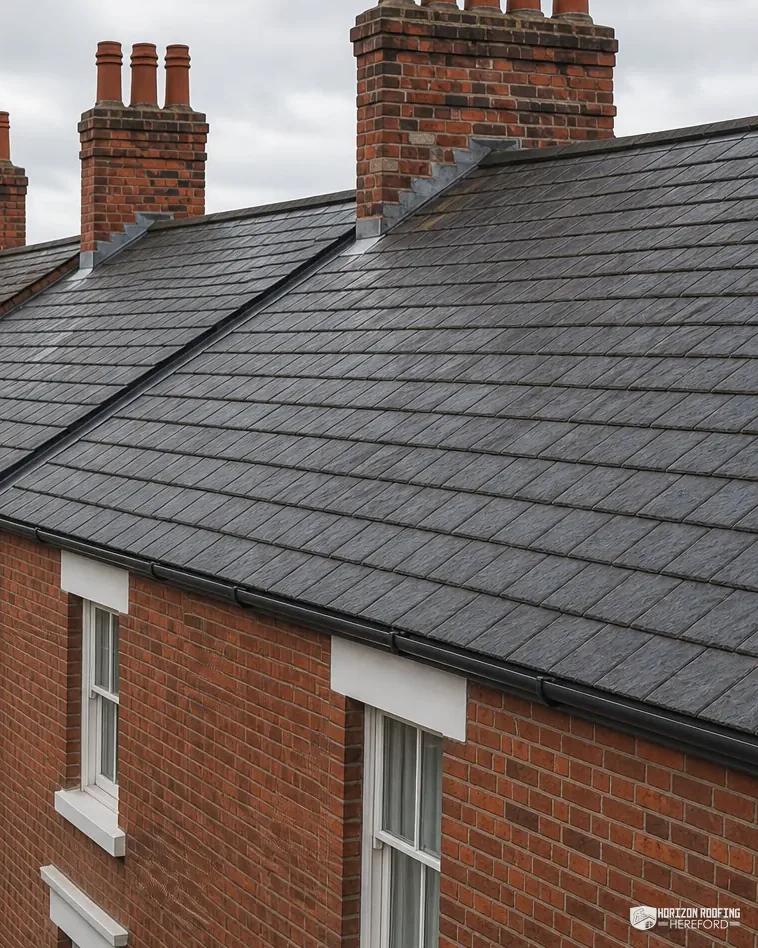
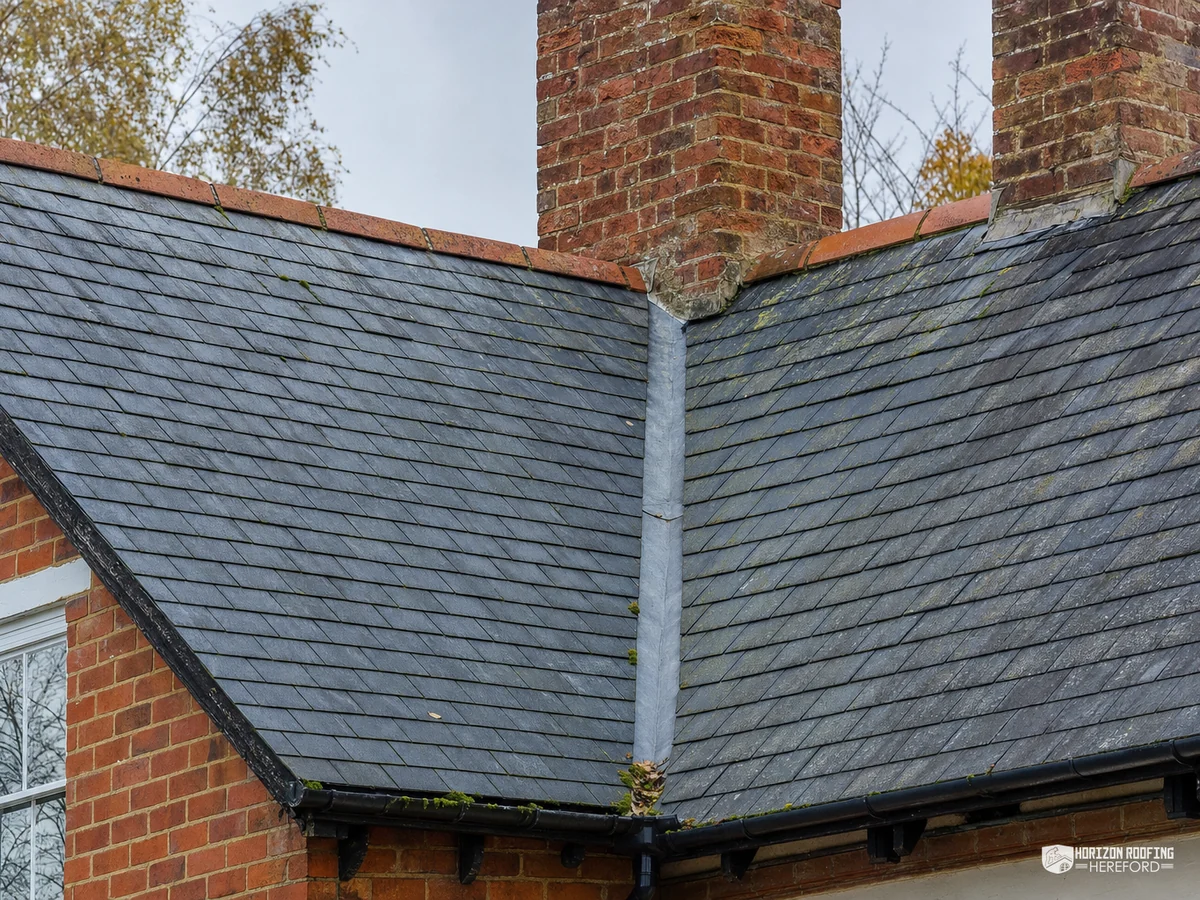
A valley is the inside corner of a roof, where the water from two slopes runs together into one channel. It takes the water of two slopes, and it is lined with lead, with a metal sheet or with a specially cut run of the covering. We start by clearing it: leaves, moss and silt build up in the angle, and a blocked valley sends water sideways under the tiles on either side. Then we look at the lining for splits, for lifted edges and for pinholes that show as a bright speck when we look at it against the sky from the loft.
The Royal Commission's 1932 inventory, writing of Wicton Farm in Bredenbury parish, recorded its walls as "timber-framed" and its roofs as "tiled". That is a statement about one building at one date. It does not tell us how your valleys are formed today, and a house that has been extended since can have more of them than the original. We map every valley on the survey and photograph each from above and from inside the loft, because a roof extended in two or three stages can hide an older valley under a newer one.
Lead thickness matters here. Royston Lead's table marks the pitched valley gutter column for Codes 4 to 8 and leaves it blank for Code 3, which the table recommends for soakers only. Where lead has failed we replace the length, not the whole run, unless the survey shows the whole lining has served out its life. MyJobQuote says correctly installed lead flashing "can last for over 80 years", so a valley in good order is a reason to leave it alone.
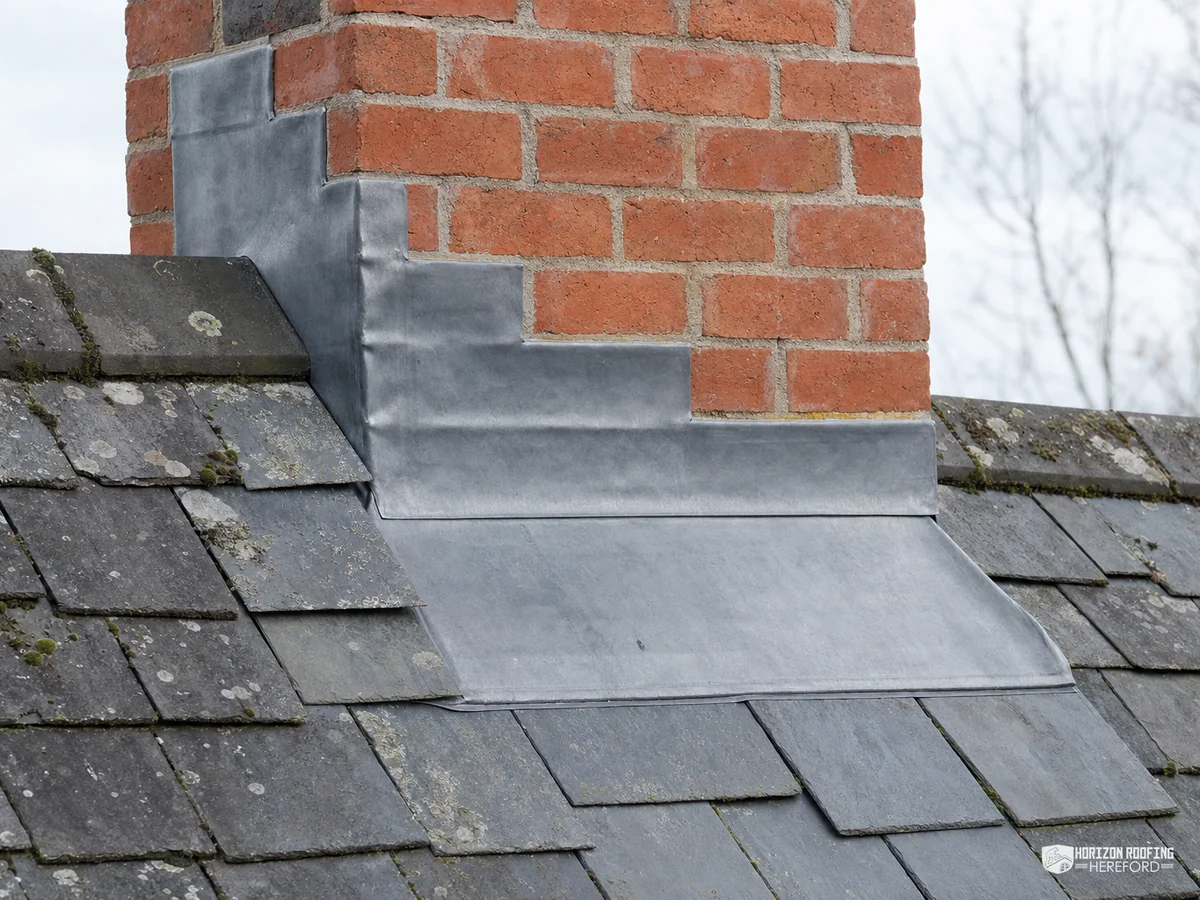
When the valley is the only fault, the repair is small and the written price reflects that, with the rest of the roof left as it is. If the covering either side is also tired, the Planning Portal gives the England test for re-covering: less than 25 per cent of the building envelope and less than 50 per cent of the roof affected means no application is normally needed. Our lead roofing page describes the leadwork we do, from valley linings to flashings.
A Bredenbury valley, point by point
- Debris
- Cleared from the angle before any inspection
- Lining
- Checked for splits, pinholes and lifted edges
- Side tiles
- Cut cleanly and firm along both banks
- Loft view
- Damp on timbers beneath the valley
- Lead code
- Code 4 or heavier for a pitched valley gutter
A valley in good order is a reason to leave it alone, and a blocked one is a quick fix.