
01432 610152 Get a quote Call 01432 610152

Roofers in Goodrich

Slate and tile roofs, flat extensions and Grade I walls in the Wye Valley.

A Goodrich survey begins at the ridge, records each fault with a photograph, and closes with a single total price.

Get a free quoteCall 01432 610152

Goodrich slate, tile and Grade I stone

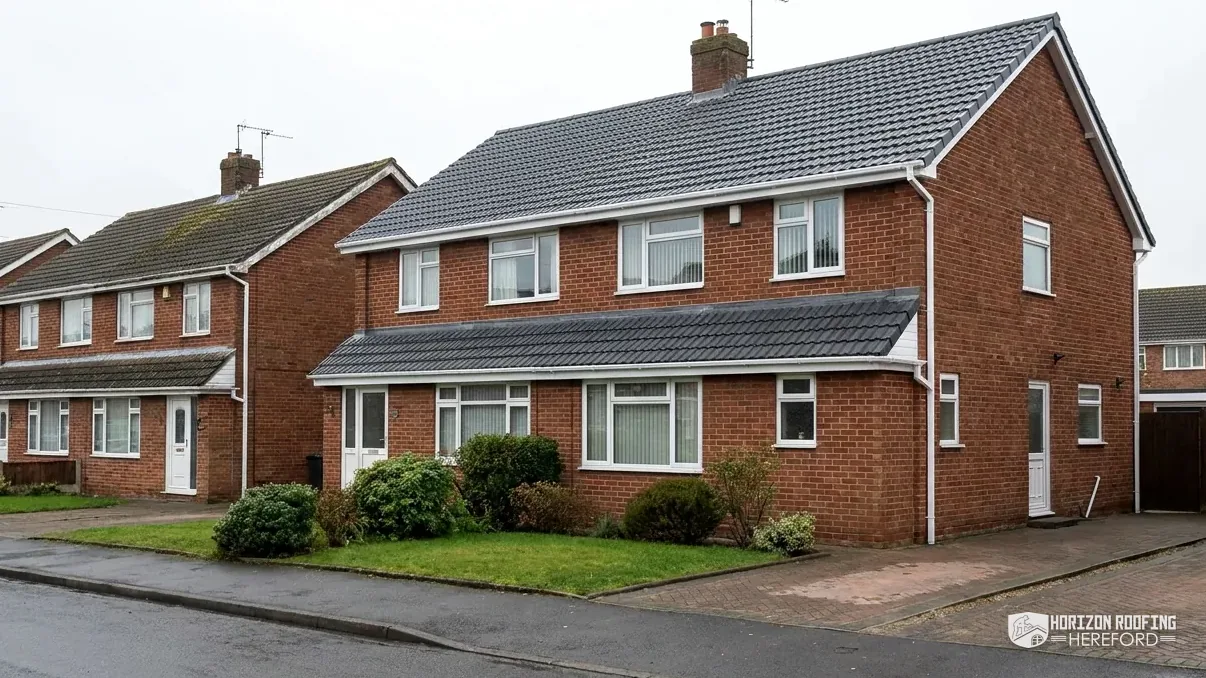
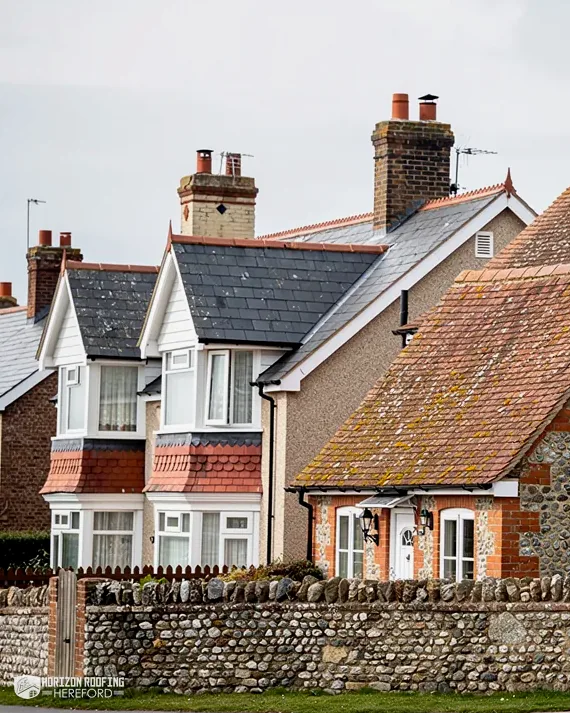
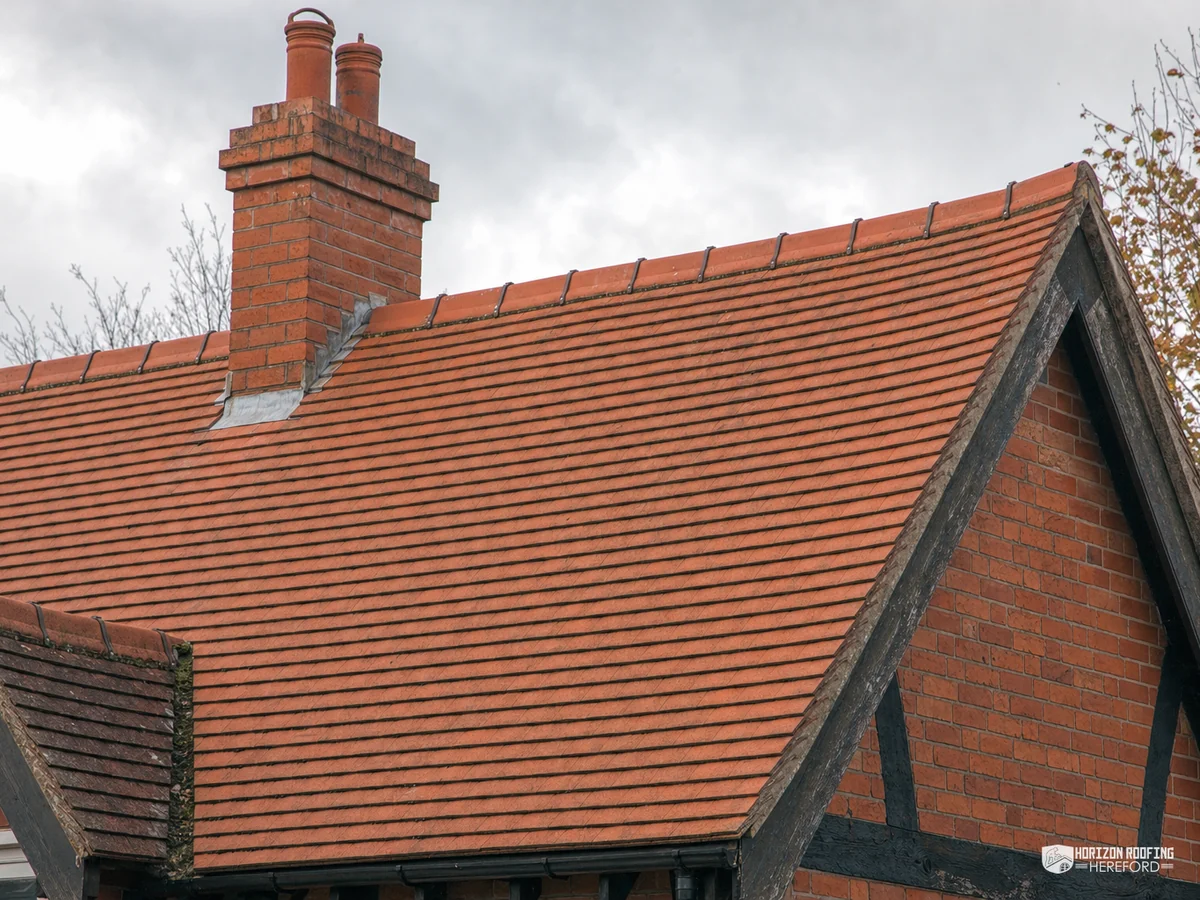
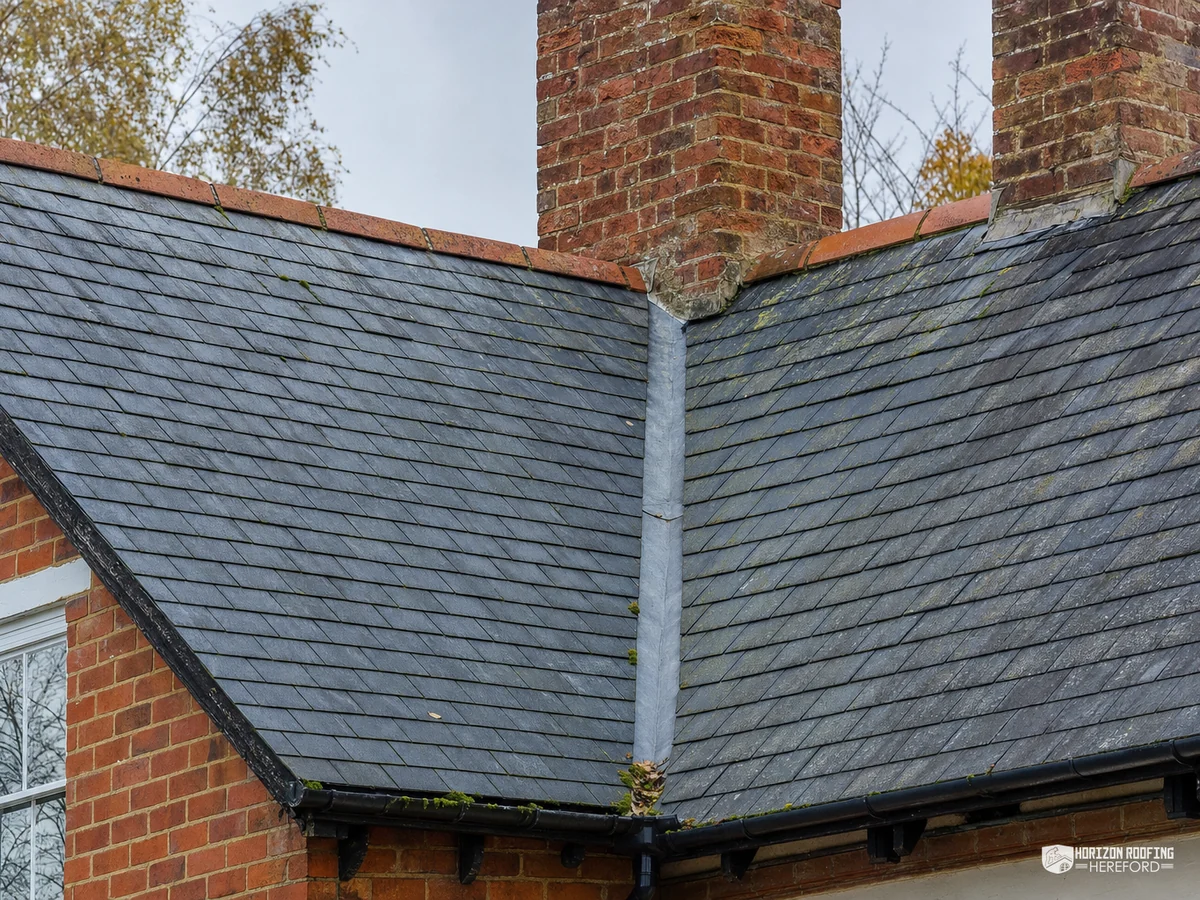
  • Older cottages with weathered clay tile roofs and brick chimneys behind a flint wall
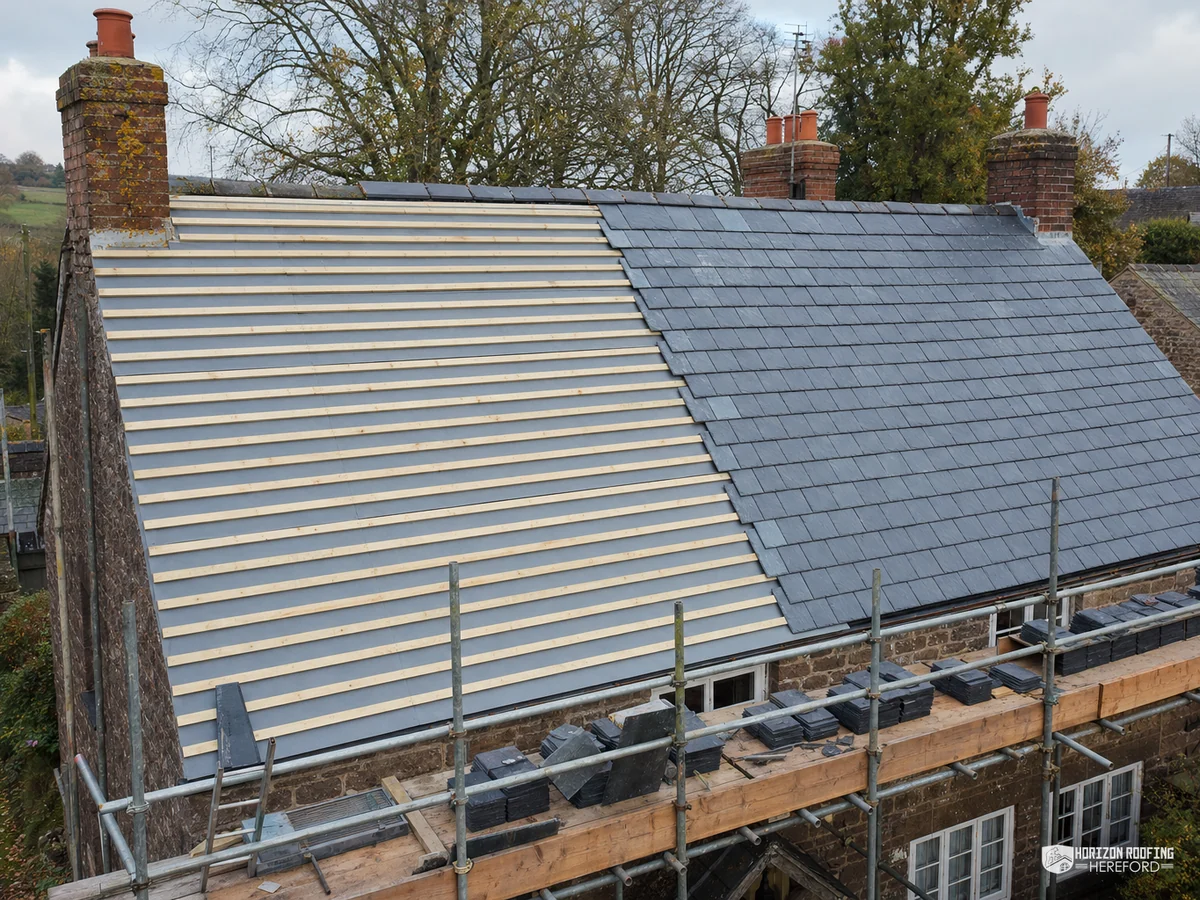
    Slate on the churchThe 1931 inventory recorded St Giles's roofs as covered with slate.
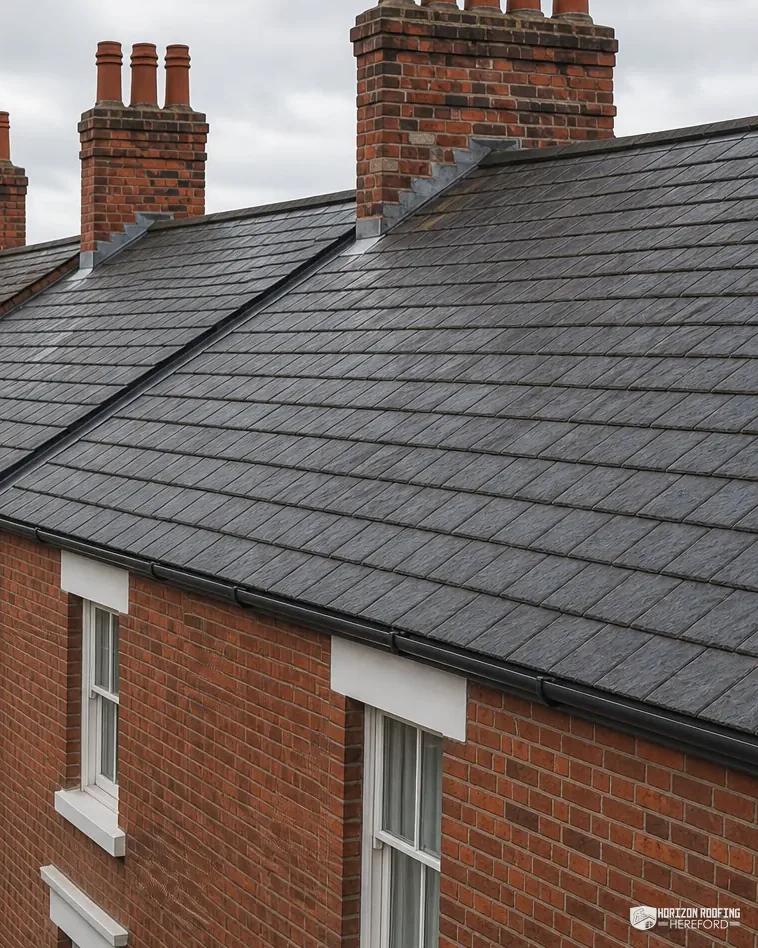
  • Slate roofs and chimney stacks along a red brick Victorian terrace
    Tiles on the prioryFlanesford Priory's roofs were recorded in 1931 as covered with tiles.
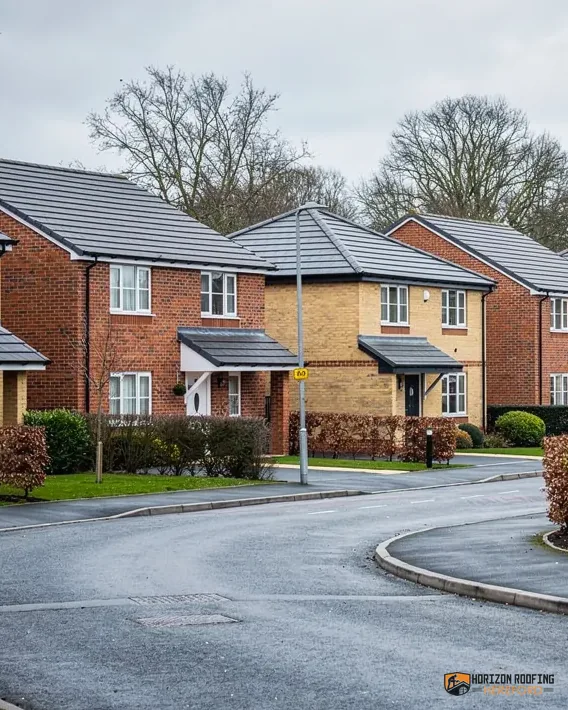
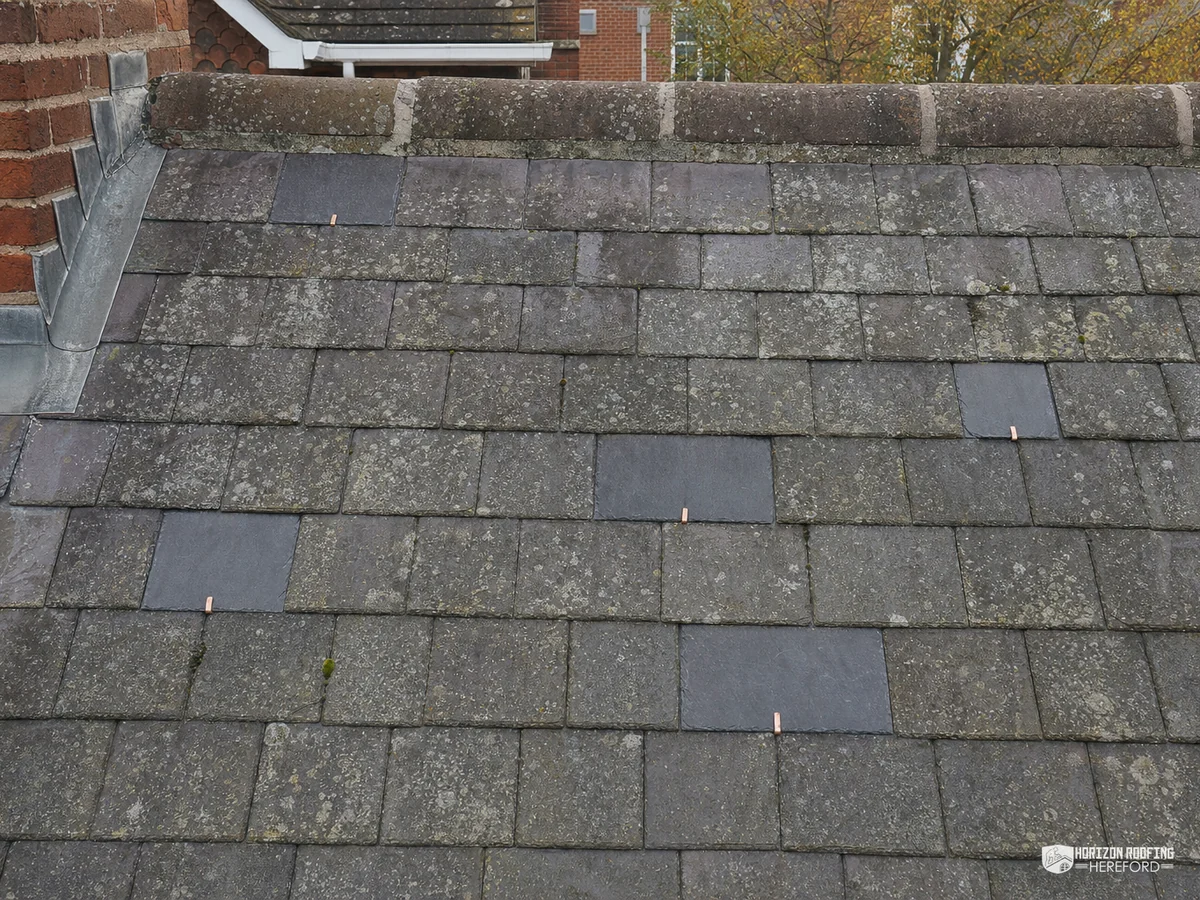
  • Newer homes with grey concrete tile roofs along a curving estate road
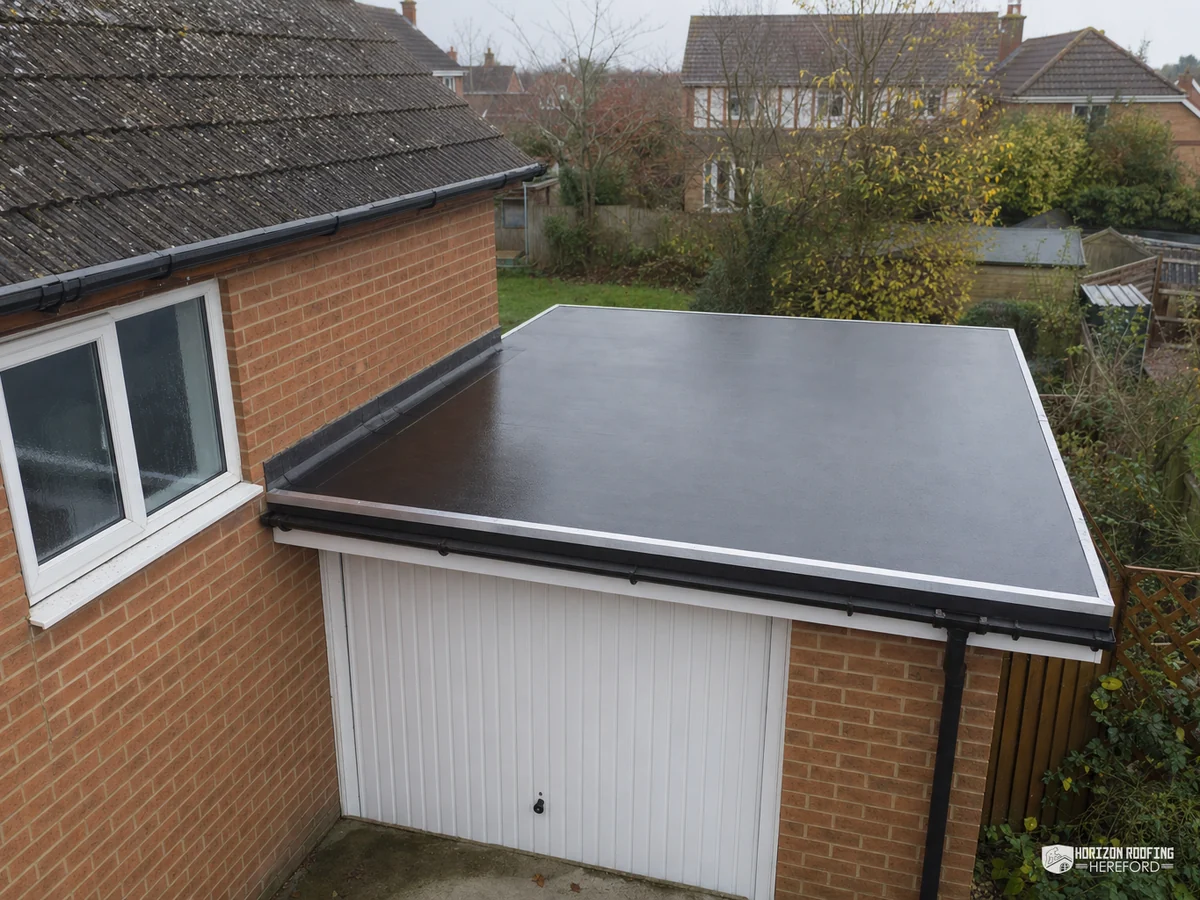
    Flat roofs on extensionsA flat extension roof needs its fall, membrane and edges checked.

Roads into Goodrich

Goodrich on a street map, with a dashed circle around the town and the nearest towns we cover. Tiles © Esri; map data © Esri, HERE, Garmin, OpenStreetMap contributors.

Goodrich roofs, slate to priory wall

Slate, flat roof and Grade I walls: three callouts on a Goodrich roof

The survey starts on the slate and tile slopes, crosses to the flat roof of an extension, and ends at the Grade I priory and the Wye Valley rules that shape any repair.

A drawn cut-away section through a Herefordshire border house: the front of the main roof is cut open to show the rafters, underlay, battens and slates, beside a black-and-white timber-framed gable. Numbered, from the ridge down: 1 Slate and tile; 2 Flat roof; 3 Priory wall.

Fig. 1 Goodrich roof section, with slope, flat roof and wall numbered one to three.

Callout 1 of 3

Slate on St Giles, tile on Flanesford Priory

Callout one is the pitched slope. Goodrich's coverings are on record in two buildings. The Royal Commission's inventory of 1931 describes slate-covered roofs at the Parish Church of St. Giles, and says of Flanesford Priory that the walls are local sandstone rubble and ashlar with dressings of the same stone, with the roofs "covered with tiles". That makes two coverings in one small parish, so a repair has to know which of them it is dealing with. A slate is a thin sheet split from rock, while a tile is moulded from clay or concrete, and the two are lapped and fixed in different ways.

On slate, the lifespans on offer are long but they are typical ranges, not promises. HomeBuilding gives Welsh slate "100+ years", Spanish slate "75-100 years" and reclaimed Welsh slate "50-80 years", and SPAB says the life of a well-slated roof is "likely to be more than 100 years". A slate roof with a few slipped slates can therefore be mended, with each new slate matched for size and colour. For clay tiles, Marley quotes the BRE's minimum life expectancy as 60 years. Concrete is a separate case: Marley says "around 60 years" while HomeBuilding says "40-50 years", so we name both figures.

Tiles come with a minimum pitch of their own, and the maker's data sheet is the place to check it. Marley's table gives its Canterbury clay tile 40° and its Ashdowne 35°, while its Mendip concrete tile is listed from 15°. The names belong to the maker's products and have nothing to do with places, and a roof that falls below the figure for the tile on it is a reason to look harder at how the covering is holding. A level gives us the pitch before any tile is chosen for a repair.

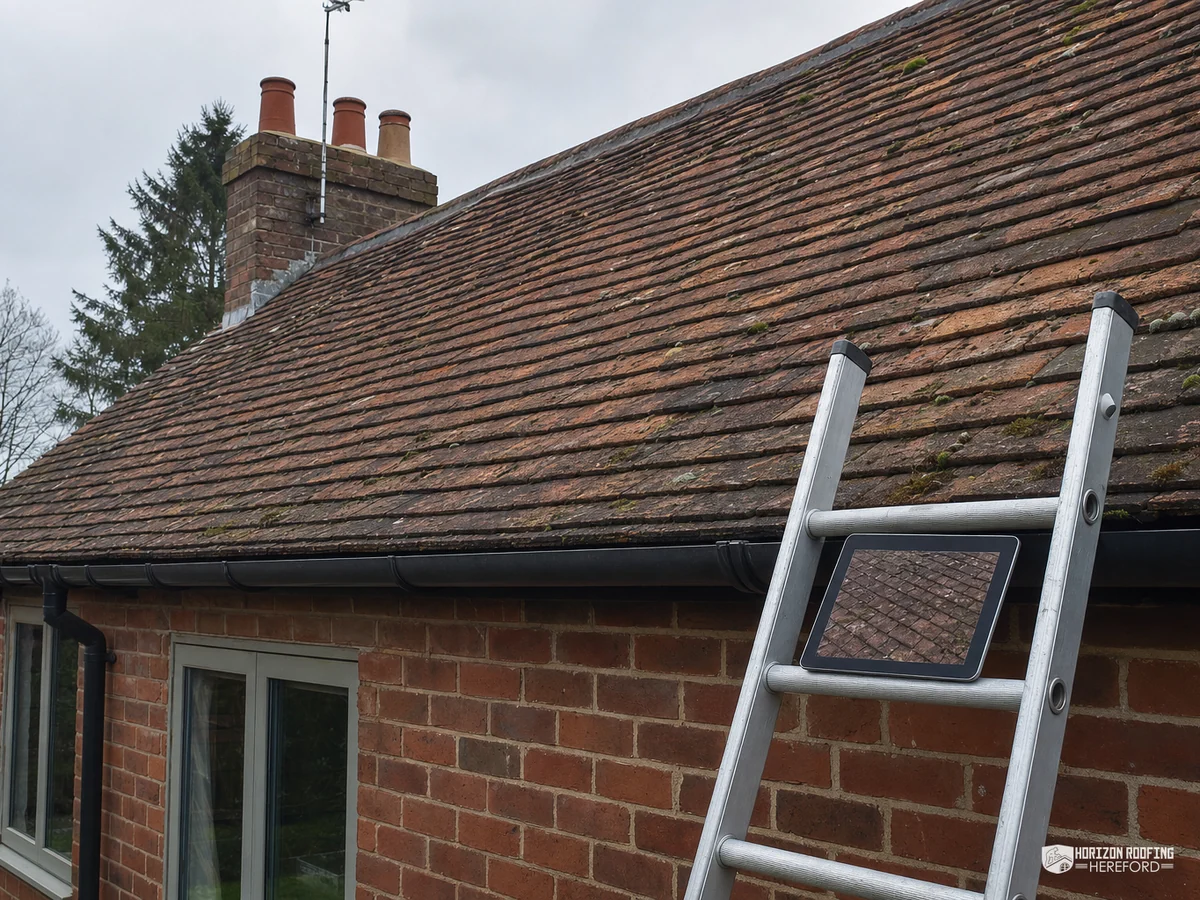
Up on the slope we check each slate or tile for slip, cracks and fixings, course by course. We lift a few tiles at random to read the bedding and the nibs, and we press the ridge capping piece by piece. Each finding is recorded with a photograph in the order the survey was walked, so the report reads from the ridge downwards. Where a slope is finished, our slate roofing page sets out how it is stripped, sorted and laid again.

A slate or tile slope at Goodrich

Slates
Slip, crack and fixings checked course by course
Tiles
Lifted here and there to read nibs and bedding
Ridge
Capping pressed piece by piece for movement
Eaves course
Photographed from the ladder and the gutter line
Fig. 2 The slopes, drawn close

Callout 2 of 3

Flat roofs on extensions: fall, membrane and edges

Callout two crosses to the flat roof of an extension, which sheds water in a different way from a slope. BS 6229:2025, the code of practice for flat roofs, is the current edition, and the 2018 edition was withdrawn on 16 December 2025. It covers flexible membranes and not lead. The NFRC says it sets "a minimum 1:80 finished fall for general roof areas and internal gutters", and IKO advises that a roof should be designed for 1:40 to reach 1:80 once built. A flat roof that ponds after rain is therefore telling us about its fall, and we look for pools at the lowest point the morning after a shower.

The membrane decides how long the roof lasts, and the sources disagree, so we give both. For EPDM, HomeBuilding says "25-30 years" and Less says "30 to 50 years". For GRP, HomeBuilding says "25-30 years" and Less "25 to 40 years". For torch-on felt, HomeBuilding says "10-15 years" and Less "10 to 20 years". They are typical figures. A membrane can fail at its edges, at the upstands where it turns up against a wall, or at an outlet, and each of those gets a photograph of its own.

Renewing a membrane has a Building Regulations side. Approved Document L (2021 edition) lists "Replacing the waterproof membrane on a flat roof" among renovation work, so the roof comes under Table 4.3, with a threshold of 0.35 and an improved figure of 0.16 W/(m2K). AD L 2026 takes over from 24 March 2027 as Table 3.3. A flat roof that was not insulated gets the question put to it, and the answer goes to Herefordshire Council Building Control or a registered building control approver before work starts.

The flat roofing page describes the systems we fit and repair. Each flat roof is priced as one total, and the points below decide it. If the roof empties into a gutter, Brett Martin advises a fall of 1mm for every 600mm of run, so the gutter is checked along its length at the same visit, and any pooling at the outlet is noted in the report with a photograph beside it.

Points that decide a flat roof's price

Deck
Its condition and how much of it must be replaced
Membrane
EPDM, GRP or felt, and the area covered
Insulation
The U-value the Building Regulations call for
Access
Height, and any scaffold licence for the road

One written total price, never itemised.

Fig. 3 Flat roofs, drawn close

Callout 3 of 3

Flanesford Priory, St Giles and the Wye Valley rules

Callout three is the wall. Flanesford Priory is listed Grade I (list entry 1157248, first listed 25 February 1966), and the Church of St Giles is listed Grade II* (list entry 1157263, first listed 25 February 1966 as well). Section 7 of the Planning (Listed Buildings and Conservation Areas) Act 1990 means that works affecting a listed building's character need listed building consent, and a listed dwelling keeps the permitted development it had, with consent needed as well. The priory's sandstone walls call for the lead, the flashings and the covering to be agreed with Herefordshire Council before any piece is moved.

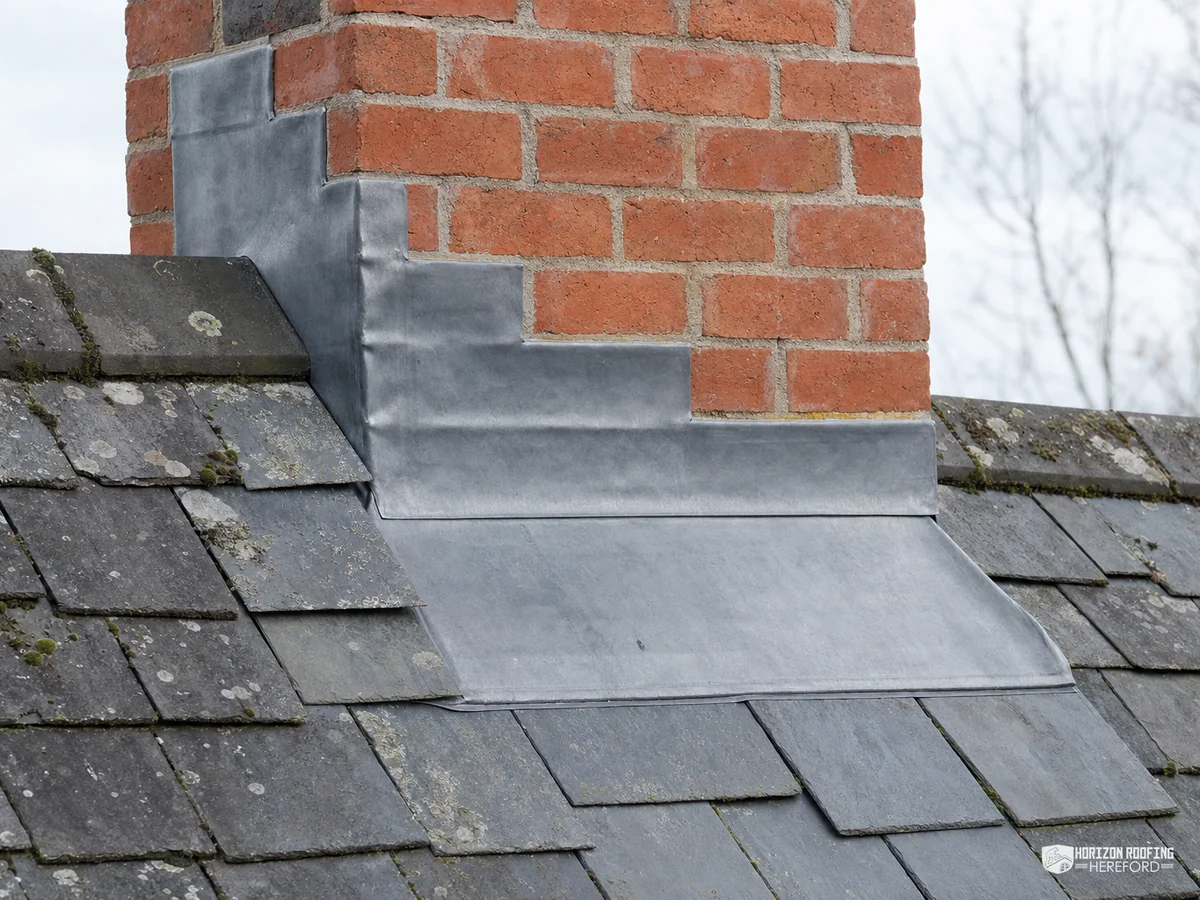
Where the roof meets rubble or ashlar, lead is tucked into the stonework and dressed down over the covering. Royston Lead's table lists Code 5 for flashings, valley gutters and parapets, and Code 4 for soakers and flashings as well, so the code is chosen for the junction. MyJobQuote says correctly installed lead flashing "can last for over 80 years", a hedged figure and no promise, so sound lead is left alone. A flashing that has pulled out of the joint is re-dressed or replaced, and the mortar joint is made good behind it.

A listing records a building, and ownership decides the route. Holy Communion is celebrated at St Giles under the Church of England; for as long as that goes on, the Goodrich church roof is a faculty matter and sits outside council consent; a church that had closed would not. The diocese's answer is kept with the survey photographs.

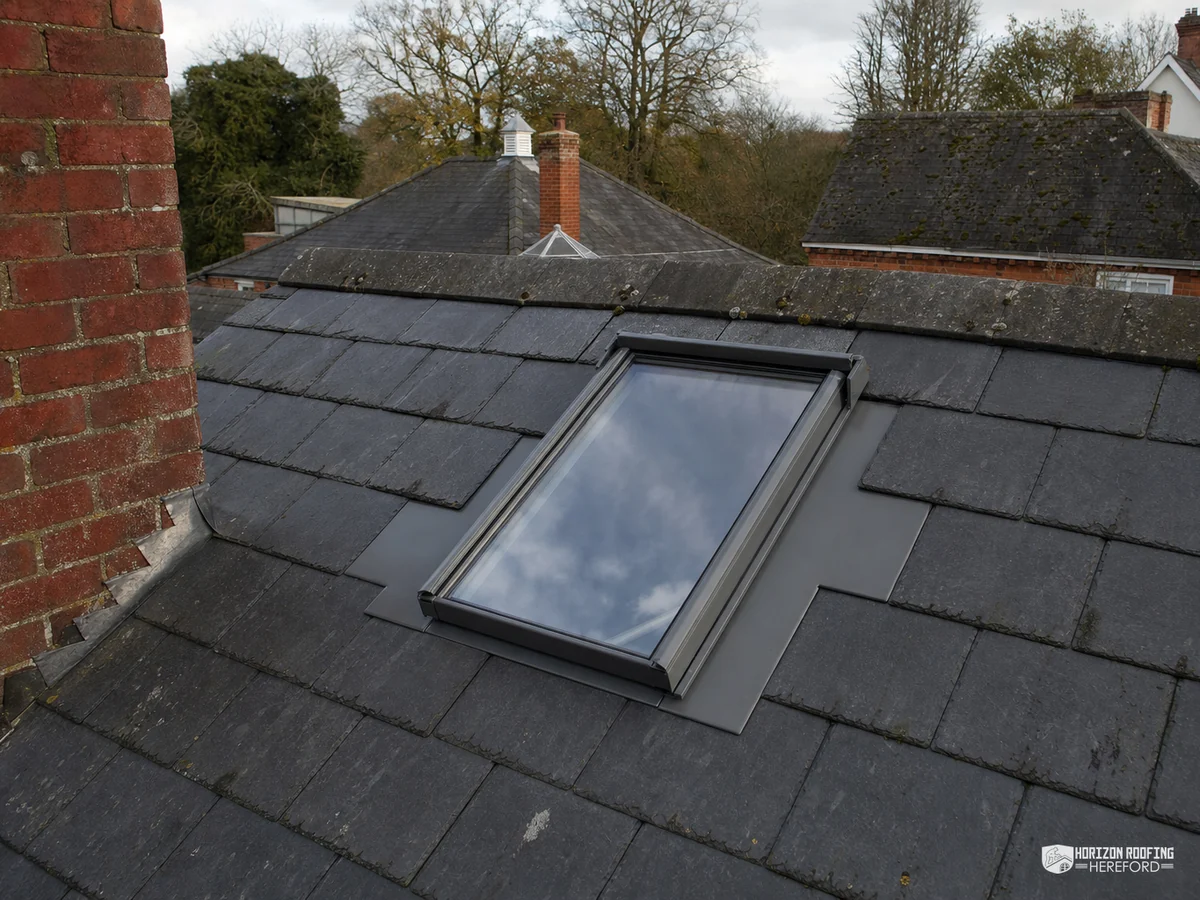
Goodrich lies inside the Wye Valley National Landscape, which Herefordshire Council says remains an Area of Outstanding Natural Beauty in law under its newer working name. The landscape is a label on the land, and the planning decision is Herefordshire Council's. Under English rules that land changes the picture for a Goodrich dormer, so Herefordshire Council sees the plan first. For roof windows, the planning guide for roof windows is the place to start.

The nearest named conservation area is Lower Lydbrook, across the county boundary, and it is Forest of Dean District Council's. For a Goodrich address, Herefordshire Council's own list of its 64 conservation areas is the one to check. Ask the council whether an Article 4 direction applies as well. Building control for a Goodrich address is Herefordshire Council Building Control, on 01432 261938, with a registered building control approver as the alternative. The listed and heritage roofing page describes our work on protected roofs.

Words on a Goodrich listed roof

Article 2(3) land
Protected English land, the Wye Valley National Landscape among it
Registered approver
A private firm registered to do building control work instead of the council
Faculty
The Church of England's own consent system for its church buildings
List entry
A building's reference number on the national register of listings

Goodrich roofs: slate, flat roofs and listings

Can slipped slates on a Goodrich roof be replaced one by one?

Yes, where the slates around them are sound. Which? put replacing one to six tiles at £75-£400 in its November 2025 survey, ex VAT, a range for the UK as a whole and not what we charge. Each slipped or cracked slate is removed, its fixing is checked, and a slate of matching size and colour goes in. The photographs show the surrounding courses. If the whole slope has failed, the report says so before any figure is written.

What did the 1931 inventory record on Goodrich roofs?

It recorded slate at the Parish Church of St. Giles, and tiles at Flanesford Priory, in 1931, in a survey of the monuments of south-west Herefordshire. A roof can be re-covered in ninety years, so the survey notes what yours carries now, whatever it was then. The inventory shows only that slate and tile were both in use in the parish, and nothing about your own house.

Does a Goodrich flat roof need more than a new membrane?

It can. Laying a fresh waterproof layer on a flat deck falls within AD L's renovation list, so the insulation is looked at under Table 4.3, with 0.35 as the threshold and 0.16 as the improved figure. The fall matters too, because NFRC gives a minimum 1:80 finished fall under BS 6229:2025. Building control is asked before work begins, and the answer is passed on to you.

What consent does roof work at Flanesford Priory or St Giles need?

Both are listed, the priory at Grade I and the church at Grade II*, so section 7 of the 1990 Act applies to any work that affects their character. For the priory, listed building consent comes from Herefordshire Council. Worship continues at St Giles under the Church of England, so its roof goes through the faculty jurisdiction while services carry on there.

Does the Wye Valley National Landscape limit work on a Goodrich roof?

The landscape does not decide planning applications; Herefordshire Council does. Any dormer there goes past the council's planners first, before a designer is engaged. A re-roof is a separate matter, and roof windows come with conditions that our planning guide lays out. Ask the council whether an Article 4 direction covers your address, because a direction narrows what can be done without an application.

What is the position on scaffold for a Goodrich roof?

Under section 169 of the Highways Act 1980 a scaffold put up on a highway needs a licence, which our scaffolder obtains for us. Under Herefordshire Council's licence, £167 is the fee for a maximum of one month, £123 for each month beyond. At least 10 days' notice is needed. If a Goodrich scaffold would meet a main road, the council is asked first. The written quote already covers the scaffold.

Have your Goodrich slates and flat roof checked

Send photographs of the slope or the flat roof, and a visit follows from Hereford, 16.9 road miles away.

10-year workmanship guarantee, in writing